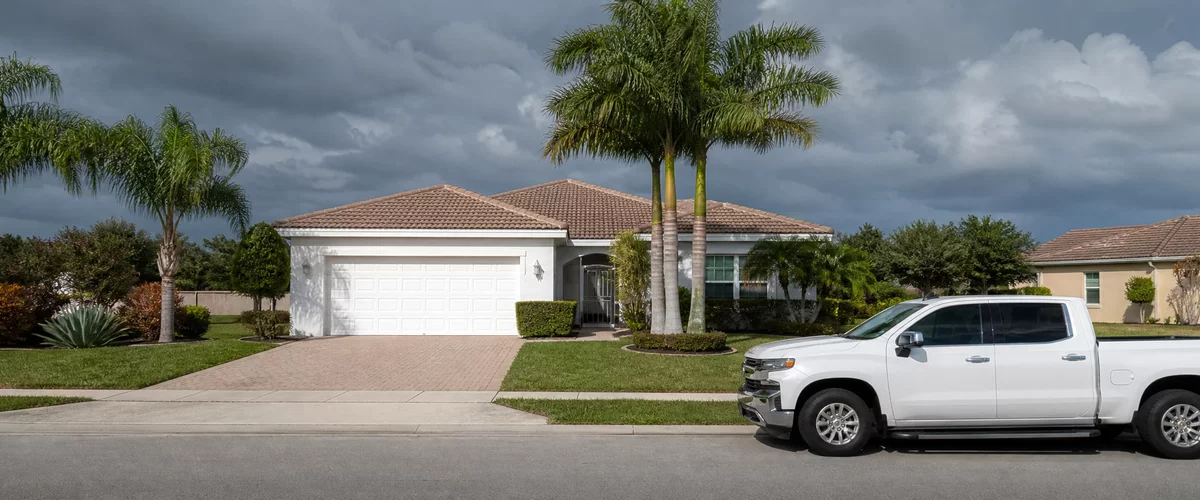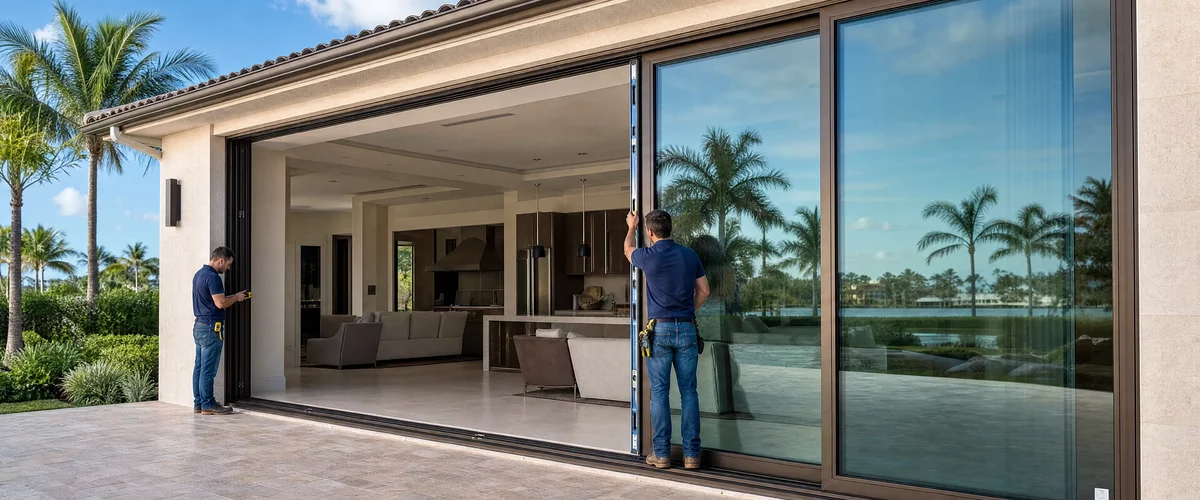
Turtle Glass Windows in Florida: What Sea Turtle Lighting Codes Require
Turtle glass is window glass tinted to 45% or less light transmittance, required near Florida nesting beaches. Where it applies, costs, and impact options.
2026 Hurricane Season Deal
Get a Free Door
With a Qualifying Windows Installation
Impact Windows Means Permanent Protection
Ends 08/31. Until supplies last. Exclusions may apply. Subject to change or cancellation. Call (954) 231-7164 for availability.
Turtle glass is window glass tinted to 45% or less light transmittance, required near Florida nesting beaches. Where it applies, costs, and impact options.
Permit fees for the same ten-window job range from $94 to $2,000 across Florida, depending only on which city the house sits in. Here is what drives the difference.
How Florida condos, HOAs, and commercial properties fund impact window projects: reserves and special assessments, association loans, C-PACE, the MSFH condo pilot, and who pays for what under the declaration.
What the Florida garage door wind code actually requires: design pressure ratings by region, DASMA 108 and 115 testing, HVHZ impact rules, label reading, permits, and how the door affects your insurance credit.
A door's DP rating is a structural wind number, tested at 1.5x the label, cycled 9,000 times after a missile strike. Here is what the numbers mean on doors specifically, the recommended minimums by Florida zone, and the real size limits by door type.
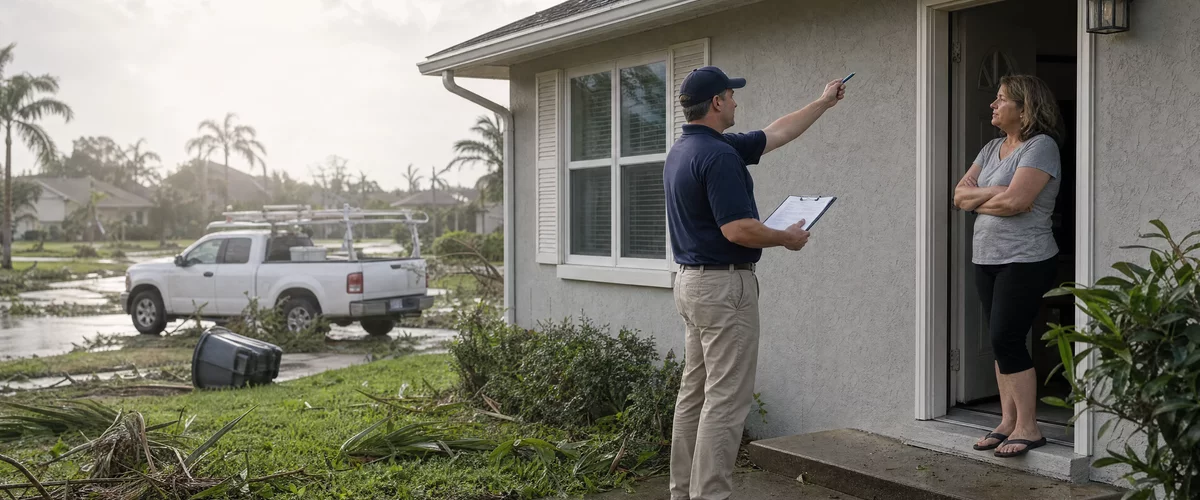
After every Florida landfall, a predictable cast arrives: door-knockers with today-only prices, crews wanting half up front, and paperwork that signs away your claim. Here is the field guide, with the specific laws that protect you and the two-minute checks that expose them.
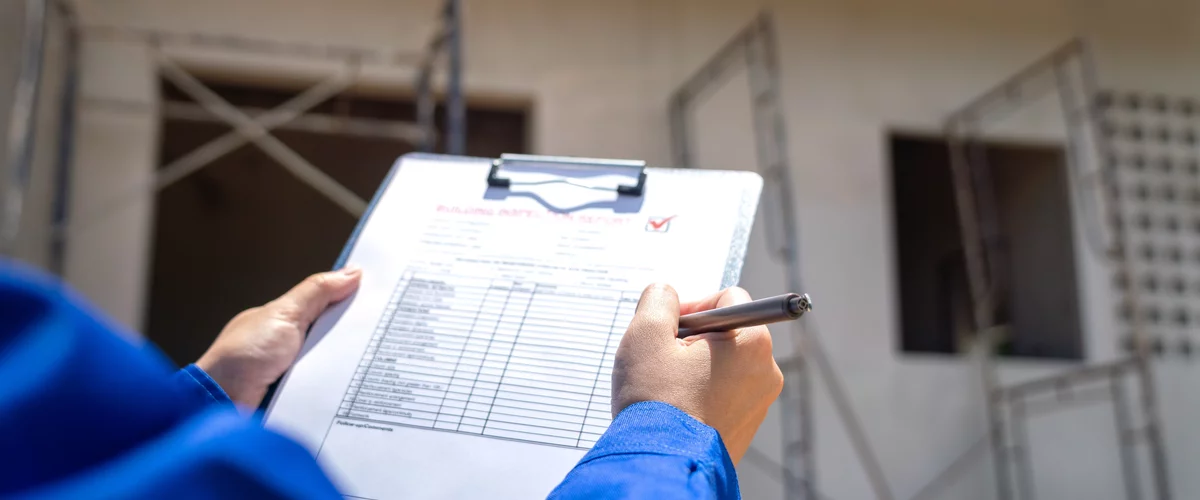
The free My Safe Florida Home inspection takes 30-60 minutes, documents your home's wind-mitigation features on the current OIR-B1-1802 form, and produces the report that controls your grant. Here is what inspectors check and how to read the results.
The OIR-B1-1802 wind mitigation form decides your Florida hurricane insurance discount, often $300 to $3,500 a year. Here is what it checks and what changed in the new April 2026 version.
Impact windows in Doral are about the modern look as much as the storm. Here is how a contemporary, glass-forward home gets big openings, slim aluminum frames, and pivot doors while meeting the HVHZ standard.
Impact windows in Aventura face wind loads that climb with every floor, must meet the HVHZ glass standard, and contend with condo boards. Here is how high-rise towers protect the glass without giving up the view.
Impact windows in Coral Gables answer to the Board of Architects before the building permit. Here is how HVHZ compliance, historic-district review, and aesthetic standards shape a window project in The City Beautiful.
Florida law prohibits HOAs from blocking impact window installation. But your HOA can regulate color, style, and uniformity. Here's how to navigate the approval process and avoid delays.
Impact windows protect against wind and debris. They do not protect against storm surge. As sea levels rise and flood zones expand, homeowners need to understand the difference and plan accordingly.
Roof overhangs are where hurricane damage often starts. Two consecutive Florida Building Commission research cycles studied why. Here's what the data shows and what homeowners and builders can do.
The Florida Building Code allows garage doors to be designed for only 60% of ASCE 7 wind pressures. During Hurricane Milton, this led to failures in otherwise code-compliant homes. Here's what to do about it.
Current sliding glass door water testing uses only 15% of design wind pressure. FIU Wall of Wind research and two FEMA reports confirm this is inadequate. Here's what's changing and what to look for when buying.
Florida's Wind-Borne Debris Region has followed the coast for decades (apart from a brief 2024 detour inland), but a growing body of research argues it should extend to homes near large inland lakes. Here are the proposals, the science, and where they stand.
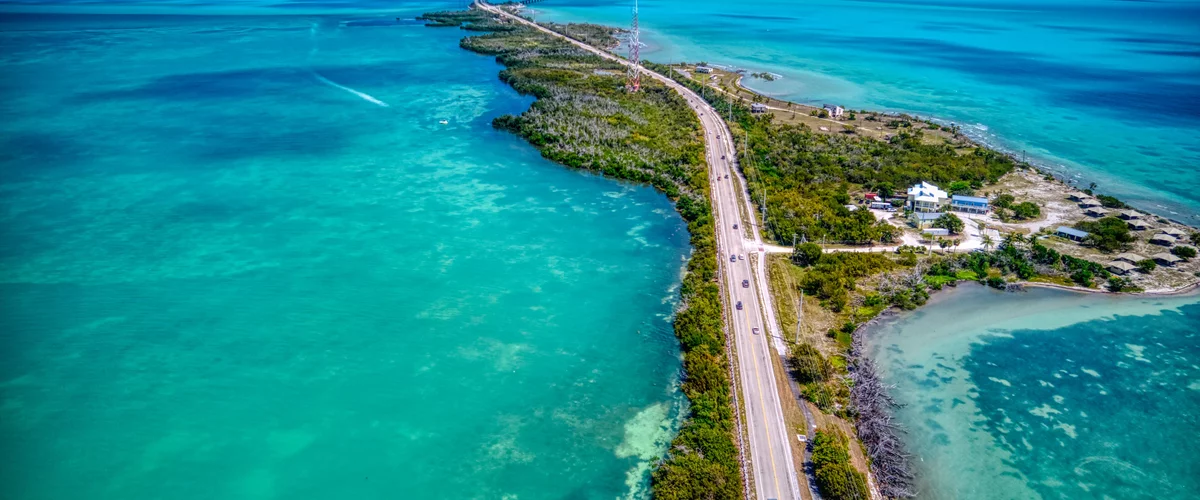
The Florida Keys face the most extreme hurricane conditions in the continental United States. Monroe County design wind speeds of 170-190 mph, Exposure D on every side, and no way out when a storm hits make impact windows a necessity—not an upgrade.
Five ways to tell if your windows are impact-rated: check the glass label, check the frame label, look for the interlayer, do the tap test, or pull your permit records. Here's how to do each one.
Hurricane season 2026 runs June 1 through November 30. Here's a month-by-month preparation timeline, a printable home hardening checklist, and the window and door upgrades that should be complete before the first storm.
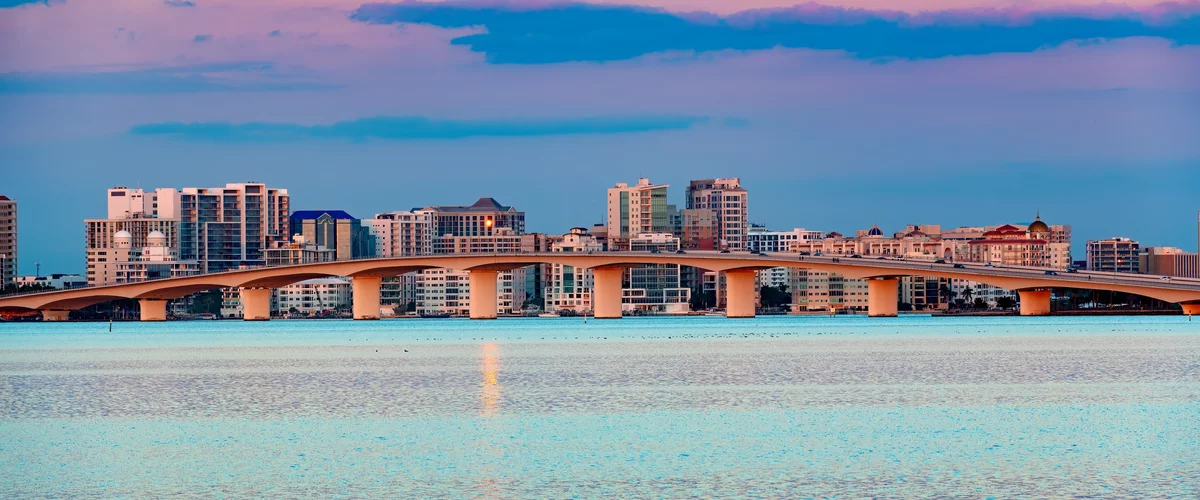
Hurricane Milton changed the equation for Sarasota. Design wind speeds of 140-155 mph, direct Gulf exposure, and a post-storm demand surge make impact window selection and timing critical. Here's what Sarasota homeowners need to know.
Hurricane Ian hit Cape Coral as a Category 4 with 150+ mph gusts and 10-15 feet of surge. Lee County issued 61,000 building permits in 8 months. Here's what Cape Coral homeowners need to know about impact windows in the post-Ian landscape.
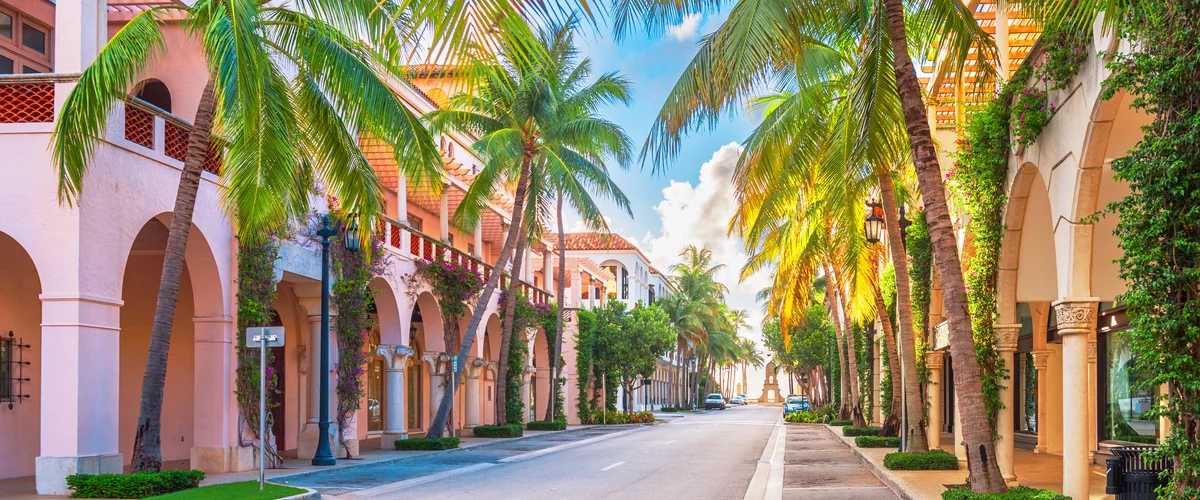
Palm Beach County is NOT in the HVHZ but sits entirely within the Wind-Borne Debris Region with 160-170 mph design wind speeds. More product options, a luxury market, and strict HOAs make it a unique installation environment.
Broward County is HVHZ with 170 mph design wind speeds. Every window replacement must carry a Miami-Dade NOA or equivalent Broward approval. Here's the complete guide for Broward homeowners.
HVHZ is a geographic zone (Miami-Dade and Broward). Impact rating is a product certification. They're related but not the same thing, and confusing them can cost you money or code compliance.
Replacing windows in a Florida condo involves association approvals, Declaration of Condominium responsibility rules, high-rise engineering, and building-wide coordination. Here is how it works for unit owners and associations.
University of Florida researchers assessed 358 structures after Hurricanes Helene and Milton (2024). Zero post-FBC homes were destroyed. 46% of pre-code coastal homes were. Here's the data and what it means for your home.
Before Hurricane Andrew in 1992, Florida had 400+ local building codes with no unified wind standards. The destruction created an entirely new product category and the strictest building code in the nation. Here's how each major hurricane shaped the code.
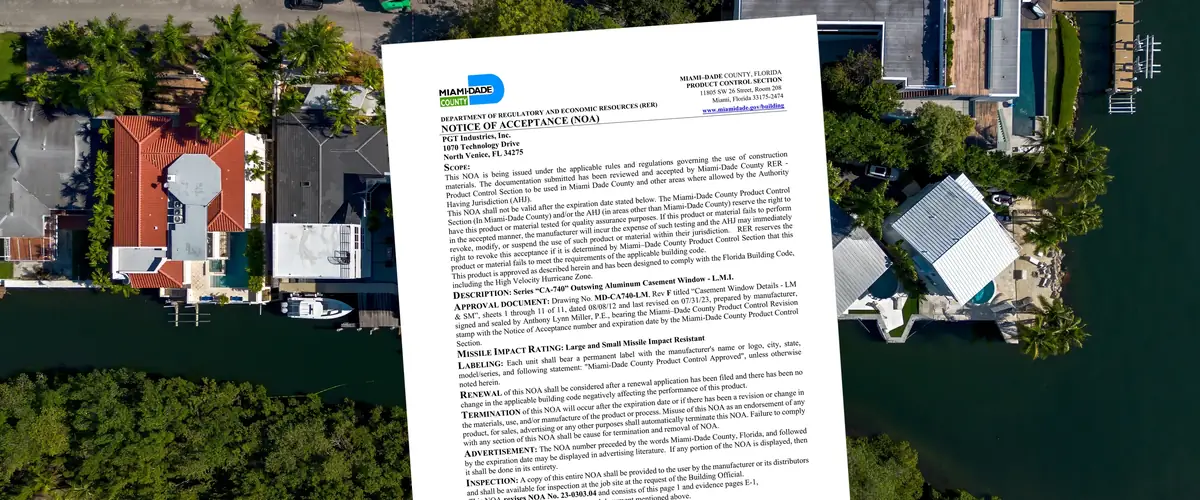
Miami-Dade County has the strictest impact window requirements in the United States. Every replacement must carry a Miami-Dade NOA. Here's what that means for your project, your products, your permits, and your insurance.
Your garage door is the largest and most vulnerable opening in your home. During Hurricane Milton, garage door failures caused roof damage in otherwise code-compliant homes. Here's what you need to know about hurricane-rated garage doors, bracing, costs, and Florida code requirements.
The Florida Building Code governs where impact windows are required, what products qualify, and how they must be installed. Here is a plain-English breakdown of what matters for your home.
Whether impact windows are required in your Florida home depends on your county, your proximity to the coast, and whether you're replacing more than 25% of your windows. Here's exactly what the code says, county by county.
The wind mitigation inspection is the single most valuable document for reducing your Florida insurance premium. Here's what the inspector checks, what each item is worth, and how to maximize your discounts.
There is no such thing as a hurricane-proof house, but there is a proven hierarchy of upgrades that makes a Florida home hurricane-resistant. This guide covers every component, from roof-to-wall connections to impact windows to flood barriers, in the order that matters most.
My Safe Florida Home is a grant, not a loan. Free wind mitigation inspections plus up to $10,000 for impact windows, doors, shutters, and roof upgrades. Who qualifies, how to apply, what changed for 2026-2027.
Impact windows are a smart upgrade in Palm Beach, but the install isn’t plug-and-play. Avoid the five mistakes that waste money and weaken protection: wrong ratings, the wrong installer, skipped permits, poor energy choices, and rushed timelines that collide with hurricane season.
Florida hospitals can’t close for storms. Impact-rated windows, doors, and hardened envelopes keep care online, cut downtime, and lower insurance. With Risk Category IV standards, phased upgrades, and FEMA/insurance financing, resilience becomes mission continuity—and measurable ROI.
Florida’s High Velocity Hurricane Zone (HVHZ) designation enforces stringent building requirements—175+ mph wind ratings, impact‐resistant windows and doors, reinforced roofs and framing—in Miami-Dade and Broward Counties. Compliance lowers insurance costs and boosts home value.
Not all impact windows are created equal. Here’s what you need to know to select a manufacturer you can trust...
Hurricane Helene's devastation revealed a stark reality: homes with impact windows were 80% more likely to remain structurally sound, protecting families from both wind damage and catastrophic water intrusion...
Impact windows and hurricane shutters both protect Florida homes from wind-borne debris, but they differ sharply in protection level, convenience, long-term cost, and daily livability. Here's the data-driven breakdown.