
If you've lived through a hurricane in Florida, you may have watched water pour in around your sliding glass doors even though the glass held and the doors stayed locked. You're not imagining it. It happens, and it happens on brand-new, code-compliant, impact-rated doors.
This isn't a defect in your door. It's a gap between how sliding glass doors are tested in the lab and what they face during an actual hurricane. That gap has been documented by FEMA twice, confirmed by university research, and mandated for investigation by the Florida Legislature. The testing standards are about to change.
Here's what's actually going on, why your doors leak, and what you can do about it today.
The Gap Between Lab Tests and Real Hurricanes
When a manufacturer certifies a sliding glass door for the Florida market, the product goes through two types of testing: structural (can it resist the wind pressure and debris impact?) and water penetration (does it keep rain out?).
The structural tests are demanding. In the HVHZ (Miami-Dade and Broward), the door must survive a 9-lb 2x4 fired at 50 fps from a pneumatic cannon, then endure 9,000 cycles of alternating pressure at 1.5x the rated design pressure. These tests simulate real hurricane debris and sustained wind loads. Products that pass them work: impact-rated doors prevent the envelope breach cascade that destroys homes.
The water tests are a different story.
Current water penetration testing (TAS 202 for HVHZ products, NAFS/AAMA for others) applies only 15% of the product's rated design wind pressure while spraying water on the door at 5 gallons per hour per square foot. A door rated for DP-50 (adequate for roughly Category 5 conditions) is water-tested at just 7.5 PSF.
During an actual hurricane, that door faces 100% of design pressure with turbulent, fluctuating pressure fields that oscillate at 0.1 to 1.0 Hz. The real-world pressure is roughly 6-7x higher than the water test pressure. And while lab tests use steady or slowly-cycling pressure, real hurricanes produce rapid oscillations that vibrate door components, deflect frames, and open transient pathways that don't exist under static loading.
This is why products that pass every certification test still allow water through their tracks during hurricanes. The tests are measuring a different thing than what the storm delivers.
What FEMA Found After Michael and Ian
FEMA deploys Mitigation Assessment Teams (MATs) after major hurricanes to study how buildings performed and recommend code changes. Two consecutive MAT reports identified sliding glass door water intrusion as a systemic problem.
Hurricane Michael (2018): FEMA P-2077
FEMA's MAT observed broken laminated glass or undamaged doors that remained in their frames but allowed water infiltration across multiple buildings in the Panama City and Mexico Beach areas. Their conclusion (FL-6) was direct: "testing standards for door and window assemblies did not appear to adequately help prevent water infiltration." They noted that "the damage indicates the performance measures in current testing requirements may not adequately address water infiltration, especially concerning limiting the infiltration of wind-driven rain."
The doors did their primary job. They stayed in the wall. The glass held. The building envelope remained intact. But water came through the tracks.
Hurricane Ian (2022): FEMA P-2342
Four years later, FEMA's Ian MAT found the same pattern across Southwest Florida. Significant water intrusion through sliding glass doors and soffits affected both older and newer construction. Homeowners reported water problems through SGDs even in homes built in 2021 with protective overhangs. Some doors lacked adequate sill risers.
FEMA's recommendation (FL-12) was more aggressive: "The Florida Building Commission should collaborate with the window industry (WDMA, FGIA) and key manufacturers to modify or delete the exceptions to water intrusion testing in the FBC." Their conclusion FL-12a went further, calling for Performance Grade (PG) ratings for water to equal the positive DP wind pressure rating. If adopted, that would mean a DP-50 door must pass water testing at 50 PSF instead of 7.5 PSF, a fundamental change in how products are designed and certified.
FEMA also issued a separate Recovery Advisory on Reducing Water Intrusion Through Windows and Doors that recommended improved sill details, enhanced flashing, and revised testing protocols.
What FIU's Wall of Wind Proved
The Florida Legislature took the issue seriously enough to mandate research. HB 1021 (2024), signed by Governor DeSantis, directed the Florida Building Commission to study wind-driven rain intrusion through sliding glass door tracks. The study was assigned to Florida International University's Department of Civil Engineering.
FIU operates the Wall of Wind (WOW), the only university facility in the United States capable of generating Category 5 hurricane conditions at full scale. Their findings, based on multiple studies (Chowdhury et al. 2021, Vutukuru et al. 2024), confirmed exactly what FEMA suspected:
Water intrusion occurred at ALL wind speeds and ALL sliding glass door configurations tested. This wasn't a marginal finding on one product. It was universal across the test matrix.
Significant water intrusion happened well below design level. In the 45 m/s tests (approximately 100 mph), the measured wind pressure corresponded to only about 26% of the tested SGD's design pressure rating. The door was rated to handle much stronger winds structurally, but water was getting through at barely a quarter of that capacity.
The mechanism is aerodynamic, not just pressure-driven. Wind turbulence causes door components to vibrate and deform at frequencies of 0.1 to 1.0 Hz, opening transient water pathways that remain sealed under the static or slowly-cycling pressure used in lab tests. Changing the wind angle by just 15 degrees shifted the intrusion pathways to different locations on the door assembly (envelope defects, cracks, joints, louvered openings). Water doesn't just push through from one direction. It finds new paths as the wind shifts.
Accordion shutters made a dramatic difference. When accordion shutters were installed over the test specimens, they reduced the pressure differential on the SGDs by 6-14% and reduced water intrusion volume through non-impact windows by 77-87%. This is significant because it demonstrates that shutters provide meaningful water intrusion mitigation even when the primary function of impact-rated glass is intact. The shutters aren't replacing the door's structural role. They're adding a rain shield.
Interestingly, the point of water intrusion changed when shutters were attached, because the shutter system altered the aerodynamic flow around the SGD. This confirms that water intrusion is a complex aerodynamic phenomenon, not a simple function of pressure pushing water through a gap.
What UF's Independent Testing Confirmed
The University of Florida conducted separate testing at the Powell Lab using a different approach: hurricane passage simulations with wind-driven rain on a small number of fenestration samples including different types of windows and doors. Their findings (Catarelli and Phillips, 2023) reinforced the FIU results:
Four of seven units that passed standard ASTM E331/E547 water tests failed under simulated hurricane conditions. Passing the lab test did not predict real-world performance. The success rate was worse than a coin flip.
The current pass/fail standard doesn't measure the right thing. The existing criterion is binary: a product fails if a single drop of water passes through the plane of the interior surface. During a hurricane, the relevant question isn't "did any water enter?" but "how much water entered over what duration, and did it cause damage?" A product that allows a few ounces of water through the track over 12 hours performs very differently from one that delivers gallons per hour, but both "fail" the same test.
Test protocols give products credit for drainage they can't actually use. Cyclic pressure protocols include brief lulls (at 0.1-1.0 Hz) during which water can drain from the track. Real hurricanes don't provide these convenient drainage windows. Water accumulates faster than the track system can shed it.
How Water Gets Through a Sliding Glass Door
Understanding the pathways helps you evaluate products and maintain your doors:
The track system. Sliding glass doors ride on tracks that, by design, have gaps to allow the panel to slide. These gaps are the primary water intrusion pathway. Water collects in the bottom track, and sustained wind pressure pushes it past the weep holes (which are designed for normal rain, not hurricane-driven rain) and past the sill riser (the raised lip at the interior edge of the track).
Weatherstripping compression. Over time and temperature cycling, weatherstripping loses its elasticity and compressive force. A door installed five years ago may have weatherstripping that's already degraded enough to allow water intrusion at pressures that would have been blocked when the seals were new.
Frame deflection. Under sustained wind load, aluminum or vinyl frames deflect slightly. This deflection opens micro-gaps at corner joints and at the junction between the frame and the glass panel, creating intrusion paths that don't exist when the door is unloaded.
Weep hole backflow. Weep holes are designed to drain water from the track to the exterior. During a hurricane, wind pressure can reverse the flow, pushing water inward through the same holes designed to drain it outward.
What Homeowners Can Do Right Now
You don't have to wait for the 9th Edition FBC to address this. Here are practical steps that reduce water intrusion today:
When Buying a New Sliding Glass Door
Ask about the sill riser height. The sill riser is the raised lip at the interior edge of the bottom track. A taller riser holds more water in the track before it spills over into your home. Not all manufacturers use the same riser height. After Hurricane Ian, FEMA specifically noted that some SGDs "lacked adequate sill risers." Ask your installer to compare riser heights across the products being quoted.
Ask about track drainage design. How many weep holes does the track have? Are they protected from wind-driven backflow? Some manufacturers use baffled or valved weep systems that allow outflow but resist inflow. These cost more but perform better during sustained wind events.
Ask what the water test pressure was relative to the DP rating. If the product was tested at 15% of DP (the current standard), you're looking at the baseline. Some manufacturers voluntarily test at higher water pressures. ES Windows' Prestige line
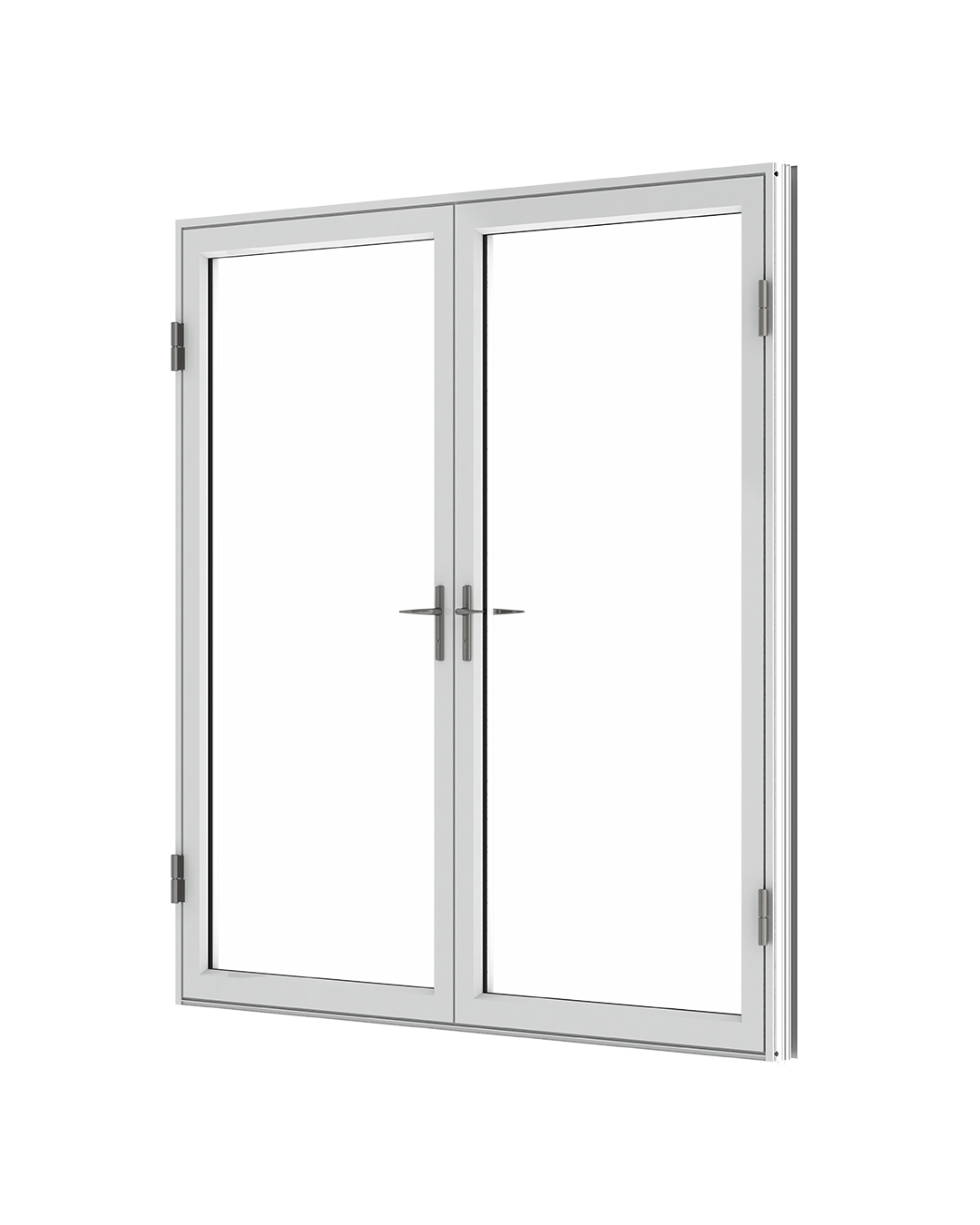
 ES Windows
Prestige Series
Premium architectural aluminum impact and thermally broken line, anchored by the Glass Magazine 2024 award-winning Pivot Door and the industry-leading ES-FX3050 folding door.
HVHZ-approved across the series 18 models in the series
Explore the Prestige Series
and WinDoor's 8100 SGD system
ES Windows
Prestige Series
Premium architectural aluminum impact and thermally broken line, anchored by the Glass Magazine 2024 award-winning Pivot Door and the industry-leading ES-FX3050 folding door.
HVHZ-approved across the series 18 models in the series
Explore the Prestige Series
and WinDoor's 8100 SGD system
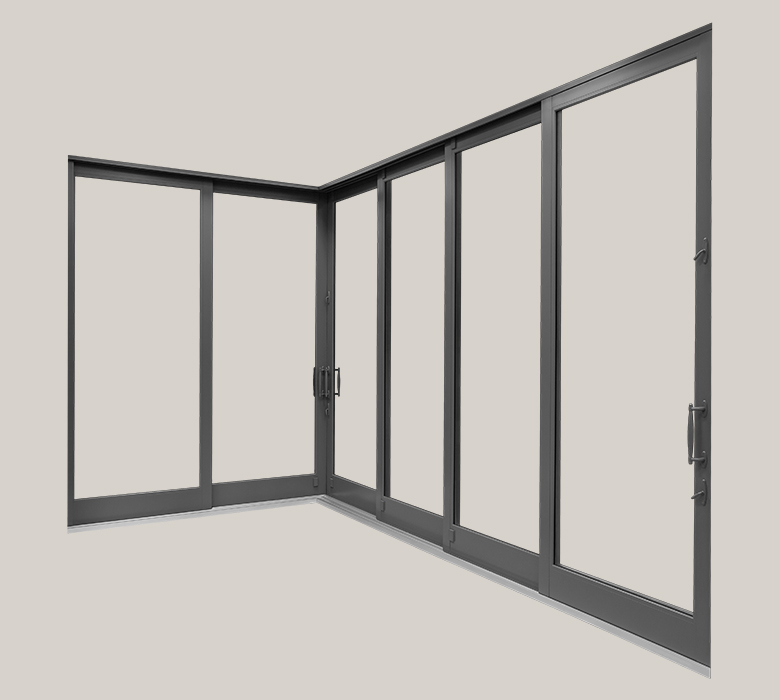
 WinDoor
 8100 Sliding Glass Door
Flagship aluminum sliding glass door with one of the industry's largest certified panel sizes (up to 60 by 144 inches). 2 through 5 tracks, corner geometries at 90 or 135 degrees.
HVHZ approved for South Florida Design pressure +100/-100 psf
See sliding glass door details
, for example, are engineered for the premium market where water performance expectations are higher.
WinDoor
WinDoor 8100 Sliding Glass Door
Flagship aluminum sliding glass door with one of the industry's largest certified panel sizes (up to 60 by 144 inches). 2 through 5 tracks, corner geometries at 90 or 135 degrees.
HVHZ approved for South Florida Design pressure +100/-100 psf
See sliding glass door details
, for example, are engineered for the premium market where water performance expectations are higher.
Consider the door's DP rating. A door with a higher DP rating was tested at a higher absolute water pressure even at the same 15% ratio. A DP-90 door (tested at 13.5 PSF water) provides more water resistance than a DP-50 door (tested at 7.5 PSF). Higher DP products also have sturdier frames that deflect less under load, maintaining tighter seals.
Consider accordion shutters as a companion. For homeowners who want the best water protection available today, an accordion shutter installed over a sliding glass door provides a secondary rain barrier that FIU testing showed reduces water intrusion by 77-87%. The shutter doesn't replace the door's structural function. It supplements the door's water management. This is the hybrid approach that many South Florida homeowners are adopting.
On Your Existing Doors
Replace weatherstripping proactively. Don't wait until it visibly fails. Weatherstripping performance degrades gradually. Replace it every 7-10 years, or sooner if your doors face direct sun exposure (which accelerates rubber degradation). Use EPDM or silicone-based weatherstripping rather than PVC-based, which hardens faster in Florida's heat.
Clear weep holes annually. Salt buildup, insect debris, and dirt block weep holes over time, reducing the track's ability to drain water. Clean them with a thin wire or compressed air before each hurricane season.
Inspect and re-caulk the frame perimeter. The exterior sealant between the door frame and the wall opening degrades over 5-7 years. Cracked or peeling caulk allows water to bypass the door entirely and enter through the wall cavity. Re-caulking is inexpensive and preventive.
Verify your sill pan. The sill pan is a waterproof tray beneath the door threshold that catches any water that penetrates the track and directs it to the exterior. Not all installations include a sill pan. If yours doesn't have one, water that gets past the track goes directly into the wall cavity and subfloor. Ask your installer whether a sill pan was installed and whether it's still intact.
During a Hurricane
Keep towels at the sill. This is low-tech but effective. Place absorbent towels at the interior base of the track before the storm. Change them as they saturate. The goal isn't to stop the water (you can't), but to manage it so it doesn't spread across your floor or wick into walls.
Ensure floor drains are clear. If your sliding door opens to a tiled or concrete area with a floor drain, make sure it's unobstructed.
Do not open the door. The myth that you should open windows or doors during a hurricane to "equalize pressure" is dangerous and wrong. Opening any part of the building envelope during hurricane-force winds invites the same internal pressurization cascade that destroys homes. Keep everything locked and sealed.
What's Coming in the 9th Edition FBC
The 9th Edition Florida Building Code is currently in development, with an expected effective date in late 2026 or 2027. Based on the Florida Building Commission's technical research program and the FIU study recommendations, several changes relevant to sliding glass doors are probable:
Higher Water Test Pressures (High Probability)
The combination of a legislative mandate (HB 1021), two FEMA MAT recommendations, and experimental evidence from both FIU and UF creates overwhelming pressure to change SGD water testing standards. The question is not whether standards will change, but how much and how quickly.
The most likely near-term outcome: the FBC will reference updated NAFS standards with higher water test pressures, possibly increasing from 15% to 20-25% of DP initially. The full PG-equals-positive-DP proposal from FEMA (testing at 100% of DP) is more aggressive and may take longer to implement, but it represents the direction the industry is heading.
For manufacturers, this means products that currently pass at 15% of DP may fail at 20-25%, requiring redesign of track profiles, sill risers, and weatherstripping systems. For homeowners, it means products certified under the 9th Edition will offer measurably better water performance than current products.
Climate-Adjusted Wind-Driven Rain Maps (Moderate Probability)
UF and Cornell University are developing location-specific wind-driven rain intensity maps for Florida. Currently, all products are tested at a uniform wetting rate of 5.0 gallons per hour per square foot regardless of where they'll be installed. A door going into a home in the Keys faces fundamentally different rain conditions than one installed in Gainesville.
If these maps are adopted into the code, products may need different water penetration ratings depending on their installation location, similar to how ASCE 7 wind speed maps drive structural requirements today. A sliding door installed on Key West might need a higher water resistance rating than the same door installed in Orlando.
Performance-Based Design Framework (Lower Probability, Longer Timeline)
The FIU study proposed replacing the current binary pass/fail system with a tiered, performance-based approach:
| Storm Return Period | Performance Expectation |
|---|---|
| 10-year storm | No water ingress permitted |
| 50-year storm | Limited water ingress at a specified flow rate |
| 500-year storm (design-level hurricane) | Focus on structural integrity; some water ingress accepted |
This framework acknowledges the physical reality that zero water intrusion during an extreme hurricane is not achievable with current technology, while establishing clear, measurable expectations at each severity level. It would allow manufacturers to communicate performance more honestly ("this door admits X gallons per hour at Category 3 conditions") rather than hiding behind a binary pass/fail at 15% of design pressure.
This is a paradigm shift that standards bodies (AAMA, ASTM, FGIA) would need to develop new test protocols for. It's more likely a 2-3 code cycle change (9th or 10th Edition) than an immediate adoption.
Aftermarket WDR Mitigation Devices (Moderate Probability)
FIU's WOW testing identified aftermarket products (exterior rubber shields, interior plastic sheeting strips for SGD tracks) that reduced water intrusion in testing. These devices are currently unregulated. The FIU study recommended that they go through the Florida Product Approval System, using FBC Section 104.11 ("Alternative materials, design and methods of construction and equipment") as the pathway. This would create a new regulated product category that complements impact-rated SGD upgrades.
An Honest Perspective
Impact-rated sliding glass doors do their primary job exceptionally well. They keep the building envelope sealed against wind-borne debris, preventing the internal pressurization cascade that causes roofs to separate and homes to be destroyed. After Hurricanes Helene and Milton (2024), zero post-FBC homes were destroyed while 46% of pre-FBC homes in the same areas were.
Water intrusion through an intact sliding glass door is not the same category of problem as a failed door. Water on the floor is manageable. A missing roof is not. The fact that water gets through the track during a sustained hurricane does not mean the door has failed. It means the current testing standard measures structural survival, not watertightness, and the gap between the two is what the 9th Edition FBC will begin to close.
In the meantime, buy the best-engineered door you can afford, ask the right questions about water management features, maintain your weatherstripping and weep holes, and consider shutters as a companion layer for your most exposed openings.
Next Steps
- If you're buying new sliding glass doors, ask your installer to compare sill riser heights, track drainage designs, and water test performance across the products being quoted. Get a free estimate with product-specific water management details.
- If you have existing doors, inspect weatherstripping, clean weep holes, and re-caulk the frame perimeter before hurricane season. These are low-cost, high-impact maintenance items.
- If water intrusion is a top concern, consider accordion shutters over your sliding glass doors for the additional 77-87% reduction in water volume that FIU testing documented.
- For a complete home hardening assessment, the My Safe Florida Home program offers free wind mitigation inspections that evaluate all openings, including sliding glass doors.
- For the broader comparison of impact windows vs. hurricane shutters across all opening types, see our complete comparison guide.