





I. Introduction
No house is hurricane-proof. That term implies a guarantee that no building can deliver against a Category 5 storm with 157+ mph sustained winds, 10-15 feet of storm surge, and 39 tornadoes (all of which Hurricane Milton produced in 2024). The honest term is hurricane-resistant: construction designed to minimize damage, maintain structural integrity, and protect occupants through the worst conditions your region is likely to face.
The good news is that the science of hurricane-resistant construction is well established and the data is clear. After Hurricane Ian (2022) caused $112 billion in damage, the Insurance Institute for Business & Home Safety (IBHS) studied 3,646 homes and found that newer construction built to modern Florida Building Code standards concentrated in the lowest damage categories, while nearly one-third of pre-code construction reached complete destruction. After Hurricane Andrew (1992), FEMA documented the same pattern. The homes that survived shared specific engineering features. The homes that failed were missing them.
This guide covers every component of residential hurricane hardening in priority order, from the upgrades that prevent catastrophic failure to the finishing touches that reduce water intrusion and cosmetic damage. Each section includes costs, code requirements, and the insurance premium impact of each improvement.
II. The Hurricane Hardening Hierarchy
Not all parts of your home are equally vulnerable. Engineering research, FEMA damage assessments, and insurance claims data consistently show the same failure sequence during hurricanes. Prioritize upgrades in this order:
| Priority | Component | Why It Matters | Typical Cost |
|---|---|---|---|
| 1 | Roof-to-wall connections | Number one structural failure point | $1,500-$3,000 (retrofit) |
| 2 | Opening protection (windows, doors, garage) | Envelope breach causes roof failure | $15,000-$50,000+ (full home) |
| 3 | Roof covering and secondary water barrier | Prevents water intrusion after wind damage | $8,000-$25,000 (reroof) |
| 4 | Structural reinforcement (gable bracing, wall anchoring) | Prevents wall collapse | $2,000-$8,000 |
| 5 | Flood and water protection | Addresses surge and rain intrusion | $1,000-$10,000+ |
The logic of this hierarchy is structural: if your roof separates from the walls (Priority 1), nothing else matters. If a window breaks and internal pressure blows the roof off (Priority 2), the remaining upgrades are irrelevant. Each level of the hierarchy protects the investment you made at the level above it.
III. Priority 1: Roof-to-Wall Connections
Why This Is Number One
The connection between your roof structure and your walls is the single most critical joint in your home during a hurricane. When wind flows over a roof, it creates suction (negative pressure) that pulls the roof upward. If the roof is not mechanically tied to the walls, the roof lifts and separates. Once the roof is gone, the walls lose lateral support and collapse.
Hurricane Andrew proved this at scale: the majority of total structural failures began with roof-to-wall connection failure. Homes where rafters or trusses were simply toenailed to the top plate (the standard practice before 1994) lost their roofs at wind speeds well below their rated capacity.
What Hurricane Straps and Clips Do
Hurricane straps (also called tie-downs or connectors) are galvanized steel brackets that mechanically fasten each rafter or truss to the top wall plate or directly to the masonry wall below. They create a continuous load path from the roof through the walls to the foundation.
Connection types, from weakest to strongest:
| Connection Type | Uplift Capacity | Insurance Credit |
|---|---|---|
| Toenails only (pre-code) | ~200 lbs | None |
| Metal clips (single-sided) | ~400-500 lbs | Moderate |
| Single wraps (strap wraps over truss) | ~800-1,200 lbs | Good |
| Double wraps (strap on both sides) | ~1,200-1,800 lbs | Best |
Per the Florida Building Code, approved straps must have a minimum uplift capacity of 500 lbs and be manufactured from galvanized steel (minimum 20 gauge). Fasteners must be minimum #8 screws with head diameters no less than 0.3 inches.
Cost and Insurance Impact
- Retrofit cost: $1,500-$3,000 for a typical single-family home (varies by accessibility and roof structure)
- Insurance discount: 5-15% of wind premium for upgrading from toenails to clips or wraps
- Wind mitigation form: Documented on Form OIR-B1-1802 in the "Roof-to-Wall Attachment" section
Roof-to-wall connection upgrades are covered by the My Safe Florida Home program and are one of the highest-ROI improvements you can make.
IV. Priority 2: Opening Protection
The Envelope Breach Cascade
This is the physics that makes opening protection the second highest priority. When a window or door fails during a hurricane:
- Wind rushes into the structure through the breach
- Internal positive pressure of 30-60 PSF builds
- External roof suction generates 40-80 PSF of outward pull
- Combined uplift of 70-140 PSF exceeds what the roof system was designed to resist
- The roof separates. Total structural failure follows.
This cascade was responsible for the majority of catastrophic home losses during Hurricane Andrew (1992), as documented in FEMA's Mitigation Assessment Team report. A single broken window can lead to a lost roof and a destroyed home. That is why opening protection is not optional in hurricane-prone regions.
Impact Windows
Impact windows are permanently installed window systems with laminated glass bonded to a polymer interlayer inside reinforced frames. When struck by debris, the glass may crack but the interlayer holds all fragments in place, keeping the building envelope sealed. They provide 24/7 protection with no deployment required.
Key specifications:
- Tested to ASTM E1996 (missile impact) and ASTM E1886 (cyclic pressure) with a 9-lb 2x4 projectile at 50 fps
- In HVHZ areas (Miami-Dade, Broward), the tear tolerance after testing is just 5 inches by 1/16 inch, which is 48x stricter than the standard Florida approval
- Beyond storm protection: 20-40% cooling cost reduction, 99% UV blocking, STC 32-40 noise reduction, forced-entry resistance
Cost by window type (installed):
| Window Type | Typical Range |
|---|---|
| Single-Hung | $1,000-$2,000 |
| Casement | $1,400-$3,000 |
| Picture/Fixed | $1,200-$2,400 |
| Horizontal Slider | $1,200-$2,900 |
Whole-home cost: $15,000-$65,000 depending on home size and product tier. See our complete impact windows cost guide for detailed pricing.
Insurance discount: Opening protection on all openings is the single biggest discount factor on the wind mitigation form, worth 30-45% of your wind premium.
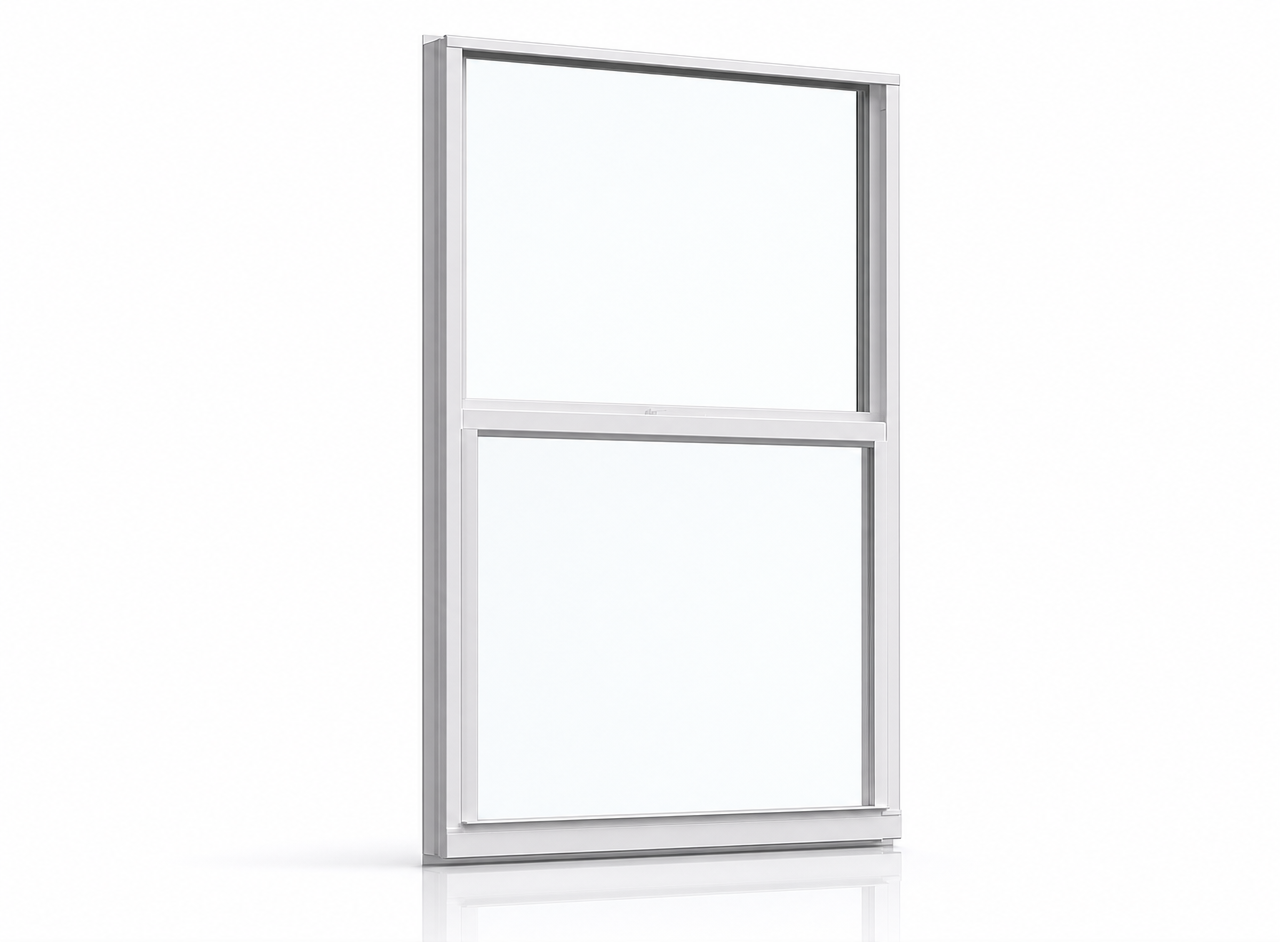
 PGT · WinGuard Aluminum Series
PGT WinGuard Aluminum Single Hung SH7700A
Aluminum impact single-hung on the WinGuard 7700-series frame with Diamond Glass laminated glazing. LMI impact-rated for Miami-Dade and Broward HVHZ installations.
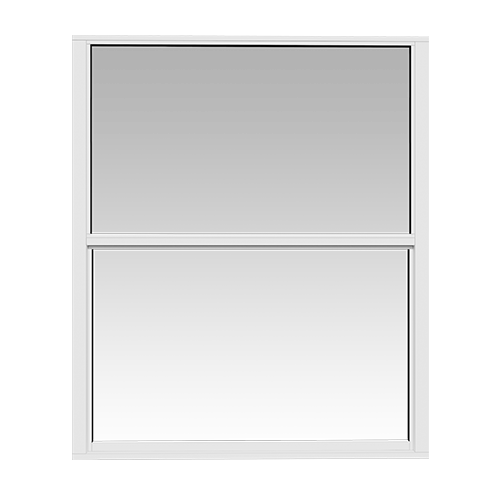
 ECO · Eco-Guard Single Hung Series
Eco-Guard Single Hung Series 50
Entry aluminum impact single hung on a 2-1/8 in. frame, +55/-60 psf, LMI for HVHZ, with block-and-tackle balances.
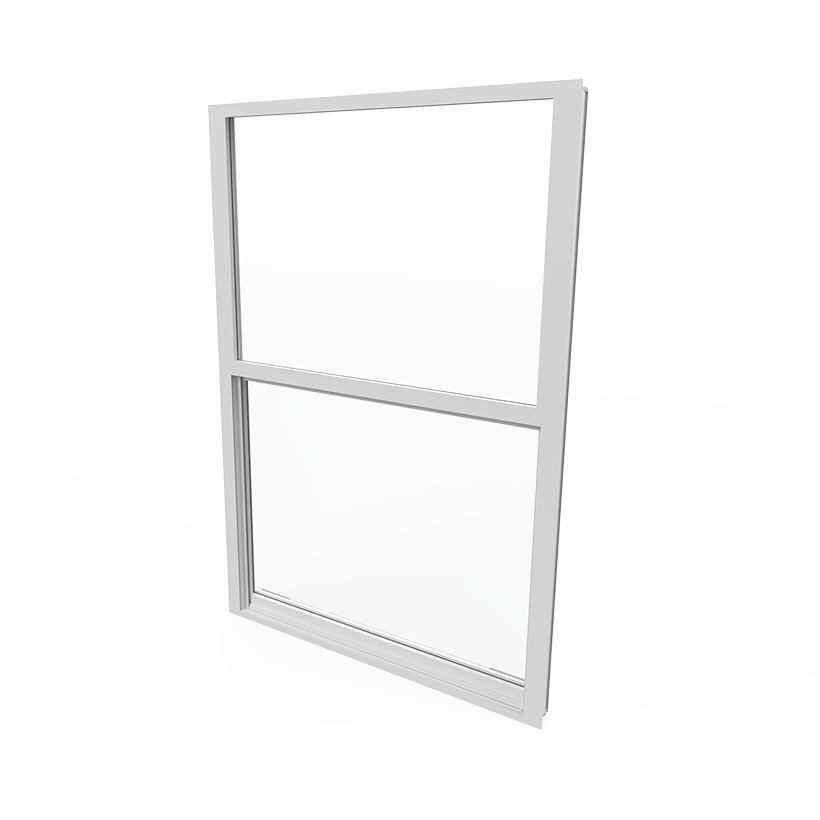
 ES Windows · Elite Series
ES Windows Elite ES-EL100 Single Hung
Aluminum impact single-hung on a 2-15/16 inch frame with block-and-tackle or ultra-lift balances. Saflex/Kuraray PVB, Vanceva Storm, and SentryGlas Plus interlayers available.
Impact Doors
Impact doors protect the largest and most vulnerable openings in your home:
- Sliding glass doors: $3,500-$9,000+ depending on size (8 ft to 12 ft+)
- French doors: $4,000-$8,000 per pair
- Entry doors: $2,000-$5,000
- Pivot doors: $5,000-$12,000+
All impact doors must meet the same missile-impact and cyclic-pressure testing standards as impact windows for your wind zone.
Hurricane Shutters
Hurricane shutters are a legitimate alternative to impact windows, particularly for budget-constrained homeowners or oversized openings:
| Shutter Type | Cost per Sq Ft | Deployment Time |
|---|---|---|
| Steel storm panels | $7-15 | 3-6 hours (2 people) |
| Accordion shutters | $18-30 | 15-30 minutes |
| Roll-down (motorized) | $40-55+ | Under 5 minutes |
| Bahama/Colonial | $20-35 | 5-10 minutes |
Shutters provide equivalent debris protection when deployed but offer no daily benefits (energy savings, noise reduction, UV blocking, security) and require advance action before every storm. For a full comparison, see our impact windows vs. hurricane shutters guide.
Hurricane-Rated Garage Doors
The garage door is the largest unprotected opening in most Florida homes, typically 8-16 feet wide. When a garage door fails, the volume of wind that enters is massive, and the internal pressurization it creates is often enough to blow the roof off by itself.
Options:
- Bracing kit (horizontal wind bars): $300-$800 installed. Reinforces an existing door but relies on the integrity of the original lightweight panels. Suitable as a temporary measure.
- Full wind-rated replacement: $800-$2,500+ for a standard two-car door. Factory-engineered with steel panels and heavy-duty hardware designed as a system. The recommended approach.
In HVHZ zones, garage doors must be both wind-load rated and impact rated. Outside the HVHZ, wind-load rating is required in the Wind-Borne Debris Region.
Insurance discount: A wind-rated garage door contributes to the opening protection category on the wind mitigation form. Combined with impact windows and doors on all other openings, this qualifies for the maximum opening-protection credit.
V. Priority 3: Roof Covering and Secondary Water Barrier
Even when the roof structure stays attached to the walls, the roof covering itself can fail during sustained high winds, allowing water intrusion that causes the majority of non-structural hurricane damage (mold, drywall, flooring, electrical).
Roof Covering
Wind-rated roofing systems are tested and certified for specific wind speeds:
- Asphalt shingles: Impact-resistant shingles (Class 4) rated for 130-150+ mph, starting at $3-$5 per sq ft installed
- Metal roofing: Standing seam metal rated for 150-180+ mph, $8-$14 per sq ft installed. Superior longevity (40-60 years) and wind performance.
- Concrete/clay tile: Rated for 150+ mph when properly attached with mortar and mechanical fasteners. Common in South Florida.
Florida Building Code requires all roof coverings in wind-borne debris regions to meet current wind-speed requirements for the location. A reroof of a typical 2,000 sq ft home costs $8,000-$25,000 depending on material.
Secondary Water Resistance (SWR)
A secondary water barrier is a self-adhering, peel-and-stick membrane applied directly to the roof deck beneath the primary roof covering. If the shingles, tiles, or metal panels blow off during a storm, the SWR prevents water from reaching the interior.
- Cost: $500-$2,000 added to a reroof project
- Insurance discount: 5-7% of wind premium
- Code requirement: Required in certain jurisdictions; recommended everywhere
SWR is one of the most cost-effective hurricane hardening upgrades because it's inexpensive to add during a reroof but extremely expensive to retrofit after the fact.
Roof Deck Attachment
How the roof sheathing (plywood or OSB panels) is fastened to the rafters or trusses matters significantly:
- Standard nailing (6d nails, 6" spacing): Minimum code, adequate for lower wind zones
- Enhanced nailing (8d nails, 6" spacing): Better uplift resistance, common in post-2002 construction
- Ring-shank nails or screws: Maximum holding power, recommended for HVHZ and high-wind coastal areas
Upgrading from standard to enhanced roof deck attachment is typically done during a reroof and earns an additional 5-10% insurance discount.
VI. Priority 4: Structural Reinforcement
Concrete Block (CBS) vs. Wood Frame
Most Florida homes are built with one of two wall systems:
Concrete Block (CBS):
- Standard for South Florida construction since the 1950s
- Reinforced with steel rebar and filled with concrete at specified intervals
- Inherently wind-resistant due to mass and rigidity
- Less vulnerable to wind-borne debris penetration
- More resistant to termites and moisture than wood
Wood Frame:
- Common in Central and North Florida and in second-story construction statewide
- Lighter weight means higher vulnerability to uplift forces
- Requires additional bracing and anchoring in high-wind zones
- More susceptible to water damage if envelope is breached
- Can be reinforced with plywood shear walls, metal strapping, and proper anchoring
Neither system is inherently "hurricane-proof." CBS homes with poor roof connections fail. Well-engineered wood-frame homes with proper strapping and bracing survive. The connection quality matters more than the wall material.
Gable End Bracing
Gable roofs have triangular end walls that are particularly vulnerable to hurricane winds. Wind can push the gable wall inward or pull its top edge outward. Gable walls taller than 5 feet are a significant collapse risk during hurricanes.
Gable end bracing reinforces these walls with diagonal braces from the top of the gable to the ceiling joists or horizontal braces along the length of the attic. Cost: $500-$2,000 for a typical home with two gable ends.
Hip roofs (where all four sides slope) are inherently more resistant because they have no flat gable surfaces for wind to push against. The four-slope design distributes wind pressure evenly, substantially reducing uplift forces. This is why a hip roof earns a 28-32% wind premium discount on the mitigation form.
Foundation and Wall Anchoring
The continuous load path from roof to foundation is only as strong as its weakest link. In addition to roof-to-wall connections (Priority 1), the wall-to-foundation connection must resist both uplift and lateral forces:
- Anchor bolts or straps connecting wall plates to the foundation
- Hold-down hardware at shear wall ends
- Properly embedded reinforcing steel in CBS construction
These elements are typically addressed in new construction. For existing homes, a structural engineer can assess and recommend specific retrofit measures.
VII. Priority 5: Flood and Water Protection
Impact windows and roof hardening protect against wind and wind-borne debris. But Hurricane Ian proved that storm surge can destroy homes that survived wind forces entirely intact. Flood protection is a separate discipline from wind protection.
Know Your Flood Zone
Check your property's flood zone designation at FEMA's Flood Map Service Center. Zones beginning with "A" or "V" indicate high flood risk. Properties in these zones face different insurance requirements and building code provisions.
Key Flood Mitigation Measures
- Elevated electrical systems: Move electrical panels, outlets, and HVAC equipment above the base flood elevation. Cost: $2,000-$5,000.
- Sump pumps and drainage: French drains, sump pumps, and proper grading direct water away from the foundation. Cost: $1,000-$5,000.
- Flood vents: In enclosed areas below the base flood elevation, flood vents equalize water pressure on foundation walls during flooding, preventing structural collapse. Cost: $500-$1,500.
- Water barriers for ground-level openings: Deployable flood barriers for garage doors and entry points. Cost: $500-$3,000 depending on opening size.
- Backflow prevention: Check valves on sewer lines prevent floodwater from backing up through drains. Cost: $300-$1,000.
Flood protection is not covered by standard homeowners insurance or the wind mitigation discount structure. Separate flood insurance (through FEMA's National Flood Insurance Program or private carriers) is required for properties in high-risk zones and recommended for all Florida homeowners.
VIII. Hurricane-Resistant Design for New Construction
If you're building a new home in Florida, you have the opportunity to incorporate hurricane resistance from the foundation up, at a fraction of the retrofit cost.
ICF (Insulated Concrete Forms) Construction
ICF walls consist of interlocking foam forms filled with steel-reinforced concrete. The result is a monolithic reinforced concrete wall encased in continuous insulation.
- Wind resistance: ICF homes can withstand 250+ mph winds (well beyond Category 5)
- Fire rating: 4-hour fire rating vs. 15 minutes for wood-framed walls
- Energy savings: 25-50% reduction in heating and cooling costs due to continuous insulation and thermal mass
- Real-world performance: An ICF home in Mexico Beach survived Hurricane Michael (2018) largely intact while surrounding wood-frame homes were flattened, a case study FEMA used to demonstrate the value of modern building codes.
- Cost premium: 5-10% more than standard CBS or wood-frame construction
ICF is the strongest residential wall system available for hurricane-prone regions. For homeowners who can absorb the modest cost premium, it eliminates most wind-related structural risk.
Hip Roofs vs. Gable Roofs
| Feature | Hip Roof | Gable Roof |
|---|---|---|
| Wind resistance | Superior (all 4 slopes) | Weaker (flat gable ends) |
| Uplift forces | Distributed evenly | Concentrated on gable walls |
| Insurance discount | 28-32% of wind premium | Lower or no discount |
| Collapse risk | Low | Gable walls >5 ft are vulnerable |
| Cost | 10-15% more than gable | Lower initial cost |
| Attic space | Less usable attic space | More usable attic space |
For new construction in hurricane zones, hip roofs are the recommended choice. The insurance savings alone can offset the additional construction cost within a few years.
Category 5 Design Standards
Designing a home to survive a Category 5 hurricane (157+ mph sustained winds) requires:
- Design wind speed of 175+ mph (the HVHZ standard)
- Impact-rated glazing on all openings (Miami-Dade NOA products)
- Continuous load path from roof to foundation with engineered connections at every joint
- Hip roof or equivalent aerodynamic roof design
- CBS, ICF, or engineered steel-frame walls
- Secondary water resistance on the roof deck
- Wind-rated garage door with impact certification
Homes built to these specifications survive major hurricanes with minimal structural damage. The Mexico Beach ICF home, the Sand Palace development homes, and thousands of HVHZ-compliant buildings throughout South Florida have demonstrated this in real storm conditions.
Current Florida Building Code Requirements
All new construction in Florida must comply with the Florida Building Code 8th Edition (2023), which requires:
- Impact-resistant glazing or approved coverings in the Wind-Borne Debris Region
- Design wind speeds per ASCE 7-22 wind speed maps (110-190 mph depending on location)
- Roof-to-wall connections meeting specified uplift capacities
- Enhanced roof deck attachment in high-wind zones
- Properly engineered continuous load paths
Building to current code adds only about 1% to construction costs relative to 1990s-era standards, according to the National Institute of Building Sciences. That 1% investment saves $11 for every $1 spent in avoided hurricane losses.
IX. The My Safe Florida Home Program
Florida's flagship hurricane hardening grant program covers most of the upgrades described in this guide:
- Free wind mitigation inspections that identify your home's vulnerabilities and document existing features for insurance discounts
- Grants up to $10,000 for qualifying improvements (impact windows, impact doors, hurricane shutters, roof upgrades, roof-to-wall connections, secondary water resistance, garage doors)
- Low-income homeowners (at or below 80% of county median) receive grants with no matching requirement
- Moderate-income homeowners (80-120% of county median) receive 2:1 matching (state pays $2 for every $1 you invest)
The program is funded at $352 million for 2025-2026. For the complete application process, eligibility requirements, and tips to avoid the most common disqualifying mistakes, see our My Safe Florida Home program guide.
X. Insurance Benefits of Hurricane Hardening
Every upgrade in this guide contributes to insurance premium reductions through the wind mitigation inspection (Form OIR-B1-1802, updated April 2026).
Discount by Feature
| Feature | Typical Discount (% of Wind Premium) |
|---|---|
| Opening protection (all openings) | 30-45% |
| Hip roof shape | 28-32% |
| Roof-to-wall connections (wraps) | 5-15% |
| Roof deck attachment (enhanced) | 5-10% |
| Secondary water resistance | 5-7% |
| FBC-compliant roof covering | 5-10% |
When all categories are maximized simultaneously, total discount on the windstorm portion of your policy can reach up to 88%. For a coastal South Florida home paying $8,000-$12,000 in annual premiums (where wind represents 60-70% of the total), that can mean $3,000-$7,000+ in annual savings.
How to Claim Your Discounts
- Complete all hurricane hardening improvements
- Schedule a wind mitigation inspection with a certified inspector
- Ensure the inspector documents each feature on Form OIR-B1-1802
- Submit the completed form to your insurance company
- The form is valid for 5 years unless material changes are made
FEMA's research shows that every $1 invested in hazard mitigation saves $6 in avoided losses. A Broward County study of buildings with window and door improvements documented a 4.8:1 benefit-cost ratio. For prescriptive retrofit methods specific to Florida homes, the Florida Building Commission publishes a comprehensive hurricane mitigation retrofit guide. Hurricane hardening pays for itself.
XI. Frequently Asked Questions
Can you truly make a house hurricane-proof? No. "Hurricane-proof" implies a guarantee no building can deliver against every possible storm scenario, especially storm surge. The accurate term is "hurricane-resistant." Homes built to current Florida Building Code standards, with continuous load paths, impact-rated openings, and proper roof systems, survive major hurricanes with minimal structural damage. But no home is immune to a direct hit from a Category 5 with significant surge.
How much does it cost to hurricane-proof a house in Florida? A comprehensive hardening of an existing home (impact windows and doors on all openings, roof-to-wall straps, secondary water barrier, wind-rated garage door) typically costs $25,000-$65,000 depending on home size and product tier. The My Safe Florida Home program can offset up to $10,000, and insurance savings of $1,000-$3,500+ per year in South Florida reduce the effective cost significantly over time. For a detailed window pricing breakdown, see our impact windows cost guide.
What is the most hurricane-resistant house design? An ICF (Insulated Concrete Forms) home with a hip roof, impact-rated glazing on all openings, continuous load path from roof to foundation, and elevated construction in flood-prone areas. ICF walls can withstand 250+ mph winds. Hip roofs distribute wind pressure evenly across all four slopes. This combination has survived Category 5 conditions in documented real-world events.
Does hurricane hardening increase home value? Yes. Impact windows alone add 7-10% to home value (on a $500,000 home, that's $35,000-$50,000). Homes with impact windows sell up to 20% faster than comparable homes without them. Homeowners recover 70-85% of their impact window investment at resale. The insurance savings and energy savings add financial value beyond the resale premium.
Should I get impact windows or hurricane shutters? Both meet code requirements. Impact windows provide 24/7 protection with no deployment, plus daily benefits (20-40% cooling savings, 99% UV blocking, noise reduction, security). Shutters cost 50-70% less upfront but require manual deployment and offer no daily benefits. For a detailed data-driven comparison, see our impact windows vs. hurricane shutters guide.
XII. Next Steps
- Get a free wind mitigation inspection through the My Safe Florida Home program. It identifies your home's vulnerabilities and can lower your insurance premiums immediately.
- Start with the highest-priority upgrades. Roof-to-wall connections and opening protection prevent the catastrophic failures that total homes. Regional pages walk through what hardening looks like in your specific market — Gulf Coast salt-air exposure for Clearwater barrier-island homes, inland HVHZ master-planned communities for Weston, and estate-home coastal exposure for Palm Beach Gardens.
- Get a free estimate for impact windows, doors, and shutters to understand the cost for your specific home.
- Check your eligibility for My Safe Florida Home grants (up to $10,000) and financing options including PACE ($0 down, income-verified approval).
- Don't wait for hurricane season. Lead times for impact windows can extend to 6-16 weeks. Planning in the off-season means better availability, faster scheduling, and often better pricing.
The homes that survive hurricanes are the ones that were prepared before the storm formed. Every upgrade you make now is one less point of failure when the wind starts.