

Instant, Honest Pricing
Hurricane Impact Windows
Cost Calculator
Our Florida property database fills in your home's details to deliver an honest installed-price range in about a minute.
Takes About1 Minute
Honest InstalledPrice Range
No Obligation100% Free
Quick Answer Updated August 2026
Impact windows cost $400–$1,800 per window installed in South Florida. Most homeowners pay $800–$1,400 per window.
$800–$1,400Per Window
$12K–$20KTypical Home
$20K–$45KLarge Home
 Depends on window size, type, frame material, glass options, county code
requirements, and existing opening condition.
Depends on window size, type, frame material, glass options, county code
requirements, and existing opening condition.
Get your instant estimate
- Address
- Property
- Openings
- Contact
- Estimate
Enter your home address so we can pull accurate property data.
Your information is secure and will never be shared.
Tell us a little about the home
Property check
- Living area
- Stories
- Year built
Here's what we have on your home. Fix anything that's off.
Your openings
Pre-filled from homes like yours — adjust to match your plans.
Your estimate is ready
Where should we send it?
Your estimate
This is a preliminary estimate range, not a quote. Your exact price comes from an on-site measurement at your free in-home consultation.
✓ We've got your request. A specialist typically calls within a few hours.
Your line-by-line breakdown
Estimate ranges are informational only, based on typical products and site conditions, and are not an offer to perform work at any price. Final pricing requires an on-site assessment and is only made in a written proposal.
An instant estimate is an honest ballpark: our Florida property database fills in your home's details, your opening counts do the rest. Wide enough to be truthful, close enough to be useful.
 Florida PropertyDatabase
20+ YearsLocal Experience
3,000+Installations
200+ 5-Star Reviews
 Miami-Dade Approved
 HVHZ Approved
 Serving All South Florida









How Much Do Impact Windows Cost in Florida?
Hurricane impact windows cost $400 to $1,800 per window installed in South Florida, and most homeowners pay $800 to $1,400 per opening. A typical whole-home project covering 15 to 20 windows runs $12,000 to $25,000 fully installed, including permits, removal of old windows, and cleanup. Statewide, market pricing runs higher: across Florida, published 2026 ranges span roughly $800 to $2,500 per window installed depending on product tier and market, with whole-house projects from $10,000 to $30,000 and premium lines above that (see our county-by-county breakdown).
The two ranges measure different things. The South Florida figures are our own installed prices, drawn from our permit-backed project history as a direct installer; the statewide band is a market-wide index across all product tiers and dealer types. Hurricane windows, impact windows, and what some sites call hurricane-proof windows are the same product: laminated impact-rated glass in a reinforced frame. Whatever the name on the quote, these prices apply.
The final price depends on your window type, frame material, glass options, the county you live in, and the condition of your existing openings. A standard single-hung vinyl window in a non-HVHZ area costs far less than a custom architectural aluminum window in Miami-Dade. The prices below reflect what we see in the field every day across Broward, Miami-Dade, and Palm Beach counties — we have installed impact windows on over 3,000 homes and commercial properties over the past two decades, and where competitors cite HomeAdvisor data, we cite our own project history.
Average Cost of Impact Windows in Florida by Window Type
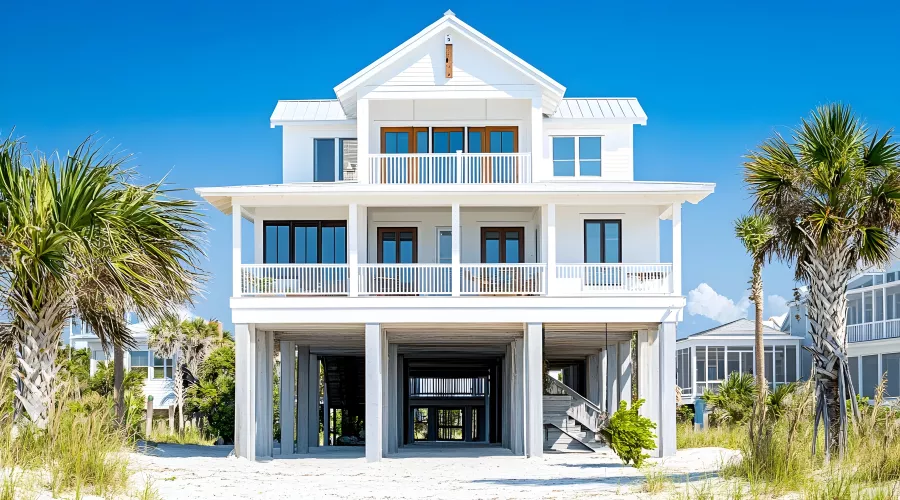
Not all window styles cost the same. Operating hardware, frame complexity, and glass area drive the differences, and impact doors sit in their own bracket below the windows:
| Window Type | Best For | Installed Cost |
|---|---|---|
 Single-Hung Single-Hung |
Bedrooms, bathrooms, standard openings | $400 – $900 |
 Sliding (Horizontal) Sliding (Horizontal) |
Florida rooms, lanais, wide openings | $500 – $1,100 |
 Casement Casement |
Maximum ventilation, tightest seal | $550 – $1,200 |
 Picture / Fixed Picture / Fixed |
View walls, stairwells, no ventilation needed | $350 – $800 |
 Awning Awning |
Bathrooms, kitchens — ventilate during rain | $500 – $1,100 |
 Architectural / Custom Architectural / Custom |
Non-standard shapes, arched, geometric | $800 – $1,800+ |
| Impact Doors | ||
| Sliding Glass Doors |
Patio and pool access, Florida rooms | $1,800 – $4,500 |
 French Doors French Doors |
Entry, formal spaces, large openings | $2,000 – $5,000+ |
Prices are installed: product, standard installation labor, and haul-away. Size, glass package, and site conditions move individual openings within these ranges.
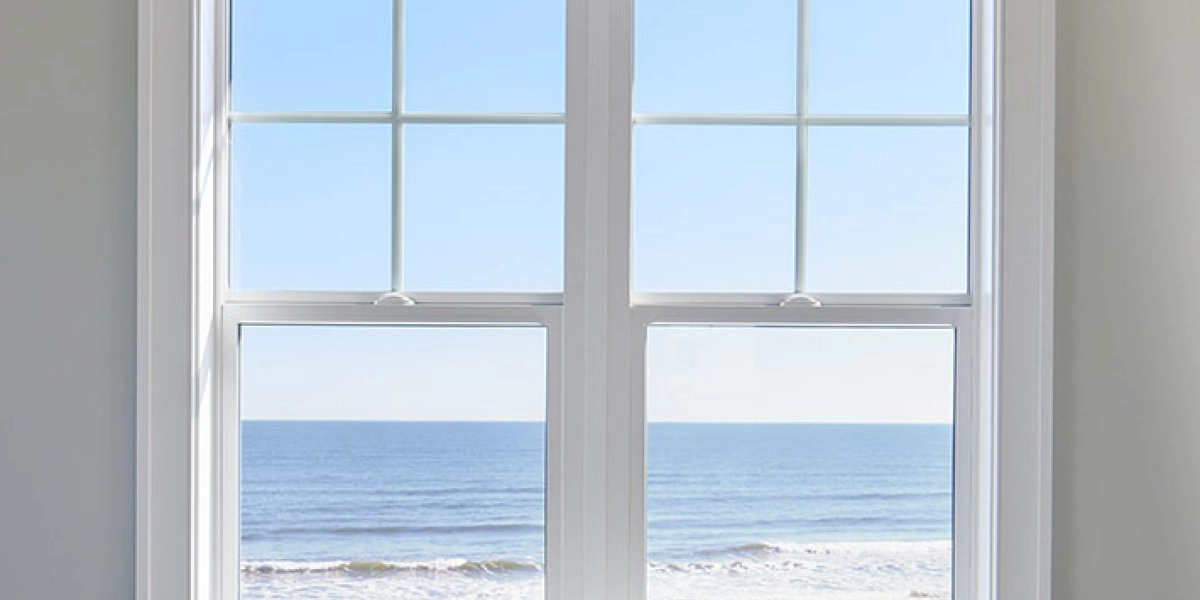
Single-hung windows are the most common and least expensive because their hardware is simple and manufacturers produce them at scale.
Custom and architectural windows — arched tops, trapezoids, or oversized fixed panels — cost more because they are manufactured to order and require custom framing during installation.
Impact Window Cost by Frame Material
Frame material affects price, performance, and longevity. In Florida, the two dominant choices are vinyl and aluminum:
Baseline
Vinyl
$400 – $1,100
per window installed
- Best insulation value
- Corrosion-proof
- Lowest cost
Best for: Budget-conscious, residential, inland homes
Limitations: Thicker sightlines, limited colors, large openings (60"+) push structural limits
60–70% of our residential installs
+15–30%
Aluminum
$600 – $1,500
per window installed
- Strongest, thinnest frames
- Largest openings possible
- Salt-air resistant
Best for: Coastal, modern, large openings, condos, salt air zone
Limitations: Conducts heat (needs thermal break), higher cost
Standard for high-rise and waterfront
+40–60%
Wood-Clad
$900 – $1,800+
per window installed
- Interior wood aesthetic
- Exterior protection
- Historic properties
Best for: Historic districts, high-end custom where review board requires wood
Limitations: Highest cost, very few HVHZ-rated products, maintenance-intensive in humid climates
Rare in South Florida
Vinyl is the right choice for most single-family homes where budget matters and window sizes are standard. Modern formulations use titanium dioxide stabilizers and fusion-welded corners that hold up well in Florida heat, though very large openings can push vinyl frames to their structural limits.
Aluminum is the standard for high-rise condos, coastal homes within the salt air zone (3,000 feet of saltwater), and any project requiring large spans or thin sightlines. The cost premium is 15–30% over vinyl for the same window size. If your home is directly on the water or above the third floor, aluminum is usually the better long-term investment.
Wood-clad impact windows exist but are rare in South Florida. Very few manufacturers produce wood-clad products that carry a Miami-Dade NOA, and the ongoing maintenance requirements make them impractical for most homeowners.
Protect your home and family with Armor Pro
Get the peace of mind you deserve with solutions built for safety and durability.
What Drives the Price: Why Quotes Vary So Much
If you've gotten two quotes for the same house and been baffled by a $10,000+ difference — you're not alone. Here's why it happens:
1
Window Size Matters More Than Window Count
Size and style: impact windows run $55 to $100 per square foot installed in South Florida. A 24×36" bathroom window costs a fraction of a 48×72" living room window. Two homes with the same number of windows can have dramatically different project costs if one has large picture windows and sliding glass doors. Tip: Compare quotes on a per-square-foot basis, not per unit, for an accurate comparison.
2
Glass Options Add Up
Glass package: Low-E, insulated, tinted, or acoustic glass adds $20 to $120 per window over standard laminated impact glass. Upgrades include:
- Low-E coating: +$30–$80/window — reflects heat, recommended for west/south-facing windows
- Insulated glass (IG): +$50–$120/window — best thermal and acoustic performance
- Tinted glass: +$20–$50/window — reduces glare and solar heat gain
- Acoustic glass: +$40–$100/window — maximizes noise reduction, ideal near airports or highways
3
Your County Determines Which Products Qualify
Certification zone: HVHZ products with a Miami-Dade NOA cost 10 to 20% more than standard Florida-approved products. Miami-Dade and Broward counties are High Velocity Hurricane Zones (HVHZ) — every product must carry a Miami-Dade County Notice of Acceptance (NOA). NOA-approved products cost 10–20% more than standard FBC-approved products due to stricter missile impact and pressure cycling testing. Palm Beach County is not HVHZ; it sits in the Wind-Borne Debris Region, where any Florida Product Approval qualifies — a wider product pool at better prices. Check your exact address to see which rules apply.
4
Some companies include permits in their quote. Others list them as a separate line item. Every Armor Pro quote includes the permit — we file it.
Impact Window Cost in Florida by County: Permit and Inspection Fees
Permit fees: Florida building departments charge roughly $100 to $900 for a whole-home window permit, depending on jurisdiction. Florida requires a building permit for window replacement, and the fee depends on which building department serves your address — often the city, not the county. Worked examples from official fee schedules for a typical whole-home replacement (verified June 2026):
| County | Permit Fee Range | Examples, Same Job |
|---|---|---|
| Miami-Dade | ≈$150 – $900 | City of Miami ≈$150 · unincorporated ≈$187 · Homestead ≈$900 |
| Broward | ≈$217 – $825 | Coral Springs ≈$217 · county BCS ≈$555 · Pompano Beach ≈$825 |
| Palm Beach | ≈$100 – $840 | Unincorporated ≈$100 flat · Boca Raton ≈$616 · Palm Beach ≈$840 |
5
Structural Modifications Add Cost
Opening condition: structural repairs add $200 to $800 per opening, most often in homes built before 1990. If existing openings need resizing, headers need reinforcement, or stucco has water damage, that's additional work. A retrofit installation into existing frames costs less than a full-frame replacement where the entire frame is removed and rebuilt. A reputable installer identifies these needs during the measurement visit — not after demolition.
6
Installation Quality Is the Invisible Cost Driver
The biggest legitimate reason for price differences between companies. Proper impact window installation includes structural anchoring to the building frame, continuous sealant bead, backer rod and foam insulation, flashing integration with exterior waterproofing, and final inspection sign-off. A crew that cuts corners quotes less — and the window leaks during the next tropical storm. The window is only as good as its installation.
7
Manufacturer Matters
Brand and product line: the same opening can run $800 or $3,500 installed depending on the manufacturer and glass package. PGT, ES Windows, ECO, WinDoor, CWS, and EAS all price differently and offer different product lines. We source from multiple manufacturers to match each project's specific needs rather than pushing a single brand — our installer's comparison of Florida's six major manufacturers covers how they differ on price, ratings, and lead times.
Two quotes for the same house can legitimately differ by five figures. That is exactly why the calculator at the top of this page itemizes its estimate: opening count from your property records, value, mid-range, and premium product tiers, and your building department's own permit line, instead of one blended number you can't inspect.
Impact Windows Cost in Florida by Project Size
Here is what whole-project costs look like for common scopes:
| Project Scope | Openings | Installed Cost |
|---|---|---|
 Single window replacement
1 opening
Single window replacement
1 opening
|
1 | $500 – $1,500 |
 Partial home (bedrooms, front)
5 – 8 openings
Partial home (bedrooms, front)
5 – 8 openings
|
5 – 8 | $3,500 – $10,000 |
 Typical whole home
1,200 – 2,000 sqft 15 – 20 openings
Typical whole home
1,200 – 2,000 sqft 15 – 20 openings
|
15 – 20 | $12,000 – $25,000 |
 Large home / estate
2,000 – 3,000+ sqft 25 – 40+ openings
Large home / estate
2,000 – 3,000+ sqft 25 – 40+ openings
|
25 – 40+ | $25,000 – $55,000 |
 Condo unit
Varies 5 – 12 openings
Condo unit
Varies 5 – 12 openings
|
5 – 12 | $4,000 – $15,000 |
Whole-home projects carry a lower per-unit cost than single-window replacements because the installer mobilizes once, pulls one permit, and achieves repetition efficiency. If you plan to do the whole house eventually, doing it all at once is almost always more cost-effective.
Condo projects may involve additional coordination with the HOA or condo association, which may require specific manufacturers, colors, or installation methods. Ask your association for their approved product list before getting quotes.
Thinking About Doing It in Phases?
Many homeowners start with the most vulnerable openings — large sliding glass doors and front-facing windows — then complete the rest in a second phase. We can plan your project in stages while keeping the per-unit cost competitive.
Where These Numbers Come From
Most cost guides recycle a national publisher's averages. The ranges on this page, and the estimate the calculator produces, are built from four sources we maintain ourselves:
County Property Records
Your address resolves to your home's own record: size, age, and construction type, which set the opening count and sizes the estimate starts from.
Official Permit Schedules
Adopted fee schedules for 35+ Florida building departments, verified June 2026. Your jurisdiction's permit line appears in the estimate, not a statewide guess.
Real Installed Pricing
419 window and door configurations we actually sell and install, priced individually across the manufacturers we carry. Field-checked against two decades of project history.
Wind-Zone and Code Logic
HVHZ versus wind-borne debris region, by address. This determines whether your products need a Miami-Dade NOA or a statewide Florida Product Approval, and prices accordingly. Check your address.
What no online estimate can know: the condition of your existing frames, hidden water damage, structural modifications, and HOA or historic-district requirements. Those are found during the free in-home measure. That is why this page gives you an honest band instead of a false point estimate, and why the measured quote is the number that counts.
Primary sources: the Florida Building Code, the Miami-Dade Product Control (NOA) registry, the My Safe Florida Home program, and Florida's OIR-B1-1802 wind mitigation form. Municipal permit fees come from each building department's adopted fee schedule.
New Rendering Tool
See Your Home With New Impact Windows & Doors
Upload a photo and our state-of-the-art visualizer shows you exactly what new windows and doors could look like on your home — in seconds.
1
Upload a photo
2
Design your build
3
See the result
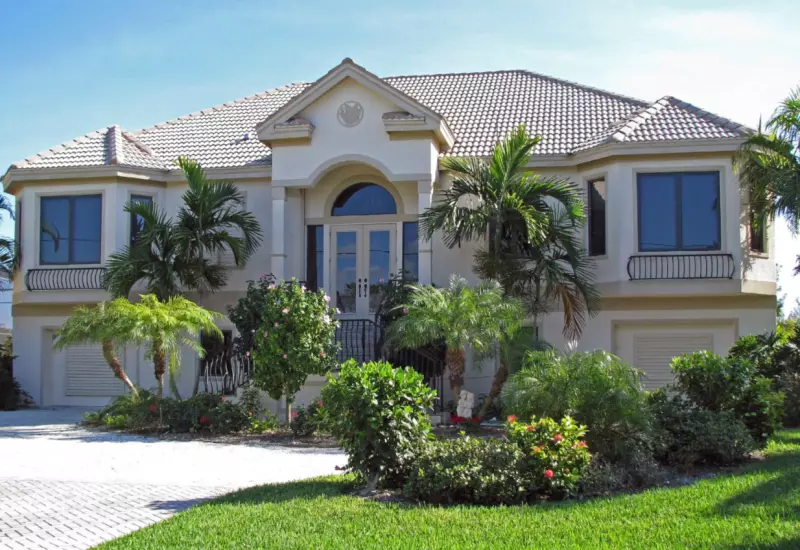 BEFORE
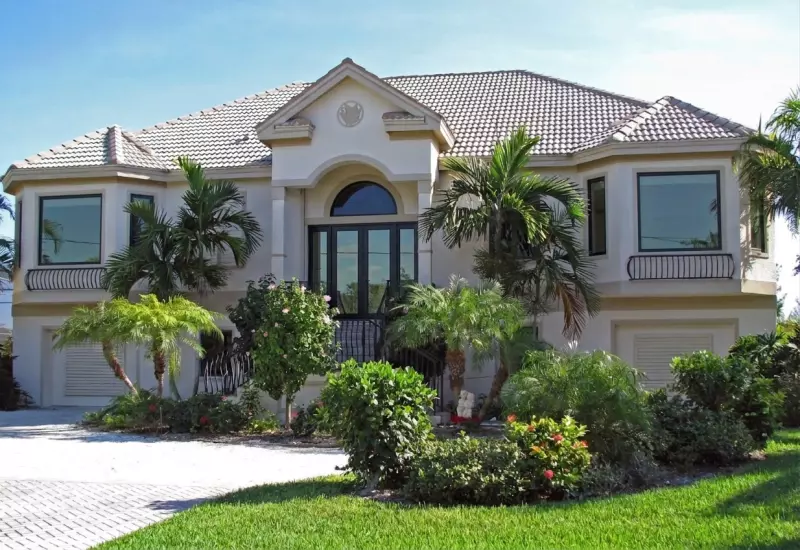 AFTER
AFTER
How Impact Windows Pay for Themselves
Impact windows are not just a hurricane expense — they return value through multiple channels:

Insurance Savings
15–45% off windstorm premiums
= $450–$2,250/year on a typical South FL policy
Florida law (Section 627.0629) requires insurers to offer wind mitigation discounts. All openings must be protected for the full credit on the OIR-B1-1802 form.

Energy Savings
15–25% lower cooling costs
= $300–$800/year in South Florida
Low-E glass and insulated units outperform single-pane windows by 2–3x on cooling. In a climate where AC runs 8+ months, this adds up fast. Source: U.S. Dept. of Energy

Property Value
3–5% home value increase
= $15,000–$25,000 on a $500K home
Impact windows reduce time on market — buyers in South Florida actively seek homes with existing hurricane protection. Source: National Association of Realtors

Avoided Storm Damage
Average FL claim: $40,000+
One failed window = wind + rain inside
A single breached window during a hurricane can destroy drywall, flooring, and electronics, and create mold conditions costing tens of thousands to remediate. Source: Insurance Information Institute

Net Cost Analysis
A $20,000 whole-home project with $1,500/year in combined insurance and energy savings has an effective payback period of 8–10 years — and the windows last 25–30+ years. Add the property value increase and avoided storm damage, and the full cost can be recovered well inside the product's lifetime.
No More Shutter Hassle
If you currently use shutters or plywood, impact windows eliminate the pre-storm scramble — permanent, 24/7 protection with zero setup labor. For snowbirds or homeowners with mobility limitations, this convenience alone justifies the investment.
When Do Impact Windows Pay for Themselves?
Adjust the sliders to match your project. The chart recalculates in real time. Savings grow each year as insurance premiums and energy costs rise.
Insurance Savings
Energy Savings
Total Savings
Total Cost
Net Return
Why are insurance savings this high? From 2006 to 2017, the U.S. experienced what climatologists call "The Hurricane Drought" — a 12-year stretch without a single major hurricane landfall, unprecedented in the modern record. When Hurricanes Irma (2017), Ian (2022), and Milton (2024) ended the lull, Florida insurers recalibrated. Premiums have more than tripled in many markets since 2019, making wind mitigation discounts worth far more today than at any point in the past two decades.
Monthly Payment
—
principal + interest
Monthly Savings
—
year 1 (grows annually)
Net Monthly Impact
—
Breakeven
—
savings exceed total cost
30-Year Net Return
—
total savings minus all costs
This calculator is for illustrative purposes only and does not constitute a guarantee of savings, return on investment, or insurance premium reduction. Actual results depend on your insurer, policy, home characteristics, energy usage, local utility rates, and other factors outside our control. Insurance discounts are determined solely by your insurance carrier based on a certified wind mitigation inspection. Energy savings estimates are based on U.S. Department of Energy data for the South Florida climate zone and may vary. Financing terms shown are representative examples; actual rates, terms, and eligibility are determined by your lender. Contact your insurance agent and a licensed lender for projections specific to your home.
Customer Reviews
See what our customers have to say about our impact windows & doors.
Verified Review

5.0
Average Rating

Financing and Assistance Programs
Protecting your home doesn't require one large check. Several programs make impact windows accessible at any budget:
My Safe Florida Home
Up to $10,000 in matching grants from the state. Includes a free wind mitigation inspection.
mysafeflhome.comPACE Financing
No money down. Approval based on home equity, not your credit score. Repaid as an assessment on your property tax bill over terms up to 30 years; selling or refinancing usually means paying off the balance first.
$0 Down Financing
Fixed-rate loans through our lending partner Hearth: from 6.99% APR, terms up to 12 years, with approved credit. Insurance and energy savings can help offset the payment. See financing options.
Seasonal tip: Order before hurricane season — demand spikes June through November, which can extend lead times and limit installer availability.
How to Get an Accurate Estimate
Online cost ranges give you a ballpark. The only way to know what your project will cost is a professional measurement:
 1
1
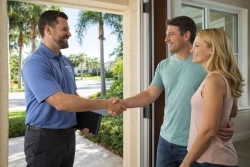
Schedule
Call or request a free in-home estimate
 2
2
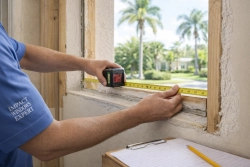
We Measure
Exact dimensions of every opening
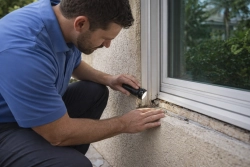 3
3
We Assess
Frame condition, water damage, structural needs
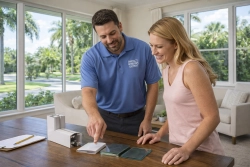 4
4
We Discuss
Your budget, style preferences, and timeline
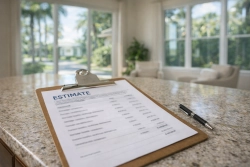 5
5
You Get a Quote
Every window itemized with product, size, and price
No pressure. No obligation. Quotes valid 30 days.
Impact Windows vs. Hurricane Shutters: Cost Comparison
Shutters cost less upfront but cost more in every other way:
$12,000 – $25,000
- Zero maintenance — no annual upkeep
- Zero pre-storm setup — always protected
- Highest insurance tier — opening protection A
- 15–25% energy savings on cooling costs
- Noise reduction — STC 28–35
- +3–5% home value increase
- 25–30+ year lifespan
$3,000 – $8,000
- Annual lubrication and track cleaning
- 2–6 hours to deploy per storm
- Same insurance tier if all openings covered
- No energy savings
- No noise reduction when not deployed
- Minimal home value impact
- 15–20 year lifespan
Most of our customers who start with shutters end up switching to impact windows within 3–5 years. The ongoing inconvenience, forgone energy savings, and limited daily benefits make the upfront cost difference smaller than it appears on paper.
Ready for your number?
The calculator at the top of this page turns your address into an installed-price range in about a minute.
Impact Window Pricing by Region
Costs vary across Florida based on HVHZ status, salt-air exposure, design wind speed, and local labor markets. The ranges above are South Florida averages — these pages break out the specifics for each market:
HVHZ premium pricing
Miami-Dade NOA and Broward HVHZ products run 10–20% higher than standard FBC. Detailed ranges:
- Miami-Dade County — NOA pricing
- Broward County — HVHZ countywide
- Coral Gables — historic district + HVHZ
- Aventura — high-rise condo HVHZ
- Doral — new construction HVHZ
- Hialeah — HVHZ residential
Coastal & salt-air pricing
Properties within 3,000 ft of saltwater favor aluminum frames; pricing reflects the material premium:
- Palm Beach County — coastal HVHZ + inland
- Clearwater — Gulf Coast barrier-island pricing
- Palm Beach Gardens — estate-home coastal
- Naples — Marco Island and waterfront
- Cape Coral — canal-home retrofits
- Lee County — post-Ian rebuild pricing
Inland & non-HVHZ pricing
Inland counties qualify for a broader range of approved products at more competitive price points:
- Weston — HVHZ inland master-planned
- Wellington — Palm Beach inland
- Orlando — Central FL inland
- Seminole County — Central FL inland
- Hendry County — inland SW Florida
- West Palm Beach — county anchor
Frequently Asked Questions About Impact Window Costs
Most Florida homeowners pay $800–$1,400 per impact window installed, though costs can range from $400 for a basic single-hung vinyl window to $1,800 or more for large custom or architectural windows. The price depends on the window type, frame material, glass options, and your county's building code requirements.
Yes. You can get an instant online estimate for new or replacement impact windows and doors in a few minutes with the calculator on this page; no at-home visit is needed to see a price. The typical South Florida process requires an in-home consultation before you receive any number; here the entire path to an estimate is online. If you would rather talk it through, call (954) 231-7164 or request a free in-home consultation.
A typical whole-home impact window replacement covering 15–20 openings costs $12,000–$25,000 installed in South Florida. Larger homes with 25–40 openings can run $25,000–$55,000. These ranges include permits, old window removal, installation, and cleanup.
Under the Florida Building Code's existing-building provisions, if you replace more than 25% of the glazed openings (windows and glass doors) on a home in a wind-borne debris region within a 12-month period, every replaced opening must be protected against windborne debris — either impact-rated glazing or code-approved shutters. In practice, any meaningful phased project crosses that threshold quickly. Impact windows satisfy the requirement automatically, and insurers only grant the full wind mitigation credit once every opening is protected anyway.
Expect $55 to $100 per square foot installed for most South Florida projects. Small openings price higher per square foot than large ones because fixed labor and setup costs spread over less glass, and custom architectural shapes can run above that range. Per-square-foot math is the most reliable way to compare two quotes: divide each quote's total by the glass area it covers, rather than comparing per-window prices across different window sizes.
A typical 2,000 square foot South Florida home has 15 to 20 openings and runs $12,000 to $25,000 fully installed, including permits. Homes with large sliding glass doors or picture windows trend toward the top of the range, because glass area drives cost more than window count. Enter your address in the calculator above to get a range built from your home's actual county property record.
In South Florida, replacing 12 windows with impact windows typically runs $9,600 to $16,800 installed, using the $800 to $1,400 per-opening range most homeowners pay. Large sliding glass doors or picture windows push the total higher, because glass area drives cost more than window count. Enter your address above for a range built from your home's county records.
For Florida homeowners, impact windows are one of the best investments you can make. Beyond hurricane protection, they reduce insurance premiums by 15–45% on the windstorm portion, lower energy bills by 15–25%, increase home value by 3–5%, provide 24/7 security, and block 99% of UV rays. Most homeowners recover the cost through insurance and energy savings within 8–12 years.
The main drawbacks are upfront cost ($400 to $1,800 per window installed in South Florida), multi-week manufacturing lead times since each window is built to order, and heavier frames with slightly thicker sightlines than non-impact glass. For most Florida homeowners, the insurance credits, storm protection, and code compliance outweigh those trade-offs.
Yes. Florida law requires insurers to discount premiums for homes with wind mitigation features. Impact-rated windows and doors qualify for the highest opening protection credit on the wind mitigation inspection form (OIR-B1-1802). Savings typically range from 15–45% on the windstorm portion of your policy. All openings must be protected to receive the full credit.
Fixed picture windows are the least expensive per unit because they have no operating hardware. Among operating windows, single-hung vinyl impact windows offer the lowest cost, typically starting around $400–$500 installed for standard sizes.
Impact windows with a Miami-Dade County Notice of Acceptance (NOA) typically cost 10–20% more than products approved only under the general Florida Building Code. The NOA requires additional missile impact testing at higher wind speeds (175 mph vs. 140 mph). NOA-approved products are required in Miami-Dade and Broward counties.
For most South Florida homes, value lines like ES Windows deliver the strongest price-to-performance, often $6,000 to $10,000 less than premium brands on a whole-home project while including laminated impact glass and Low-E options. The right answer depends on your openings and wind zone; our installer's comparison of Florida's major manufacturers breaks down where each brand wins.
No. Florida building code requires a licensed contractor to install impact windows, and a building permit with inspections is mandatory. Improper installation voids the product warranty, will not pass inspection, and creates failure points during storms.
Quality impact windows last 25–30 years or more with minimal maintenance. The laminated glass does not degrade, and modern frame materials are engineered for Florida's UV exposure, humidity, and salt air. Hardware may need replacement after 15–20 years. Clean glass and frames with mild soap quarterly and inspect seals for cracks annually.
Yes. Homes with impact windows sell for 3–5% more in Florida's hurricane-prone markets. On a $500,000 home, that translates to $15,000–$25,000 in additional value. Impact windows also reduce time on market, as buyers in South Florida actively seek properties with existing hurricane protection.
Yes. Through our lending partner Hearth, fixed-rate personal loans start around 6.99% APR with $0 down and terms up to 12 years, with approved credit. The My Safe Florida Home program provides matching grants up to $10,000 for qualifying homeowners. PACE financing (approval based on home equity rather than your credit score, repaid through your property tax bill) also exists and is worth understanding fully before choosing it. See our financing options for details.
The federal Section 25C energy-efficiency credit expired December 31, 2025, and has no replacement. The current incentive is Florida's home-hardening sales-tax refund: up to $500 per home on impact-resistant windows and doors purchased between July 1, 2026 and June 30, 2029, claimed through a Department of Revenue refund application with your receipts.
Yes. The My Safe Florida Home program offers matching grants up to $10,000 for qualifying homeowners after a free wind-mitigation inspection, and impact windows are an eligible improvement. Funding runs in legislative cycles and applications open in waves, so check current availability before planning a project around it.
Impact sliding glass doors typically cost $1,800–$4,500 installed, depending on size, frame material, and glass options. Large multi-panel sliders or French doors with impact glass can exceed $5,000. Our impact door cost guide breaks down pricing by door type and configuration.
Hurricane shutters cost less upfront ($3,000–$8,000 for a whole home vs. $12,000–$25,000 for impact windows; see our hurricane shutter pricing guide). However, impact windows provide year-round energy savings, equivalent insurance discounts, noise reduction, UV protection, and eliminate shutter deployment labor. Most homeowners who try shutters eventually upgrade to impact windows within 3–5 years.
This is generally not recommended. Mixing window types weakens your home's overall storm resistance, and Florida building code in wind-borne debris regions requires all openings to be protected. You also will not qualify for the full wind mitigation insurance discount unless every opening has impact-rated protection.
A Design Pressure rating measures how much wind force a window can withstand — the higher the number, the stronger the window. In South Florida, residential impact windows typically need a DP rating of 40–65+ depending on your location and floor level. Your installer should match the DP rating to the specific wind load requirements at your address. Look up your address to see your design wind speed and the DP rating you need.
Protect your home and family with Armor Pro
Get the peace of mind you deserve with solutions built for safety and durability.