

The Short Answer
It depends on where you live, how close you are to the coast, and how many windows you're replacing.
Impact windows (or equivalent opening protection) are legally required in:
- The HVHZ (all of Miami-Dade and Broward counties)
- The Wind-Borne Debris Region (most of coastal Florida)
Impact windows are not code-required in:
- Inland areas outside the Wind-Borne Debris Region (most of Central and North Florida)
But even where not required, impact windows deliver insurance savings of 15-45%, energy savings of 20-40%, and a 7-10% increase in property value, making them a strong investment in any Florida wind zone.
The rest of this guide explains exactly what the code requires, where it applies, how the 25% rule works, what happens if you don't comply, and why impact windows make financial sense even when they're optional.
The Three Zones
Florida's building code divides the state into three distinct zones for opening protection requirements. Your zone determines what products you need and how they must be tested.
Zone 1: HVHZ (High Velocity Hurricane Zone)
Where: All of Miami-Dade County and all of Broward County.
What's required: All glazed openings (windows, doors, skylights, garage doors) must be protected with impact-rated products or approved hurricane shutters. There are no exceptions for existing homes that are replacing windows: every replacement must meet current code.
Testing standard: Products must carry a Miami-Dade Notice of Acceptance (NOA), which requires passing TAS 201 (missile impact), TAS 202 (structural load), and TAS 203 (cyclic pressure) testing. The tear tolerance after cyclic testing is 5 inches by 1/16 inch, which is 48x stricter than the standard Florida Product Approval (5 inches by 3 inches). This is why Miami-Dade NOA products cost 10-20% more than standard FBC-approved products.
Design wind speeds: 175 mph (Miami-Dade), 170 mph (Broward).
Special rules:
- Exposure Category B is prohibited. All structures must use Exposure C as the minimum, regardless of surrounding terrain.
- A statewide Florida Product Approval number alone is not sufficient. The product must specifically hold a current Miami-Dade NOA.
- NOAs expire annually. Manufacturers must renew with factory inspections. If a product's NOA lapses, it cannot be used on new permit applications.
Zone 2: Wind-Borne Debris Region (WBDR)
Where: Coastal portions of most Florida counties. Specifically:
- Areas within 1 mile of the coastal mean high-water line where the ultimate design wind speed is 130 mph or greater
- Any location where the ultimate design wind speed is 140 mph or greater, regardless of distance from the coast
Per the Florida Building Code 8th Edition (2023), Section 1609.2, this covers:
- All of Palm Beach County (unincorporated areas), covered in depth in our Palm Beach County impact windows guide
- All of Pinellas County (St. Petersburg, Clearwater)
- All of Monroe County (Florida Keys, 170-190 mph design wind speeds)
- Large portions of Hillsborough County (Tampa)
- Coastal areas of Lee County (Fort Myers, Cape Coral)
- Coastal areas of Collier County (Naples)
- Coastal areas of Brevard County (Melbourne, Cocoa Beach)
- Coastal areas of Sarasota County
- Coastal areas of Manatee, Charlotte, St. Lucie, Martin, Indian River, and Volusia counties
- Portions of Pasco County
What's required: All glazed openings in new construction must be either impact-resistant (meeting ASTM E1996/E1886) or protected with approved hurricane shutters. Window replacements must meet the same standard when replacing more than 25% of glazed area (see the 25% Rule below).
Testing standard: Products need a Florida Product Approval with impact rating. The testing uses ASTM E1996 (missile impact) and ASTM E1886 (cyclic pressure). The tear tolerance is 5 inches by 3 inches, significantly more lenient than HVHZ. Products with a Miami-Dade NOA are automatically accepted in the WBDR, but not vice versa.
Design wind speeds: 130-170 mph depending on location and proximity to coast.
Zone 3: Outside the WBDR
Where: Inland portions of coastal counties and most of Central and North Florida, including:
- Most of Orange County (Orlando): 115-130 mph design wind speeds
- Inland Hillsborough County
- Most of Duval County (Jacksonville): 115-130 mph
- Inland Seminole, Polk, Osceola, Alachua, and other Central/North Florida counties
- Most of the Panhandle (inland areas)
What's required: Standard wind-rated windows that meet the design wind speed for the location. Impact resistance is not code-required. Hurricane shutters are also not required.
Why impact windows still make sense here: Even outside the WBDR, impact windows provide insurance premium reductions (the wind mitigation form applies statewide), energy efficiency improvements, UV protection, noise reduction, and security. The financial return is smaller than in South Florida (insurance premiums are lower), but the investment typically pays for itself over 15-20 years. And if the 9th Edition FBC expands the WBDR to include inland water bodies (see "What's Changing" below), some homes currently outside the WBDR may find themselves inside it.
Requirements by County
This table summarizes the opening protection requirements for the most-searched Florida counties. "Impact required" means impact-rated windows/doors or approved hurricane shutters are mandatory under current code.
| County | Zone | Design Wind Speed | Impact Required? | Product Approval Needed |
|---|---|---|---|---|
| Miami-Dade | HVHZ | 175 mph | Yes, all replacements | Miami-Dade NOA |
| Broward | HVHZ | 170 mph | Yes, all replacements | Miami-Dade NOA |
| Palm Beach | WBDR | 160-170 mph | Yes (entire unincorporated county) | Florida Product Approval or NOA |
| Monroe (Keys) | WBDR | 170-190 mph | Yes, all areas | Florida Product Approval or NOA |
| Lee (Fort Myers) | WBDR (coastal) | 150-160 mph | Yes (coast), 25% rule (inland) | Florida Product Approval or NOA |
| Collier (Naples) | WBDR (coastal) | 150-160 mph | Yes (coast), 25% rule (inland) | Florida Product Approval or NOA |
| Pinellas (St. Pete) | WBDR | 140-150 mph | Yes, entire county | Florida Product Approval or NOA |
| Hillsborough (Tampa) | Mixed | 130-150 mph | Yes (coastal portions), no (inland) | Florida Product Approval or NOA |
| Sarasota | WBDR (coastal) | 140-155 mph | Yes (coast), 25% rule (inland) | Florida Product Approval or NOA |
| Manatee | WBDR (coastal) | 140-150 mph | Yes (coast), 25% rule (inland) | Florida Product Approval or NOA |
| Brevard (Melbourne) | WBDR (coastal) | 130-150 mph | Yes (barrier islands, coast) | Florida Product Approval or NOA |
| Orange (Orlando) | Outside WBDR | 115-130 mph | No, but recommended | Standard wind rating |
| Seminole | Outside WBDR | 115-130 mph | No, but recommended | Standard wind rating |
| Duval (Jacksonville) | Outside WBDR | 115-130 mph | No, but recommended | Standard wind rating |
| Pasco | Mixed | 130-140 mph | Portions in WBDR | Depends on location |
Tampa is the clearest split market in that table: coastal Hillsborough falls inside the WBDR while inland neighborhoods sit outside it, which is why we start every quote for impact windows in Tampa with an address check.
Uncertain about your zone? The University of Florida GeoPlan Center maintains interactive wind speed maps that show the exact design wind speed and WBDR boundaries for any Florida address.
 PGT · WinGuard Aluminum Series
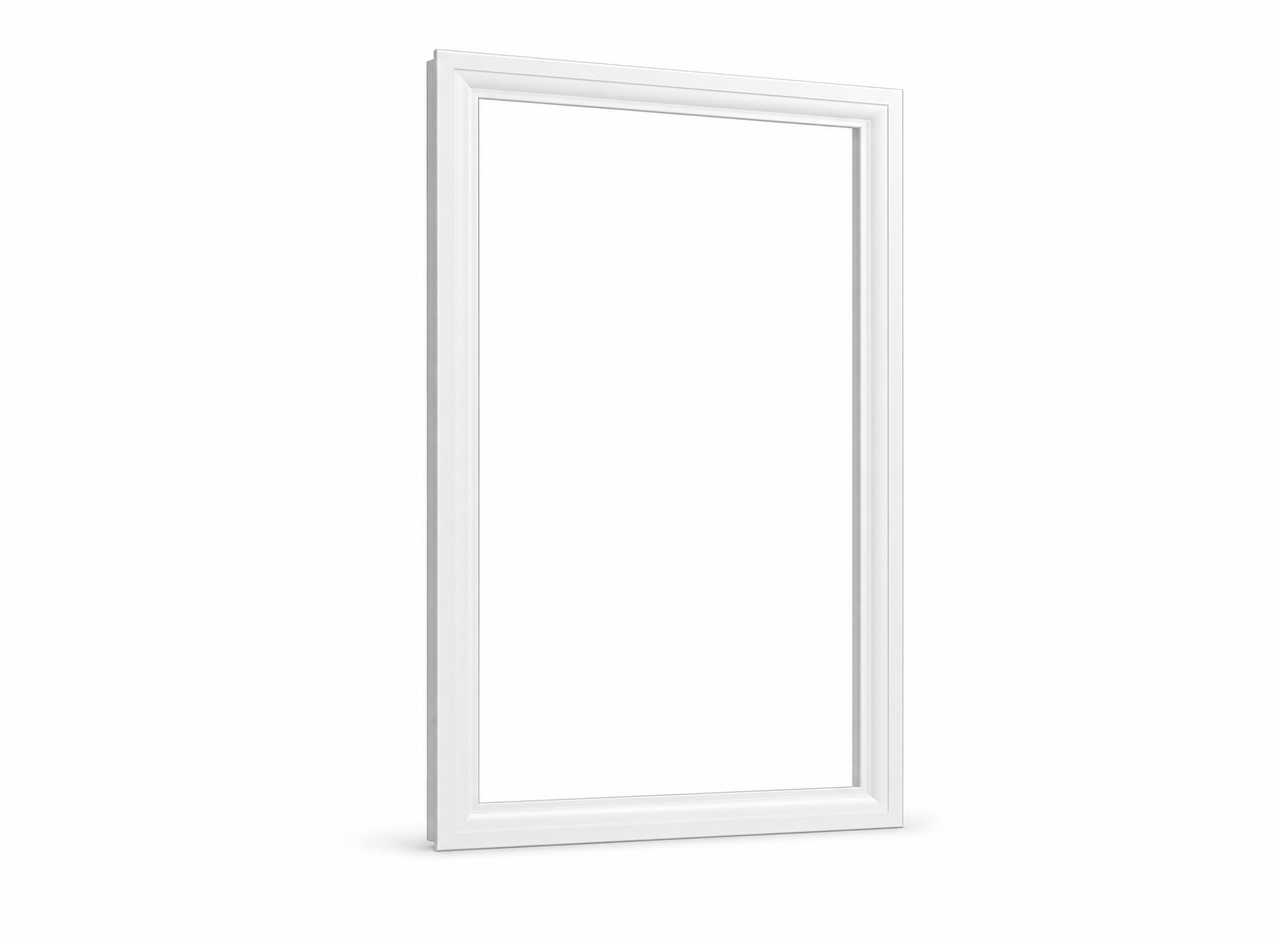
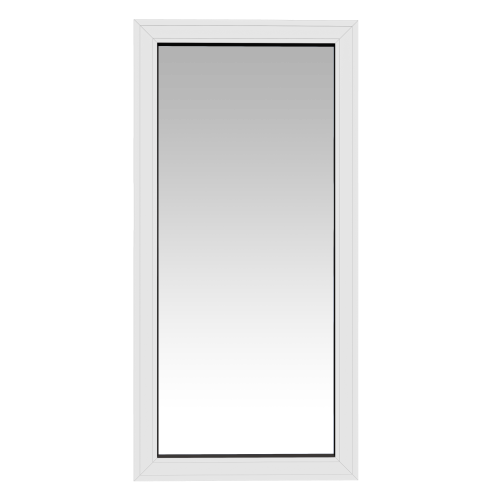
PGT WinGuard Aluminum Casement CA740A
Aluminum impact casement on the WinGuard 740-series frame, side-hinged with a crank-out sash. Mulls cleanly with AW740A and PW740A in the 740-family.
 ECO · Eco-Guard Casement & Awning Series
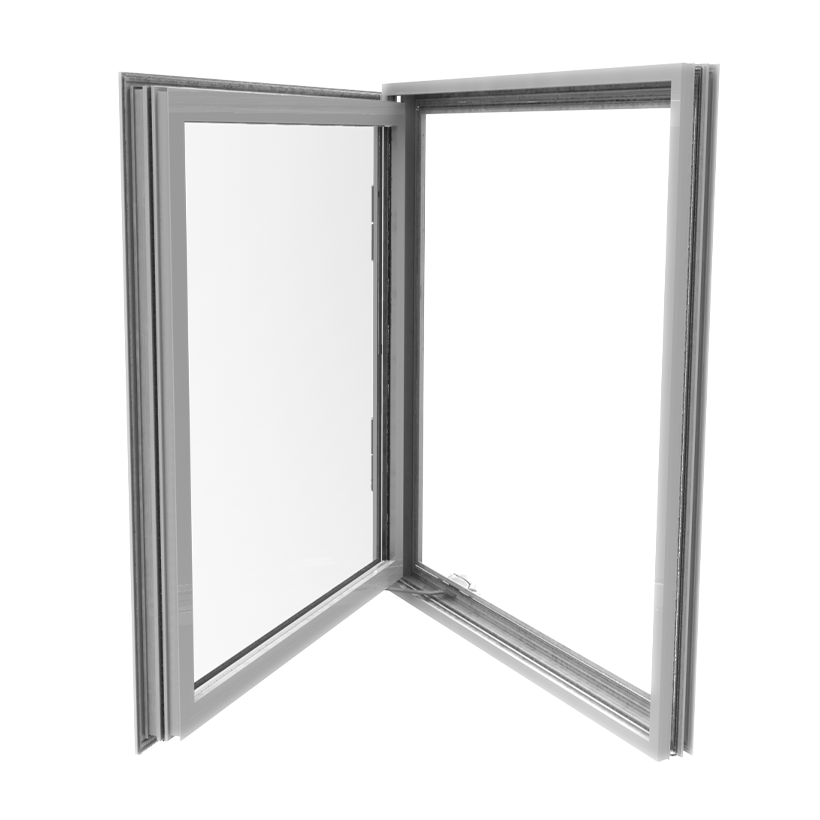
Eco-Guard Casement Window Series 500
Outswing aluminum impact casement, 2-3/4 in. frame, +70/-75 psf, LMI+SMI, NFRC-certified, with a stainless operator + multipoint lock.
 ES Windows · Prestige Series
ES Windows Prestige ES-P252 Casement/Awning/Fixed (TB)
Thermally broken aluminum window platform supporting casement, awning, and fixed configurations on a shared 2.5-inch frame. Dual LMI+SMI at 95/105 psf.
The 25% Rule
This is the code provision that catches many homeowners off guard.
The rule: If you replace more than 25% of the total glazed opening area of your home within a 12-month period in a Wind-Borne Debris Region or the HVHZ, all replacement windows must meet current new-construction impact standards.
Key details:
- It's measured by total surface area of glass, not by number of windows. A single large sliding glass door might represent 15-20% of your total glazed area by itself.
- The 12-month period is a rolling window, not a calendar year. Building departments track cumulative replacement area.
- It applies to existing homes, including those built before the 2002 Florida Building Code took effect.
- Exceeding the threshold without impact-rated products can result in permit denial, fines, and forced removal of non-compliant windows.
What this means in practice:
- If you have 15 windows and replace 4 or more (roughly 25%+ of glazed area), the replacements must be impact-rated in a WBDR.
- If you plan to replace "just a few" windows for energy or aesthetic reasons, measure the total glazed area first to avoid accidentally triggering the requirement.
- In many cases, it makes more financial sense to do a whole-home impact window project rather than piecemeal replacements. You get the full insurance discount (all openings must be protected to qualify for the maximum credit), avoid the 25% rule triggering a partial upgrade, and benefit from whole-home volume pricing.
What "Required" Actually Means for Existing Homes
A common misconception is that all Florida homes must have impact windows right now. That's not the case. Here's what the code actually requires:
New construction: All new homes in the WBDR and HVHZ must have impact-rated opening protection from the date of construction. No exceptions.
Existing homes: Your current non-impact windows can remain in place indefinitely. The code does not require you to retrofit an existing home with impact windows unless you are:
- Replacing windows (subject to the 25% rule in the WBDR, or any replacement in the HVHZ)
- Undertaking a renovation that requires a building permit and exceeds certain cost thresholds relative to the home's value
- Building an addition that includes new openings
You cannot downgrade. If your home currently has impact windows and you need to replace one, the replacement must also be impact-rated. You cannot go from impact to non-impact glass.
In the HVHZ specifically: Every window replacement, even a single window, must meet current HVHZ standards with a Miami-Dade NOA product. There is no 25% threshold in the HVHZ; the requirement applies to any replacement.
What Happens If You Don't Comply
Non-compliance with Florida Building Code opening protection requirements carries real consequences:
Permit denial. Your building permit application will be rejected if you specify non-impact products in a zone that requires impact protection.
Fines. Under Florida Statute 162.09, first violations can result in fines up to $250 per day. Repeat violations can reach $500 per day. Jurisdictions with populations exceeding 50,000 may impose fines up to $15,000 for irreparable violations.
Property liens. Unpaid fines are recorded as liens against the property and accrue until compliance is achieved. In severe cases, local governments may pursue lien foreclosure.
Forced removal. Building officials can require removal and replacement of non-compliant windows installed without proper permits or with incorrect products.
Insurance consequences. Installing non-impact windows in a zone that requires them means you won't qualify for wind mitigation discounts. Worse, if your home suffers hurricane damage through non-compliant openings, your insurer may deny the claim based on the homeowner's failure to meet code requirements.
Resale complications. A home with unpermitted or non-compliant window work will face issues during title search, inspection, and closing. Buyers' insurers may refuse coverage or require remediation before binding a policy.
Why These Requirements Exist: The Performance Data
Florida's opening protection requirements exist because the data is unambiguous. University of Florida researchers studied 358 structures after Hurricanes Helene and Milton (both 2024), and the results are categorical:
Hurricane Helene (Category 4, Big Bend coast, 140 mph sustained winds):
- 221 structures assessed in coastal hazard zones
- Zero post-FBC structures were destroyed. Of 43 post-FBC homes, 64% had negligible to slight damage, 18% had moderate damage. None exceeded moderate.
- 46% of pre-FBC structures were destroyed. All 78 structures that collapsed or shifted off foundations were pre-FBC.
Hurricane Milton (Category 3, Sarasota, 120 mph, 46 confirmed tornadoes):
- 120 residential structures assessed in tornado paths
- Zero post-FBC structures were destroyed. Only 3-5% experienced heavy damage.
- 16% of pre-FBC structures were destroyed. 26% classified with heavy damage or destruction.
The difference is not marginal. It is categorical. The building code requirements for impact-rated opening protection are the primary reason post-FBC homes survive while pre-FBC homes are destroyed at rates of 16-46%.
The researchers also documented the cost of this protection: adding impact-resistant fenestration to new construction increases total home cost by only 1.7% to 2.7%. The benefit-cost ratio (reduction in insured losses over a 10-year period) ranges from 61% to 110%, meaning impact windows can pay for themselves in avoided damage within a single decade, before insurance savings are even factored in.
This data is why the code exists, why it keeps getting stricter, and why the 9th Edition FBC is expected to expand requirements further.
What's Changing: The 9th Edition FBC (2026-2027)
The 9th Edition Florida Building Code is currently in development, with an expected effective date in late 2026 or 2027. Based on Florida Building Commission technical research, several changes will directly affect where impact windows are required:
Inland WBDR Expansion (High Probability)
The current WBDR definition applies to coastal water bodies. But a University of Florida and Applied Research Associates study found that large inland lakes and bays with 5,000+ feet of fetch produce the same wind acceleration effects as coastal exposure. Using the HurMis 3D debris simulation model across 30 Florida neighborhoods, researchers determined that homes within 3,000 feet of these inland water bodies face wind-borne debris risk equal to or greater than homes currently required to have impact protection.
If the 9th Edition adopts this finding, homeowners around large Central Florida lakes (in Lake, Polk, Seminole, Orange, Osceola, Volusia, Marion, and Sumter counties) would need impact-rated glazing on new construction, and the 25% rule would apply to existing home window replacements.
At the same time, the study recommends reducing the coastal WBDR boundary from 1 mile to 3,000 feet, which would reduce the total WBDR area by 43-56%. The net effect is more risk-consistent: protecting homes that face genuine debris risk while removing requirements from homes that modeling shows are too far from water to face significant risk.
Modified Sliding Glass Door Water Testing (High Probability)
Two FEMA Mitigation Assessment Team reports (from Hurricanes Michael and Ian) documented that sliding glass doors meeting current TAS 202 testing standards still allowed significant water intrusion during actual hurricanes. The current water penetration test uses only 15% of the design wind pressure, and FIU Wall of Wind testing confirmed that water intrusion occurs at wind speeds well below design level. The 9th Edition is expected to increase water test pressures for sliding glass doors.
Garage Door Requirements (Moderate Probability)
During Hurricane Milton, garage door failures undermined otherwise code-compliant homes. Current FBC Section 609.4 allows garage doors to be designed for only 60% of ASCE 7 wind pressures. In two post-FBC homes in St. Lucie County, properly rated garage doors were breached by a combination of wind pressure and debris impact, causing internal pressurization that uplifted the roof decking. The 9th Edition may increase required garage door DP ratings or clarify impact-rating requirements.
What this means for homeowners: If you're in a Central Florida county with large inland lakes and you're planning a window replacement project, be aware that the 9th Edition may bring your property into the WBDR. Installing impact windows now, while the code doesn't require it, means you won't face a mandatory upgrade later.
Why Install Impact Windows Even When Not Required
If you're in Orange County (Orlando), Duval County (Jacksonville), or another area outside the WBDR, impact windows are not code-required. But the financial and practical benefits still apply:
Insurance Savings
The wind mitigation inspection form (OIR-B1-1802) applies statewide, not just in the HVHZ or WBDR. Impact windows on all openings qualify for the opening protection credit everywhere in Florida.
| Location | Typical Annual Insurance Savings |
|---|---|
| Coastal South Florida | $1,500-$3,500/year |
| Tampa Bay / Southwest FL | $700-$1,500/year |
| Central Florida (Orlando) | $300-$800/year |
| North Florida (Jacksonville) | $200-$500/year |
Energy Efficiency
Impact windows with IGU and Low-E construction reduce cooling costs by 20-40%. For an average Florida home, that's $500-$800 per year in energy savings.
Property Value
Impact windows add 7-10% to home value and homes with them sell up to 20% faster. In a market where buyers increasingly expect hurricane protection, having impact windows is a competitive advantage even in areas where the code doesn't mandate them.
Security, Noise, and UV Protection
Impact laminated glass resists forced entry, reduces noise transmission by STC 32-40 (vs. 26-28 for standard glass), and blocks 99% of UV radiation. These benefits apply 365 days a year, regardless of hurricane season.
The Product Approval Hierarchy
Not all "impact-rated" products are equal. Florida uses a three-tier approval system, and the tier you need depends on your zone:
| Tier | Approval | Required In | Accepted In | Testing Standard |
|---|---|---|---|---|
| 1 | Miami-Dade NOA | HVHZ (Miami-Dade, Broward) | All of Florida + most U.S. hurricane jurisdictions | TAS 201/202/203 (tear tolerance: 5" x 1/16") |
| 2 | Broward County BC | Broward County | Broward only | TAS or ASTM (varies) |
| 3 | Florida Product Approval | WBDR (non-HVHZ) | Non-HVHZ Florida | ASTM E1996/E1886 (tear tolerance: 5" x 3") |
Practical advice: If you're buying impact windows for a home in the WBDR and there's any chance you'll move to the HVHZ later (or sell to someone who might), consider buying Miami-Dade NOA products. They cost 10-20% more but are accepted everywhere.
Permitting Requirements
Impact window installation requires a building permit in virtually all Florida jurisdictions. The permit process verifies that:
- The products specified carry the correct approval for your zone (NOA for HVHZ, Florida Product Approval for WBDR)
- The installation method matches the manufacturer's approved specifications
- The contractor holds a valid Florida license (verify at myfloridalicense.com)
- Design pressure ratings are adequate for your building's height, exposure category, and location on the structure
Typical permit costs: $100-$600 depending on municipality and project size. In Miami-Dade, a typical residential window project runs approximately $420 including HVHZ review. In Broward, expect approximately 1.85% of job value with a $125 minimum.
Timeline: 2-6 weeks for permit review. At least one inspection must pass within 180 days of permit issuance.
Removable storm panels (steel or aluminum) typically do not require a permit but must be installed on code-compliant tracks. All permanently mounted shutter systems (accordion, roll-down, Bahama, colonial) require permits.
Next Steps
- Determine your zone using the UF GeoPlan wind speed maps or contact your local building department.
- If you're in the HVHZ or WBDR, understand that your next window replacement must be impact-rated. Plan ahead rather than discovering this during the permit process.
- If you're outside the WBDR, consider impact windows for the insurance, energy, and property value benefits.
- Get a free estimate to understand the cost for your specific home, with product recommendations matched to your zone's requirements.
- Check eligibility for the My Safe Florida Home program (grants up to $10,000) and financing options including PACE ($0 down, income-verified approval).