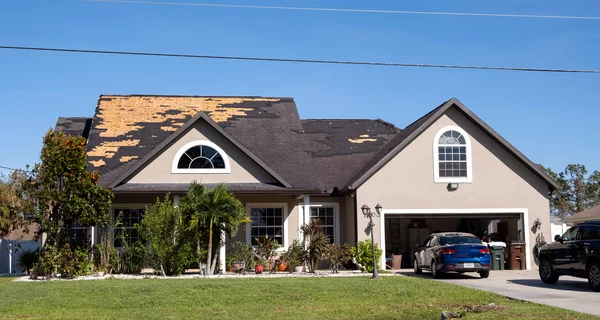


Florida's building code is the strictest wind-resistance standard in the country, and for good reason. The state sits in the most hurricane-active corridor in the Western Hemisphere, and every major storm since Andrew has exposed gaps that the code subsequently closed.
If you are replacing windows or doors on a Florida home, the Florida Building Code (FBC) determines what products you can install, what testing those products must pass, and what permits and inspections are required before and after the work. This guide breaks down each of those requirements in plain English so you know exactly what applies to your property.
What the Florida Building Code Requires
The FBC is a statewide building standard that superseded more than 400 local codes when it took effect on March 1, 2002. It is updated on a triennial cycle. The current version, the 8th Edition, became effective on December 31, 2023.
For windows and doors, the code addresses four things:
- Wind-load requirements: how much wind force a product must resist, based on where your home is located.
- Opening protection: whether your glazed openings must be impact-rated or protected by shutters.
- Product approval: the testing and certification a product must carry before it can be installed.
- Installation standards: how the product must be anchored, sealed, and inspected.
The 8th Edition introduced a significant technical change: it adopts ASCE 7-22 (replacing ASCE 7-16) as the reference standard for wind-load calculations, affecting 125 code sections. It also adds tornado load provisions (ASCE 7-22 Chapter 32) for the first time, a direct response to the inland damage patterns observed during recent storms.
Wind Zones and Design Wind Speeds
The FBC does not use a simple "zone map" the way some building codes do. Instead, it assigns design wind speeds to specific locations based on ASCE 7-22 wind-speed maps. These speeds represent the 3-second gust wind speed at 33 feet above ground for a given risk category.
Here is what that looks like across Florida:
Design Wind Speeds by Region
| Region | Design Wind Speed |
|---|---|
| Miami-Dade County (HVHZ) | 175 mph |
| Broward County (HVHZ) | 170 mph |
| Monroe County (Keys) | 170-190 mph |
| Palm Beach County | 160-170 mph |
| Lee/Collier coastal | 150-160 mph |
| Tampa Bay coastal | 140-150 mph |
| Central Florida inland | 115-130 mph |
These numbers dictate the minimum design pressure rating a window or door must carry. A product rated for 130 mph winds cannot legally be installed in a location with a 170 mph design wind speed.
The High Velocity Hurricane Zone (HVHZ)
The HVHZ covers all of Miami-Dade County and all of Broward County. It is the most restrictive wind zone in the United States.
HVHZ requirements go beyond higher wind speeds:
- Exposure Category C is mandatory. Exposure B (the more sheltered inland category) is prohibited, even for homes surrounded by trees and buildings. This means every product is engineered for open-terrain wind conditions.
- Products must carry a Miami-Dade NOA. A state-level Florida Product Approval is not sufficient. The NOA requires testing to TAS 201/202/203, annual factory inspections, and a separate renewal process.
- Design wind speeds start at 170 mph in Broward and 175 mph in Miami-Dade, approximately 25-45 mph higher than most of coastal Florida outside the HVHZ.
If you live in either of these counties, the HVHZ designation affects every aspect of your window replacement project, from which products you can choose to how much they cost. Our HVHZ vs. impact rating guide explains the practical differences in detail.
The Wind-Borne Debris Region (WBDR)
The Wind-Borne Debris Region is defined in FBC Section 1609.2 and determines where opening protection (impact windows or hurricane shutters) is mandatory. A location falls within the WBDR if either of two conditions is met:
- Coastal trigger: Within 1 mile of the coastal mean high-water line where the basic wind speed with Exposure D is 130 mph or greater.
- Inland trigger: Anywhere the basic wind speed is 140 mph or greater, regardless of distance from the coast.
In practical terms, this covers all of Southeast Florida, the Keys, most of the Gulf Coast from Naples to Tampa, and portions of the Atlantic coast north through the Space Coast. Our guide on where impact windows are required in Florida maps these boundaries county by county.
Within the WBDR, all glazed openings in new construction must use impact-rated products or be protected by code-approved shutters. For replacement projects on older homes, the 25% rule determines when the mandate applies.
The Three-Tier Product Approval System
Not all "impact windows" carry the same approval. Florida uses a three-tier product approval system, and your county determines which tier is required.
Tier 1: Miami-Dade Notice of Acceptance (NOA)
The Miami-Dade NOA is the highest product approval standard in the U.S. It is required for all products installed in the HVHZ (Miami-Dade and Broward counties).
What it takes to earn a NOA:
- Testing to TAS 201/202/203 (the HVHZ-specific testing protocols)
- Review by the Miami-Dade Product Control Division
- 9+ months of processing time
- $15,000-$50,000 in testing costs per product line
- 5-year validity with annual factory inspections and renewal fees
The NOA is not merely a stamp. It specifies exactly how each product can be installed, including frame material, fastener type and spacing, glass configuration, and maximum opening size. Deviating from these specifications voids the approval.
Tier 2: Broward County Product Approval
Broward County maintains its own product evaluation process. Products with a current Miami-Dade NOA are automatically accepted in Broward, but Broward also issues its own approvals for products that meet their review criteria. In practice, most manufacturers obtain the NOA because it satisfies both counties.
Tier 3: Florida Product Approval (FPA)
The Florida Product Approval is the statewide standard. Products are tested to ASTM E1886/E1996 (the national impact standard) and reviewed through the Florida Building Commission's product approval system. Each approved product receives an FL number that can be verified online.
A Florida Product Approval is sufficient for every county outside the HVHZ. However, it is not accepted in Miami-Dade or Broward. The reason is the testing gap: TAS 203 requires a post-impact tear tolerance of just 5 inches by 1/16 inch, while ASTM E1996 allows 5 inches by 3 inches, a 48x difference in strictness.
Look up the specific wind zone for your address before choosing a product approval tier.
How to Verify a Product Approval
Before signing any contract, verify that the products being quoted carry current approval:
- FL numbers: Search at floridabuilding.org
- Miami-Dade NOA: Search at miamidade.gov/permits/product-control.asp
- Check expiration dates. Product approvals expire. A lapsed approval means the product cannot legally be installed.
Any reputable installer will provide product approval numbers on your quote. If a company cannot or will not share these numbers, that is a significant red flag.
These are three of the impact windows we install most across the HVHZ, each carrying a current Miami-Dade NOA you can verify in the database above:
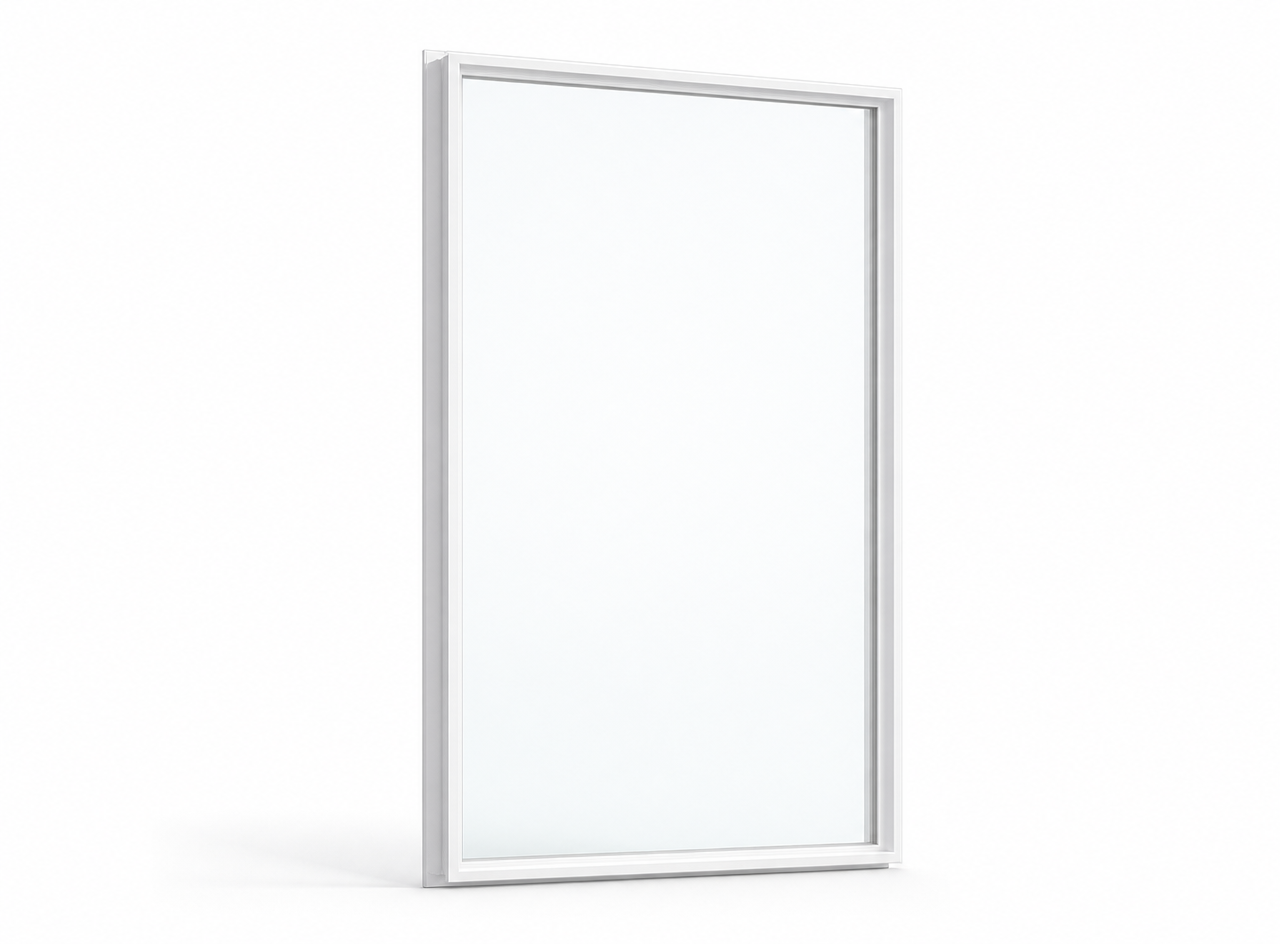
 PGT · WinGuard Aluminum Series
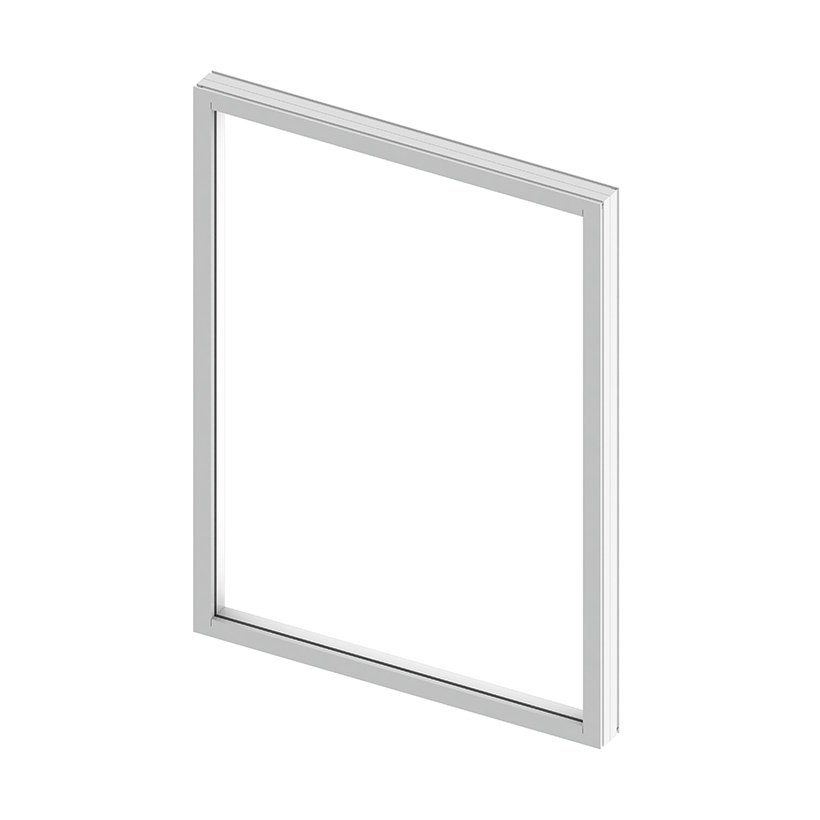
PGT WinGuard Aluminum Picture PW7720A
Aluminum impact fixed picture window on the WinGuard 7720 picture platform for unobstructed view installations. Diamond Glass, LMI for HVHZ.
 ES Windows · Elite Series
ES Windows Elite ES-EL150 Fixed Window
Aluminum impact fixed window on a 2-15/16 inch frame, matching the rest of the Elite residential line for clean sightline continuity.
 Air Master · Standard Windows
Fixed picture window with up to 7/16-inch laminated impact glass. Miami-Dade NOA 23-1113.03 plus Florida Product Approval for HVHZ installations.
Testing Standards: TAS vs. ASTM
The code references two families of testing standards for impact-rated glazing. Understanding the difference helps you evaluate product quality beyond the minimum requirements.
TAS 201/202/203 (HVHZ Standard)
These are the testing protocols developed by Miami-Dade County and required for all products installed in the HVHZ.
- TAS 201 (Large Missile Impact): A 9-lb 2x4 lumber section is fired from a pneumatic cannon at 50 fps (approximately 34 mph) at designated impact points on the window, including the center of the glass and near corners and frame junctions.
- TAS 202 (Structural Performance): After impact, the specimen is tested for structural integrity, air infiltration, and water penetration under simulated storm conditions.
- TAS 203 (Cyclic Pressure): The impacted specimen undergoes 9,000 cycles of alternating positive and negative pressure at 1.5 times the rated design pressure, with simultaneous wind-driven rain. The post-test tear tolerance is 5 inches by 1/16 inch, meaning the interlayer can develop a tear no larger than 5 inches long and 1/16 inch wide.
ASTM E1886/E1996 (National Standard)
This is the testing standard used for Florida Product Approval outside the HVHZ. It is also used nationally in other hurricane-prone states.
- ASTM E1996 defines missile levels A through E based on wind zone. For most of Florida's WBDR outside the HVHZ, Missile Level C or D applies, using a 4.5-lb 2x4 at 50 fps (half the projectile weight of the HVHZ test).
- ASTM E1886 defines the test procedure for cyclic pressure loading after impact.
- Post-test tear tolerance: 5 inches by 3 inches, significantly more lenient than the HVHZ standard.
The practical takeaway: a window that passes ASTM E1886/E1996 is a genuinely impact-resistant product. But the TAS standard is measurably stricter. Products tested to TAS standards are engineered with thicker interlayers, heavier frames, and more robust hardware to meet the tighter tolerance. This is one reason HVHZ-approved products typically cost 10-20% more than their non-HVHZ counterparts.
Design Pressure Ratings Explained
Every impact window and door carries a design pressure (DP) rating. This number represents the maximum wind load, measured in pounds per square foot (PSF), that the product can withstand in both positive pressure (wind pushing inward) and negative pressure (wind pulling outward, creating suction).
What the DP Numbers Mean
| DP Rating | Approximate Wind Speed Equivalent |
|---|---|
| DP-30 | ~130 mph |
| DP-40 | ~150 mph |
| DP-50 | ~160 mph |
| DP-60+ | ~170+ mph |
These are approximate equivalences. The actual wind speed a product can handle depends on several factors defined in ASCE 7-22:
- Wind speed at your specific location (from the code's wind-speed maps)
- Exposure category (B for suburban/sheltered, C for open terrain, D for coastal/waterfront)
- Building height coefficient (Kz): higher floors experience greater wind loads
- Window zone: Zone 5 (within 10% of the building width from any corner) experiences higher wind loads than Zone 4 (the field of the wall)
A corner window on the second floor of a coastal home will require a higher DP rating than the same-size window in the center of a single-story inland home, even at the same wind speed.
How to Determine Your Required DP
Your required design pressure is not something you calculate yourself. It is determined by the engineer or architect who prepares the building plans, or for replacement projects, by the window manufacturer's engineering department based on your home's specific parameters.
What you should verify on any quote:
- The DP rating listed for each product meets or exceeds your local code requirement.
- Corner windows are rated for Zone 5 loads, not Zone 4.
- The rated DP applies to the specific size being installed. Larger windows of the same product line may carry a lower DP rating because the glass area is greater.
The 25 Percent Rule
FBC Section 707.4 contains one of the most commonly misunderstood provisions in the code. Known as the "25% rule," it determines when replacing windows on an older home triggers a mandatory upgrade to current impact standards.
How It Works
If your home meets all three of these criteria, the 25% rule applies:
- Location: Your home is in the Wind-Borne Debris Region.
- Age: Your home was built before March 1, 2002 (the date the statewide FBC took effect). In the HVHZ, the cutoff is September 1, 1994.
- Building type: The home is a one- or two-family dwelling.
If you replace more than 25% of your total glazed opening area within any rolling 12-month period, all of the replacement windows and doors must meet current impact standards.
Key Details
- Calculated by area, not count. Replacing four small bathroom windows may stay under 25%. Replacing two large sliding glass doors may exceed it.
- Rolling 12-month period. You cannot circumvent the rule by splitting a project across two calendar years if the replacements fall within 12 months of each other.
- Applies to aggregate glazed area. Every window and door opening counts toward the total, including sliding glass doors, picture windows, and fixed-lite transoms.
The 25% rule is one of the most common reasons homeowners in the WBDR end up needing impact windows or impact doors even when they initially planned a smaller project. If you are close to the threshold, it is worth planning strategically: either staying below 25% or committing to a whole-home upgrade that brings the entire envelope up to current standards.
Permit Requirements
Almost every window or door replacement in Florida requires a building permit. The only common exception is a same-size, same-type replacement in some jurisdictions that does not alter the structural opening, and even then, most building departments require a permit.
What the Permit Application Requires
Your contractor is responsible for pulling the permit, but you should know what documentation is involved:
- Product approval numbers: FL numbers for state-approved products, or NOA numbers for HVHZ installations. The building department will verify these against the product approval database.
- Engineering calculations: For the design pressure, wind-load, and structural attachment of each product to the specific opening.
- Installation specifications: Manufacturer-approved installation details, including fastener type, spacing, and anchorage method for the wall type (concrete block, wood frame, etc.).
- Contractor license: The installing contractor must hold a current, active license in the jurisdiction where the work is being performed.
Inspection Stages
Most jurisdictions require at least one inspection, and some require two:
- Buck inspection (some jurisdictions): After the old window is removed and the rough opening is prepared but before the new product is installed. The inspector verifies the opening dimensions, structural condition, and flashing.
- Final inspection: After installation is complete. The inspector checks that the installed product matches the permitted product (approval numbers, size, configuration), that fastener spacing matches the approved installation detail, and that weathersealing is complete.
Common Permit Rejections
Permits are rejected more often than most homeowners realize. The most frequent reasons:
- Missing or expired FL/NOA numbers. The quoted product does not have current Florida approval.
- Wrong design pressure. The product's DP rating does not meet the minimum for the location and window zone.
- Incorrect fastener spacing. The proposed installation detail does not match the product's approved installation method.
- Unlicensed contractor. The company pulling the permit is not properly licensed in that jurisdiction.
A rejected permit means delays, resubmission fees, and potentially a different (and sometimes more expensive) product selection. This is why working with an experienced local installer matters. Companies that do this work every day know what each building department requires and submit clean applications the first time.
Energy Code Requirements
The FBC includes energy efficiency requirements that apply alongside the wind-resistance provisions. For windows and doors, the two key metrics are:
- U-Factor: Measures heat transfer through the product. Lower is better. Current Florida code requires a maximum U-Factor that varies by climate zone.
- SHGC (Solar Heat Gain Coefficient): Measures how much solar heat the glass transmits. Lower means less heat enters the home. ENERGY STAR v7.0 for the Southern Zone requires U-Factor of 0.32 or lower and SHGC of 0.23 or lower.
Most modern impact windows meet or exceed these thresholds. The laminated glass and low-E coatings used in impact products are inherently better at blocking heat transfer and solar gain than standard single-pane glazing.
A note on tax credits: The Section 25C federal tax credit for energy-efficient windows and doors expired on December 31, 2025. As of this writing, there is no active federal tax credit for residential window replacement. State and utility incentive programs may still apply; check with your installer or energy provider.
What Is Changing: The 9th Edition FBC
The 9th Edition of the Florida Building Code is expected to take effect on December 31, 2026. While the final text is still being developed by the Florida Building Commission, several proposed changes are significant for impact window requirements:
Proposed WBDR Expansion
The current 130 mph coastal trigger for the Wind-Borne Debris Region may be modified to eliminate the "within 1 mile of the coast" restriction at that wind speed. This would expand the WBDR to include inland areas that currently fall just outside the boundary, potentially requiring impact products in neighborhoods that do not need them today.
Multistory Residential Mandate
A proposed provision would require impact-rated building envelopes for multistory R-1 and R-2 occupancies (hotels, apartments, condominiums) within 5 miles of tidal waters where design wind speeds reach 160 mph.
Tighter Energy Standards
The SHGC requirement may tighten from the current standard to 0.25, meaning windows will need to block even more solar heat gain. Most high-performance impact windows already meet this threshold, but some budget-tier products may not.
Product Revalidation
Products tested under ASCE 7-16 methodology may need revalidation under ASCE 7-22. For homeowners, this means some currently approved products could lose their approval if manufacturers do not complete retesting before the 9th Edition takes effect.
Legislative Activity
Florida House Bill 911 and Senate Bill 1218 (tracked at leg.state.fl.us) propose mandating impact-rated building envelopes in all areas with design wind speeds of 160 mph or greater. If passed, this would significantly expand the areas where impact windows are required.
The 9th Edition is still in development, and specific provisions may change before adoption. But the direction is clear: the trend is toward more areas requiring impact products, stricter energy standards, and tighter testing protocols.
Frequently Asked Questions
Do I need impact windows if my home was built before the Florida Building Code?
It depends on your location and how many windows you are replacing. If your home is in the WBDR and you replace more than 25% of your glazed opening area within 12 months, all replacements must meet current impact standards. If you stay under 25%, you can replace with non-impact products in most cases, though your insurance company may still require impact products for full coverage.
What is the difference between a Florida Product Approval and a Miami-Dade NOA?
A Florida Product Approval (FL number) is the statewide certification. A Miami-Dade NOA is a county-level approval with stricter testing requirements. The NOA is required in the HVHZ (Miami-Dade and Broward counties). Outside the HVHZ, the FL number is sufficient. See our detailed HVHZ vs. impact rating comparison for the full breakdown.
Can I install impact windows myself to save money?
Technically, Florida law allows homeowners to perform work on their own primary residence. However, you still need a permit, the installation must follow the manufacturer's approved installation detail exactly, and the work must pass inspection. More importantly, a self-installed window may void the manufacturer's warranty and could create insurance complications if the installation fails during a storm. For a product that is specifically engineered to protect your home and family during a hurricane, professional installation is strongly recommended.
How do I know what design pressure rating I need?
Your required DP is determined by your location's design wind speed, your home's exposure category, the height of the window above grade, and whether the window is in a corner zone (Zone 5) or field zone (Zone 4). A qualified installer will calculate this for your specific home. As a general reference: most of coastal Florida outside the HVHZ requires DP-40 to DP-50, and the HVHZ typically requires DP-50 to DP-60+.
Do replacement windows always require a permit?
In nearly every Florida jurisdiction, yes. Window and door replacement is considered an alteration to the building envelope, which requires a building permit. Performing work without a permit can result in fines, mandatory removal, and complications when you sell the home. Your installer should handle the entire permit process as part of the project.
What happens if I install non-impact windows in the WBDR?
If caught during inspection, the installation will fail and the non-compliant products must be removed and replaced at the homeowner's or contractor's expense. If discovered during a property sale, the title company or buyer's inspector may require remediation before closing. And if the windows fail during a storm, your homeowner's insurance may deny the claim based on code non-compliance.
Will the 25% rule ever go away?
The 25% rule has been part of the code since the WBDR was established. Rather than being eliminated, the trend is toward expanding it. The proposed 9th Edition changes would make the rule apply to more geographic areas by expanding the WBDR boundary.
Next Steps
Understanding the Florida Building Code is the first step toward making an informed window replacement decision. Here is what to do with this information:
1. Determine your zone. Find out whether your home is in the HVHZ, the Wind-Borne Debris Region, or outside both. This determines your minimum product requirements.
2. Understand your options. Learn what impact windows are, how they differ from hurricane shutters, and what they cost for a whole-home project.
3. Verify product approvals. When you receive quotes, check every product's FL number or NOA against the official databases. Do not take a salesperson's word for it.
4. Choose an experienced local installer. The best product in the world fails if it is installed incorrectly. Look for a company that handles permitting, uses manufacturer-trained crews, and has a track record in your specific county.
5. Get a professional assessment. Every home is different. Window sizes, wall construction, exposure category, and building height all affect your requirements. A site visit is the only way to get accurate specifications and pricing.
If you are in South Florida and ready to start the process, request a free estimate from Armor Pro Windows & Doors. We handle the engineering, permitting, installation, and final inspection, so you get the right products installed to code, with no guesswork.