

If you are building a new home in Florida, the cheapest impact windows you will ever be offered are the ones the builder has not ordered yet. The base window package on most production homes meets the wind code at the lowest design pressure that passes, and changing those windows after closing means buying windows twice: once inside the purchase price, and again as a full retrofit with tear-out, a second permit, and wall repair. The upgrade conversation happens at the design center, on the builder's schedule, and the window to have it closes early.
We install impact windows and doors across South Florida, and a steady share of our replacement work comes from houses less than ten years old. Those owners are not replacing worn-out product. They are paying retail, plus demolition, for a decision that was available as a line-item option before the slab was poured. This guide covers how the base package gets specified, how to read the window schedule before you sign, what to ask the builder for instead, and what the after-closing math looks like when you wait.
Why the Base Package Is the Code Floor
Every permitted house in Florida gets a window schedule: a page in the plan set where the engineer of record assigns each opening a required design pressure, calculated from the ASCE 7 wind maps, the site's exposure category, the building height, and the opening's position on the wall. Corner openings carry higher suction numbers than mid-wall openings. Big sliders carry different numbers than small bathroom windows.
The builder's purchasing team then selects the least expensive product that passes each number. There is nothing improper about this. A production builder pricing hundreds of homes has every reason to buy the code minimum, and the code minimum is, by definition, legal and inspectable. The point is that nobody in that chain is paid to buy you margin.
The bigger catch sits in the code itself. The Florida Building Code, Residential (Section R301.2.1.2) requires protection of glazed openings in windborne debris regions: within one mile of the coast where design wind speeds reach 130 mph, anywhere they reach 140 mph, and throughout the High Velocity Hurricane Zone of Miami-Dade and Broward. What it requires is protection, not impact glass. A labeled set of steel panel shutters stacked in the garage satisfies the section. Plenty of base packages are exactly that: non-impact windows plus shutters, sold under a brochure line about being hurricane-ready.
So the first question is not "which impact windows is my builder using." It is "is my builder using impact windows at all."
The Constraint Nobody Mentions: "Impact" Covers a Fourfold Spread
Here is the part that surprises buyers who did ask for impact glass. Across the 33 impact-rated single hung window lines in our product approval database, governing design pressures run from +50/-50 psf at the entry end to +150/-195 psf for heavy architectural aluminum. That figure comes from the 87 design pressure records we maintain for single hungs, checked against manufacturer data sheets and Florida product approvals. Every one of those 33 lines is sold as an impact window.
That is a nearly fourfold spread inside one opening type. The +50/-50 line legitimately passes an inland tract-home schedule. The +150/-195 line covers a high-rise corner in Miami-Dade. Both say "impact" on the sticker, both pass the missile test, and a contract that reads "impact windows by builder" has told you almost nothing about which end of that range you are getting.
Design pressure is the structural rating of the whole assembly: glass, frame, hardware, and anchoring, tested as a system. If the term is new, our guide to impact window performance ratings walks through DP, U-factor, and SHGC in plain language. For this article, the short version is enough: DP is the number the engineer's schedule demands, and product lines differ enormously in how much of it they carry.
How to Read the Builder's Window Spec Sheet
The window specification lives in three places: the window schedule page of the permitted plan set, the specification exhibit attached to your purchase contract, and the option sheet at the design center. Ask for all three. If the contract exhibit says "hurricane protection per code" with no manufacturer, no series, and no ratings, that is not a spec. It is a placeholder for the cheapest thing that passes.
When you get the real schedule, here is what each line tells you:
| What is on the schedule | What it means | What to check |
|---|---|---|
| Manufacturer and series | The product line, which sets the frame, the glass options, and the DP ceiling | Whether it is the maker's entry line or a step up. Search the series name plus "impact" and read the maker's own data sheet |
| FL number or NOA number | The state or Miami-Dade product approval the installation must follow | Look it up free on the Florida product approval search. The approval lists tested sizes, pressures, and anchoring |
| Design pressure (+/- psf) | The structural rating assigned to each opening | Compare it to the engineer's required pressure for that opening. Note how much margin is left, if any |
| Missile rating | Which impact test the assembly passed | Large missile (LMI) for glazing within 30 feet of grade. "Impact" with no missile rating listed is a red flag |
| Glass makeup | Laminated or not, insulated or monolithic, Low-E coating, interlayer | Laminated glass is what makes a window impact-rated. Energy performance lives here too |
| U-factor and SHGC | The energy code numbers | Whether the glass just squeaks under the Florida energy code or beats it comfortably |
Twenty minutes with the schedule and the product approval search tells you more than any sales conversation. You will know the brand, the line, the tested pressures, and whether the glass package is the cheapest laminated makeup the line offers.
What to Ask For Instead
Buyers who get value out of the design center ask for one of three things, in roughly this order.
1. A line upgrade
Same manufacturer, one line up. The step from a maker's entry impact line to its mid or architectural line usually buys a heavier frame, a higher DP ceiling, larger approved sizes, and better hardware. It is also the easiest yes a builder can give: same supplier, same installing crew, same bucks and trim details, one revised purchase order. If the schedule shows the entry line, this is the first ask.
2. A glass package upgrade
Within a line, the glass makeup is often selectable: monolithic laminated versus insulated laminated, clear versus Low-E coated, air fill versus argon. This is the ask that changes your electric bill, because the structural rating and the energy numbers are set by different parts of the assembly. A line upgrade with the cheapest glass can leave energy performance on the table; a glass upgrade on the base line can leave structure on the table. Read both columns of the schedule.
3. Design pressure headroom
Ask for product approved comfortably above the engineer's required number, not exactly at it. The required pressure is a minimum for the worst-case opening; headroom means the same series still covers your largest openings, where DP ratings fall as size grows. Higher-DP lines are also generally tested to higher water infiltration pressures, which is what you feel in a sideways summer thunderstorm, not a hurricane. And when you sell, "approved to +100/-130" reads differently than "passed."
| Product | Design Pressure | Impact Rating | HVHZ Approved | Details |
|---|---|---|---|---|
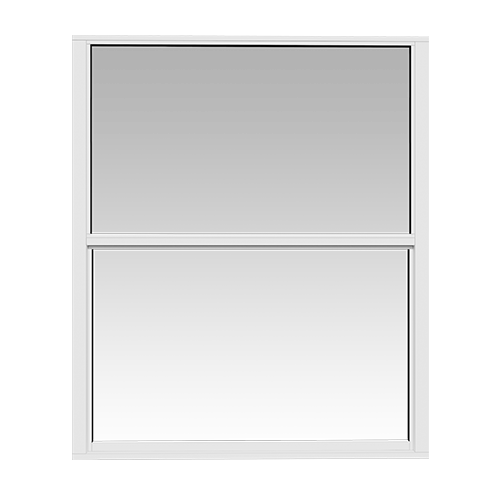 Eco-Guard Single Hung Series 50ECO
|
+55/-60 psf | LMI | Yes | |
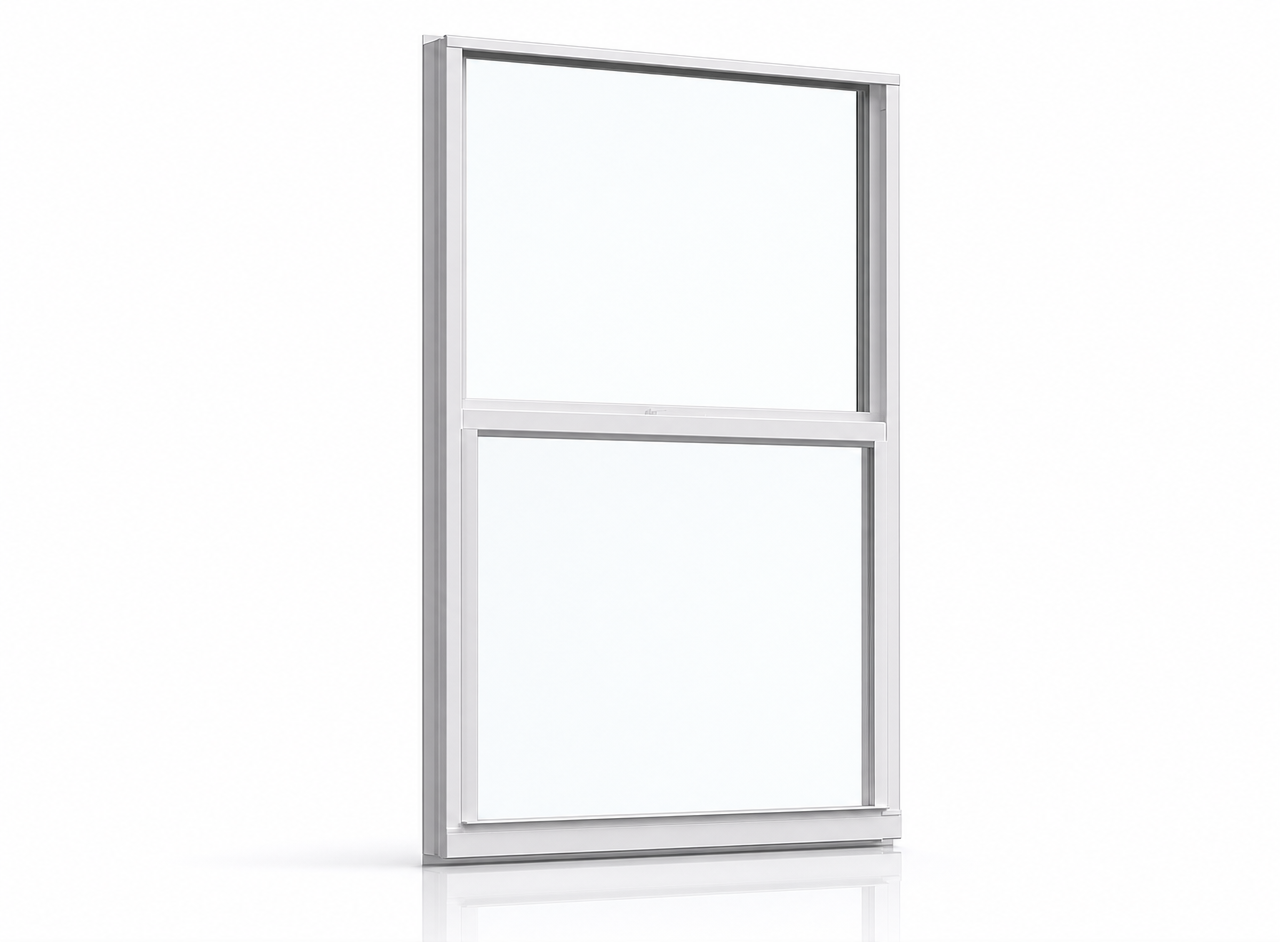 PGT WinGuard Aluminum Single Hung SH7700APGT
|
+80/-110 psf | LMI | Yes | |
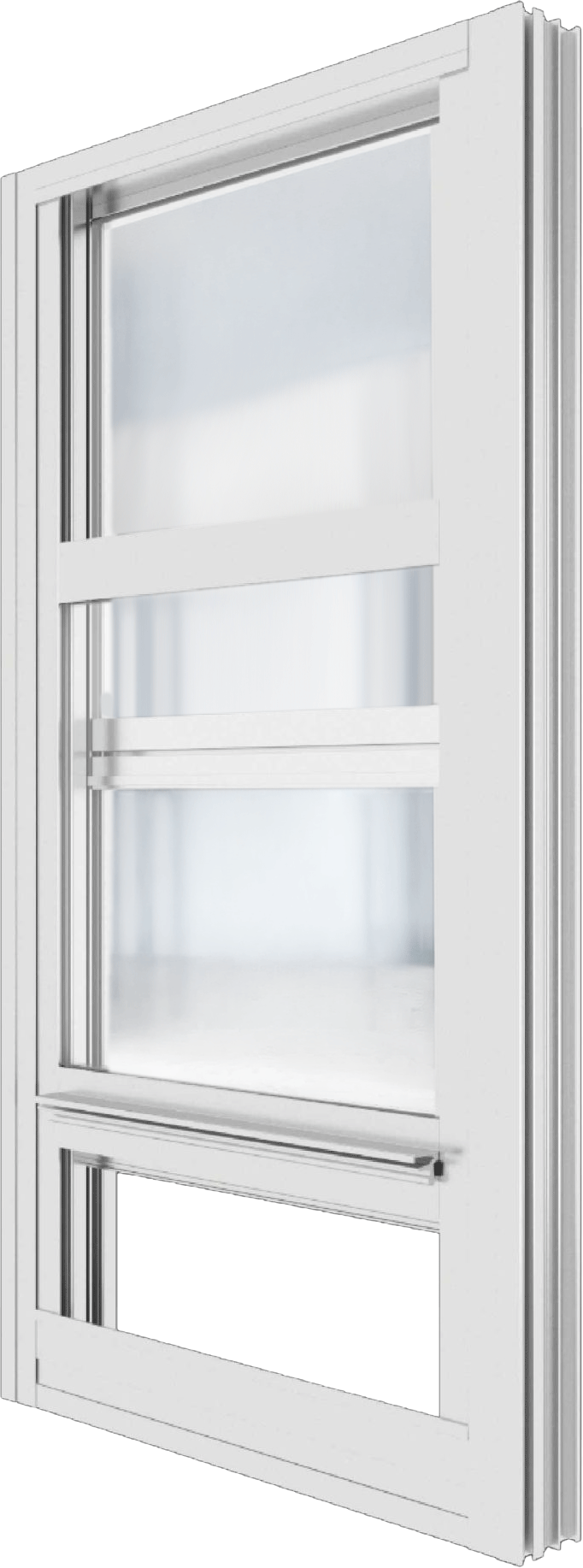 Eurocraft EC-200 Single Hung WindowEurocraft
|
+140/-140 psf | LMI/SMI | Yes |
Design pressures shown are the line's tested ceiling; ratings fall as opening size grows. The FL or NOA approval for your exact opening is what governs.
Whichever ask you make, get it as a written change order naming the manufacturer, series, glass makeup, and FL or NOA number. "Upgraded windows" on a change order is worth what it says, which is nothing.
What Design-Option Pricing Actually Looks Like
Builder option pricing carries margin. That is how design centers work, and window upgrades are no exception: expect the quoted delta to sit above what the same product swap would cost at street retail. You can push back with three moves: ask for per-opening itemized pricing rather than a package number, ask whether promotional or closing-cost credits can apply to structural options, and get a retail installed quote for the same series to anchor the negotiation.
For reference, our own retail installed pricing for single hung impact windows spans $520 to $3,750 per opening across the 40 lines we price, with most lines falling between about $900 and $2,100 depending on series, size, and glass. Those are replacement-market numbers, and they are the honest comparison point for any option sheet: if the builder's upgrade delta per opening is below what the full window costs at retail, you are ahead even before counting what the retrofit path adds.
And that is the real frame for the decision. Even a padded design-center price competes against the retrofit column below, not against retail alone.
The After-Closing Retrofit Math
Here is what the same upgrade looks like on each side of the closing date:
| Cost line | Upgrade at the build | Replace after closing |
|---|---|---|
| The windows | You pay the difference between base and upgraded product | You pay full price for the new product, and the nearly new base windows go in a dumpster |
| Labor | Set by crews already on site, inside the build sequence | Full retrofit labor: tear-out, buck and anchor work, sealants, mobilization |
| Permit and engineering | Covered under the master building permit | A new permit, product approval documents, and inspections |
| Wall repair | None. Windows go in before stucco and drywall are finished | Stucco patching, interior returns, and paint on a house you just decorated |
| Financing | Rolled into the mortgage at first-mortgage rates | Cash, a HELOC, or an unsecured personal loan at rates above a first mortgage |
| Insurance credits | Opening protection documented from the first policy year | Credits begin only after replacement and a new wind mitigation inspection |
| Living through it | You do not live there yet | Trades in every room of an occupied home |
We are not going to invent a percentage for how much more the retrofit path costs, because it depends on the house, the county, and the product. The structure of the math does not depend on any of that: the after-closing path contains every dollar of the at-build path, plus demolition, disposal, a second permit, and wall repair, and it starts from zero because the base windows you already paid for have no salvage value. That is what "costs more than the upgrade would have" means on an invoice.
The value side of the ledger is real too. Impact glass carries a documented resale premium and an insurance story we cover in what impact windows do for property value and whether impact windows are worth it. At the build, you collect those benefits from day one.
When Waiting Still Makes Sense
Not every buyer gets the choice. If you are buying a finished spec home, the glass was ordered months ago; negotiate price, not the window schedule. If you are past the builder's option cutoff, a mid-construction change order can genuinely cost more than it should, because windows are ordered early in vertical construction. And in some coastal markets, regional builders spec impact glass as standard, in which case your only question is which line and which glass package, and the schedule will tell you.
If you closed on a home with shutters and non-impact glass, the retrofit is still frequently worth doing; it just deserves open eyes about what it includes. Start by checking your address in our wind zone lookup to see the design wind speed and debris-region status you are building against, and price the project per opening rather than as one intimidating number. A phased plan that starts with the openings your engineer's schedule works hardest, such as large sliders and corner windows, is a legitimate path, with the caveat on insurance credits covered in the FAQ below. Financing the whole job is the other way to handle a large number, and it avoids the partial-credit problem phasing creates.
Next Steps
If you are pre-drywall, send us the window schedule and the option sheet; we read builder specs every week and will tell you plainly whether the quoted upgrade is worth the delta. If you already closed, we will price the retrofit per opening so you can see the real number instead of guessing at it. Either way, request a free estimate and bring the paperwork; the spec sheet always settles more than the sales pitch does.