

Impact window performance ratings are the numbers that decide two things at once: how your windows hold up in a hurricane, and what they cost to run every month. Yet most quotes list them with no explanation, so DP +65/-70, U-factor 0.30, and SHGC 0.25 all blur together.
This guide decodes each rating for a Florida home. You will learn what the number measures, which ones matter most in our hot, storm-exposed climate, and the one distinction that trips up even salespeople. We install products from several manufacturers, so the goal is to help you compare any two quotes on equal footing.
The Ratings at a Glance
Six numbers do most of the work. Here is what each one measures and the Florida target to keep in mind.
| Rating | What it measures | Florida target |
|---|---|---|
| Design Pressure (DP) | Structural wind load the window can carry | Meets the ASCE 7 requirement for your opening (often 50–70+ in the HVHZ) |
| Performance Grade (PG) | DP plus bundled water, air, and forced-entry tests | Meets or exceeds your required DP |
| SHGC | Share of the sun's heat the glass lets in | 0.25 or lower (0.23 is better) |
| U-factor | How much heat passes through the whole window | 0.32 or lower (0.65 is the code ceiling for impact) |
| VT | Visible light the glass lets through | Higher is brighter; balance against SHGC |
| Air leakage | Air that passes at a test pressure | 0.30 cfm/sf or lower; the lower the tighter |
The first two are about surviving a storm. The next three are about comfort and energy bills. We will take them in that order.
Design Pressure (DP): The Structural Rating
Design Pressure is the amount of wind load a window is engineered to carry, measured in pounds per square foot (PSF). You see it written as two numbers, like +65/-70. The positive number is the inward pressure a wind gust pushes against the glass. The negative number is the outward suction that pulls on it as wind accelerates around your home. The suction side is usually the larger threat, which is why the negative number is often bigger.
DP is not one-size-fits-all. The required DP for each opening comes from an ASCE 7 wind-load calculation that accounts for your wind speed, exposure, building height, and where the opening sits on the wall. Corners and upper floors see higher pressures than a sheltered ground-floor opening on a protected wall. A single-story inland home might need DP 35 to 40, while a coastal or High-Velocity Hurricane Zone opening commonly requires DP 50 to 70 or higher. The number on the window must meet or exceed the number the engineer calculated for that specific hole.
For real-world context, here is the certified range our own product data holds for the residential window and door lines we install. These are ranges, not single numbers, because DP is certified per size and configuration: the same line will certify much higher on a small unit than on a wide one.
| Product line | Positive DP | Negative DP |
|---|---|---|
| PGT WinGuard Vinyl | +50 to +100 | -50 to -110 |
| PGT WinGuard Aluminum | +60 to +90 | -56 to -130 |
| ECO Eco-Guard Single Hung | +40 to +80 | -60 to -141 |
| ECO Eco-Guard Casement & Awning | +60 to +90 | -60 to -130 |
| ECO Eco-Guard Horizontal Rolling | +55 to +90 | -60 to -135 |
| ES Windows Prestige | +60 to +95 | -60 to -95 |
| ES Windows Elite | +80 to +90 | -80 to -90 |
Notice that the negative (suction) rating often runs well beyond the positive one, and that the spread within a single line is wide. This is the practical reason a quote should name the DP for your opening at your size rather than the line's headline number.
One honest point worth making. DP is a pressure, not a wind speed. Marketing that turns a DP number into a single "mph rating" is oversimplifying, because converting pressure to wind speed depends on exposure and internal-pressure assumptions. The pressure rating matters, but the feature that truly separates an impact window from an ordinary one is the laminated glass surviving a flying 2x4, which we cover in how impact window glass works. For how DP fits the Miami-Dade approval system, see HVHZ vs impact rating.
Performance Grade vs Design Pressure: The Distinction Nobody Explains
Here is where two quotes that look similar can be very different, and where even salespeople get it wrong.
Performance Grade (PG) is a bundle. It certifies that a window met a design pressure and passed separate tests for water penetration, air infiltration, and forced entry, all at a defined level. Design Pressure by itself is only the structural piece. A window rated PG 50 was tested as a complete package to that grade, not just pushed on until the glass bent.
The North American standard (AAMA / NAFS) sorts windows into performance classes by how demanding that bundle is:
| Class | Typical use | Gateway PG |
|---|---|---|
| R | One and two-family homes | 15 |
| LC | Light commercial, larger homes | 25 |
| CW | Commercial | 30 |
| AW | Architectural, high-rise | 40 |
Now the part that surprises people. Within that bundle, the tests are held to very different pressures:
- The structural test is run to 150 percent of the rated DP, to prove a safety margin.
- The water-penetration test is run to only about 15 percent of the rated DP (a bit higher for the top AW class).
That gap is deliberate. Wind pressure during a storm is far higher than the pressure at which wind-driven rain gets forced through a seal, so the two are tested at different levels. But it means a window's water rating is not the same as its DP. A DP 50 window is not "watertight to 50 PSF." Its water resistance was verified at a much lower pressure. When a salesperson implies a high DP guarantees no leaks in a driving rain, that is the misunderstanding. This is also why water intrusion, not blow-out, is the failure mode Florida research now focuses on for sliding doors.
The takeaway: match your DP to the engineer's requirement for structural safety, and treat the water rating as its own separate line to ask about, especially for large sliding doors and coastal exposures.
U-Factor: Insulation That Matters Less in Florida
U-factor measures how much heat passes through the entire window, frame and glass together. Lower is better insulated. It runs on a scale where most windows fall between about 0.20 and 0.65.
In cold climates, U-factor is the headline number because the goal is keeping heat in. Florida is the opposite. We are a cooling-dominated climate, so keeping the sun's heat out matters far more than insulation. That is why the Florida Building Code is lenient on U-factor for impact windows: in Climate Zone 2, which covers most of the peninsula, it allows impact-rated units up to 0.65, recognizing that laminated impact glass is heavier and harder to insulate.
If you want the energy benefit anyway, aim lower. ENERGY STAR's Southern-zone requirement is 0.32 or lower, and a good double-pane impact unit with a Low-E coating and argon fill lands around 0.28 to 0.32. Triple-pane windows push U-factor down to roughly 0.18 to 0.22, but in Florida the extra glass rarely pays back its cost and weight. For what these upgrades actually save, see how impact windows lower energy costs.
SHGC: The Number That Matters Most in Florida
If you remember one rating from this guide, make it this one. SHGC, the Solar Heat Gain Coefficient, measures how much of the sun's heat the glass lets through, on a scale from 0 to 1. The lower the number, the cooler your home and the smaller your cooling bill.
In Florida's climate, SHGC does more for your comfort and your power bill than any other rating. The state agrees: the Florida Building Code caps glazed SHGC at 0.25 in the state's climate zones, and ENERGY STAR's version 7.0 Southern zone wants 0.23 or lower. A quality impact glass package meets both.
The tool that lowers SHGC is the Low-E coating on the glass. Modern triple-silver coatings from the major glass makers now reach an SHGC around 0.23 while still passing plenty of daylight, and adding a light tint can push it lower still. The coating, not the frame, is what moves this number, which is why the glass specification is where SHGC is won or lost. We break down the coatings in how impact window glass works.
VT, CR, and Air Leakage
Three smaller ratings round out the label.
Visible Transmittance (VT) is the share of visible light the glass lets through, on a 0 to 1 scale. Higher VT means a brighter room. There is a natural tension with SHGC, because blocking heat can also dim light, so the best coatings are the ones that keep VT high while driving SHGC down. The ratio of the two, sometimes called the light-to-solar-gain ratio, is a quick measure of how well a coating balances the two.
Condensation Resistance (CR) rates how well a window resists interior fogging, on a 0 to 100 scale where higher is better. It matters more in cold climates than in Florida, but it is a useful tie-breaker.
Air leakage measures how much air passes through the window at a test pressure, in cubic feet per minute per square foot (cfm/sf). The certification ceiling is 0.30 cfm/sf, but the best-sealing window types run far tighter. This is where window type matters, which we come to below.
How to Read an NFRC Label
Every certified window carries a National Fenestration Rating Council (NFRC) label, and it is the honest, apples-to-apples source for the energy numbers. Manufacturers cannot pick their own test method, so the label lets you compare any two windows directly.
The label shows four main values in a grid:
- U-Factor (top left): insulation, lower is better.
- SHGC (top right): solar heat gain, lower is better in Florida.
- Visible Transmittance (bottom left): daylight, higher is brighter.
- Air Leakage (bottom right): tightness, lower is better.
The structural ratings, DP and PG, are not on the NFRC label. Those come from the product approval, either a Miami-Dade NOA or a Florida Product Approval, which you can look up by the approval number. For how that approval system works in the HVHZ, see our Miami-Dade impact window requirements guide. You can confirm the energy values on the NFRC site and the ENERGY STAR levels on the ENERGY STAR windows page.
Ratings Differ by Window Type
The same manufacturer will publish different numbers for a casement than for a single-hung, and the mechanism is the seal. Casement, awning, and fixed windows use a compression seal that presses tighter as the wind pushes harder. Single-hung, double-hung, and horizontal-roller windows slide past brush or fin seals, so they cannot squeeze shut under load the same way.
Where that difference shows up most reliably is air leakage: compression-seal types routinely certify well below the 0.30 cfm/sf ceiling, while sliding types sit closer to it.
Design pressure is a more complicated story, and it is worth correcting a common shortcut. It is often said that casements simply reach higher design pressures than hung windows. Across our own certified product data that does not hold as a rule, because DP is dominated by size, frame depth, and reinforcement rather than by operating style, and hung windows are typically specified in smaller sizes that certify higher. Treat operating style as the thing that predicts air tightness, and treat DP as something to read off the approval for the specific size you are ordering. Standards bodies like the Fenestration and Glazing Industry Alliance define the performance classes these ratings map to.
None of this means a single-hung is a poor choice. It means the ratings you should expect depend on the window type, and a fair comparison holds the type constant.
 PGT · WinGuard Aluminum Series
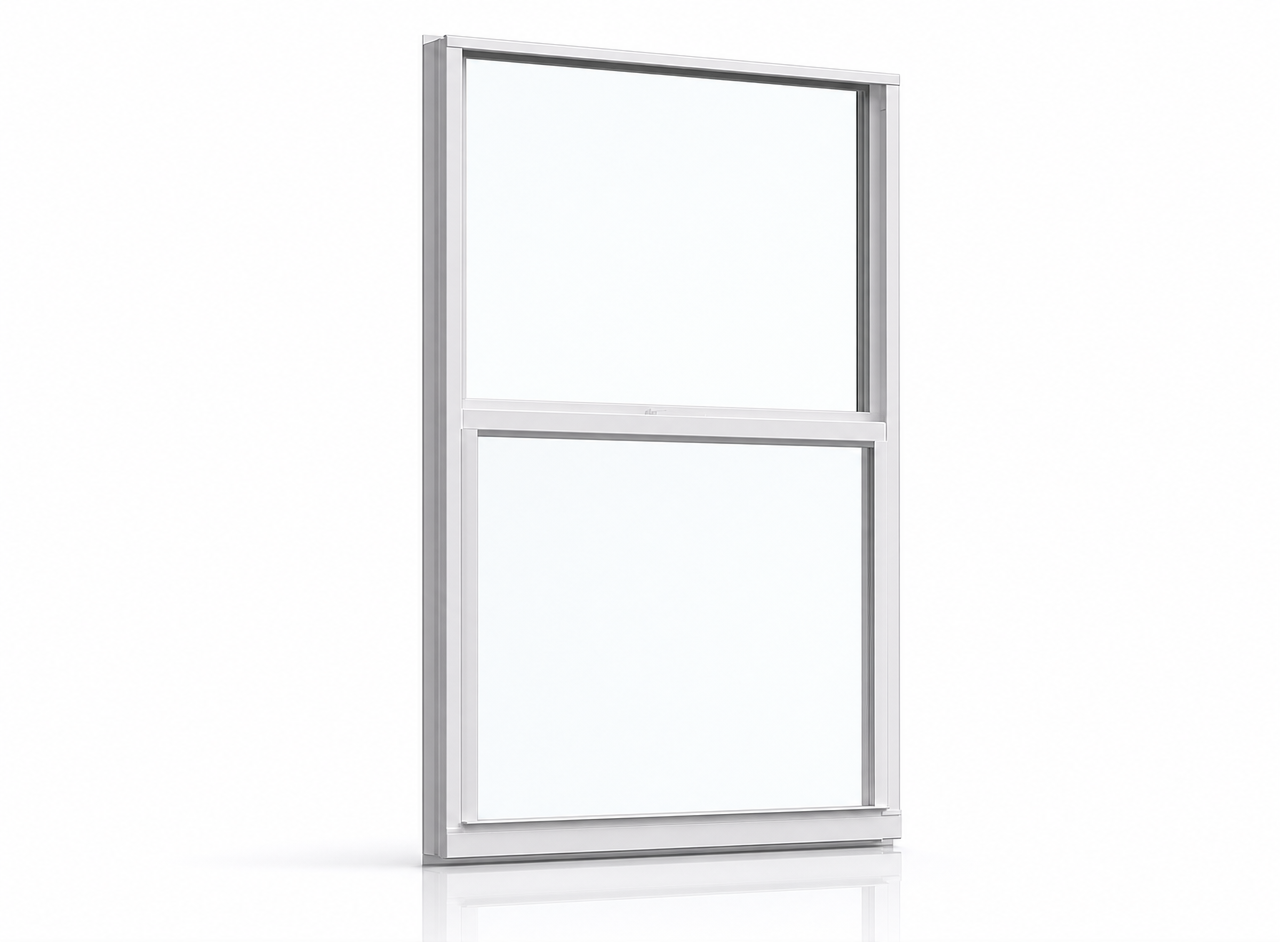
PGT WinGuard Aluminum Single Hung SH7700A
Aluminum impact single-hung on the WinGuard 7700-series frame with Diamond Glass laminated glazing. LMI impact-rated for Miami-Dade and Broward HVHZ installations.
 ECO · Eco-Guard Single Hung Series
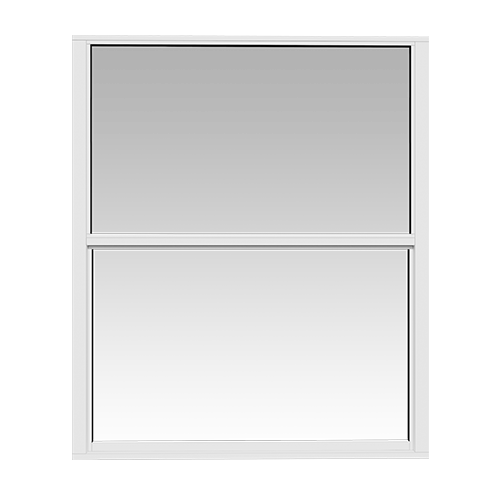
Eco-Guard Single Hung Series 50
Entry aluminum impact single hung on a 2-1/8 in. frame, +55/-60 psf, LMI for HVHZ, with block-and-tackle balances.
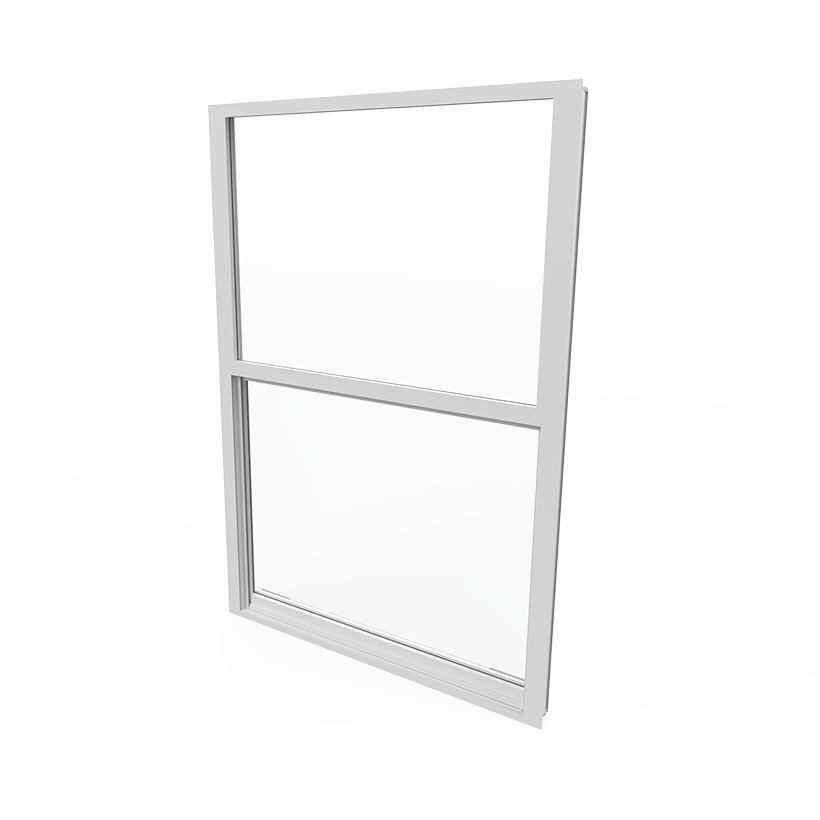
 ES Windows · Elite Series
ES Windows Elite ES-EL100 Single Hung
Aluminum impact single-hung on a 2-15/16 inch frame with block-and-tackle or ultra-lift balances. Saflex/Kuraray PVB, Vanceva Storm, and SentryGlas Plus interlayers available.
When you are ready to match products and ratings to your actual openings, our team will walk your home opening by opening. You can start with a free estimate, and our impact window cost guide shows how the glass and rating choices affect price.
Next Steps
- Get a free estimate and ask for the calculated DP for each opening, not just a single number for the whole house.
- Check the NFRC label on any quoted product for SHGC (0.25 or lower) and U-factor, and confirm the values on the NFRC site.
- Verify the approval. Confirm each product carries a current Miami-Dade NOA or Florida Product Approval for your county and exposure.
- Read the glass line too. The glass package drives your SHGC and much of the price, as we explain in how impact window glass works.
- Compare like with like. When weighing two quotes, hold the window type constant, since a casement and a single-hung will always post different numbers.