
No sliding glass door is hurricane proof, and no such rating exists in the Florida Building Code or in any testing standard. What you can buy is an impact-rated sliding glass door: an assembly that survived a 9-pound 2x4 fired at it at 50 feet per second, then 9,000 alternating pressure cycles, without the opening failing. The glass is allowed to crack during those tests. What is never allowed is penetration of the missile or a breach of the opening.
That distinction sounds like lawyer talk until you watch a test or walk a neighborhood after a storm. We install impact sliding glass doors across South Florida, and the honest way to describe them is engineered survivability. A door of this class is built and certified to keep the opening sealed through a defined set of wind, debris, and pressure conditions, with known limits printed on its approval documents.
This article answers the question the way an installer answers it across a kitchen table. We will cover what "hurricane rated" certifies, what the tests permit and forbid, and the design pressure numbers that replace the marketing language. We will also cover where these doors genuinely struggle (hint: it is water, not glass) and the shutter route for homeowners keeping their existing doors.
What "Hurricane Rated" Actually Means for a Sliding Glass Door
A hurricane rated sliding glass door is one that passed a defined test sequence and carries a product approval saying so. In Miami-Dade and Broward counties, the High Velocity Hurricane Zone, that sequence is the TAS protocols. Elsewhere, the national standards ASTM E1886 and E1996 apply.
| Test | What It Simulates | What the Door Must Do |
|---|---|---|
| TAS 201 / ASTM E1996 | Flying debris: a 9-lb 2x4 at 50 fps (34 mph) | Stay in its frame; no penetration |
| TAS 202 | Wind load, air, water, forced entry | Hold design pressure; pass overload held for 30 seconds |
| TAS 203 / ASTM E1886 | Hours of gusting wind | Survive 4,500 positive + 4,500 negative pressure cycles after impact |
Doors face a harder version of this gauntlet than windows. The hardware must be permanently mounted during testing, and TAS 201 requires that locking mechanisms latch without tools. Every roller, track, interlock, and lock point is a structural component while the pressure cycles run: a single lock point that loses engagement can start a progressive failure of the whole panel. That is why impact sliding doors carry multi-point locks with 3 to 7 engagement points instead of a lone latch.
Scale matters too. A standard 5-foot by 10-foot sliding panel presents about 50 square feet of glass, roughly 5 to 10 times the area of a typical impact window. The laminated glass alone in a panel that size weighs around 250 pounds. More area means more total wind force and a higher chance of taking a debris strike.
Cracked Glass Passes; a Breached Opening Fails
Here is the part that surprises homeowners: an impact door can finish its certification test with badly cracked glass and still pass. The product being certified is not unbreakable glass. It is a sealed opening.
Impact glass is laminated: two glass sheets bonded to a polymer interlayer. When the 2x4 hits, the outer sheet fractures and absorbs energy, the interlayer stretches, and the fragments stay bonded in place. The assembly then has to survive 9,000 pressure cycles in that damaged state.
The pass criteria are written around penetration, not appearance. In the HVHZ, the impacted specimen fails if the interlayer develops a tear longer than 5 inches and wider than 1/16 inch. Outside the HVHZ, the allowance is 5 inches by 3 inches, a far looser bar. In both cases the missile must not pass through, and the panel must remain in its frame.
So when a storm throws a branch through your patio door's outer glass sheet and you are looking at a spiderwebbed panel the next morning, the door did not fail. It did exactly what its certification promised: it took the hit, kept the envelope closed, and protected the pressurization of your home. You will still be replacing that panel.
Design Pressure: The Number That Replaces "Hurricane Proof"
Every certified sliding glass door carries a design pressure (DP) rating: the wind load, in pounds per square foot, it is approved to resist. It has a positive number (wind pushing in) and a negative number (suction pulling out), and the negative side usually governs because suction is what pulls panels off tracks.
The spread between products is wide. Across the 36 impact sliding glass door models with active Florida product approvals in our installer catalog, from 8 manufacturers, design pressure ratings run from about ±50 psf on products aimed at inland, low-rise openings up to +120/-140 psf at the top of the range. That is nearly a threefold difference between two doors that both legitimately carry the words "impact rated." The Mr. Glass MG-1000

 Mr. Glass
MG-1000 Sliding Glass Door (2T / 4P)
Premium residential aluminum sliding glass door on a 2-track frame supporting up to 4 panels. Dual LMI+SMI at 120/140 psf, panels up to 72 by 144 inches.
Impact-rated laminated glass Design pressure +120/-140 psf
See sliding glass door details
, the strongest sliding door we can order, certifies at +120/-140 psf under Florida approval FL19092-R6, tested to TAS 201, 202, and 203.
What a storm delivers is a separate question. Wind pressure grows with the square of wind speed, so a gust twice as fast pushes four times as hard, and corner zones of a wall see stronger suction than the center. The DP your opening must meet is not a guess; it comes from a wind-load calculation based on your site's design wind speed, exposure, and the opening's size and position. Our wind zone lookup shows the design wind speed and wind-borne debris status for any Florida address, which is the starting point for that calculation.
The practical takeaway: never shop sliding doors on "hurricane rated" alone. Two doors with that label can differ by 90 psf of rated capacity. Match the DP on the approval document to the DP your opening requires, with your contractor or engineer doing the math for corner and height conditions.
How to Read the Actual Certification
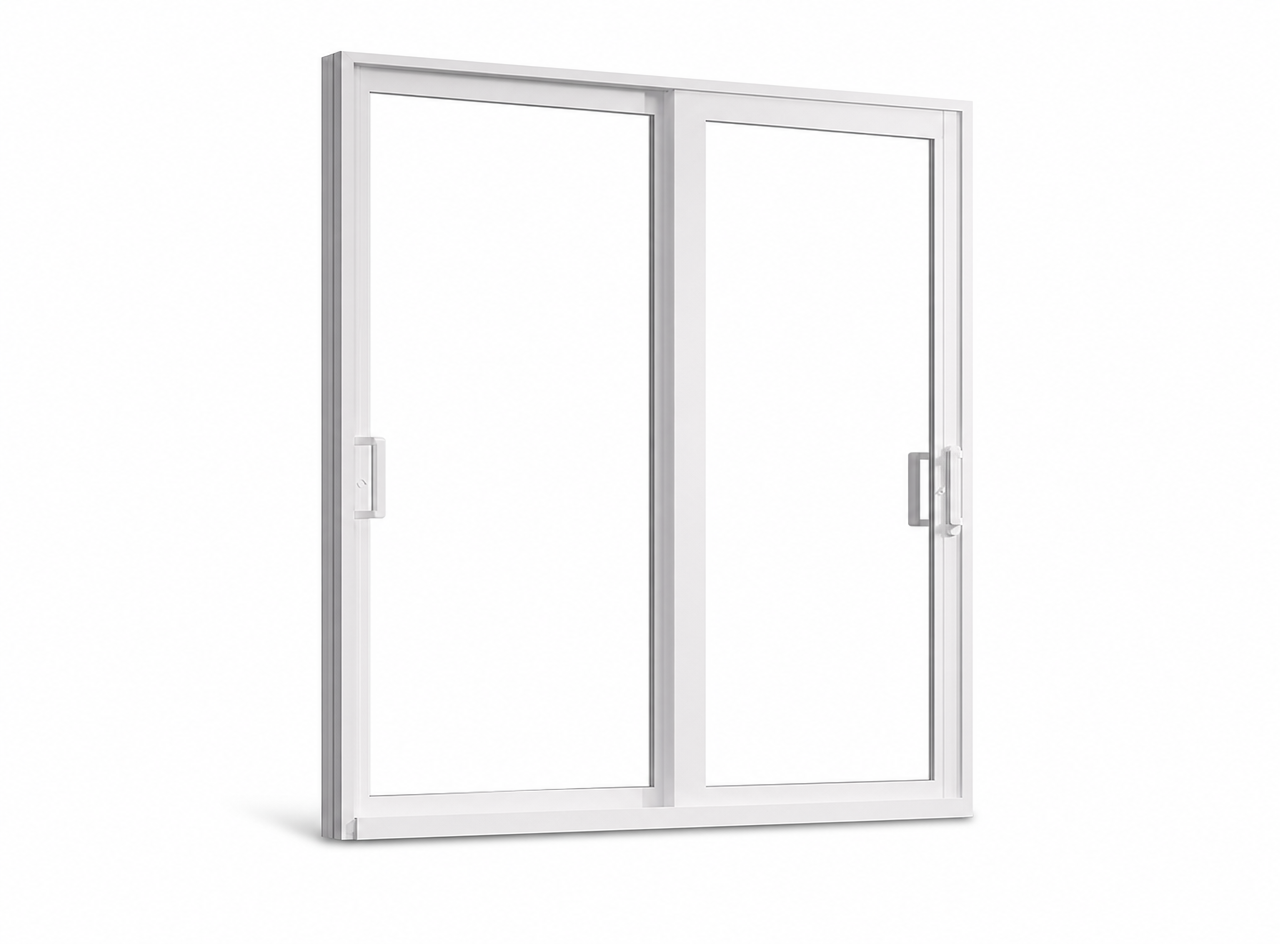
The document that settles every argument about a door's rating is its product approval: a Miami-Dade Notice of Acceptance (NOA) or a Florida Product Approval. These are public records, and reading one takes two minutes once you know where to look. Take the current NOA for PGT's SGD-770 aluminum sliding door
 PGT · WinGuard Aluminum Series
PGT WinGuard Aluminum SGD770A Sliding Glass Door
Flagship aluminum impact sliding glass door in WinGuard, the workhorse SGD across the catalog. Diamond Glass laminated glazing, LMI for HVHZ.
HVHZ approved for South Florida Design pressure +90/-90 psf
See sliding glass door details
, NOA 24-1219.08, as a live sample:
- The description line names the exact series and configuration covered. An approval for one series tells you nothing about the model one tier down.
- The missile impact rating line is the honest sentence the marketing never prints. The SGD-770 NOA reads "Large and Small Missile Impact Resistant." A non-impact door's NOA reads "Missile Impact Rating: None" followed by a requirement that approved hurricane protection devices be installed over it.
- The DP tables in the drawings list allowable pressures by panel size and glass type. Ratings shrink as panels grow; the headline number applies to a tested size, not to every size.
- The expiration date matters. Approvals lapse and get renewed; the SGD-770 NOA runs through February 17, 2030. Your permit needs a current one.
We keep the approval paperwork for every impact sliding glass door line we install, and we would rather show a customer a DP table than an adjective.
Where Hurricane Rated Sliding Doors Actually Struggle
The weak point of an impact sliding glass door is not the glass. Post-storm investigations keep finding the same thing: the assemblies hold structurally and leak water.
The certification gap explains why. Water testing under TAS 202 runs at only 15% of the door's positive design pressure. A legislature-mandated study by Florida International University, published by the Florida Building Commission in November 2024, tested full-size sliding doors at FIU's Wall of Wind and measured meaningful water intrusion at roughly 26% of design pressure, in winds near 100 mph. Every configuration tested leaked to some degree. FEMA's field teams after Hurricanes Michael and Ian reported the same pattern in real houses, including homes built in 2021. We wrote a full breakdown of that research and the code changes it is driving in why sliding glass doors leak during hurricanes, so we will not repeat it here.
The hardware geometry is the other honest limitation, and it lives in two places:
The interlock. Where a sliding panel overlaps its neighbor, the meeting stiles hook together in an interlock that must resist suction trying to peel the panels apart while surviving thousands of deflection cycles. Heavier interlock extrusions and reinforced meeting rails are a real differentiator between product tiers, and roller height adjustment has to keep those interlocks fully engaged for the life of the door.
The threshold. A door sill is a horizontal surface near grade that has to carry panel weight, drain rain, and block wind-driven water all at once. Accessibility rules cap sliding door thresholds at 3/4 inch, while serious water resistance wants a sill dam of 2 to 4 inches. Weep holes that drain the track in normal rain can feed water inward when storm pressure reverses the flow. Sill riser height is a decision, not a default, and it is worth ten minutes of conversation on any coastal installation.
None of this makes the impact rating hollow. It means the rating certifies structural survival, and water management is a separate performance axis you should ask about by name: sill dam height, track drainage, and what the manufacturer publishes about water test pressure.
Shutters Over Glass: The Other Code-Legal Path
The Florida Building Code has always allowed a second route: keep non-impact glass and cover it with an approved protection device. That is exactly what a non-impact door's NOA prescribes, and it remains a legitimate way to bring an opening into compliance.
The FIU research adds a wrinkle in the shutter's favor. Accordion shutters reduced the pressure differential acting on sliding glass doors by 6 to 14% in Wall of Wind testing, and they cut water intrusion volume through non-impact windows by 77 to 87%. A shutter is not just a debris shield; it changes the aerodynamic loading on the door behind it.
The trade-offs are the ones you already suspect. Hurricane shutters must be deployed before every storm by someone physically present, they complicate egress while closed, and they leave you with ordinary glass the other 360 days a year: no security laminate, no acoustic benefit, and a dark room every time a warning has you closing up. Impact doors protect passively, at a higher upfront cost. For pricing on impact sliding doors by size and configuration, along with DP ratings by manufacturer, see our hurricane impact sliding glass door guide.
Plenty of our customers run a hybrid: impact doors on the openings they use daily, shutters over garage-side or upper-floor glass where deployment is easy and the budget goes further.
Engineered Survivability: The Honest Answer
So, are sliding glass doors safe in a hurricane? An impact-rated door, sized to the design pressure of its opening, installed and anchored per its approval documents, is among the most storm-capable pieces of glazing you can put in a wall. The engineering that certification represents is real: a 34-mph 2x4, a pressure overload held against the frame, and 9,000 cycles of alternating load on an already-damaged specimen.
What that door is not is proof against anything. A storm can exceed a design pressure. Debris can hit harder than the test missile; a statewide Florida Building Commission study found field debris "larger and moving faster than current test criteria." Wind-driven rain will find pathways that a 15%-of-DP water test never probed. The right expectation for a design-level hurricane behind impact sliding doors is a sealed, pressurized house, possibly with crazed glass to replace and towels at the track. That outcome is the product working.
Anyone who tells you a door is hurricane proof is selling the adjective, not the assembly. The sellable truth is stronger: the limits are tested, published, and matched to your opening, which is more than can be said for any product that leans on the word "proof."
PGT · WinGuard Aluminum Series
PGT WinGuard Aluminum SGD770A Sliding Glass Door
Flagship aluminum impact sliding glass door in WinGuard, the workhorse SGD across the catalog. Diamond Glass laminated glazing, LMI for HVHZ.
 ECO · Eco-Guard Sliding Glass Door Series
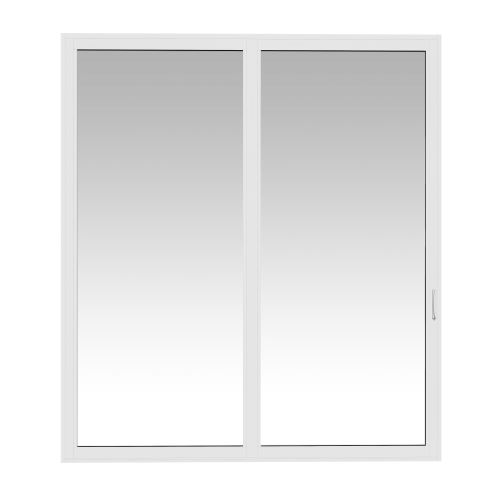
Eco-Guard Sliding Glass Door Series 700
Standard aluminum impact patio slider to 4.5 ft panels x 108 in., +70/-75 psf, LMI+SMI, NFRC-certified, dual-point lock, water-rated sill-riser table.

 ES Windows · Multimax Series
ES Windows Multimax ES-MX4000 Sliding Glass Door
Value-tier aluminum impact sliding door in OX, XO, OXO, and OXXO on a 2-track frame up to 4 panels at 5-3/8 inch depth. Vitro Solarban 70 available.
Next Steps
If you are weighing an impact sliding glass door against shutters, or trying to translate a DP requirement into an actual product, we do that math every day: request a free estimate and we will bring the approval documents, the DP tables for your opening, and straight answers about water performance to your kitchen table.