



Why Sliding Glass Doors Deserve Special Attention
Sliding glass doors are different from every other opening in your home. They're larger (8-16+ feet wide), heavier (200-400+ lbs per panel), more mechanically complex (track systems, rollers, multi-point locks), and more exposed to wind and rain than standard windows.
They're also the most expensive single fenestration product in a typical Florida home, often costing as much as 3-5 standard impact windows combined. Getting the right product for your opening, wind zone, and budget matters more here than anywhere else in your project.
And they have a documented weakness that other window types don't share: FIU Wall of Wind research confirmed that sliding glass doors are the most vulnerable window type for water intrusion during hurricanes, with significant leaking at just 26% of rated design pressure. This makes product selection, installation quality, and maintenance more critical for SGDs than for any other opening.
This guide covers everything you need to know to make a confident purchasing decision. (Still weighing a slider against French or bi-fold panels for the same opening? Start with our door types comparison, then come back for the slider specifics.)
Pricing by Size and Configuration
Impact sliding glass doors cost $2,500 to $12,000 installed for most South Florida openings: the common 8-foot two-panel runs $3,500-$6,000 (roughly $1,700-$3,000 per panel), while wide multi-panel and pocketing systems reach $15,000-$40,000+. Every figure below is an installed price. For pricing across every door type, see our impact door cost guide.
| Configuration | Width | Typical Cost (Installed) | Notes |
|---|---|---|---|
| 2-panel (XO or OX) | 6 ft | $2,500-$4,500 | Standard bedroom/den patio access |
| 2-panel (XO or OX) | 8 ft | $3,500-$6,000 | Most common residential size |
| 3-panel (OXO or XXO) | 9-12 ft | $5,000-$9,000 | Living room/family room standard |
| 4-panel (2-track) | 12-16 ft | $7,000-$12,000 | Large living areas, lanai access |
| 4-panel (3-track or 4-track) | 16-20 ft | $10,000-$18,000 | Premium open-plan configurations |
| Multi-panel pocketing | 16-40 ft | $15,000-$40,000+ | Panels slide into wall cavities |
| Corner door (90 or 135 degree) | Varies | $12,000-$25,000+ | Where two glass walls meet at a corner |
Panel notation: X = sliding panel, O = fixed panel. XO means the left panel slides, the right is fixed. OXO means a center slider with fixed panels on each side.
Prices include the door unit, frame, tracks, hardware, installation labor, permits, and disposal of the old door. They do not include structural modifications to the rough opening (if needed), interior trim, or exterior stucco/finish repair.
What Drives Price Variation Within Each Size
The same 8-foot opening can cost $3,500 or $6,000+ depending on:
- Manufacturer tier. ECO
 ECO
ECO Window Systems
Miami-made impact windows and doors with vertical glass integration and Miami-Dade NOA coverage.
Miami-Dade NOA / HVHZ approved 41 models across 10 product lines
Explore ECO
(budget) to PGT WinGuard
ECO
ECO Window Systems
Miami-made impact windows and doors with vertical glass integration and Miami-Dade NOA coverage.
Miami-Dade NOA / HVHZ approved 41 models across 10 product lines
Explore ECO
(budget) to PGT WinGuard
 PGT
WinGuard Aluminum Series
PGT's flagship aluminum impact platform since 1998, with one of the deepest Miami-Dade NOA libraries in the industry. Single hung through sliding doors on one HVHZ-certified frame system.
HVHZ-approved across the series 11 models in the series
Explore the WinGuard Aluminum Series
(mid-range) to WinDoor
PGT
WinGuard Aluminum Series
PGT's flagship aluminum impact platform since 1998, with one of the deepest Miami-Dade NOA libraries in the industry. Single hung through sliding doors on one HVHZ-certified frame system.
HVHZ-approved across the series 11 models in the series
Explore the WinGuard Aluminum Series
(mid-range) to WinDoor
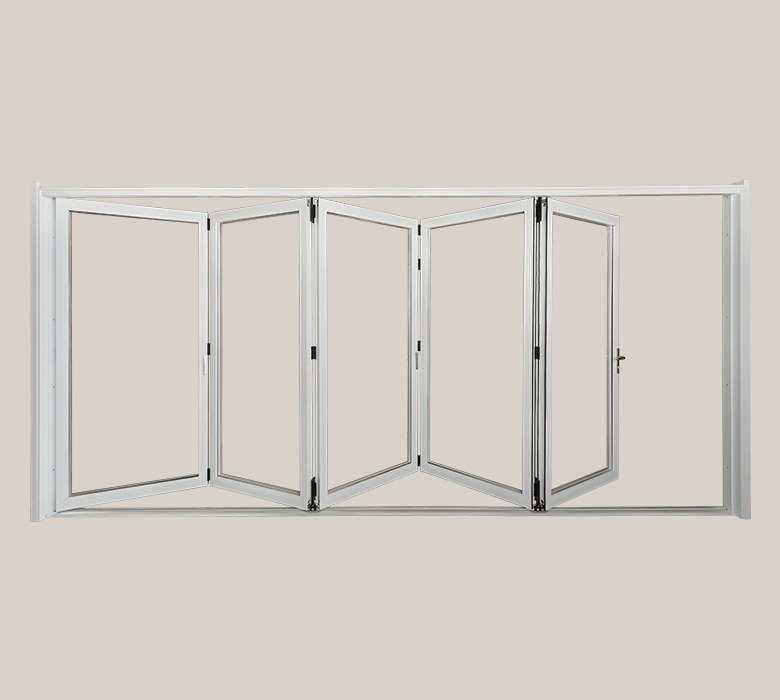
 WinDoor
Luxury aluminum impact windows and doors with industry-leading panel sizes and corner configurations.
9 impact models Manufacturing since 2001
Explore WinDoor
(premium). See the manufacturer comparison below.
WinDoor
WinDoor
Luxury aluminum impact windows and doors with industry-leading panel sizes and corner configurations.
9 impact models Manufacturing since 2001
Explore WinDoor
(premium). See the manufacturer comparison below. - Frame material. Standard aluminum is baseline. Thermally broken aluminum adds 30-50%. Vinyl SGDs exist but are less common for large openings due to lower max DP ratings.
- Glass configuration. Standard laminated glass is baseline. Insulated glass (IGU with argon fill + Low-E) adds $200-$500 per panel. Tinted, low-iron, or acoustic interlayers add further.
- Design pressure rating. Higher DP = sturdier frame, heavier glass, more robust hardware = higher cost. A DP-50 door and a DP-90 door for the same opening are different products at different prices.
- Track count. More tracks allow more panels and wider openings but increase frame width and cost.
Understanding Design Pressure for Sliding Glass Doors
Design pressure (DP) is especially important for sliding glass doors because the large surface area concentrates enormous wind loads on the frame and track system.
A standard 8-foot SGD has roughly 40 square feet of surface area. At DP-50, that's 2,000 lbs of total wind force on the door assembly. At DP-90, it's 3,600 lbs. The frame, tracks, rollers, and lock mechanisms must handle these loads without deflecting enough to break the glass seal or allow the panel to derail.
DP Ratings by Manufacturer
| Manufacturer | Product Line | Max DP (Impact) | Max Panel Size | Max Tracks |
|---|---|---|---|---|
| PGT | WinGuard SGD780 | +/-90 PSF | 5'W x 10'H or 4'W x 12'H | 4 (up to 8 panels, 40 ft wide) |
| ES Windows | Elite EL400 | +80/-80 PSF | Varies by config | 4 |
| ECO | Series 760 | +105/-115 PSF | Varies | 4 |
| ECO | Series 700/750 | +60/-70 PSF | Varies | 2-3 |
| WinDoor | 8100 SGD | +125/-150 PSF | 60"W x 144"H (12 ft tall) | 5 |
| WinDoor | Estate Lift & Slide | Premium | Premium sizes | Multi-track |
| CWS (Pella) | Hurricane Guard | +/-60 PSF | Standard sizes | 2 |
WinDoor's 8100 system
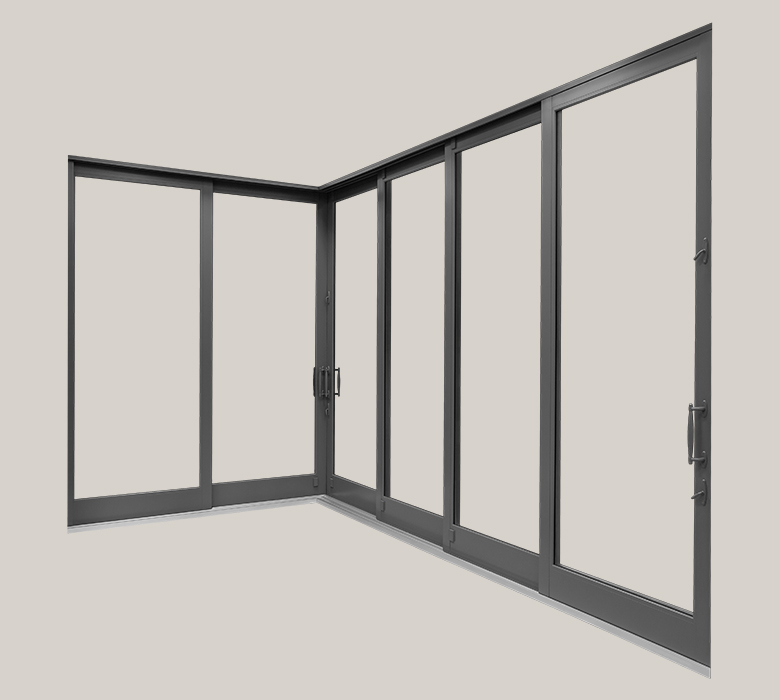 WinDoor
 8100 Sliding Glass Door
Flagship aluminum sliding glass door with one of the industry's largest certified panel sizes (up to 60 by 144 inches). 2 through 5 tracks, corner geometries at 90 or 135 degrees.
HVHZ approved for South Florida Design pressure +100/-100 psf
See sliding glass door details
is in a class by itself for design pressure (+125/-150) and panel size (up to 12 feet tall). It's the product specified for luxury high-rises, five-star resorts, and custom waterfront homes. The price reflects this: expect $15,000-$30,000+ for a premium WinDoor installation.
WinDoor
WinDoor 8100 Sliding Glass Door
Flagship aluminum sliding glass door with one of the industry's largest certified panel sizes (up to 60 by 144 inches). 2 through 5 tracks, corner geometries at 90 or 135 degrees.
HVHZ approved for South Florida Design pressure +100/-100 psf
See sliding glass door details
is in a class by itself for design pressure (+125/-150) and panel size (up to 12 feet tall). It's the product specified for luxury high-rises, five-star resorts, and custom waterfront homes. The price reflects this: expect $15,000-$30,000+ for a premium WinDoor installation.
For most residential applications, PGT WinGuard SGD780 at DP +/-90 and ES Windows Elite EL400
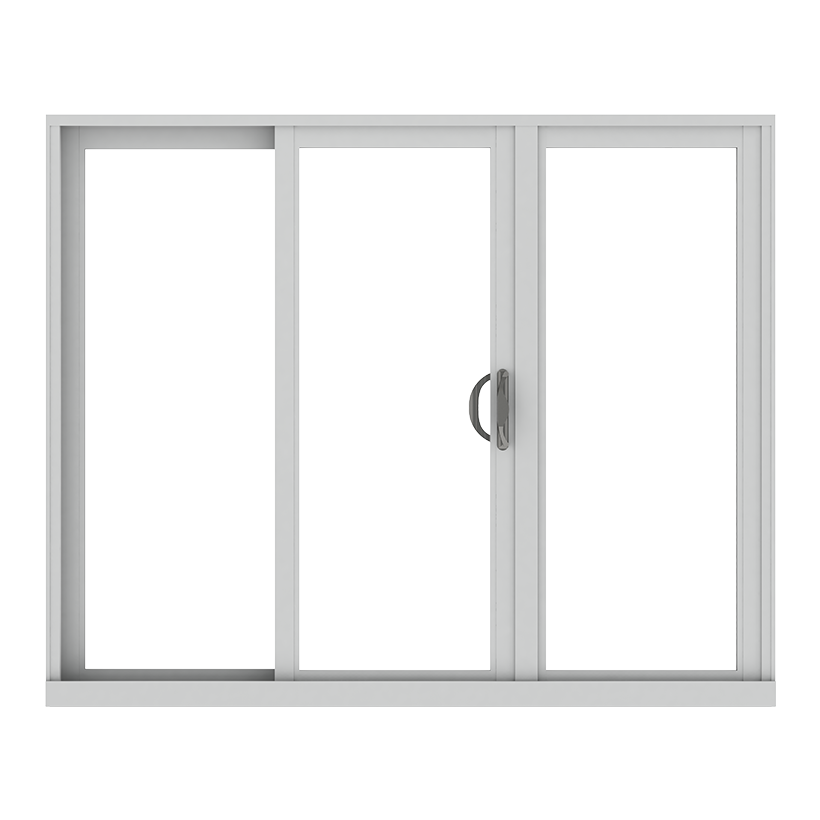
 ES Windows · Elite Series
ES Windows Elite ES-EL400 Sliding Glass Door
Aluminum impact sliding glass door supporting up to 6 panels in nine panel configurations on a 4-13/16 inch frame. Up to 4-track frame with pocket option.
HVHZ approved for South Florida Design pressure +80/-80 psf
See sliding glass door details
at DP +80/-80 provide excellent performance at mid-range pricing. ECO's Series 700/750 offers budget-friendly options at lower DP ratings suitable for standard residential openings outside the HVHZ.
ES Windows · Elite Series
ES Windows Elite ES-EL400 Sliding Glass Door
Aluminum impact sliding glass door supporting up to 6 panels in nine panel configurations on a 4-13/16 inch frame. Up to 4-track frame with pocket option.
HVHZ approved for South Florida Design pressure +80/-80 psf
See sliding glass door details
at DP +80/-80 provide excellent performance at mid-range pricing. ECO's Series 700/750 offers budget-friendly options at lower DP ratings suitable for standard residential openings outside the HVHZ.
How DP Requirements Are Determined
Your building's engineer (or your installer, using manufacturer-provided calculation tools) determines the required DP for each opening based on:
- Your location's design wind speed (175+ mph in the HVHZ, 130-170 mph in the WBDR)
- Building height (higher floors need higher DP)
- Window position (corner locations need 40-60% higher negative DP than center-wall locations)
- Exposure category (Exposure D near open water is highest; Exposure C is the HVHZ minimum)
A sliding glass door at a corner location on the second floor of a coastal Broward home may require DP-90+, while the same-sized door in a center-wall ground-floor location on an inland Orlando home may only need DP-40. This is why quotes vary so much for seemingly identical openings.
Track Systems and Configurations
The track system determines how the door operates, how wide the opening can be, and how the panels relate to each other.
Standard Track (Most Common)
Two tracks: one for the fixed panel, one for the sliding panel. The sliding panel rolls on tandem or heavy-duty rollers within its track. This is the standard residential configuration for 2-panel and 3-panel systems.
Advantages: Simplest, most reliable, lowest cost. Widest product selection across all manufacturers.
Limitation: Only one panel slides. For a 3-panel OXO on two tracks, the center panel slides while both outer panels are fixed, giving you a maximum opening of one-third the total width.
Multi-Track (3, 4, or 5 Tracks)
Additional tracks allow more panels to slide independently, creating wider clear openings. PGT's SGD780 offers up to 4 tracks with 8 panels and a 40-foot maximum width. WinDoor's 8100 goes to 5 tracks.
Advantages: Wider openings. Multiple panels can stack to one or both sides. Better for open-plan living where you want the wall to disappear.
Limitation: Each additional track increases the frame depth (the sill width from interior to exterior). A 2-track sill is typically 5-6 inches. A 4-track sill can be 10-12 inches. More tracks also mean more potential water intrusion pathways.
Pocketing Systems
In a pocketing configuration, the sliding panels retract into cavities built into the adjacent walls. When fully open, the panels disappear, creating a completely unobstructed opening.
Advantages: Maximum visual impact. The wall literally opens. Popular in luxury waterfront homes where the indoor-outdoor transition is a design priority.
Limitation: Requires wall cavities built during construction or major renovation (cannot be retrofitted easily). The pockets must be large enough to contain the panels and their tracks. Most expensive SGD configuration. Limited to new construction or gut renovations.
Flush-Sill (ADA-Compliant)
Standard SGD tracks have a raised sill (the bottom track) that creates a step between interior and exterior. Flush-sill configurations level the track with the floor on both sides, eliminating the trip hazard and meeting ADA accessibility requirements.
Advantages: No threshold step. ADA compliant. Cleaner visual transition between interior and exterior floors.
Limitation: Water management is more challenging with a flush sill because there's no raised track to contain water. Proper drainage and waterproofing beneath the sill are critical. More expensive than raised-sill configurations.
The Water Intrusion Factor
Sliding glass doors have the highest water vulnerability of any fenestration type. This is documented by FIU Wall of Wind research and two FEMA Mitigation Assessment Team reports.
The reason is mechanical: the track system requires gaps for the panel to slide. Those gaps are the primary pathway for wind-driven rain during hurricanes. The current water penetration test applies only 15% of the product's rated design pressure, while real hurricanes deliver 100%, a 6-7x gap that the 9th Edition FBC is expected to narrow.
What to Ask About Water Performance
Sill riser height. The raised lip at the interior edge of the bottom track. Taller = more water capacity before overflow. Not all manufacturers use the same height. This is the single most impactful water-management detail.
Track drainage. How many weep holes? Are they baffled against wind-driven backflow? What's the drainage rate capacity?
Weatherstripping material. EPDM and silicone last longer and maintain compression better than PVC-based weatherstripping in Florida's heat. Replace every 7-10 years regardless of visible condition.
Water test pressure. Ask what percentage of DP the product was actually tested at. Higher DP products are tested at higher absolute water pressures (even at the same 15% ratio), providing better real-world water performance.
The Accordion Shutter Companion Strategy
FIU testing showed that accordion shutters installed over sliding glass doors reduce water intrusion volume by 77-87%. For homeowners who have non-impact sliding glass doors or who want maximum water protection on existing impact SGDs, an accordion shutter ($600-$1,500 per opening) provides a secondary rain shield.
This is also the most cost-effective way to protect a large sliding glass opening when a full impact SGD replacement ($3,500-$9,000+) exceeds the budget. A standard (non-impact) sliding door plus an accordion shutter meets code for opening protection at a fraction of the cost of an impact-rated door.
Comparing Top Manufacturers
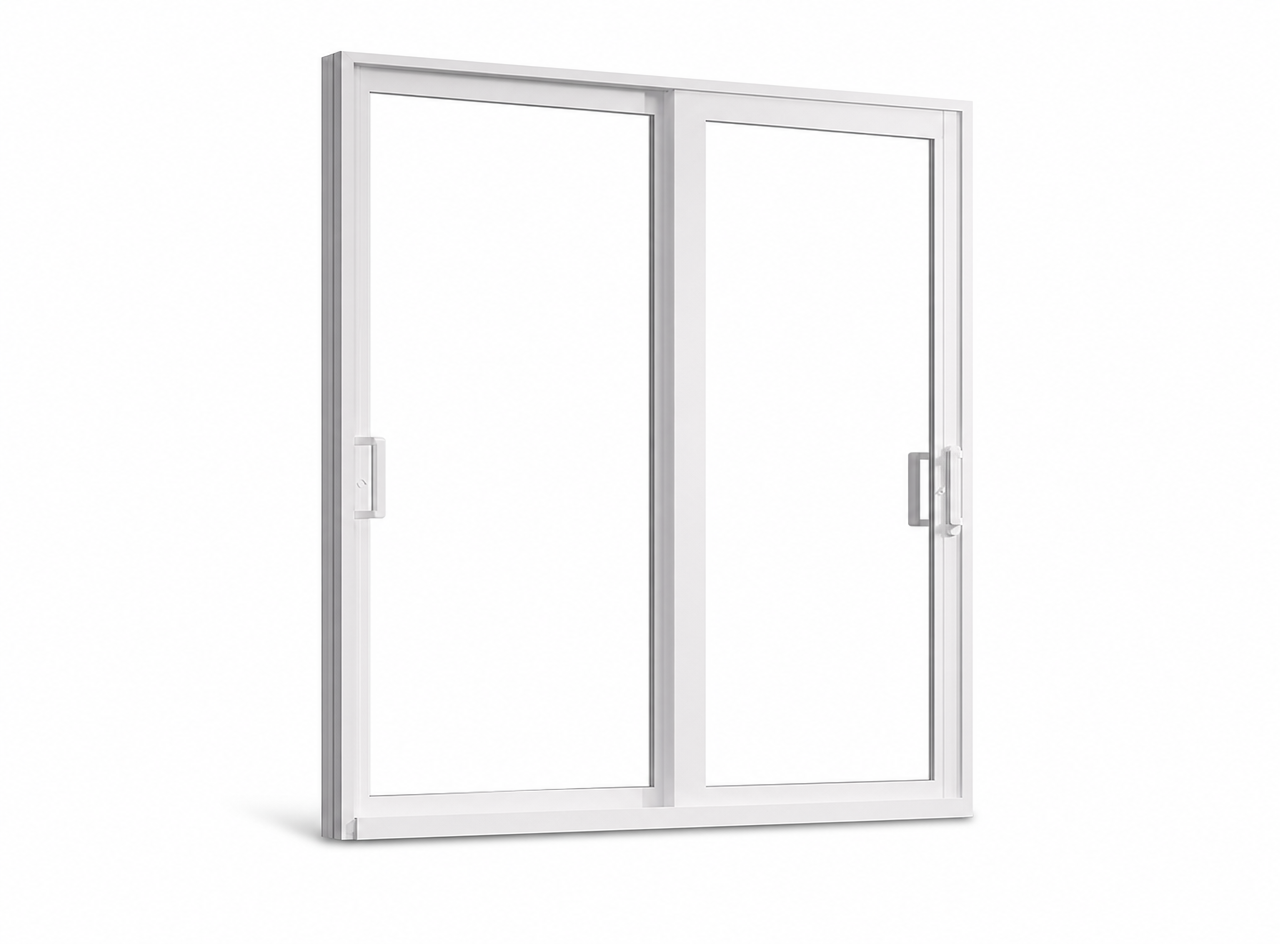 PGT · WinGuard Aluminum Series
PGT WinGuard Aluminum SGD770A Sliding Glass Door
Flagship aluminum impact sliding glass door in WinGuard, the workhorse SGD across the catalog. Diamond Glass laminated glazing, LMI for HVHZ.
ECO · Eco-Guard Sliding Glass Door Series
Eco-Guard Sliding Glass Door Series 700
Standard aluminum impact patio slider to 4.5 ft panels x 108 in., +70/-75 psf, LMI+SMI, NFRC-certified, dual-point lock, water-rated sill-riser table.
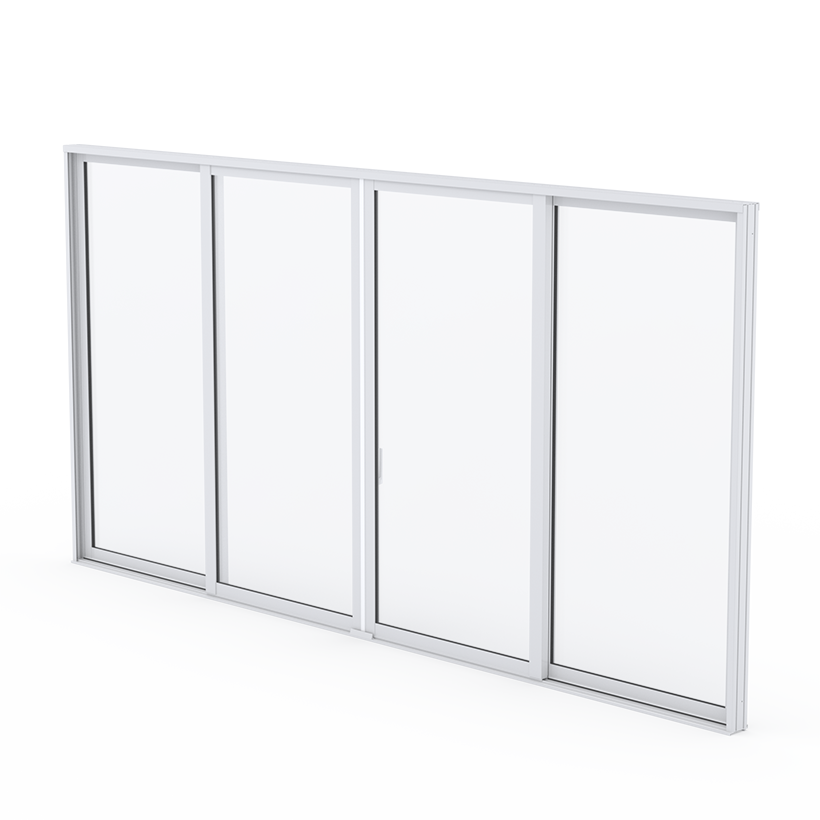 ES Windows · Prestige Series
ES Windows Prestige ES-SGD2020 Sliding Glass Door
Flagship aluminum impact sliding door in 2-track or 3-track configurations supporting up to 5 panels. Corners at 90 and 135 degrees, plus a pocket option for full-wall openings.
PGT WinGuard SGD780 (Mid-Range Standard)
The most widely installed impact sliding glass door in Florida. Available in 2-4 track configurations with panels up to 5 ft wide by 10 ft tall (or 4 ft by 12 ft). Maximum opening width of 40 feet with 8 panels. DP +/-90 PSF. Dual-point lock system, heavy-duty tandem rollers. Frame colors: white, bronze, clear anodize, black, beige.
Best for: Most residential applications. Broadest installer network. Strong warranty (limited lifetime on frame, 10 years on laminated glass). Over 3 million WinGuard units installed with no reported impact failures.
ES Windows Elite EL400 (Value Leader)
Approximately 20% less expensive than PGT for comparable specifications. Low-E and Kynar/Dynar coatings included standard (PGT charges extra). DP +80/-80 PSF. Up to 4 tracks with multiple operable panels. 5-6 week delivery vs. 12-16 weeks for PGT.
Best for: Budget-conscious projects where delivery speed matters. The value proposition (premium features at mid-range price) is strongest in this product line.
ECO Window Systems Series 700-760 (Budget)
The most affordable impact SGD on the Florida market. Series 700/750 at DP +60/-70 PSF for standard residential. Series 760 at DP +105/-115 PSF for higher-wind applications. Up to 4 tracks. Miami-Dade approved (Series 760).
Best for: Rental properties, multi-family, and cost-conscious homeowners. Popular with builders for spec homes.
WinDoor 8100 SGD (Premium/Luxury)
The largest certified impact sliding glass door panels in the industry. Panels up to 60" wide by 144" tall (5 ft by 12 ft). Up to 5 tracks. DP +125/-150 PSF. Available in pocketing and non-pocketing configurations, including 90-degree and 135-degree corner doors. 3-inch Delrin rollers for smooth operation at extreme panel weights.
Best for: Luxury waterfront homes, high-rise condominiums, resorts. Architect-specified projects where the door is a design statement. Notable installations include Ritz Carlton, Walt Disney World Resorts, and Marriott International properties.
Price: Premium. Expect $15,000-$30,000+ per installation depending on configuration. This is the most expensive residential SGD option, but it delivers design pressure ratings and panel sizes that no other manufacturer matches.
Impact Sliding Doors vs. Shutters for Large Openings
For budget-constrained projects, hurricane shutters over existing standard sliding doors are a legitimate alternative:
| Option | Cost per Opening (8 ft SGD) | Impact Protection | Water Protection | Daily Benefits | Deployment |
|---|---|---|---|---|---|
| Impact SGD (mid-range) | $3,500-$6,000 | Always on | Moderate (limited by track design) | Energy, noise, UV, security | None needed |
| Accordion shutter over standard door | $600-$1,500 | When deployed | 77-87% reduction (FIU data) | None | 15-30 min |
| Roll-down shutter over standard door | $1,200-$3,000 | When deployed | Good | None | Under 5 min |
The shutter approach costs 60-80% less per opening but requires deployment before every storm and provides no year-round benefits. For the full cost-benefit analysis, see our impact windows vs. shutters comparison and hurricane shutters cost guide.
Installation Considerations Specific to SGDs
Structural header. Sliding glass door openings are wide, and the header above the opening must carry the wall and roof loads that the removed wall section previously supported. In new construction, the header is engineered for the opening. In retrofits, verify that the existing header is adequate for the new door's weight and wind loads. A structural engineer may need to assess this for openings over 10 feet.
Sill pan. A waterproof sill pan beneath the door threshold is critical for SGDs because of their higher water intrusion vulnerability. Not all installations include sill pans. Ask your installer specifically.
Floor level transition. If the interior floor and exterior surface (patio, lanai) are at different heights, the track system must accommodate the transition. Flush-sill options are available but require more careful waterproofing.
Roller adjustment. After installation, the door panels must be adjusted so they roll smoothly and the weatherstripping makes consistent contact with the frame. Poorly adjusted rollers cause uneven weatherstripping compression, which increases water intrusion risk over time.
Permits. SGD installation requires a building permit in virtually all Florida jurisdictions. In the HVHZ, the product must carry a Miami-Dade NOA. In the WBDR, a Florida Product Approval with impact rating is required.
Next Steps
- Get a free estimate that includes sliding glass door options from multiple manufacturers matched to your opening's DP requirements.
- Ask about water performance. Request sill riser height, track drainage design, and weatherstripping material for each product being quoted. See our guide to why SGDs leak for the detailed questions.
- Consider the hybrid approach. If impact SGDs exceed your budget, accordion shutters over standard doors provide code-compliant protection at 60-80% less cost.
- Check MSFH eligibility at mysafeflhome.com for grants up to $10,000 toward impact doors and other improvements.
- For the full cost picture, see our impact door cost guide (every door type compared), the impact windows cost calculator, and the hurricane shutters cost guide.