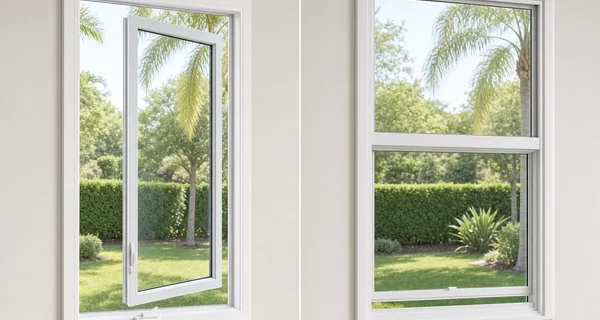

Awning vs casement impact windows is a choice between two versions of the same machine. Both hinge on one edge, crank outward, and pull the sash into a compression seal against the frame when locked. The awning hinges at the top and tilts out from the bottom; the casement hinges at the side and swings open like a small door. In most Florida impact lines the two share glass packages, locking hardware, and pressure ratings, so the real decision is geometry: where the window sits, what the room needs, and how big the opening is.
We install both styles across South Florida, often in the same wall. To put numbers behind the comparison, we checked the approval database we maintain on the brands we track: of the 11 impact-rated product lines that build both an awning and a casement version, 8 pairs carry identical governing design pressures, and in the 3 lines where the ratings split, the casement holds the higher number. Strength is almost never the tiebreaker.
What does break the tie: bedroom egress rules, the size charts (awnings run short and wide, casements narrow and tall), how you like to ventilate, and a price gap smaller than most homeowners expect.
Two Hinges, One Compression Seal
The North American Fenestration Standard (NAFS, published as AAMA/WDMA/CSA 101/I.S.2/A440) classifies both styles as projecting windows: the sash pivots outward on hinges instead of sliding in a track. When you crank the sash shut and throw the lock, the hardware squeezes the sash gasket against the frame on all four sides, and wind pressure pushes the sash tighter into that seal instead of working a sliding joint.
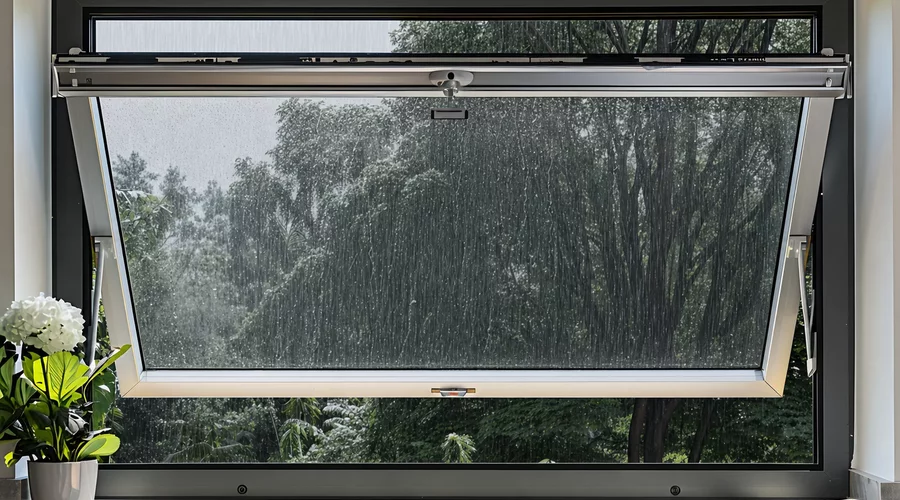
An awning window mounts its hinges along the head of the frame, so the sash tips out at the bottom and hangs over the opening like a small roof. A casement mounts its hinges along one jamb, so the sash swings out to the side and clears nearly the full frame.
Hung and rolling windows trade that compression seal for sliding weatherstrip; our impact window types comparison covers the whole field, while this article stays inside the crank-out family.
What Our Approval Database Says About Strength
Do manufacturers certify the two styles to the same loads? We compared the governing design pressure ratings, magnitudes only, for every impact line in our database that builds both styles. Across those 10 paired lines, 7 awning and casement versions carry identical governing design pressures.
| Product line | Awning governing DP (PSF) | Casement governing DP (PSF) |
|---|---|---|
| PGT WinGuard Vinyl (AW-5540 / CA-5540) | +70 / −110 | +70 / −110 |
| PGT WinGuard Aluminum (AW-740 / CA-740) | +90 / −130 | +90 / −130 |
| Pella HurricaneShield Vinyl | +67.5 / −67.5 | +67.5 / −67.5 |
In the three lines where the pair splits (Custom Window Systems Hurricane Guard
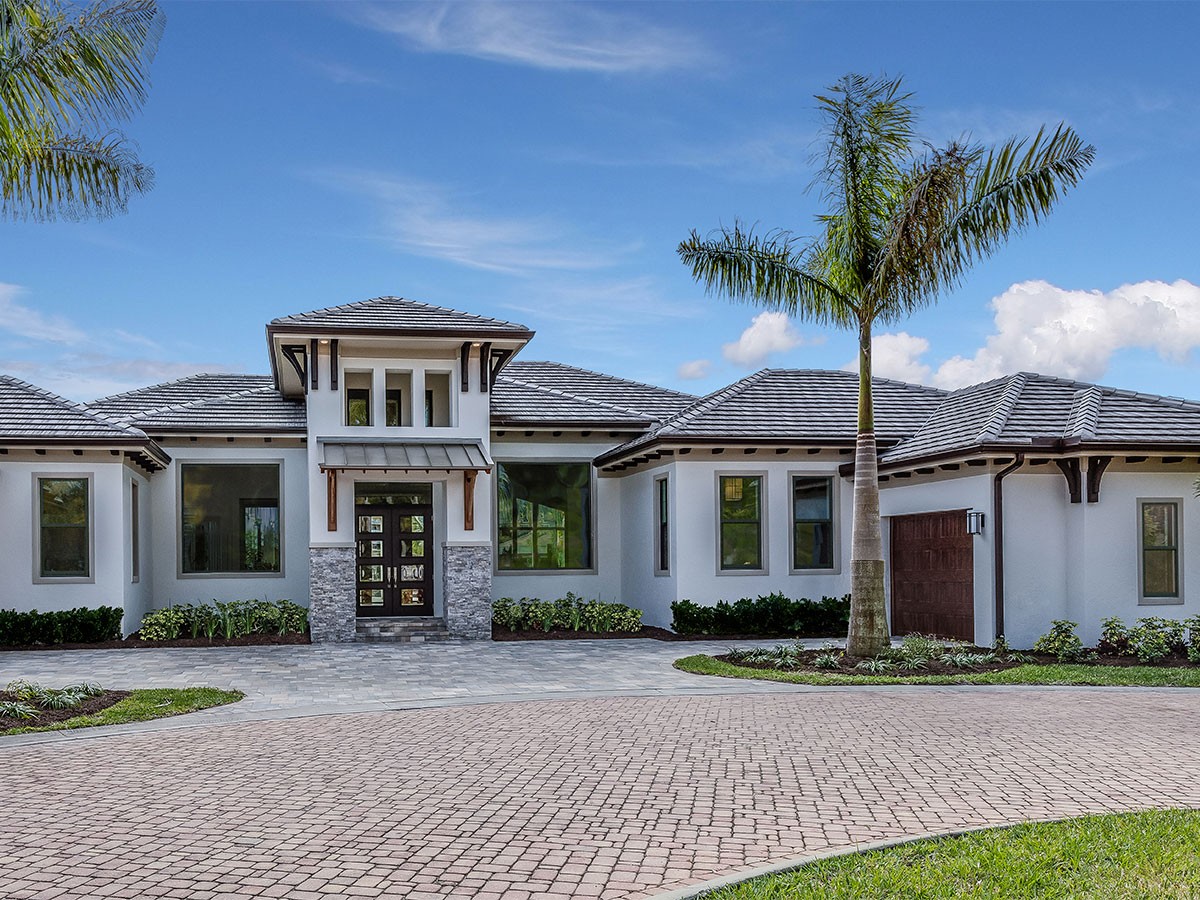
 CWS
Hurricane Guard Series
Flagship impact line across both aluminum and vinyl substrates: single hung, slider, picture, casement, hinged door, sliding door. HVHZ-certified on aluminum, FL-state on vinyl.
HVHZ-approved across the series 25 models in the series
Explore the Hurricane Guard Series
, Eastern Architectural Systems 143

 EAS
143 Series Vinyl
Six operation styles (single hung, double hung, horizontal roller, picture, casement, awning) on a shared 3-1/4 inch fusion-welded vinyl frame with 0.070 inch wall thickness.
6 models in the series Covers Casement Window, Double-Hung Window, Horizontal Roller Window, +3 more
Explore the 143 Series Vinyl
, and ECO's Eco-Guard series
 ECO
Eco-Guard Casement & Awning Series
ECO's aluminum impact casement (Series 500), matching fixed (550), and project-out awning (560) — NFRC-certified, stainless operators and multipoint locks, under FL Product Approvals FL41650 / FL32389 / FL41651.
5 models in the series Covers Casement Window, Fixed Window, Awning Window
Explore the Eco-Guard Casement & Awning Series
), the casement version carries the higher rating every time.
The practical reading: pick the hinge axis for the room, not for the storm. Either style, sized and anchored per its approval documents, meets Florida and High-Velocity Hurricane Zone requirements in the lines we install. ECO's Eco-Guard 560 awning, approved under FL41651, is a worked example: the state-filed installation drawing spells out the large-missile rating, anchor schedule, and size limits behind the +70/−70 PSF rating in our records.
Where the Awning Window Wins
Ventilation during rain. The top-hinged sash sheds light rain away from the opening while air keeps moving underneath it. Through a summer of daily afternoon showers, an awning can stay cracked when every other operable style in the house has to close. That is the biggest reason people ask us about hurricane awning windows for kitchens and Florida rooms; our guide to impact windows and ventilation covers airflow planning. The limit: cracked-open is a fair-weather setting, and when a storm is coming every awning gets cranked shut and locked like everything else.
High and transom placements. Because the crank handle sits on the sill and needs no lifting force, an awning works above eye level: over a kitchen sink, over a tub, as an operable transom band above fixed glass or doors. Heat stacks at the ceiling, and a high awning band lets it out.
Privacy bands. A short, wide impact awning window mounted high in a bathroom or street-facing bedroom wall brings in light and air with no sight line from outside. We spec these constantly in older Broward and Miami-Dade homes.
The classic pairing. Awnings rarely work alone. The standard move is a fixed picture window with an awning below (or above) it: the fixed lite does the view, the awning does the airflow, and the mulled assembly reads as one tall window from the street.
Where the Casement Window Wins
Egress. Florida's Residential Code, Section R310, requires sleeping rooms to have an emergency escape opening: at least 5.7 square feet of net clear area (5.0 at grade floor), 24 inches of clear height, and 20 inches of clear width. A casement swings its sash fully out of the way, so a modest frame satisfies the rule. An awning's open sash hangs across its own short opening, and almost no impact awning qualifies. Bedrooms get casements. This is code, not preference.
Opening area and breeze capture. A casement opens close to 100 percent of its frame, the most of any operable style, and the open sash acts as a scoop that redirects a breeze running parallel to the wall into the room.
Glass and view. Casement size charts run tall: 76 to 84 inch vents are routine, so a casement impact window fills a full-height opening with one uninterrupted pane, no meeting rail across the view.
Size Charts Tell the Real Story
Side by side, the two size charts complement each other. Across the 44 awning and casement products carrying size data in our database, the average maximum height for an awning is 54 inches against 75 inches for a casement, while maximum widths sit within two inches of each other.
| Product line | Awning max single vent (W × H) | Casement max single vent (W × H) |
|---|---|---|
| ES Windows Elite uPVC | 42 × 42 in | 40 × 80 in |
| ECO Eco-Guard | 53 × 37 in | 37 × 76 in |
| PGT WinGuard Aluminum | 60 × 39 in | 37 × 63 in |
Narrow tall formats stretch those limits a little (PGT's WinGuard aluminum awning reaches 84 inches tall once width drops under 28 inches), but the pattern holds: awnings are wide and short, casements narrow and tall. A 3-by-5 bedroom opening rules out the awning; a 5-by-3 strip above a counter rules out the casement.

 PGT · WinGuard Aluminum Series
PGT WinGuard Aluminum Awning AW740A
Aluminum impact awning on the WinGuard 740-series casement frame, top-hinged for ventilation in light rain. Diamond Glass, LMI for HVHZ.
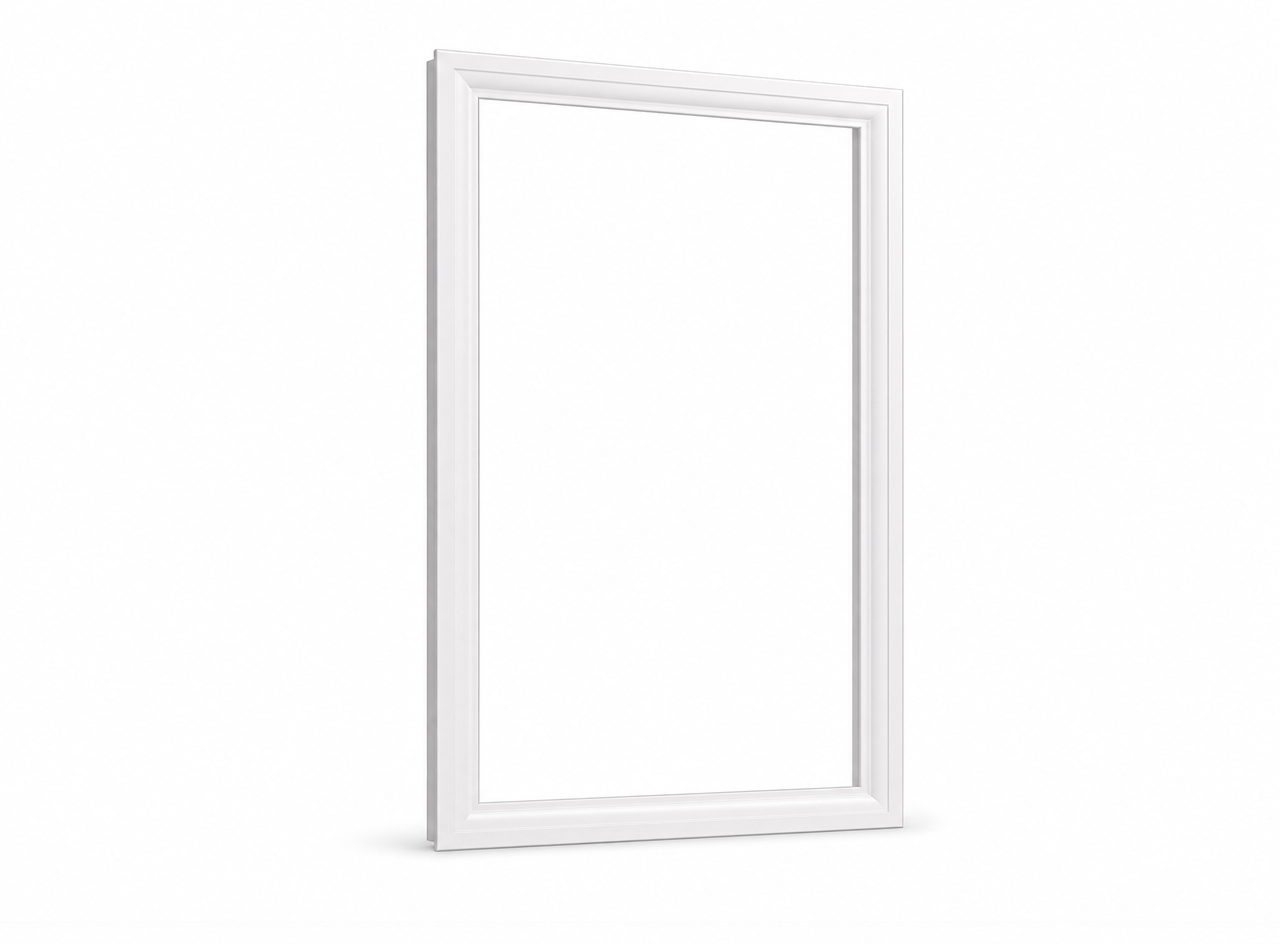 PGT · WinGuard Aluminum Series
PGT WinGuard Aluminum Casement CA740A
Aluminum impact casement on the WinGuard 740-series frame, side-hinged with a crank-out sash. Mulls cleanly with AW740A and PW740A in the 740-family.
Hardware and Screens
Both styles run on a crank operator and, in impact versions, a multi-point lock that draws the sash into the seal at several points along the frame. Under the cover, awnings use a scissor-arm operator centered on the sill, casements a single or dual-arm operator plus a hinge track on the jamb side. Operators are the wear item on either style, and both are field-replaceable.
Screens mount on the interior in both styles, since the sash swings outward; on a single hung, by contrast, the screen lives outside collecting grime. Interior screens stay cleaner and pop out without a ladder. Exterior glass is the difference: many casements swing wide enough to reach the outside face from indoors, while a high-mounted awning usually needs outside access.
What Each Style Costs Installed
Pricing surprises people: the smaller window is not meaningfully cheaper. Across the 16 impact awning products we price, installed figures average roughly $1,100 to $2,400 per window; across 28 casements, roughly $1,200 to $2,600. The operator, multi-point lock, laminated glass, and labor are nearly the same parts list either way, so shrinking the glass does not shrink the invoice much.
Entry points from our own retail figures: a CWS Hurricane Guard 652 awning starts around $835 installed at its smallest size, and ECO's Eco-Guard awning and casement both start around $1,100. The order even flips line by line; in PGT's WinGuard vinyl series
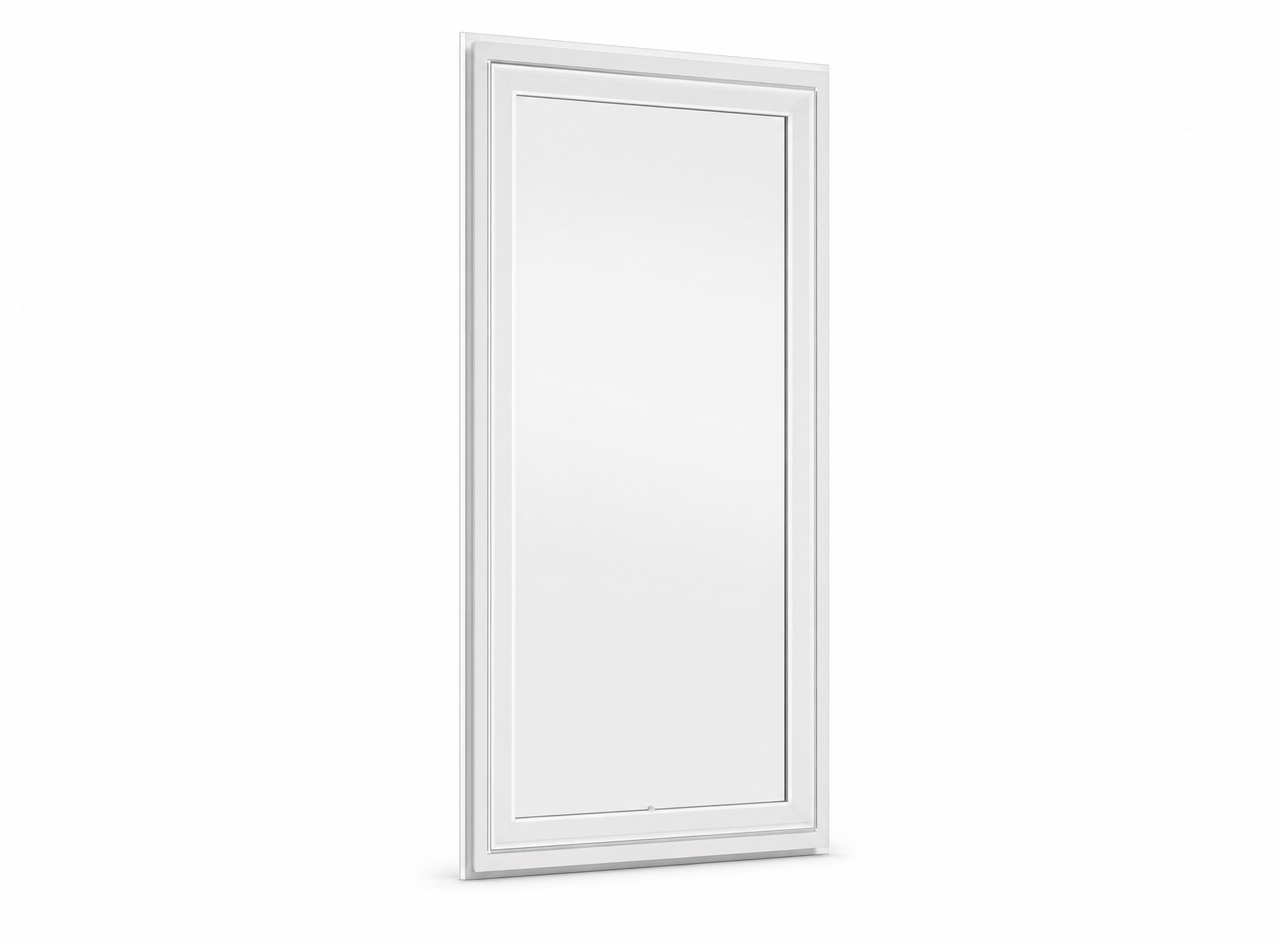 PGT
WinGuard Vinyl Series
The best-selling impact vinyl line in the U.S., built on a 3-1/2 inch welded vinyl frame with Diamond Glass laminated glazing. Nine operation styles mull cleanly into all-vinyl elevations.
HVHZ-approved across the series 12 models in the series
Explore the WinGuard Vinyl Series
the casement starts lower than the awning. Treat the two styles as the same budget line and spend your decision energy on placement.
Next Steps
- Walk the house and sort openings by job: view, breeze, privacy, egress. Bedroom escape openings need casements; high strips and over-sink spots favor awnings.
- Check your opening shapes against the size patterns above: wide-and-short points to awning, tall-and-narrow to casement.
- If some openings fit neither style, the impact window types comparison covers the rest of the field.
- Schedule a free estimate and we will measure each opening, match it to approved products, and price both styles wherever either works.