

Impact window glass looks like ordinary glass, but it is engineered to do something ordinary glass cannot: crack on impact and still stay in the frame, sealing your home against wind and water for the rest of the storm. That single behavior, glass that breaks but holds, is the whole point of a hurricane impact window, and it explains every layer inside one.
This guide takes an impact window apart, layer by layer, so you can read the glass line on a quote and know exactly what you are buying. We install glass from several manufacturers, so the goal here is to explain how the technology works rather than to sell one brand of it.
What Makes Impact Glass Different From Regular Glass
A standard single-pane window is one piece of glass. When a flying roof tile hits it, the glass shatters, the opening blows out, and wind pressurizes your home from the inside. That internal pressure is what lifts roofs and pushes out walls.
Impact glass is laminated glass: two layers of glass permanently bonded to a tough, clear plastic interlayer in the middle, like a glass sandwich. When debris strikes it, the outer glass layer can fracture, but the interlayer stretches and holds every fragment in place. The pane spiderwebs, yet it stays in the frame and keeps the building envelope sealed.
Engineers describe the outer layer as a sacrificial ply. It is meant to take the hit and crack. The interlayer then holds the broken glass together while the inner layer continues to carry the wind load. So when a salesperson says impact glass is "unbreakable," that is not quite right, and you should be skeptical of the claim. The glass can and does crack. What it will not do is leave the opening. That distinction is the honest, accurate way to understand the product.
This is the same principle as a car windshield, which is also laminated and also stays in one piece when a rock hits it. The difference is that an impact window uses thicker glass, a much stronger interlayer, and a frame anchored to survive hurricane-force pressure.
The Three Glass Types, and Why Tempered Is Not Always Best
Not all glass is the same. Three types show up in window manufacturing, and they behave very differently when they break.
| Glass type | Strength vs annealed | How it breaks | Where it fits |
|---|---|---|---|
| Annealed | Baseline (1x) | Large, sharp shards | Common inner lite in many laminated impact units |
| Heat-strengthened | About 2x (3,500-7,500 psi surface compression) | Large fragments that interlock on the interlayer | Preferred for most impact assemblies |
| Fully tempered | About 4-5x (over 10,000 psi) | Dices into thousands of small cubes | Where a safety-glazing code requires it (doors, sidelites) |
Most homeowners assume tempered glass, the strongest type, must be the best choice for a hurricane window. It usually is not, and the reason is what happens after the glass breaks.
When a heat-strengthened lite fractures, it breaks into large pieces that stay locked together on the interlayer, almost like an arch. The broken assembly keeps most of its stiffness, losing under nine percent in lab testing. A fully tempered lite does the opposite: it dices into thousands of tiny cubes that act like loose ballast on a limp membrane, and the broken assembly loses roughly half its stiffness. For a window that has to keep carrying wind load with cracked glass, that is the wrong behavior.
Fully tempered glass carries one more drawback. A rare impurity called nickel sulfide can sit inside the glass and slowly expand, causing spontaneous breakage years later with no impact at all. This failure mode affects only fully tempered glass. For these reasons, glass makers such as Vitro recommend heat-strengthened glass for laminated impact units except where a safety-glazing code specifically calls for tempered, such as in a door or a low sidelite.
The takeaway: "tempered" on a quote is not automatically an upgrade. The right glass type depends on where the unit goes and what the code requires.
The Interlayer Is the Heart of an Impact Window
If the glass is the skin, the interlayer is the muscle. It is the clear plastic core that holds everything together after the glass cracks, and it is where impact windows quietly differ the most in quality. Two materials dominate the Florida market.
PVB (polyvinyl butyral) is the standard interlayer, the same material used in car windshields for nearly a century. Eastman's Saflex is the best-known brand. PVB is proven, widely available, and meets code for the vast majority of residential impact windows.
SentryGlas (ionoplast), made by Kuraray, is the structural upgrade. It is far stiffer and stronger than PVB, and it shines in exactly the conditions Florida throws at it: heat and time.
Here is the part most homeowners never hear. PVB softens as it warms. On a hot day, in the few seconds of a wind gust, standard PVB can lose most of its stiffness as glass-surface temperatures climb. SentryGlas barely flinches. Verified against the manufacturer's own engineering data, at around 30 degrees Celsius in a three-second gust, SentryGlas is roughly 200 times stiffer than standard PVB and about three times stiffer than even the structural grade of PVB. Over a full year of sustained load, standard PVB can relax by a factor of dozens, while SentryGlas relaxes only about twofold. In a climate that is hot most of the year, that difference is not academic.
| Interlayer | Relative stiffness in heat | Best use |
|---|---|---|
| Standard PVB | Baseline; softens significantly when warm | Most residential impact windows |
| Structural PVB | Stiffer than standard, still heat-sensitive | Larger or higher-pressure openings |
| SentryGlas (ionoplast) | Roughly 200x standard PVB at gust speed in heat | Large spans, high design pressure, coastal exposure |
You do not need SentryGlas in every window. A standard PVB laminate is the right, code-compliant choice for most openings. But for a wide sliding glass door, a tall fixed picture window, or a high-rise unit facing brutal pressure, the structural interlayer is what keeps a large pane rigid when it is cracked, hot, and loaded all at once. Ask which interlayer a quote uses, and where.
There is also an acoustic version of PVB. It uses a soft inner core that damps the specific frequencies the human ear finds most annoying, cutting perceived outside noise by roughly half at the worst pitch. It is a comfort upgrade rather than a structural one, and it is worth asking about if you live near traffic or a flight path. We cover that further in our guide to how impact windows reduce noise.
How Impact Glass Proves Itself: The Missile and Pressure Tests
An impact window is not "impact-rated" because a brochure says so. It earns the label by surviving a brutal, standardized test sequence, and understanding that test tells you what the glass can actually do.
The headline test is the large-missile test. A cannon fires a nine-pound 2x4 wood stud at roughly 34 miles per hour (50 feet per second) directly at the glass. That is about 350 foot-pounds of energy, meant to mimic the kind of lumber a hurricane turns into a battering ram. The window has to take two of these hits, on three separate specimens, without the debris penetrating. A separate small-missile test fires ten steel balls for openings higher above the ground, where the threat is roof gravel rather than lumber.
Surviving the impact is only half of it. The same window then goes onto a pressure rig and endures 9,000 pressure cycles, pushing and pulling on the cracked glass to simulate hours of fluctuating storm wind.
What separates the two Florida approval tracks is how much the interlayer is allowed to open up by the end of all that. Under the Miami-Dade TAS protocols that govern the High-Velocity Hurricane Zone, the tear may not exceed 5 inches long and 1/16 inch wide. Under the ASTM standards behind a statewide Florida Product Approval, the limit is 5 inches long and 3 inches wide. Same length, very different opening: about a third of a square inch versus about fifteen, which is why the HVHZ tolerance is roughly forty-eight times tighter by area. That gap is the real reason Miami-Dade approval is treated as the gold standard. We explain the certifications in detail in HVHZ vs impact rating.
This is also why the missile, not the wind speed, is the true differentiator. Plenty of glass can resist wind pressure. Only laminated impact glass can take a 2x4 to the face and still seal the opening. If you want to understand the limits honestly, impact glass is built to stop storm debris, not bullets; we walk through that difference in can impact windows stop a bullet.
Low-E Coatings and Energy Performance in Florida
Impact glass does more than survive storms. The right coating turns it into a year-round energy upgrade, and in Florida the number that matters most is SHGC, the Solar Heat Gain Coefficient. SHGC measures how much of the sun's heat the glass lets through, on a scale from 0 to 1. The lower the number, the cooler your home and the smaller your cooling bill.
The tool that lowers SHGC is a Low-E (low-emissivity) coating, a microscopically thin metallic layer baked onto the glass. It lets visible light through while reflecting infrared heat back outside. Modern coatings stack multiple ultra-thin silver layers to do this, and the best of them are remarkable: triple-silver coatings from major glass makers like Cardinal, Vitro, and Guardian now reach an SHGC around 0.23 while still passing plenty of daylight.
That performance is not optional in Florida. The Florida Building Code caps glazed SHGC at 0.25 in the state's climate zones, and the federal ENERGY STAR program's Southern-zone window requirement is even tighter at 0.23. A quality Low-E impact glass package meets both. Because Florida is a cooling climate, SHGC matters far more here than the U-factor that dominates window marketing up north. For the full picture of bills and payback, see our breakdown of how impact windows lower energy costs.
One practical note: the Low-E coating belongs on an interior surface of an insulated unit, not buried inside the laminated glass sandwich, where it would lose its energy benefit. A reputable installer will spec it correctly.
Single-Glazed vs Insulated (IGU) Impact Glass
Impact glass comes in two basic builds, and the difference affects both energy performance and weight.
Single-glazed (non-insulated) impact glass is one laminated unit: two glass lites and an interlayer. It is fully impact-rated and is the most common choice in South Florida, where the priority is storm protection more than winter insulation.
Insulated (IGU) impact glass adds a second, separate pane and a sealed air gap, usually filled with argon for better insulation. So an impact IGU is a laminated unit plus another lite of glass, which is what lets it carry a low-E coating efficiently and hit the best energy numbers.
The trade-off is weight. Glass is heavy, and impact glass is heavier than most people expect. A four-foot by eight-foot insulated impact sliding-glass-door panel holds roughly 280 pounds of glass alone, before the frame. That weight is exactly why impact sliding doors need heavy-duty rollers and a two-person installation, and why frame and anchor quality matter as much as the glass.
Whether you need an IGU depends on your goals and budget. If energy savings and the lowest possible SHGC are priorities, the insulated unit earns its cost. If pure storm protection is the goal, a single-glazed laminated unit may be the better value. A good consultation works that out opening by opening.
How to Read the Glass Line on Your Quote
You now know more about impact glass than most salespeople will volunteer. Here is how to put it to work when two quotes look similar on price. Ask about each of these.
- Interlayer type and thickness. Is it standard PVB, structural PVB, or SentryGlas, and how thick? A common laminated thickness is 7/16 inch; thinner 5/16 inch glass is also used. For large doors and high-pressure openings, ask whether SentryGlas is offered.
- Glass type. Annealed, heat-strengthened, or tempered, and does it match the opening's code requirement?
- Low-E and SHGC. Does the glass carry a Low-E coating, and what is the SHGC? In Florida you want 0.25 or below, ideally near 0.23.
- Single-glazed or insulated. Is this a laminated unit or a laminated IGU with argon? This drives both the energy rating and the price.
- Approval. Does the product carry a Miami-Dade Notice of Acceptance (NOA) or a Florida statewide product approval? In the HVHZ, you need a Miami-Dade NOA tested to the TAS 201, 202, and 203 standards.
- Design pressure (DP). The DP rating, written as a plus and minus number in pounds per square foot, must meet the engineered requirement for your specific opening and exposure.
If a quote cannot answer these, that is useful information. The glass specification is where corners get cut, because most buyers never ask. Two windows can look identical in a showroom and perform very differently in a storm and on your power bill, and the glass line is where that difference lives. The glass package also explains a real share of price differences between bids, which we cover in our impact window cost guide.
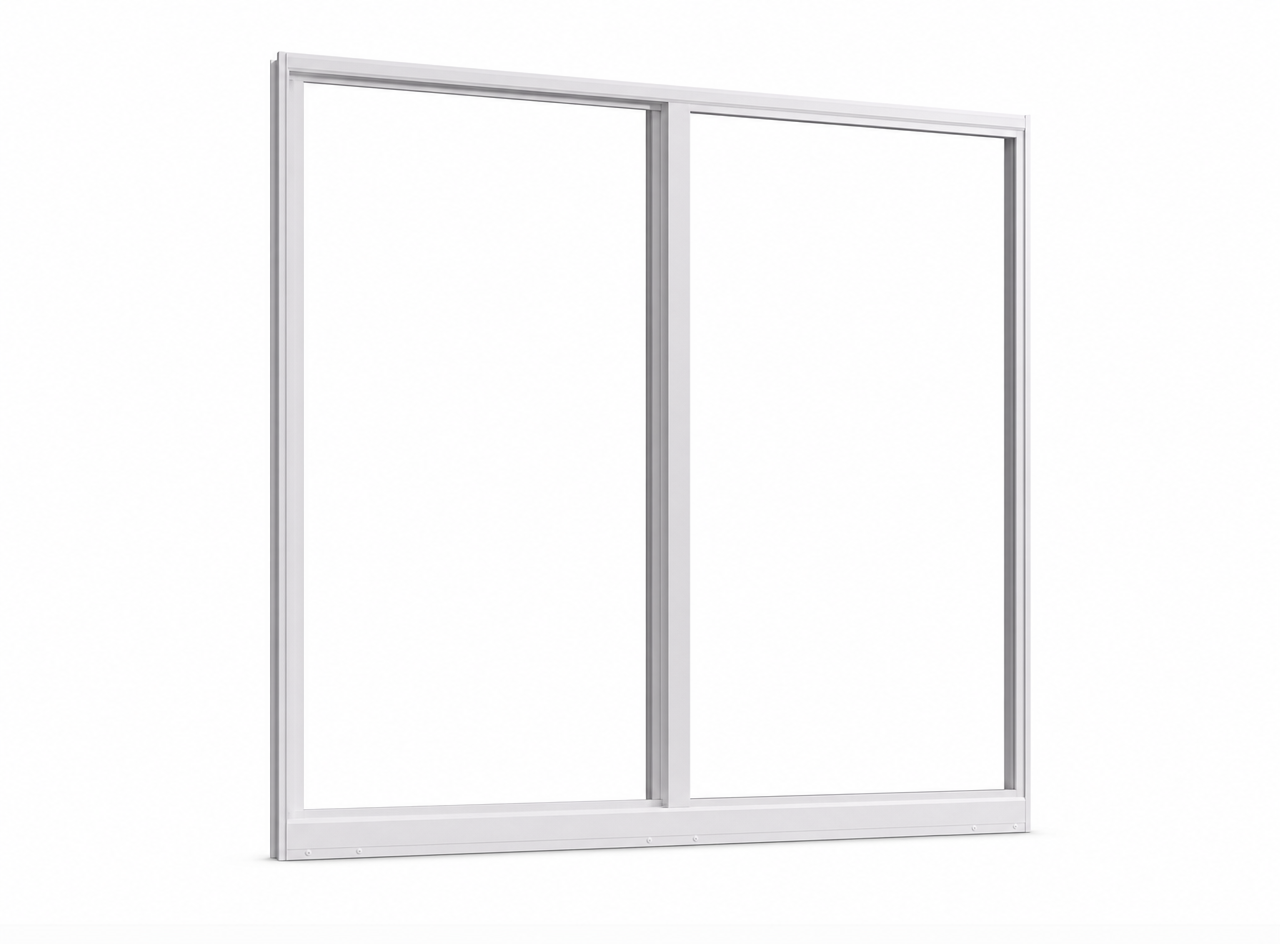
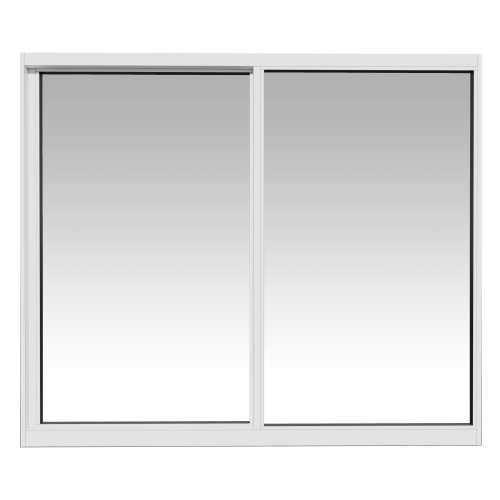
 PGT · WinGuard Aluminum Series
PGT WinGuard Aluminum Horizontal Roller HR7710A
Aluminum impact horizontal roller on the WinGuard 7700-series frame, opening side-to-side for wider residential openings. Diamond Glass, LMI for HVHZ.
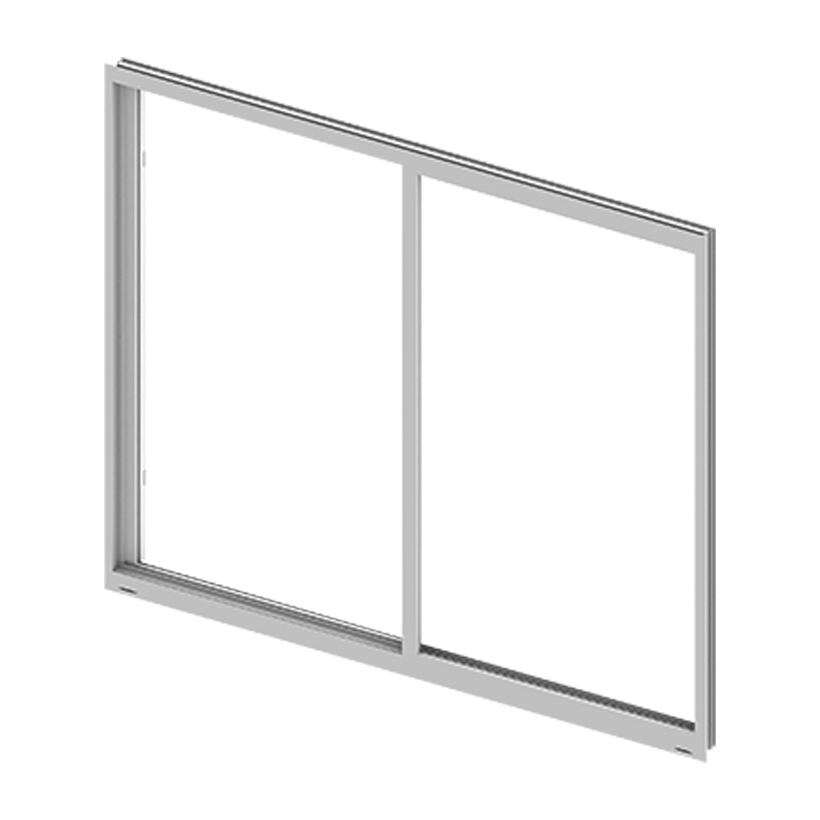
 ECO · Eco-Guard Horizontal Rolling Series
Eco-Guard Horizontal Rolling Series 60
Entry 2-panel aluminum impact roller, 2-1/8 in. frame, +55/-60 psf, LMI for HVHZ.
 ES Windows · Elite Series
ES Windows Elite ES-EL200 Sliding Window
Aluminum impact horizontal slider in XO, OX, and XOX configurations on a 2-15/16 inch frame. Polyamide rollers with needle bearings.
When you are ready to compare real options for your home, our team will walk you through the glass choices opening by opening, with no pressure. You can start with a free, no-obligation estimate.
Next Steps
- Pull out your current quote and check it against the six glass questions above, especially the interlayer type, the SHGC, and the product approval.
- Decide your priorities for each opening: pure storm protection, maximum energy savings, or noise reduction. The right glass build is different for each.
- Verify the approval. Confirm the product carries a Miami-Dade NOA or Florida product approval for your county and exposure.
- Check the energy numbers against the ENERGY STAR window requirements and NFRC ratings so you know the SHGC and U-factor are real, certified values.
- Explore financing if you are phasing the project. Our financing options let you start with the most exposed openings and add the rest over time.
- Get a free, no-pressure estimate. We will spec the glass opening by opening for your home and exposure. Start with a free estimate.