
Impact windows are one of the most effective building upgrades you can make in Florida. They're also one of the most misunderstood. Every week, homeowners ask us whether their impact windows are bulletproof, whether the glass ever breaks, or whether taping their windows is "good enough" for a hurricane.
Some of these myths are harmless misconceptions. Others are genuinely dangerous. This article addresses seven of the most common impact window myths head-on, using testing data, building code specifications, and material science—not marketing language.
Myth 1: Impact Windows Are Bulletproof
Verdict: FALSE.
This is the single most common misconception about impact windows. The confusion is understandable: both impact glass and ballistic glass are "laminated" products that resist penetration. But they are fundamentally different products engineered for fundamentally different threats.
What Impact Glass Actually Is
Impact glass consists of two sheets of glass (annealed or heat-strengthened) bonded to a polyvinyl butyral (PVB) interlayer under heat and pressure in an autoclave. The standard residential configuration uses three plies of PVB film totaling approximately 0.090 inches (2.29 mm). The complete glass unit (both glass sheets plus the interlayer) is roughly 5/16 inch thick.
This assembly is tested per TAS 201 (Test Application Standard 201), which fires a 9-lb 2x4 lumber missile from a pneumatic cannon at 34 mph (50 feet per second) at the glass. The test simulates wind-borne debris during a hurricane. That's what impact glass is designed to stop, not bullets.
What Ballistic Glass Actually Is
Ballistic glass, tested to NIJ Standard 0108.01 (National Institute of Justice), is a completely different product. It consists of multiple alternating layers of glass and polycarbonate bonded together under extreme pressure. The finished product is typically 1.5 to 3 inches thick, roughly 5 to 10 times thicker than impact glass.
The key material difference is the interlayer. Impact glass uses PVB with a tensile strength of approximately 20 MPa. Ballistic glass uses polycarbonate with a tensile strength of 55-75 MPa, nearly four times stronger. Polycarbonate is the same material used in riot shields, fighter jet canopies, and bank teller partitions. PVB is not designed to stop that level of concentrated force.
The Energy Math
The physics make the difference clear:
- A 9-lb 2x4 traveling at 34 mph delivers approximately 400 ft-lbs of kinetic energy distributed across a 3.5-inch-wide surface
- A 9mm handgun round delivers approximately 500+ ft-lbs of kinetic energy concentrated on a bullet tip roughly 0.355 inches in diameter
The bullet carries more total energy and concentrates it on a contact area roughly one-tenth the width of the 2x4. That concentration is what matters. A nail and a baseball bat can carry similar amounts of kinetic energy, but only one punctures the wall.
Impact glass is not designed, tested, or rated to resist ballistic threats. Period.
What Impact Glass DOES Resist
While impact windows will not stop a bullet, they do provide significant forced-entry resistance. A burglar who can punch through a standard window in seconds would need sustained effort with heavy tools to breach an impact window. The PVB interlayer holds the glass together even after the panes crack, and the laminated panel remains anchored in a reinforced frame. This is a real and valuable security benefit—it's just not the same thing as being bulletproof.
Myth 2: Impact Windows Never Break
Verdict: FALSE.
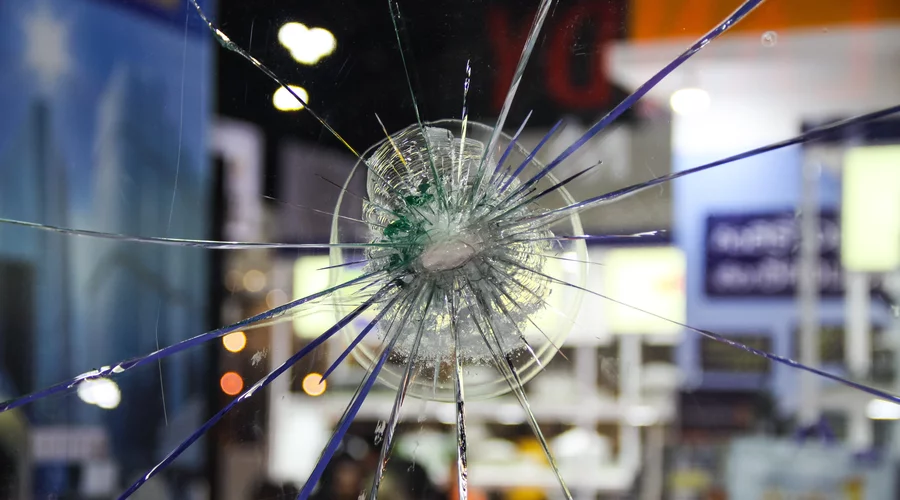
The glass absolutely cracks. That's not a defect—it's the entire engineering principle.
How Impact Glass Is Designed to Fail
When wind-borne debris strikes an impact window, the system absorbs energy in a specific sequence:
-
The outer glass lite fractures. This is intentional. The glass absorbs kinetic energy through the fracturing process itself: the energy required to propagate cracks through the glass is energy that does not transfer to the interlayer or the frame.
-
The PVB interlayer stretches and deforms. After the glass cracks, the interlayer absorbs additional energy through plastic deformation: it stretches permanently rather than springing back. This is the same principle that makes crumple zones work in cars.
-
The interlayer holds all fragments in position. Even with both glass lites completely spider-webbed, the PVB keeps every fragment bonded in place. The window is visually destroyed but structurally intact.
-
The cracked panel stays sealed in the frame. Wind and water cannot enter the home. The building envelope is maintained.
The Pressure Cycling Test
Surviving the initial debris impact is only half the test. After the 2x4 strike, the damaged specimen must endure 9,000 cycles of alternating positive and negative air pressure per TAS 203. This simulates the sustained wind loads a cracked window faces during the hours-long passage of a hurricane.
In the High Velocity Hurricane Zone (Miami-Dade and Broward counties), the post-test tear tolerance is exceptionally strict: no tear in the interlayer may exceed 5 inches long by 1/16 inch wide. That's a hairline opening on a panel that has already been hit by a 2x4 and then flexed back and forth 9,000 times.
A cracked impact window is a window that has done its job. If your impact windows crack during a hurricane, they are performing exactly as designed. Do not attempt to remove or replace them during the storm. They are still protecting your home.
Myth 3: You Don't Need Shutters If You Have Impact Windows
Verdict: MOSTLY TRUE.
Impact windows are code-compliant as standalone opening protection under the Florida Building Code. If your windows carry the appropriate Miami-Dade NOA (Notice of Acceptance) or Florida Product Approval, they meet the opening protection requirement without any additional shutters, panels, or covers.
The Insurance Question
On the OIR-B1-1802 wind mitigation inspection form, impact windows and hurricane shutters receive the same opening protection credit. An inspector checks whether all openings are protected. Impact windows and approved shutters are treated equivalently. There is no additional discount for having both.
The typical premium reduction for the opening protection credit is 30-45% of the wind portion of your homeowners insurance, which often translates to $1,000-$3,000 per year in savings depending on your policy, location, and home value.
The Always-On Advantage
The practical advantage of impact windows over shutters is that protection is always deployed. You never have to:
- Monitor a forecast and decide when to install panels
- Spend hours putting up and taking down shutters
- Store bulky panels in your garage
- Find someone to install shutters if you're traveling when a storm forms
- Risk injury from ladder work during pre-storm preparation
Impact windows protect your home 24/7—during the surprise June tropical storm, during the overnight November squall, and during every day in between.
The Hybrid Approach
Some homeowners use a combination: impact windows on standard-size openings (bedrooms, bathrooms, kitchens) and shutters on large sliding glass doors where impact-rated units can be significantly more expensive. This is a legitimate cost-management strategy, but it does require deploying shutters before every storm.
For a full comparison, see our detailed guide: Impact Windows vs. Hurricane Shutters.
Myth 4: All Impact Windows Are the Same
Verdict: FALSE.
This myth costs homeowners real money and real protection. The differences between impact window products are substantial—and the cheapest option is often the least protective.
Design Pressure Ratings
Impact windows carry a DP (Design Pressure) rating that indicates the maximum wind load they can withstand. Ratings range from DP-30 (suitable for low-rise buildings in moderate wind zones) to DP-100+ (required for high-rise and extreme exposure applications). A DP-50 window is not "almost as good" as a DP-70; it's rated for a fundamentally lower wind load.
In South Florida's HVHZ, most residential applications require a minimum of DP-50 to DP-65 depending on the building's height, exposure category, and distance from the coast.
Interlayer Materials
Not all interlayers are created equal:
- PVB (polyvinyl butyral) is the standard interlayer used in most residential impact windows. It's effective, proven, and cost-efficient.
- SentryGlas (SGP) is an ionoplast interlayer that is 100 times stiffer and has 5 times the tear strength of standard PVB. It's used in large-span applications, commercial storefronts, and premium residential products where maximum post-impact integrity is required.
The difference matters most in large glass panels (sliding glass doors, picture windows, and floor-to-ceiling walls) where the interlayer must span a greater unsupported area after the glass cracks.
Testing Standards: HVHZ vs. Non-HVHZ
This is where the gap gets alarming. Florida uses two different testing tracks:
- TAS 201/202/203 governs the High Velocity Hurricane Zone (Miami-Dade and Broward). These are the strictest standards.
- ASTM E1886/E1996 governs the rest of the state's Wind-Borne Debris Region.
Both standards fire the same 9-lb 2x4 at 50 fps. The critical difference is in the post-impact tear tolerance:
| Standard | Max Tear Length | Max Tear Width |
|---|---|---|
| HVHZ (TAS 203) | 5 inches | 1/16 inch |
| Non-HVHZ (ASTM E1996) | 5 inches | 3 inches |
The non-HVHZ standard allows a tear 48 times wider. A 5-inch-by-3-inch opening in a cracked window is large enough for significant wind and water intrusion. If you're buying impact windows anywhere in Florida, ask whether the product carries a Miami-Dade NOA, not just a state-level Florida Product Approval. The HVHZ standard is the benchmark for quality.
Frame Materials
The glass gets the attention, but the frame holds everything together:
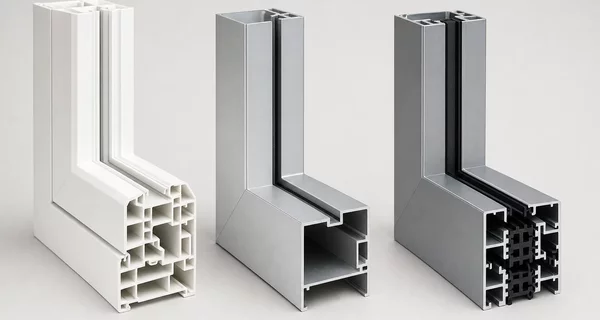
- Aluminum 6063-T5 is the standard alloy for residential impact window frames. The T6 temper is approximately 15-20% stronger and is used in higher-DP-rated products.
- Vinyl (uPVC) frames offer better thermal insulation but lower structural strength. They're suitable for moderate DP ratings in protected exposures.
- Fiberglass frames combine thermal performance with structural strength but carry a price premium.
The frame must be strong enough to keep the cracked laminated glass unit in place during 9,000 pressure cycles. A premium glass unit in a weak frame is a system that fails at its weakest point.
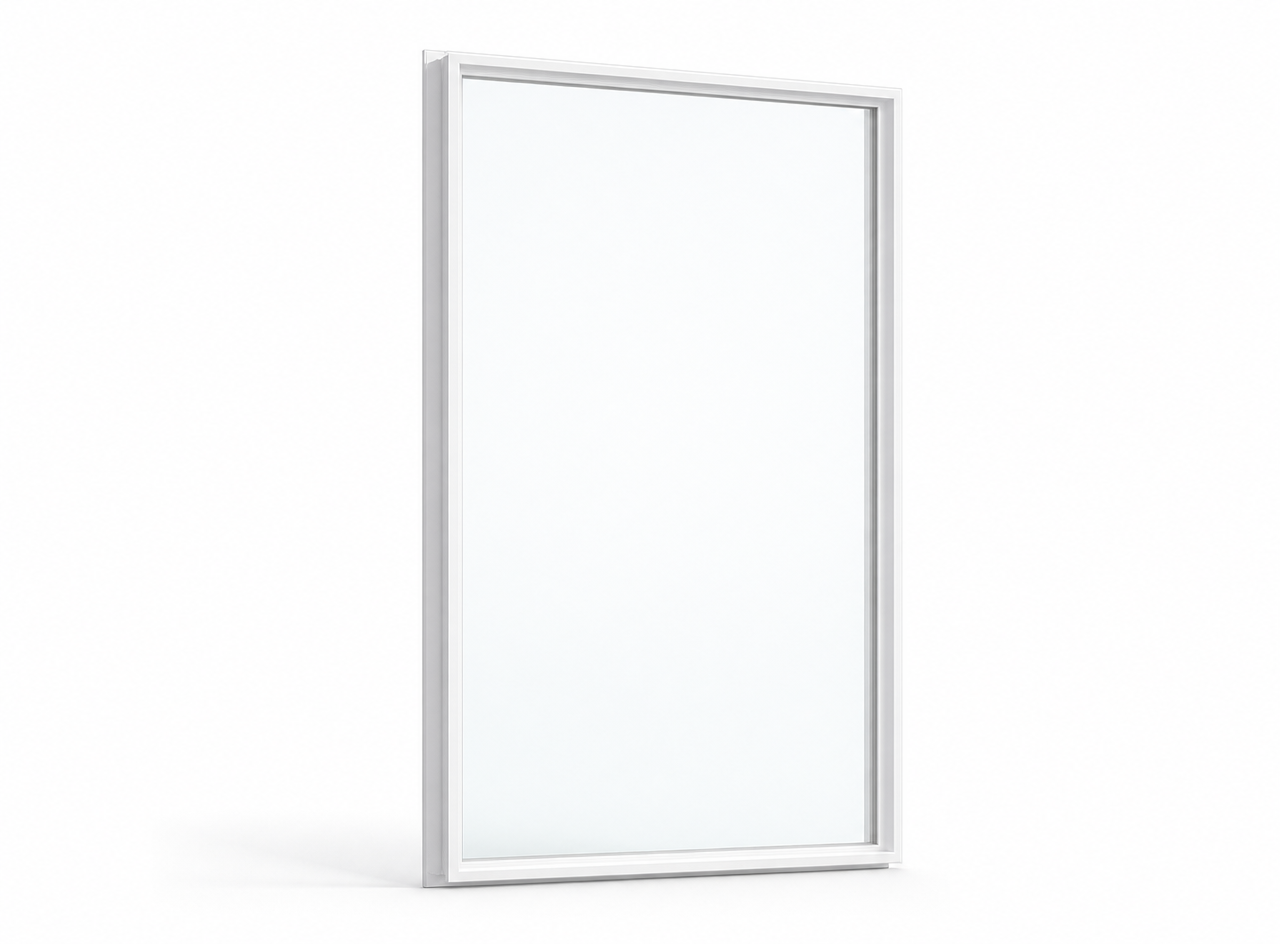
 PGT · WinGuard Aluminum Series
PGT WinGuard Aluminum Picture PW7720A
Aluminum impact fixed picture window on the WinGuard 7720 picture platform for unobstructed view installations. Diamond Glass, LMI for HVHZ.
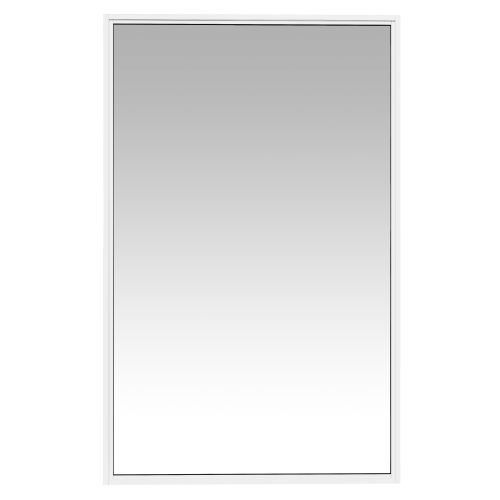
 ECO · Eco-Guard Architectural Fixed Window Series
Eco-Guard Architectural Fixed Window Series 70
Entry aluminum impact fixed window, 2-1/8 in. frame, +60/-60 psf, LMI, up to 32 x 104 in.
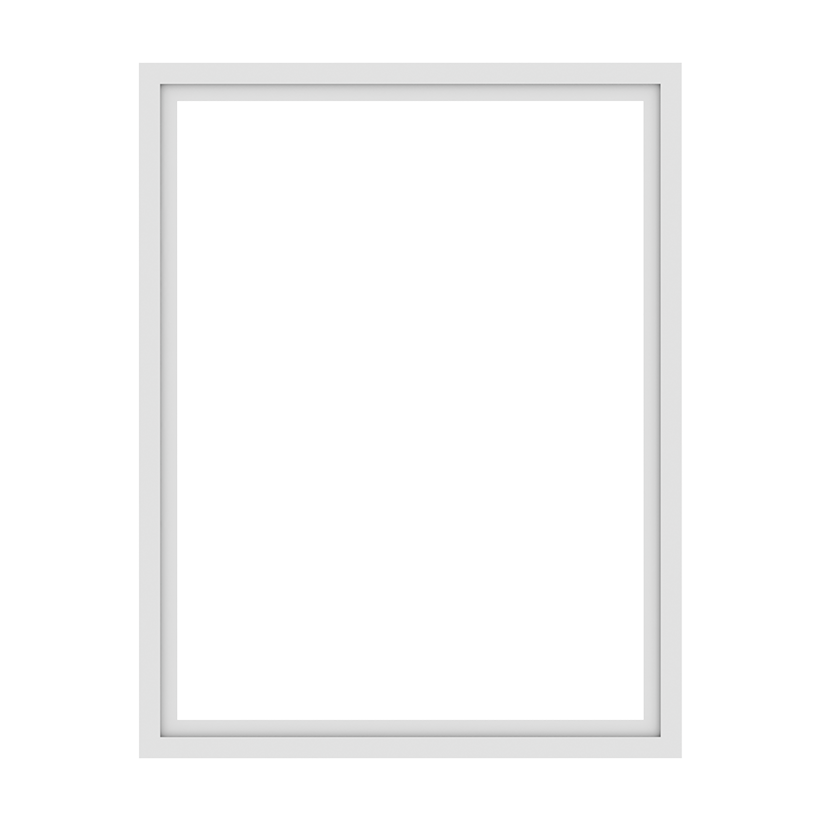
 ES Windows · Multimax Series
ES Windows Multimax ES-MX1500 Fixed Window
Value-tier aluminum impact fixed window up to 36 by 120 inches on a 2-3/8 inch frame. Dual LMI+SMI at 100 psf positive, 140 psf negative for low-rise and high-rise HVHZ.
Myth 5: Impact Windows Make Your Home Stuffy
Verdict: FALSE.
This myth persists because people assume "impact" means "sealed shut." In reality, every standard operable window type is available as an impact-rated product:
- Single-hung: bottom sash slides up
- Double-hung: both sashes slide
- Casement: hinged at the side, cranks open
- Awning: hinged at the top, pushes out from the bottom
- Horizontal roller: sash slides left or right
- Sliding: same operation as a horizontal roller, typically in larger sizes
These windows open, close, lock, and operate with standard hardware. You can open them for fresh air on a calm morning and close them before a storm. The laminated glass and reinforced frame add weight, but the operating mechanisms are designed to handle it.
The only impact windows that don't open are picture windows (also called fixed windows), and those don't open in non-impact versions either. That's a window type, not a limitation of impact technology.
Myth 6: Impact Windows Are Ugly or Obvious
Verdict: FALSE.
Fifteen years ago, this had some truth to it. Early impact windows had thick frames, visible interlayer edges, and limited style options. Today, impact windows are visually indistinguishable from standard windows at any normal viewing distance.
What You'll Actually See
The only visible indicator that a window is impact-rated is a small permanent bug label, a tiny etched or printed marking in one corner of the glass that identifies the manufacturer, product approval number, and testing standard. It's roughly the size of a postage stamp and is required by code. You have to look for it to find it.
Style and Configuration Options
Modern impact windows are available in:
- Every standard frame color: white, bronze, black, silver, custom colors
- Every standard window style: single-hung, casement, awning, sliding, picture, and architectural shapes
- Custom sizes: manufactured to your exact opening dimensions
- Grid patterns: colonial, prairie, and custom configurations between the glass panes
Premium product lines push the aesthetics further. ES Windows' Prestige series
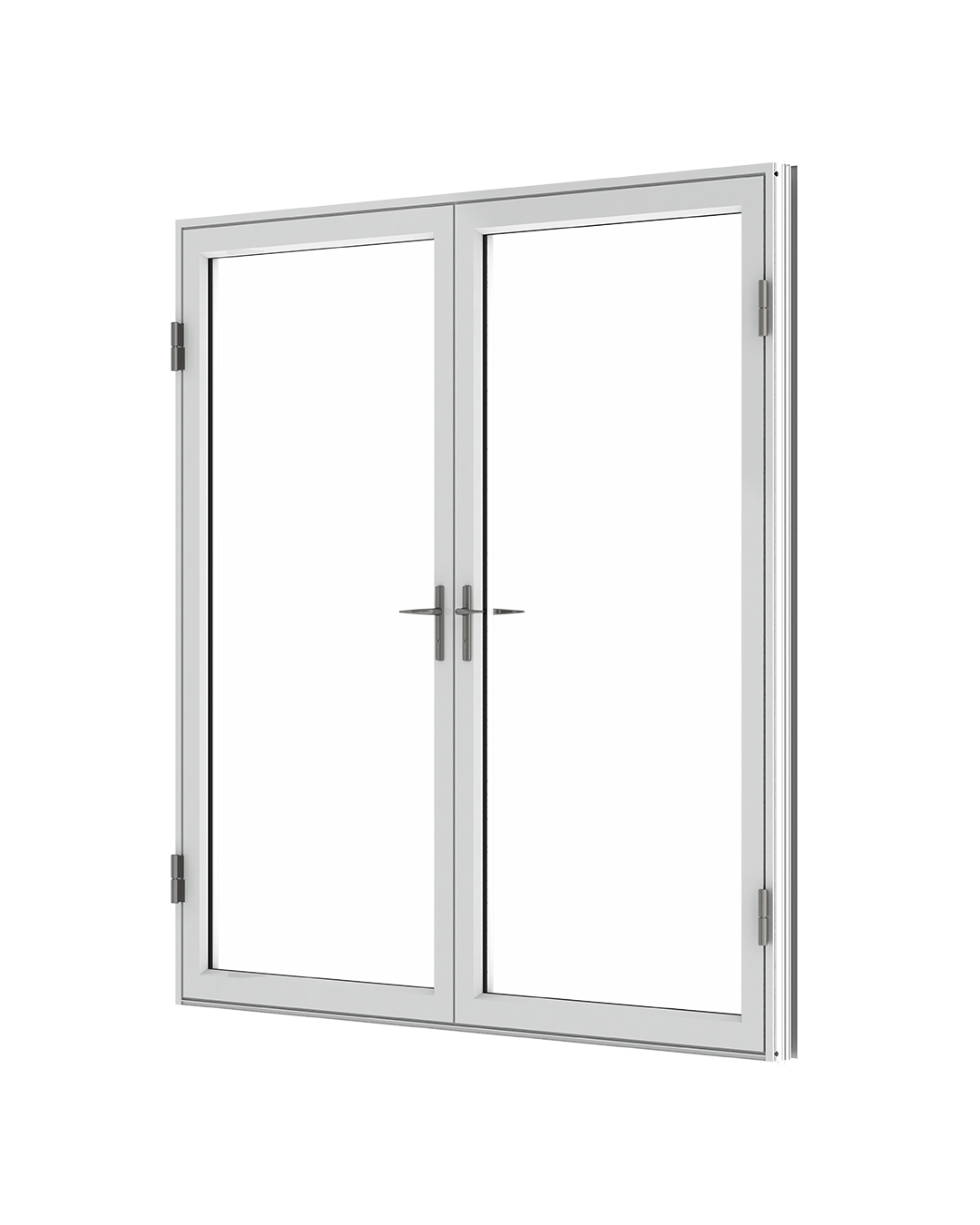 ES Windows
Prestige Series
Premium architectural aluminum impact and thermally broken line, anchored by the Glass Magazine 2024 award-winning Pivot Door and the industry-leading ES-FX3050 folding door.
HVHZ-approved across the series 18 models in the series
Explore the Prestige Series
offers frameless butt glass corners, where two glass panels meet at a 90-degree angle without a visible vertical frame member. PGT's WinGuard
ES Windows
Prestige Series
Premium architectural aluminum impact and thermally broken line, anchored by the Glass Magazine 2024 award-winning Pivot Door and the industry-leading ES-FX3050 folding door.
HVHZ-approved across the series 18 models in the series
Explore the Prestige Series
offers frameless butt glass corners, where two glass panels meet at a 90-degree angle without a visible vertical frame member. PGT's WinGuard
 PGT
WinGuard Aluminum Series
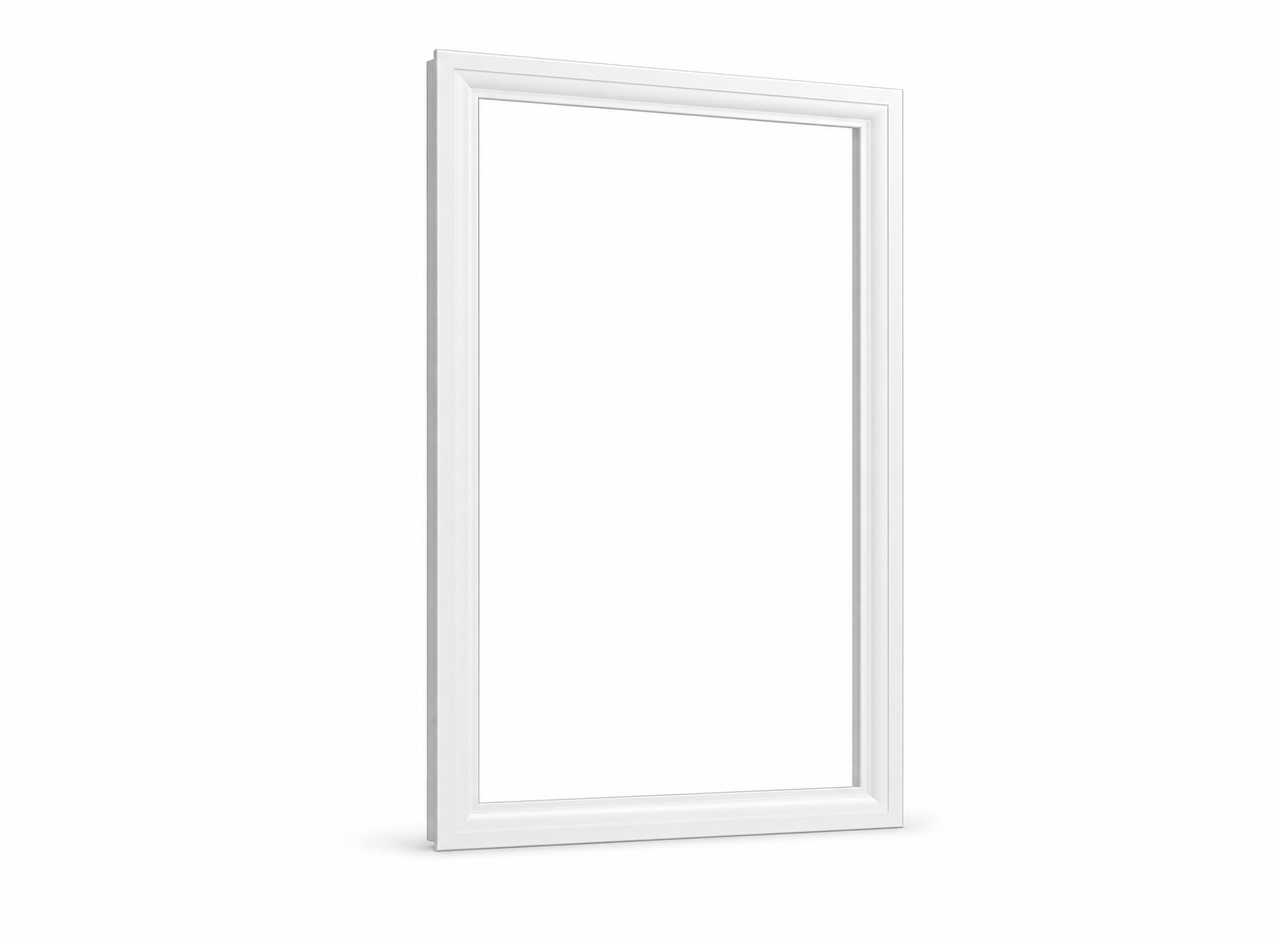
PGT's flagship aluminum impact platform since 1998, with one of the deepest Miami-Dade NOA libraries in the industry. Single hung through sliding doors on one HVHZ-certified frame system.
HVHZ-approved across the series 11 models in the series
Explore the WinGuard Aluminum Series
line is available in both aluminum and vinyl frames with multiple color and hardware options.
PGT
WinGuard Aluminum Series
PGT's flagship aluminum impact platform since 1998, with one of the deepest Miami-Dade NOA libraries in the industry. Single hung through sliding doors on one HVHZ-certified frame system.
HVHZ-approved across the series 11 models in the series
Explore the WinGuard Aluminum Series
line is available in both aluminum and vinyl frames with multiple color and hardware options.
The Green Tint Issue
Standard laminated glass has a faint green tint caused by the iron content in the glass. Most people never notice it. If it matters to you (for example, in a showroom, art gallery, or home with floor-to-ceiling ocean views), low-iron glass eliminates the tint entirely and provides crystal-clear transparency. It's a modest upcharge that makes a visible difference in large glass expanses.
Myth 7: Taping Windows Works as Hurricane Protection
Verdict: DANGEROUS.
This myth refuses to die, and it puts people at risk every hurricane season. The idea is that masking tape, duct tape, or painter's tape applied in an X-pattern across the glass will strengthen it or hold it together during a storm.
It does neither.
What the Experts Say
NOAA (National Oceanic and Atmospheric Administration), FEMA (Federal Emergency Management Agency), and the National Hurricane Center all explicitly warn against taping windows. Their position is unambiguous: tape does not strengthen glass, does not prevent breakage, and does not provide meaningful protection.
Why Tape Is Actually Worse Than Nothing
Tape creates a false sense of security, which may cause homeowners to skip actual protective measures. But there's a more direct harm: untaped glass tends to break into many small pieces that scatter. Taped glass may break into fewer, larger shards that remain partially connected by the tape. Larger shards carry more mass and more cutting potential. A large, tape-connected slab of broken glass blown inward by hurricane-force wind is more dangerous than a spray of small fragments.
What Actually Works
There are only three options that provide real, code-compliant hurricane protection for your windows:
- Impact windows: permanent, always-on, no deployment required
- Hurricane shutters: approved systems including accordion, roll-down, Bahama, colonial, and storm panels
- Plywood: as an absolute emergency last resort, 5/8-inch CDX plywood can be cut to fit and mechanically fastened to the wall surrounding the window. It's ugly, slow to install, and requires pre-drilled anchor points, but it's real protection if nothing else is available
Tape is not on this list. Neither is hurricane window film, which has its own limitations.
Frequently Asked Questions
Can impact windows stop a bullet?
No. Impact glass uses a PVB interlayer approximately 0.090 inches thick with a tensile strength of about 20 MPa. Ballistic glass uses polycarbonate at 55-75 MPa and is 1.5-3 inches thick. A 9mm handgun round delivers 500+ ft-lbs of energy concentrated on a 0.355-inch contact point. Impact glass is not engineered for that kind of concentrated force.
Do impact windows break?
Yes, and they're designed to. The outer glass lite fractures to absorb kinetic energy, and the PVB interlayer holds all fragments in place. A cracked impact window is still providing full hurricane protection. The cracked panel must survive 9,000 pressure cycles per TAS 203 after the initial impact.
Are impact windows as good as shutters?
Impact windows and hurricane shutters provide equivalent code-compliant opening protection. They receive the same credit on the wind mitigation inspection form. The advantage of impact windows is that protection is permanent and always deployed, with no installation or storage required.
Do all impact windows meet the same standards?
No. HVHZ products (Miami-Dade and Broward) are tested to TAS 201/202/203, which allows a maximum post-impact tear of just 5 inches by 1/16 inch. Non-HVHZ products tested to ASTM E1886/E1996 allow tears up to 5 inches by 3 inches, which is 48 times wider. Always look for a Miami-Dade NOA when comparing products.
Can you open impact windows?
Yes. Single-hung, double-hung, casement, awning, horizontal roller, and sliding impact windows all open and close normally with standard hardware. Only picture/fixed windows don't open, which is the same as non-impact versions.
Does taping windows help during a hurricane?
No. NOAA, FEMA, and the National Hurricane Center explicitly warn against taping windows. Tape does not strengthen glass, does not prevent breakage, and may cause glass to break into larger, more dangerous shards. The only effective options are impact windows, hurricane shutters, or plywood.
How can I tell if my windows are impact-rated?
Look for the permanent bug label, a small etched marking in one corner of the glass that lists the manufacturer, product approval number, and testing standard. For a detailed walkthrough, see our guide: How to Tell If Your Windows Are Impact.
Next Steps
Understanding what impact windows can and cannot do is the first step toward making the right decision for your home. Here's where to go from here:
- Get a Free Estimate: We'll assess your home, explain your options, and provide transparent pricing with no pressure.
- What Are Impact Windows?: A complete beginner's guide to how impact windows work, what they cost, and who needs them.
- Impact Windows Cost Guide: Detailed pricing breakdowns by window type, size, and manufacturer.
- How to Tell If Your Windows Are Impact: Already have windows and not sure if they're impact-rated? Here's how to check.