
The Honest Answer
Hurricane window film holds glass fragments together if your window breaks. That's a real benefit. But it does not prevent the window from breaking in the first place, does not maintain your building envelope during a hurricane, does not meet Florida Building Code requirements, and does not qualify for insurance discounts.
If you're in the HVHZ (Miami-Dade, Broward) or the Wind-Borne Debris Region (most of coastal Florida), film is not a code-compliant substitute for impact windows or approved hurricane shutters. If someone is selling you film as "hurricane protection," you need to understand the limitations before you spend money on a product that won't do what you expect.
What Hurricane Window Film Is
Hurricane window film (also called security film, safety film, or storm film) is a thick polyester adhesive film, typically 8-14 mil (0.008-0.014 inches), applied to the interior surface of existing glass. The film bonds to the glass with a pressure-sensitive adhesive.
Some installations add an anchoring system: a frame or channel around the perimeter that mechanically connects the film to the window frame. Without an anchor, the film holds glass fragments but the entire filmed sheet can be pushed inward by wind pressure. With an anchor, the filmed glass stays in the frame longer, but the glass itself is still broken and the film eventually tears under sustained pressure.
3M Safety & Security Film is the most recognized brand. Other manufacturers include Llumar, SolarGard, and Hanita. Pricing runs $5-$15 per square foot installed, depending on film thickness and whether an anchoring system is included.
What Film CAN Do
Film has legitimate benefits. They're just not the ones that matter most during a hurricane.
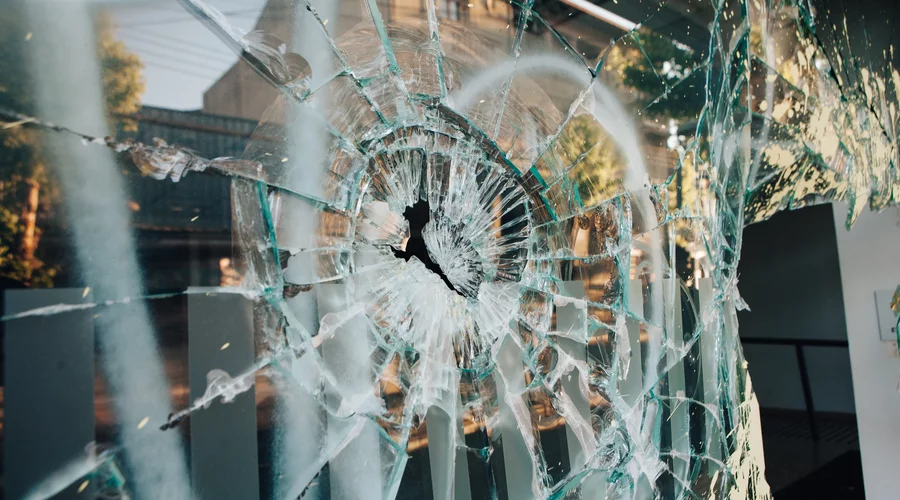
Hold glass fragments together. When untreated glass breaks, it produces sharp shards that become projectiles inside your home. Film keeps most fragments adhered to the adhesive, reducing the spray of glass into the room. This is a genuine safety benefit, particularly for interior injuries during a storm.
Provide forced-entry resistance. A burglar can punch through standard glass in seconds. Filmed glass requires sustained effort with tools, generates more noise, and takes significantly longer to breach. For homes where security is a concern year-round (vacation properties, ground-floor windows), this is valuable.
Block UV radiation. Most window films block 99%+ of UV, similar to the PVB interlayer in impact windows. This prevents furniture, flooring, and artwork from fading.
Reduce solar heat gain. Tinted or reflective films reduce SHGC (Solar Heat Gain Coefficient), lowering cooling costs. Some films can reduce solar heat gain by 40-60%.
Reduce glare. Tinted films reduce visible light transmission, which can be beneficial for rooms with direct sun exposure.
What Film CANNOT Do
This is the critical section. Film fails at the specific tests that define hurricane protection in Florida.
Film Cannot Stop a 2x4 Projectile
The test that impact windows and hurricane shutters must pass is the missile impact test: a 9-lb 2x4 lumber section fired at 50 fps (34 mph) from a pneumatic cannon. This simulates the wind-borne debris that causes 60-70% of window failures during hurricanes.
When a 2x4 at 50 fps hits a filmed standard window:
- The glass shatters on impact (film does not strengthen the glass)
- The film stretches and may hold some fragments briefly
- The projectile penetrates through the glass and film
- The window opening is breached
- Wind enters the structure
When the same projectile hits an impact window:
- The outer glass absorbs the impact and cracks
- The 0.090-inch PVB interlayer (bonded under 280 degrees F and 180 PSI in an autoclave) absorbs the remaining energy through plastic deformation
- The cracked-but-intact panel stays sealed in the reinforced frame
- The opening remains closed
- Wind stays out
The difference is structural. Film is a surface adhesive. The PVB interlayer in impact glass is an integral structural component bonded to the glass at a molecular level. A 0.014-inch adhesive film on the surface of glass cannot replicate what a 0.090-inch interlayer bonded between two glass sheets under extreme heat and pressure achieves.
Film Cannot Maintain the Building Envelope Under Sustained Pressure
Even if film holds fragments together through an initial debris strike (possible with small, low-energy debris), it cannot survive the cyclic pressure test that impact windows must pass: 9,000 cycles of alternating positive and negative pressure at 1.5x the rated design pressure, simulating hours of sustained hurricane-force winds.
The cracked, filmed glass panel has no structural rigidity. Under sustained wind pressure, it deflects inward, the film stretches beyond its elastic limit, and the panel eventually fails. Wind enters. The envelope breach cascade begins: 30-60 PSF internal pressure + 40-80 PSF external roof suction = 70-140 PSF of total uplift that can tear the roof off from the inside.
Film Does Not Meet Florida Building Code
In the HVHZ (Miami-Dade, Broward): Film does not carry a Miami-Dade NOA as standalone opening protection. It cannot be used to satisfy the code requirement for impact-rated glazing on any opening.
In the Wind-Borne Debris Region (most of coastal Florida): Film does not carry a Florida Product Approval with impact rating meeting ASTM E1996/E1886. It cannot be used to satisfy opening protection requirements for new construction or the 25% rule for existing home window replacements.
For permits: If you specify window film as your opening protection on a building permit application in any Florida jurisdiction that requires impact-rated glazing, the permit will be denied.
Film Does Not Qualify for Insurance Discounts
The wind mitigation inspection form (OIR-B1-1802) evaluates opening protection as a category. To qualify for the opening-protection credit (30-45% of your wind premium, the single largest discount on the form), all openings must be protected with products that meet Florida Building Code impact requirements.
Window film does not meet these requirements. A wind mitigation inspector will not credit film as opening protection. The discount you're forgoing by using film instead of impact windows or shutters is worth $1,000-$3,500 per year in South Florida.
Over 10 years, that's $10,000-$35,000 in insurance savings you don't receive. The film cost $2,000-$5,000 to install. The impact windows that would qualify for the discount cost $15,000-$40,000. The insurance savings alone cover a significant portion of the impact window cost, while the film generates zero insurance return.
Even 3M Film with an Anchoring System Falls Short
3M markets an anchoring system (sometimes called "attachment system" or "frame system") that mechanically connects the film to the window frame, keeping the filmed glass in place longer under pressure.
This does improve the film's performance compared to unanchored film. But it still does not match impact window performance:
- The glass still shatters on debris impact (film doesn't prevent breakage)
- The anchored film still deflects under sustained pressure (no structural rigidity)
- The system is not Miami-Dade approved as standalone opening protection
- The system does not pass TAS 201/202/203 or ASTM E1996/E1886 at the levels required for HVHZ or WBDR code compliance
- The system does not qualify for the wind mitigation opening-protection credit
3M's own documentation does not claim their safety film meets Florida Building Code requirements for hurricane opening protection. The product is marketed for security, UV protection, and fragment retention, not as a code-compliant hurricane defense.
Film vs. Impact Windows: The Real Comparison
| Factor | Hurricane Window Film | Impact Windows |
|---|---|---|
| Cost per sq ft | $5-$15 | $55-$140 |
| Stops debris penetration | No | Yes |
| Maintains building envelope | No | Yes |
| Florida Building Code compliant | No (HVHZ/WBDR) | Yes |
| Miami-Dade NOA available | No (standalone) | Yes |
| Insurance opening-protection credit | No | Yes (30-45% of wind premium) |
| Annual insurance savings | $0 | $1,000-$3,500 (South Florida) |
| Energy savings | Moderate (heat rejection) | 20-40% cooling reduction |
| UV protection | 99% | 99% |
| Noise reduction | Minimal | STC 32-40 |
| Forced-entry resistance | Moderate | Superior |
| Lifespan | 5-10 years | 25-30 years |
| Property value impact | Negligible | +7-10% |
The price comparison ($5-$15 vs. $55-$140 per square foot) is technically accurate but fundamentally misleading. Film and impact windows are not comparable products at different price points. They're different categories of product that deliver different levels of protection. Comparing them on price alone is like comparing a bicycle lock to a car's anti-theft system on cost.
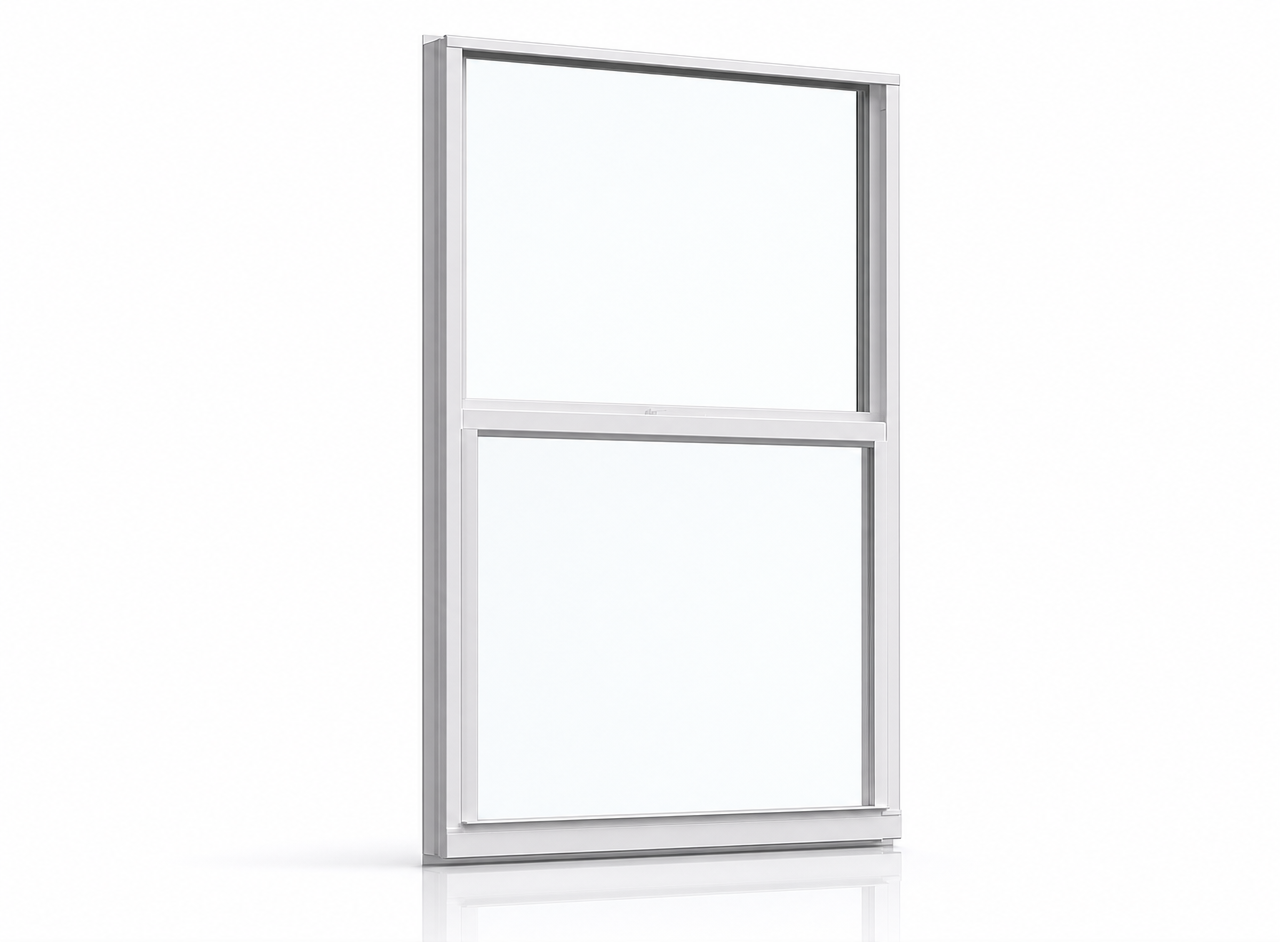
 PGT · WinGuard Aluminum Series
PGT WinGuard Aluminum Single Hung SH7700A
Aluminum impact single-hung on the WinGuard 7700-series frame with Diamond Glass laminated glazing. LMI impact-rated for Miami-Dade and Broward HVHZ installations.
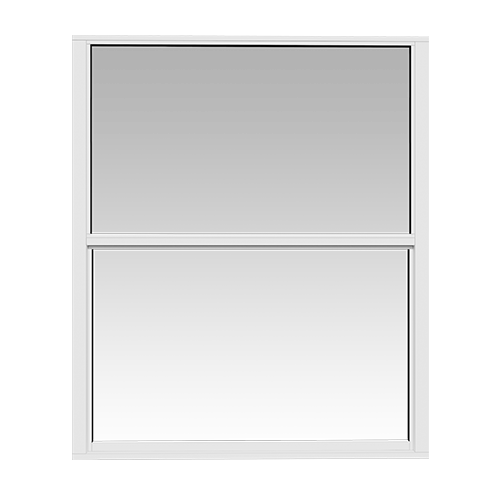
 ECO · Eco-Guard Single Hung Series
Eco-Guard Single Hung Series 50
Entry aluminum impact single hung on a 2-1/8 in. frame, +55/-60 psf, LMI for HVHZ, with block-and-tackle balances.
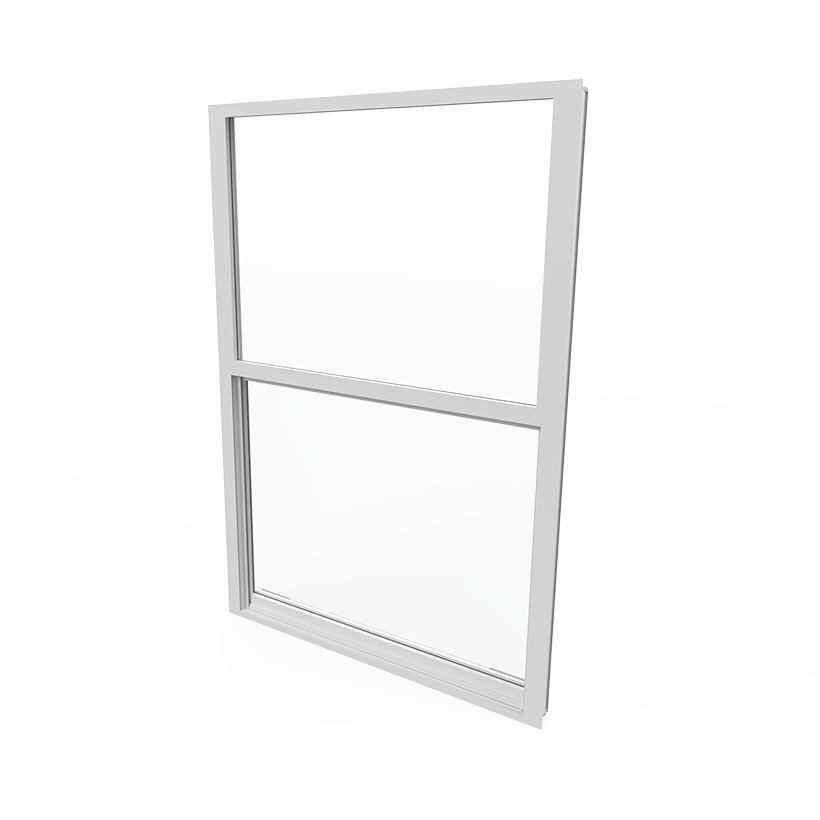
 ES Windows · Elite Series
ES Windows Elite ES-EL100 Single Hung
Aluminum impact single-hung on a 2-15/16 inch frame with block-and-tackle or ultra-lift balances. Saflex/Kuraray PVB, Vanceva Storm, and SentryGlas Plus interlayers available.
When Film Makes Sense
Film has legitimate applications. None of them involve substituting for code-required hurricane protection.
Security outside hurricane zones. If you're in an area where impact windows are not code-required (most of Central and North Florida) and your primary concern is break-in resistance rather than hurricane protection, security film is a cost-effective option.
Supplemental layer on impact windows. Some homeowners apply film to the interior surface of their impact windows for additional UV filtering, tinting, or privacy. Since the impact glass already provides the structural protection, the film adds aesthetic/comfort features. This is a legitimate use case.
UV and heat rejection. If your windows face direct sun and you want to reduce fading and cooling costs without replacing the windows, film is effective for this purpose. Just don't expect it to provide hurricane protection.
Temporary measure while saving for impact windows. If you cannot afford impact windows or shutters right now, film provides marginally better protection than bare glass (fragments are contained, small debris may not penetrate immediately). But understand that it's a stopgap, not a solution. And budget for the real solution as soon as possible.
Commercial interior glass. In commercial buildings where interior glass partitions could shatter during an earthquake or severe weather event, safety film prevents injury from falling glass shards. This is a code requirement in some jurisdictions for interior glazing.
What to Do Instead
If your windows need hurricane protection and you're in a zone where it's required by code (HVHZ or WBDR), these are your code-compliant options:
| Option | Cost per Window | Code Compliant | Insurance Credit | Daily Benefits |
|---|---|---|---|---|
| Impact windows | $1,000-$3,000 | Yes | Yes (30-45%) | Energy, noise, UV, security, value |
| Accordion shutters | $300-$700 | Yes | Yes | None when retracted |
| Roll-down shutters | $500-$1,500 | Yes | Yes | None when retracted |
| Storm panels | $150-$350 | Yes | Yes | None (stored between storms) |
| Hurricane screens | $200-$500 | Most products, yes | Yes (verify approval) | None when not deployed |
| Hurricane window film | $100-$300 | No | No | UV, heat rejection only |
If budget is the constraint, storm panels at $150-$350 per window are the cheapest code-compliant option. Hurricane screens at $200-$500 are lighter and easier to deploy. Both qualify for insurance discounts. Film does not.
The My Safe Florida Home program provides grants up to $10,000 for code-compliant hurricane protection (impact windows, shutters, doors, roof upgrades). PACE financing provides $0 down with income-verified approval. Both options make real hurricane protection accessible at every budget level.
Next Steps
- If you need code-compliant hurricane protection, skip film and go directly to impact windows, shutters, or storm panels.
- If you want UV and heat rejection on windows that are already impact-rated, film is a fine supplemental product.
- If budget is the barrier, the My Safe Florida Home program provides grants up to $10,000 and PACE financing provides $0 down. Storm panels at $2,000-$5,000 for a whole home are the cheapest code-compliant path.
- Get a free estimate for impact windows and shutters so you can compare the real cost of code-compliant protection against the false economy of film.