
Why Window Protection Is the Most Important Decision
Your windows are the most vulnerable openings in your home during a hurricane. Wind-borne debris (roof tiles, tree branches, 2x4 lumber, gravel) causes 60-70% of window failures during hurricanes. When a window breaks, the consequences are catastrophic: wind enters the home, internal pressure builds to 30-60 PSF, and combined with external roof suction of 40-80 PSF, the resulting 70-140 PSF of uplift can tear the roof off from the inside.
This is how Hurricane Andrew destroyed 63,500 homes in 1992. A single unprotected window can lead to the loss of the entire structure.
The good news: every option on this list prevents that cascade when properly installed and (where applicable) deployed. The question is which option fits your budget, your lifestyle, and your code requirements.
Every Option Ranked
1. Impact Windows (Best: Permanent, Always-On)
Impact windows use laminated glass bonded to a polymer interlayer inside reinforced frames. When debris strikes, the glass may crack but the interlayer holds all fragments in place, keeping the building envelope sealed. They're installed once and protect permanently.
Cost: $1,000-$3,000 per window installed. $15,000-$65,000 for a whole home.
Why they're #1:
- No deployment. They work whether you're home, traveling, sleeping, or evacuated. With rapid intensification events tripling since 1980, the value of always-on protection keeps increasing.
- Daily benefits. 20-40% cooling cost reduction ($500-$800/year), 99% UV blocking, STC 32-40 noise reduction, forced-entry resistance, and 7-10% property value increase.
- Maximum insurance credit. 30-45% of wind premium, the highest opening-protection discount available.
- Code-compliant everywhere. Meets requirements in the HVHZ, Wind-Borne Debris Region, and everywhere else.
The trade-off: Highest upfront cost. But over 20 years, insurance and energy savings frequently make impact windows net-positive in ROI.
For detailed pricing: See our impact windows cost guide and vinyl vs. aluminum comparison.
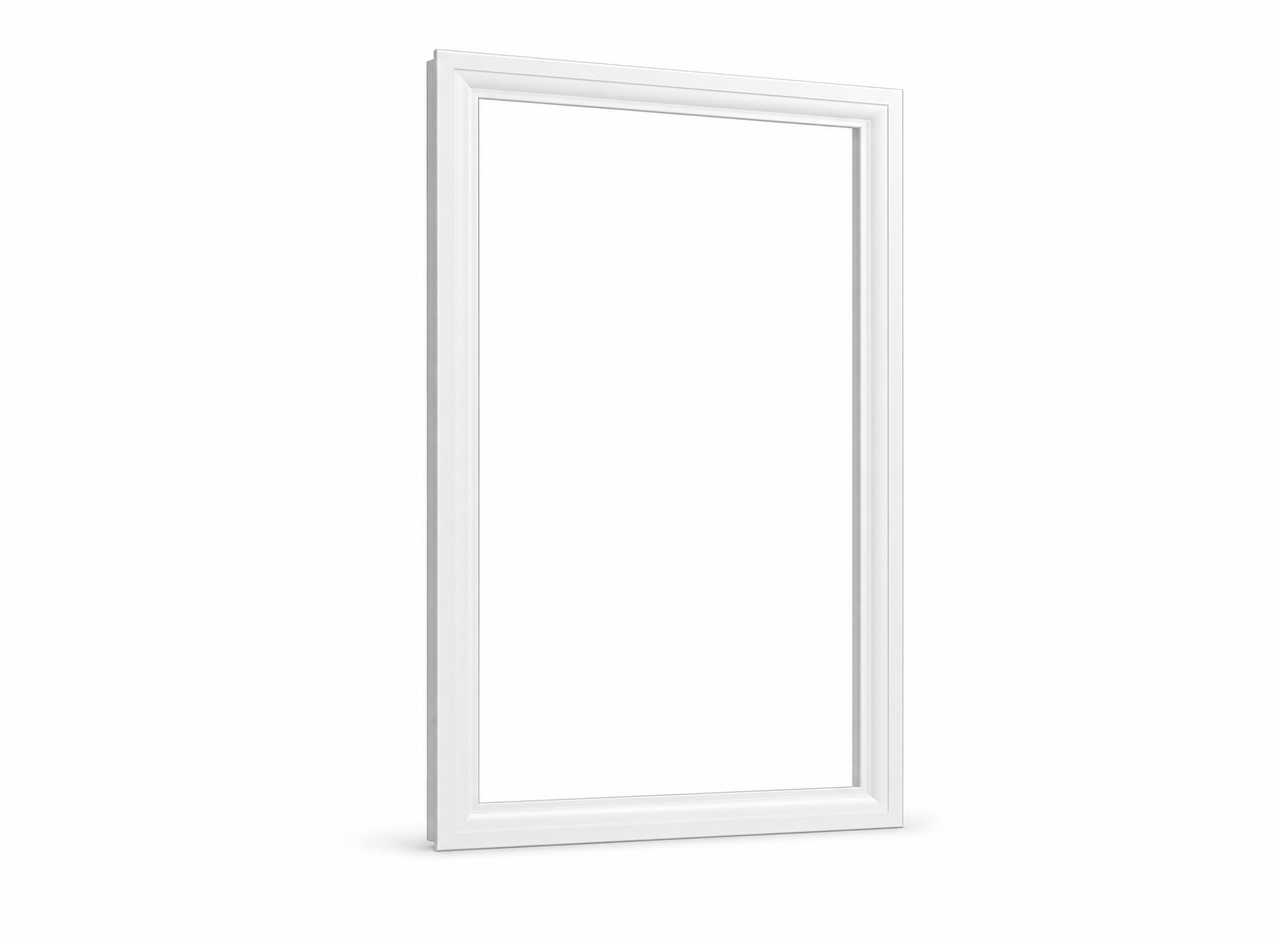
 PGT · WinGuard Aluminum Series
PGT WinGuard Aluminum Casement CA740A
Aluminum impact casement on the WinGuard 740-series frame, side-hinged with a crank-out sash. Mulls cleanly with AW740A and PW740A in the 740-family.
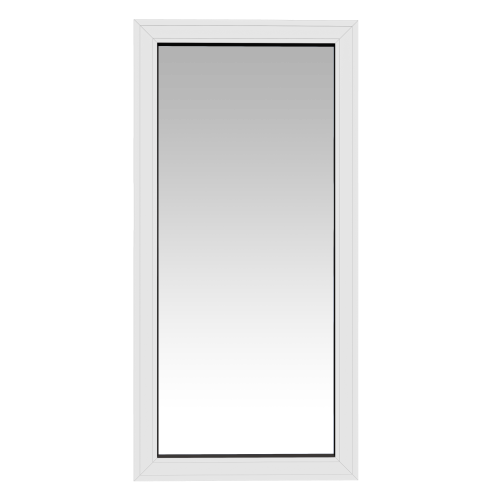
 ECO · Eco-Guard Casement & Awning Series
Eco-Guard Casement Window Series 500
Outswing aluminum impact casement, 2-3/4 in. frame, +70/-75 psf, LMI+SMI, NFRC-certified, with a stainless operator + multipoint lock.
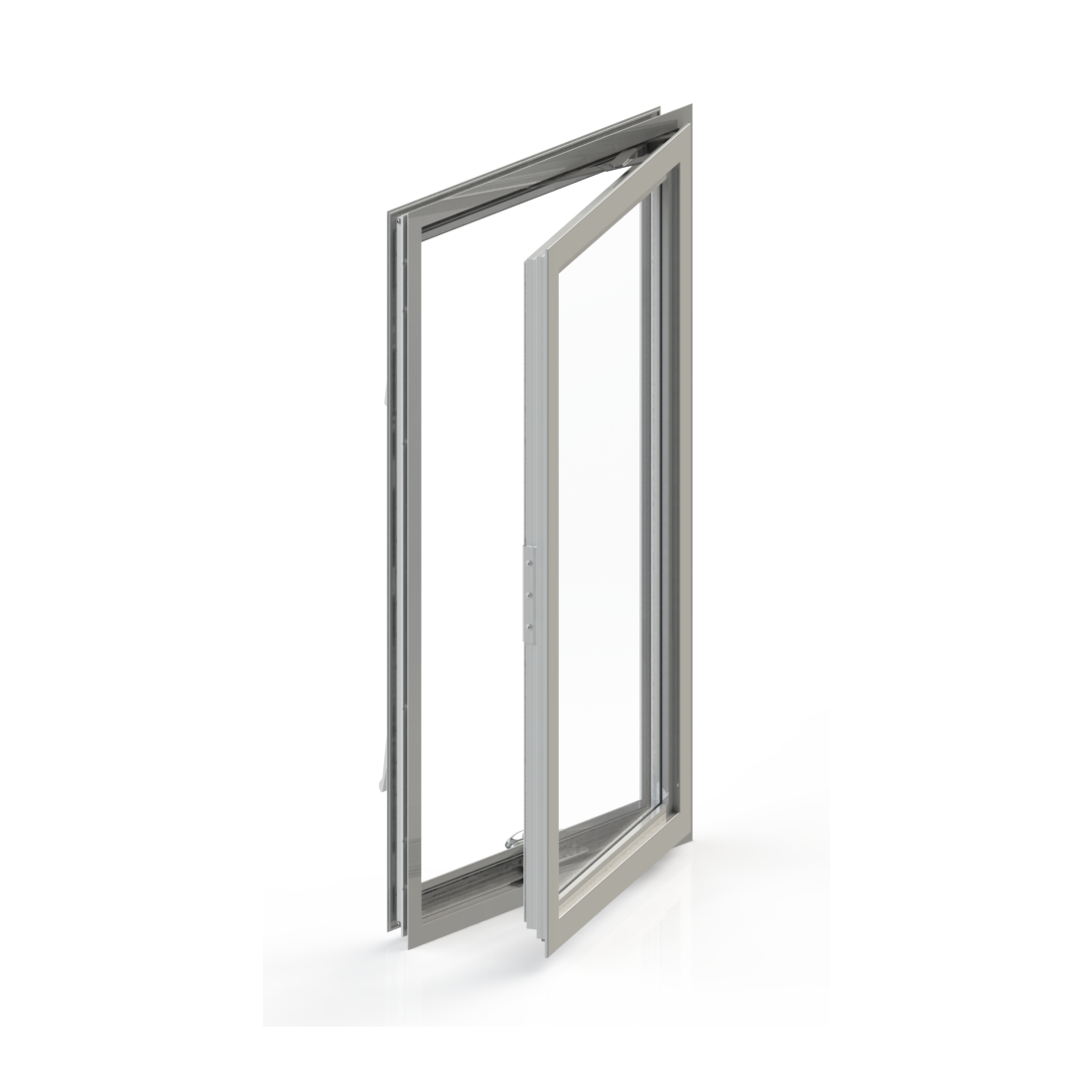
 ES Windows · Elite Series
ES Windows Elite ES-5000 Casement
Flagship aluminum impact casement in Elite, available in X and XX configurations on a 2-1/8 inch frame depth. Stainless 4-bar hinges, rated to 90 psf.
2. Roll-Down Shutters (Excellent: Permanent, Quick Deploy)
Roll-down shutters mount in a housing above each window and roll down to cover the opening. Manual crank models take 5-15 minutes per opening. Motorized models deploy with a button press in under 5 minutes for the entire home.
Cost: $500-$1,500 per window. $8,000-$25,000 for a whole home.
Strengths: Fastest deployment of any shutter type. Nearly invisible when retracted (hidden in housing). Motorized models can be deployed remotely. Code-compliant in all Florida zones when properly certified.
Limitations: No daily benefits when retracted. Motorized models require manual override for power outages. Higher cost than accordion shutters. Motor replacement at 10-15 years.
3. Accordion Shutters (Very Good: Permanent, Easy Deploy)
Accordion shutters mount permanently beside each window on tracks. To deploy, pull both halves closed and lock in the center. 15-30 minutes for a whole home, one person, no tools.
Cost: $300-$700 per window. $5,000-$12,000 for a whole home.
Strengths: Best value among permanent shutters. Easy deployment without tools or ladders (ground-floor). Code-compliant in all zones. The most popular permanent shutter type in Florida. EAS manufactures the best-selling accordion shutter on the market.
Limitations: Visible when retracted (folded panels stack beside each opening). No daily benefits. Upper-floor deployment requires reaching from inside.
4. Bahama Shutters (Good: Permanent, Decorative)
Bahama shutters mount above each window on hinges and prop open at an angle. They provide shade and some rain protection in daily use. To deploy, lower them flat against the window and secure.
Cost: $400-$800 per window. $6,000-$12,000 for a whole home.
Strengths: Decorative appeal (Caribbean/coastal aesthetic). Provide daily shade and rain protection. 5-10 minute deployment.
Limitations: Windows only (not for doors or sliding glass doors). Partially obstruct views even in the open position. No energy, noise, or UV benefits comparable to impact windows.
5. Colonial Shutters (Good: Permanent, Traditional)
Colonial shutters mount in pairs on either side of the window, like traditional exterior shutters. They swing closed and latch over the window for storms.
Cost: $400-$800 per window. $6,000-$12,000 for a whole home.
Strengths: Traditional aesthetic that complements many Florida home styles. 5-10 minute deployment. Permanent mount.
Limitations: Same as Bahama: windows only, no daily benefits, partially obstruct views.
6. Storm Panels (Budget: Removable)
Storm panels are flat sheets of steel, aluminum, or clear polycarbonate that bolt into pre-installed tracks around each window. Stored in the garage between storms.
Cost: $150-$350 per window (aluminum). $2,000-$5,000 for a whole home.
Strengths: Lowest-cost code-approved protection. FIU research showed panels reduce water intrusion by 77-87% when installed over windows. Polycarbonate (clear) panels allow light through.
Limitations: Deployment takes 3-6 hours with 2 people. Requires a ladder for upper floors. Heavy (steel panels especially). Requires significant garage storage space. Must be installed before every storm, which means you need to be home, physically capable, and have lead time.
7. Hurricane Screens (Budget: Removable, Lightweight)
Hurricane screens use high-tensile fabric or perforated mesh panels that deploy over windows. Much lighter than metal panels (2-5 lbs per panel vs. 15-30+ lbs).
Cost: $200-$500 per window. $3,000-$8,000 for a whole home.
Strengths: Very lightweight and easy to handle. One person can deploy a whole home in 15-30 minutes. Compact storage. Some allow partial light when deployed. Good option for large lanai enclosures.
Limitations: 5-10 year lifespan (fabric degrades from UV). Not all products carry Florida Product Approval (verify before buying). Limited HVHZ options. No daily benefits. Must be deployed before each storm.
8. Hurricane Window Film (Supplemental ONLY)
Adhesive films applied to existing glass. These are marketed as hurricane protection but carry a critical limitation.
Cost: $5-$15 per square foot.
What it does: Holds some glass fragments together if the window breaks, reducing the spray of glass shards into the room.
What it does NOT do:
- Does NOT meet Florida Building Code for opening protection
- Does NOT qualify for insurance wind mitigation discounts
- Does NOT prevent debris from penetrating the window
- Does NOT prevent the envelope breach cascade
- Does NOT substitute for impact windows or shutters
- May void your existing window manufacturer's warranty
Our position: Film can supplement other protection (apply it to non-impact windows in rooms where you want reduced glass-shard risk), but it must never be your primary or only hurricane protection strategy. If someone tells you film is "just as good" as impact windows, they're wrong.
9. Plywood (Emergency Only, Last Resort)
Plywood boarding is the oldest and most basic form of window protection. It is not code-approved, does not qualify for insurance discounts, and should only be used when no other option is available.
If you must use plywood:
- Use at minimum 5/8-inch CDX plywood (not particleboard, not OSB, not thin plywood)
- Cut panels to overlap the window opening by at least 4 inches on each side
- Secure with barrel bolts or lag screws into pre-installed anchors (not nails, not tape, not screws into stucco alone)
- Pre-drill anchor points before hurricane season so you can install quickly
- Label each panel for its corresponding window
What plywood cannot do: It cannot stop the same debris that impact glass and tested shutters are designed to resist. A 2x4 at hurricane speed can punch through 5/8-inch plywood. It provides some protection (better than nothing), but it is not a reliable hurricane defense and should be replaced with a code-approved solution as soon as possible.
What NOT to Do
Do NOT Tape Your Windows
This is the most persistent hurricane myth in Florida. Taping your windows with masking tape, duct tape, or painter's tape does nothing to strengthen the glass, prevent shattering, or hold fragments together. Independent testing has shown that taped glass breaks into larger, more dangerous shards (the tape creates larger fragment zones) rather than the smaller pieces that untaped glass produces.
The myth likely originated from the idea that tape holds glass together like a laminated interlayer. It doesn't. The adhesive bond between tape and glass is negligible compared to the forces involved in a debris impact. Tape on glass during a hurricane is decoration, not protection.
Do NOT Wait Until a Storm Is Approaching
Impact window installation takes 5-16 weeks from order to completion (depending on manufacturer and scheduling). Shutter installation takes 1-4 weeks. Even storm panels require pre-installed tracks.
If you wait until a storm enters the Gulf of Mexico to start planning, you're too late for anything except plywood and hoping for the best. The time to solve this problem is before hurricane season (June 1), not during it.
Do NOT Assume Your Windows Are "Good Enough"
If your home was built before 2002, your windows were not required to be impact-rated. If your home is in the Wind-Borne Debris Region and you haven't upgraded, your windows may be your home's single greatest vulnerability. The Helene/Milton data is unambiguous: 46% of pre-code coastal homes were destroyed during Helene, while zero post-code homes were.
Which Option Is Right for You?
| Your Situation | Best Option | Why |
|---|---|---|
| Maximum protection, highest value over time | Impact windows | Always-on + daily benefits + highest insurance credit |
| Budget under $12,000 for whole home | Accordion shutters | Code-compliant on all openings within budget |
| Snowbird or second home (not always present) | Impact windows or motorized roll-down | No deployment gap or remote deployment |
| Elderly or mobility-limited | Impact windows | Zero physical effort |
| Large lanai or pool enclosure | Hurricane screens or accordion | Cost-effective for oversized spans |
| Rental or investment property | Storm panels or hurricane screens | Lowest cost per opening |
| Just need to cover 2-3 windows for now | Storm panels | Minimal investment for partial protection |
| Want maximum curb appeal with protection | Bahama or colonial shutters | Decorative enhancement + storm protection |
| Emergency (storm coming in 24 hours, no existing protection) | Plywood (emergency only) | Better than nothing; replace with proper solution after |
The Mix-and-Match Approach
You don't have to use the same protection on every opening. Many Florida homeowners combine methods strategically:
- Impact windows on bedrooms, living areas, and upper floors (daily benefits + no deployment)
- Accordion shutters on large sliding glass doors and French doors (cost-effective for wide openings)
- Impact entry door on the front door (security + curb appeal)
- Impact-rated garage door (largest opening, weakest link)
This hybrid approach can save 20-30% compared to full impact glazing while still qualifying for the maximum insurance opening-protection credit (all openings must be covered).
Grants and Financing
The My Safe Florida Home program covers most protection methods on this list (impact windows, impact doors, shutters, garage doors) with grants up to $10,000. Low-income homeowners receive grants with no matching requirement.
PACE financing provides $0 down with income-verified approval for impact windows, shutters, and other hurricane hardening, paid through your property tax bill over 10-25 years.
Most installers also offer $0 down and 100% financing options for impact windows and permanent shutters.
Next Steps
- Identify your zone. Are you in the HVHZ, WBDR, or outside both? Your zone determines which products are code-required vs. optional.
- Get a free estimate that includes options across multiple protection types so you can compare cost and performance side by side.
- Act before June 1. Lead times extend dramatically once hurricane season starts. Planning now means installation before the first storm.
- Check MSFH eligibility for grants up to $10,000.
- For detailed comparisons: impact windows vs. shutters | impact windows vs. screens | roll-down vs. accordion | shutters cost guide | impact windows cost guide