
Why Your Front Door Matters
Your front door is the primary entry point to your home. It faces direct wind exposure, takes the full force of wind-borne debris on the windward side of the building, and is structurally critical to maintaining your building's envelope during a hurricane.
If a front door fails, the result is the same as a failed window: wind enters, internal pressure builds to 30-60 PSF, and combined with external roof suction of 40-80 PSF, the resulting 70-140 PSF of uplift can tear the roof off from the inside.
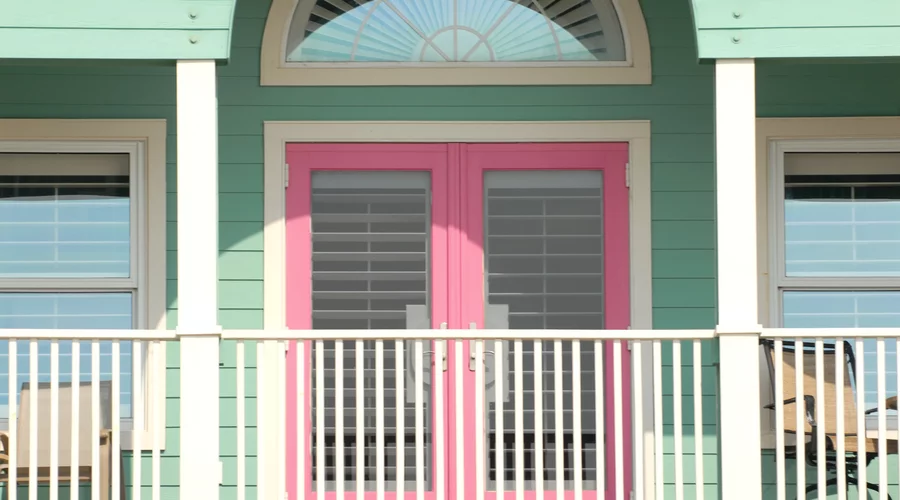
But a front door also does something no other opening does: it defines your home's first impression. It needs to look as good as it protects. The best impact front doors deliver both, with material options, glass configurations, and finishing choices that make hurricane protection invisible to visitors.
Types of Hurricane Impact Front Doors
Fiberglass Impact Doors
The most popular choice for residential front doors. Modern fiberglass doors use compression-molded fiberglass skins over a polyurethane or polystyrene insulated core, creating a door that's strong, lightweight, energy-efficient, and remarkably convincing as a wood substitute.
Cost: $2,000-$4,500 installed (single door with standard frame and hardware)
Advantages:
- Excellent thermal insulation (R-values of 6-8 for the door panel, vs. virtually zero for aluminum)
- Convincing wood-grain textures that can be stained or painted to match any aesthetic
- Virtually maintenance-free (no rotting, warping, rusting, or delaminating)
- Lighter weight than steel or solid aluminum (easier on hinges, easier to operate)
- Impact-rated laminated glass options for full-lite, half-lite, and sidelight configurations
- Wide range of panel designs: raised panel, flat panel, flush, Craftsman, Mediterranean
Limitations:
- Lower maximum design pressure than aluminum (adequate for most residential, but not for the highest-DP HVHZ applications)
- Can crack under extreme impact if the fiberglass skin is thin gauge
- Color can fade over time in direct sun without UV-resistant finish (repairable with refinishing)
Best fiberglass impact door manufacturers: PlastPro (largest US fiberglass door manufacturer), Therma-Tru (Tru-Defense hurricane line), and Masonite.
Aluminum Impact Doors
The strongest option for high-wind zones. Aluminum entry doors use extruded 6063 alloy frames (the same material used in impact windows) with laminated impact glass and reinforced panel construction.
Cost: $2,500-$6,000 installed
Advantages:
- Highest design pressure ratings of any entry door material (ECO Series 950 with 4-point active/2-point inactive locking is Miami-Dade approved)
- Thinnest profiles, maximizing the glass area for full-lite and sidelight configurations
- Any color via powder coating (Kynar/PVDF finishes provide 25+ years of coastal durability)
- Required in many HVHZ applications where higher DP is mandated
- Excellent structural rigidity under sustained wind loads
Limitations:
- High thermal conductivity (aluminum conducts heat at 209 W/m-K, creating a thermal bridge between inside and outside unless thermally broken)
- Higher cost than fiberglass or steel
- Can show dents from severe impact more readily than steel
- Limited panel design options compared to fiberglass (most aluminum entry doors are flat or minimally profiled)
Best aluminum impact entry door manufacturers: ECO Window Systems (Series 600/650/850/950, Miami-Dade approved), PGT/WinDoor (Estate Entrance Door), ES Windows (Elite EL300 French/Swing Door with integrated sidelites).
Steel Impact Doors
The best security option. Steel entry doors use 20-24 gauge galvanized steel skins over an insulated core, providing the heaviest, most forced-entry-resistant construction.
Cost: $1,800-$4,000 installed
Advantages:
- Superior forced-entry resistance (steel is harder to breach than fiberglass or aluminum)
- Heavy construction provides excellent sound isolation
- Lower cost than aluminum at comparable sizes
- Smooth or embossed panel designs available
- Good fire resistance
Limitations:
- Rusts in coastal salt-air environments without proper priming and painting. This is the critical trade-off for Florida coastal homes. Steel doors within 3 miles of the ocean require annual inspection and periodic refinishing.
- Heavier than fiberglass (more stress on hinges and frame)
- Dents more visibly than fiberglass (though less than aluminum)
- Limited to painted finishes (cannot be stained to look like wood)
- Thermal bridging unless the frame includes a thermal break
Best steel impact entry door manufacturers: Therma-Tru (Smooth-Star and Traditions lines), JELD-WEN (ImpactGard).
Material Comparison
| Factor | Fiberglass | Aluminum | Steel |
|---|---|---|---|
| Cost (installed) | $2,000-$4,500 | $2,500-$6,000 | $1,800-$4,000 |
| Max design pressure | Moderate | Highest | Moderate-High |
| Insulation (R-value) | 6-8 | Low (unless thermally broken) | 4-6 |
| Salt-air resistance | Excellent | Good (with coating) | Poor (rusts) |
| Wood-look options | Yes (stainable) | No | No (paint only) |
| Security (forced entry) | Good | Good | Best |
| Maintenance | Lowest | Low-Moderate | Highest (coastal) |
| Weight | Lightest | Moderate | Heaviest |
| Color options | Stain or paint | Any (powder coat) | Paint only |
Key Features to Evaluate
Design Pressure Rating
As with impact windows, the required DP for your entry door depends on your location, building height, and position. Front doors on the windward face of a home experience higher positive pressure than side or rear doors. In the HVHZ, expect DP requirements of +50 to +80 PSF or higher for entry doors.
Multipoint Locking Systems
This is the single most important hardware specification for a hurricane-rated front door.
A standard residential deadbolt locks at one point. During hurricane-force winds, the pressure on the door can bow the panel away from the frame at the top and bottom while the single lock point holds in the middle. This deformation can break the seal, allow wind entry, and eventually cause the lock to fail.
Multipoint locking systems engage at 3 to 5 points along the height of the door: typically a deadbolt at the standard lock height, plus hook bolts or compression bolts at the top and bottom of the door. This distributes the locking force across the full door height, preventing bowing and maintaining the seal under sustained pressure.
- 3-point lock: Deadbolt + top hook + bottom hook. Standard for most impact entry doors.
- 4-point lock: Adds a compression point at the hinge side. Used on wider doors.
- 5-point lock: Full perimeter locking. Premium security applications.
If you're comparing quotes, verify that every impact entry door includes at minimum a 3-point multipoint locking system. A hurricane-rated door with a single-point deadbolt defeats the purpose.
Glass Options
Impact front doors are available with various glass configurations, all using impact-rated laminated glass:
Full-lite: A single large glass panel covering most of the door surface. Maximizes natural light and curb appeal. The glass is impact-rated laminated (same technology as impact windows). Most visually dramatic but requires the highest glass quality for clarity.
Half-lite: Glass in the upper half, solid panel in the lower half. Balances light and privacy. The most popular residential configuration.
Quarter-lite / Decorative lite: Smaller glass panels set into a mostly solid door. Provides accent light and visual interest with maximum privacy and panel strength.
Sidelights: Narrow glass panels flanking the entry door on one or both sides. Sidelights must be impact-rated to the same standard as the door itself. In the HVHZ, sidelights require Miami-Dade NOA certification.
Transoms: Glass panels above the door. Like sidelights, they must be impact-rated and code-compliant for your zone.
Decorative glass options: Textured, frosted, rain glass, etched patterns, wrought iron between glass lites, and privacy glass. These aesthetic treatments are applied to impact-rated laminated glass, so the decorative element does not reduce the hurricane protection level.
Threshold and Weatherstripping
The door threshold is a common water intrusion point during hurricanes. Look for:
- Adjustable threshold: Allows fine-tuning the seal between the door bottom and the threshold after installation
- Compression weatherstripping on all four sides (not just the latch side)
- Drip cap above the door to redirect water away from the top seal
- Sill pan beneath the threshold to catch and redirect any water that penetrates
Impact Front Door Styles
Contemporary/Modern
Clean lines, large glass panels (full-lite or oversized half-lite), minimal trim, flat or flush panel construction. Often in aluminum with a matte black or dark bronze powder coat. Pivot entry doors (where the door rotates on a central or offset pivot rather than side hinges) make a dramatic statement and are available in impact-rated configurations from WinDoor (Estate Pivot) and ECO (Series 1500, Miami-Dade approved, panels up to 10 ft tall).
Traditional
Raised panel designs, divided lites, decorative glass with simulated mullions. Typically fiberglass with stainable wood-grain texture. Classic 6-panel or 4-panel configurations. The most common residential impact entry door style.
Mediterranean/Spanish
Arched tops, wrought iron accents between glass lites, rustic textured finishes. Fiberglass excels here because it can be molded into arch-top shapes and stained to match terra cotta, dark walnut, or mahogany tones. Arched-top impact doors are custom products and carry a price premium.
Craftsman
Divided lite upper panel (typically 3 or 6 lites) over a solid lower panel, with strong horizontal lines. Available in stainable fiberglass. Popular in bungalow, arts-and-crafts, and transitional home styles.
Pricing by Configuration
| Configuration | Fiberglass | Aluminum | Steel |
|---|---|---|---|
| Single door, solid panel | $1,800-$3,000 | $2,200-$4,000 | $1,500-$2,800 |
| Single door, half-lite | $2,200-$4,000 | $2,800-$5,000 | $2,000-$3,500 |
| Single door, full-lite | $2,500-$4,500 | $3,000-$6,000 | $2,200-$4,000 |
| Double door (pair) | $4,000-$7,000 | $5,000-$9,000 | $3,500-$6,500 |
| Single door + 1 sidelight | $3,500-$5,500 | $4,000-$7,000 | $3,000-$5,000 |
| Single door + 2 sidelights | $4,500-$7,000 | $5,500-$9,000 | $4,000-$6,500 |
| Single door + transom | $3,000-$5,000 | $3,500-$6,500 | $2,500-$4,500 |
| Pivot door | $5,000-$12,000+ | $5,000-$12,000+ | N/A |
Florida Code Requirements
HVHZ (Miami-Dade, Broward)
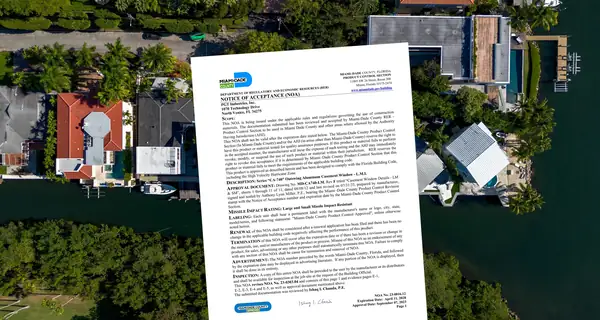
Entry doors must carry a Miami-Dade NOA with impact certification. The product must pass TAS 201 (missile impact), TAS 202 (structural load), and TAS 203 (cyclic pressure) testing. Standard "hurricane-rated" entry doors with only a Florida Product Approval are not sufficient for the HVHZ.
Wind-Borne Debris Region
Entry doors must carry a Florida Product Approval with impact rating meeting ASTM E1996/E1886. Products with a Miami-Dade NOA automatically satisfy this requirement.
Outside the WBDR
Standard wind-rated entry doors meeting the design wind speed for your location are code-sufficient. Impact rating is not required but provides security benefits year-round.
The 25% Rule
If your entry door replacement is part of a larger project where you're replacing more than 25% of your glazed opening area within 12 months in a Wind-Borne Debris Region, the entry door (and all other replaced openings) must meet current impact standards.
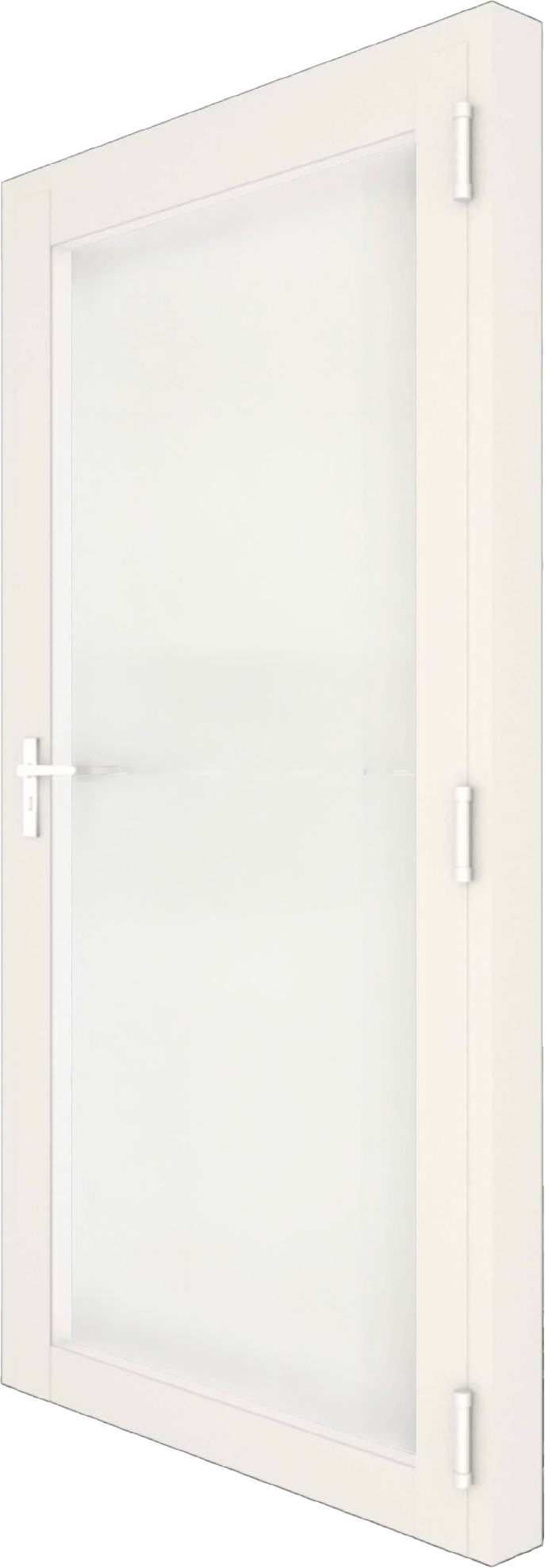
 Eurocraft
Eurocraft EC-650 Outswing Door
- Design Pressure
- +100/-100 PSF
- Frame
- Aluminum
- HVHZ
- Yes
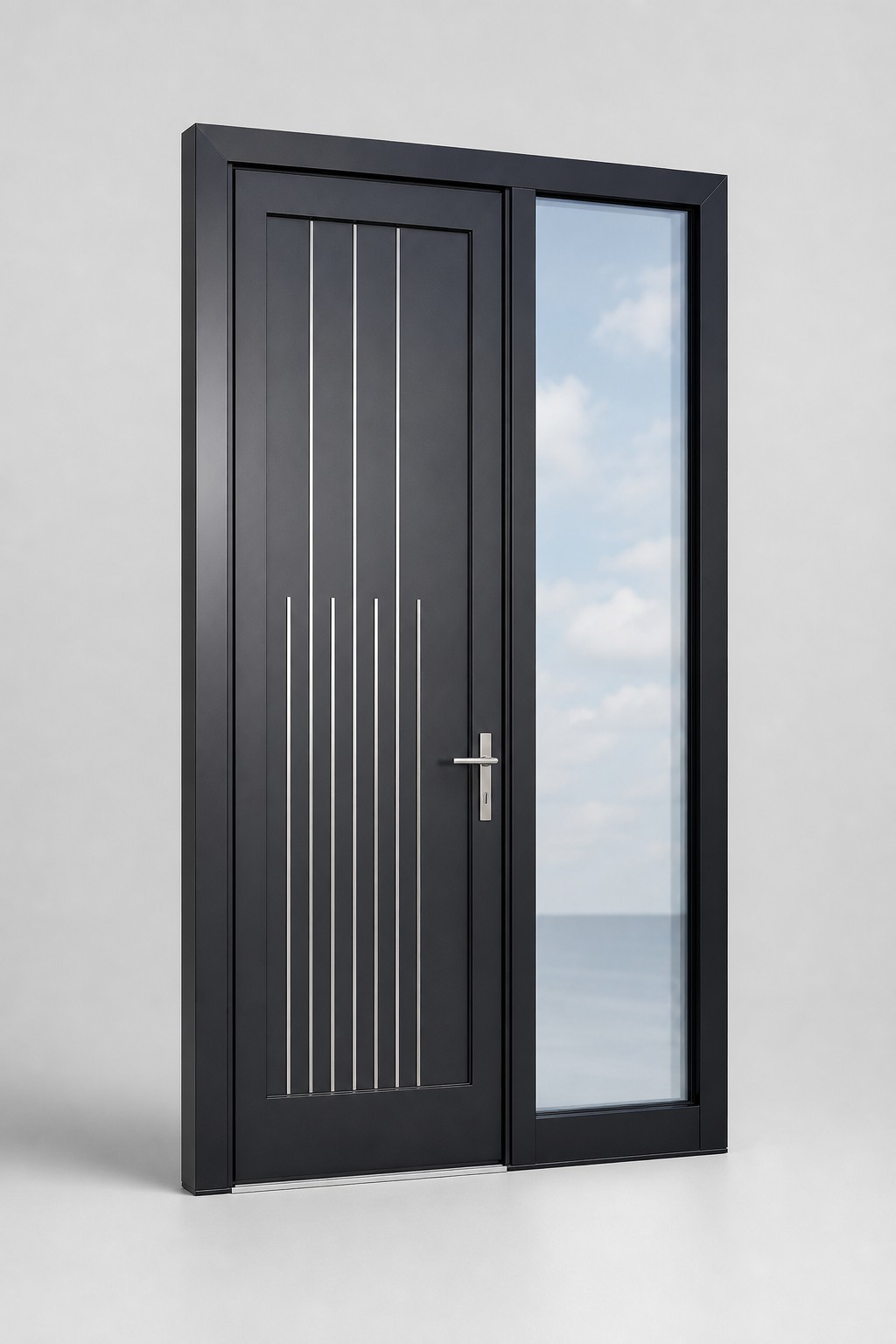
 Mr. Glass
MG-3500 Residential Entry Door
- Design Pressure
- +80/-80 PSF
- Frame
- —
- HVHZ
- —
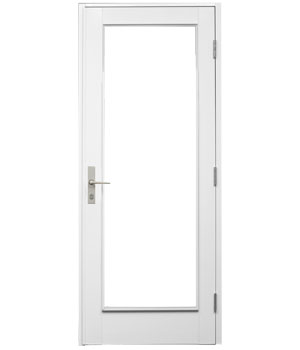
 Air Master · Swing-Out & Entrance Doors
Air Master Full Glass Continental Door
- Design Pressure
- +75/-75 PSF
- Frame
- Aluminum
- HVHZ
- No
Next Steps
- Get a free estimate that includes entry door options in your preferred material and style, matched to your zone's DP requirements.
- Specify a multipoint lock. Don't accept a hurricane-rated door with a single-point deadbolt.
- Consider the full opening package. Your front door, sliding glass doors, garage door, and windows all need to be protected for the maximum insurance discount.
- Check MSFH eligibility for grants up to $10,000 that cover impact doors alongside other improvements. Financing options including PACE ($0 down, income-verified approval) are also available.
- For the complete door product lineup, see our impact doors page covering entry, French, sliding glass, and pivot configurations.