



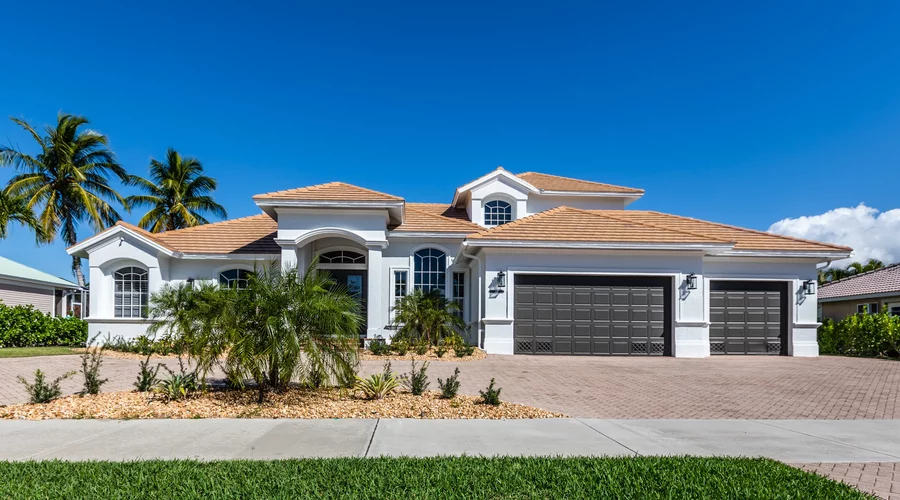

Why Your Garage Door Is the Weakest Link
You might have impact windows on every window, impact-rated entry doors, and hurricane straps tying your roof to the walls. But if your garage door fails during a hurricane, none of that may matter.
The garage door is the largest single opening in most Florida homes. A standard two-car garage door is 16 feet wide and 7-8 feet tall, roughly 112-128 square feet of surface area exposed to wind. That's larger than any window, any door, and most wall sections. When it fails, the volume of wind that enters is massive, and what happens next is catastrophic.
Here's the sequence, documented by University of Florida researchers after Hurricane Milton (2024):
- Wind-borne debris (shingles, tree branches, construction material) strikes the garage door
- The door, designed for lower wind pressures than the rest of the home, is breached
- Hurricane-force wind rushes into the garage
- Internal pressure of 30-60 PSF builds inside the home
- Combined with external roof suction of 40-80 PSF, total uplift reaches 70-140 PSF
- The roof decking, designed for external loads only, lifts from the inside
This is the same envelope breach cascade that destroys homes when windows fail. The difference is that the garage door is the opening most likely to fail first, because the building code holds it to a lower standard.
What Hurricane Milton Proved
In the Cobblestone neighborhood in St. Lucie County, a development of post-FBC homes built in 2019 and later was struck by an EF-3 tornado during Hurricane Milton. These were modern, code-compliant homes with impact windows and proper roof connections.
Only two homes suffered structural roof damage. Both had garage doors facing the tornado.
The garage doors were properly rated for the region at DP 36 PSF. They were code-compliant. But asphalt shingle debris from older pre-FBC homes in the area struck the doors at tornado speeds. The combination of wind pressure and debris impact breached the doors. Once the garage was open to the wind, internal pressurization caused roof decking to uplift in both homes.
Every other Cobblestone home, including those with garage doors oriented away from the tornado's approach, survived intact.
The UF researchers described garage doors as potential "damage amplifiers" and noted that current FBC provisions "do not appear to provide adequate resistance to combined wind-pressure and windborne debris impact."
The Code Gap
Here's why this happens. Florida Building Code Section 609.4 allows garage doors to be designed for only 60% of ASCE 7 wind pressures, while windows and doors must meet full design loads.
In practical terms: if your home's engineer calculates that a wall opening requires DP-50 to resist the wind pressure at your location, your impact windows must be rated to DP-50. But your garage door only needs to handle DP-30 (60% of 50).
The rationale was that garage doors are deeper (set back from the wall plane) and partially shielded. The Milton data suggests this rationale is insufficient when debris impact is factored in. The 9th Edition FBC is expected to address this gap.
Requirements by Zone
| Zone | Wind Rating Required | Impact Rating Required | Product Approval |
|---|---|---|---|
| HVHZ (Miami-Dade, Broward) | Yes (175+ mph) | Yes (TAS 201/202/203) | Miami-Dade NOA |
| Wind-Borne Debris Region (coastal FL) | Yes (for zone wind speed) | Yes (ASTM E1996/E1886) | Florida Product Approval or NOA |
| Outside WBDR (inland/north FL) | Yes (for zone wind speed) | No (but recommended) | Standard wind rating |
In the HVHZ, your garage door must pass the same missile impact test as your windows: a 9-lb 2x4 fired at 50 fps from a pneumatic cannon. In the Wind-Borne Debris Region, impact rating is also required. Outside these zones, only wind-load rating is mandatory, but impact resistance is strongly recommended based on the Milton data.
Your Options: Bracing vs. Replacement
Garage Door Bracing Kits
Bracing kits add horizontal wind bars (metal reinforcement struts) across the back of your existing garage door panels, plus vertical stiffeners and improved track brackets.
Cost: $300-$800 installed
What you get:
- Increased resistance to wind pressure on the existing door panels
- Quick installation (typically half a day)
- Lower cost than full replacement
- May satisfy minimum wind-load requirements in some zones
What you don't get:
- No impact resistance. Bracing strengthens the door against pressure but does nothing to stop debris from punching through the panel. A 2x4 traveling at 50 mph will penetrate a braced standard garage door just as easily as an unbraced one.
- Reliance on original panels. Bracing is only as strong as the lightweight panels it's attached to. If the panel material fails (dents, cracks, separates from the frame), the bracing can't compensate.
- May not meet code. In the HVHZ and Wind-Borne Debris Region, bracing alone typically does not satisfy the impact-resistance requirement.
Bottom line: Bracing is a reasonable temporary measure or budget option for homes outside the WBDR. For homes in hurricane zones where impact resistance is required or recommended, bracing is a half-measure.
Full Wind-Rated Garage Door Replacement
A wind-rated (and ideally impact-rated) garage door is factory-engineered as a complete system: reinforced steel panels, heavy-duty tracks, wind-load-rated hardware, and integrated bracing designed to work together.
Cost:
| Door Size | Wind-Rated Only | Wind + Impact Rated |
|---|---|---|
| Single-car (8-9 ft) | $800-$2,000 | $1,500-$3,000 |
| Two-car (16 ft) | $1,500-$3,500 | $2,500-$5,000 |
| Three-car (18+ ft) | $2,500-$5,000 | $4,000-$7,000+ |
What you get:
- Engineered as a system (panels, tracks, hardware designed together)
- Wind-load rated to your zone's design pressure
- Impact-rated options available (large missile tested for HVHZ)
- Insulated options (R-12 to R-18) that improve energy efficiency and noise
- Code-compliant for all Florida zones when properly specified
- Qualifies for insurance wind mitigation credit
Major manufacturers:
| Manufacturer | Hurricane Product Line | Notes |
|---|---|---|
| Clopay | Hurricane Shield | Largest US garage door manufacturer; wide range of styles and ratings |
| Amarr | WindStorm | Steel and aluminum options; good mid-range value |
| Wayne Dalton | WindCode | Multiple wind zone ratings; insulated options |
| C.H.I. | WindCode rated | Premium residential and commercial |
| Overhead Door | Wind Code | Multiple design pressure options |
The national brands above sell through dealer networks. In South Florida, we install impact-rated aluminum garage doors engineered to the same hurricane standard as the rest of the envelope, the three below are the models we specify most for coastal homes:
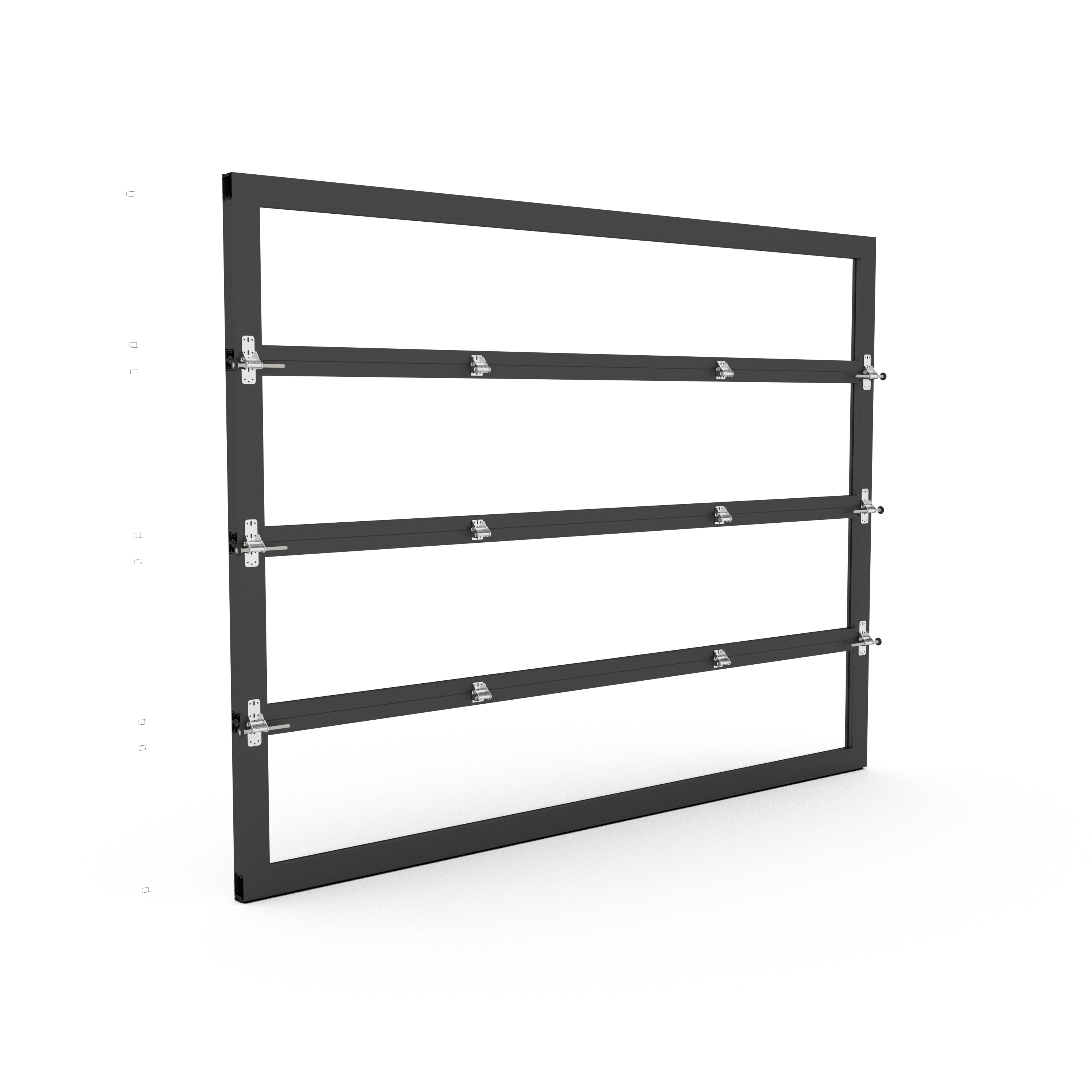
 ES Windows · Prestige Series
ES Windows Prestige ES-PGD3040 Captured-Glass Garage Door
Premium aluminum-and-glass impact garage door with heavy-duty rollers, steel hinges, and motorized operation. For coastal homes where the garage is part of the envelope.
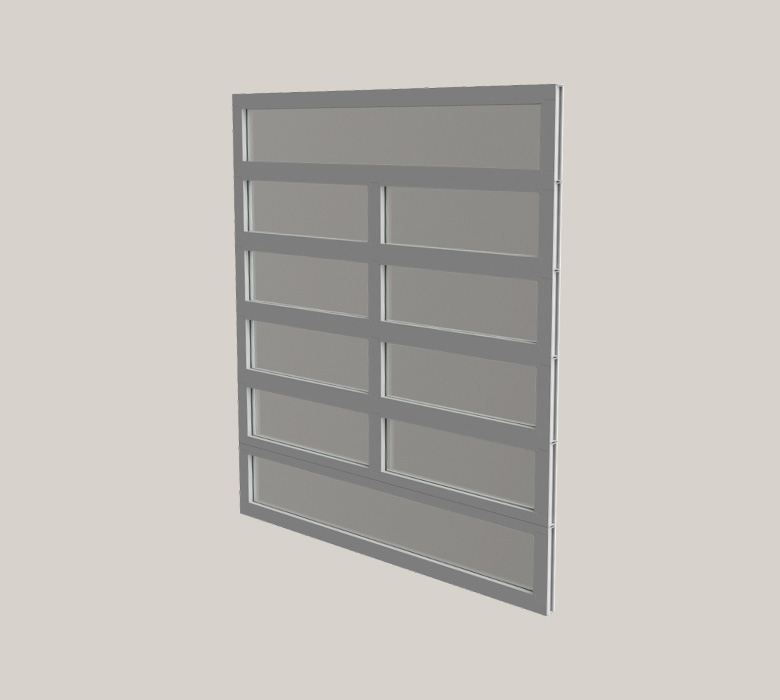
 WinDoor
WinDoor GD9995A Impact Garage Door
Sectional aluminum impact garage door with up to 9 panel sections at unit sizes of 216 by 192 or 192 by 216 inches. LMI for HVHZ envelope coverage.

 ECO · Eco-Guard Garage Door Series
Eco-Guard Garage Door Series 850-16
6-section impact-rated aluminum sectional garage door (page label E870) to 192 x 144 in., +40/-45 psf, LMI.
Comparison
| Factor | Bracing Kit | Full Replacement |
|---|---|---|
| Cost | $300-$800 | $1,500-$5,000 |
| Wind resistance | Improved | Engineered |
| Impact resistance | None | Available (impact-rated models) |
| Code compliance (HVHZ/WBDR) | Usually no | Yes (when properly specified) |
| Insurance credit | Possible (limited) | Full opening-protection credit |
| Lifespan | 5-10 years (depends on door condition) | 20-30 years |
| Installation time | Half day | Full day |
Features to Look For
When shopping for a hurricane-rated garage door, these specifications matter:
Wind load rating (DP). Match to your zone's requirements. A door rated DP-30 is adequate for some inland areas but insufficient for coastal zones that require DP-50 or higher. Your installer should calculate the required DP based on your location, building height, and exposure category.
Impact resistance. For homes in the HVHZ or Wind-Borne Debris Region, choose a door that's been tested and certified for debris impact (large missile or small missile depending on the zone and installation height). Look for the Miami-Dade NOA number (HVHZ) or Florida Product Approval number (WBDR).
Material and gauge. Steel doors in 24-gauge (standard) to 20-gauge (heavy duty) are the norm for hurricane zones. Heavier gauge means more resistance to denting and impact. Aluminum doors are lighter but can be specified in heavier gauges for hurricane applications.
Insulation. Insulated doors (polyurethane or polystyrene core) improve energy efficiency, reduce noise, and add panel rigidity. R-values of R-12 to R-18 are common. In Florida's climate, insulation helps keep the garage cooler and reduces heat transfer to adjacent living spaces.
Track and hardware. Hurricane-rated doors use heavier tracks, reinforced brackets, and additional fastening points. The track system must be anchored into the wall framing (not just the drywall or veneer) with proper fasteners.
Motor/opener compatibility. If you have an automatic opener, verify compatibility with the new door's weight and balance. Hurricane-rated doors are heavier than standard doors and may require a more powerful opener. Ensure the opener has a manual override for power outages during storms.
Wind lock or auto-lock. Some hurricane-rated doors include automatic wind locks that engage when the door is closed, preventing wind from pushing the door off the tracks. This feature is particularly valuable because manual locks are only effective if someone remembers to engage them before the storm.
The Insurance Angle
This is where the garage door becomes a financial decision, not just a safety one.
The wind mitigation inspection form (OIR-B1-1802) evaluates your home's opening protection as a category. To qualify for the maximum opening-protection credit (30-45% of your wind premium, the single largest discount on the form), ALL glazed openings must be protected: every window, every door, every skylight, and every garage door.
One unrated garage door voids the full opening-protection credit. You could have $40,000 in impact windows and impact doors on every other opening, but if the garage door doesn't qualify, you don't get the maximum credit.
For a coastal South Florida home paying $8,000-$12,000 per year in insurance, the opening-protection credit is worth $1,500-$3,500 annually. A $2,500 garage door replacement that completes the protection package and unlocks that credit pays for itself in 1-2 years of insurance savings.
| Protection Scenario | Opening Protection Credit |
|---|---|
| Impact windows + impact doors + unrated garage door | Partial credit (or none, depending on insurer) |
| Impact windows + impact doors + wind-rated garage door | Full credit (if all other openings also protected) |
| Impact windows + impact doors + impact-rated garage door | Full credit + highest confidence from insurer |
Installation Considerations
Permits. Garage door replacement requires a building permit in most Florida jurisdictions. The permit verifies that the product is rated for your wind zone and that the installation meets code.
Structural anchoring. The door tracks and header must be anchored into the structural framing of the garage opening, not into drywall, stucco veneer, or lightweight trim. In CBS (concrete block) construction, this means proper masonry anchors. In wood-frame construction, lag bolts into studs and headers.
Opener reinforcement. If your garage has an automatic opener, the opener mounting bracket may need reinforcement to handle the heavier door. The opener arm connection point is a potential failure point during high wind if not properly secured.
Weatherstripping. Hurricane-rated doors should include bottom weatherstripping that seals against the garage floor and side/top weatherstripping that reduces water intrusion. This is separate from the wind-load rating but matters for preventing the water damage that follows wind events.
The My Safe Florida Home Program
Impact-rated garage doors are an eligible improvement under the My Safe Florida Home program:
- Low-income homeowners receive grants up to $10,000 with no matching requirement
- Moderate-income homeowners receive 2:1 matching (invest $5,000, receive $10,000)
- The grant can cover the garage door as part of a larger project (windows, doors, roof)
- A garage door upgrade often completes the opening-protection package, unlocking the full insurance credit
If you're already planning an impact window project, adding the garage door to the same scope ensures you qualify for the maximum insurance discount from day one.
What's Coming in the 9th Edition FBC
The Helene/Milton building performance data has put garage door requirements on the 9th Edition FBC agenda. Expected changes include:
- Increased DP requirements. The 60% ASCE 7 allowance (FBC Section 609.4) may be raised to 80% or higher, bringing garage doors closer to the standard required for other openings.
- Clarified impact-rating requirements. The distinction between wind-load rating and impact rating may be tightened in the Wind-Borne Debris Region, where current code language creates ambiguity about whether garage doors need debris impact testing.
- Possible retroactive trigger. If the 25% rule or renovation thresholds are extended to garage doors (currently they apply primarily to glazed openings), some existing homes may face mandatory upgrades during reroof or renovation projects.
The practical advice: if you're replacing your garage door anyway, specify above the current minimum. A door rated for 80-100% of ASCE 7 rather than 60% costs marginally more today and avoids a potential mandatory upgrade under the next code cycle.
Next Steps
- Check your current garage door. Is it the original builder unit? Is it wind-rated? Impact-rated? If you're not sure, the product label on the inside of the door should show the DP rating and any certification numbers.
- Get a free estimate that includes your garage door alongside any window and door upgrades. Bundling the garage door into a comprehensive opening-protection project maximizes insurance savings and may qualify for MSFH grants.
- Get a wind mitigation inspection to see how your current garage door affects your insurance discount. If it's the one item preventing the full opening-protection credit, the ROI on replacement is immediate.
- If replacing, specify above code minimum. A door at 80-100% of ASCE 7 (rather than the current 60% minimum) costs marginally more and future-proofs against expected 9th Edition FBC changes.