

The Short Answer
Neither is universally better. Your best choice depends on where you live in Florida, how close your home is to the ocean, what design pressure your openings require, and your budget.
Aluminum is structurally stronger, has the broadest product selection for HVHZ areas, and offers thinner frames with more glass. Vinyl costs less, insulates better, and never corrodes. For most Florida homeowners, the decision comes down to location and budget.
This guide walks through every factor that matters, with specific product comparisons, real performance data, and regional recommendations so you can make the right call for your home.
Why Frame Material Matters More Than You Think
When homeowners shop for impact windows, the conversation usually starts with glass: laminated vs. insulated, Low-E vs. tinted, PVB vs. SentryGlas interlayer. But the frame is just as important. It determines:
- How much wind pressure your window can handle (critical for code compliance)
- How much heat transfers through the wall opening (your energy bill)
- How long the window lasts in salt air (maintenance and lifespan)
- How much of the opening is glass vs. frame (aesthetics and natural light)
- What your window costs (15-50% price variation between materials)
The Florida impact window market splits roughly 48% aluminum, with vinyl and fiberglass making up the remainder. Aluminum dominates because Florida's building codes demand structural performance that only metal frames could reliably deliver when the industry was young. But vinyl technology has matured significantly, and the choice is no longer as clear-cut as it was a decade ago.
Aluminum vs Vinyl: The Head-to-Head Comparison
| Factor | Standard Aluminum | Thermally Broken Aluminum | Vinyl (uPVC) |
|---|---|---|---|
| Typical cost per window | $900-$1,800 | $1,200-$2,500 | $750-$1,400 |
| Cost vs. standard aluminum | Baseline | 30-50% more | 15-30% less |
| U-factor (thermal) | 0.80-1.07 | 0.28-0.45 | 0.28-0.32 |
| Thermal conductivity | 209 W/m-K | Reduced 70-85% by break | 0.16 W/m-K |
| Max design pressure | +90/-130 PSF (PGT WinGuard) | +110/-195 PSF (WinDoor Estate) | +65/-70 PSF (PGT WinGuard) |
| HVHZ product selection | Broadest (all major manufacturers) | Growing (WinDoor, ES Prestige) | Limited (2-3 product lines) |
| Salt-air resistance | Moderate to good (requires coating) | Moderate to good (requires coating) | Excellent (no corrosion) |
| Color options | Any color (powder coat) | Any color (powder coat) | Limited (white, tan, some two-tone) |
| Frame profile thickness | Thinner (more glass area) | Moderate | Thicker |
| Maintenance | Periodic inspection in coastal environments | Same as standard aluminum | Virtually none |
| Corner construction | Mechanical fastening + adhesive | Mechanical + thermal break element | Fusion-welded (monolithic) |
| Lifespan | 25-30 years | 25-30 years | 15-25 years |
| Product | Frame Material | Impact Rating | U-Factor | SHGC | Details |
|---|---|---|---|---|---|
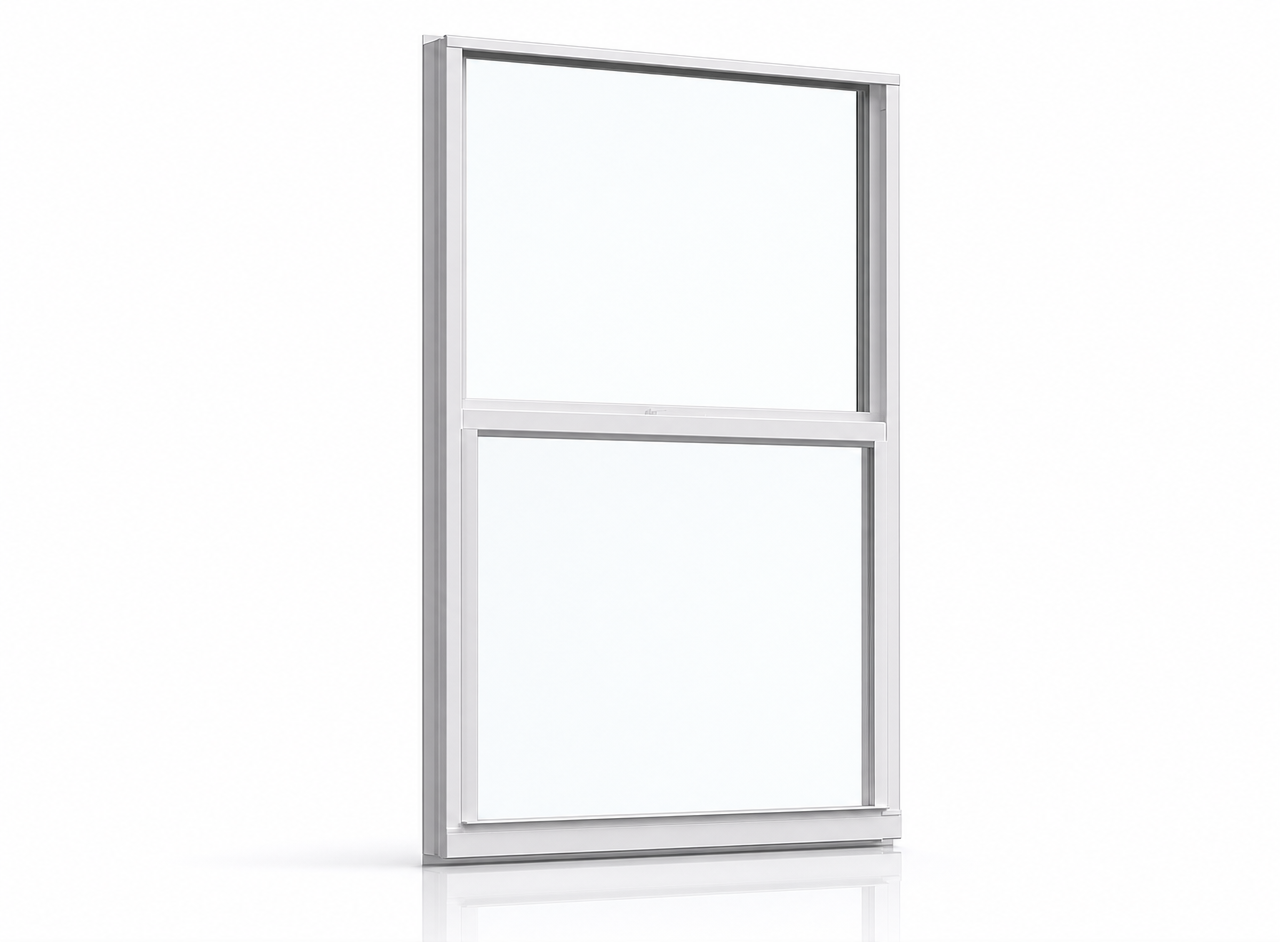 PGT WinGuard Aluminum Single Hung SH7700APGT
|
Aluminum | LMI | 1.1–1.11 | 0.3–0.7 | |
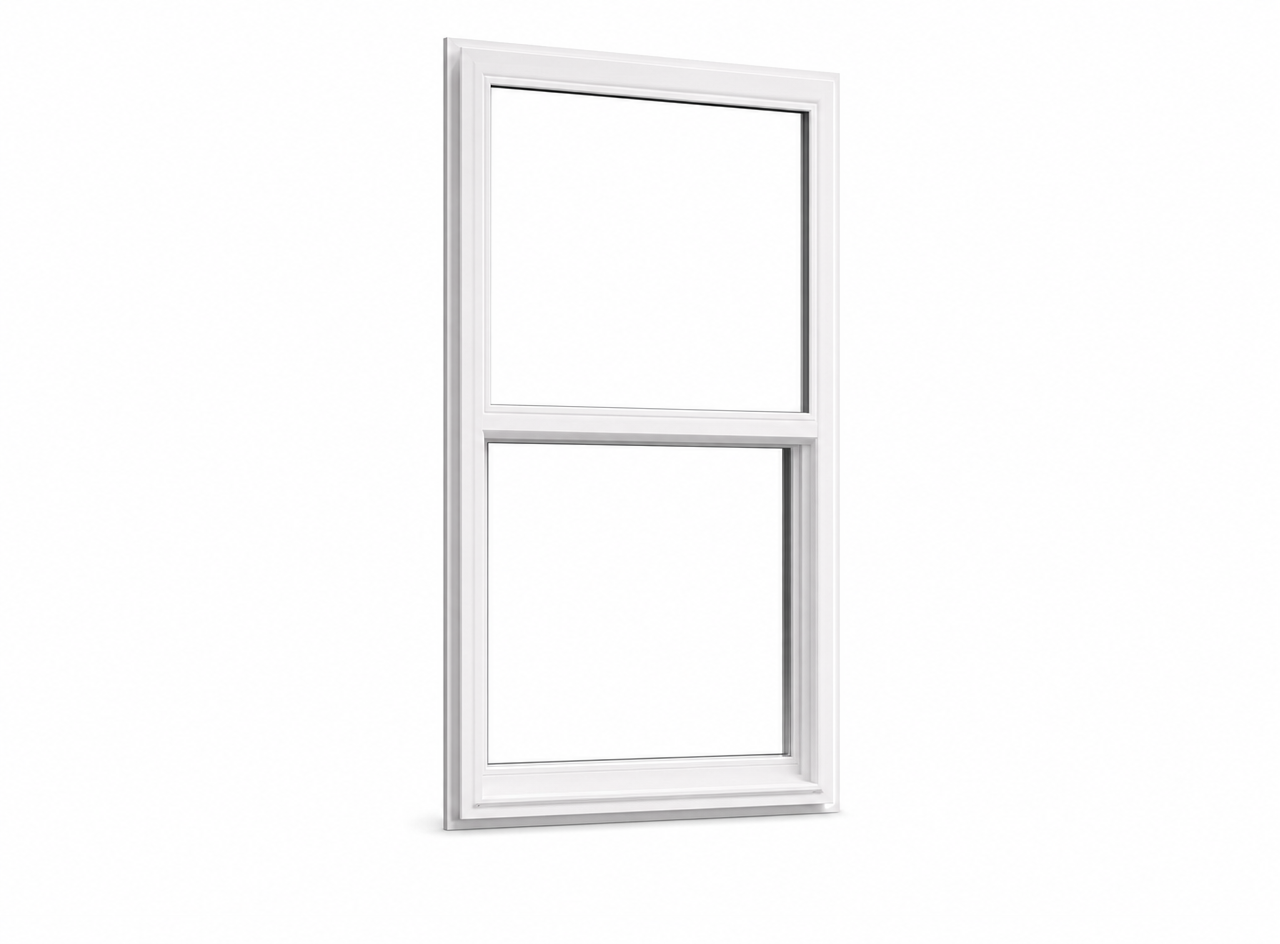 PGT WinGuard Vinyl Single Hung SH5500PGT
|
Vinyl | LMI | 0.3 | 0.19–0.29 |
Specs shown are approximate. Confirm ratings and sizes on the product pages.
Aluminum: The Case For
Structural Strength
Aluminum alloy 6063 (the industry standard for impact window frames) provides the structural backbone that Florida's building codes demand. In T5 temper, it delivers 29,000 PSI ultimate tensile strength. In T6 temper (used for higher-performance applications), that rises to 35,000 PSI.
This strength translates directly to higher design pressure ratings. When your building's engineer calculates the required DP for each window position (accounting for your location's wind speed, your building height, and whether the window is in a wall center or corner zone), aluminum products can meet requirements that vinyl cannot.
For homes in the HVHZ with Exposure C (the mandatory minimum), corner windows on upper floors may need DP ratings of -90 to -130 PSF. Only aluminum frames can deliver this.
Broadest Product Selection
Every major Florida impact window manufacturer offers aluminum products. In the HVHZ alone, aluminum product lines with Miami-Dade NOA approval include:
| Manufacturer | Aluminum Product Lines | Notable DP Ratings |
|---|---|---|
| PGT | WinGuard Aluminum, Sparta | Up to +90/-130 PSF |
| ES Windows (Tecnoglass) | Elite, Prestige, Commercial | Up to +100/-140 PSF |
| ECO Window Systems | Series 50-560 (windows), 600-1500 (doors) | Up to +105/-115 PSF |
| WinDoor | 8100 SGD, 9000 Series, Estate | Up to +110/-195 PSF |
| CWS (Pella) | Hurricane Guard | Up to +67.5/-100 PSF |
| EAS | 2000/3000 Series, 6000-8100 Doors | Various |
This breadth of choice means you can match a product to your exact requirements for style, performance, and budget. With vinyl, you're choosing from a much smaller menu.
Thinner, Sleeker Profiles
Aluminum's strength-to-weight ratio allows thinner frame profiles, which means more glass in the same rough opening. For floor-to-ceiling windows, large picture windows, and contemporary architectural designs, the visual difference is meaningful. ES Windows' Prestige
 ES Windows
Prestige Series
Premium architectural aluminum impact and thermally broken line, anchored by the Glass Magazine 2024 award-winning Pivot Door and the industry-leading ES-FX3050 folding door.
HVHZ-approved across the series 18 models in the series
Explore the Prestige Series
Frameless Butt Glass system (ES-FX3050) eliminates vertical aluminum profiles entirely for a nearly continuous glass wall.
ES Windows
Prestige Series
Premium architectural aluminum impact and thermally broken line, anchored by the Glass Magazine 2024 award-winning Pivot Door and the industry-leading ES-FX3050 folding door.
HVHZ-approved across the series 18 models in the series
Explore the Prestige Series
Frameless Butt Glass system (ES-FX3050) eliminates vertical aluminum profiles entirely for a nearly continuous glass wall.
Any Color
Aluminum frames are finished by electrostatic powder coating or anodizing and are available in virtually any color. Standard options include white, bronze, clear anodize, black, and beige. Premium finishes like Kynar/PVDF coatings (ES Windows
 ES Windows
Tecnoglass-owned, vertically integrated impact windows and doors with in-house glass and aluminum.
Miami-Dade NOA / HVHZ approved 145 models across 9 product lines
Explore ES Windows
markets their version as "Dynar") provide superior long-term color retention and chalk resistance in coastal UV exposure; ES backs its Kynar paint finishes with 10-15 year finish warranties.
ES Windows
ES Windows
Tecnoglass-owned, vertically integrated impact windows and doors with in-house glass and aluminum.
Miami-Dade NOA / HVHZ approved 145 models across 9 product lines
Explore ES Windows
markets their version as "Dynar") provide superior long-term color retention and chalk resistance in coastal UV exposure; ES backs its Kynar paint finishes with 10-15 year finish warranties.
If your home's exterior is a custom color, your impact window frames can match it. With vinyl, you're limited to the manufacturer's standard palette.
Corrosion Protection Has Improved
Early-generation aluminum windows in Florida's salt air did corrode. That history still shapes the perception of aluminum as a coastal liability. But modern finishing technology has largely solved this problem. Powder coatings of 60-120 micrometers and anodized oxide layers of 15-25 micrometers provide effective barriers. Stainless steel fasteners (standard on premium lines like ES Windows) prevent the galvanic corrosion that occurs when dissimilar metals contact each other in salt environments.
Aluminum still requires more attention than vinyl in severe coastal exposure (within 1 mile of the ocean), but the gap has narrowed considerably.
Aluminum: The Limitations
Thermal Conductivity (Without a Thermal Break)
This is aluminum's fundamental weakness. At 209 W/m-K, aluminum conducts heat roughly 1,300 times faster than vinyl. Without a thermal break, an aluminum window frame is a massive thermal bridge between your air-conditioned interior and Florida's 95-degree exterior.
Standard (non-thermally-broken) aluminum impact windows typically achieve U-factors of 0.80-1.07, well above the ENERGY STAR V7.0 threshold of 0.32. This means higher cooling costs and a less comfortable home, especially in rooms with large glass areas. The fix is the thermal break, which gets its own section below.
Higher Base Cost
Even without a thermal break, aluminum impact windows cost 15-30% more than vinyl. Add a thermal break and you're at 30-50% more. For a 15-window project, the difference between vinyl and thermally broken aluminum can be $8,000-$15,000.
Tariffs are compounding this in 2026: the April 2026 Section 232 update placed a 10% tariff on finished aluminum window imports and applied duties to the full customs value of the product rather than just its metal content, while the Midwest Premium (the delivery surcharge on physical aluminum in the US market) hit a record $1.05 per pound, and manufacturers announced a fresh round of price increases starting in early May 2026. Vinyl escapes most of that pressure, though not all of it, since vinyl impact frames carry internal metal reinforcement.
Thermal Break Aluminum Windows vs Vinyl: Closing the Energy Gap
A thermal break is a strip of low-conductivity material built into the middle of an aluminum frame. Instead of one continuous metal extrusion running from the Florida sun to your air-conditioned interior, the frame becomes two aluminum halves joined by a structural polymer isolator, so heat crossing the frame has to pass through the polymer instead of an unbroken conductive metal path. Manufacturers build them two ways:
- Polyamide strut (mechanical method). Pre-formed strips of glass-fiber-reinforced polyamide (PA66 nylon) are crimped into precision grooves in the exterior and interior aluminum sections, creating complete thermal separation between the two.
- Pour-and-debridge. A liquid two-part polyurethane resin is poured into a channel in the extrusion and cured, then the aluminum bridge beneath it is machined away so no metal path remains. Advanced versions lance the aluminum at 1.5-inch increments before the pour, creating mechanical interlocks with up to 4x the shear strength of polyamide struts.
Here is what the break does to the numbers. A standard aluminum impact window runs a U-factor of 0.80-1.07, roughly triple the ENERGY STAR ceiling of 0.32 for Florida. Interrupting the metal path cuts heat transfer through the frame by 70-85% (from 4.0-6.0 W/m2K down to 0.8-2.0 in the metric units frame suppliers quote), which brings thermally broken aluminum windows down to whole-window U-factors of about 0.28-0.45. The best of them land inside vinyl territory: ES Windows' Prestige line posts a U-factor of 0.295 with SHGC 0.355, while quality vinyl impact frames run 0.28-0.32. On energy, the race between thermally broken aluminum and vinyl is close to a tie. On structure it is not: the aluminum keeps its design pressure ratings, and that is the whole point.
When thermally broken aluminum beats vinyl in Florida:
- Your openings need more than DP +65/-70. That's vinyl's ceiling. Corner zones (Zone 5), upper floors, and oversized openings routinely require more. Thermally broken aluminum reaches the same ratings as the rest of the aluminum catalog, up to +110/-195 PSF in WinDoor's Estate casement.
- Large glass walls with sun exposure. The more frame you have on a south or west face, the more a conductive frame costs you in cooling. This is where the price premium pays itself back fastest.
- Dark or custom frame colors. Dark vinyl absorbs heat and can warp. A thermally broken aluminum frame takes any powder-coat or Kynar finish with no thermal penalty.
- Contemporary sightlines. You keep aluminum's thin profiles and glass area; vinyl needs bulkier profiles to hit its structural numbers.
The product lines to ask for. WinDoor's 9000 Series is the benchmark in the Florida market: its I-Strut construction is a three-piece frame (outer aluminum frame, center I-Strut core, inner aluminum frame) in which the strut acts as both thermal barrier and structural connector. It covers fixed (9020), single hung (9400), horizontal roller (9470), and casement windows. ES Windows builds thermal breaks into its Prestige line and its T-suffix Thermally Broken Series models. Both price into the premium tier, 30-50% above standard aluminum. If your project pairs high design pressures with high energy goals, this is the category that resolves the aluminum vs vinyl trade-off instead of splitting it.
Vinyl: The Case For
Lower Cost
Vinyl impact windows typically cost 15-30% less than comparable aluminum products. On a 15-window project, that difference can save $3,000-$8,000. For budget-conscious homeowners or investment properties, this is often the deciding factor.
Superior Thermal Performance (No Thermal Break Needed)
This is vinyl's biggest technical advantage. Vinyl (unplasticized polyvinyl chloride, or uPVC) has a thermal conductivity of 0.16 W/m-K. Aluminum conducts heat at 209 W/m-K. That's a 1,300x difference.
In practical terms, vinyl frames achieve U-factors of 0.28-0.32 through multi-chamber extrusion profiles that trap insulating air pockets. No thermal break technology is needed because the material itself is a poor conductor of heat. This matters in Florida's cooling-dominated climate, where your windows are the primary pathway for solar heat to enter your home.
The current ENERGY STAR Version 7.0 requirements for the Southern Climate Zone (all of Florida) are U-factor 0.32 or lower and SHGC 0.23 or lower. Quality vinyl impact windows meet these thresholds without any thermal break, while standard aluminum frames need a thermal break to get close.
Zero Corrosion in Salt Air
Vinyl does not corrode. Period. It doesn't rust, pit, chalk, or degrade in salt air. For homes within a few miles of the coast, this means lower maintenance and longer life for the frame itself (though hardware and weatherstripping still need periodic attention).
In contrast, aluminum frames require protective finishing (anodizing or powder coating) to resist Florida's salt-air environment. Premium finishes like Kynar/PVDF-based coatings provide excellent long-term protection, but less expensive finishes may show degradation over 15-20 years in severe coastal exposure.
Fusion-Welded Corners
Vinyl window frames are assembled by heating the mitered ends of the frame sections and pressing them together, creating a monolithic joint with no mechanical fasteners and no air gaps. This fusion weld is as strong as the parent material and provides better long-term weather sealing than the mechanical corner joints used in aluminum frames.
Quieter
Vinyl's viscoelastic properties provide slightly better sound damping than aluminum at the frame level. Combined with laminated impact glass (which already achieves STC ratings of 32-40), vinyl frames contribute to a quieter home, especially near highways or airports.
Vinyl: The Limitations
Lower Maximum Design Pressure
This is the critical constraint. Vinyl alone lacks the structural rigidity to resist the design pressures required in Florida's highest wind zones. To compensate, vinyl impact window manufacturers reinforce their frames internally with steel or aluminum inserts, but even with reinforcement, maximum design pressures are lower than aluminum.
The strongest vinyl impact line on the market, PGT WinGuard Vinyl
 PGT · WinGuard Vinyl Series
PGT WinGuard Vinyl Single Hung SH5500
Flagship vinyl impact single-hung on a 3-1/2 inch welded frame with SecureConnect corner keys. ComfortLift handles, removable sash for cleaning, LMI for HVHZ.
HVHZ approved for South Florida Design pressure +65/-70 psf
See single-hung window details
, tops out at DP +65/-70 PSF, and that ceiling is reached by its sliding glass door (SGD5570); the SH5500 single hung rates +55/-65. That's adequate for most standard residential applications, but it falls short of what's needed for corner windows (Zone 5) in higher wind zones, or for larger openings where higher DPs are required.
PGT · WinGuard Vinyl Series
PGT WinGuard Vinyl Single Hung SH5500
Flagship vinyl impact single-hung on a 3-1/2 inch welded frame with SecureConnect corner keys. ComfortLift handles, removable sash for cleaning, LMI for HVHZ.
HVHZ approved for South Florida Design pressure +65/-70 psf
See single-hung window details
, tops out at DP +65/-70 PSF, and that ceiling is reached by its sliding glass door (SGD5570); the SH5500 single hung rates +55/-65. That's adequate for most standard residential applications, but it falls short of what's needed for corner windows (Zone 5) in higher wind zones, or for larger openings where higher DPs are required.
By comparison, PGT WinGuard Aluminum
 PGT
WinGuard Aluminum Series
PGT's flagship aluminum impact platform since 1998, with one of the deepest Miami-Dade NOA libraries in the industry. Single hung through sliding doors on one HVHZ-certified frame system.
HVHZ-approved across the series 11 models in the series
Explore the WinGuard Aluminum Series
achieves +90/-130 PSF, and WinDoor's Estate casement reaches +110/-195 PSF.
PGT
WinGuard Aluminum Series
PGT's flagship aluminum impact platform since 1998, with one of the deepest Miami-Dade NOA libraries in the industry. Single hung through sliding doors on one HVHZ-certified frame system.
HVHZ-approved across the series 11 models in the series
Explore the WinGuard Aluminum Series
achieves +90/-130 PSF, and WinDoor's Estate casement reaches +110/-195 PSF.
Limited HVHZ Selection
In the HVHZ (Miami-Dade and Broward counties), every product must carry a Miami-Dade NOA. The vinyl impact products with HVHZ approval are:
- PGT WinGuard Vinyl (SH5500 and related 5500-series models): HVHZ-approved with Miami-Dade NOAs across the line, DP up to +65/-70 PSF
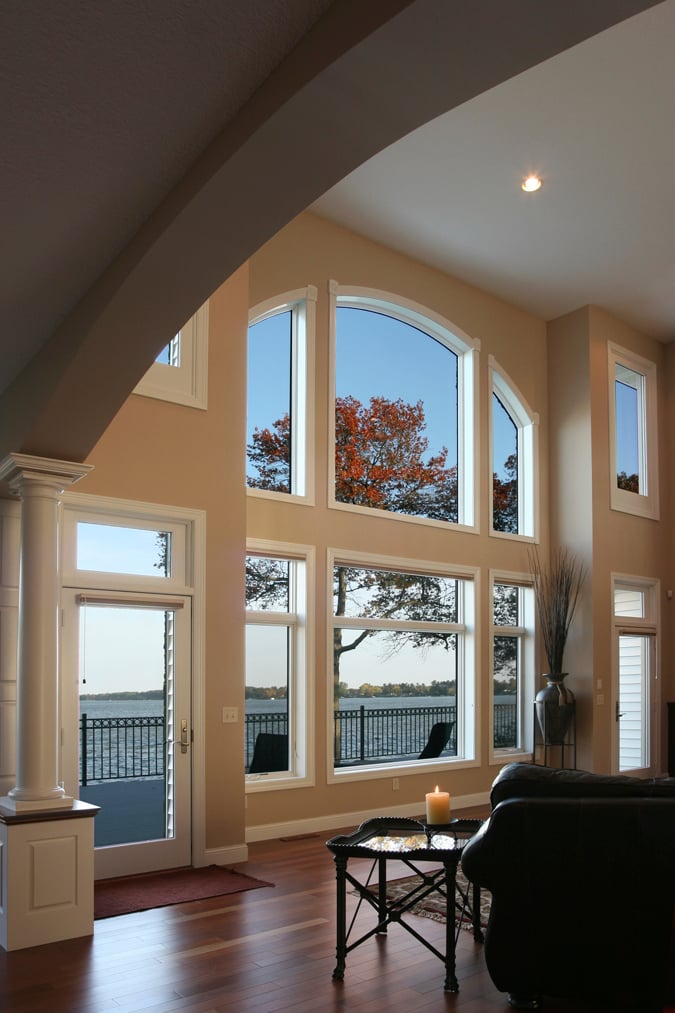
- EAS Bertha
 EAS
176 Series Bertha
Flagship HVHZ-rated vinyl impact line with lifetime warranty on both frame and insulated glass. Single hung up to 120 psf, with SentryGlas Plus upgrades available on HR and Picture.
3 models in the series Covers Fixed Window, Horizontal Roller Window, Single-Hung Window
Explore the 176 Series Bertha
(Earthwise): HVHZ-approved, DP +/-60 PSF across its single hung, horizontal roller, and casement, with fusion-welded construction and 12% thicker thermal walls than most competitors
EAS
176 Series Bertha
Flagship HVHZ-rated vinyl impact line with lifetime warranty on both frame and insulated glass. Single hung up to 120 psf, with SentryGlas Plus upgrades available on HR and Picture.
3 models in the series Covers Fixed Window, Horizontal Roller Window, Single-Hung Window
Explore the 176 Series Bertha
(Earthwise): HVHZ-approved, DP +/-60 PSF across its single hung, horizontal roller, and casement, with fusion-welded construction and 12% thicker thermal walls than most competitors
The big caveat: CWS StormStrong Vinyl is NOT HVHZ-approved (maxes out at DP +/-50 PSF); it's sold everywhere in Florida except Miami-Dade and Broward. ES Windows launched a vinyl line in November 2023, but it's still ramping and not yet a factor in the HVHZ menu. If you live in Miami-Dade or Broward and want vinyl, verify that the specific product line carries a current Miami-Dade NOA before signing a contract.
Thicker Frame Profiles
Vinyl frames need more material to achieve structural performance, resulting in thicker profiles that leave less glass area in the opening. If you're after a contemporary, clean-line look with maximum glass and minimal frame, aluminum's thinner profiles are more appealing.
Limited Color Options
Vinyl is difficult to finish in dark colors because dark pigments absorb more solar heat, which can cause vinyl to soften and warp in Florida's climate. Most vinyl impact windows are available in white, tan/almond, and a few two-tone combinations. If you need bronze, black, or a custom color to match your home's architecture, aluminum is the better fit.
Thermal Expansion
Vinyl has a higher coefficient of thermal expansion than glass, which means the frame and the glass expand and contract at different rates through Florida's temperature swings. Over time, this differential stress can affect seal integrity. Quality vinyl manufacturers mitigate this with engineered relief points and flexible sealant systems, but it remains a long-term consideration.
The Third Option: Fiberglass
Fiberglass (pultruded glass-fiber reinforced polymer) frames are a growing category worth knowing about, even though they represent a small share of the Florida impact market today.
What makes fiberglass interesting:
- Thermal expansion nearly identical to glass. This is fiberglass's most compelling technical advantage. Because the frame and the glass expand and contract at the same rate, seal integrity is maintained over decades of Florida temperature cycling. Neither vinyl (8x more expansion than glass) nor aluminum (3x more) can match this.
- U-factors of 0.30-0.38. Better than standard aluminum, comparable to vinyl, without needing a thermal break.
- Superior strength-to-weight ratio compared to vinyl, allowing thinner profiles.
- Paintable in any color without thermal concerns (unlike vinyl, which can warp in dark colors).
- No corrosion in salt air.
- Fastest-growing frame material at 8.1% CAGR.
The limitation: Florida impact product selection in fiberglass is still limited compared to vinyl and aluminum. As more manufacturers add fiberglass lines, this will change, but today it's a premium niche rather than a mainstream option.
Understanding Design Pressure: Why It Drives the Decision
If you've read this far, you've seen "design pressure" mentioned repeatedly. Here's why it's the technical factor that often makes the aluminum-vs-vinyl decision for you.
Design pressure (DP) measures the maximum wind pressure a window can withstand, in pounds per square foot (PSF). Your building's engineer calculates the required DP for each window based on:
- Your location's design wind speed (175+ mph in the HVHZ, 130-170 mph in the WBDR)
- Your building height (higher floors = higher wind pressure)
- Where the window sits on the building (Zone 5 corners experience 40-60% higher suction than Zone 4 wall centers)
- Your exposure category (Exposure D near water = highest pressure multiplier)
A DP-50 window might be adequate for a single-story inland home's center-wall windows. But that same home's corner windows might need DP-70, and a two-story coastal home's upper-floor corners might need DP-90+.
Vinyl maxes out around DP +65/-70. If any of your windows require higher, you need aluminum (or a hybrid approach with vinyl in the lower-DP positions and aluminum in the corners).
This is why your installer's recommendation matters. A good installer measures every opening, knows the DP requirements for each position on your home, and matches the right product to each location. Asking for "all vinyl" or "all aluminum" without this analysis can result in either overspending or under-specifying.
Regional Recommendations
Based on our experience installing impact windows across South Florida, here's what we typically recommend by region:
Miami-Dade and Broward (HVHZ)
Default recommendation: Aluminum. The broadest Miami-Dade NOA product selection, the highest available DP ratings, and the structural performance needed for HVHZ Exposure C requirements. For homeowners prioritizing energy efficiency, thermally broken aluminum (WinDoor 9000 Series, ES Windows Prestige) delivers HVHZ-level strength with vinyl-level U-factors.
Vinyl is viable for standard-size openings in wall-center positions where DP +65/-70 is sufficient. PGT WinGuard Vinyl is HVHZ-approved and offers significant cost savings. But verify every opening's DP requirement first. If any window needs higher, you'll need aluminum for at least those positions.
Palm Beach County (WBDR, 160-170 mph)
Either works. Palm Beach is not HVHZ, so Miami-Dade NOA is not required (though NOA products are accepted). Vinyl impact windows with Florida Product Approval meet code for most residential applications. Aluminum is preferred for larger openings, upper floors, and oceanfront homes.
Lee and Collier (Naples, Fort Myers, Cape Coral)
Vinyl is a strong choice. Design wind speeds of 150-160 mph are well within vinyl's structural capability for most residential openings. The 15-30% cost savings is significant in this market. For direct waterfront homes on barrier islands (Sanibel, Marco Island), aluminum provides the extra structural margin and broader product selection.
Tampa Bay (Pinellas, Hillsborough)
Vinyl is optimal for most homes. Lower design wind speeds (130-150 mph) and the energy efficiency benefits make vinyl the value leader. Aluminum is warranted for high-rise condos, commercial applications, and homes seeking the thinnest possible frame profiles. On Tampa impact windows projects we typically run vinyl inland and coated aluminum near the bay and Gulf beaches, where salt air shortens the life of cheaper finishes.
Orlando and Inland Central Florida
Vinyl is the default. Outside the Wind-Borne Debris Region, design wind speeds are 115-130 mph. Impact windows are not code-required here, but homeowners installing them for insurance and comfort benefits should prioritize energy performance, where vinyl excels.
Monroe County (Florida Keys)
Aluminum is the standard. Design wind speeds of 170-190 mph (among the highest in the state), extreme salt exposure, and the structural demands of island construction favor aluminum. Thermally broken aluminum is ideal for the premium homes that characterize much of the Keys market.
Cost Comparison in Practice
Here's what the frame material decision looks like on a real project (typical 3/2 Florida home, 15 openings including 2 sliding glass doors):
| Frame Material | Per-Window Average | Project Total | Energy Cost (Annual) | 10-Year Total |
|---|---|---|---|---|
| Vinyl | $1,100 | $16,500 | $1,500 (cooling) | $31,500 |
| Standard Aluminum | $1,400 | $21,000 | $1,900 (cooling) | $40,000 |
| Thermally Broken Aluminum | $1,800 | $27,000 | $1,500 (cooling) | $42,000 |
Vinyl saves approximately $4,500 upfront compared to standard aluminum and approximately $8,500 over 10 years when energy savings are included. Thermally broken aluminum has the highest upfront cost but matches vinyl's energy performance, so the 10-year gap is smaller.
These are illustrative averages. Your actual cost depends on window types, sizes, and manufacturer.
What We See in the Field
After thousands of installations across South Florida, a few patterns stand out:
Vinyl seals hold up. Early vinyl impact windows had a reputation for seal failures, particularly in hot south-facing exposures. Modern fusion-welded vinyl frames with engineered relief systems have largely solved this. PGT alone has more than four million WinGuard units installed, a scale that has shaken out the early failure modes.
Aluminum corrosion is manageable. We see corrosion issues primarily in homes within 1 mile of the ocean with standard (non-premium) powder coating, particularly on hardware and fasteners. Stainless steel hardware and premium finishes like Kynar dramatically reduce this risk.
Mixed-material projects work well. Many of our projects use aluminum for large sliding glass doors and corner windows (where high DP is required) and vinyl for standard bedroom and living room windows (where DP +65 is sufficient). This hybrid approach captures vinyl's cost and energy benefits where they matter most, while using aluminum's structural performance where it's needed.
The thermal break is worth it on large glass walls. For homes with floor-to-ceiling glass on the south or west side, thermally broken aluminum delivers noticeably better comfort and lower energy bills. The premium pays for itself faster in these high-solar-load applications.
Manufacturer Highlights by Frame Material
Best Aluminum Impact Products
- PGT WinGuard Aluminum: The market leader. Broadest selection, most Miami-Dade NOA certifications in the industry. Up to +90/-130 PSF. More than four million WinGuard units installed across the product family's history.
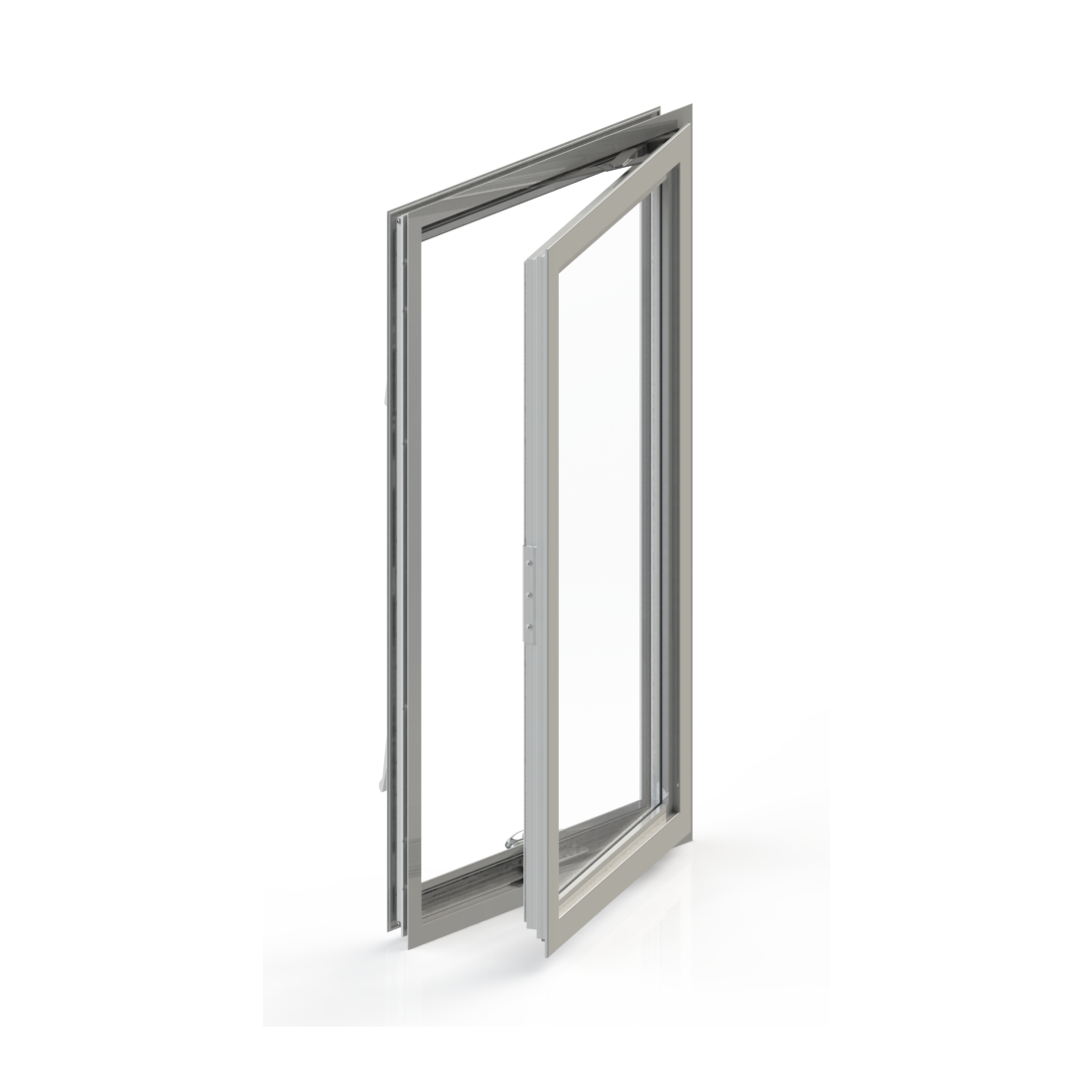
- ES Windows Elite
 ES Windows
Elite Series
Mid-tier aluminum impact line for residential builders, with current 2023 FBC Miami-Dade NOAs across casement, single hung, fixed, sliding window, French door, and SGD.
HVHZ-approved across the series 8 models in the series
Explore the Elite Series
: 20% less expensive than PGT for comparable specs. Low-E and Kynar/Dynar coatings included standard (no upcharge). 5-6 week delivery vs. 12-16 weeks for competitors. DP +80/-80 PSF.
ES Windows
Elite Series
Mid-tier aluminum impact line for residential builders, with current 2023 FBC Miami-Dade NOAs across casement, single hung, fixed, sliding window, French door, and SGD.
HVHZ-approved across the series 8 models in the series
Explore the Elite Series
: 20% less expensive than PGT for comparable specs. Low-E and Kynar/Dynar coatings included standard (no upcharge). 5-6 week delivery vs. 12-16 weeks for competitors. DP +80/-80 PSF. - ECO Window Systems
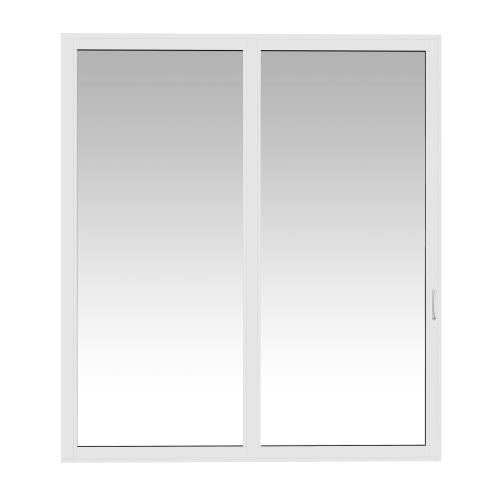
 ECO
ECO Window Systems
Miami-made impact windows and doors with vertical glass integration and Miami-Dade NOA coverage.
Miami-Dade NOA / HVHZ approved 41 models across 10 product lines
Explore ECO
: The most affordable aluminum impact option. Popular for rental properties, multi-family, and cost-conscious homeowners. Full catalog from single-hung to pivot doors to glass railings.
ECO
ECO Window Systems
Miami-made impact windows and doors with vertical glass integration and Miami-Dade NOA coverage.
Miami-Dade NOA / HVHZ approved 41 models across 10 product lines
Explore ECO
: The most affordable aluminum impact option. Popular for rental properties, multi-family, and cost-conscious homeowners. Full catalog from single-hung to pivot doors to glass railings. - WinDoor Estate: The luxury tier. +110/-195 PSF casement (industry-leading negative pressure rating). 8100 SGD handles panels up to 12 feet tall. Ogee glazing beads, stainless steel package, multipoint locks.
Best Thermally Broken Aluminum
- WinDoor 9000 Series: I-Strut thermally broken technology across single-hung, casement, horizontal roller, and fixed windows. Three-piece construction: outer frame + center I-Strut core + inner frame.
- ES Windows Prestige: Frame depth of 3". U-factor 0.295, SHGC 0.355. Includes the ES-FX3050 Frameless Butt Glass (panels up to 5'W x 12'H) and the ES-8000T Jumbo Fixed Window (7' x 15', the largest single-pane impact window on the market).
Best Vinyl Impact Products
- PGT WinGuard Vinyl (5500 series): The strongest vinyl impact line (DP up to +65/-70). HVHZ-approved. Multi-chamber frame, welded sash corners, stainless steel assembly screws. SecureConnect corner keys, SnapLock 3-point auto-lock. Limited lifetime warranty on frame/sash.
- EAS Bertha (Earthwise): HVHZ-approved vinyl impact, DP +/-60 PSF. 12% thicker thermal walls than most competitors. Fusion-welded 3-1/4" frame and sash. Only vinyl impact window backed by the Good Housekeeping Seal of Approval. Double pane with argon gas fill standard.
- ES Windows (Tecnoglass): Launched its vinyl line in November 2023 and it's still ramping, with roughly $10 million in FY2025 vinyl revenue and management projecting 2.5-3x growth in 2026. Not yet at parity with PGT WinGuard Vinyl or EAS Bertha, but worth watching.
Next Steps
- Get a free estimate that includes product recommendations matched to each opening on your home, with options in both vinyl and aluminum where applicable.
- Ask about design pressure requirements. A good installer will calculate the required DP for each window position and recommend the appropriate frame material accordingly.
- Compare energy performance. Ask for U-factor and SHGC data for each product being quoted. The cheapest window per unit may cost more over 10 years when energy bills are included.
- Check your eligibility for the My Safe Florida Home program (grants up to $10,000) and financing options including PACE ($0 down, income-verified approval, repaid through your property tax bill).
- See our impact windows cost guide for detailed pricing by window type, frame material, and manufacturer tier.