
The French Door Challenge
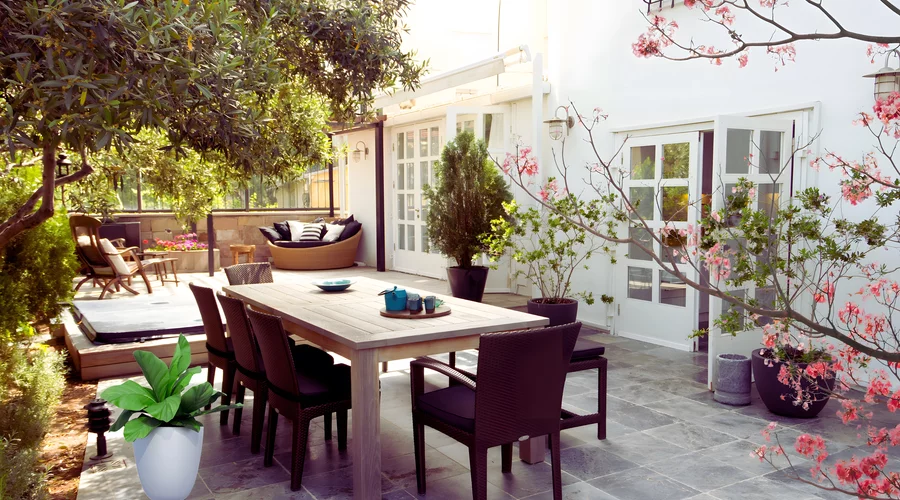
French doors are one of the most architecturally distinctive openings in a Florida home. The symmetrical double-door design, the glass panels, the classic proportions: French doors make a statement that most homeowners chose deliberately.
That same design creates specific hurricane shutter challenges:
Width. French doors typically span 5-8 feet (two panels of 2.5-4 feet each), wider than a standard window but narrower than most sliding glass doors. The shutter system must cover the full width including the astragal (the vertical bar where the two panels meet when closed).
Swing arc. Out-swing French doors (recommended for Florida because wind pressure pushes them into the frame) swing outward. Shutters mounted directly on the door frame must not block the outward swing. In-swing doors have interior clearance requirements.
Aesthetics. French doors are chosen for their appearance. The shutter system should complement, not undermine, the architectural character.
Both panels matter. Unlike a single entry door, both French door panels face the same wind loads. The shutter must protect both panels and the junction between them.
Here's every option, ranked by how well it fits French doors specifically.
Shutter Options for French Doors
Colonial Shutters: Best Aesthetic Match
Colonial shutters mount in pairs on either side of the door opening, like traditional exterior shutters. For French doors, this is the most natural fit because the shutter style mirrors the double-door symmetry.
How they work: Two shutter panels (one on each side) are hinged to the wall beside the door opening. In normal conditions, they sit flat against the wall in a decorative open position. Before a storm, you close them over the opening and secure them with a center latch or barrel bolt system.
Cost: $400-$800 per French door pair (both shutter panels).
Deployment: 5-10 minutes (close both panels, engage locks).
Why they're best for French doors:
- The paired shutter design matches the paired door design
- When open, they enhance curb appeal rather than detracting from it
- No visible tracks, housings, or folded panels
- Available in colors that complement most French door frame finishes
Limitations:
- Do not provide any protection until deployed (no partial-close option)
- Require wall space on both sides for the opened shutter panels
- Cannot be used if the French doors are flanked by adjacent windows or walls with insufficient clearance
- Higher cost per square foot than accordion shutters
Bahama Shutters: Shade + Protection (Top-Mounted)
Bahama shutters mount above the opening on a hinge and prop open at an angle, providing shade and rain protection in daily use. For French doors, this works only if the door opening has sufficient height clearance above.
Cost: $500-$900 per French door pair.
Deployment: 5-10 minutes (lower and secure).
Why they work: Provide daily shade and rain protection in the propped-open position, adding function beyond storm protection. The tropical aesthetic complements many Florida French door installations.
Limitations: The propped-open shutter partially obstructs the view through the upper portion of the French doors. On tall French door openings (7-8 feet), the Bahama shutter can be very large and heavy when lowered. Not ideal for French doors under a shallow overhang or soffit with limited clearance above the opening.
Accordion Shutters: Most Popular Permanent Option
Accordion shutters mount permanently on tracks above and beside the opening, folding out from both sides to meet in the center.
Cost: $600-$1,500 per French door opening.
Deployment: 2-5 minutes (pull both halves closed, lock).
Why they work for French doors:
- Close from both sides, matching the French door's bilateral design
- Fastest manual deployment among non-motorized options
- Code-compliant in all Florida zones when properly certified
- FIU Wall of Wind testing showed accordion shutters reduce water intrusion by 77-87%
Swing arc consideration: For out-swing French doors, accordion shutter tracks must be mounted far enough from the door frame that the retracted accordion panels don't interfere with the fully opened door panels. Your installer measures the door swing radius and positions the tracks accordingly.
Limitations: When retracted, the folded panel stacks are visible on both sides of the opening. Track hardware along the top and bottom is permanently visible. Less aesthetically complementary to French doors than colonial shutters.
Roll-Down Shutters: Fastest Deployment
Roll-down shutters mount in a housing above the door opening and roll down to cover both panels.
Cost: $1,200-$3,000 per French door opening.
Deployment: Under 5 minutes (motorized) or 5-10 minutes (manual crank).
Why they work: The housing is above the opening and the guide tracks are on the sides, neither of which interferes with the French door swing arc. When retracted, the shutter is nearly invisible (hidden in the housing). For HOA communities where visible shutter hardware is an issue, roll-downs have the lowest visual profile.
Limitations: Highest shutter cost for French doors. The housing above the opening adds 8-12 inches of visual bulk at the top of the door. Motorized models need electrical wiring and manual override for power outages.
Storm Panels: Budget Option
Aluminum, steel, or clear polycarbonate flat panels that bolt into pre-installed tracks around the French door opening.
Cost: $300-$600 per French door opening.
Deployment: 30-60 minutes with 2 people.
Why they're cheapest: Minimal material and hardware cost per square foot. For homeowners who need code-compliant protection at the absolute lowest price and are willing to do the manual labor before each storm.
Clear polycarbonate panels are worth considering for French doors because they allow light through while deployed, preserving some of the natural light that French doors are designed to provide.
Limitations: Heavy panels (especially steel) require two people and significant physical effort. Must be stored in the garage between storms. Require 30-60 minutes to install on a French door opening, which is more complex than a single window due to the width and the astragal.
Cost Comparison
| Shutter Type | Cost (French Door Pair) | Deployment | Aesthetics (Retracted) | Best For |
|---|---|---|---|---|
| Colonial | $400-$800 | 5-10 min | Decorative (enhances appearance) | Traditional/Mediterranean homes |
| Bahama | $500-$900 | 5-10 min | Tropical (provides shade) | Coastal/Caribbean styles |
| Accordion | $600-$1,500 | 2-5 min | Functional (panels visible) | Most homeowners (value + convenience) |
| Roll-down (motorized) | $1,200-$3,000 | Under 5 min | Minimal (hidden in housing) | HOA communities, convenience priority |
| Storm panels | $300-$600 | 30-60 min | N/A (stored between storms) | Budget projects |
| Impact French doors | $4,000-$8,000 | None | Normal doors | Permanent protection + daily benefits |
When to Replace with Impact French Doors Instead
Impact French door replacement costs 3-5x more than shutters ($4,000-$8,000 per pair vs. $600-$1,500 for accordion). But the comparison isn't purely about storm protection.
Choose shutters when:
- Budget is the constraint (shutters are 50-80% less)
- Your existing French doors are in good condition and you want to keep them
- The French doors are a secondary opening (guest room, side patio)
- You're planning a hybrid project with impact windows on primary openings and shutters on doors
Choose impact French door replacement when:
- Your existing French doors are failing (difficult to open, corroded frame, poor seals)
- You want permanent always-on protection (no deployment)
- You value daily benefits (energy savings, noise reduction, UV blocking, security)
- You're not home during storms (no deployment gap)
- You want to maximize property value (impact doors add 7-10% to home value)
- You need multipoint locking for superior wind resistance (3-5 point locks distribute force along the full door height)
For the complete impact French door buyer's guide (in-swing vs out-swing, glass options, manufacturers, pricing), see our hurricane impact French doors guide.
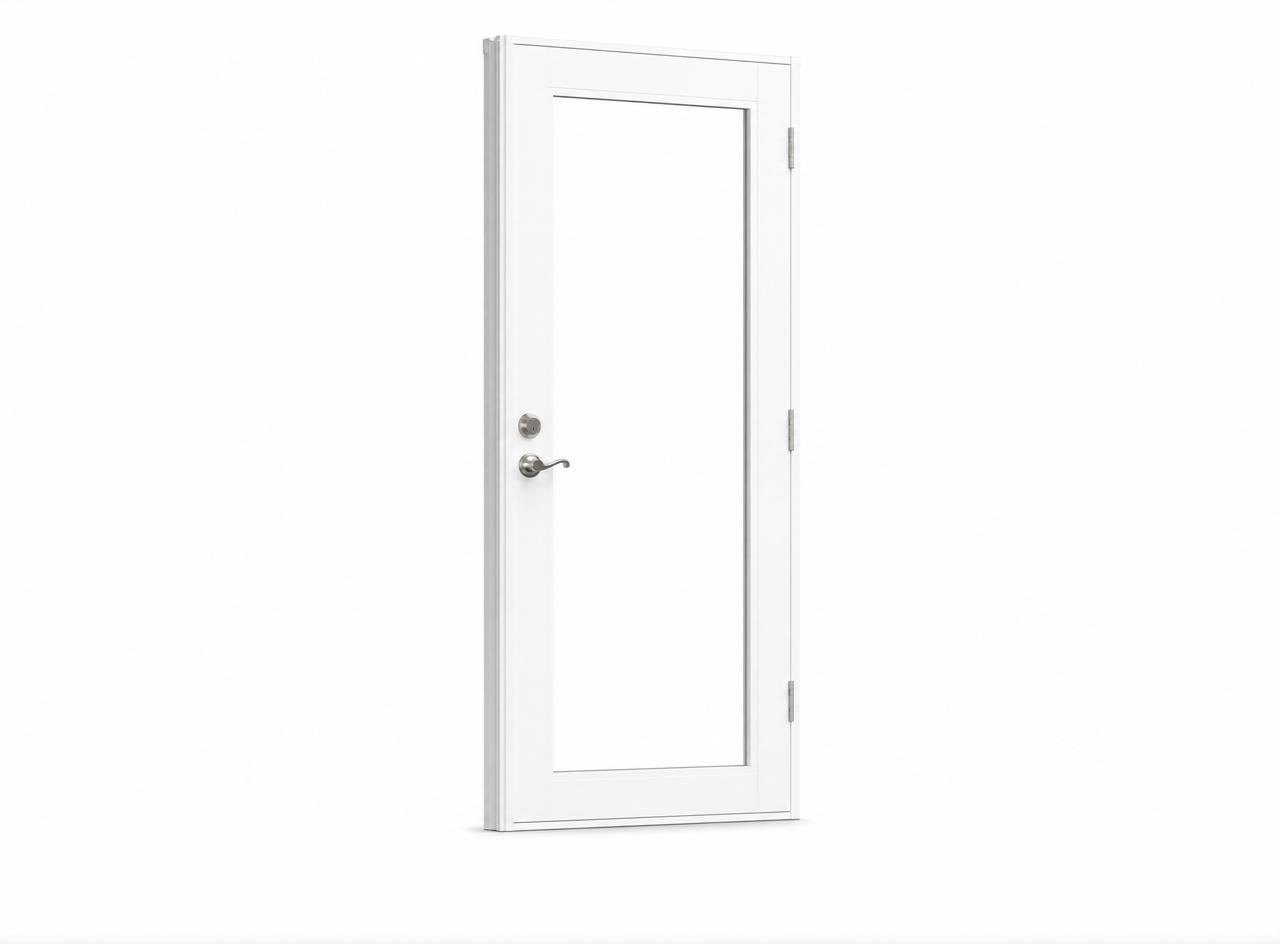
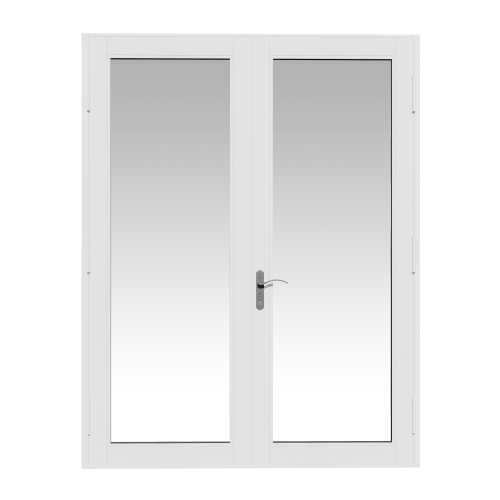
 PGT · WinGuard Aluminum Series
PGT WinGuard French Door FD160A
Aluminum impact French door in single and double swing configurations for residential patio and entrance openings. LMI for HVHZ.
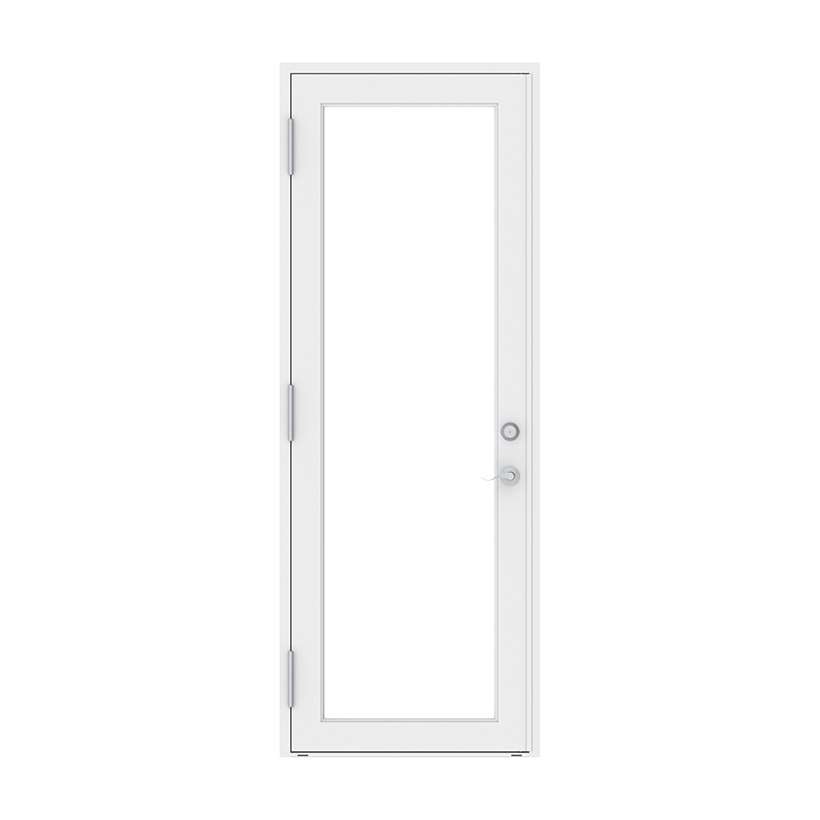
 ECO · Eco-Guard French & Swing Door Series
Eco-Guard French Door Series 600
4 in. outswing aluminum impact French door, single/double/OXXO to 148 in. wide x 98 in., +70/-75 psf, LMI+SMI, NFRC-certified, concealed install screws.
 ES Windows · Multimax Series
ES Windows Multimax ES-MX3000 French Door
Value-tier aluminum impact French door in single-leaf and double-leaf on a 4-inch frame. Vitro Solarban 70 Low-E glass package available as upgrade.
Installation Considerations Specific to French Doors
Out-Swing Clearance
Most Florida impact French doors are out-swing (recommended because wind pressure pushes the door into the frame). Shutter mounting must account for the outward swing arc:
- Colonial and Bahama: Mount on the wall beside and above the door, outside the swing radius. Generally no conflict.
- Accordion: Track positioning must leave enough gap between the retracted panels and the door edge to allow full swing. An experienced installer measures this precisely.
- Roll-down: Housing above the opening and guide tracks on the sides, typically outside the swing path. Confirm with your installer.
- Storm panels: Bolt-up tracks mount on the wall surrounding the opening, outside the door swing. No conflict when panels are removed.
The Astragal Question
The astragal is the vertical bar where the two French door panels meet when closed. When mounting shutters, the astragal doesn't interfere with the shutter system (the shutter covers the entire opening including the astragal). But if you're converting from French doors to impact French doors, the new door's astragal design matters: it must integrate weatherstripping and receive flush bolts for the inactive panel's locking system.
Sidelight and Transom Coverage
Many French door configurations include sidelights (narrow glass panels flanking the doors) and/or a transom (glass panel above). Each of these must be separately protected:
- Shutters must cover sidelights as well as the door panels. Some shutter systems can extend to cover sidelights as part of the same unit. Others require separate shutter panels for each sidelight.
- Transoms above French doors need their own shutter or can sometimes be covered by extending the main shutter system upward.
If your French doors have sidelights and a transom, factor these into your quote. An 8-foot French door opening with two sidelights and a transom is effectively four separate openings that all need protection.
HOA Considerations
French doors are often the most architecturally prominent opening on a home's exterior. HOA architectural review boards pay close attention to shutter installations on French doors.
Colonial shutters generally receive the easiest HOA approval because they enhance rather than detract from the door's architectural character. Accordion shutters may face pushback in communities with strict aesthetic standards due to the visible folded panels and tracks. Roll-down shutters with a well-integrated housing are often accepted because they're nearly invisible when retracted.
Under Florida law (HB 293, 2024), your HOA cannot prohibit hurricane protection. But they can regulate color, style, and uniformity. Choose a shutter color that matches your door frame and submit a complete application with product specifications and color samples.
Next Steps
- Get a free estimate with shutter options and impact French door replacement pricing for your specific door configuration (including sidelights and transoms if applicable).
- If you're in an HOA, check the architectural guidelines for shutter style and color requirements before selecting a product.
- Consider the hybrid approach: impact windows on standard openings, accordion or colonial shutters on French doors.
- Check MSFH eligibility for grants up to $10,000 covering shutters and impact doors.
- For the complete French door comparison, see our impact French doors guide and hurricane shutters cost guide.