
It is one of the most common questions we hear from South Florida homeowners who already have impact windows installed: Do I still need hurricane shutters?
The short answer is no. In most cases, you do not. But there are specific situations where adding shutters over impact windows makes practical and financial sense. This guide breaks down the building code requirements, insurance implications, cost analysis, and the handful of scenarios where doubling up is worth the investment.
The Short Answer: You Usually Do Not Need Both
Impact windows are standalone opening protection under the Florida Building Code. When your home has impact-rated windows installed on every opening, you have already met the code requirement for wind-borne debris protection. Adding hurricane shutters on top of that is not required by any Florida building code, insurance regulation, or lending standard.
Here is why impact windows alone are sufficient:
They pass the same debris tests. Impact windows installed in the High-Velocity Hurricane Zone (HVHZ) (Miami-Dade and Broward counties) must carry a Notice of Acceptance (NOA) and pass TAS 201, TAS 202, and TAS 203 testing. That means they have been struck by a 9-pound 2x4 lumber missile traveling at 50 feet per second and then subjected to thousands of cycles of positive and negative pressure. Outside the HVHZ, impact products must hold Florida Product Approval with ASTM E1886/E1996 certification. Either way, the glass cracks but the interlayer holds. The envelope stays sealed.
They are always deployed. This is the single biggest advantage impact windows have over every type of shutter. Accordion shutters, roll-down shutters, and storm panels all require someone to deploy them before the storm arrives. Impact windows are on duty 24 hours a day, 365 days a year. No advance warning needed, no physical effort required, no risk of being away from home when a storm forms quickly.
Insurance treats them the same. The wind mitigation inspection form (OIR-B1-1802) evaluates every opening in your home. The opening-protection credit, worth 30-45% of the windstorm portion of your premium, is available when ALL openings are protected with either impact-rated products or approved shutters. There is no extra tier for homes that have both. Impact windows and approved shutters receive the same credit.
The code says OR, not AND. FBC Section 1609.2 requires impact-resistant glazing or approved protective coverings in the Wind-Borne Debris Region. The code does not require both.
For the vast majority of South Florida homeowners, impact windows alone provide complete, code-compliant, always-active hurricane protection.
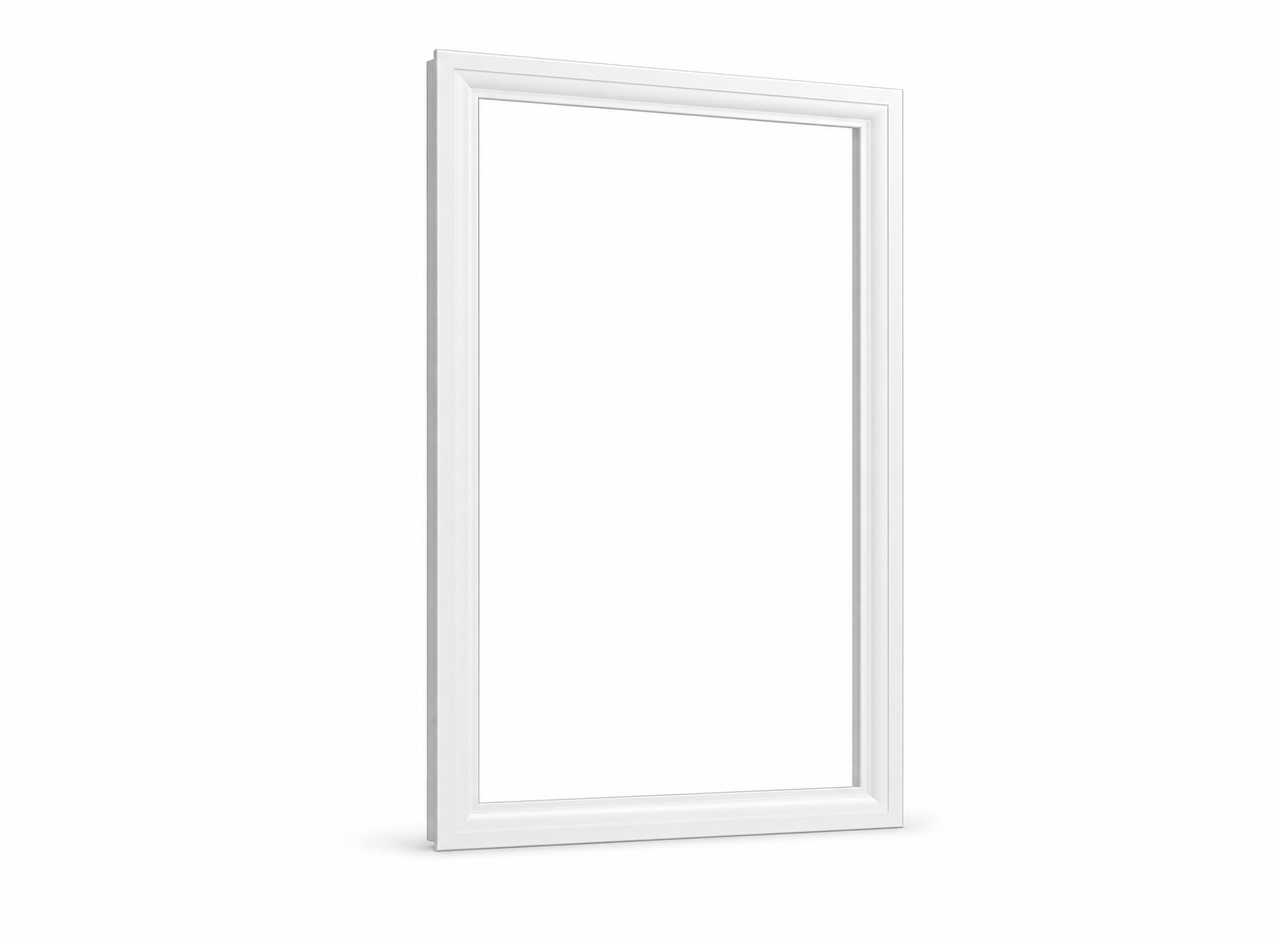
 PGT · WinGuard Aluminum Series
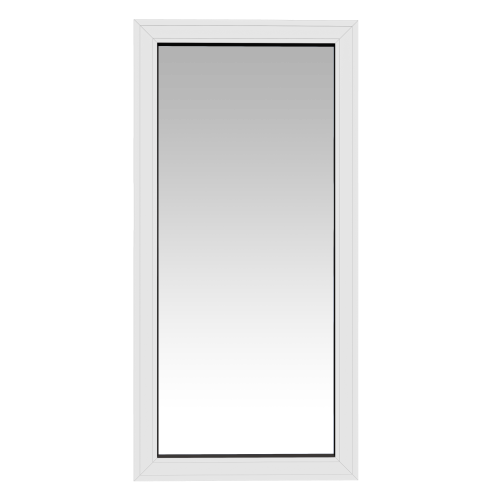
PGT WinGuard Aluminum Casement CA740A
Aluminum impact casement on the WinGuard 740-series frame, side-hinged with a crank-out sash. Mulls cleanly with AW740A and PW740A in the 740-family.
 ECO · Eco-Guard Casement & Awning Series
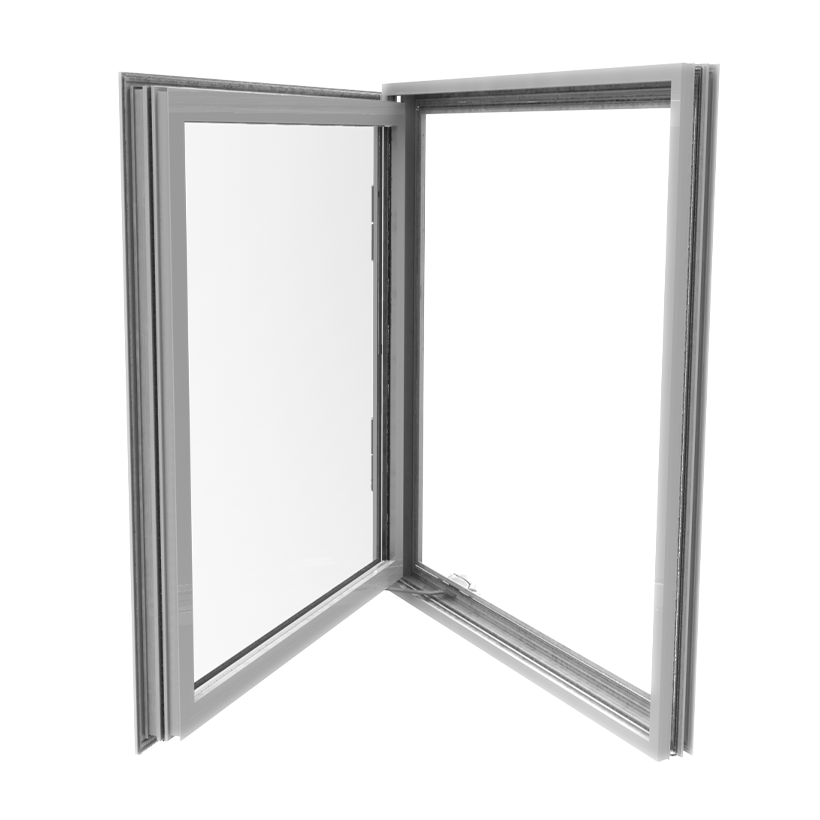
Eco-Guard Casement Window Series 500
Outswing aluminum impact casement, 2-3/4 in. frame, +70/-75 psf, LMI+SMI, NFRC-certified, with a stainless operator + multipoint lock.
 ES Windows · Prestige Series
ES Windows Prestige ES-P252 Casement/Awning/Fixed (TB)
Thermally broken aluminum window platform supporting casement, awning, and fixed configurations on a shared 2.5-inch frame. Dual LMI+SMI at 95/105 psf.
When Additional Shutters Make Sense
While most homes with impact windows do not need shutters, there are legitimate scenarios where adding a second layer of protection is worth considering.
Barrier Island Properties With Exposure D Conditions
Florida's barrier islands, including Key Biscayne, Miami Beach, Fisher Island, Hutchinson Island, and communities along the Gulf Coast, face wind exposure conditions classified as Exposure D under ASCE 7. Exposure D applies to flat, unobstructed terrain with open water fetch, and it increases design wind pressures by approximately 40-60% compared to Exposure B (typical suburban inland conditions).
What that means in practice: a window rated for a Design Pressure (DP) of +50/-60 PSF in a suburban Exposure B location may need to handle +70/-90 PSF in an Exposure D beachfront setting. While properly specified impact windows should already be rated for the actual design pressures at your location, adding accordion or roll-down shutters creates a second barrier that absorbs debris impact energy before it reaches the glass.
If you own a beachfront home on a barrier island and your impact windows are rated close to (but not significantly above) the minimum required DP for your exposure, shutters add a meaningful margin of safety.
Ground-Floor Openings in Storm Surge Zones
This is the scenario most people overlook. Impact windows are tested to resist wind-borne debris: lumber and gravel propelled by hurricane-force winds. Storm surge is a fundamentally different force.
Storm surge generates hydrostatic pressure (the static weight of standing water), hydrodynamic pressure (the force of moving water), and wave action that can include floating debris ranging from dock sections to vehicles. These forces far exceed anything in the TAS or ASTM wind-load test protocols.
The evidence from recent storms is clear:
- Hurricane Ian (2022): Storm surge reached 10-15 feet along the Lee County coast (Fort Myers Beach, Sanibel, Pine Island). Homes with intact impact windows still suffered catastrophic damage from surge forces that blew out walls and foundations.
- FEMA P-2342 (Post-Ian Mitigation Assessment): FEMA explicitly noted that windows, including impact-rated products, cannot protect against storm surge forces. Surge mitigation requires different strategies: elevation, breakaway walls, and flood barriers.
If your home is in a FEMA-designated storm surge zone and has ground-floor openings below the projected surge height, adding impact-rated shutters over those openings provides an additional barrier. It will not make the opening surge-proof, but it can reduce the volume and velocity of water intrusion and block large floating debris from penetrating the glass.
Oversized or Non-Standard Openings
Not every opening in a home has the same level of protection. Some situations where the installed impact product may have a lower DP rating than the theoretical ideal:
- Custom-shaped windows (arched, trapezoidal, circular) where the available impact-rated options are limited
- Very large fixed picture windows where the glass area exceeds standard tested sizes
- Older impact windows that were code-compliant when installed but may not meet current, more stringent DP requirements
In these cases, adding shutters creates a redundant layer that compensates for the weaker link.
Large Sliding Glass Doors as Sacrificial Protection
Impact sliding glass doors in the 8-12 foot range are among the most expensive components in a home's opening protection system. Replacement cost after a direct hit, even if the interlayer holds and the envelope stays sealed, can run $3,500-$6,000 or more for a high-end multi-panel door.
Accordion shutters over a large sliding glass door cost $600-$1,500. If a piece of debris strikes the shutter instead of the glass, the shutter absorbs the damage. Replacing a damaged accordion shutter panel is far cheaper than replacing impact glass.
This is the "sacrificial protection" argument, and it is the most common reason we see homeowners combine impact windows with shutters on specific openings. For more on this comparison, see our guide on hurricane shutters for sliding glass doors.
Privacy, Light Control, and Aesthetics
Some homeowners install Bahama shutters or colonial shutters not primarily for hurricane protection but for the practical benefits they offer year-round:
- Privacy screening for street-facing windows
- Light and heat control (Bahama shutters angle to block direct sun while allowing airflow)
- Visual curb appeal: colonial shutters in particular add an architectural element that complements certain home styles
If you want shutters for these reasons and also happen to have impact windows, you get a genuine dual-layer system as a bonus. Just make sure any decorative shutters you install are actually hurricane-rated if you want them to count for insurance purposes.
The Building Code Perspective
Understanding what the Florida Building Code actually requires, and does not require, eliminates most of the confusion around this question.
What the Code Requires
FBC Section 1609.2 defines the Wind-Borne Debris Region, which includes all of Miami-Dade and Broward counties (the HVHZ) and areas within one mile of the coast from the Florida-Georgia border south to the Miami-Dade/Monroe county line where the basic wind speed is 130 mph or greater.
Within this region, all exterior openings (windows, doors, skylights, garage doors) must be protected with one of the following:
- Impact-resistant glazing: windows and doors that have been tested and certified to resist wind-borne debris impact and cyclic pressure loading
- Approved protective coverings: hurricane shutters (accordion, roll-down, storm panels, Bahama, colonial) that carry the appropriate product approval
The operative word is or. The code requires one approved system, not two.
HVHZ vs. Non-HVHZ Standards
In the HVHZ (Miami-Dade and Broward), impact products must carry a Miami-Dade County NOA and pass the TAS 201/202/203 test protocol, the most stringent standard in North America. The large missile test uses a 9-pound 2x4 at 50 fps.
In the non-HVHZ portions of the Wind-Borne Debris Region, products must hold Florida Product Approval with ASTM E1886/E1996 certification. The large missile test uses an 8-pound 2x4 at 50 fps (Zone 4) or 34 fps (Zone 3).
Both standards produce products that are independently sufficient for opening protection.
The 25% Rule
You may hear references to the "25% rule" in Section 707.4 of the Florida Building Code (Existing Building). This provision addresses replacement scope: when you replace more than 25% of a building's glazed openings within a 12-month period, all replaced openings must meet current code requirements for impact resistance. It does not require dual protection or mandate that shutters be added alongside impact windows.
For a deeper dive into Florida's building code requirements for impact windows, see our complete guide to the Florida Building Code and impact windows.
The Insurance Perspective
Insurance is where the rubber meets the road for most homeowners. Florida's average homeowners insurance premium hit $14,140 in 2024 and is projected to reach $15,460 in 2025, making the wind mitigation discount one of the most valuable financial tools available to Florida homeowners.
How the Opening-Protection Credit Works
The wind mitigation inspection evaluates your home across several categories. The opening-protection credit is the single largest individual discount, worth 30-45% of the windstorm portion of your premium.
The critical rule: the weakest opening determines your credit level. If you have impact windows on 19 out of 20 openings and the 20th has no protection, you receive zero or drastically reduced credit for opening protection.
No Bonus for Doubling Up
Here is the key point for homeowners considering shutters over impact windows: the OIR-B1-1802 form does not have a higher tier for "impact windows plus shutters." An opening protected by impact glass receives the same credit as an opening protected by approved shutters. Adding shutters to an already-protected opening does not increase your insurance discount by a single dollar.
Where Shutters Fill the Insurance Gap
There is one scenario where adding shutters makes strong financial sense from an insurance perspective: if you have impact windows on most openings but a few non-impact openings remain.
Common examples:
- A non-impact garage door (often the largest opening in the home)
- An older skylight that predates the impact window installation
- A side entry door that was not replaced during the window project
- A few original windows in a garage or utility room
In these cases, adding shutters to the few unprotected openings is the cheapest path to full opening-protection credit. Accordion shutters on two or three small openings might cost $1,200-$3,000 total, but the insurance savings of $1,000-$3,500 per year means the investment pays for itself within one to three years.
For a detailed breakdown of insurance savings from impact windows, including region-by-region estimates, see our full guide.
Cost of Doubling Up vs. Better Alternatives
If you are considering adding shutters over your existing impact windows, it is worth looking at what that money could accomplish elsewhere.
The Cost of Doubling Up
Adding accordion shutters over impact windows runs approximately $600-$1,500 per opening, depending on size and configuration. For a typical South Florida home with 15-20 openings, that is $9,000-$30,000 in additional protection on top of an already-protected envelope.
The marginal benefit? Modest. You gain sacrificial protection for the glass and a second debris barrier, but you do not gain additional insurance credit, you do not satisfy any code requirement that was not already met, and you add a deployment requirement that your impact windows had eliminated.
Where That Budget Produces Better Returns
FEMA research shows that every $1 invested in mitigation saves $6 in avoided losses. But the return depends heavily on where you invest. Here are alternatives that typically produce higher returns than doubling up on already-protected openings:
| Alternative Investment | Cost | Why It Matters |
|---|---|---|
| Hurricane-rated garage door | $800-$2,500 | Often the largest and weakest opening in the home. If it fails, the entire building envelope is compromised. |
| Roof-to-wall connections upgrade (straps vs. clips) | $1,500-$3,000 | Hurricane straps resist 500+ lbs of uplift per connection. Clips resist roughly half that. This upgrade can earn an additional 5-15% insurance discount. |
| Secondary water barrier for the roof | $1,500-$4,000 | Peel-and-stick membrane under roof covering prevents water intrusion even if shingles or tiles are lost. Worth 5-7% insurance discount. |
| Completing remaining non-impact openings | Varies | Going from partial to full opening protection is the single most valuable insurance move you can make. |
| Energy-efficient glass upgrade (Low-E, argon gas IGU) | $50-$150/window premium | Reduces cooling costs 10-25% and blocks UV that damages flooring and furniture. |
The bottom line: unless your impact windows are already the strongest link in your home's hurricane resistance chain, the money is better spent strengthening the weakest link.
The My Safe Florida Home Program
The My Safe Florida Home program offers grants up to $10,000 for hurricane hardening improvements, covering many of the alternatives listed above. The program includes a free wind mitigation inspection to identify which improvements will produce the greatest benefit for your specific home. Eligible improvements include impact windows, hurricane shutters, roof-to-wall connections, garage doors, and secondary water barriers.
More information is available at mysafeflhome.com.
For a complete priority list of hurricane hardening upgrades, see our guide on how to hurricane proof your house in Florida.
The Hybrid Approach: Impact Windows Plus Selective Shutters
For homeowners who want a second layer of protection without spending on full-house shutter coverage, the hybrid approach is the most cost-effective strategy.
The hybrid formula:
- Impact windows on all standard window openings (single-hung, horizontal roller, casement, fixed)
- Impact doors on all entry doors and French doors
- Accordion or roll-down shutters on large sliding glass doors (8 feet and wider) where replacement cost is highest
This approach makes economic sense for several reasons:
- Sliding glass doors are the most expensive openings to replace. A triple-panel impact sliding glass door can cost $3,500-$6,000. Accordion shutters over that same opening cost $800-$1,500 and provide sacrificial debris protection.
- Sliding glass doors have the largest glass area. More glass area means more statistical exposure to debris strikes.
- Standard windows are less expensive to replace if damaged. A single-hung impact window replacement runs $500-$1,200, less than the cost of adding shutters to that same opening.
- You maintain the "always on" advantage for the majority of your openings while adding selective reinforcement where the financial risk is highest.
For a detailed comparison, see our guides on impact windows vs. hurricane shutters and impact windows vs. accordion shutters.
Frequently Asked Questions
Do hurricane shutters over impact windows void the window warranty?
No. Installing hurricane shutters over impact windows does not void the window manufacturer's warranty. The shutters are mounted to the wall or frame surrounding the window, not to the window itself. However, you should ensure the shutter installation does not penetrate or damage the window frame or its water-management system (sill pan, weep holes).
Will adding shutters over impact windows lower my insurance more?
No. The wind mitigation form (OIR-B1-1802) does not provide an additional discount for having both shutters and impact windows on the same opening. The opening-protection credit is binary for each opening: it is either protected with an approved system or it is not. Doubling up does not create a higher credit tier.
Can I remove my shutters after installing impact windows?
Yes. Once impact windows are installed on all openings and verified through a wind mitigation inspection, you can remove your existing shutters. Many homeowners do this to improve curb appeal and eliminate the maintenance and deployment requirements that come with shutters. Just make sure the shutter removal does not leave unfinished penetrations in your exterior walls; patch and seal all mounting holes.
Do impact windows protect against storm surge?
No. Impact windows are tested to resist wind-borne debris (lumber and gravel propelled by hurricane-force winds). Storm surge, standing and moving floodwater, generates hydrostatic and hydrodynamic forces that far exceed wind-load testing parameters. According to FEMA P-2342, windows cannot protect against storm surge. If your home is in a storm surge zone, surge mitigation requires different strategies: elevation, breakaway walls, and flood barriers.
What is the difference between Exposure B and Exposure D wind loads?
Exposure B is the default classification for suburban and urban areas with numerous closely spaced obstructions (other buildings, trees) that slow and disrupt wind. Exposure D applies to flat, open terrain with large expanses of open water (barrier islands, beachfront properties, and open coastline). Exposure D design wind pressures are approximately 40-60% higher than Exposure B for the same basic wind speed. This means impact products on a beachfront home must carry substantially higher DP ratings than the same products installed a few miles inland.
If I have impact windows, what should I spend money on instead of shutters?
The highest-return investments for a home that already has impact windows are: (1) a hurricane-rated garage door if your current door is not wind-rated, (2) roof-to-wall connection upgrades from clips to straps, (3) a secondary water barrier for your roof, and (4) completing any remaining non-impact openings (skylights, side doors, utility room windows). Each of these addresses a different link in the building envelope chain and can produce additional insurance discounts. See our full guide on hurricane proofing your Florida home.
How do I know if my impact windows are rated high enough for my location?
Check the permanent label etched into the glass or the label on the window frame. It should list the Design Pressure (DP) rating and the product approval number (NOA for HVHZ, Florida Product Approval for non-HVHZ). Your local building department or a licensed contractor can tell you the required DP rating for your specific address based on wind speed, exposure category, and building height. If your installed DP rating is below the current requirement, adding shutters can provide supplemental protection while you plan a replacement.
Next Steps
If you are a South Florida homeowner trying to decide whether to add shutters over your existing impact windows, here is the decision framework:
-
Check your weakest link first. Before spending on shutters over impact windows, verify that every opening (including your garage door, entry doors, skylights, and utility windows) is already protected with impact-rated products or approved shutters. One unprotected opening costs you the entire opening-protection insurance credit.
-
Evaluate your exposure. If you are on a barrier island or beachfront property with Exposure D conditions, talk to your installer about whether your current impact products have adequate DP margins. If they are rated close to the minimum, shutters add a worthwhile second layer.
-
Check your storm surge risk. If your home has ground-floor openings below the projected storm surge height for your area, consider shutters on those specific openings, and also investigate broader surge mitigation strategies like elevation.
-
Consider the hybrid approach for large sliding glass doors. If you have sliding glass doors 8 feet or wider, accordion shutters as sacrificial protection make financial sense given the high replacement cost of impact glass.
-
Get a wind mitigation inspection. A certified inspector can evaluate your entire home and identify which improvements will produce the greatest insurance savings and storm resistance for your specific situation.
-
Invest in the highest-return improvements first. Garage doors, roof connections, and secondary water barriers typically produce better returns than adding shutters over already-protected impact windows.
Ready to evaluate your home's hurricane protection? Request a free estimate and our team will assess your current windows, doors, and openings to identify the most cost-effective path to complete protection.