
What Are Hurricane Screens?
Hurricane screens are a newer category of hurricane protection that uses high-tensile synthetic fabric or perforated metal mesh panels to block wind-borne debris. Unlike traditional metal shutters (accordion, roll-down, steel panels), screens are lightweight, flexible, and partially transparent, allowing some light through while deployed.
The most recognized products in this category include the EAS Storm Catcher (manufactured by Eastern Architectural Systems, one of Florida's largest impact window and shutter manufacturers) and FenetPro hurricane screens. These products mount to permanent tracks or clips installed around each window or door opening and deploy by unrolling or attaching the fabric panel before a storm.
Hurricane screens are not a new invention, but they've gained significant market share in the past decade as fabric technology has improved and more products have achieved Florida Product Approval with impact ratings.
The Head-to-Head
| Factor | Impact Windows | Hurricane Screens |
|---|---|---|
| Cost per window | $1,000-$3,000 | $200-$500 |
| Cost per sq ft | $55-$140 | $10-$18 |
| Whole home (12-15 openings) | $15,000-$40,000 | $3,000-$8,000 |
| Deployment | None (always on) | 15-30 minutes |
| Weight per panel | N/A (permanent) | 2-5 lbs (very light) |
| People needed | N/A | 1 person |
| Lifespan | 25-30 years | 5-10 years |
| Energy savings | 20-40% cooling reduction | None |
| Noise reduction | STC 32-40 | None when retracted |
| UV protection | 99% (always) | None when retracted |
| Security | 24/7 forced-entry resistance | None when retracted |
| Property value | +7-10% | Minimal |
| Insurance credit | 30-45% of wind premium | Same (when all openings protected) |
| HVHZ approved | Yes (broad selection) | Limited |
| Visibility when deployed | Normal window appearance | Fabric/mesh visible |
| Light transmission when deployed | Full | Partial (varies by product) |
| Storage | None | Screens must be stored between storms |
Protection Level
Impact Windows
Impact windows use laminated glass bonded to a polymer interlayer inside reinforced frames. When struck by a 9-lb 2x4 at 50 fps, the glass may crack but the interlayer holds all fragments in place, maintaining the building envelope and preventing the internal pressurization cascade that destroys homes during hurricanes.
Impact windows are tested to TAS 201/202/203 (HVHZ) or ASTM E1996/E1886 (WBDR) and are structural components of the building. They work whether you're home, traveling, or asleep when the storm hits.
Hurricane Screens
Hurricane screens use high-strength synthetic fabric (typically polypropylene, polyester, or PVC-coated mesh) tensioned across the opening. When debris strikes the screen, the fabric stretches and absorbs the impact energy through deformation rather than rigid resistance. The screen prevents the debris from penetrating the opening, but the mechanism is fundamentally different from laminated glass.
Quality hurricane screen products pass the same ASTM E1996 missile impact test as impact windows and shutters: a 9-lb 2x4 fired at 50 fps. They also pass the ASTM E1886 cyclic pressure test. When properly installed, deployed, and maintained, code-approved screens provide equivalent debris protection to code-approved shutters.
The critical difference: Screens must be deployed before the storm. If you're not home, can't deploy in time, or a storm rapidly intensifies (as Hurricane Milton did in 2024, going from tropical storm to Category 5 in under 24 hours), undeployed screens provide zero protection. Impact windows have no deployment gap.
Code Compliance
Wind-Borne Debris Region (Most of Coastal Florida)
Hurricane screens with a valid Florida Product Approval and impact rating meeting ASTM E1996/E1886 are accepted in the Wind-Borne Debris Region as opening protection for both new construction and window replacements (subject to the 25% rule for existing homes).
HVHZ (Miami-Dade, Broward)
This is where screens face limitations. The HVHZ requires a Miami-Dade NOA, which involves TAS 201/202/203 testing with the significantly stricter tear tolerance (5 inches by 1/16 inch vs. 5 inches by 3 inches for standard Florida approval). Not all hurricane screen products carry a Miami-Dade NOA. Before purchasing screens for a Miami-Dade or Broward property, verify the specific product's NOA status.
Verify Before You Buy
Not all products marketed as "hurricane screens" carry Florida Product Approval. Some screen products are sold without code certification and will not satisfy building code requirements, will not qualify for insurance discounts, and will not pass a building department inspection.
Always ask for the Florida Product Approval number or Miami-Dade NOA number and verify it at the Florida Product Approval System or Miami-Dade Product Control before purchasing.
Cost Comparison in Practice
For a typical 3/2 Florida home with 12-15 openings including 2 sliding glass doors:
| Solution | Upfront Cost | Replacement Cost (20 yr) | Insurance Savings (20 yr) | Energy Savings (20 yr) | Resale Value | Net 20-Year Cost |
|---|---|---|---|---|---|---|
| Hurricane screens | $4,000-$7,000 | $8,000-$21,000 (2-4 replacements) | -$14,000-$24,000 | $0 | Minimal | -$2,000 to +$4,000 |
| Impact windows | $25,000-$40,000 | $0 | -$20,000-$50,000 | -$10,000-$16,000 | +$35,000-$50,000 | -$30,000 to -$76,000 |
Screens are cheaper in year one. But over 20 years, you'll replace them 2-4 times (at $4,000-$7,000 each time), and they generate no energy savings or property value increase. Impact windows have a higher upfront cost but produce compounding annual returns that screens cannot match.
The net 20-year cost for impact windows is deeply negative (meaning you came out ahead) while screens hover around breakeven or slightly positive (meaning you spent money with minimal return beyond insurance savings).
Convenience and Lifestyle
Screens: Lighter Than Shutters, Still Requires Action
Hurricane screens solve the biggest complaint about traditional metal shutters: weight. A fabric screen panel weighs 2-5 lbs, compared to 15-30+ lbs for a steel storm panel. One person can deploy screens for an entire home in 15-30 minutes without a ladder (for most ground-floor installations) and without the physical strain of handling heavy metal.
Storage is also easier. Screens fold or roll into compact bundles that take up a fraction of the garage space that steel or aluminum panels require.
But screens still require deployment. You need to be at the property, have the screens accessible, and have 15-30 minutes of advance warning. If you evacuate before a rapidly intensifying storm, your screens stay in the garage.
Impact Windows: Zero Action Required
Impact windows are installed once and protect continuously. There is nothing to deploy, store, find, carry, or install. They work during unexpected storms, when you're traveling, when you're elderly, and when a hurricane changes course overnight. This is their fundamental advantage over every deployable protection system, including screens.
Insurance Impact
Both impact windows and code-approved hurricane screens qualify for the opening-protection credit on the wind mitigation form (OIR-B1-1802) when all openings are protected. The discount (30-45% of wind premium) is the same regardless of whether you use impact windows, screens, or traditional shutters to achieve it.
However, impact windows typically qualify for a higher overall discount because they also contribute to better air infiltration ratings (the sealed IGU construction reduces drafts that the wind mitigation inspection evaluates) and because some insurers view permanent protection more favorably than deployable systems for the opening-protection category.
If you're using screens, verify with your specific insurer that the product you're installing qualifies for the opening-protection credit. Not all insurers evaluate all screen products identically.
Durability and Lifespan
This is where the cost equation shifts significantly against screens over time.
| Factor | Impact Windows | Hurricane Screens |
|---|---|---|
| Expected lifespan | 25-30 years | 5-10 years |
| UV degradation | Glass is UV-stable | Fabric degrades under UV exposure |
| Replacements over 30 years | 0-1 | 3-6 |
| Salt-air impact | Minimal (sealed units) | Fabric and hardware corrode |
| Mold/mildew risk | None | Possible if stored wet |
| Tear/puncture vulnerability | Very high impact resistance | Can be torn by sharp debris |
Fabric hurricane screens degrade from UV exposure even when stored indoors, because cumulative UV damage from deployment cycles and storage in non-climate-controlled garages accumulates over time. Florida's intense UV environment accelerates this. Most manufacturers recommend inspection before each hurricane season and replacement when the fabric shows visible wear, fraying, or loss of tensile strength.
If a screen tears during a storm, the opening is compromised. If impact glass cracks during a storm, the laminated interlayer holds all fragments in place and the opening stays sealed. This is a fundamental difference in failure mode.
When Hurricane Screens Make Sense
Screens are a legitimate option in specific situations:
Budget bridge. You plan to install impact windows eventually but can't afford them now. Screens provide code-compliant protection at 20-25% of the cost while you save for the permanent solution.
Rental and investment properties. The lower cost per unit makes screens practical for properties where the owner won't benefit from the daily advantages of impact windows (energy, noise, UV, security, value).
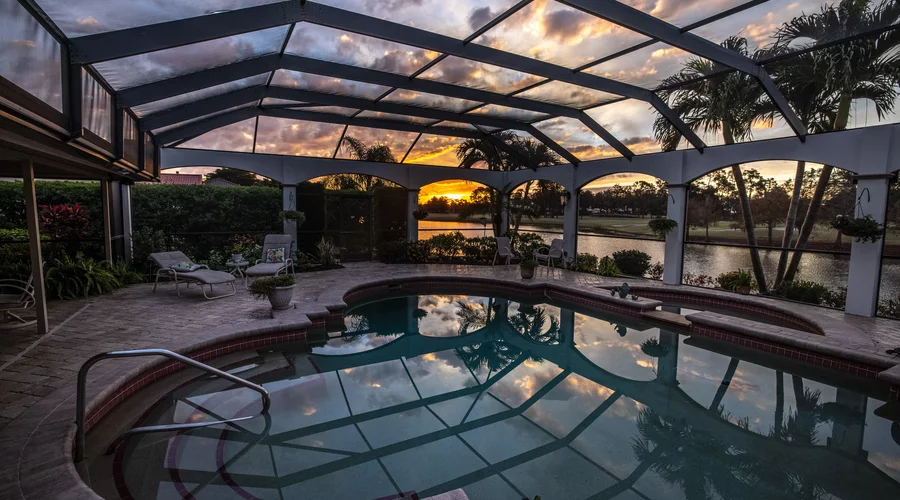
Large lanai and patio enclosures. Screened lanai enclosures with dozens of screen panels are expensive to protect with impact glass or traditional shutters. Hurricane-rated fabric screens can protect the lanai opening at a fraction of the cost.
Secondary or seasonal homes. If you use the property only part of the year and have a caretaker who can deploy screens, the lower investment may be appropriate for a home where you don't experience the daily benefits.
Non-HVHZ locations with low DP requirements. In areas outside the HVHZ with lower design pressures, screens provide adequate protection at their lowest price point.
When Impact Windows Are the Better Choice
You live in the home full-time. The daily benefits (energy savings, noise, UV, security) compound every day of the year, not just during hurricanes. Over 20 years, these benefits exceed the upfront cost difference.
You're in the HVHZ. Broader product selection with Miami-Dade NOA certification. No deployment gap. No risk of product approval issues.
You travel during hurricane season. Impact windows protect whether you're home or not. Screens don't.
You're elderly or physically limited. No deployment effort whatsoever.
You plan to sell within 10 years. Impact windows add 7-10% to home value and homes with them sell up to 20% faster. Screens add negligible resale value.
You want maximum insurance savings. Impact windows typically qualify for higher overall mitigation credits and are viewed more favorably by insurers than deployable systems.
 PGT · WinGuard Aluminum Series
PGT WinGuard Aluminum Casement CA740A
Aluminum impact casement on the WinGuard 740-series frame, side-hinged with a crank-out sash. Mulls cleanly with AW740A and PW740A in the 740-family.
 ECO · Eco-Guard Casement & Awning Series
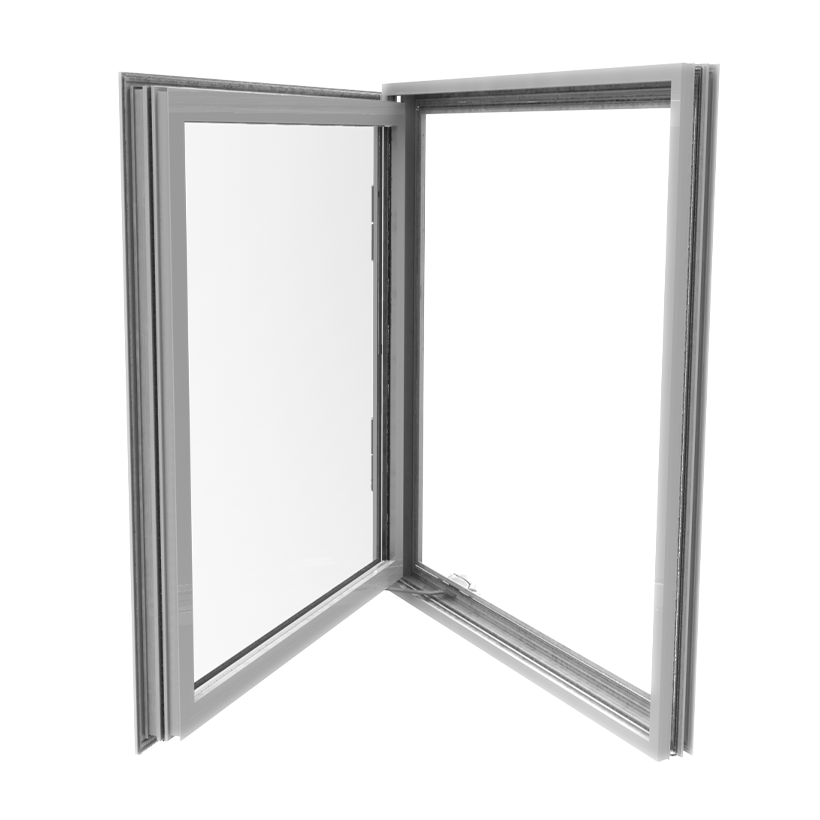
Eco-Guard Casement Window Series 500
Outswing aluminum impact casement, 2-3/4 in. frame, +70/-75 psf, LMI+SMI, NFRC-certified, with a stainless operator + multipoint lock.
 ES Windows · Prestige Series
ES Windows Prestige ES-P252 Casement/Awning/Fixed (TB)
Thermally broken aluminum window platform supporting casement, awning, and fixed configurations on a shared 2.5-inch frame. Dual LMI+SMI at 95/105 psf.
The Hybrid Approach
Some homeowners combine screens with impact windows strategically:
- Impact windows on bedrooms, living areas, and primary openings (permanent protection + daily benefits)
- Hurricane screens on secondary openings, guest rooms, or large lanai enclosures (cost-effective coverage to complete the opening-protection package for insurance)
This mixed approach ensures all openings are protected (qualifying for the full insurance credit) while keeping the total cost below a full impact window project.
Next Steps
- If you're considering screens as a budget bridge, get a free estimate for both screens and impact windows so you can compare the upfront and long-term costs side by side.
- Verify product approval for any screen product before purchasing. Check the Florida Product Approval System or ask the installer for the approval number.
- For the full shutters comparison, see our hurricane shutters cost guide and roll-down vs. accordion comparison.
- For impact window pricing, see our complete cost guide.
- Check MSFH eligibility for grants up to $10,000 toward impact windows, shutters, and other hurricane hardening improvements. Financing options including PACE ($0 down) are also available.