
Florida hurricane evacuation decisions are not about courage or category numbers. They are about water, walls, and the three days after the storm passes. Every June through November, every Florida homeowner runs the same calculation: stay or go, and if stay, where in the house, and if go, when and to where.
There is no universal rule, but there is a framework. The National Weather Service is blunt about the central rule: storm surge has historically been the leading cause of hurricane-related deaths in the United States. That single fact does most of the work in any honest evacuation conversation. The rest is six inputs you weigh against your specific home, family, and storm forecast.
This is a companion piece to the Hurricane Prep for Florida Homeowners hub. It is timed to National Hurricane Preparedness Week, which the NWS runs May 3 through 9, 2026. Wednesday's daily theme is "Get moving when a storm threatens," and that is the question this article is built to answer.
"Hide from the wind, run from the water"
Veteran Floridians compress the entire evacuation calculus into nine words: hide from the wind, run from the water.
Wind, even at major-hurricane speeds, is survivable inside a properly built and properly protected home. A concrete-block house with a hurricane-rated roof and impact-rated openings is engineered to keep people safe through Category 4 winds. The house may rattle, you may not sleep, the power will almost certainly go out, but the building does its job.
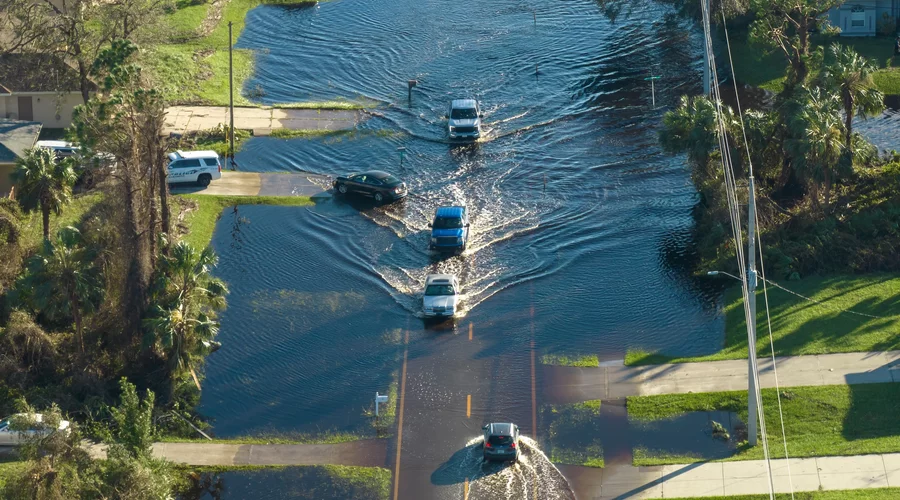
Water is different. Storm surge does not negotiate with construction quality. A 10-foot surge in a single-story home means the house fills with water, regardless of whether the windows held. According to the National Hurricane Center, surge can extend several miles inland in flat coastal terrain, and rising baseline sea levels are pushing surge boundaries further every decade.
That is the rule. Wind, you can shelter against. Water, you have to leave. Now we layer the inputs that tell you which kind of storm is coming and which kind of home you are in.
Step 1: Know your evacuation zone
Florida is divided into evacuation zones lettered A through E, with Zone A being the most surge-vulnerable and Zone E the least. The zones are set by county emergency management based on storm surge modeling, not on flood insurance designations. They look very different from FEMA flood maps, which is the most common point of confusion.
Look up your zone before the season starts, not in the middle of a cone update. The Florida Division of Emergency Management maintains a portal at floridadisaster.org where you enter an address and get the zone back. Save it in your phone. Tell your spouse, your tenant, your adult kids who came home for the season.
A few things newcomers miss:
- Zone A is sometimes a single block deep. You and a neighbor across the street can be in different zones.
- Zones do not depend on category. When officials issue evacuation orders, they typically order by zone (e.g., "all of Zone A, plus Zone B east of Federal Highway"), not by hurricane category.
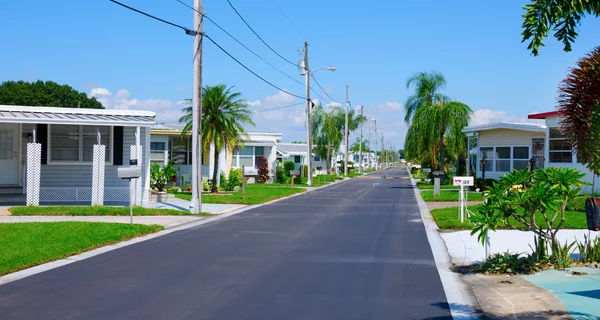
- Mobile and manufactured homes are usually under separate evacuation guidance. In most counties, mobile homes are ordered to evacuate at lower thresholds than site-built homes regardless of zone.
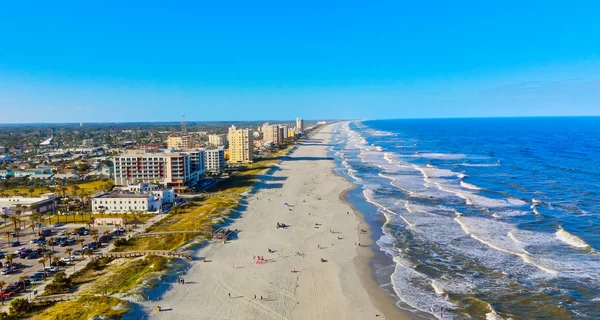
- Barrier islands (Sanibel, Marco, Anna Maria, Key Biscayne, Fisher Island, Hutchinson Island, the entire Florida Keys) almost always go first.
Newcomers especially struggle with this step. Our first hurricane season newcomer guide covers the orientation in more depth, but the short version is: find your zone in May, write it down, and treat any future "evacuate Zone A" announcement as personal.
For our coverage area, you can also start at your county page. Monroe County covers the entire Florida Keys, where the entire archipelago is in Zone A and evacuations begin earlier than anywhere else in the state. Miami-Dade County maintains its own zone lookup. Lee County saw what surge can do during Hurricane Ian in 2022, when 10 to 15 feet of surge destroyed thousands of homes along its coast.
Step 2: Read the forecast like a Florida veteran
The cone is not the forecast. Veteran Floridians ignore the centerline and read four other products from the National Hurricane Center.
Storm Surge Watch and Storm Surge Warning. Issued separately from hurricane watches and warnings. A surge warning means life-threatening inundation is expected within 36 hours. The NHC publishes interactive surge maps at nhc.noaa.gov/surge showing modeled surge heights in feet. If the map shows 6+ feet over your address and you are not on a third floor, you are leaving.
Hurricane Watch (48 hours) and Hurricane Warning (36 hours). Watch means conditions are possible. Warning means conditions are expected. Watches usually come out Saturday for a Tuesday storm. By Sunday afternoon your decision should be made.
Wind speed probability product. Shows the percentage chance your specific location sees tropical-storm-force or hurricane-force winds. A 60% chance of hurricane-force winds at your address is meaningfully different from being on the edge of the cone with 15%.
Intensity forecast and rapid intensification risk. The NOAA Geophysical Fluid Dynamics Laboratory has documented that rapid intensification events near coastlines have tripled since 1980. Hurricane Milton in 2024 gained 95 mph in 24 hours over the Gulf. A storm that intensifies faster than the forecast leaves no time for last-minute evacuation, which is why earlier decisions are always better.
The single most useful question to ask of any forecast: is this a surge-dominant storm or a wind-dominant storm? A slow Cat 1 dragging through the Gulf for three days, pushing water against the coast, can produce more surge damage than a fast Cat 4 that punches through. The answer changes your decision.
Step 3: Assess your home
Two homes on the same street can have different correct answers. Construction matters more than most newcomers realize.
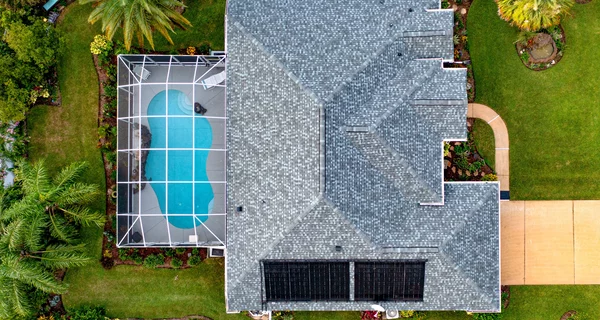
A reinforced concrete-block home with a hurricane-rated roof and impact-rated windows and doors is, structurally, one of the safest places to be during a wind event short of an underground bunker. The Florida Building Code's High-Velocity Hurricane Zone provisions, in effect across Miami-Dade and Broward, require these homes to withstand wind speeds in the 175 mph range. After Hurricane Andrew, no post-2002 code-compliant home in HVHZ has been totally destroyed by wind alone. Hardened homes can shelter where unhardened homes cannot.
A wood-frame home with original 1970s windows, an unreinforced gable roof, and no shutters is a different conversation. The same Category 3 wind that the concrete-block home shrugs off can fail the older home's roof, blow out a window, and turn the interior into a debris field. If your home is in this category, your evacuation threshold drops a category.
If you are weighing this assessment, our plywood, shutters, or impact windows comparison walks through the protection options in detail, and the five-year plan to harden a Florida home covers prioritization across upgrades.
The honest pass mention: impact windows change the wind side of the equation. They do not change the water side. A hardened home in Zone A still evacuates for surge. The decision tree below assumes the construction question goes first, then the surge question overrides everything.
Step 4: Family and logistics
The home decision is one part. The household decision is the other.
Children, especially under five. Small kids in a powerless 90-degree house for a week is its own kind of emergency. Many parents lower their evacuation threshold by a category when there are toddlers in the home.
Elderly or medically dependent relatives. Oxygen concentrators, dialysis schedules, refrigerated medications, and mobility limitations all argue for earlier evacuation. Special-needs shelters exist, but registration usually closes before the storm makes landfall, sometimes weeks before. Florida's special needs registry should be set up in May.
Pets. Most public shelters do not accept pets. The practical move is a hotel reservation along your evacuation route, made the moment a watch is issued. Pet carriers, vaccination records, and 7 days of food and meds should be staged for grab-and-go.
Medical equipment that runs on grid power. Even with a generator, a 7-day outage with a CPAP, infusion pump, or powered wheelchair is a higher-stakes proposition than the same outage with healthy adults.
The job that says you cannot leave. First responders, hospital staff, utility crews, and port and airport operations workers may be required to stay or report. Households that include one of these workers often split: the worker stays, the family evacuates. Have that plan worked out in May, not Tuesday morning.
Step 5: Post-storm reality check
Even if you stay and your house is fine, you are signing up for the conditions described in our two weeks without power post. A short list of what "stranded for 3+ days" actually looks like:
- Power out for a week or more. Heat, mosquitoes, no AC, no refrigerator. Multi-week outages happened in Andrew (6 weeks in Miami), Wilma (10+ days in South Florida), Irma (2 weeks), Charley and Frances (a month inland), Ian (2+ weeks in Lee County).
- Sewer down. Lift stations run on grid electricity. When the grid goes, your toilet stops working even if water is in the line.
- Roads blocked or flooded. After Hurricane Michael, residents in Bay Point were stuck for 3 days waiting for cleared routes.
- Grocery shelves empty for 3 to 7 days. Gas stations dark or out of fuel. ATMs offline.
- Cell service spotty. Internet down for days to weeks.
If you stay, the question is not whether your home survives. It is whether you are ready to live in your home in those conditions for a week. Many people who can shelter physically choose to evacuate anyway because the post-storm logistics are exhausting, especially with kids or elderly parents. Going through one bad week of stranded conditions changes the next decision permanently.
Step 6: Evacuation logistics
If you are leaving, the question becomes when, where, and how.
When: 12 to 24 hours before the official evacuation order. This is the single most important timing rule in Florida hurricane evacuation. The official order triggers a panic wave. I-75, I-95, and the Florida Turnpike turn into parking lots. A 4-hour drive becomes 14. Gas stations along the route run dry.
If you watch the cone Saturday and the surge map Saturday night and decide you are going Sunday morning, you are out before the rush. Wait for the mandatory order Monday and you sit in traffic with everyone else.
Where: think laterally, not directly inland. Many evacuees default to Orlando or Atlanta. Both fill fast. Less obvious moves work better. If the storm tracks up the east coast, west coast hotels often have room. If it is tracking northwest, going south can put you behind the storm rather than in front of it.
How: Florida 511 and route redundancy. Florida's traffic system at fl511.com shows real-time conditions, contraflow lane activations, and closures. Know two route options before the storm is named. If I-95 is jammed and U.S. 1 is moving, take U.S. 1.
Money: have an emergency fund. Three to seven nights of hotels for a family of four, plus restaurant meals, fuel, the boarded pet, and the unexpected, runs $1,500 to $4,000. Cash is part of this. ATMs go down at the destination too. Carry small bills.
Documents: zip-lock bag, ready to grab. Passports, driver's licenses, the deed, the insurance policy, a copy of the wind mitigation inspection, prescription lists, the kids' birth certificates, photos of the house interior and exterior taken the day before. Confirm coverage details ahead of the storm. Our hurricane insurance breakdown covers what wind, hurricane, and FEMA flood coverage actually do, which matters because flood is the relevant policy for surge damage and is almost always a separate product. The FEMA flood map service center shows your flood zone, which is related to but different from your evacuation zone.
Decision matrix
Use the matrix as a starting point, not a verdict. Local emergency management orders override anything below.
| Storm scenario | Zone A coastal | Zone B coastal | Zone C/D inland | Inland CB hardened | Inland wood-frame |
|---|---|---|---|---|---|
| Tropical storm | Stay (monitor) | Stay | Stay | Stay | Stay |
| Cat 1 wind-dominant | Consider | Stay | Stay | Stay | Stay |
| Cat 1 surge-dominant (5-10 ft) | Evacuate | Consider | Stay | Stay | Stay |
| Cat 2 wind-dominant | Evacuate | Consider | Stay | Stay | Consider |
| Cat 2 surge-dominant (8-12 ft) | Evacuate | Evacuate | Consider | Stay | Consider |
| Cat 3 wind-dominant | Evacuate | Evacuate | Stay | Stay | Evacuate |
| Cat 3 surge-dominant (10-15 ft) | Evacuate | Evacuate | Evacuate | Stay | Evacuate |
| Cat 4 any | Evacuate | Evacuate | Evacuate | Stay (consider leaving) | Evacuate |
| Cat 5 any | Evacuate | Evacuate | Evacuate | Evacuate | Evacuate |
A few rules of thumb the matrix encodes:
- "If it isn't a Cat 3 it isn't worth waking up for" is the inland CB-home version of the rule. It does not apply to Zone A. It does not apply to mobile homes. It does not apply to families with infants or medically dependent members.
- A Cat 1 with 10-foot predicted surge in Zone A is a mandatory leave, not a judgment call.
- A Cat 3 with wind-dominant track and minimal surge, hitting an inland concrete-block home with impact openings, is genuinely defensible as a stay.
- Anything Cat 4 or 5 with you anywhere near the cone, you go. The risk-reward of staying through a Cat 5 is unfavorable even for hardened homes. Hurricane Michael was a Cat 5 at Mexico Beach in 2018, and even well-built structures sustained substantial damage.
If you stay: how to actually shelter
Pick the smallest interior room with no exterior windows. A first-floor bathroom or hallway closet beats a master bedroom every time. Bring:
- Mattresses or a heavy blanket pile, ready to drag over you and the kids if a window or roof fails. The "mattress drag" is the central technique for surviving wind events when a wall fails.
- Closed-toe shoes for everyone, including children. After a roof or window failure, the floor is glass and debris.
- A weather radio, headlamps, fully charged phones, a battery bank, drinking water, snacks, pet leashes.
- Helmets for kids. Bike helmets are fine.
The eye is not the all-clear. When the wind drops to nothing, you are halfway through. The back side hits within 30 to 60 minutes from the opposite direction. Stay in the safe room until local authorities or the radio confirms the storm has cleared.
For supplies and the longer post-storm logistics list, our water, food, and sanitation guide is the more detailed companion.
If you go: timing, route, money
The condensed playbook:
- Decision by Sunday for a Tuesday storm. Watch Saturday means decide Sunday. Earlier is always better.
- Roll out at least 12 hours before the official evacuation order. Beat the panic wave. Roll 18 to 24 hours early if you are pulling pets, kids, or elderly relatives.
- Two routes loaded in your phone before you leave. Check fl511.com on the way. If your primary turns red, reroute without sitting in it.
- Reserve the hotel before the watch becomes a warning. Pet-friendly rooms go first. Cancellation policies during named storms are usually waived, so reserve aggressively and cancel later if needed.
- Cash, documents, photos of the house, prescription lists. Zip-lock bag, in the car, before you start the engine.
- Shelters are not plan A. Public shelters in Florida are last-resort, especially with pets. Plan a hotel; the shelter is the backup.
- Tell two people your plan. A family member out of state, a neighbor staying behind. They are your check-in nodes.
You may go and the storm may turn. That is fine. A precautionary evacuation that turned out to be unnecessary is a bad weekend. The reverse decision is something else entirely.
Next Steps
- Look up your evacuation zone today at floridadisaster.org and write it on your refrigerator. If you live in Monroe County, Miami-Dade County, or Lee County, check your county emergency management page for local order patterns.
- Verify your flood zone at the FEMA flood map service center. Flood zones drive your insurance product mix; evacuation zones drive your storm-week decision.
- Read our hurricane insurance breakdown so you know what your wind, hurricane, and flood coverages actually do before you file a claim.
- If your home has original windows or no opening protection, look at the My Safe Florida Home grant program and consider getting a free estimate on hardening your openings before next season.
- Save Florida 511 and the NHC tropical cyclone product page to your phone home screen. They are the two URLs you will actually use during a storm.
- Have the conversation with your household before the season starts. The worst time to negotiate "do we leave for a Cat 2?" is when a Cat 2 is 36 hours out.