

Florida hurricane insurance is not one policy. It is at least three products stitched together, and the gaps between them are where homeowners get blindsided after a storm. The standard homeowners policy covers most named perils. The hurricane portion sits inside it with its own deductible. Flood is sold separately, almost always.
This guide walks through the three layers, then the wind mitigation credit system that controls your premium. The credit system runs on a single state document, the OIR-B1-1802 wind mitigation inspection form, administered by the Florida Office of Insurance Regulation. The form was updated in April 2026 for the first time since 2012, and the rules around opening protection are stricter than most homeowners realize. The full cluster is in the hurricane prep hub guide.
The "three policies" you didn't know you had
When a homeowner says "my insurance," they usually mean a single bill from a single carrier. But under that bill there are three separate coverages, each with its own deductible, exclusions, and rules.
Layer one: the standard homeowners policy. Covers fire, theft, vandalism, plumbing leaks, falling objects, and most named perils. The deductible is what you think of as "your deductible," usually $1,000-$2,500 for non-hurricane events.
Layer two: hurricane wind coverage. Technically part of the homeowners policy in most Florida markets, not a separate rider. But it has its own deductible, expressed as a percentage of dwelling coverage rather than a flat dollar amount. On a $400,000 home with a 2% hurricane deductible, you pay the first $8,000. With a 5% deductible, $20,000. The hurricane deductible only triggers when a named storm reaches Florida, so it sits dormant most of the year.
Layer three: flood insurance. Standard homeowners excludes flood. Period. If water enters from the ground up, including storm surge, you need a separate policy through the FEMA National Flood Insurance Program or a private flood carrier. Wind-driven rain through a damaged roof is usually covered under the homeowners policy. Storm surge that pushes through your front door is not. The line between the two is litigated in almost every major coastal claim.
Some carriers break out wind into a separate policy in certain coastal markets, especially under Citizens Property Insurance or a non-admitted carrier. In those cases you may see four bills instead of three.
The single most expensive mistake a Florida homeowner makes is assuming hurricane coverage includes flood. It does not. If you are weighing whether to evacuate or stay, your flood zone is part of the answer. See the cluster post on whether to evacuate or shelter in place for how flood zone affects that call.
The hurricane deductible nobody reads
Open your policy declarations page. Find "Hurricane Deductible." It will read something like "2% of Coverage A" or "5% of Coverage A." Coverage A is your dwelling limit, the amount it would cost to rebuild your house. That percentage is your real first-dollar exposure when a named storm hits.
| Dwelling coverage | 2% deductible | 5% deductible |
|---|---|---|
| $300,000 | $6,000 | $15,000 |
| $400,000 | $8,000 | $20,000 |
| $500,000 | $10,000 | $25,000 |
| $750,000 | $15,000 | $37,500 |
| $1,000,000 | $20,000 | $50,000 |
The deductible only triggers when the National Weather Service declares a hurricane watch or warning for the county. Tropical storms and ordinary windstorms still fall under the standard deductible. But once that hurricane watch goes up, the percentage deductible takes over for the entire storm event.
A homeowner with a $20,000 hurricane deductible has every reason to prevent damage from happening at all. One avoided event over the life of the home easily justifies the upfront cost of opening protection. Florida Statute 627.701 governs how hurricane deductibles are disclosed; carriers must offer 2%, 5%, and 10% options.
Wind mitigation credits: the OIR-B1-1802 form
Florida is the only state where homeowners can dramatically reduce their wind premium by documenting how their home is built. The mechanism is a single inspection form, the OIR-B1-1802, which a certified inspector completes after walking the property.
The form evaluates seven categories of construction features. Each category produces an independent credit. The credits stack against the wind portion of the premium, which in coastal counties can run 60-70% of the total bill.
| Category | What it measures | Largest credit driver |
|---|---|---|
| 1 | Roof covering | FBC-compliant materials installed post-2002 |
| 2 | Roof deck attachment | 8d ring-shank nails with adhesive |
| 3 | Roof-to-wall connection | Double wraps or concrete bond beam |
| 4 | Roof geometry | Hip roof (all sides slope down) |
| 5 | Secondary water resistance | Peel-and-stick membrane under roof covering |
| 6 | Opening protection | All windows, doors, and glazed openings rated |
| 7 | Wind zone and code compliance | Post-FBC construction in mapped wind zone |
The maximum combined discount across all seven categories can reach 88-90% of the wind premium portion. In a high-wind coastal county, that translates to thousands of dollars per year.
The April 2026 update tightened documentation rules. Inspectors now have to show roof permits, product approvals, and installation years. Photographs are substantially more numerous. Wind zone classifications follow the newer ASCE 7-22 standard. The opening protection evaluation became comprehensive: every glazed opening on the home gets evaluated, and the weakest one determines the rating.
The update was adopted by the Florida Cabinet on September 30, 2025, with insurance credits applying from July 2026 (a three-month lag for carriers to update their rating systems). Forms remain valid for five years unless material changes are made to the home.
You do not need a private inspector to start. My Safe Florida Home provides the inspection at no cost to qualifying homeowners, and the inspection alone can identify credits the homeowner is already eligible for but not claiming. We have a full breakdown of that program in our My Safe Florida Home guide.
The all-or-nothing rule on opening protection
This is the part that catches people.
Category 6 evaluates every glazed opening on the home as a single set. The weakest opening determines the rating for the entire house. Get an "A" rating and you receive the full opening protection credit, the largest single category on the form. Get a "B," "C," "N," or "X" rating and the credit drops sharply or disappears.
A glazed opening is anything with glass facing the outside: all windows, all sliding glass doors, entry doors with glass panels or sidelites, French doors with glass, skylights, and garage doors with decorative glass inserts. Some interpretations include main attic vents.
If even one of those is unprotected, the rating fails. A $35,000 whole-home impact window installation can lose its insurance credit because of a $4,500 garage door with decorative glass the homeowner forgot about. About 80% of residential hurricane damage starts at the garage door, so the rule is not arbitrary, but it surprises people.
What counts as "protected": impact windows, impact-rated sliding glass, French, and entry doors, impact-rated garage doors, accordion shutters, roll-down shutters, Bahama shutters, colonial shutters, aluminum or polycarbonate storm panels, and hurricane fabric screens. Plywood does not count, no matter how thick or well-attached.
Two consequences worth marking. First, hurricane shutters and impact windows receive identical insurance credits. There is no premium advantage to choosing one over the other. The full breakdown is in our plywood vs. shutters vs. impact windows comparison. Second, you can mix methods: impact windows on primary living spaces where you want year-round noise reduction and UV protection, hurricane shutters on secondary openings where you only need the credit. Both methods on the same home still earn the full "A" rating as long as every glazed opening is covered. You also do not need to deploy shutters to receive the credit. Stowed accordion shutters in their open position still count.
 PGT · WinGuard Aluminum Series
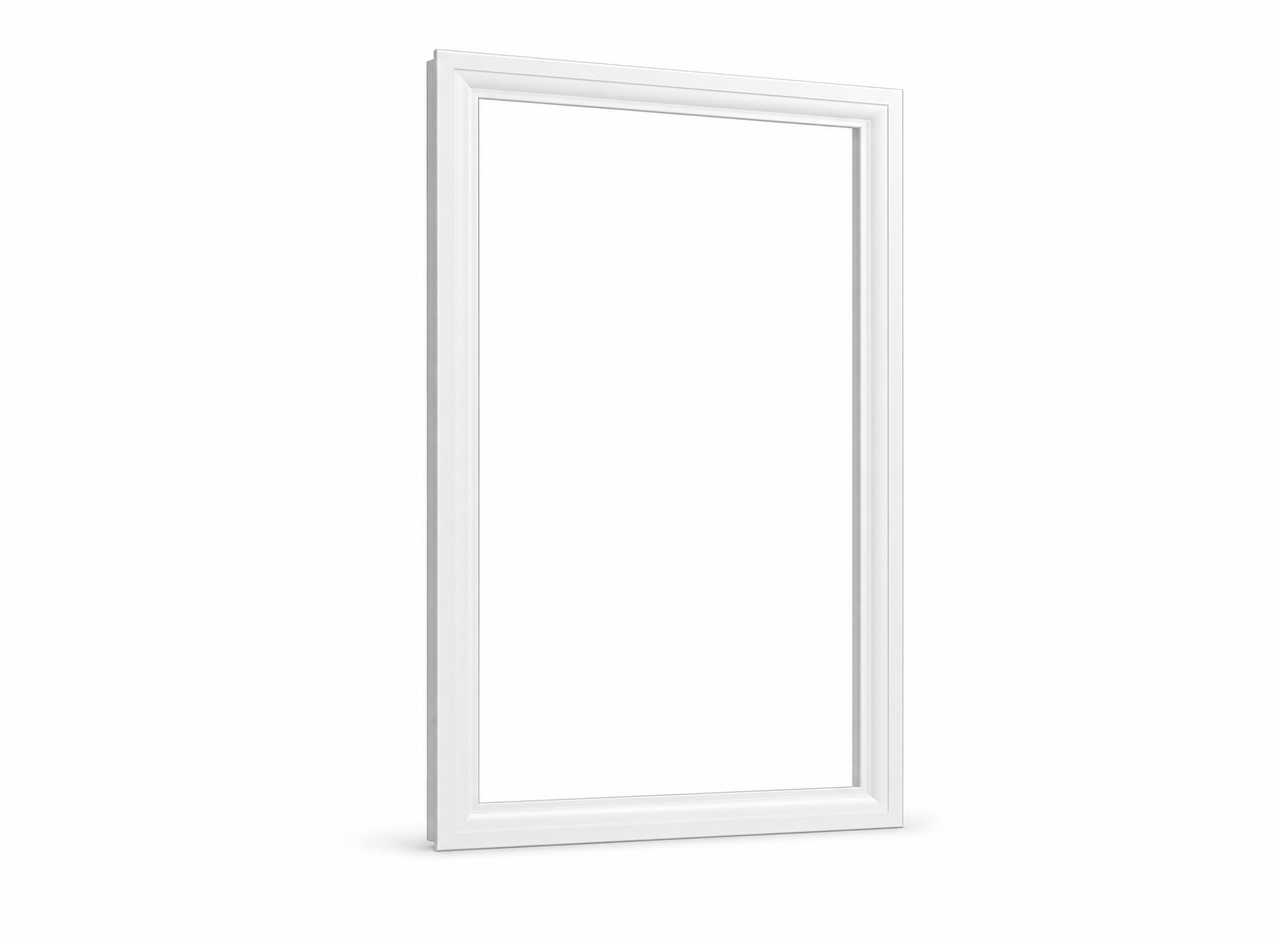
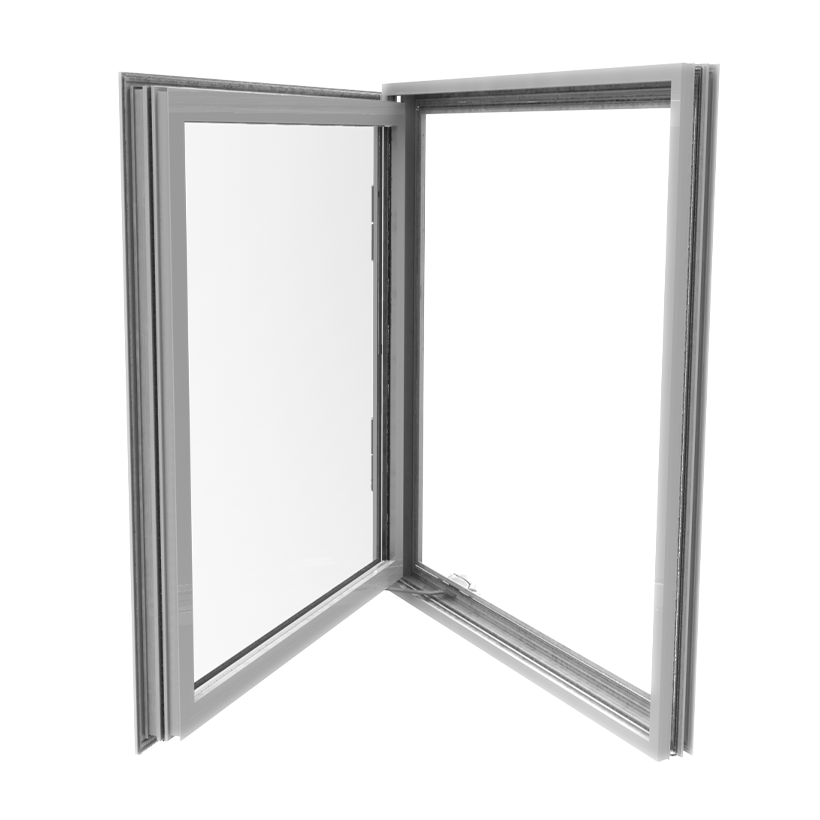
PGT WinGuard Aluminum Casement CA740A
Aluminum impact casement on the WinGuard 740-series frame, side-hinged with a crank-out sash. Mulls cleanly with AW740A and PW740A in the 740-family.

 ECO · Eco-Guard Casement & Awning Series
Eco-Guard Casement Window Series 500
Outswing aluminum impact casement, 2-3/4 in. frame, +70/-75 psf, LMI+SMI, NFRC-certified, with a stainless operator + multipoint lock.
 ES Windows · Prestige Series
ES Windows Prestige ES-P252 Casement/Awning/Fixed (TB)
Thermally broken aluminum window platform supporting casement, awning, and fixed configurations on a shared 2.5-inch frame. Dual LMI+SMI at 95/105 psf.
Flood insurance: separate, often required, often skipped
Flood is almost always a separate policy. Here is the structure:
| Provider | Who buys it | Typical premium |
|---|---|---|
| FEMA NFIP | Most flood-zone homeowners with mortgages | $700-$3,000/year |
| Private flood carriers | Higher-value homes, coverage above NFIP limits | $1,500-$5,000+/year |
If your property is in a Special Flood Hazard Area (SFHA), Zone A or Zone V on FEMA flood maps, your mortgage lender will require flood insurance. Outside the SFHA, it is optional, and most homeowners decline. That is a mistake in coastal Florida. About 25% of NFIP claims come from properties outside the SFHA. Storm surge does not respect map boundaries, and FEMA's maps are decades old in many areas. In Pinellas County, only about 17% of coastal units carry flood coverage, even though Tampa Bay is identified as the most vulnerable U.S. location for storm surge.
A few other points to know:
- NFIP has a 30-day waiting period before coverage starts. You cannot buy a policy when a storm is forming.
- Building coverage is capped at $250,000 under NFIP. Contents coverage is capped at $100,000.
- Flood policies have separate building and contents deductibles, often $1,000-$10,000 each.
- Cars are not covered. Auto comprehensive covers them.
For Monroe County, every coastal lot in Broward and Miami-Dade, and most of Lee and Collier, flood is not optional in any meaningful sense.
What savings actually look like
The wind mitigation credit produces a different dollar amount in every county. Three variables drive it: the average premium in that county, the percentage of that premium attributable to wind, and the size of the opening protection credit (typically 22-25% of the wind portion when all openings are protected).
The table below pulls real OIR premium data and applies the credit to a 19-opening project, the standard model used by Lisa Miller & Associates in their March 2024-2025 analysis.
| County | Avg premium | Wind % | Annual insurance savings | 10-year savings |
|---|---|---|---|---|
| Monroe | $7,621 | 70% | $1,174 | $11,740 |
| Palm Beach | $6,351 | 65% | $908 | $9,080 |
| Broward | $6,165 | 65% | $882 | $8,820 |
| Miami-Dade | $5,960 | 65% | $852 | $8,520 |
| Martin | $5,954 | 60% | $714 | $7,140 |
| Collier | $5,524 | 60% | $663 | $6,630 |
| Indian River | $4,422 | 55% | $486 | $4,860 |
| Lee | $3,631 | 55% | $399 | $3,990 |
| Pinellas | $3,902 | 50% | $390 | $3,900 |
| Sarasota | $3,453 | 55% | $380 | $3,800 |
| Brevard | $3,466 | 45% | $312 | $3,120 |
| Hillsborough | $3,434 | 45% | $309 | $3,090 |
| Orange | $3,495 | 25% | $157 | $1,570 |
| Duval | $2,744 | 28% | $138 | $1,380 |
Source: Florida OIR via Lisa Miller & Associates, March 2024-2025.
Two patterns worth pointing out. First, Monroe County and South Florida (Miami-Dade, Broward, Palm Beach) carry premiums roughly twice as high as inland counties and produce annual savings two to three times larger. Second, the savings figures above are insurance only. They do not include energy savings, hurricane deductible avoidance, or property value impact, which together easily double the picture.
For a homeowner in Hialeah or coastal Broward paying $8,000-$12,000/year, full opening protection plus other mitigation can move the bill by $2,500-$5,000/year. That is not a discount, that is a different category of insurance.
My Safe Florida Home and other affordability paths
Florida runs the largest home-hardening grant program in the country. My Safe Florida Home pays for inspections and partially funds qualifying upgrades, including impact windows, impact doors, hurricane shutters, roof upgrades, and roof-to-wall connections.
| Income level | Definition | Grant amount | Match required |
|---|---|---|---|
| Low-income | At or below 80% of county median income | Up to $10,000 | None — 100% state funded |
| Moderate-income | 80-120% of county median | Up to $10,000 | 2:1 (state pays $2 per $1 you invest) |
| Above moderate | Above 120% of county median | Free inspection only | No grant |
Funding history shows the demand: FY 2023-2024's $200 million was exhausted in two weeks with 45,000 homeowners wait-listed. FY 2024-2025 received $280 million plus a $72 million supplemental. FY 2026-2027 proposed funding tops $600 million, including $480 million to clear the backlog.
Eligibility caps dwelling value at $700,000 for moderate-income applicants (waived for low-income). The home must be a primary residence with a homestead exemption, single-family or townhouse up to three stories, and built before January 1, 2008.
The single most important rule: do not start work before grant approval. Construction begun before the official letter triggers automatic disqualification. Roughly 30,000 applicants in the 2023-2024 cycle missed the prioritization questionnaire and lost their place. We cover application mechanics in our My Safe Florida Home program guide.
A separate $30 million Condominium Pilot Program funds buildings three stories or taller within 15 miles of the coast, up to $175,000 per association. The 2024 voting threshold dropped from 100% to 75% owner approval, which made the program functional after years of unanimous-consent gridlock.
Beyond MSFH, two other paths matter. PACE (Property Assessed Clean Energy) lets a homeowner finance hurricane hardening with $0 down, income-verified approval, and repayment through the property tax bill over 10-25 years. Interest rates run 6-9%. The lien is first-position, ahead of the mortgage, which has caused friction with lenders and is worth understanding before you sign. Our financing page covers PACE alongside HELOC, dealer financing, and personal loans. Separately, FEMA's Hazard Mitigation Grant Program covers up to 75% of eligible costs after a Presidential disaster declaration; Florida has open declarations for Milton (DR-4834), Helene (DR-4828), Debby (DR-4806), and Idalia (DR-4734).
Two incentives have ended and are worth flagging because the internet still cites them. The federal Section 25C tax credit for energy-efficient windows expired December 31, 2025. The Florida sales tax exemption on impact windows, doors, and garage doors expired June 30, 2024. Anyone telling you in 2026 that you can claim the federal credit on a current installation is working from outdated information.
Florida's market recovery: 2024 SB 2A and what changed
Premiums roughly tripled between 2019 and 2024. The state average reached $14,140 in 2024 and was projected to top $15,460 in 2025, about three times the national average. The reason was a litigation environment, not weather.
Under the pre-reform Assignment of Benefits regime, contractors signed up homeowners, took control of claims, inflated them, and sued carriers when they pushed back. One-way attorney fees meant the carrier paid the homeowner's lawyer if the homeowner won by even $1, while the homeowner never paid the carrier's lawyer. Florida ended up with 79% of all U.S. homeowner insurance lawsuits and 9% of all claims. Senate Bill 2A, signed December 2022, banned AOB on residential property claims, eliminated one-way attorney fees, and tightened claims handling timelines.
By late 2025 the structural recovery showed up in the data:
| Metric | Crisis peak | 2025 |
|---|---|---|
| Combined ratio (weighted) | 104 (2024) | Below 82 |
| Profitable carriers | 39 of 61 | 46 of 61 |
| Market surplus | $13B (2024) | $16.4B |
| Average rate change filed | Double digits | +0.5% YTD |
| New market entrants (2024-2025) | 0 | 11+ carriers |
| Citizens policies | 1.3 million (Sept 2023) | ~385,000 |
The Perryman Group's February 2026 analysis estimated property-casualty insurance costs are about 14.5% lower than they would have been without the reforms, with $4.2 billion in additional business activity and roughly 29,000 jobs created.
What has not recovered: rates themselves. Premiums stabilized but mostly have not dropped. The cumulative 60%+ increase from 2019-2023 is locked in. The implication for opening protection: the percentage discount on wind premium is roughly the same as it was in 2019, but the wind premium itself has tripled. A 22-25% opening protection credit in 2026 is worth two to three times what the same credit was worth seven years ago.
Payback math for impact windows
Most homeowners run insurance-only payback math and conclude impact windows are slow to recover. They miss four other value streams that move the calculation considerably: energy savings ($500-$800/year from 20-40% cooling reduction per ENERGY STAR data), hurricane deductible avoidance ($200-$500/year probability-weighted), property value increase (7-10% of home value at sale per appraisal data), and faster sale (20% faster per Florida Realtors data).
The complete payback for a coastal Miami-Dade home with full impact windows:
- Project cost: $35,000
- Annual savings (insurance + energy + deductible): $3,400
- Simple payback: 10.3 years
- Property value increase (7%): $35,000
- Net cost after value increase: roughly $0
For a hybrid Broward installation (impact on primary openings, shutters on secondary): $22,000 project, $2,450/year total savings, 9.0-year simple payback, 5% property value lift adds about $20,000.
For inland counties like Orange or Duval, the insurance-only payback runs decades. The case in those markets rests on code compliance, storm protection, energy savings, and noise reduction rather than insurance math. The Florida Building Code 9th Edition effective December 2026 may expand the Wind-Borne Debris Region into Central Florida, which would change the inland math.
The IBHS post-Ian study quantified the protection side: homes with impact-rated windows and doors are up to 90% less likely to suffer major damage during a hurricane. Among 455 single-family homes built to the modern Florida Building Code in Hurricane Ian's path, zero had structural wind damage. The avoided-damage value alone justifies the investment in the highest-risk counties.
Next Steps
- Pull your declarations page and confirm your hurricane deductible percentage. On a $400K dwelling, a 5% deductible is $20,000 of first-dollar exposure. Adjust if you can absorb a higher or lower number.
- Schedule a wind mitigation inspection. If you qualify, the My Safe Florida Home program offers it free. Otherwise, $75-$150 from a licensed inspector. The form alone may identify credits you are already entitled to and not claiming.
- If you are in a coastal county, verify your flood policy is current and that the building and contents limits match your replacement cost. If you do not have flood, get a quote at floodsmart.gov. Remember the 30-day waiting period.
- If you are missing the opening protection credit because of one or two openings, get a free estimate on closing the gap. A single garage door with rated glass or shutters on two windows can recover the full credit. That work is exactly what we do from our Coral Springs home base.
- Compare cash, PACE, HELOC, and dealer financing for any larger upgrade. The right financing depends on how long you plan to hold the property and what other low-cost options are available.
- For multi-stage upgrades, sequence them by ROI. Opening protection and roof-to-wall connections deliver the largest credits per dollar in coastal counties.