
The Short Answer
Yes. Impact windows add 7-10% to a home's market value, help homes sell approximately 20% faster, and return 70-85% of their cost at resale. On a $500,000 South Florida home, that translates to $35,000-$50,000 in added value.
But the resale number is only one piece of the story. Impact windows generate seven distinct return streams (insurance savings, energy savings, avoided hurricane deductible risk, UV protection, noise reduction, security, and property value) that compound over the product's 20-30 year lifespan. When you account for all of them, a mid-range impact window project typically generates 2-3x the initial investment in total economic return.
This article breaks down what the data actually shows: the resale ROI, how appraisers evaluate impact windows, which Florida markets reward them most, how they compare to other home improvements, and why the total economic picture is far more favorable than the resale recoup alone.
The ROI Data
Resale Recoup: 70-85%
Homeowners who install impact windows recover 70-85% of their investment when they sell. For a $25,000 project, that means the buyer is effectively paying $17,500-$21,250 of that cost through the higher sale price.
That 70-85% recoup rate puts impact windows in strong company among home improvements. According to Remodeling Magazine's Cost vs. Value Report, most major renovations recover less:
| Home Improvement | Typical Resale Recoup |
|---|---|
| Garage door replacement | 102% |
| Entry door replacement | 90-100% |
| Impact windows | 70-85% |
| Kitchen remodel (mid-range) | 75% |
| Standard window replacement (non-impact) | 67-72% |
| Bathroom remodel | 65-70% |
| Roof replacement | 60-65% |
Impact windows sit right alongside mid-range kitchen remodels for resale recoup, and above bathroom remodels, roof replacements, and standard (non-impact) window replacements.
But here is the critical difference: no other home improvement on that list also reduces your insurance premiums by $1,000-$3,500/year, cuts your energy bills by $500-$800/year, and eliminates $10,000-$25,000 in hurricane deductible risk. Impact windows are the only renovation that simultaneously increases resale value, reduces ongoing costs, and provides catastrophic risk protection.
Property Value Increase: 7-10%
Impact windows add 7-10% to a home's market value in South Florida. On the Florida median single-family home price of $413,990 (per Florida Realtors), that's roughly $29,000-$41,400.
On a $500,000 home (common in coastal Miami-Dade, Broward, and Palm Beach), the increase is $35,000-$50,000.
This value increase reflects several buyer calculations that go beyond aesthetics:
- Lower insurance costs. The buyer inherits the opening-protection credit on day one.
- No immediate capital need. A buyer purchasing a home without impact windows faces a $15,000-$65,000 upgrade as a near-term expense. A home with impact windows already installed removes that obligation.
- Reduced risk. The buyer avoids the 2-5% hurricane deductible exposure on unprotected openings.
- Code compliance. The home meets or exceeds current Florida Building Code requirements for opening protection.
Faster Sale: 20% Fewer Days on Market
Homes with impact windows sell approximately 20% faster than comparable homes without hurricane protection. In a market where the average home sits for 60 days, that means closing in roughly 48 days instead.
Faster sales mean lower carrying costs: mortgage payments, insurance, utilities, taxes, and maintenance on a home you've already mentally moved out of. For a $500,000 home with $3,500/month in carrying costs, selling 12 days sooner saves approximately $1,400.
More importantly, a faster sale reduces the risk of price reductions. The longer a listing sits, the more likely the seller will need to cut the asking price to generate interest. Impact windows help avoid that cycle by removing a common buyer objection before it arises.
How Realtors and Buyers View Impact Windows
The Buyer's Calculation
Florida attracts buyers from across the country. Data from the National Association of Realtors shows that domestic migration into Florida is led by buyers from New York (11%), Georgia (7%), California (6%), Texas (6%), and New Jersey (5%).
Many of these buyers come from states without hurricane risk. When they tour homes in South Florida and learn that a standard home could face $15,000-$65,000 in impact window costs (or alternatively, the hassle and limitations of hurricane shutters), the presence or absence of impact windows becomes a significant factor in their purchase decision.
In coastal markets, real estate agents consistently report that impact windows are one of the first features buyers ask about, alongside roof age and insurance costs. A home without impact protection raises three immediate red flags for buyers:
- How much will it cost to install? Buyers estimate $20,000-$40,000 and deduct that from their offer.
- How much more will insurance cost? Without the opening-protection credit, annual premiums could be $1,000-$3,500 higher.
- What happens during a hurricane? Buyers from non-hurricane states are especially risk-averse about unprotected homes.
MLS and Marketing Value
Impact windows are listed as an upgrade in MLS listings and frequently highlighted in agent remarks. In South Florida, phrases like "full impact windows and doors" or "all hurricane impact glass" are selling points that agents feature prominently, similar to "new roof" or "updated kitchen."
The wind mitigation inspection report provides documented proof of the installation. Sellers who can produce this form during showings give buyers immediate confidence that the protection is verified, the insurance savings are real, and no additional investment is needed.
How Appraisers Value Impact Windows
Real estate appraisers use the comparable sales approach, comparing your home to recently sold homes with similar features. In markets where impact windows are common, the adjustment works like this:
- Your home has impact windows, comp does not. The appraiser adjusts the comp's value upward (or your home's value is supported at a higher level).
- Your home does not have impact windows, comp does. The appraiser adjusts downward, treating the absence as a deficiency.
That second point is the shift that has occurred in South Florida over the past decade. Impact windows have moved from "nice upgrade" to "expected feature" in many coastal markets. When a home lacks them, appraisers and buyers increasingly treat it as a deficiency, similar to a home without central air conditioning or an updated electrical panel.
Appraisers also consider the cost approach for unique or newer installations, estimating the depreciated replacement cost of the impact windows. For a recently installed system, this can support a significant value adjustment.
The key documentation that supports the appraisal:
- Wind mitigation inspection form (OIR-B1-1802): Proves opening protection status to appraisers and lenders.
- Permit records: Show that the installation was done by a licensed contractor with building department approval.
- Product approval documentation: Confirms the products meet Florida Building Code requirements, including HVHZ standards where applicable.
Markets Where Impact Windows Matter Most
Not every Florida market values impact windows equally. The premium varies by geography, buyer expectations, and local risk profile.
Miami-Dade and Broward Counties
These counties sit within the High Velocity Hurricane Zone, where impact protection has been required on new construction since 2002. Over two decades, this has created a market where impact windows are the baseline expectation, not a premium upgrade.
Buyers in these markets assume impact windows are present. When they are not, the home is immediately flagged as needing a major upgrade, and offers are adjusted downward by $20,000-$40,000 or more. In this market, the absence of impact windows is a deal-breaker for a significant percentage of buyers.
Palm Beach County
Palm Beach follows a similar pattern to Broward, with strong buyer expectations for impact protection. The county's mix of older waterfront estates and newer construction creates a wide range of retrofit opportunities. Homes on the barrier island and in coastal communities face the strongest buyer demand for full impact protection.
Fort Myers, Naples, and Southwest Florida (Post-Ian)
After Hurricane Ian (2022) devastated parts of Lee and Collier counties, buyer demand for impact windows surged. Homeowners who had impact windows during Ian saw dramatically less damage, and that real-world evidence changed buyer behavior. Today, impact windows carry a significant premium in these markets, and many buyers simply refuse to consider homes without them.
Tampa Bay (Post-Milton)
The Tampa Bay area experienced a similar shift after Hurricane Milton (2024). A region that had historically underinvested in hurricane protection is now rapidly adopting impact windows. Buyer expectations are catching up to South Florida levels, and the property value premium for impact windows in Pinellas, Hillsborough, and Manatee counties is growing.
Monroe County (Florida Keys)
The Keys face design wind speeds of 170-190 mph, the highest in the continental United States. Impact protection is not optional here; it is required and universally expected. Homes without impact windows in the Keys face insurability challenges that can make them effectively unsellable.
Barrier Islands and Coastal Communities
Any barrier island or direct-coastal community in Florida carries elevated wind and flood risk. Impact windows are increasingly a prerequisite for obtaining insurance in these locations, and some insurers are now requiring impact protection as a condition of policy renewal. In these communities, impact windows are less about increasing property value and more about maintaining insurability—and by extension, sellability.
The Total Economic Return: Beyond Resale
The 70-85% resale recoup figure, while strong, dramatically understates the total economic value of impact windows. Here are all seven return streams:
1. Insurance Premium Reduction: $300-$3,500+/Year
Florida's average homeowners insurance premium reached $14,140 in 2024, the highest in the nation. For some Florida households, insurance premiums now equal or exceed mortgage payments.
The opening-protection credit on the wind mitigation form reduces the windstorm portion of your premium by 30-45%. In coastal South Florida, that translates to $1,500-$3,500 per year. Over 20 years, insurance savings alone can reach $30,000-$70,000, potentially exceeding the entire cost of the installation.
2. Energy Savings: $500-$800/Year
Modern impact windows use insulated glass units (IGU) with Low-E coatings that reduce cooling costs by 20-40%. For a typical Florida home spending $2,000-$2,400/year on cooling, that's $500-$800 in annual savings. Over 20 years: $10,000-$16,000.
3. Avoided Hurricane Deductible Risk
Most Florida hurricane deductibles are 2-5% of insured value. On a $500,000 home, that's $10,000-$25,000 you pay out of pocket before insurance covers anything. Impact windows dramatically reduce the likelihood of hurricane damage that triggers this deductible. This is not an annual savings; it's a risk reduction. But when a hurricane does strike, the difference between a $0 claim and a $10,000-$25,000 deductible payment is significant.
4. UV Protection
The PVB interlayer in laminated impact glass blocks 99% of UV radiation. This prevents fading of furniture, flooring, artwork, and fabrics. Over a decade, UV damage to interior furnishings can cost thousands of dollars in premature replacement, costs that impact windows quietly eliminate.
5. Noise Reduction
Quality impact IGU achieves Sound Transmission Class (STC) ratings of 35+, reducing exterior noise by up to 50%. For homes near airports, highways, construction zones, or busy streets, this translates to measurable quality-of-life improvement and can be a significant selling point at resale.
6. Security and Forced Entry Resistance
Laminated impact glass resists forced entry far better than standard glass. A burglar can break through a standard window in seconds; penetrating laminated glass requires sustained effort with heavy tools and generates significant noise. This 24/7 security benefit has value whether or not you ever face a hurricane.
7. Property Value Increase: 7-10%
As documented above: $35,000-$50,000 on a $500,000 home, with a 20% faster sale.
What the Total Return Looks Like
When you combine all seven return streams, the math changes dramatically:
| Return Stream | 20-Year Value |
|---|---|
| Insurance savings ($1,800/yr avg) | $36,000 |
| Energy savings ($650/yr avg) | $13,000 |
| Avoided deductible (1 event) | $10,000-$25,000 |
| Property value increase (at sale) | $35,000-$50,000 |
| UV/noise/security | Significant but hard to quantify |
| Total quantifiable return | $94,000-$124,000 |
| Minus investment | -$25,000 to -$35,000 |
| Net return | $59,000-$99,000 |
A mid-range impact window project costing $25,000-$35,000 generates approximately $94,000-$124,000 in total quantifiable value over 20 years. That's roughly 3-4x the initial investment.
FEMA Data: The Government's Own Numbers
The federal government has studied the economics of hazard mitigation extensively, and the data strongly supports impact window investment.
Mitigation Saves Study
The FEMA National Institute of Building Sciences "Mitigation Saves" report (2019) found that:
- Modern building codes save $11 for every $1 invested compared to 1990s-era codes.
- Private-sector hazard mitigation retrofits save $4 for every $1 invested.
- Some analyses show savings as high as $6 to $13 per $1 invested, depending on the hazard type and region.
Broward County Case Study
A FEMA study specific to Broward County found a benefit-cost ratio of 4.8:1 for wind mitigation retrofits. A $2.15 million project cost was weighed against $10.4 million in avoided losses, meaning the community saved nearly five dollars for every dollar spent on protection.
What This Means for Individual Homeowners
These are aggregate numbers, but the principle applies at the individual level. Florida has approximately 5.9 million single-family homes, and roughly 80% were built before 2002, before the modern Florida Building Code required hurricane protection on new construction. That means 3-4 million Florida homes still lack impact protection, representing a massive retrofit market and a corresponding gap in property values between protected and unprotected homes.
Payback Period: When the Investment Pays for Itself
Scenario 1: Mid-Range South Florida Project
| Factor | Value |
|---|---|
| Investment | $25,000 |
| Annual insurance savings | $1,500 |
| Annual energy savings | $650 |
| Combined annual savings | $2,150 |
| Simple payback | 11.6 years |
After the payback period, every year generates $2,150 in pure savings. Over the remaining 8-18 years of the product's lifespan (impact windows last 20-30 years), that's $17,200-$38,700 in net savings beyond the break-even point—on top of the property value increase.
Scenario 2: Larger Coastal Project
| Factor | Value |
|---|---|
| Investment | $35,000 |
| Annual insurance savings | $2,500 |
| Annual energy savings | $700 |
| Combined annual savings | $3,200 |
| Simple payback | 10.9 years |
Higher-value coastal homes often see faster payback because insurance savings scale with premium size.
Scenario 3: Combined with Roof Upgrades
When impact windows are installed alongside roof upgrades (hip roof retrofit, secondary water resistance, improved roof-to-wall connections), the combined insurance discount can be substantially larger. In these cases, the payback period drops to 5-8 years because the cumulative wind mitigation credits compound.
The My Safe Florida Home program can offset up to $10,000 of the cost, further accelerating payback. A $25,000 project with a $10,000 grant has an effective cost of $15,000—and a payback period of just 7 years at $2,150/year in combined savings.
The Lifespan Advantage
Impact windows have a 20-30 year lifespan, which means they typically outlast the payback period by a decade or more. Over their full lifespan, they generate 2-3x the initial investment in total economic return. Very few home improvements can make that claim.
Comparison: Impact Windows vs. Other Home Improvements
When homeowners consider where to invest $25,000-$35,000 in their home, impact windows compete with kitchen remodels, bathroom renovations, and other upgrades. Here is how they compare on total economic return, not just resale recoup:
| Improvement | Resale Recoup | Annual Savings | Risk Reduction | Total 20-Year Return |
|---|---|---|---|---|
| Garage door replacement | 102% | None | None | Resale only |
| Entry door replacement | 90-100% | Minimal | Minimal | Resale only |
| Impact windows | 70-85% | $2,000-$3,200/yr | $10K-$25K deductible | $94K-$124K |
| Kitchen remodel (mid-range) | 75% | None | None | Resale only |
| Standard windows (non-impact) | 67-72% | $300-$500/yr | None | Moderate |
| Bathroom remodel | 65-70% | None | None | Resale only |
| Roof replacement | 60-65% | Minimal | Moderate | Resale + insurance |
The garage door and entry door replacements have higher resale recoup percentages, but they cost far less ($2,000-$5,000 typically) and generate no ongoing savings. In absolute dollar terms, impact windows deliver significantly more total economic return than any other common home improvement.
Standard (non-impact) window replacement deserves specific attention. Non-impact windows provide energy savings but no insurance savings, no hurricane protection, and no deductible risk reduction. The 67-72% resale recoup on standard windows is actually lower than impact windows' 70-85%, and the total economic return is a fraction of what impact windows deliver. In Florida, replacing old windows with new non-impact windows is almost always a missed opportunity.
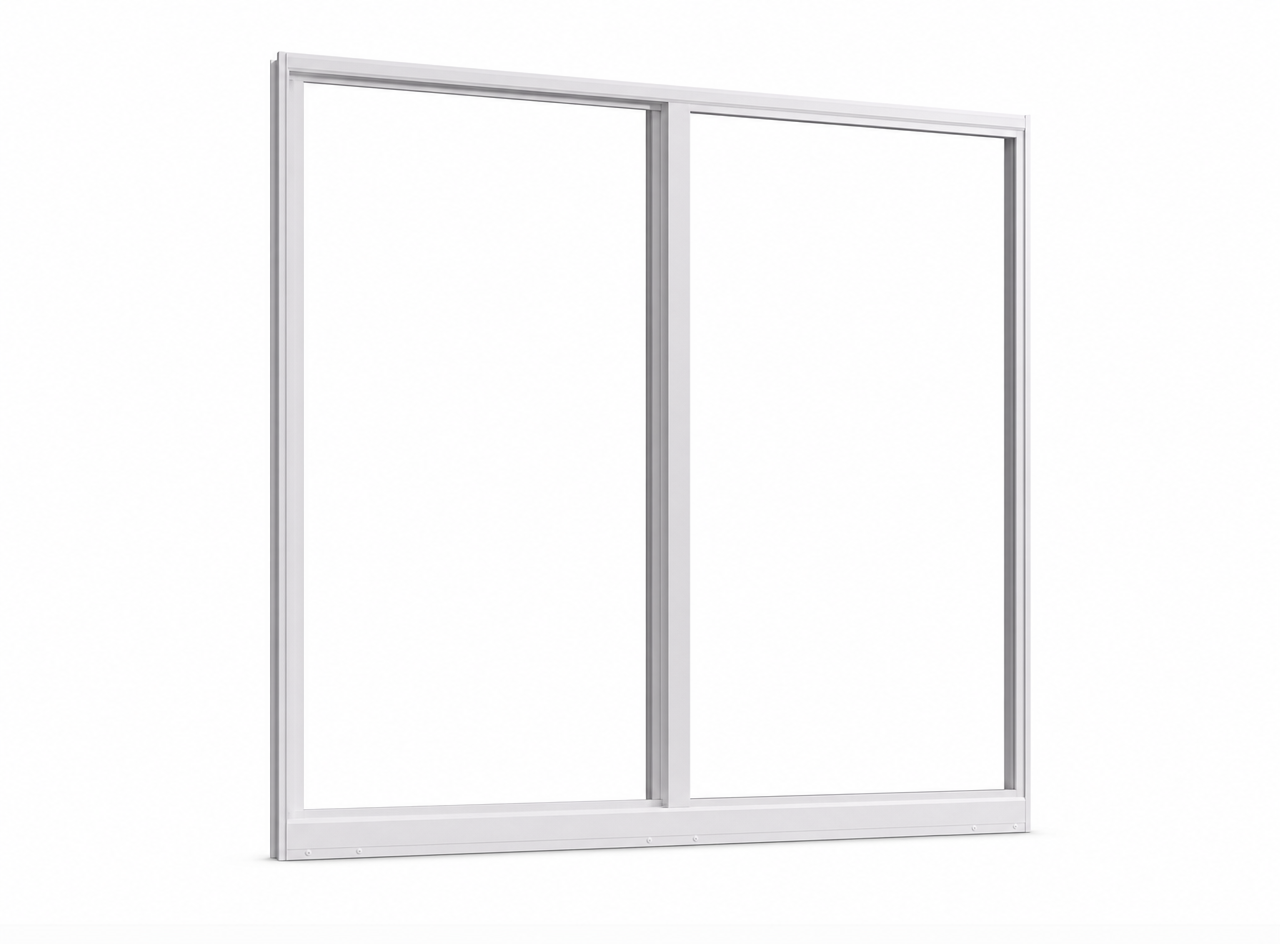
 PGT · WinGuard Aluminum Series
PGT WinGuard Aluminum Horizontal Roller HR7710A
Aluminum impact horizontal roller on the WinGuard 7700-series frame, opening side-to-side for wider residential openings. Diamond Glass, LMI for HVHZ.
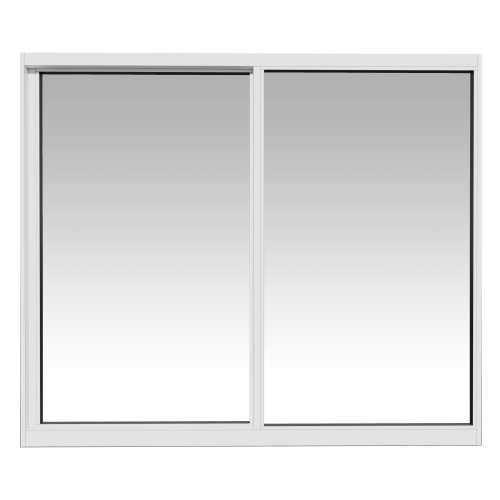
 ECO · Eco-Guard Horizontal Rolling Series
Eco-Guard Horizontal Rolling Series 60
Entry 2-panel aluminum impact roller, 2-1/8 in. frame, +55/-60 psf, LMI for HVHZ.
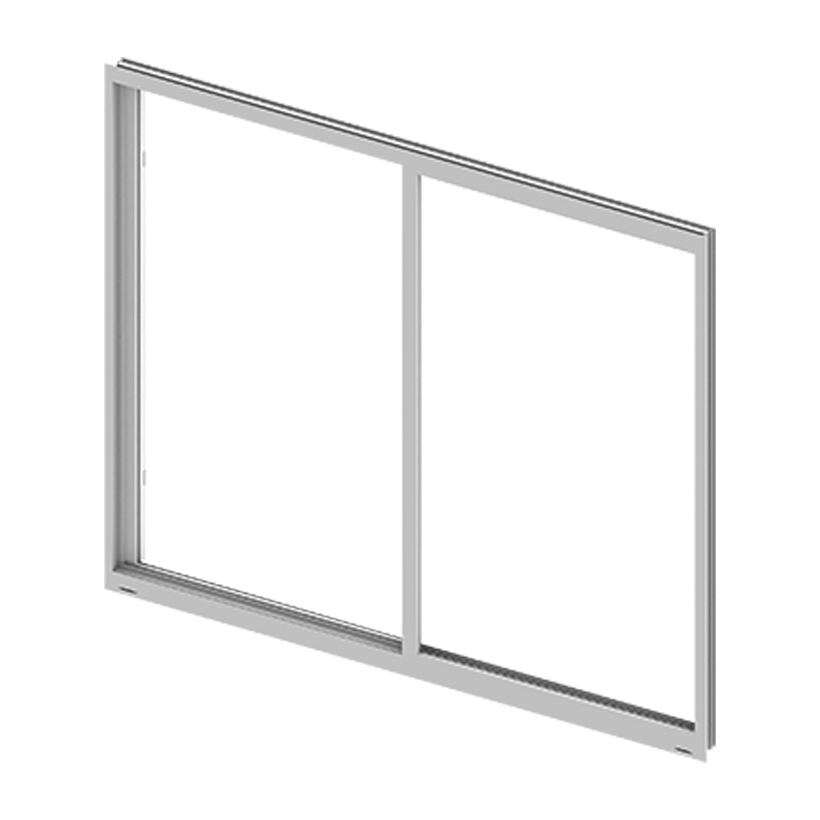
 ES Windows · Elite Series
ES Windows Elite ES-EL200 Sliding Window
Aluminum impact horizontal slider in XO, OX, and XOX configurations on a 2-15/16 inch frame. Polyamide rollers with needle bearings.
FAQ
How much do impact windows increase home value?
Impact windows add 7-10% to a home's market value in South Florida. On a $500,000 home, that's $35,000-$50,000. The exact increase depends on the local market, the age and condition of the installation, and whether the home is in a high-risk wind zone. In markets like Miami-Dade and Broward where impact windows are expected, the value increase may be even higher because the absence of impact windows is treated as a deficiency.
Do impact windows help a home sell faster?
Yes. Homes with impact windows sell approximately 20% faster than comparable homes without hurricane protection. This is because impact windows remove a major buyer objection (the cost and hassle of installing protection), lower the buyer's expected insurance costs, and signal that the home has been well-maintained and upgraded. In coastal markets, full impact protection is one of the first features buyers and their agents look for.
What ROI do impact windows provide compared to a kitchen remodel?
Impact windows recover 70-85% of their cost at resale, compared to 75% for a mid-range kitchen remodel. The numbers are close on resale recoup alone. But impact windows also generate $1,500-$3,200/year in insurance and energy savings that a kitchen remodel does not. Over 20 years, a $30,000 impact window project delivers $94,000-$124,000 in total economic return. No kitchen remodel produces that kind of ongoing financial benefit.
Do appraisers give credit for impact windows?
Yes. Appraisers use comparable sales to evaluate impact windows by comparing your home to recently sold homes with and without hurricane protection. In South Florida, impact windows are increasingly viewed as an expected feature, and their absence results in a downward adjustment. Appraisers also consider the wind mitigation inspection form, permit records, and product approval documentation when evaluating the upgrade.
How long until impact windows pay for themselves?
A typical mid-range South Florida project ($25,000) with combined annual savings of $2,150 (insurance + energy) reaches payback in approximately 11-12 years. If you use the My Safe Florida Home program grant ($10,000), the effective cost drops to $15,000 and the payback period drops to about 7 years. When combined with roof upgrades that increase total insurance credits, payback can be as short as 5-8 years.
Are impact windows worth it if I plan to sell in a few years?
It depends on the timeline. If you plan to sell within 2-3 years, you will recover 70-85% of your investment at resale and benefit from 2-3 years of insurance and energy savings, but you may not reach full payback. If you plan to sell in 5+ years, the combination of annual savings and resale value recovery typically makes the investment clearly worthwhile. In markets where buyers expect impact windows (most of coastal South Florida), the faster sale and stronger offers can offset much of the short-term gap.
Do impact windows affect insurance rates?
Significantly. Impact windows qualify for the opening-protection credit on the wind mitigation inspection form, which reduces the windstorm portion of your insurance premium by 30-45%. In coastal South Florida, this translates to $1,500-$3,500/year in savings. Florida Statute 627.0629 requires insurers to offer these discounts when verified by a certified inspector. Some insurers are now requiring impact protection for policy renewal in high-risk coastal areas, making impact windows essential for maintaining insurability.
Next Steps
If you are considering impact windows and want to understand the specific return for your home:
-
Get a project estimate. The ROI calculation starts with knowing your actual cost. Request a free estimate to get accurate pricing for your specific home, window count, and product preferences.
-
Check your insurance savings. Ask your insurance agent what your opening-protection credit would be with full impact windows on all openings. This gives you the annual savings number for your payback calculation. For more detail, read our impact windows insurance savings guide.
-
Explore the My Safe Florida Home program. If you qualify, a $10,000 grant can significantly reduce your effective cost and accelerate your payback period.
-
Get a wind mitigation inspection. A wind mitigation inspection documents your current home's hurricane protection features. If you already have some mitigation features, impact windows may be the final piece that unlocks the full opening-protection credit.
-
Compare total economic return, not just resale value. When evaluating impact windows against other home improvements, look at the full picture: resale recoup plus annual savings plus risk reduction plus quality-of-life benefits. On total return, impact windows outperform nearly every other home improvement available. Our guide on whether impact windows are worth it covers the complete financial analysis.
Impact windows are one of the few home improvements where the financial case gets stronger the longer you own the home. The resale value is real, the annual savings compound, and in a state where hurricanes are a certainty, the protection has value that no spreadsheet fully captures.
Ready to see what impact windows would cost for your home? Get a free estimate from Armor Pro Windows & Doors.