
To harden a Florida home against hurricane damage on a working homeowner's budget, you sequence the upgrades over four or five seasons. The fortress build that survives a Category 3 quietly (concrete walls, hurricane-rated roof, impact windows and doors, reinforced garage door, whole-home generator, a yard that does not throw missiles) is almost never built in one year.
This is the priority sequence we recommend after a couple decades of installing in Miami-Dade, Broward, and Palm Beach. Each step has a specific cost range, a specific insurance reduction, and a specific financing path. The Helene and Milton building performance study by Prevatt and Roueche surveyed 358 structures across the Big Bend coastal region and the East Coast tornado tracks; zero post-FBC homes were classified as destroyed. The National Institute of Building Sciences Mitigation Saves report put modern-code construction at $11 saved per $1 invested. The math is settled. What's left is the order.
National Hurricane Preparedness Week runs May 3-9, and the NWS daily theme "Strengthen your home" maps to this article directly. You have a few weeks before June 1 to start a plan, not finish one.
Why the order matters
Wind does not pick a random opening to attack. It finds the path of least resistance and pressurizes the inside of the house through whichever component fails first. Once the building envelope breaches, internal pressure pushes up against the roof from below while the wind pulls up from above. That is how a roof comes off.
Sequenced correctly, each upgrade protects the next one. A hurricane-rated roof defends everything underneath it. Impact-rated openings keep the envelope sealed so the roof never sees the doubled load. A reinforced garage door closes the largest single opening, the one most likely to fail before windows do. A generator turns a two-week outage from a survival event into an inconvenience. A trimmed yard stops your own trees from breaking your own windows.
If you do these upgrades in the wrong order, say premium impact windows but a $1,200 builder-grade garage door, the weakest piece still defines the outcome. Helene and Milton showed exactly that. In the Cobblestone neighborhood, two post-2019 homes lost roof decking after their garage doors breached during EF-3 tornado gusts, even though the windows held. The garage doors were rated DP-36 PSF and code-compliant. As the Prevatt and Roueche report put it, "garage doors can act as damage amplifiers, as failures increase the positive internal pressure, increasing uplift pressure on the roof."
The sequence tracks the order in which a Florida home actually fails.
Year 1: Roof first
The roof is the largest single mitigation credit on the wind mitigation form, the most expensive thing to fix after a storm, and the one component that protects everything else. Start here.
A hurricane-rated roof in Florida means three things working together: an FBC-compliant roof covering, a code-strong roof deck attachment, and a secondary water resistance barrier. The Florida Office of Insurance Regulation OIR-B1-1802 wind mitigation form evaluates each of these independently, and each contributes a separate credit on your premium. The four roof-related categories combined (covering, deck attachment, roof-to-wall connection, geometry) plus secondary water resistance can reach approximately 40-50% of the wind portion of your premium.
Specifically:
- Roof covering. An FBC-compliant roof installed post-2002 (or pre-2002 with FBC-equivalent documentation) earns the highest covering credit. Asphalt shingle, metal, and tile all qualify if installed to current code.
- Roof deck attachment. Modern code (8d ring-shank nails with adhesive, or 8d nails at 6" spacing) earns substantially more credit than legacy 6d nails at 6" spacing. Many older South Florida homes still have the older nailing pattern.
- Roof-to-wall connection. Concrete-block construction with a poured bond beam earns the maximum credit. Stick-built homes earn it through metal hurricane straps wrapping the truss to the top plate (single or double wraps) rather than toe nails alone.
- Roof geometry. A hip roof (all sides slope down) earns more credit than a gable. You cannot retrofit roof shape, but you can verify it during inspection.
- Secondary water resistance (SWR). A peel-and-stick polymer-modified bitumen membrane on the deck-to-truss joints, applied during a re-roof. This is a relatively cheap retrofit ($1,500-$3,000 added to a re-roof) that pays back fast in insurance credit.
The cost range for a full hurricane-rated re-roof in South Florida runs $15,000-$40,000 depending on size, pitch, and material. Asphalt shingle is the budget tier; standing-seam metal and concrete tile are the premium options.
Annual insurance savings from a maxed-out roof category: $1,500-$3,500 in the higher-premium counties (Monroe, Palm Beach, Broward, Miami-Dade), per the FLOIR data and Lisa Miller & Associates analysis. Payback runs 8-12 years on insurance alone, faster if you stack it with the IBHS FORTIFIED Roof certification, which some carriers credit additionally.
A note on FORTIFIED. The IBHS FORTIFIED program builds in three levels (Roof, Silver, Gold). FORTIFIED Roof requires sealed roof deck, enhanced edge metal, ring-shank deck nails, and impact-rated vents. Some Florida carriers credit FORTIFIED beyond the OIR form, and the My Safe Florida Home program covers FORTIFIED-aligned roof improvements. Worth asking your carrier and your inspector before re-roofing.
Financing for Year 1: MSFH grants ($10,000 free for low-income, 2:1 match for moderate-income), the insurance credit itself, and PACE for whatever's left. If your existing roof has 5+ years of useful life, you do not need to rip it off this year. Add SWR and deck attachment improvements at the next re-roof and document the existing covering with FBC-equivalent paperwork now to start collecting partial credit.
Year 2: Openings (windows, doors, and shutters)
Once the roof is solid, the next failure point is the openings. Wind-borne debris hitting a non-impact window blows the envelope open in milliseconds, and from there the pressure cascade follows the same path as a garage door failure. Year 2 is for impact windows, impact doors, or compliant shutters across every glazed opening on the house.
The Florida Building Code 8th Edition requires impact-rated openings or qualifying shutters in the High Velocity Hurricane Zone (Miami-Dade and Broward) and in the Wind-Borne Debris Region (most of coastal Florida, including Palm Beach County and Monroe). The 9th Edition, effective December 31, 2026, is expected to expand the WBDR by removing the "coastal" qualifier, bringing roughly 1.4 million Central Florida homes into the impact mandate when they trigger the 25% rule on a re-glaze.
Three options earn the same insurance credit:
- Impact windows and doors. Permanent, passive, no deployment. Whole-home installed cost runs $25,000-$80,000 depending on tier, count, and county. ECO and ES Windows budget tier comes in at the low end; PGT WinGuard mid-range at $30,000-$45,000 for a typical 15-opening home; WinDoor luxury at the high end. See our breakdown of impact windows by tier.
- Hurricane shutters. Aluminum storm panels run $1,500-$5,000 whole-home. Accordion runs $5,000-$16,000. Roll-down motorized $14,000-$45,000. All earn the same insurance credit as impact windows. Pure ROI math favors shutters; lifestyle math favors impact windows. See hurricane shutters.
- Hybrid. Impact glass on living spaces and bedrooms, shutters on bathrooms and utility rooms. Captures the lifestyle benefits where they matter most at moderate cost.
Across the impact-window tiers above, the casement is the workhorse opening — a crank-out sash that seals tight against wind-driven rain. Here is how the three lines we install most compare at that opening:
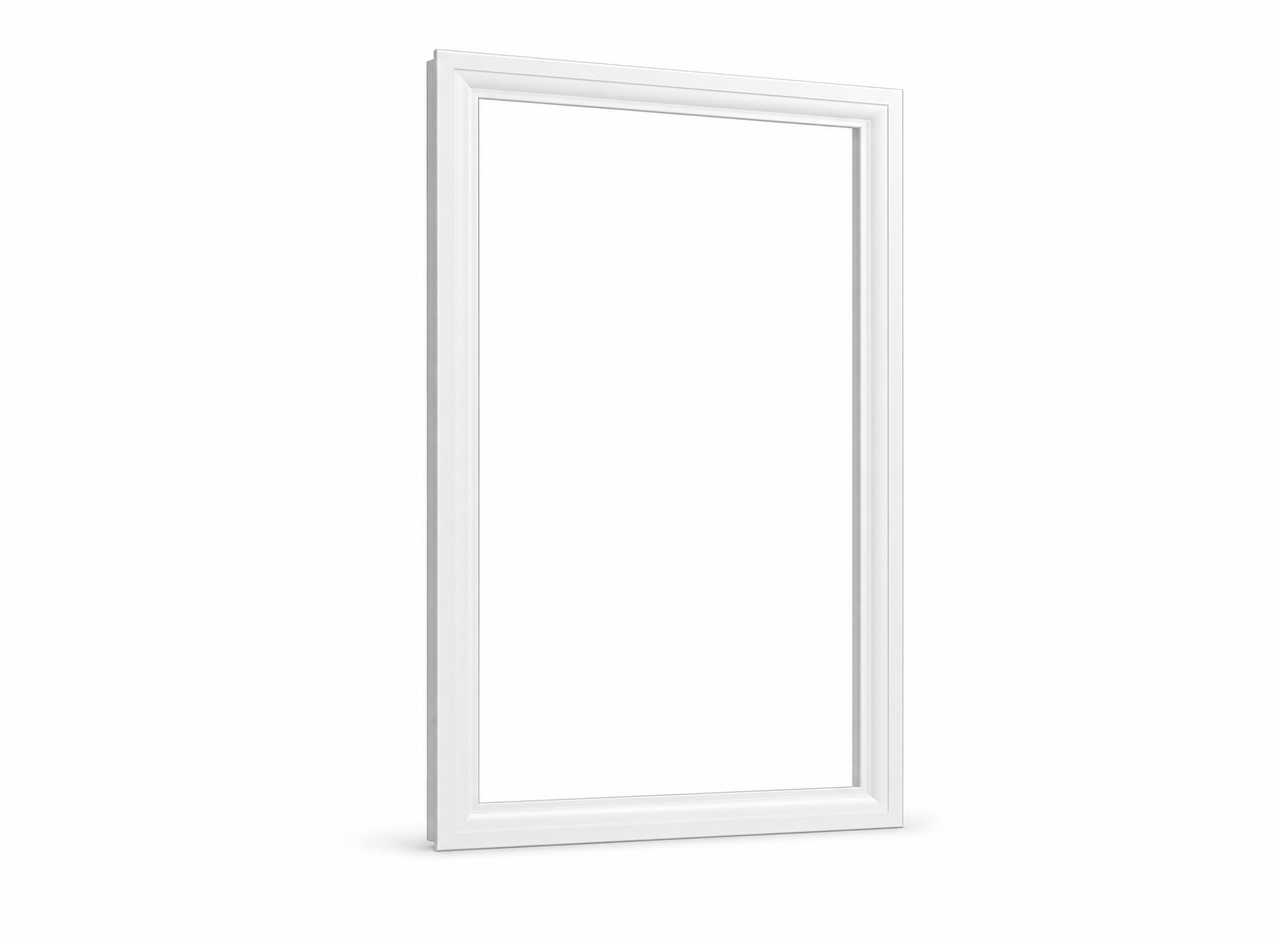
 PGT · WinGuard Aluminum Series
PGT WinGuard Aluminum Casement CA740A
Aluminum impact casement on the WinGuard 740-series frame, side-hinged with a crank-out sash. Mulls cleanly with AW740A and PW740A in the 740-family.
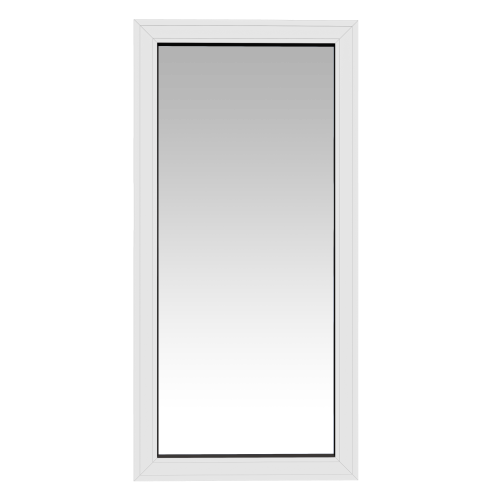
 ECO · Eco-Guard Casement & Awning Series
Eco-Guard Casement Window Series 500
Outswing aluminum impact casement, 2-3/4 in. frame, +70/-75 psf, LMI+SMI, NFRC-certified, with a stainless operator + multipoint lock.
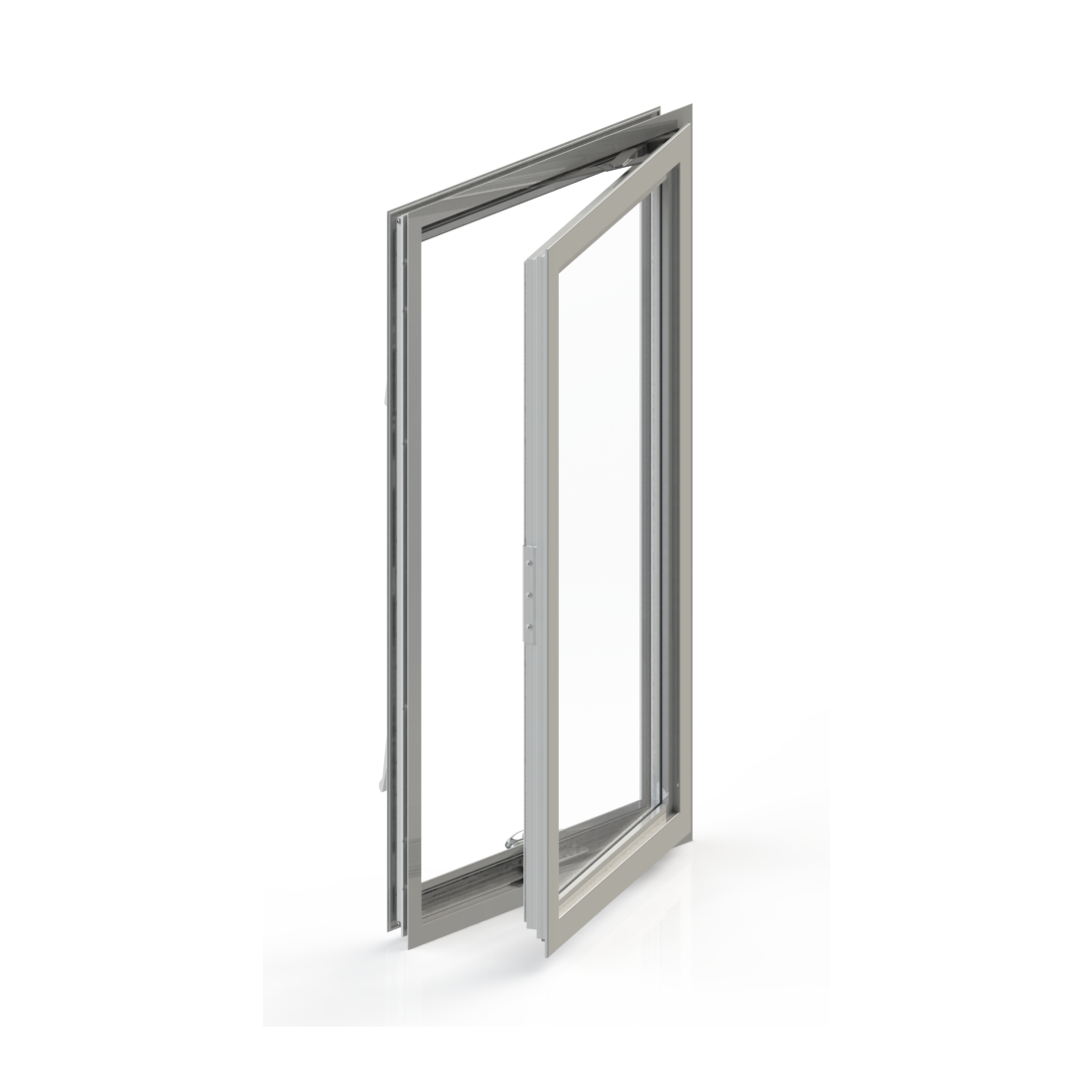
 ES Windows · Elite Series
ES Windows Elite ES-5000 Casement
Flagship aluminum impact casement in Elite, available in X and XX configurations on a 2-1/8 inch frame depth. Stainless 4-bar hinges, rated to 90 psf.
Either way, the all-or-nothing rule applies. The OIR-B1-1802 form rates the home as a single unit; the weakest opening determines the rating for the entire envelope. One unprotected bathroom window or one garage door with unrated glass inserts collapses the credit to zero.
The annual insurance savings from full opening protection in coastal Florida:
| County | Avg annual insurance savings |
|---|---|
| Coastal Miami-Dade ($500K home) | $1,500-$3,500 |
| Coastal Broward ($400K home) | $1,000-$2,500 |
| Palm Beach ($350K home) | $500-$1,200 |
| Monroe (Keys, $500K home) | $1,500-$3,000 |
Source: FLOIR data via Lisa Miller & Associates, March 2024-2025.
Beyond insurance, impact glass adds value the wind mitigation form does not capture: quiet inside during a Cat 3, year-round noise reduction up to 50%, 99% UV blocking, energy savings of $500-$800/year from the laminated glass plus Low-E coating, and a 7-10% bump in property value at sale where impact is the expected standard. Detailed in our plywood, shutters, or impact windows breakdown.
The most-overlooked opening on most homes is the sliding glass door. A single 12-foot SGD can be 30-40% of total glazed area; replacing it alone often triggers the 25% rule. Match SGD upgrade with the rest of openings.
Financing for Year 2: PACE (10-25 year terms, $0 down, paid through property tax bill) is the most-common path because impact openings are one of PACE's core covered improvements. HELOC at 6-8% beats PACE on total interest cost when the homeowner has equity and credit. MSFH grants apply to impact openings as well as roof. Detail on the financing page and in the My Safe Florida Home program post.
Year 3: The garage door
This is the one most homeowners skip. They should not. The Helene and Milton data, the FBC technical research findings, and the field experience all converge on the same point: the garage door is the largest single opening on most homes and the most likely to fail first.
An estimated 80% of residential hurricane wind damage begins with a garage door breach. FBC residential Section 609.4 currently allows garage doors to be designed for only 60% of ASCE 7 wind pressures, a reduced loading allowance. In WBD regions, Section 609.6 requires impact rating, but the recent Helene and Milton data showed that even properly rated DP-36 doors failed under the combination of wind pressure and shingle debris. The Florida Building Commission is actively reviewing whether to tighten garage door requirements in the 9th Edition or 10th.
A wind-rated double garage door (16' wide) without impact rating runs $2,000-$10,000 in non-HVHZ counties. An impact-rated double door (Miami-Dade NOA) runs $5,500-$9,500+ in HVHZ. ECO's Series 850-12
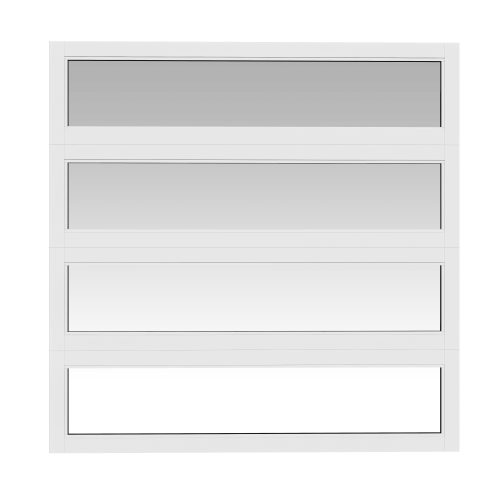 ECO · Eco-Guard Garage Door Series
Eco-Guard Garage Door Series 850-12
4-section impact-rated aluminum sectional garage door to 192 x 144 in., +40/-45 psf, LMI, belt or chain drive.
HVHZ approved for South Florida Design pressure +40/-45 psf
See garage door details
and 850-16
ECO · Eco-Guard Garage Door Series
Eco-Guard Garage Door Series 850-12
4-section impact-rated aluminum sectional garage door to 192 x 144 in., +40/-45 psf, LMI, belt or chain drive.
HVHZ approved for South Florida Design pressure +40/-45 psf
See garage door details
and 850-16
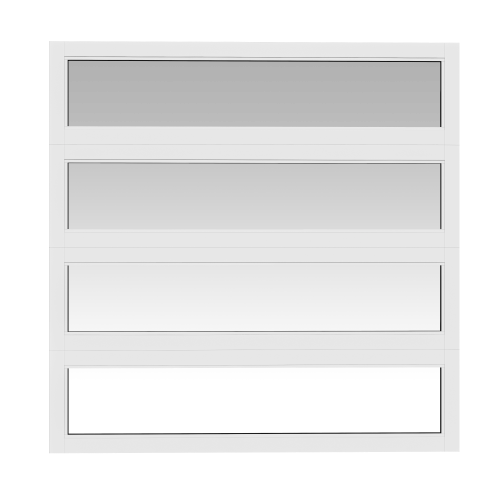 ECO · Eco-Guard Garage Door Series
Eco-Guard Garage Door Series 850-16
6-section impact-rated aluminum sectional garage door (page label E870) to 192 x 144 in., +40/-45 psf, LMI.
HVHZ approved for South Florida Design pressure +40/-45 psf
See garage door details
are common impact-rated options; Clopay, Amarr, and CHI Overhead also make Miami-Dade-rated lines.
ECO · Eco-Guard Garage Door Series
Eco-Guard Garage Door Series 850-16
6-section impact-rated aluminum sectional garage door (page label E870) to 192 x 144 in., +40/-45 psf, LMI.
HVHZ approved for South Florida Design pressure +40/-45 psf
See garage door details
are common impact-rated options; Clopay, Amarr, and CHI Overhead also make Miami-Dade-rated lines.
The critical distinction: wind-rated and impact-rated are not the same. Wind-rated resists pressure only; impact-rated resists pressure and flying debris. Only impact-rated doors qualify for the wind mitigation credit in HVHZ and WBDR. If the garage door has decorative glass inserts, those panels must be impact-rated, or the entire opening protection credit on the home goes to zero.
Annual insurance savings specifically attributable to the garage door upgrade are smaller than the windows category, $200-$600/year at most, because the credit is captured at the full-envelope level. The real return is preventing the catastrophic failure mode. If your garage door breaches during a Cat 3, you are looking at six-figure roof and interior repairs, regardless of how good the rest of your envelope is.
Financing: cash for most homeowners, MSFH grant (impact garage doors are explicitly covered), or rolled into a HELOC alongside other upgrades.
Year 4: Power resilience
The storm is one day. The aftermath is the part that wears people down. Andrew left parts of Miami without power for six weeks. Irma hit South Florida for two weeks. Charley and Frances put inland Central Florida out for a month. The heat, the mosquitoes through open windows, the food spoiling in the fridge, the inability to shower or sleep: these are the reasons Florida veterans consistently rank a generator as the single best quality-of-life upgrade after experiencing one extended outage. Detailed digest of what two weeks without power actually feels like in our Florida hurricane power outage post.
There are three tiers of power resilience.
Portable generator (2,500-7,500 watts). $400-$1,500. Runs a window AC unit, the fridge, a few lights, charging. Requires gas storage rotated through the car to keep fresh, a transfer interlock at the panel, and outdoor placement at least 20 feet from the house to prevent CO poisoning. The cheap option, the one most Florida households actually own.
Whole-home standby generator with transfer switch (18-26 kW). $10,000-$20,000 installed, including a 500-1,000 gallon propane tank or a natural gas line. Auto-starts on grid loss, runs the entire house on fuel supply. The 22-26 kW size handles full HVAC plus everything else. Generac, Kohler, and Briggs & Stratton dominate; installation by a licensed electrician and propane service is required.
Whole-home battery system. $15,000-$40,000+ for a Tesla Powerwall, Anker SOLIX E10, or Enphase IQ Battery setup, ideally paired with rooftop solar. Quieter, cleaner, fuel-independent, but limited duration without solar recharge. Hardware survives flooding better than a propane generator pad in a flood zone.
The wind mitigation form does not credit generators or batteries; the return is quality of life and avoided spoilage. For a homeowner who has lived through a two-week outage in August, that's enough. Financing is typically HELOC; MSFH does not cover generators directly.
Year 5: Yard, trees, drainage, and surge mitigation
The last year of the plan is everything outside the building envelope. It tends to get deferred because it does not break first, but it determines what your envelope sees during a storm.
Wind alone rarely shatters a window. Wind-borne debris does, at 120+ mph, from the yard, the neighbors' yard, or the roof down the street. Detailed in our yard, debris, and tornado post.
The Year 5 work:
- Tree trimming and removal. Annual professional trim, not the day before a named storm. Dead branches and overhanging limbs first; trees too close to the house come out entirely. Royal palms, queen palms, oaks, and gumbo limbo are common Florida problems.
- Fence and gate hardening. Wood fences become missiles in a Cat 3. Aluminum or PVC with adequate post depth survives better.
- Outdoor furniture, grills, planters. Bring in or anchor. Trampolines should be removed before any named storm; they cross property lines and destroy neighbors' cars and roofs.
- Drainage and grading. Swales, French drains, gutter extensions, lot grading. The first eight inches of rain in a Cat 3 falls in three hours.
- Storm surge mitigation if coastal. Elevate HVAC condensers, electrical panels, and water heater above expected surge height. Flood vents in garage and crawlspace. Flood-resistant exterior doors. FEMA flood insurance is a separate product; the FEMA Hazard Mitigation Grant Program covers some of these items.
Cost range for Year 5: $2,000-$15,000 depending on lot size, tree count, and whether surge mitigation is needed. No insurance credit attaches directly to most of this work, though FEMA flood insurance premiums depend on elevation and surge protections.
Financing: cash, with one caveat. If your re-grading or surge mitigation work is part of an FHMP-funded project after a declared disaster, you may receive partial reimbursement. Track the federal disaster declarations.
The five-year sequencing table
| Year | Upgrade | Cost range | Annual insurance savings | Payback | Financing |
|---|---|---|---|---|---|
| 1 | Hurricane-rated roof + deck attachment + SWR | $15K-$40K | $1,500-$3,500 | 8-12 yrs | MSFH grant + insurance credit |
| 2 | Impact windows + doors (or hybrid with shutters) | $25K-$80K | $1,000-$3,500 | 12-18 yrs | PACE / HELOC / MSFH |
| 3 | Impact-rated garage door | $1,500-$9,500 | $200-$600 | 5-10 yrs | Cash or rolled into HELOC |
| 4 | 22-26 kW whole-home generator + transfer switch | $10K-$20K | (quality of life) | n/a (avoided loss) | HELOC |
| 5 | Yard, trees, drainage, surge mitigation | $2K-$15K | (quality of life) | n/a | Cash; FEMA HMGP if eligible |
Source: cost ranges from impact window industry data, FLOIR, HomeGuide, and field installation pricing as of 2026; insurance savings from FLOIR and Lisa Miller & Associates analysis, March 2024-2025.
How insurance pays for the plan
The wind mitigation discount mechanics surprise homeowners. Understanding how the credits combine helps you sequence smarter.
Each category on the OIR-B1-1802 form earns an independent credit. The credits are applied multiplicatively against the wind portion of the premium, and combined they can reach 88-90% off the wind portion. The wind portion is itself 35-70% of total premium depending on county: coastal Miami-Dade and Monroe at the high end, inland counties at the low end.
A worked example for a coastal Miami-Dade home with an $8,000 annual premium and a 60% wind portion ($4,800):
| Step | Credit | Annual savings |
|---|---|---|
| Roof covering (FBC) | -15% of wind | -$720 |
| Roof deck attachment | -5% | -$240 |
| Roof-to-wall (clips) | -10% | -$480 |
| Hip roof | -5% | -$240 |
| SWR | -5% | -$240 |
| Opening protection (all openings) | -22% | -$1,056 |
| Total combined wind discount | ~62% | ~$2,976/yr |
Net new premium: about $5,024 instead of $8,000. The opening protection credit alone is the largest single category.
A few mechanics worth knowing:
- The OIR-B1-1802 form was updated effective April 1, 2026, with the credit changes flowing through to premiums starting July 2026. The opening protection rating is now stricter: every glazed opening must be protected, including skylights, sidelites, transoms, and garage doors with glass inserts.
- The wind mitigation inspection costs $75-$150 privately, or it's free through the My Safe Florida Home program. MSFH inspections are available regardless of income.
- Shutters and impact windows earn identical credits. The premium savings do not differ between the two; the difference is in lifestyle, convenience, and home value.
Detail on the insurance side in our hurricane insurance explained post.
Financing the plan
A $60,000-$120,000 multi-year hardening project is rarely paid in cash. Florida homeowners use a combination of grants, credits, and financing layers.
My Safe Florida Home (MSFH) grants. The state's home hardening program. $280M appropriated for FY 2025-2026; over $600M proposed for FY 2026-2027. Two components: free wind mitigation inspection (regardless of income) and matching grants for upgrades (income-qualified).
| Income | Grant amount | Match required |
|---|---|---|
| Low-income (≤80% county median) | Up to $10,000 | None (100% state-funded) |
| Moderate-income (80-120% county median) | Up to $10,000 | 2:1 (state pays $2 per homeowner $1) |
Eligible homes must be single-family or townhouse, three stories or fewer, primary residence with homestead, permitted before January 1, 2008, with insured dwelling value under $700,000 (low-income are exempt from the cap). Apply at mysafeflhome.com. Detail in our MSFH program post.
PACE financing. Property Assessed Clean Energy. $0 down, income-verified approval, 6-9% fixed rate, 10-25 year terms, paid through your property tax bill. Best for homeowners who cannot qualify for HELOC or who need $0 out-of-pocket. Worse total interest cost than HELOC. Lien transfers with the property on sale, which complicates resale within 5 years. Florida providers: Ygrene and Florida PACE.
HELOC or home equity loan. 6-8% rate for borrowers with equity and good credit. Usually beats PACE on total interest. Tax-deductible interest in many cases. The default choice for South Florida homeowners with $200K+ in home equity.
Federal credits. The Section 25C Energy Efficient Home Improvement Credit expired December 31, 2025. There is no current federal tax credit for impact windows or doors installed in 2026 or later. The Florida sales tax exemption on impact products also expired June 30, 2024 and has not been renewed.
FEMA Hazard Mitigation Grant Program. Available after federally-declared disasters. Funds mitigation that reduces future damage. Slower process than MSFH but covers larger scopes including elevation and surge work.
Detail on financing structures and sample monthly payments on our financing page.
What this looks like in practice
A real five-year sequence for a 1995-built Coral Springs home (Broward, WBDR), 2,400 sq ft, 15 windows + 2 SGDs + 1 entry door + 1 double garage:
- Year 1 (May-October 2026). Re-roof with shingle, code-compliant deck attachment, SWR, double truss-to-wall straps. $28,000. MSFH grant: $10,000. Out of pocket: $18,000. Insurance reduction: $2,200/year starting July 2026.
- Year 2 (Spring 2027). Whole-home impact windows and doors, ECO and ES Windows budget-value tier. $34,000. PACE at 7.5% over 20 years: $274/month. Additional insurance reduction: $1,800/year. Net monthly cost after offset: $124.
- Year 3 (Fall 2027). Impact-rated double garage door plus matching pedestrian door. $7,000. Cash. Insurance reduction: $300/year additional.
- Year 4 (Summer 2028). 22 kW Generac standby with 500-gallon propane tank. $14,000. HELOC at 7% over 10 years: $163/month.
- Year 5 (Spring 2029). Tree trimming, two oak removals, drainage swale, fence replacement. $6,500. Cash.
Total cost over five years: $89,500. MSFH grant offset: $10,000. Annual insurance savings: $4,300/year. Insurance plus energy savings cumulative offset by year 10: roughly $48,000. Property value increase at sale (7% on $450K home): $31,500. Net cost after credits, savings, and value capture over 10 years: approximately zero.
That is what the NIBS $11-per-$1 number looks like at the household level: a long, systematic transfer of risk off the homeowner and onto the insurance pool that's already pricing for it.
For a smaller budget, or an inland Central Florida property where insurance savings are thinner, the ordering still holds but the payback is longer. The 9th Edition WBDR expansion effective December 31, 2026 will add roughly 1.4 million Central Florida homes to the impact mandate. Inland homeowners who get ahead of that change pay 2026 prices instead of 2027 post-mandate prices.
Next Steps
- Get a free wind mitigation inspection. My Safe Florida Home provides them at no cost. The inspector completes the OIR-B1-1802 form, identifies your existing credits, and recommends the highest-value upgrades. The right starting point even without grant plans.
- Apply for an MSFH grant. If you qualify by income, apply through mysafeflhome.com and review our MSFH program post for current wave timing. The program has been substantially over-subscribed in prior cycles.
- Schedule a free estimate for openings. If your roof is solid and you are working on Year 2, we cover Miami-Dade, Broward, Palm Beach, and surrounding counties. We install PGT, ES Windows, ECO, WinDoor
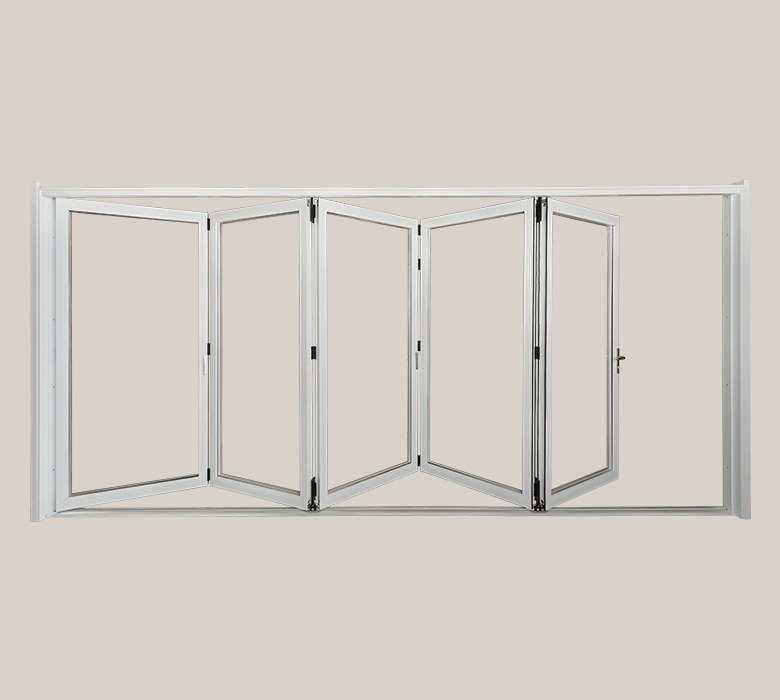
 WinDoor
Luxury aluminum impact windows and doors with industry-leading panel sizes and corner configurations.
9 impact models Manufacturing since 2001
Explore WinDoor
, and EAS
WinDoor
WinDoor
Luxury aluminum impact windows and doors with industry-leading panel sizes and corner configurations.
9 impact models Manufacturing since 2001
Explore WinDoor
, and EAS
 EAS
Eastern Architectural Systems
Fort Myers manufacturer of vinyl and aluminum impact windows and doors, makers of the Bertha line.
18 models across 6 product lines
Explore EAS
, every major South Florida tier.
EAS
Eastern Architectural Systems
Fort Myers manufacturer of vinyl and aluminum impact windows and doors, makers of the Bertha line.
18 models across 6 product lines
Explore EAS
, every major South Florida tier. - Read the related cluster posts. Compare options for openings in plywood, shutters, or impact windows. Understand the insurance side in what hurricane insurance actually covers. Plan for the outage in two weeks without power. Address the yard in yard, trampoline, and tornado. Return to the parent guide at hurricane prep for Florida homeowners.
- Review financing options. Compare PACE, HELOC, and home equity loan on our financing page before committing to a multi-year sequence.
- Time the work to the building code calendar. Permits issued before December 31, 2026 fall under the 8th Edition; later permits under the 9th. Matters most for Central Florida homeowners.