
A florida hurricane power outage is what your neighbors will be telling stories about ten years from now, not the storm itself. The wind passes in a long afternoon. The aftermath stretches for a week, two weeks, sometimes longer, and that is the part of a hurricane that wears people down. The heat. The mosquitoes through the open windows. The fridge full of food going off. The car you sleep in because it has air conditioning and your bedroom does not.
Hurricane Andrew left parts of Miami-Dade County without power for up to six weeks in 1992, per the NHC Tropical Cyclone Report. Irma in 2017 took two weeks across most of South Florida. Charley and Frances left inland counties dark for around a month in 2004. This article is for the homeowner who has heard "stock water and batteries" a hundred times and still has no idea what an extended outage actually feels like. We install impact windows for a living, but this is not a pitch. The houses that came through Andrew intact still went six weeks without power, and that is the problem we are talking about today.
"It's never the storm, it's the aftermath"
Florida natives have a phrase for this: it's never the storm, it's the aftermath. The hurricane is loud and frightening for a few hours. Then it's quiet. Then you walk outside and realize you have no idea when normal life is coming back.
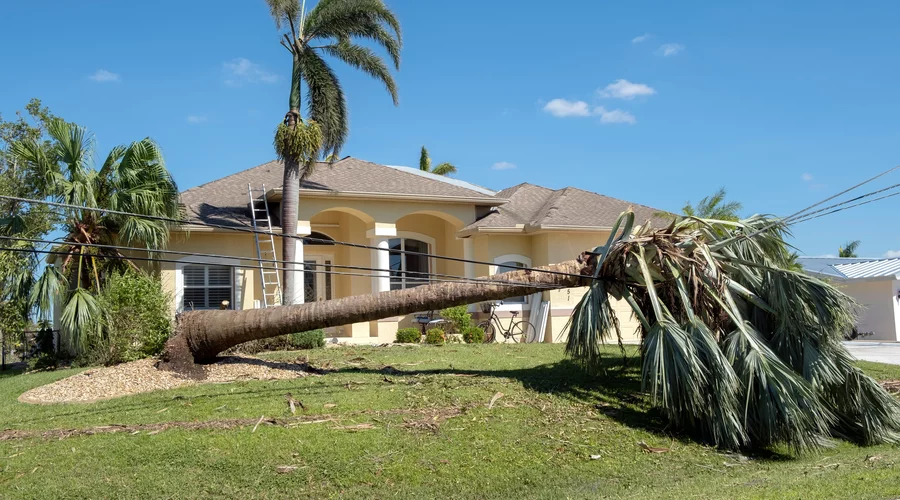
The grid in South Florida is a mix of overhead and underground lines. Overhead lines come down with branches and flying debris. Substations flood. Transmission towers buckle in Cat 3 winds. Even when your house is fine, the path back to your house from the power plant might involve a dozen broken links, and crews work them in priority order: hospitals, water plants, fire stations, then dense neighborhoods, then the rest. If you live somewhere down the priority list, you wait.
FPL's outage map is the resource most South Florida homeowners refresh obsessively after a storm. The estimated restoration times on it are aspirational the first 48 hours and start to firm up after that. Bookmark it before hurricane season. The day a storm is named is not the day to figure out where the link is.
Plan for seven days minimum. Plan for fourteen if it is a major storm. The reason newcomers panic in their second hurricane season is that nobody told them the wind was the easy part.
What two weeks of 90 degrees feels like inside your house
Here is the part the checklists do not capture.
By day two, your house is the same temperature inside as outside. In June, July, August, that is 88 to 95 degrees with 70 percent humidity. Cement-block walls hold heat. The air does not move. You sweat lying still. You sweat in your sleep, which is the part that breaks people, because four nights without real sleep make every other problem worse.
You open the windows. Now mosquitoes get in. Florida has several species that bite during the day, including the aggressive Aedes aegypti, and standing water in every yard breeds them in waves. Without intact screens, the mosquitoes win. People wake up covered in welts.
You cannot shower because the water heater is electric, and after about a day even the cold tap runs warm because the well pump or municipal pressure has degraded. Sponge baths with a wet rag and a bowl of water from the bathtub reservoir become routine.
The fridge stops being a fridge after about four hours. The freezer holds for a day or two if you packed it tight. Then you are eating room-temperature pasta out of a can and tossing meat in trash bags that smell terrible by day three because the trash trucks are not running either.
The CDC tracks heat-related illness during power outages as one of the leading causes of indirect hurricane deaths, especially among elderly residents and people with heart conditions. After Irma, more people died from heat and CO poisoning in the aftermath than from the storm itself. Plan for the heat the same way you plan for the wind.
A phrase from one of our customers stuck with us: "Surviving the Florida summer like it's 1847." That is roughly what it is.
The cheap things that matter most
Most of the gear that makes an outage tolerable costs less than dinner for two. Buy it in May, not the day a storm is named. Stock in May.
Battery-powered fans. The single best cheap purchase. A 20-dollar Ryobi or O2COOL fan runs all night on D-cells or a USB power bank, points at your face, and turns 92-degree air into something you can sleep through. Buy one per person. Buy spare batteries.
Frozen gallon water jugs. Fill empty milk jugs and gallon containers and freeze them flat for a week before hurricane season. They do three jobs at once: thermal mass that extends fridge life from four hours to twelve, cold compresses against the back of your neck when the heat is unbearable, and drinking water as they melt. One gallon per person per day for at least seven days.
Baby wipes. When you cannot shower for a week, two big tubs of unscented baby wipes are the difference between feeling human and not. They also work for cleaning hands before eating.
Manual can opener. Most kitchens own only an electric one. The day power goes, every can of beans, soup, and tuna becomes inaccessible. A 4-dollar hand-crank opener belongs in your hurricane kit.
Battery banks for phones. Two 20,000-mAh banks per phone-using adult, charged in the days before. Phone signal often comes back before grid power.
A battery-powered lantern. Lanterns light a whole room; flashlights light a beam. After three nights of holding a flashlight in your teeth while you make dinner, you will buy a lantern. Buy it now.
A propane camping stove. A 40-dollar Coleman two-burner stove on the back porch lets you make coffee, heat soup, and cook the meat you are about to lose. Never use it indoors. CO again.
Citronella candles, DEET spray, and screen patches. Spray, candles on the patio, and a roll of screen-repair tape for the holes mosquitoes already found in your existing screens.
Cash. ATMs and card readers go down. Two hundred fifty dollars in twenties and small bills in a plastic bag is the number that comes up over and over from people who have been through it. Waffle House and a few gas stations will be cash-only for days.
That is most of the cheap layer. None of it is dramatic. All of it matters.
Generators: the single biggest quality-of-life upgrade
If you can afford one, a generator is the upgrade that flips a power outage from miserable to inconvenient. Veterans of two or three storms tend to buy one and never look back. The question is what kind, what size, and how to use it without killing yourself.
Portable generators (the entry point)
A portable inverter generator in the 2,500 to 3,000-watt range, costing roughly 600 to 1,200 dollars, will run a small window AC unit, a fridge, a fan or two, and charge phones. That is enough to make one room of the house tolerable, keep the food cold, and sleep through the night. Honda, Yamaha, and Predator (Harbor Freight) make models in this range. Inverter models run cleaner, quieter, and use less fuel than older open-frame units.
A bigger 5,000 to 7,500-watt unit (1,000 to 2,000 dollars) will run a window AC, fridge, freezer, microwave, lights, and several outlets. That is most of a comfortable life with rationing.
The catch is fuel. A 3,000W generator under load burns roughly half a gallon per hour. Twelve hours a day for ten days is sixty gallons of gasoline. You cannot store sixty gallons of gas in a Florida garage in June. The realistic plan is fifteen to twenty gallons in approved cans, rotated through your car or boat every three months so the fuel does not gum up. A fuel stabilizer like Stabil extends shelf life. After a storm, expect long lines at every working gas station.
Whole-home standby generators
A permanently installed standby generator (Generac, Kohler, Cummins) tied to natural gas or a buried propane tank and an automatic transfer switch is the fortress build. It runs the whole house, kicks on within seconds of an outage, and can run for weeks if you have a 500 to 1,000-gallon propane tank buried in the yard. Cost is 8,000 to 18,000 dollars installed depending on size and fuel type. For someone who has lived through Andrew or Irma in their current house, it is often the next big upgrade after impact windows. Our five-year plan to harden a Florida home covers where it fits in the priority list.
Battery backup systems
Wall-mounted home battery systems like the Anker SOLIX, EcoFlow Delta Pro, or Tesla Powerwall are the newest option. They run silently, work indoors safely (no CO), and can be paired with solar panels to recharge during the day. A 5 to 10 kWh system costs 4,000 to 12,000 dollars. The advantage is that they survive flooding (wall-mounted, no fuel stored on site), the disadvantage is capacity: most systems run essential loads for half a day to two days, not two weeks. They pair beautifully with solar.
The generator safety line
Here is the rule, all caps in our heads: never run a portable generator inside the house, in the garage, or under an open window. Carbon monoxide kills. The CDC documents generator-related CO deaths every hurricane season, and most of them happen in the first 72 hours after a storm when people are tired and not thinking clearly. Run portables at least twenty feet from the house, with the exhaust pointing away from any window, door, or vent. Buy a battery-powered CO detector and put it in the bedroom.
The other rule: never plug a generator directly into a wall outlet to power the house ("backfeeding"). It can kill the lineman working to restore your block. Use a transfer switch installed by a licensed electrician, or run extension cords directly from the generator to specific appliances.
Don't fill the freezer with meat in June
This one runs counter to every grocery-shopping instinct in May. The temptation is to stock up before hurricane season: a freezer full of chicken thighs, ground beef, ribs, fish. If a storm hits and you lose power for a week, all of it spoils. People throw away three hundred dollars of meat every September.
The CDC food safety guidance is the standard: a full freezer holds for about 48 hours unopened, a fridge for 4 hours. After that, perishables enter the danger zone for bacteria growth. Anything that has been above 40 degrees for more than two hours should be tossed.
The smarter June pantry is shelf-stable. Canned beans, canned tomatoes, dry pasta, rice, peanut butter, tortillas, jerky, condensed milk, peanut butter and jelly, oatmeal, instant coffee, snack food, MREs if you want to spend the money. Eat the meat in the freezer down to a week's worth before any named storm. If a hurricane is forecast, cook everything frozen in the first 24 to 48 hours after the power goes and eat it as a one-week feast. Grilled chicken, pulled pork, fish tacos, all consumed before they spoil.
A small chest freezer with a generator-powered top and a stack of frozen gallon jugs inside is the workaround for households that want to keep frozen food through an outage. For most people, the simpler answer is: don't stock the freezer in June.
Mosquitoes, screens, and the open-window problem
Mosquitoes deserve their own section in any honest article about florida hurricane power outage life. Open the windows for airflow and within an hour the room fills with bugs. Florida hurricanes leave standing water everywhere, and the mosquito population explodes within three days.
Audit your screens before hurricane season. Walk every window with a flashlight at night, look for holes and torn corners, and patch with screen-repair tape (about 8 dollars). Pet damage and wear are the usual culprits.
Box fans in window frames. A box fan blowing outward from a window creates positive pressure that pushes mosquitoes back. Combined with a working screen, it is surprisingly effective.
Battery-powered Thermacell devices. A Thermacell repeller with butane cartridges creates a 15-foot zone of protection. It is the workhorse for screened porches and bedrooms.
Standing water audit. The day after the storm, walk the yard and dump every container that holds water. Plant saucers, kid toys, tarps with sagging puddles. Mosquitoes breed in a tablespoon.
The deeper fix is a house that does not need the windows open. Whole-home generators and battery backups solve that.
When the grid comes back
Restoration is uneven. One side of a street comes back; the other side waits four more days. Crews work the priority list, then the easy fixes, then the hard ones. If your house is on a long lateral or behind a downed transmission line, you are at the back.
When power flickers back, do a few things.
Check your appliances slowly. A cold start after a long outage stresses motors. Run the AC for ten minutes, then off for an hour, then back on.
Throw out anything in the fridge that has been warm. When in doubt, toss. Food poisoning costs more than a tub of yogurt.
Reset GFCI outlets. Hurricane debris and water often trip GFCIs in bathrooms, kitchens, and outdoor outlets. Press reset.
Watch out for storm-chaser scammers. Out-of-state contractors with no Florida license drive door to door offering roof repairs, tree work, and fence replacements at "today only" prices. The licensed local contractors are too busy to door-knock; they have a six-month backlog. Verify a contractor's license at myfloridalicense.com before signing anything. Our companion piece on hurricane insurance coverage covers what a legitimate post-storm claim process looks like.
FEMA disaster recovery resources, including individual assistance grants, SBA loans, and HMGP funding, come online once a federal disaster declaration is in place. Register early. Document everything with photos before you start clearing debris.
How this fits into the broader prep picture
A florida hurricane power outage is one chapter of a much bigger preparedness story. The water and food and sanitation logistics are their own problem; we cover those in When the Grid Goes Down: Water, Food, and Sanitation in a Florida Power Outage. The decision of whether to ride out a storm or evacuate (which changes the outage equation entirely) is in Evacuate or Shelter in Place. And the bigger fortress build, where a whole-home generator sits next to impact windows and a hurricane-rated roof, is in The Five-Year Plan to Harden a Florida Home.
If you are new to Florida and reading this for the first time, start with the hub guide on hurricane prep for Florida homeowners or the first-season newcomer guide. The cluster covers everything from evacuation zones to the trampoline-as-debris problem.
Miami-Dade County and Broward County homeowners are reading this with Andrew, Wilma, and Irma in their lived memory. Newcomers in those counties: take the veterans seriously when they say plan for two weeks. They have done it. They know.
Next Steps
- Buy the cheap layer this month. Battery fans, frozen water jugs in the freezer, baby wipes, manual can opener, battery banks, propane camp stove, citronella candles, screen-repair tape. Total cost under 250 dollars.
- Decide on a generator strategy by May. Either buy a portable inverter and a fuel storage plan, or budget for a whole-home standby and get on a contractor's calendar (lead times stretch in late spring).
- Audit your screens and seal mosquito gaps. Walk every window at night with a flashlight before hurricane season. Patch holes.
- Bookmark FPL's outage map and the FEMA disaster recovery page. Save them in your phone for fast access during and after a storm.
- Read the rest of the cluster. When the Grid Goes Down: water, food, sanitation covers the logistics layer in depth. The Five-Year Plan to Harden a Florida Home covers where generators and other fortress upgrades fit in the priority order.
- If you are thinking about long-term home hardening, request a free in-home estimate and we will walk you through what makes sense for your specific house, exposure, and budget. The My Safe Florida Home program covers some of the cost for qualifying homeowners.