
What Impact Windows Are Designed to Do (and What They're Not)
If you own impact windows in Florida, you own one of the most effective hurricane protection systems ever engineered. During Hurricanes Helene and Milton (2024), zero homes built to modern Florida Building Code standards were destroyed. The impact windows, doors, and structural connections that the code requires are directly responsible for that result.
But "not destroyed" and "completely dry inside" are two different things.
Impact windows are engineered to solve the most dangerous problem a home faces during a hurricane: envelope breach. When a standard window shatters from flying debris, wind enters the home and creates 30-60 PSF of internal pressure. Combined with external roof suction of 40-80 PSF, the result is 70-140 PSF of total uplift on the roof structure, which is enough to tear the roof off from the inside. This cascade destroyed over 63,500 homes during Hurricane Andrew (1992). Impact windows eliminate it.
What impact windows are not designed to do is keep every drop of rain out during a 12-16 hour hurricane with sustained winds at or near their rated design pressure. This isn't a defect. It's a physics limitation. And it caught thousands of Florida homeowners by surprise during Hurricane Irma.
What Hurricane Irma Taught Us
Hurricane Irma struck Florida in September 2017 as the first major hurricane to test modern impact windows at scale across the entire state. Irma tracked through all of Florida, affecting both coasts, and produced sustained winds for an unusually long duration.
The structural results were exactly what the building code promised. HVHZ-compliant homes in Sunny Isles Beach and Fort Lauderdale sustained minimal damage. Impact windows held. Doors held. Envelope integrity was maintained. Insurance payouts averaged 30% higher for non-compliant homes.
But across South Florida, homeowners with brand-new, fully code-compliant impact windows reported something unexpected: water on their window sills, pooling on their floors, and in some cases running down interior walls. Impact windows that had passed every certification test were allowing water through.
What Happened
Irma produced sustained hurricane-force winds for approximately 16 hours over the Florida peninsula. The laboratory test that certifies an impact window's water resistance (TAS 202 for HVHZ products, NAFS/AAMA for others) applies water and pressure for a fraction of that duration. And the water test pressure is only 15% of the product's rated design wind pressure.
During those 16 hours, Irma's sustained winds did something the lab test doesn't simulate:
Gaskets and weatherstripping fatigued. Rubber and EPDM seals are designed to compress against the frame and maintain a watertight seal. Under sustained wind pressure, they compressed, heated (from friction and deformation), and gradually lost elasticity. By hour 8 or 10, seals that were performing fine in hour 1 had softened enough to allow water through.
Frames deflected under sustained load. Under constant wind pressure, aluminum and vinyl frames deflect slightly. This deflection opens micro-gaps at corner joints and at the junction between the frame and the glass panel. These gaps don't exist when the window is unloaded. They appear only under sustained stress, and they close again when the wind stops, making them invisible to post-storm inspectors.
Weep holes reversed. Impact windows and doors include weep holes at the bottom of the frame to drain water from the track to the exterior. During Irma, sustained wind pressure pushed water inward through the same holes designed to drain it outward. The drainage system that works fine in a normal thunderstorm becomes a water entry pathway during a hurricane.
The result: impact windows survived structurally (no envelope breach, no glass failures, no frame separations) but leaked water through stressed seals, deflected joints, and reversed weep holes. The building code prevented structural failure. It did not prevent water on the floor.
Why the Lab Test Doesn't Catch This
The gap between lab testing and real hurricane performance has been documented extensively by both university researchers and FEMA.
The Pressure Gap
The current water penetration test applies pressure at only 15% of the product's rated design wind pressure. A window rated DP-50 (adequate for approximately Category 5 conditions) is water-tested at just 7.5 PSF. During an actual hurricane, that window faces 50 PSF or more while rain is being driven horizontally into it.
That's a 6-7x gap between the test condition and the real condition.
The Duration Gap
Lab pressure cycles run for minutes. Irma's hurricane-force winds lasted 16 hours. The difference matters because water intrusion is progressive. Seals compress over time. Frames deflect further under sustained load. Water accumulates in tracks and overwhelms drainage capacity. A window that stays dry for 15 minutes of cyclic pressure may leak steadily after 6 hours of sustained load.
The Turbulence Gap
Lab tests use static or slowly cycling pressure (smooth ramp up, hold, ramp down). Real hurricanes produce turbulent, fluctuating pressure fields that oscillate at 0.1 to 1.0 Hz. These rapid oscillations vibrate frame components, flex glass panels, and open transient water pathways that remain sealed under smooth pressure loading.
FIU's Wall of Wind facility (the only U.S. university facility capable of generating Category 5 conditions at full scale) confirmed this: water intrusion occurred at all wind speeds and all window and door configurations tested. Significant leaking happened at just 26% of rated design pressure. The products were performing as designed for debris impact and structural integrity. They were simply not designed for the water conditions a real hurricane delivers.
The Location Gap
UF's Wind-Driven Rain Climatology study (2021-2022) mapped wind-driven rain intensity across Florida and found dramatic variation. A home in the Keys faces fundamentally different rain conditions than a home in Jacksonville. Coastal homes at the tip of a barrier island experience rain rates that inland homes 20 miles away never see.
But the current water test uses a uniform wetting rate of 5.0 gallons per hour per square foot regardless of where the product will be installed. A window going into a home on Key West is tested at the same rain rate as one going into a home in Gainesville. This means that products meeting the test standard may provide adequate water resistance in one location and inadequate resistance in another, with no way for the homeowner to know the difference from the product label.
What You Can Do About It
The testing standards will improve over time (the 9th Edition FBC is expected to increase water test pressures). But you don't have to wait. The most effective steps are things you can do today.
Maintenance: Your Best Defense
Most water intrusion through impact windows is preventable with regular maintenance. The components that allow water through are consumable parts designed to be replaced periodically, not permanent seals that last forever.
Replace weatherstripping every 7-10 years. Weatherstripping is the compressible seal between the operable sash and the frame. Over time and through Florida's heat, it hardens, loses its elasticity, and no longer compresses tightly enough to keep water out under pressure. Don't wait until you see visible deterioration. The performance degrades gradually, and by the time weatherstripping is visibly cracked, it's been underperforming for years.
Use EPDM or silicone-based weatherstripping, not PVC-based. PVC hardens faster in Florida's UV exposure and high temperatures. South-facing windows degrade fastest.
Clear weep holes at least once a year. Weep holes are the small openings at the bottom of the window or door track that allow water to drain to the exterior. Over time, they accumulate salt crystals, insect debris, dirt, and paint. Blocked weep holes mean water that enters the track has nowhere to go except over the sill riser and into your home. Clean them with a thin wire, pipe cleaner, or compressed air before each hurricane season.
Re-caulk the exterior frame perimeter every 5-7 years. The sealant bead between the window frame and the wall opening (stucco, CBS, wood) degrades from UV exposure, temperature cycling, and building settlement. Cracked or peeling caulk allows water to bypass the window entirely and enter through the wall cavity. This is the most common source of what homeowners perceive as "window leaking" that is actually wall leaking. Use a quality exterior-grade polyurethane or silicone sealant.
Inspect after every hurricane, even if windows look fine. A hurricane can stress seals, shift frames by fractions of an inch, and create micro-damage that doesn't show visually but affects water performance in the next storm. Walk every window after a significant wind event. Look for:
- Water stains on the interior sill or wall below the window
- Gaps between the sash and frame when the window is locked
- Weatherstripping that no longer springs back when pressed with a finger
- Caulk separation at the exterior frame perimeter
Installation Quality Matters More Than Product Brand
Two identical windows from the same manufacturer can perform very differently based on how they're installed. The quality of the rough opening preparation is at least as important as the product itself.
Sill pan installation. A sill pan is a waterproof tray beneath the window or door threshold that catches any water penetrating the frame and directs it to the exterior through weep holes. Not all installations include a sill pan. Without one, any water that gets past the frame or track goes directly into the wall cavity and subfloor, causing hidden mold and structural damage that may not be discovered for years.
If you're getting new impact windows or doors installed, ask your installer whether sill pans are included in the scope. If you have existing windows and aren't sure whether sill pans are present, a qualified installer can inspect from the exterior.
Continuous sealant bead. The sealant between the window frame and the rough opening should be a continuous, unbroken bead all the way around the perimeter. Spot-applied sealant (a dab every 6 inches) leaves gaps that water finds. This is an installation quality issue, not a product issue, and it's invisible once the window is in the wall.
Proper flashing. Flashing tape and membrane around the rough opening create a secondary water barrier between the window frame and the wall assembly. In a properly flashed installation, water that gets past the frame perimeter is caught by the flashing and directed to the exterior rather than into the wall cavity. Current FBC requires flashing, but the quality of execution varies.
Product Selection
When choosing impact windows, features that improve water resistance are worth asking about:
Design pressure rating. A window with a higher DP rating was tested at a higher absolute water pressure, even at the same 15% ratio. A DP-90 window is water-tested at 13.5 PSF; a DP-50 window is tested at 7.5 PSF. The higher-rated product also has a sturdier frame that deflects less under sustained load, maintaining tighter seals for longer.
Frame material. Vinyl frames have fusion-welded corners (monolithic joints with no air gaps). Aluminum frames use mechanical corner connections that can open microscopic pathways under sustained deflection. Both perform well when new; vinyl's welded corners may have a slight long-term advantage for water resistance.
Sill riser height on sliding glass doors. The sill riser is the raised lip at the interior edge of the bottom track. A taller riser holds more water in the track before it overflows into your home. Not all sliding glass doors have the same riser height. For a deep dive into SGD water performance, see our guide to why sliding glass doors leak during hurricanes.
Consider Companion Protection for Your Most Exposed Openings
FIU's Wall of Wind testing found that accordion shutters installed over windows and sliding glass doors reduced the pressure differential on the glazing by 6-14% and reduced water intrusion volume through non-impact windows by 77-87%. Even when impact glass is intact and performing its structural role, the shutter provides a secondary rain shield that dramatically reduces the volume of wind-driven rain reaching the window seals.
This is the hybrid approach that many South Florida homeowners are adopting: impact windows for permanent structural protection and daily benefits (energy savings, noise reduction, UV blocking, security), plus accordion or roll-down shutters over the most exposed openings (typically south- and east-facing sliding glass doors and large picture windows) for additional water management during hurricanes.
Window Type and Water Vulnerability
Not all window styles are equally susceptible to wind-driven rain. The vulnerability correlates directly with the number of moving parts and the complexity of the seal system.
| Window Type | Water Vulnerability | Why |
|---|---|---|
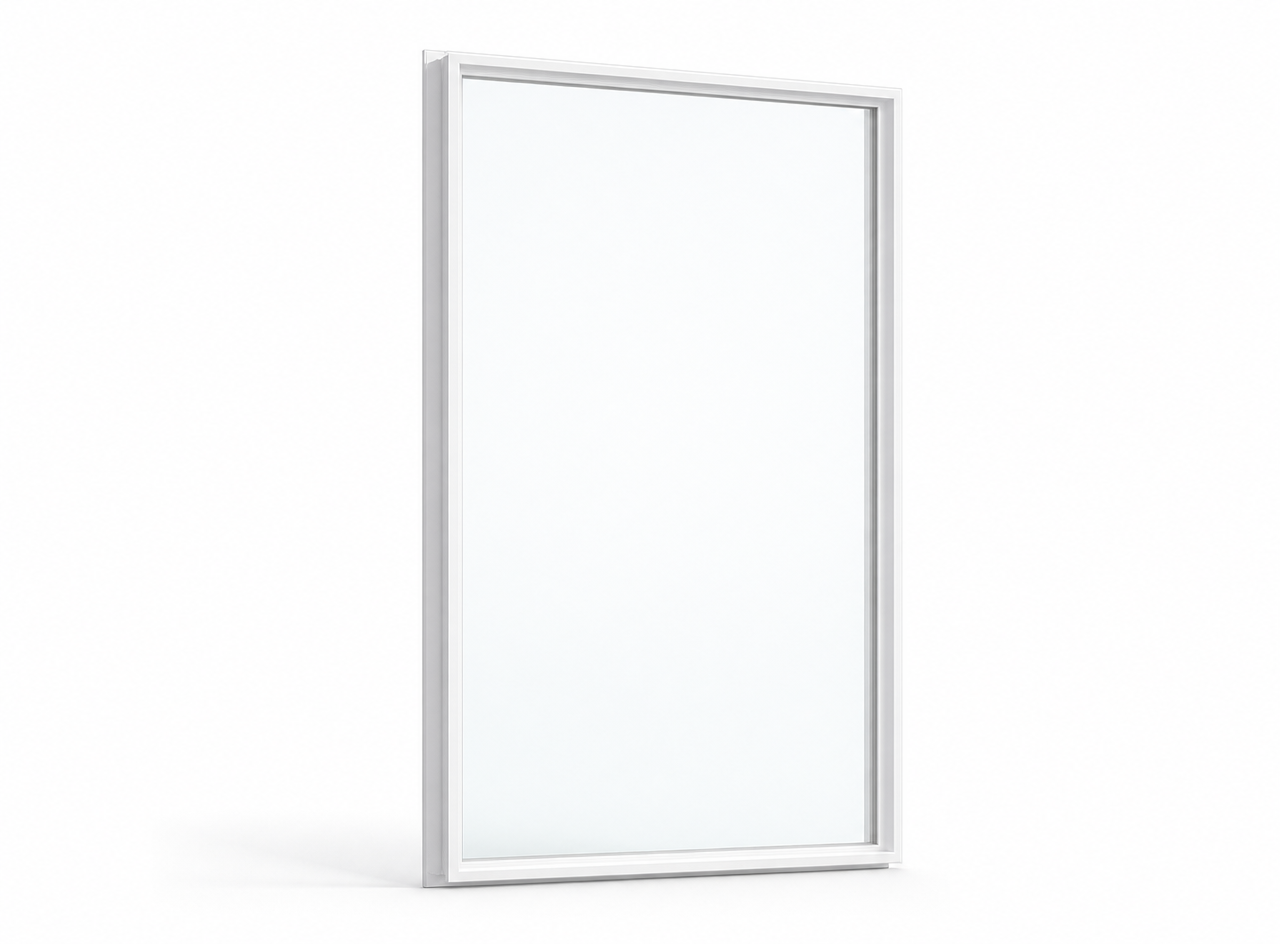
| Picture/Fixed | Lowest | No moving parts, no operable seals, structural glazing or gaskets only |
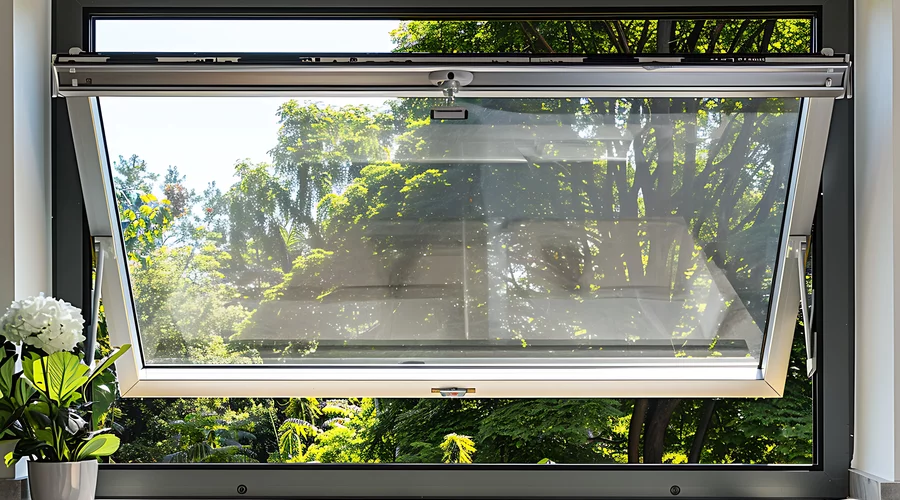
| Awning | Low | Top-hinged; gravity assists seal compression; rain sheds away from opening |
| Casement | Low-Moderate | Side-hinged; multipoint locks maintain compression; decent seal performance |
| Single-Hung | Moderate | Bottom sash meets frame at horizontal joint; meeting rail is the primary vulnerability |
| Horizontal Slider | Moderate-High | Similar to sliding glass doors; track system with inherent gaps for panel travel |
| Sliding Glass Door | Highest | Largest track system, widest span, most complex seal geometry, biggest frame deflection under load |
If water intrusion is a primary concern, minimizing the number of operable windows (especially horizontal sliders) and maximizing fixed glass where ventilation isn't needed reduces your exposure. A home with picture windows everywhere except the bedrooms and bathrooms (where operable single-hung or casement windows provide ventilation) will experience less water intrusion than a home with sliders throughout.
 PGT · WinGuard Aluminum Series
PGT WinGuard Aluminum Picture PW7720A
Aluminum impact fixed picture window on the WinGuard 7720 picture platform for unobstructed view installations. Diamond Glass, LMI for HVHZ.
 ECO · Eco-Guard Architectural Fixed Window Series
Eco-Guard Architectural Fixed Window Series 70
Entry aluminum impact fixed window, 2-1/8 in. frame, +60/-60 psf, LMI, up to 32 x 104 in.
 ES Windows · Elite Series
ES Windows Elite ES-EL150 Fixed Window
Aluminum impact fixed window on a 2-15/16 inch frame, matching the rest of the Elite residential line for clean sightline continuity.
What's Coming in the 9th Edition FBC
The Florida Building Commission has funded research across multiple cycles to address the water intrusion gap. The 9th Edition FBC (expected late 2026 or 2027) is likely to include several changes:
Higher water test pressures. The current 15% of DP is expected to increase, likely to 20-25% initially. This is the most probable near-term change, driven by two FEMA Mitigation Assessment Team recommendations (Hurricane Michael P-2077 and Hurricane Ian P-2342), a legislative mandate (HB 1021), and experimental evidence from FIU and UF. Products certified under the 9th Edition will offer measurably better water performance.
Climate-adjusted testing. UF and Cornell University are developing location-specific wind-driven rain intensity maps for Florida. If adopted, products may need different water resistance ratings depending on where they're installed, similar to how wind speed maps drive structural requirements. A window installed on Key West might need a higher water resistance rating than the same window in Orlando.
Performance-based tiered framework. Rather than a binary pass/fail, the FIU study proposed a tiered system: no water ingress for a 10-year storm, limited measured ingress for a 50-year storm, and focus on structural integrity (with some water accepted) for a 500-year design-level hurricane. This acknowledges the physics: zero water intrusion during an extreme hurricane is not achievable with current technology. Honest, measurable performance standards would replace the current fiction that a test at 15% of DP predicts real-world watertightness.
Keeping Perspective
A few ounces of water on a window sill during a Category 4 hurricane is not the same kind of problem as a shattered window, a breached building envelope, and a roof that separates from the walls.
Impact windows have a documented track record of preventing catastrophic structural failure. Zero post-FBC homes were destroyed during Helene and Milton. The envelope breach cascade that wiped out 63,500 homes during Andrew has been effectively eliminated by modern impact glazing.
Water intrusion through intact, properly functioning impact windows is a maintenance and inconvenience issue, not a structural safety issue. It's real, it can cause cosmetic damage and mold if not managed, and the testing standards should be improved to better predict it. But it is a fundamentally different category of problem than what happens when a window fails entirely.
The honest answer to "do impact windows keep water out during a hurricane?" is: they keep the building envelope intact, which is the thing that saves your home. They keep most water out under most conditions. They may allow some water through seals and tracks during a sustained, intense hurricane. And the gap between "most" and "all" is something you can meaningfully reduce through regular maintenance.
Your Maintenance Checklist
Print this, tape it inside your utility closet, and run through it every May before hurricane season:
- Weatherstripping: Press with a finger on every operable window. If it doesn't spring back firmly, schedule replacement. Replace proactively every 7-10 years.
- Weep holes: Use a wire or pipe cleaner to clear each weep hole at the bottom of every window and door track. Check for salt buildup, insect nests, or paint.
- Exterior caulk: Walk the exterior of your home and inspect the sealant bead around every window and door frame. Re-caulk any cracked, peeling, or separated sections.
- Track drainage: Run water into the bottom track of each sliding window and door. Watch the weep holes. Water should flow to the exterior within seconds. If it pools, the drainage is obstructed.
- Lock engagement: Lock every operable window and check that the sash pulls tight against the frame. If there's play or the lock doesn't fully engage, the hardware may need adjustment or replacement.
- Frame inspection: Look for cracks, chips, or discoloration in the frame finish (powder coating on aluminum, surface on vinyl). Damaged finishes allow moisture to contact the frame material and accelerate degradation.
- Sill inspection: Check the interior sill for water stains from previous storms. Stains indicate an intrusion pathway that may need professional attention.
Each item takes 1-2 minutes per window. For a 15-window home, the entire checklist takes about 30 minutes. That 30 minutes is the most effective thing you can do to reduce water intrusion during the next hurricane.
Next Steps
- Run the maintenance checklist above before hurricane season. Most water intrusion is preventable with proactive seal maintenance.
- If you're buying new windows, ask about DP rating, sill riser height, and weatherstripping material. See our impact windows cost guide for pricing by window type.
- For sliding glass doors specifically, see our detailed guide on why sliding glass doors leak and what's changing.
- If water intrusion is a top concern, consider accordion shutters over your most exposed openings for the additional 77-87% reduction in water volume documented by FIU.
- Get a free estimate that includes a review of your current windows' condition and maintenance needs alongside any replacement recommendations.
- Check your eligibility for the My Safe Florida Home program (free wind mitigation inspection plus grants up to $10,000 for qualifying improvements).