
Installing impact windows during hurricane season sounds, to many Florida homeowners, like fixing the roof in the rain. Every June we hear the same reasoning: the season has started, so the project waits until November. That reasoning gets the risk exactly backwards, and it quietly costs the homeowners who follow it a full season of protection, a calendar year of deductible exposure, and often a spot in line ahead of the post-storm rush.
Here is the honest version of the timing question, from a crew that installs through every month of the season.
The Short Answer
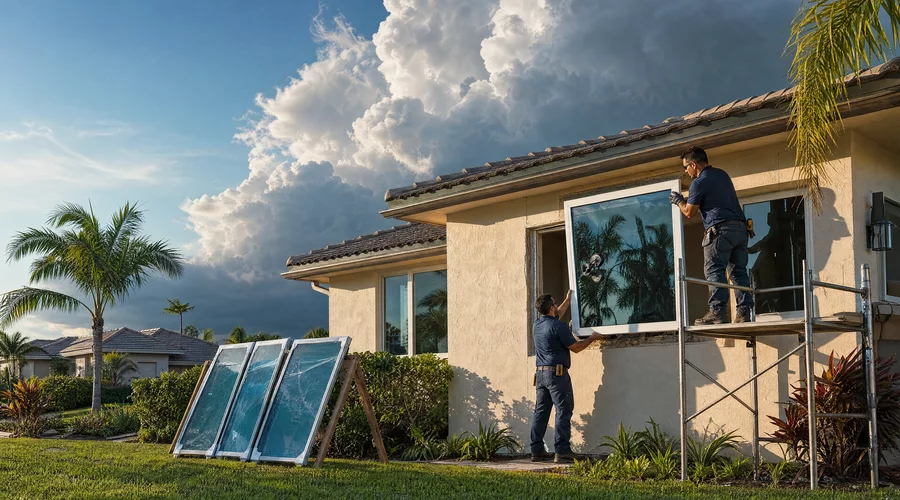
There is no operational reason to avoid mid-season installation. Impact window replacement is a one-opening-at-a-time process: the old unit comes out, the new unit goes in, and the opening is closed and sealed the same day. Your home is never left exposed overnight. Crews across South Florida install from June through November without interruption, and manufacturers ship all season. The constraint that actually matters is not the calendar. It is lead time, and lead time is exactly what a landfall destroys.
The Real Timeline: Order to Installed
| Stage | Typical duration | What controls it |
|---|---|---|
| Measure + contract | A few days | Your schedule |
| Manufacturing | 4-8 weeks (Florida-made) to 10-16+ (imported) | Where your product line is built |
| Permit review | Days to ~6 weeks (runs in parallel) | Your municipality; 30-business-day statutory cap |
| Installation | 1-3 days for most homes | Opening count and install type |
| Final inspection | Same-day to ~1 week | Virtual/private vs. county queue |
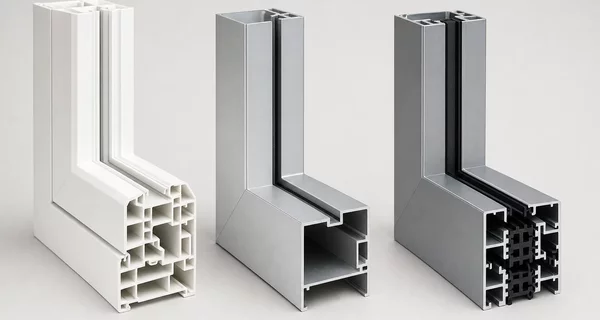
The manufacturing row deserves the detail, because "how long do impact windows take" has no single answer — it depends on where the line is built. Florida-domestic manufacturers building in the Miami area typically run 4-8 weeks. PGT's WinGuard lines out of Venice run 6-12. Imported lines (ES Windows glass ships from Tecnoglass's Barranquilla plant) run 10-16 weeks of production plus two to four weeks of ocean freight and customs. None of that makes one product better than another; it makes the ordering date matter differently by brand, which is exactly the conversation to have at the estimate.
Order in early August and a typical whole-home project on a Florida-made line installs in September, inside the statistical heart of the season (August 15 through October 15, with the historical peak on September 10). That is not a reason to skip the project; it is the reason to compress the front end. Every week between "thinking about it" and a signed order is a week added to the exposed side of the timeline. Our guide to preparing your home for the season covers what to do while you wait for glass.
Two scheduling realities are worth knowing. Manufacturing lead time is the long pole, and it stretches as the season progresses and orders stack up. And permits are municipal, so a Coral Springs project and a Miami project ordered the same day can install weeks apart — though less apart than they used to, because a 2024 Florida law (F.S. 553.792, effective January 2025) caps residential permit review at 30 business days, cuts it to 10 business days when the plans carry a private provider's engineer seal, and docks the permit fee 10% for every business day a department runs late. Some jurisdictions beat those caps by a mile: Miami-Dade's FastTrack program turns exact same-size window change-outs around in about 24 hours, and Brevard County's code auto-issues a residential permit if the county misses its 15-business-day review window. An installer who files the permit application immediately after contract, rather than after the windows arrive, removes most of the remaining variance; it is worth asking any bidder which way they sequence it, and whether they use private-provider review when a queue backs up.
One more front-end detail rewards attention: the measure appointment. Windows are manufactured to the measured opening, not the catalog size, so nothing enters the factory queue until a technician has measured every opening. Homeowners who schedule the measure within days of signing start the 4-8 week clock that week; those who let it drift push the whole timeline right by exactly the drift. The same logic applies to selection changes: a glass or color revision after the order enters production restarts that unit's clock, which is why finalizing choices at contract, not during manufacturing, protects your install date.
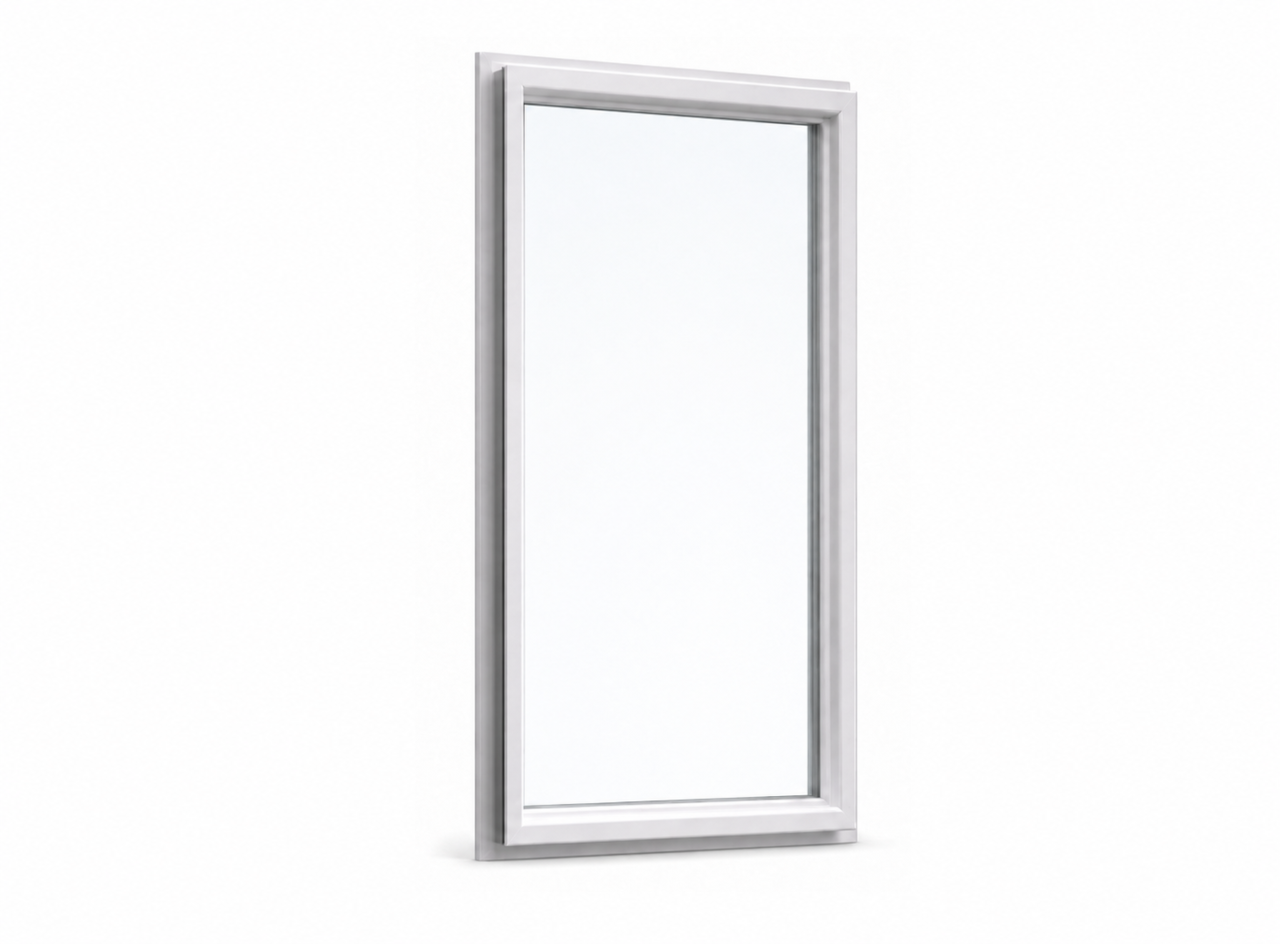
 PGT · WinGuard Vinyl Series
PGT WinGuard Vinyl Picture PW5520
Vinyl impact standard-profile fixed picture window, sized up to 96 by 72 inches for unobstructed view installations. LMI for HVHZ.
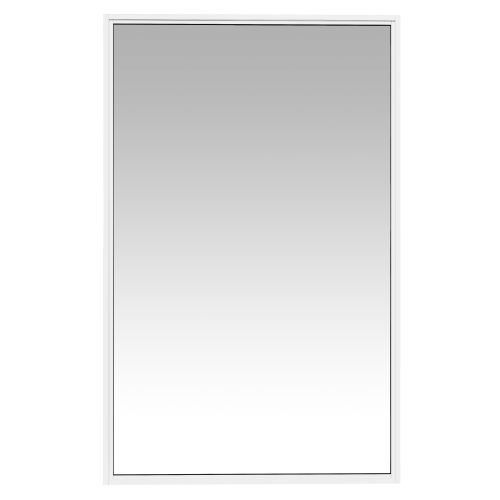
 ECO · Eco-Guard Architectural Fixed Window Series
Eco-Guard Architectural Fixed Window Series 70
Entry aluminum impact fixed window, 2-1/8 in. frame, +60/-60 psf, LMI, up to 32 x 104 in.
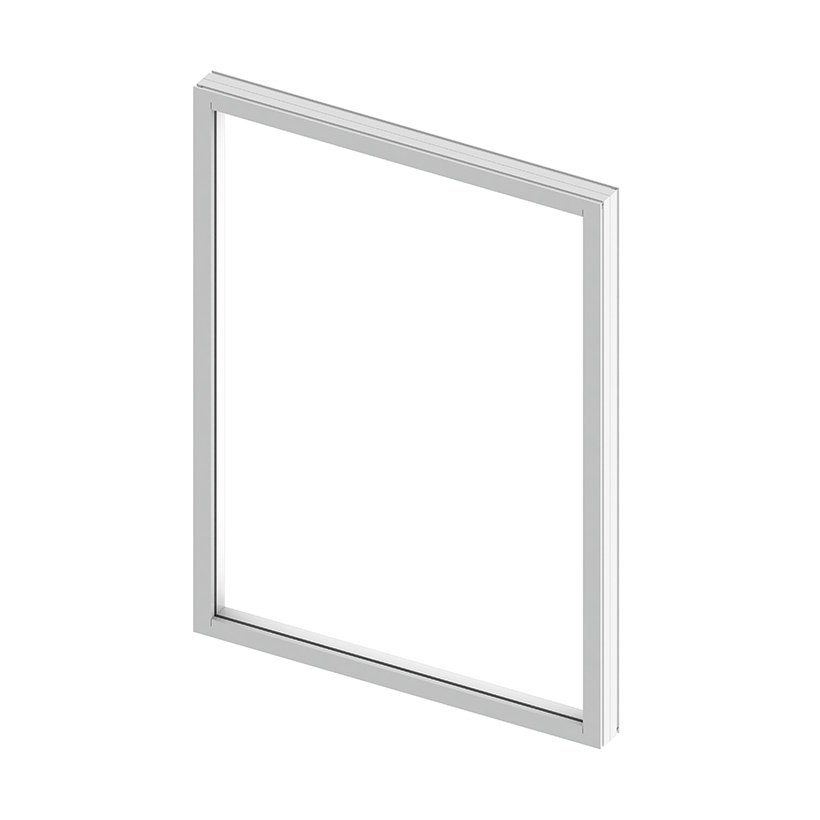
 ES Windows · Elite Series
ES Windows Elite ES-EL150 Fixed Window
Aluminum impact fixed window on a 2-15/16 inch frame, matching the rest of the Elite residential line for clean sightline continuity.
What a Landfall Does to This Timeline
The strongest argument for ordering mid-season is what happens to the market the day after a storm hits anywhere in Florida.
Demand arrives all at once: every homeowner who "meant to get around to it" calls the same week, joined by everyone with actual damage. Installer capacity that ran at normal booking flips to a backlog measured in months. Manufacturers allocate constrained output. Glass, aluminum, and screen material tighten. Post-storm emergency repairs jump the queue, pushing planned retrofits further back. And prices firm up across the board, because every input is suddenly scarce, an effect we documented in our cost guide.
The homeowners who ordered in July install on schedule through that chaos, because their windows were already in the manufacturing queue. The ones who waited for a "calmer" moment discover the calm moment never arrives in a landfall year; it converts directly into next spring.
There is also a scam dimension to the post-storm market: out-of-town crews, pressure tactics, and deposit games arrive with the first news trucks. We wrote a separate field guide to post-storm contractor scams, and the shortest version is that the safest time to pick your installer is before the storm gives you a deadline.
The Deductible Math Nobody Runs
Florida homeowners carry a separate hurricane deductible, usually 2%, 5%, or 10% of the dwelling coverage amount, and it applies per calendar year under Florida Statute 627.701. On a $400,000 dwelling policy:
| Hurricane deductible | Out of pocket before insurance pays |
|---|---|
| 2% | $8,000 |
| 5% | $20,000 |
| 10% | $40,000 |
Read that table against what opening damage actually looks like. A storm that breaches two windows and a slider might produce $15,000-$30,000 in glass, water, and interior damage. Under a 5% deductible on that policy, the first $20,000 is yours. Impact openings shift those odds structurally: the most common failure mode (wind-borne debris through glass, followed by pressurization and water) is the one they are engineered and tested to stop. Avoiding one moderate opening-damage claim can return more than the price difference of the windows themselves, before counting the insurance premium credits that protected openings earn.
The calendar-year mechanics add one more wrinkle worth knowing: the deductible applies once per year across storms, so a second hurricane in the same season draws on whatever remains of it. Protection you install in August covers the balance of this season and every season after. Protection you delay to November starts its value clock a full season later.
The Insurance Clock Runs on Renewals, Not Seasons
Wind-mitigation credits do not wait for hurricane season to end. They apply at your next policy renewal, documented by an OIR-B1-1802 inspection, and renewals fall in every month of the year. Install in September with a January renewal and your credits begin in January. Wait until November and the same renewal may arrive before your final inspection does, pushing the discount a full policy year out. Our wind-mitigation inspection guide covers how the credit documentation works; the operational advice is simpler: know your renewal date, and count backward.
What Happens to Your Project When a Storm Watch Goes Up
Homeowners mid-project worry about this more than any other scenario, so here is exactly how installers manage an approaching system.
At the cone stage (a named storm with Florida in the forecast window, days out), nothing changes for most projects. Crews keep installing; forecast cones five days out shift by hundreds of miles, and stopping work for every cone would idle South Florida's entire trade half the summer.
At watch stage (tropical storm or hurricane conditions possible within 48 hours), active job sites get buttoned up. Whatever openings are mid-swap that day are completed and sealed; no new openings come out. Crews shift to securing sites, staging materials indoors, and helping close out anything weather-sensitive. Your half-finished project is not half-open: it is a house where some openings are new impact units and the rest are your original windows, exactly as protectable by shutters or panels as they were last month.
At warning stage, installation pauses entirely and resumes after the all-clear, typically within days. Windows waiting in the installer's warehouse ride out the storm indoors, insured and unharmed; deliveries from manufacturers pause and restack, which can add a week or two to mid-pipeline orders after a near-miss.
The net effect of a storm scare on an in-flight project is measured in days to a couple of weeks. The net effect of not having started is measured in seasons, which is the asymmetry this whole article is about.
The November Trap
The wait-until-season-ends plan has a second flaw beyond the exposed months: November is not the clean start it looks like. Year-end brings holiday crew schedules and permit offices working shortened weeks through Thanksgiving and December, while every other homeowner who deferred in June arrives in the same queue with the same reasoning. Projects "starting fresh in November" routinely install in February, having saved nothing and skipped nothing except a season of protection and one renewal cycle of premium credits.
The price direction while you wait is not neutral, and in 2026 it has dates attached. Tariffs on imported finished aluminum windows and doors took effect April 2, 2026 at 10%, stacked on the 50% duty on steel and aluminum content in force since June 2025. Tecnoglass, the parent of ES Windows and one of the largest suppliers of impact glass to Florida, announced a 5-6% price pass-through on orders placed from May 2026 forward in its investor guidance; domestic manufacturers, who escaped the finished-product duty but not the raw-aluminum exposure, raised list prices roughly 3-5% in late 2025. Blended input costs for an aluminum impact window are up on the order of 15-20% versus early 2024. This is also why written quotes now carry real expiration dates: on imported lines, most installers re-price anything older than about 30 days. Waiting out the season has never been free, but this cycle it has an invoice. If the true constraint is budget rather than season, the honest fix is a financing structure or a phased opening plan, not a calendar delay.
The Mid-Season Objections, Answered Honestly
"What if a storm comes while my windows are on order?" Then you are exactly where you would have been without the order: protected by whatever you have today (shutters, panels, plywood), but with permanent protection weeks away instead of unstarted. An order in the queue is strictly better than no order. If a storm threatens mid-project, crews stop at a sealed, closed state; no reputable installer leaves openings unbuttoned with weather inbound.
"Should I wait for off-season pricing?" Seasonal promotions exist (slow-period discounting and new-year specials are real industry patterns), but they are small levers pulled against a big ratchet: input costs stepped up 15-20% over the last two years on tariffs and aluminum alone, and the post-storm surge moves prices the other direction entirely. A winter promotion has never yet outrun a tariff cycle plus a season of exposure and a missed renewal of premium credits. The better cost levers are product tier, opening strategy, and financing terms, all covered in our financing guide.
"Is a partial install worth anything mid-season?" Structurally, yes: every protected opening removes a breach path, and prioritizing the garage door and large glass first follows the engineering (our garage door guide explains why). For insurance credits, remember the all-or-nothing rule: the big opening-protection discount requires every opening protected, so pair a partial glass install with rated coverage on the remainder to finish the credit.
"Can I still use shutters while I wait?" Yes, and you should. Existing shutters, panels, and even properly installed plywood remain your bridge protection until the glass arrives. Our comparison of plywood, shutters, and impact windows ranks the temporary options.
Next Steps
- Check your homeowners declarations page for your hurricane deductible percentage and your renewal date. Those two numbers set your personal timing math.
- Get a free estimate now so your measurements and quote are ready even if you decide later; the quote starts the clock, not the calendar.
- If budget is the constraint, review financing options and the My Safe Florida Home grant before assuming a full project is out of reach.
- Keep your bridge protection ready: inventory your shutters and panels with our prep checklist while the glass is in production.
- If you are comparing bids, ask each installer when they file permits and what their current manufacturing lead time is; those two answers reveal your true installed-by date.