
You installed impact windows on every window. You upgraded to impact-rated entry and sliding glass doors. You reinforced the roof-to-wall connections. Your wind mitigation inspection should qualify you for the maximum insurance discount.
Then you find out it doesn't. One component is holding your entire home back: the garage door.
The garage door is the largest opening in most Florida homes, typically 8 to 16 feet wide, and it's the component most often overlooked in hurricane hardening projects. The Federal Alliance for Safe Homes estimates that 80% of residential hurricane wind damage starts with wind entry through the garage door. Not the windows. Not the front door. The garage.
This article explains why the garage door is the weakest link, what happened during Hurricane Milton when properly rated garage doors failed in post-code homes, what your options are (bracing vs. replacement), and why addressing the garage door is often the single highest-ROI step in a hurricane hardening project.
Why the Garage Door Fails First
The Size Problem
A standard two-car garage door is 16 feet wide and 7-8 feet tall, roughly 112-128 square feet of opening. That's larger than any window or entry door in the house. When that opening fails during a hurricane, the volume of wind that enters is enormous.
By comparison, a typical single-hung window is about 15 square feet. A sliding glass door is 40-60 square feet. The garage door is 2-8 times larger than any other opening on the home. More surface area means more total wind force, and a single large opening means a single point of failure.
The Code Problem
Here's the engineering gap that most homeowners don't know about: Florida Building Code Section 609.4 allows garage doors to be designed for only 60% of ASCE 7 wind pressures. Windows and entry doors must meet 100% of the calculated design pressure. Garage doors get a 40% discount.
This means a home where every window is rated to DP-50 (adequate for Category 5 conditions) may have a garage door rated to only DP-30, which corresponds to roughly Category 3 conditions. The garage door is literally designed to a lower standard than the windows flanking it.
The rationale for the 60% allowance was that garage doors are flexible systems (they deflect under load rather than breaking) and that the ASCE 7 pressure coefficients were thought to overestimate loads on large flexible panels. But Hurricane Milton challenged that assumption.
The Failure Mechanism
When a garage door fails during a hurricane, the same envelope breach cascade that applies to windows plays out at a much larger scale:
- The garage door buckles, bows inward, or separates from its tracks under a combination of wind pressure and debris impact
- Hurricane-force wind rushes into the garage, a space typically 400-600 square feet with a direct connection to the home's interior through the door to the house
- Internal positive pressure of 30-60 PSF builds inside the structure
- Combined with external roof suction of 40-80 PSF, total uplift reaches 70-140 PSF on the roof system above the garage
- The roof decking separates. Roof systems are engineered for external pressure loads only, not this combined internal-push/external-pull force
- Once the garage roof goes, the damage cascades through the rest of the structure
This isn't theoretical. It's the documented failure sequence from Hurricane Andrew (1992) through Hurricane Milton (2024), and it's why FEMA, the Florida Building Commission, and every hurricane researcher keeps pointing to garage doors as a critical vulnerability.
The Evidence: Hurricane Milton (2024)
University of Florida researchers (Dr. David Prevatt and team) assessed 120 residential structures in tornado paths after Hurricane Milton, which made landfall near Siesta Key as a Category 3 hurricane with 120 mph sustained winds and spawned 46 confirmed tornadoes, including three rated EF-3.
The most instructive case study came from the Cobblestone neighborhood in St. Lucie County, a community of post-FBC homes built in 2019 and later. These were modern, code-compliant homes with impact windows, impact doors, and properly rated garage doors.
What happened:
- An EF-2 tornado (winds estimated at 111-135 mph) hit the neighborhood
- Only two post-FBC homes suffered structural roof damage
- Both had garage doors directly facing the tornado
- The garage doors were properly rated for the region at DP 36 PSF
- They were breached by the combination of wind pressure and asphalt shingle debris launched by the tornado
- Once the garage doors failed, internal pressurization caused roof decking to uplift in both homes
- Every other post-FBC home in the neighborhood (with garage doors oriented away from the tornado path) survived intact
The researchers' conclusion was pointed: "Garage doors can act as damage amplifiers." A component that meets the current code requirement was still the initiation point for structural failure in otherwise well-built homes.
The DP 36 PSF rating on those doors was consistent with FBC Section 609.4's 60% allowance. If the doors had been rated to 100% of ASCE 7 pressure (roughly DP 60), or if they had carried impact ratings to resist debris, the outcome might have been different.
Broader Milton Context
Across all 120 structures assessed in tornado paths:
- Zero post-FBC homes were destroyed (compared to 16% of pre-FBC homes)
- Only 3-5% of post-FBC homes experienced heavy damage
- The two Cobblestone garage door failures were the most notable post-FBC damage events
This data reinforces that modern Florida building codes work exceptionally well, with garage doors being the one remaining systemic weak point that the code hasn't fully addressed.
How Garage Doors Fail: The Specific Mechanisms
Understanding how doors fail helps you evaluate your options:
Track separation. The most common failure mode during Hurricane Andrew. Wind pressure pushes the door panels inward, causing them to deflect. The tracks on either side rotate under the load, and the door rollers pop out of the tracks. The entire door collapses inward. This failure mode is related to the horizontal stiffness of the door panels and the anchoring of the track system to the wall.
Panel buckling. Lightweight residential garage doors (particularly single-layer steel or aluminum) lack sufficient stiffness to resist sustained wind pressure across their span. The panels bow inward between the hinges and stiffening struts, eventually creasing or tearing at the connection points. Once one panel buckles, the adjacent panels lose support and follow.
Debris penetration. In tornado conditions (like Milton's Cobblestone case) or in areas where upstream structures generate large debris fields, flying objects can punch through garage door panels that were designed only for wind pressure, not impact. This is the critical difference between a "wind-rated" door and an "impact-rated" door.
Bottom seal failure. Wind-driven water and pressure can enter beneath the door if the bottom seal is deteriorated or the threshold is inadequate. While this doesn't cause the envelope breach cascade, it contributes to water damage and can weaken the floor slab connection over time.
Your Options
Option 1: Bracing an Existing Door ($300-$800)
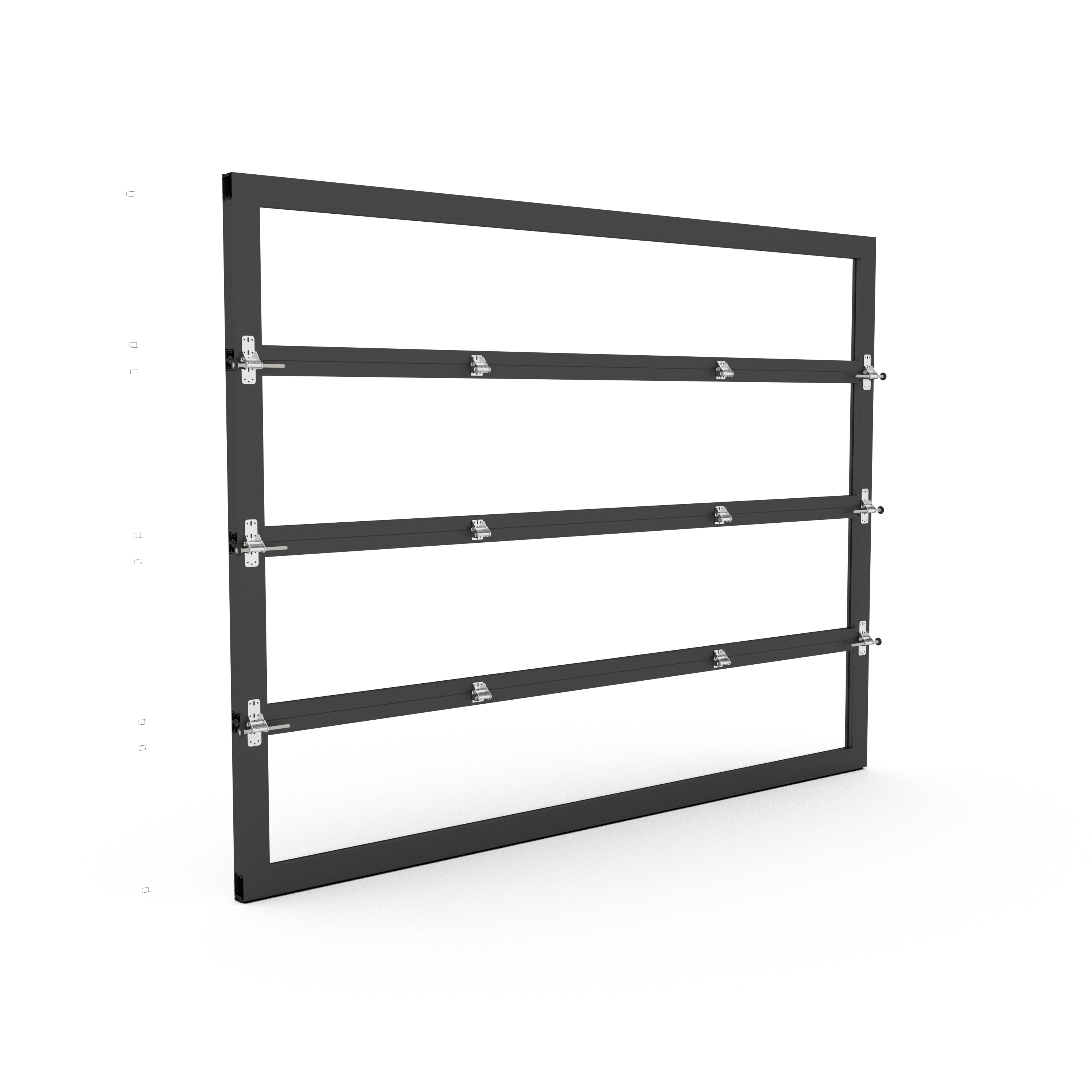
Horizontal wind bracing bars (sometimes called reinforcement kits) bolt across the back of each door panel, connecting the center of the panel to the vertical track on each side. This reduces panel deflection and increases the door's resistance to wind pressure.
What bracing does:
- Reduces panel deflection by distributing wind load across the horizontal struts
- Connects panel centers to tracks, reducing the likelihood of track separation
- Can be installed in 2-4 hours by a garage door professional
- Available for most standard residential door sizes
What bracing does NOT do:
- Provide impact resistance. Debris can still punch through the original panel material.
- Replace the original panels. If the panels are lightweight, dented, or corroded, the bracing is reinforcing a weak substrate.
- Meet code in all jurisdictions. Bracing kits are generally not considered "approved products" under the Florida Building Code and may not satisfy the opening protection requirement on the wind mitigation form.
- Guarantee performance. The system is only as strong as the original door it's attached to.
Best for: Budget-constrained situations where full replacement isn't feasible immediately. Think of it as a stopgap, not a solution.
Option 2: Wind-Rated Replacement ($1,200-$6,000)
A factory-engineered wind-rated garage door is designed as a complete system: panels, tracks, hardware, springs, and fasteners are all engineered to work together to resist a specified wind load (DP rating).
What you get:
- Panels made from reinforced steel (typically 24-26 gauge) with integral stiffeners
- Heavy-duty tracks and reinforced track mounts
- Wind-load rating certified to the Florida Building Code for your wind zone
- Proper engineering for the door's specific size and aspect ratio
- A product that satisfies the structural component of the opening protection requirement
What you don't get:
- Impact resistance (unless specifically rated for impact). A wind-rated door resists pressure but may not stop a 2x4 traveling at 34 mph. In the Wind-Borne Debris Region and HVHZ, impact resistance is required in addition to wind-load rating for new construction.
Cost range (2026, installed):
- Single door (8-10 ft wide): $1,200-$3,000
- Double door (16 ft wide): $2,000-$6,000
- Price varies by DP rating, material (steel vs. aluminum), insulation, and manufacturer
Option 3: Impact-Rated Replacement ($2,500-$10,000)
An impact-rated garage door meets both the wind-load requirement and the missile-impact test standard for its zone. In the HVHZ (Miami-Dade, Broward), this means passing TAS 201 with a Miami-Dade NOA. In the Wind-Borne Debris Region, it means passing ASTM E1996/E1886 with a Florida Product Approval.
What you get:
- Everything in a wind-rated door, plus debris impact resistance
- Full compliance with opening protection requirements in all Florida wind zones
- Qualification for the maximum insurance opening-protection credit (when combined with impact windows and doors on all other openings)
Products to know:
- ECO Window Systems Series 850-12 and 850-16: Miami-Dade NOA approved impact-rated garage doors
- Clopay: Offers Florida WindCode-compliant doors with impact options for various wind zones
- Wayne Dalton: Wind-load rated doors with reinforcement options

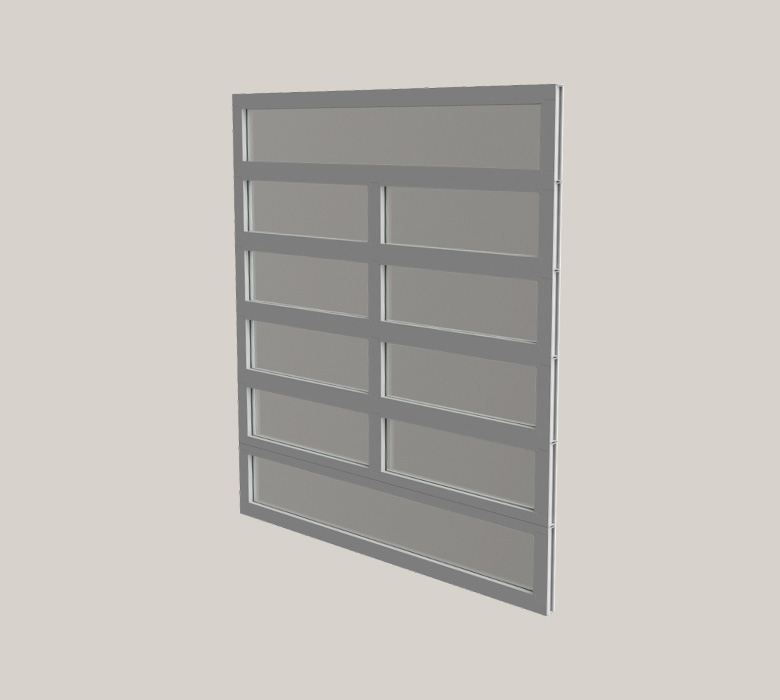
 ECO · Eco-Guard Garage Door Series
Eco-Guard Garage Door Series 850-16
6-section impact-rated aluminum sectional garage door (page label E870) to 192 x 144 in., +40/-45 psf, LMI.
 ES Windows · Prestige Series
ES Windows Prestige ES-PGD3040 Captured-Glass Garage Door
Premium aluminum-and-glass impact garage door with heavy-duty rollers, steel hinges, and motorized operation. For coastal homes where the garage is part of the envelope.
 WinDoor
WinDoor GD9995A Impact Garage Door
Sectional aluminum impact garage door with up to 9 panel sections at unit sizes of 216 by 192 or 192 by 216 inches. LMI for HVHZ envelope coverage.
Cost range (2026, installed):
- Single door: $2,500-$4,500
- Double door: $4,000-$10,000
- HVHZ-certified (NOA) products are at the upper end of the range
Comparison Table
| Option | Cost (Double Door) | Impact Resistance | Meets FBC Wind Load | Qualifies for Insurance Credit | Recommended For |
|---|---|---|---|---|---|
| No action | $0 | None | Depends on existing door | No | Not recommended |
| Bracing kit | $300-$800 | None | Improved but not certified | Unlikely | Temporary budget measure |
| Wind-rated replacement | $2,000-$6,000 | No | Yes | Partial (wind only, not impact) | Non-WBDR areas |
| Impact-rated replacement | $4,000-$10,000 | Yes | Yes | Yes (full opening credit) | WBDR and HVHZ areas |
The Insurance Math: Why the Garage Door Is Often the Highest-ROI Upgrade
Here's the scenario we see frequently: a homeowner spends $25,000-$40,000 on impact windows and impact doors throughout the house, gets a wind mitigation inspection, and learns they don't qualify for the full opening-protection credit because the garage door isn't impact-rated.
The opening protection category on the wind mitigation form (OIR-B1-1802) is all-or-nothing for the maximum credit. ALL glazed openings, entry doors, and the garage door must be protected to receive the top-tier discount (30-45% of the wind premium). One unprotected opening, including the garage, drops you to a lower credit tier.
The math:
- A coastal South Florida home paying $8,000/year in insurance might save $2,400-$3,600/year with the full opening-protection credit
- Without the garage door, the credit drops to a lower tier, saving perhaps $1,200-$1,800/year
- The difference: $1,200-$1,800/year in savings left on the table
- An impact-rated garage door costs $4,000-$10,000 installed
- Payback period: 2-8 years, depending on premium and door cost
If you've already invested in impact windows and doors, the garage door is often the last piece that unlocks the full insurance discount. The marginal cost is relatively low. The marginal insurance benefit is relatively high. It's frequently the best return on investment in the entire hurricane hardening project.
Code Requirements by Zone
| Zone | Wind-Load Rating Required? | Impact Rating Required? | Product Approval |
|---|---|---|---|
| HVHZ (Miami-Dade, Broward) | Yes (but only 60% of ASCE 7) | Yes | Miami-Dade NOA |
| WBDR (most coastal FL) | Yes (60% of ASCE 7) | Yes (new construction) | Florida Product Approval or NOA |
| Outside WBDR | Yes (60% of ASCE 7) | No (recommended) | Standard wind rating |
The 60% ASCE 7 allowance applies in all zones. Whether the door also needs impact resistance depends on whether you're in a debris zone. For existing homes outside the WBDR, a wind-rated (non-impact) door meets code but doesn't provide debris protection or qualify for the maximum insurance credit.
What's Coming in the 9th Edition FBC
The Prevatt/Roueche building performance report submitted to the Florida Department of Business and Professional Regulation identified garage doors as a critical weak point based on the Milton data. Several code changes are under consideration for the 9th Edition (expected late 2026 or 2027):
Increased DP requirements (moderate probability). The 60% ASCE 7 allowance may be increased to 70% or 80%, or the exception may be narrowed to apply only in certain exposure categories. This would require stronger doors across all wind zones.
Clarified impact requirements in WBDRs (high probability). The current code's interaction between garage door wind-load provisions (Section 609.4) and opening protection provisions (Section 1609.2) creates ambiguity. The 9th Edition is expected to clarify that garage doors in the WBDR must carry impact ratings, not just wind-load ratings.
Testing protocol updates (moderate probability). Current garage door testing evaluates pressure resistance in a uniform, static manner. The Milton data suggests that the combination of fluctuating wind pressure plus debris impact is a failure mode that static testing doesn't capture. New protocols may incorporate dynamic pressure or combined pressure-plus-impact testing.
Maintenance: Keeping Your Garage Door Hurricane-Ready
Even a properly rated garage door needs periodic maintenance to perform as designed:
Quarterly:
- Visually inspect tracks for bowing, loosening, or separation from the wall
- Check rollers for smooth operation (grinding = potential failure point)
- Verify the bottom seal is intact and making contact with the floor
Annually (before hurricane season):
- Lubricate all moving parts (rollers, hinges, springs, track) with silicone-based lubricant
- Inspect panel condition for dents, creases, or corrosion that could weaken the structure
- Verify the auto-reverse safety mechanism functions (required by code)
- Check track anchoring: bolts should be tight and the track should not flex when pushed
- In coastal environments, rinse tracks and hardware with fresh water to remove salt deposits
After any hurricane or high-wind event:
- Inspect for track deformation, panel buckling, or fastener loosening
- Check that the door operates smoothly on its tracks
- If the door was loaded during the storm (even if it held), have a professional inspect the springs and track anchoring
My Safe Florida Home Coverage
Impact-rated garage doors are an eligible improvement under the My Safe Florida Home program:
- Covered by grants up to $10,000
- Can be combined with window and door upgrades in a single grant application
- Low-income homeowners receive grants with no matching requirement
- Moderate-income homeowners get 2:1 matching (invest $5,000, receive $10,000)
If you're applying for MSFH to cover impact windows, include the garage door in the same application. It adds relatively little to the project cost but completes the opening protection package, maximizing both the structural benefit and the insurance discount.
Next Steps
- Check your current garage door. Look for the rating label on the inside. If there's no label or the rating is below DP-30, your door is likely inadequate for Florida hurricane conditions.
- If you already have impact windows and doors, the garage door may be the one component preventing you from qualifying for the full insurance discount. Upgrading it is often the highest-ROI step remaining.
- Get a free estimate that includes the garage door alongside your window and door project. Bundling reduces per-opening overhead and ensures all openings are covered in a single permit.
- Check eligibility for My Safe Florida Home grants (up to $10,000). Include the garage door in your application.
- Ask about financing options including PACE ($0 down, income-verified approval). A $4,000 garage door that saves $1,500/year on insurance has a payback period under 3 years.