
Broward's Place in Florida's Hurricane Code
Broward County is one of only two counties in Florida (along with Miami-Dade) that sits entirely within the High Velocity Hurricane Zone. With 1.9 million residents, design wind speeds of 170 mph, and a housing stock that spans Fort Lauderdale beachfront high-rises to Coral Springs planned communities, Broward presents a specific set of requirements and opportunities for impact window projects.
Broward was added to the HVHZ when the statewide Florida Building Code took effect on March 1, 2002, absorbing the South Florida Building Code's hurricane provisions that had originally applied only to Miami-Dade. The code has been tested in real conditions: Hurricane Wilma (2005) struck Broward as a Category 2 and exposed a critical high-rise glazing gap. Hurricanes Helene and Milton (2024) produced the most comprehensive validation data to date, with zero post-FBC homes destroyed across 358 assessed structures statewide.
Broward Code Requirements
What's Required
Every window, door, skylight, and garage door replacement in Broward must meet HVHZ standards:
| Requirement | Broward County |
|---|---|
| Wind zone | HVHZ |
| Design wind speed | 170 mph (3-second gust, Risk Category II) |
| Product approval | Miami-Dade NOA or Florida Product Approval with HVHZ compliance |
| Impact testing | TAS 201/202/203 or ASTM E1886/E1996 (Broward accepts both) |
| Tear tolerance | 5" x 1/16" (TAS) or 5" x 3" (ASTM) |
| Exposure category | C minimum (Exposure B prohibited) |
| Any replacement | Every replacement must meet current code (no threshold/25% rule in HVHZ) |
Broward vs. Miami-Dade: The Key Difference
Broward offers homeowners a slightly broader product selection than Miami-Dade because it accepts both Miami-Dade NOA and Florida Product Approval with HVHZ compliance. Miami-Dade accepts only the NOA.
In practice, most products installed in Broward carry a Miami-Dade NOA (because manufacturers certify for the broadest acceptance), but the dual-acceptance policy means some products that are available in Broward may not be available in Miami-Dade. This is a minor distinction for most residential projects but can matter for specialty or custom configurations.
The ASTM testing pathway (with the more lenient 5" x 3" tear tolerance) is accepted in Broward but not in Miami-Dade (which requires TAS testing with the 48x stricter 1/16" tolerance). Some Broward-specific products take advantage of this.
Permitting: City by City
Broward permits are issued by individual city building departments in nearly every sizable city: Fort Lauderdale, Hollywood, Pembroke Pines, Coral Springs, Miramar, Sunrise, Davie, Plantation, and Pompano Beach all run their own. The county's Building Code Services Division (BCSD) covers unincorporated Broward and the smaller cities that contract with it, at 1.85% of job value with a $125 minimum. Processing timelines, documentation requirements, and inspection procedures vary city to city.
What that means for fees: there is no single Broward permit fee. Under the adopted schedules in our permit fee dataset, the same $30,000, 10-opening job runs from about $217 in Coral Springs (a per-opening schedule) to $825 in Pompano Beach (2.75% of value), plus the countywide BORA surcharge ($0.52 per $1,000 of job value) and the state's 2.5% surcharge. Formulas for every verified jurisdiction are in our Florida window permit cost guide.
Other permit parameters:
- Review clock: once an application is complete, residential jobs over $15,000 get a decision within 30 business days under s. 553.792, Florida Statutes; smaller jobs within 5 business days
- At least one inspection must pass within 180 days of permit issuance
City-specific notes your installer should know:
| City | Population | Notes |
|---|---|---|
| Fort Lauderdale | 183,000 | Largest city; active building department; beachfront and high-rise require additional attention |
| Coral Springs | 134,000 | Efficient permitting process; predominantly single-family planned communities |
| Pembroke Pines | 171,000 | Large HOA community base; architectural review may add time |
| Hollywood | 154,000 | Beach and inland areas; older housing stock with significant retrofit opportunity |
| Davie | 107,000 | Mix of residential styles; equestrian/rural areas have different exposure categories |
| Plantation | 96,000 | Planned communities; many post-2002 homes already have impact windows |
| Weston | 72,000 | Newer construction; strong HOA presence; many homes already code-compliant |
| Miramar | 141,000 | Growing city; mix of established and new development |
| Parkland | 35,000 | Upscale; premium product expectations; HOA architectural review |
| Deerfield Beach | 80,000 | Beachfront condos and inland residential; diverse requirements |
The Wilma Legacy: Why High-Rises Matter in Broward
On October 24, 2005, Hurricane Wilma crossed South Florida as a Category 2 with downtown Fort Lauderdale gusts barely exceeding 100 mph. That should have been manageable. Instead, it produced some of the most dramatic building damage of the decade.
Hundreds of windows blew out in dozens of high-rise buildings across Fort Lauderdale and Miami. The Broward County Courthouse was described as looking "like a bombed-out building." The Broward School District headquarters ("Crystal Palace") was "stripped of nearly its entire glass facade on one side." Multiple buildings had over 1,000 individual panes of broken glass.
The root cause: at the time, the building code only required impact-resistant or laminated glass on the first 30 feet of a building. Above that height, standard monolithic tempered glass was permitted. Wilma's winds shattered upper-floor glass, and the falling shards became missiles themselves, cascading damage to adjacent buildings.
The 2007 code revision (FBC 3rd Edition) required laminated or tempered glass for insulated windows above 30 feet, directly addressing the Wilma failure pattern. Today, Broward's high-rise buildings are held to significantly stricter glazing standards than pre-Wilma construction.
If you own a unit in a high-rise condo built before 2007, your windows may have the pre-Wilma glass that failed during the storm. Replacement with current-code impact glazing eliminates this vulnerability. Note that threshold building inspections are required for window replacement above the third floor, requiring a licensed Professional Engineer as Special Inspector.
Neighborhoods and Product Recommendations
Fort Lauderdale Beach and Las Olas
Direct ocean exposure (Exposure D), severe salt air, higher design pressures. High-rise condos and luxury waterfront homes.
Recommended: Aluminum frames with premium Kynar/PVDF finishes and stainless steel hardware. WinDoor for high-rise applications requiring extreme DP ratings (+125/-150 PSF). ES Windows Prestige for premium residential with the largest available glass panels.
Coral Springs, Parkland, Coconut Creek
Inland residential, lower salt exposure (3+ miles from ocean), strong HOA presence.
Recommended: Either aluminum or vinyl. PGT WinGuard Vinyl (DP +65/-70) is adequate for most standard residential openings. ES Windows Elite offers 20% savings with premium features included. Match frame colors to HOA specifications.
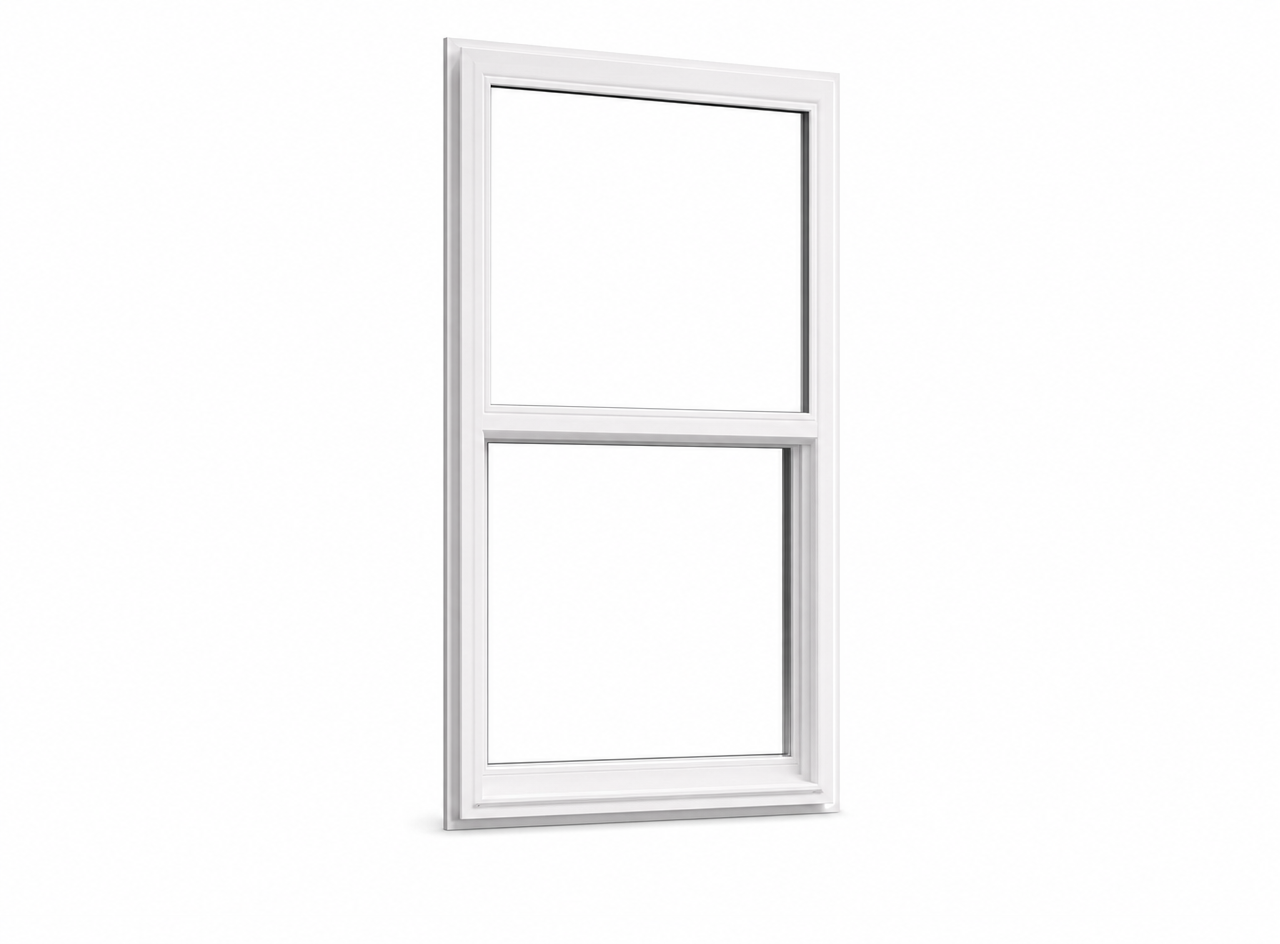
 PGT · WinGuard Vinyl Series
PGT WinGuard Vinyl Single Hung SH5500
Flagship vinyl impact single-hung on a 3-1/2 inch welded frame with SecureConnect corner keys. ComfortLift handles, removable sash for cleaning, LMI for HVHZ.
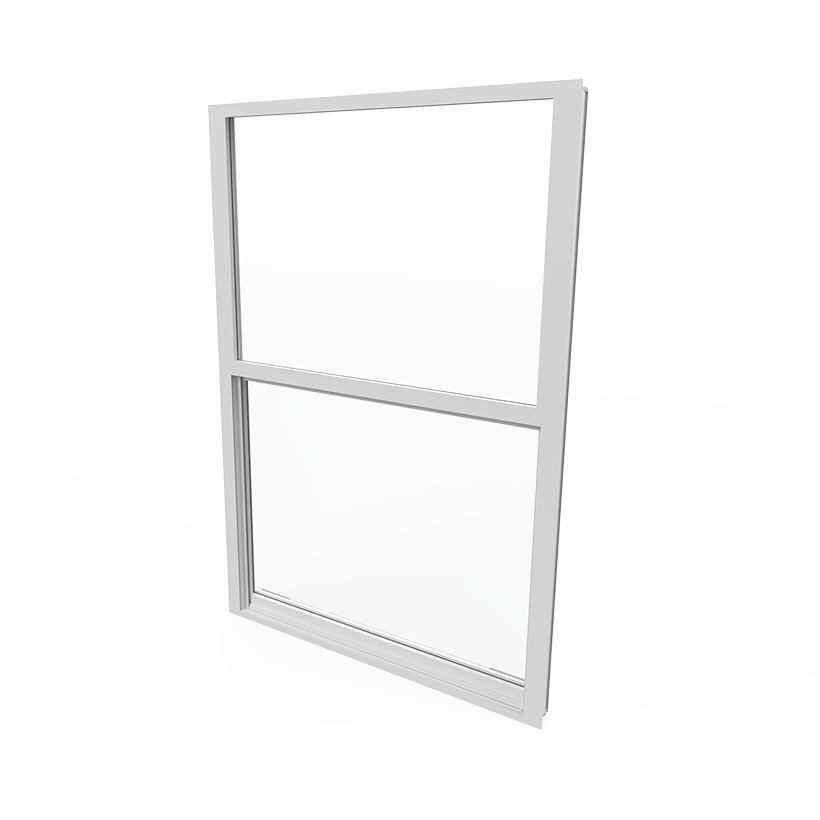
 ES Windows · Elite Series
ES Windows Elite ES-EL100 Single Hung
Aluminum impact single-hung on a 2-15/16 inch frame with block-and-tackle or ultra-lift balances. Saflex/Kuraray PVB, Vanceva Storm, and SentryGlas Plus interlayers available.
Pembroke Pines, Miramar, Weston
Planned communities, many post-2002 homes, extensive HOA governance.
Recommended: Many homes already have impact windows from original construction (2002+). For first-generation replacement (original impact windows now 20+ years old), match the existing manufacturer if possible for visual consistency. For pre-2002 homes in these areas, any HVHZ-approved product from a major manufacturer works well.
Hollywood Beach and Dania Beach
Beachfront and near-beach, moderate to severe salt exposure, mix of older condos and newer construction.
Recommended: Aluminum with premium coastal finishes. For older condo buildings, coordinate with the condo association for building-wide product standards. ECO Window Systems offers the most affordable HVHZ-approved option for budget-conscious coastal projects.
Davie, Sunrise, Tamarac, Lauderhill
Established inland residential, older housing stock, significant retrofit market.
Recommended: Value-oriented products. ES Windows Elite or ECO
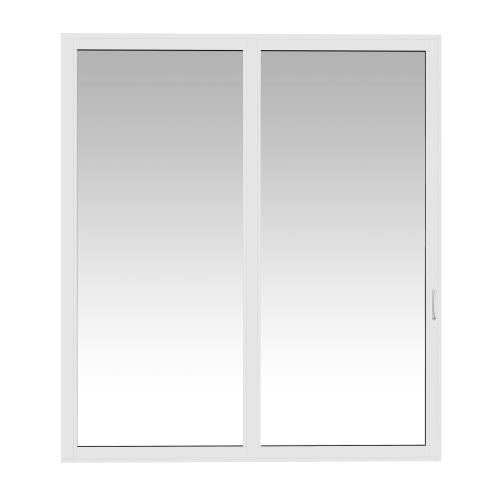
 ECO
ECO Window Systems
Miami-made impact windows and doors with vertical glass integration and Miami-Dade NOA coverage.
Miami-Dade NOA / HVHZ approved 41 models across 10 product lines
Explore ECO
for the best cost-per-opening. These neighborhoods have the highest concentration of pre-2002 homes in Broward without impact protection, the prime retrofit market.
ECO
ECO Window Systems
Miami-made impact windows and doors with vertical glass integration and Miami-Dade NOA coverage.
Miami-Dade NOA / HVHZ approved 41 models across 10 product lines
Explore ECO
for the best cost-per-opening. These neighborhoods have the highest concentration of pre-2002 homes in Broward without impact protection, the prime retrofit market.
Cost Expectations
Broward pricing is slightly below Miami-Dade (Broward's dual-acceptance policy allows some less expensive ASTM-tested products) but above non-HVHZ markets.
| Home Size | Budget Tier | Mid-Range | Premium |
|---|---|---|---|
| Small (8-10 openings) | $12,000-$18,000 | $18,000-$26,000 | $26,000-$38,000 |
| Average (12-15 openings) | $20,000-$30,000 | $30,000-$45,000 | $45,000-$65,000 |
| Large (18-25 openings) | $32,000-$48,000 | $48,000-$65,000 | $65,000-$95,000+ |
For detailed pricing by window type, frame material, and manufacturer tier, see our impact windows cost guide and impact doors cost guide.
Insurance Savings in Broward
| Home Value | Annual Premium | Savings with Full Opening Protection |
|---|---|---|
| $300,000 | $4,000-$6,500 | $800-$1,800/year |
| $400,000 | $5,000-$8,000 | $1,000-$2,500/year |
| $600,000 (beachfront) | $8,000-$14,000 | $1,500-$3,500/year |
The wind mitigation opening-protection credit (30-45% of wind premium) requires all openings protected. A FEMA study of Broward County buildings with window and door improvements documented a 4.8:1 benefit-cost ratio ($2.15 million in project costs vs. $10.4 million in avoided losses).
For the complete insurance ROI analysis, see our insurance savings guide.
Grants and Financing
- My Safe Florida Home: Grants up to $10,000 for qualifying Broward homeowners. Apply at mysafeflhome.com.
- PACE financing: $0 down, income-verified approval, paid through property taxes.
- Additional financing options: Most installers offer $0 down and 100% financing.
Next Steps
- Get a free estimate with HVHZ-compliant product recommendations matched to your Broward neighborhood and exposure.
- Determine your city's permit process. Your installer should handle this, but knowing which city department issues your permit helps you track progress.
- Check MSFH eligibility for grants up to $10,000.
- Get a wind mitigation inspection after installation to claim your insurance discounts.
- If you're in an HOA, start the architectural review process before selecting products so you know the color and profile requirements.