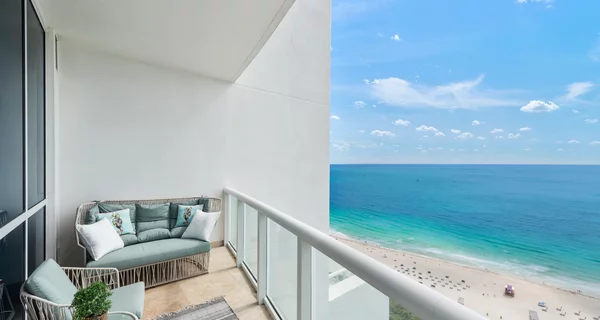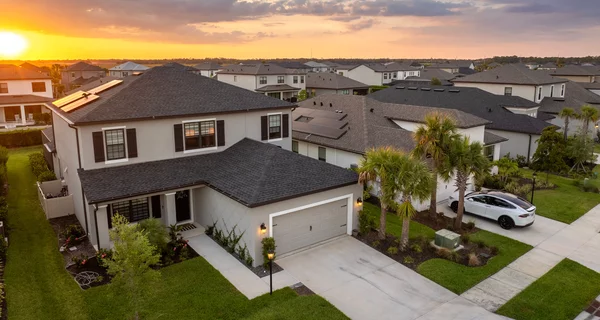


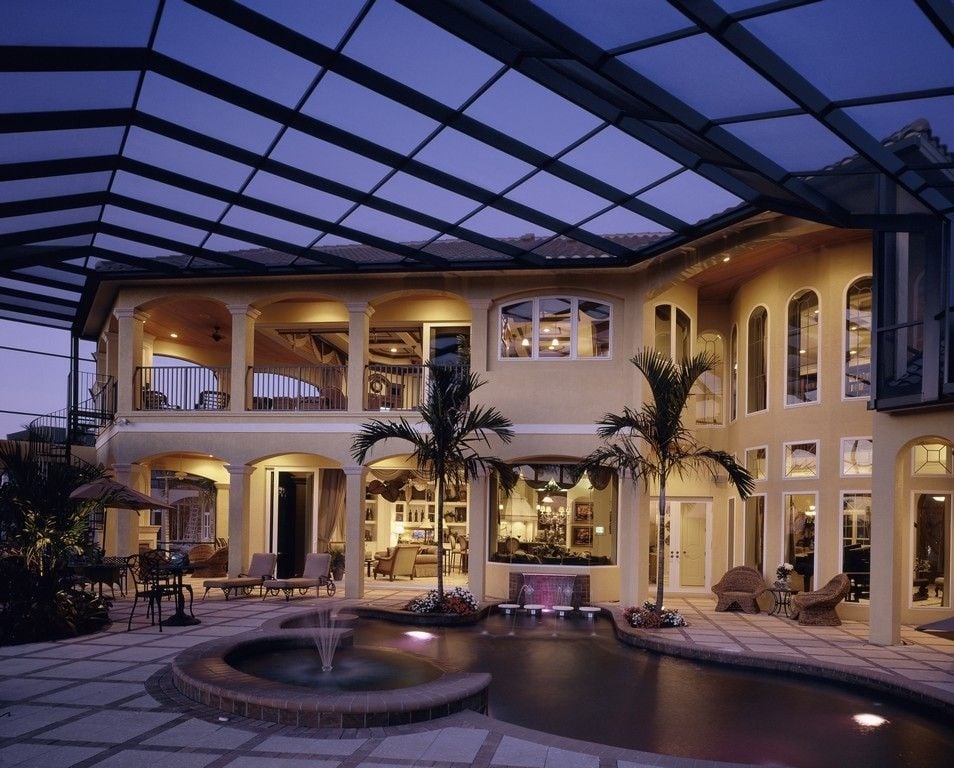
Turtle glass windows use tinted glass with an inside-to-outside visible light transmittance of 45 percent or less, the standard Florida's sea turtle lighting ordinances set for windows near nesting beaches. Within line of sight of the sand in one of Florida's 26 nesting counties, local code most likely requires this glass on seaward new construction, and window film or room-darkening treatments on existing buildings. The reason: interior light spilling onto the beach at night disorients nesting sea turtles and their hatchlings, and a 45 percent tint cuts that spill roughly in half.
We install impact windows in these lighting districts every season, from Miami Beach condo towers to homes in the Keys, so turtle-code glass is a normal line item for us. Across the glass-configuration records in our catalog database, we count 311 gray, bronze, or dedicated turtle-glass options across 107 impact window and door products from 8 manufacturers. Meeting the ordinance almost never limits which window you can buy; it just decides which glass goes in it.
Here is what the 45 percent rule actually says, who enforces it, how it interacts with impact glass, and how the number gets checked at permit time.
What Turtle Glass Is: The 45 Percent Rule
"Turtle glass" is not a separate product category or impact rating. It is ordinary window glass, laminated or insulated, whose tint holds visible light transmittance (VT) at or below 45 percent measured from inside to outside. The State of Florida Model Sea Turtle Lighting Ordinance, adopted by reference in Rule 62B-55, Florida Administrative Code, puts it this way for new construction:
All glass windows, walls, railings and doors on the seaward and shore-perpendicular sides of any new construction shall use tinted glass with an inside to outside light transmittance value of 45 percent or less.
The model ordinance defines tinted glass as "glass modified via tinting, film or other material to reduce the inside to outside light transmittance value." Miami Beach's local version adds the measurement detail: transmittance covers the visible spectrum, 400 to 700 nanometers, measured as the share of light passing through the glass.
Three practical points fall out of that definition:
- Any tint that hits the number qualifies. Gray and bronze body tints are the common routes; no color is mandated.
- Film counts. Compliant window film on existing glass satisfies the same standard, so existing buildings rarely need window replacement for turtle code alone.
- The number is a glass value, not a whole-window value. More on that below, because it trips people up at permit time.
One common confusion is worth clearing up. FWC's wildlife lighting rules for fixtures call for long-wavelength amber or red light sources, 560 nanometers or greater. That amber requirement applies to bulbs, not windows. The glass side of the code is only about transmittance, and the tints that get you there are usually gray or bronze, not orange.
For the full anatomy of what sits inside an impact unit (lites, interlayers, spacers, coatings), see our guide to what impact window glass is made of. This article stays on the turtle-code layer.
Where Florida Requires Turtle Glass Windows
Section 161.163, Florida Statutes directed the state to designate nesting areas and publish guidance for local rules. Rule 62B-55.003, F.A.C. designates the nesting counties: Bay, Brevard, Broward, Charlotte, Collier, Miami-Dade (listed as Dade), Duval, Escambia, Flagler, Franklin, Gulf, Indian River, Lee, Manatee, Martin, Monroe, Nassau, Okaloosa, Palm Beach, Pinellas, St. Johns, St. Lucie, Santa Rosa, Sarasota, Volusia, and Walton, 26 in all, plus the inlet shorelines of those beaches.
The current model ordinance under Rule 62B-55.004 took effect December 15, 2020. Local governments then adopt their own versions, and the local ordinance is what a permit reviewer actually enforces.
So "do I need turtle glass" has a two-layer answer: is your county on the state nesting list, and does a local lighting ordinance reach your property? Most beach communities in those 26 counties have one. FWC maintains the running list of local sea turtle lighting ordinances by county, the fastest way to find the code section for your address.
Where the line runs on the ground
The model ordinance does not draw the boundary at beachfront lots. It establishes a lighting district covering "all properties... that may produce artificial light directly, indirectly, or cumulatively visible from any portion of the beach, regardless of whether those properties are beachfront properties." A third-row house whose upstairs windows glow over the dune line is inside the district; a canal-front home two blocks in with no sightline to the sand is not.
For the glass itself, the trigger on new construction is orientation: windows, glass doors, glass walls, and glass railings on the seaward and shore-perpendicular sides of the building. Landward-facing glass is not part of the tinted-glass rule.
Miami Beach's ordinance (City Code Chapter 46, Article V, adopted 2006) shows how a municipality writes this in practice: "Tinted glass shall be installed on all windows and glass doors of single and multistory structures facing or within line-of-sight of the beach," with exterior shade screens allowed as a substitute. The full text is short: Miami Beach turtle nesting protection ordinance. Planning a window project there? Our Miami Beach impact windows page covers the rest of that city's permitting picture.
Monroe County deserves its own mention: the Keys are on the nesting list end to end, and oceanside properties from Key Largo to Key West meet the county's lighting rules alongside the most demanding wind-load requirements in the state. We cover that combination on our Florida Keys impact windows page.
Nesting Season Rules by County
The glass is permanent, but the ordinance's behavioral rules (lights out, curtains drawn, no flashlights on the beach) run during nesting season, whose dates vary by coast. The model ordinance's guidance splits the state like this:
| County group | Nesting season | Coast |
|---|---|---|
| Brevard, Indian River, St. Lucie, Martin, Palm Beach, Broward | March 1 – October 31 | Atlantic (leatherbacks nest early) |
| Bay, Charlotte, Collier, Miami-Dade, Duval, Escambia, Flagler, Franklin, Gulf, Lee, Manatee, Monroe, Nassau, Okaloosa, Pinellas, St. Johns, Santa Rosa, Sarasota, Volusia, Walton | May 1 – October 31 | Gulf coast and remaining Atlantic |
| Miami Beach (city ordinance) | April 1 – October 31 | Local variation |
Municipalities can and do set their own dates, one more reason the local code, not the state model, is the document to check.
During those months, an ordinance jurisdiction expects interior light to stay invisible from the beach at night. A 45 percent tint alone does not make a lit living room invisible from the sand, which is why FWC guidance pairs tinted glass with moving lamps away from seaward windows and closing blinds after dark, and why some heavily glazed condo towers go darker; tints down to 15 percent transmittance have been used.
Turtle Glass and Impact Windows: Ordering the Right Tint
The good news if you are replacing windows anyway: turtle glass is ordered as a glass option on the same impact windows you would buy regardless. The laminated makeup that earns the missile-impact approval stays the same; the tint rides along in the glass lites. You are choosing a color of an approved configuration, not a different product.
Our catalog database backs that up. The 311 turtle-suitable tinted configurations we track break down by manufacturer like this:
| Manufacturer | Impact products with gray, bronze, or turtle-glass options |
|---|---|
| ES Windows | 28 |
| Eastern Architectural Systems | 17 |
| Mr Glass | 17 |
| PGT Custom Windows & Doors | 12 |
| Custom Window Systems | 12 |
| Pella | 10 |
| WinDoor | 9 |
| Andersen | 2 |
A few notes from inside that data:
- Gray is the workhorse. Gray tint appears on 90 of the 107 products, bronze on 75. Both are stocked options for every major line we install.
- Some lines name the package outright. Pella's Hurricane Shield

 Pella
HurricaneShield Series
Florida-built (Ocala) residential vinyl impact line for HVHZ. Four window operations plus three patio door styles, all Miami-Dade and Broward certified.
8 models in the series Covers Single-Hung Window, Casement Window, French Door, +4 more
Explore the HurricaneShield Series
series lists a dedicated "Turtle Glass" insulated laminated package across seven of its window and door types, 7/8-inch overall in the windows and 1 inch in the patio doors.
Pella
HurricaneShield Series
Florida-built (Ocala) residential vinyl impact line for HVHZ. Four window operations plus three patio door styles, all Miami-Dade and Broward certified.
8 models in the series Covers Single-Hung Window, Casement Window, French Door, +4 more
Explore the HurricaneShield Series
series lists a dedicated "Turtle Glass" insulated laminated package across seven of its window and door types, 7/8-inch overall in the windows and 1 inch in the patio doors. - Eastern Architectural Systems
 EAS
Eastern Architectural Systems
Fort Myers manufacturer of vinyl and aluminum impact windows and doors, makers of the Bertha line.
18 models across 6 product lines
Explore EAS
markets turtle glass as a specialty strength, aimed at Southwest Florida's coastal lighting districts in Lee and Collier counties.
EAS
Eastern Architectural Systems
Fort Myers manufacturer of vinyl and aluminum impact windows and doors, makers of the Bertha line.
18 models across 6 product lines
Explore EAS
markets turtle glass as a specialty strength, aimed at Southwest Florida's coastal lighting districts in Lee and Collier counties.
The one thing the catalog cannot decide for you is whether a specific tinted makeup lands at or under 45 percent, because transmittance depends on tint density and glass thickness together. The same gray tint that meets the number in one thickness can miss it in a thinner lite. The manufacturer's glass performance chart for the exact makeup on your order settles it, and it is the document your permit reviewer will want to see.
 PGT · WinGuard Aluminum Series
PGT WinGuard Aluminum Picture PW7720A
Aluminum impact fixed picture window on the WinGuard 7720 picture platform for unobstructed view installations. Diamond Glass, LMI for HVHZ.
 ES Windows · Elite Series
ES Windows Elite ES-EL150 Fixed Window
Aluminum impact fixed window on a 2-15/16 inch frame, matching the rest of the Elite residential line for clean sightline continuity.

 WinDoor
WinDoor 9020 Aluminum Picture Window
Flagship aluminum impact picture window up to 108 by 144 inches at 150 psf positive and negative. Sightline-matches the 8100 SGD and 9050 terrace door.
The NFRC label is not the ordinance number
The VT printed on an NFRC energy performance label is a whole-window value: it averages the glass with the opaque frame, so it always reads lower than the glass-only transmittance. A window can show an NFRC VT of 0.42 while its center-of-glass transmittance sits well above 45 percent. The ordinance number is a glass value, inside to outside. Submit the glass data, not the label, and you will save yourself a review cycle.
Low-E Coatings, Energy, and What a Tint Changes Inside
Turtle tint and Low-E coatings are not competitors. They stack. A gray or bronze body tint absorbs a share of the full solar spectrum; a spectrally selective Low-E coating reflects infrared heat while passing visible light. Ordered together in an insulated impact unit, the tint handles the transmittance requirement while the Low-E pushes solar heat gain lower than either would alone.
The energy side is a real consolation prize for anyone reluctant about darker glass. Clear glass carries a solar heat gain coefficient (SHGC) around 0.75 to 0.85; a gray or bronze tint alone runs near 0.44; tinted glass with a modern Low-E stack lands in the 0.20s, the range Florida's energy code is pushing all new glazing toward anyway. On a west-facing wall of AC-cooled Florida living space, glass in that range is what you want with or without a turtle ordinance.
What does 45 percent transmittance feel like from inside? Noticeably tinted, nothing like a blacked-out storefront. Rooms stay bright because Florida sun delivers far more light than a room needs; views read slightly gray or warm-bronze. Daytime privacy and glare control improve enough that many owners on the water order the same tint on non-required elevations so the glass matches all the way around. The look also pairs naturally with dark exterior frames, a combination we covered in our guide to black frame impact windows.
The honest tradeoff: at night the physics flips. With interior lights on, a tinted window shows the room more than it hides it, which is exactly why the ordinances still expect curtains or blinds after dark in nesting season. Turtle glass reduces light spill; it does not eliminate it.
What Turtle Glass Costs
On our orders, turtle-code tint adds roughly $50 to $100 per window over the same unit in clear glass. On a typical whole-home impact project it moves the total by low single-digit percentages; on a large sliding door or glass wall the premium is a little more visible. Window film retrofits on existing buildings price by the square foot and come in well under replacing otherwise sound glass.
If your project already includes Low-E insulated impact glass (most do), the tint is the only incremental cost. For per-window and whole-project numbers, our impact windows cost calculator breaks pricing down by opening.
How Turtle Glass Compliance Is Checked at Permit Time
Enforcement runs through three doors.
1. The local building permit. In an ordinance jurisdiction, plan review checks the window schedule for the seaward and shore-perpendicular elevations. The reviewer wants glass documentation showing inside-to-outside VT at or below 45 percent for those openings: the manufacturer's glass data for the exact tint and makeup on the order. Painless when the spec sheet is in the submittal from day one; a correction letter when the schedule just says "gray tint" with no transmittance value.
2. The state CCCL permit, if you are seaward of the line. Construction seaward of Florida's Coastal Construction Control Line needs a DEP permit under Chapter 62B-33, F.A.C., and the application requirements include a dimensioned marine turtle lighting plan covering the exterior lighting design. Glazing and lighting get reviewed at the state level on top of the local permit.
3. Nesting-season surveys after you build. The model ordinance creates a beach lighting inspector who walks the beach at night during nesting season and documents lighting visible from the sand, with written notices, deadlines to correct, and daily fines backed by property liens. Miami Beach's version adds that the city can remove offending exterior fixtures itself and bill the owner. Compliance is not a one-time permit checkbox; beach-visible windows that glow after dark will eventually draw a knock on the door.
For existing buildings inside a lighting district, the compliance menu for interior light is practical: apply window film that meets the tinted-glass standard, move lamps away from seaward windows, or use opaque shades. Full replacement is never the mandated path for turtle code alone, though when a building is replacing windows anyway for hurricane protection, ordering the tint from the factory is cheaper and cleaner than filming new glass afterward.
Next Steps
If your project sits anywhere near a nesting beach, settle the turtle-code question before you sign a window order, not after plan review kicks it back.
- Look up your jurisdiction on FWC's lighting ordinance list and skim the local code for the tinted-glass language.
- Check whether your lot is seaward of the CCCL, which adds the state permit layer.
- Ask for the glass performance data (inside-to-outside VT) for the exact tint and makeup you are quoted, and keep it in the permit package.
- If you are comparing impact windows anyway, have the tint priced into the quote from the start; it is a $50 to $100 per-window line, not a redesign.
- Request a free estimate and tell us the property is in a turtle lighting district. We will spec compliant glass from the first drawing.