

Black frame windows have become the most requested finish change we handle, and almost every homeowner who asks for them asks the same three questions in the same order. Does black make the room hotter? Will it fade in the Florida sun? And what does it cost compared to white?
The answers are more interesting than the marketing on either side suggests. Black frames do run hotter, but not in the way most people assume, and not in a way that shows up on your electric bill. Fade resistance is not a matter of quality claims: it is a published specification with a number, and you can order the better one by name. And cost tracks something concrete, which is how many manufacturers actually offer the color.
That last point is measurable. Across the 281 impact products in our catalog that publish a frame finish list, drawn from 10 manufacturers and 157 distinct finish values, black is orderable on 109 of them. White is orderable on 185. That gap is the real constraint behind the trend, and it explains the upcharge and the lead time better than any other single fact.
Why black is having a moment
The pull is architectural, and it is not a Florida invention. Black and dark bronze frames read as steel, and steel windows carry a century of associations with warehouse conversions, modern farmhouse, and the kind of contemporary coastal work that has dominated South Florida design for the last decade.
Black frames also do something white frames cannot: they disappear. A dark frame against a bright exterior reads as a thin line, so the window looks more like glass and less like an assembly. On a large opening with a water view, that matters more than it does on a bedroom double hung.
The practical version is that homeowners are replacing windows once every twenty-five to thirty years, and while the wall is open they want the house to look like it was designed this decade rather than in 1998. That is a reasonable thing to want.
Does a black frame make the room hotter
Short answer: the frame gets hotter, the room does not.
Solar heat gain into a room is a property of the glazing, not the frame. It is measured as the Solar Heat Gain Coefficient, the SHGC number on the NFRC label attached to every certified window. SHGC runs from 0 to 1, and it describes the fraction of solar energy that gets through the glass. A Low-E coated impact unit in South Florida typically lands somewhere around 0.20 to 0.30, well inside the ENERGY STAR criteria for the Southern climate zone. That number is set by the glass makeup and the coating, and it does not change when you order the frame in black.
The frame itself is a small fraction of the opening area, and in an aluminum window the frame is a conductor rather than an absorber of solar load into the space. So the cooling-load argument against dark frames is mostly imaginary.
What is real:
- Surface temperature. A dark aluminum frame in direct South Florida sun runs meaningfully hotter to the touch than a white one. On a west-facing slider that the family opens all afternoon, this is worth knowing before you buy.
- Thermal expansion on long spans. Aluminum moves with temperature, and a dark finish reaching higher surface temperatures moves more. On a long multi-panel slider or a wide picture window, that expansion has to be accommodated in the installation. It is a detail the installer handles, not a defect, but it is a real engineering consideration on large openings.
- Finish stress. Higher operating temperature and higher UV load together are what age a coating. This is why the finish specification matters more on a dark frame than a light one, which brings us to the part of the question that actually deserves attention.
If your concern is cooling cost, the lever is the glass. Ask about SHGC and Low-E, not frame color. The impact window range lists the glazing options available on each product line.
Finish systems, and what separates them
There are two ways an aluminum impact window frame gets its color, and they age differently.
Anodizing is an electrochemical process that grows an oxide layer into the aluminum surface. The color is part of the metal, not a layer on top of it. Anodized finishes are extremely durable and cannot peel, because there is nothing to peel. The tradeoff is color range: anodized black and bronze are available, but you will not get a wide palette, and color consistency across a large order is harder to guarantee.
Powder coating is a dry polymer applied electrostatically and cured in an oven. It offers nearly unlimited color, better color consistency, and a thicker protective layer. It is what most black frames in Florida actually are. Powder coat quality varies enormously, and that variation is exactly what the AAMA specifications exist to describe.
The three coating grades
The Fenestration and Glazing Industry Alliance, formerly AAMA, publishes three voluntary specifications for organic coatings on architectural aluminum. They are not marketing tiers. They are different tests with different pass thresholds, particularly for South Florida weathering.
| Specification | What it is | Typical warranty | Where it belongs |
|---|---|---|---|
| AAMA 2603 | Baseline architectural coating. Lightest weathering requirement. | Often 1 to 5 years | Interior, shaded, or low-exposure work |
| AAMA 2604 | Intermediate performance. Much higher color-retention and chalk-resistance thresholds than 2603. | Commonly 5 years | The practical standard for most residential exterior work |
| AAMA 2605 | Highest grade. The most demanding weathering, color retention, and chalk resistance thresholds of the three. | Commonly 10 years | Coastal, high-UV, dark colors, and anything you want to look right in year fifteen |
The South Florida version of this is straightforward: 2603 does not belong on the outside of your house, 2604 is the working standard, and 2605 is the grade worth paying for on a dark frame in direct sun near salt air.
This is not theoretical, and it is not a distinction only specifiers care about. Across our catalog, 36 products from three manufacturers name an AAMA coating grade as an explicitly orderable finish line item rather than burying it in a spec sheet. On 29 of those products, AAMA 2604 and AAMA 2605 appear as a choice on the same product, with the 2605 option carrying the longer finish warranty. A homeowner who knows the numbers can ask for the better one by name and get a price for it.
Most manufacturers do not expose the choice that plainly. That does not mean the coating is unspecified: it means you have to ask what grade the standard finish meets, and get the answer in writing. Any manufacturer running a serious architectural line can tell you.
What our catalog actually offers
Here is the availability picture across the impact products we track that publish a frame finish list. These are counts of distinct products, not SKUs or color chips.
| Finish family | Products offering it | Manufacturers offering it |
|---|---|---|
| White | 185 | 10 |
| Bronze | 156 | 10 |
| Black | 109 | 8 |
| Anodized | 57 | 1 |
| Wood grain | 44 | 1 |
Taking the exact catalog label rather than the family, the ordering is sharper still: white appears on 150 products, bronze on 102, and plain black on 71.
Two things follow from that table, and they are the practical answer to "what does black cost."
Black is a real option, not a special order, but it is a narrower one. Roughly 39% of the products we track offer black against 66% for white. Every major manufacturer we install has black in some form, but not on every line and not in every operating type. If you have already chosen a product line for its design pressure or its size envelope, the color question may already be settled for you.
The narrower the availability, the more the color costs. White is the stocked color and the default production run. Anything else is a finish operation with its own scheduling, and dark powder coat is a run that shows every defect, so rejection rates are higher. That shows up as an upcharge and as added lead time. In our experience the upcharge on a dark finish typically lands in the range of 5% to 15% of the window cost depending on manufacturer and line, and lead times commonly run two to four weeks longer than the same product in white. Those are our numbers from quoting the work, not published figures, and they move with the manufacturer's backlog.
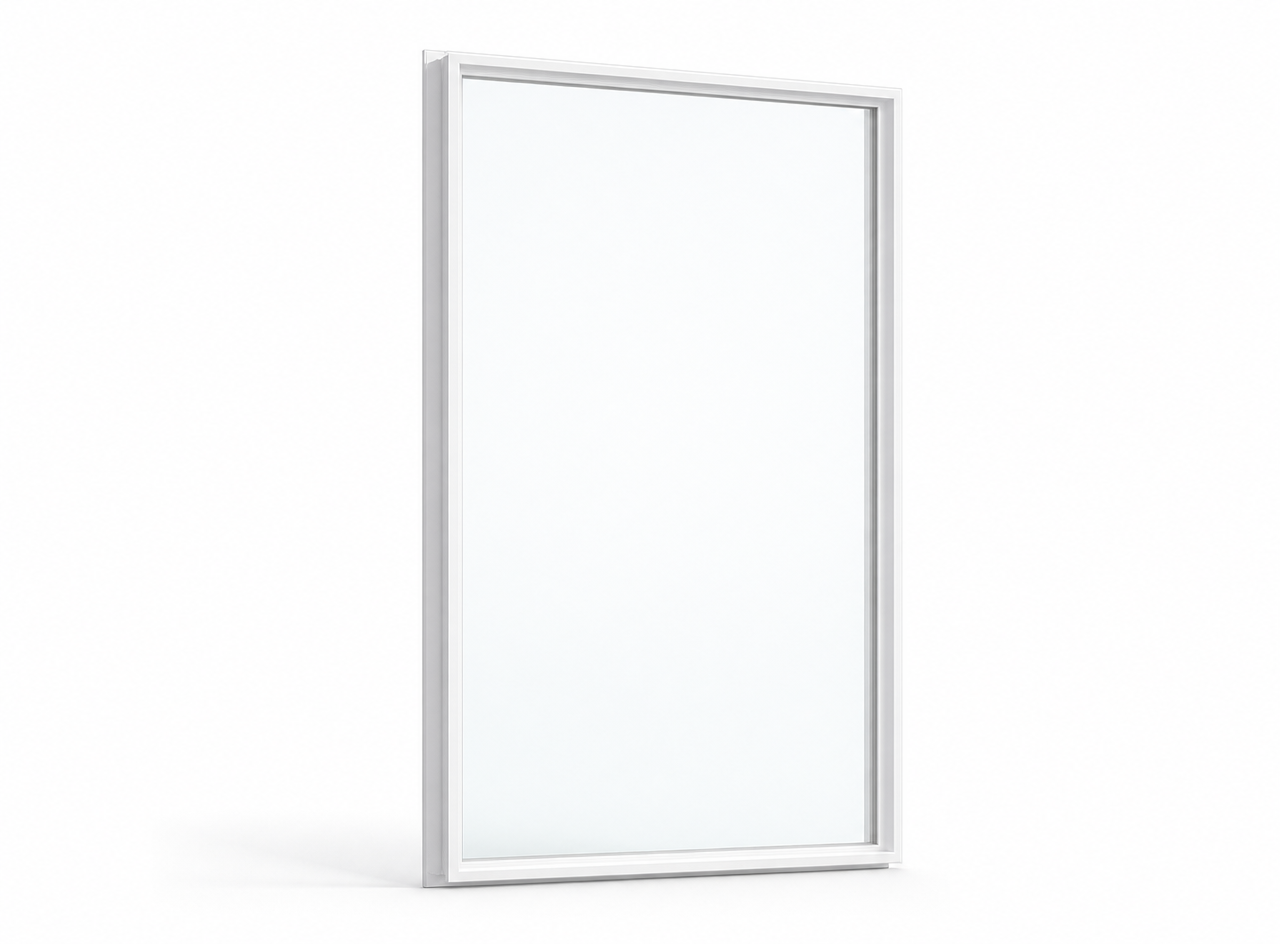
 PGT · WinGuard Aluminum Series
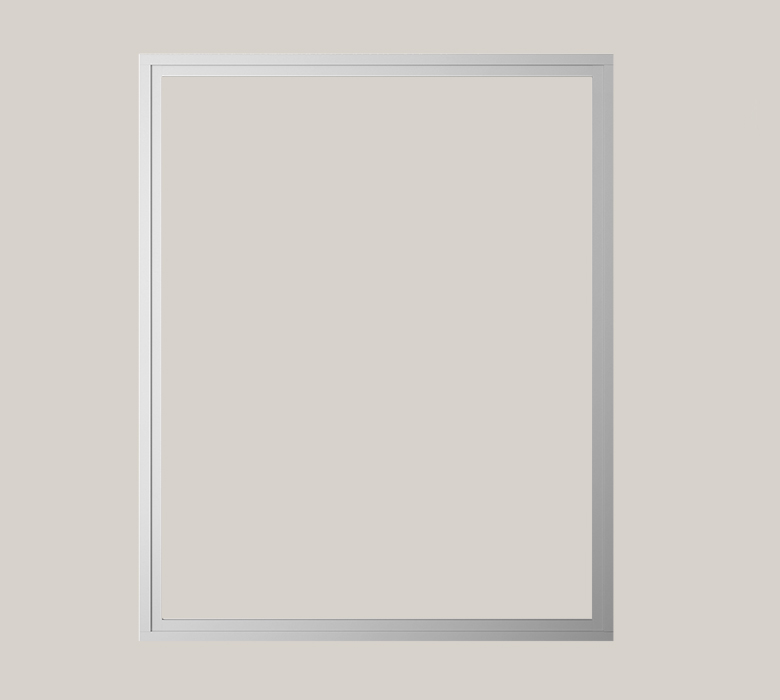
PGT WinGuard Aluminum Picture PW7720A
Aluminum impact fixed picture window on the WinGuard 7720 picture platform for unobstructed view installations. Diamond Glass, LMI for HVHZ.
 WinDoor
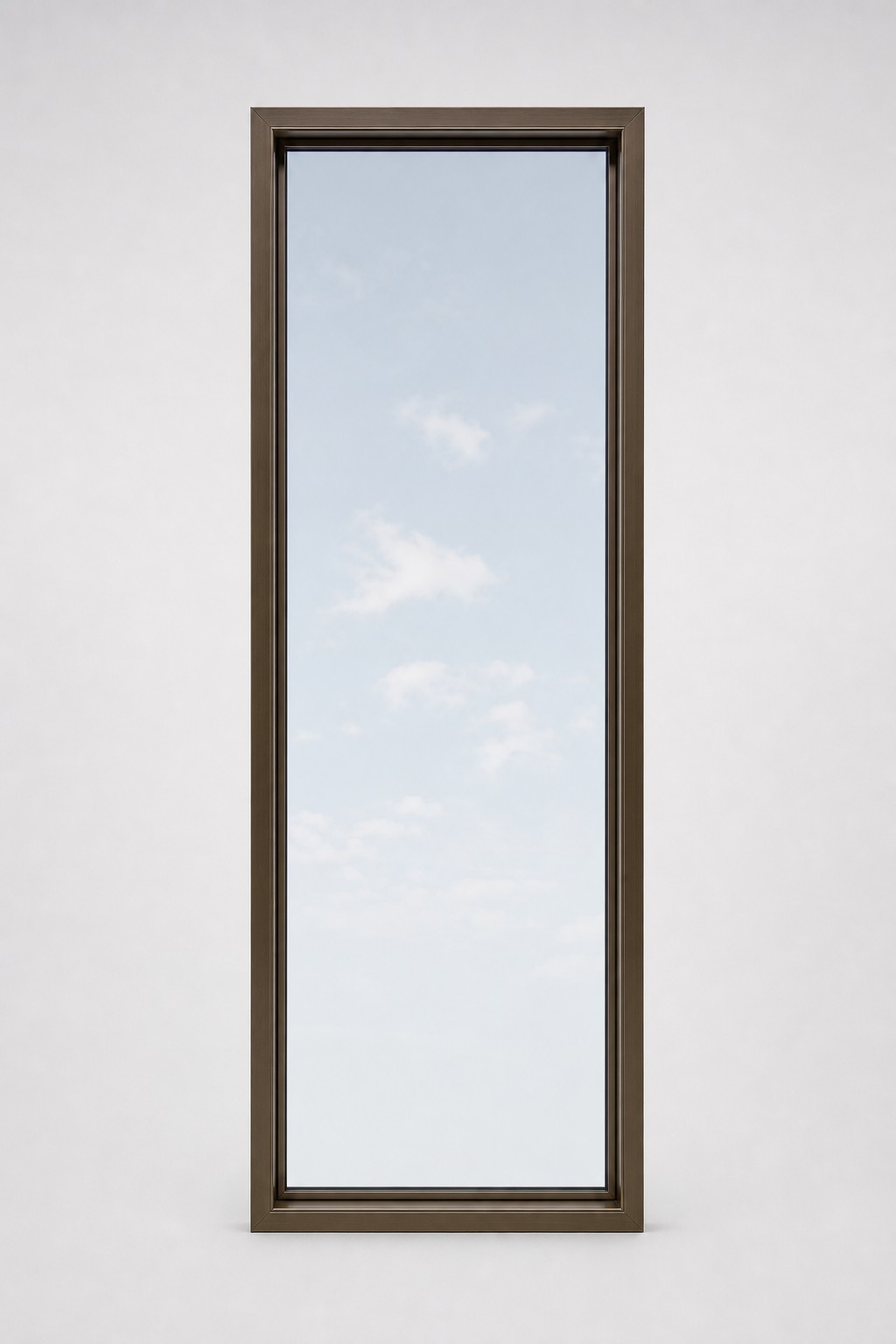
WinDoor 9020 Aluminum Picture Window
Flagship aluminum impact picture window up to 108 by 144 inches at 150 psf positive and negative. Sightline-matches the 8100 SGD and 9050 terrace door.
 Mr. Glass
Standard-tier aluminum impact fixed picture window for unobstructed-view installations up to 48 by 84 inches. LMI at 100 psf for HVHZ.
Fade and chalk in the South Florida sun
Coating failure on an exterior aluminum frame shows up two ways.
Chalking is the powdery white residue that appears when the resin binder at the surface breaks down under UV and releases pigment. Wipe a finger across an aged frame and it comes away dusty. It is the first visible sign a coating is aging.
Fade is loss of color saturation. On dark colors it reads as a shift toward gray or, on some blacks, toward a faint purple or brown cast. It is more visible on black than on any other color, because there is nowhere for the change to hide. A white frame that has lost some brightness still looks white. A black frame that has faded looks obviously tired, and it looks worst where the sun hits hardest, which means one elevation of your house ages differently from the others.
The variables that drive both are UV load, surface temperature, and salt. South Florida delivers all three at once. Our review of what a decade of Florida corrosion research shows covers the salt-air side of this in more depth, drawing on the Florida Building Commission's technical research program, and the finding that matters here is that exposure varies sharply over short distances. A house three blocks from the water is in a different environment than one on the beach.
Practical guidance:
- On a dark frame within a few miles of the coast, specify AAMA 2605 if the line offers it.
- Rinse frames with fresh water periodically. This is the single highest-return maintenance action on coastal aluminum, and it costs nothing.
- Read the finish warranty separately from the product warranty. They are different documents with different terms, and finish coverage frequently excludes chalking below a stated threshold or prorates after a few years.
- Ask whether the warranty is transferable if you might sell.
Two-tone: dark outside, white inside
The option most homeowners do not know exists is a frame with different interior and exterior colors. Dark exterior for the architecture, white or light interior so the rooms stay bright and the frames disappear against the ceiling and trim.
This is not a custom request. In our catalog, bronze exterior with white interior appears on 22 products, black exterior with white interior on 12, and additional black-and-white two-tone configurations on another 12. Some products offer more than one of these combinations, so that is 34 distinct products offering the configuration as a standard orderable option.
Two-tone typically costs more than a single finish, because it is two finish operations. It solves a real problem, though. Black frames read beautifully from the street and can make a small room feel heavier from the inside, particularly in a space with limited natural light. If you love the exterior look but worry about the interior, this is the answer, and it is worth asking for by name.
Aluminum-clad wood products handle this differently: the exterior cladding takes the color and the interior is wood, prefinished or ready to stain. That is a different product category with different Florida considerations, but the design outcome is similar.
Seeing it on your own house
Color decisions made from a two-inch chip in a showroom are decisions made badly. Frame color interacts with your wall color, your roof, your trim, and your light, and the same black looks different on white stucco than it does on a painted brick or a colored coastal exterior.
Two things help. First, ask your contractor for a full-size sample or a photo of a completed job in the same finish on a similar exterior. Second, look at your own house with the change applied before you commit. Our Window and Door Designer and Visualizer renders finish changes on a photo of your actual home, which resolves the question far better than a chip does, and it costs nothing to try.
If you are still deciding between operating types as well as colors, our single hung windows page and the broader impact window range show what each type looks like in the finishes available for it.
Next Steps
- Decide the glass before the color. SHGC and Low-E determine comfort and cooling cost. Frame color does not. Settle the performance question, then choose the finish.
- Ask which AAMA grade the standard finish meets, and get the answer in writing. If the line offers 2605 and you are near the coast with a dark frame, price it.
- Check availability against the line you want. Black is offered on roughly 39% of the products we track. If you have already selected a product for its design pressure or size envelope, confirm the color exists on it before you fall in love with it.
- Consider two-tone if you like the exterior look but want bright interiors. It is a standard option on 34 products in our catalog.
- See it on your house. Try the Window and Door Designer and Visualizer with a photo of your own exterior before you commit to a chip.
- Get the finish priced as its own line. Request a free estimate and we will quote the color upcharge, the coating grade, and the lead time separately, so you can decide what the look is worth to you.
Catalog availability figures are current as of August 2026 and describe the impact products we track that publish a frame finish list. Manufacturer offerings change as lines are updated, so confirm current availability when you order.