
Impact windows on a Florida rental property earn the same wind mitigation insurance credits an owner-occupied home earns. Florida law requires those credits on residential property insurance, and the definition reaches the DP-3 dwelling policies most landlords carry, not just homeowners policies. What a rental does not get is the My Safe Florida Home grant: the program requires an owner-occupied home with a homestead exemption, and its own FAQ lists rental properties by name among the ineligible.
That pair of facts frames the whole landlord decision, and most owners find out about the second one after they have already penciled a $10,000 grant into the budget. The rest of the math is different too. Your premium is an operating expense and the window project is a depreciating improvement, which is a different tax posture than a homestead ever gets. Your tenants, not you, are the ones standing behind the glass in August. And the work has to fit a lease calendar, not a family vacation.
We install impact windows and doors across South Florida for owner-occupants and landlords alike, and the landlord conversation runs different from the first phone call. Here is the version of the math that fits an investment property: how landlord policies price wind, what the state will and will not fund, where the tax treatment diverges, and when in the lease cycle to schedule the work.
Why a Rental Changes the Impact Window Decision
An owner-occupant buys impact windows partly for the night of the storm: the quiet, the not-boarding-up, the sleeping in your own bed. A landlord is buying four drier things:
- A smaller insurance line item, every year, on a policy whose wind portion has roughly tripled since 2019.
- A building that protects itself. Nobody has to drive to the property with panels the day before landfall.
- A tenant who is safe and stays housed. A rental that comes through a storm intact keeps producing rent; one with breached openings can sit gutted for months.
- A stronger asset at sale or refinance, documented on a wind mitigation form the next buyer's insurer will honor.
The other difference is distance. You are not there. Any protection plan that depends on someone being on site the day before landfall, on ladders, in traffic, is a plan with a hole in it. That single fact does most of the work in the shutters-versus-impact choice for rentals, and we will come back to it.
How Landlord Policies Price Wind
A tenant-occupied single-family home or duplex is usually insured on a dwelling fire form, most often the DP-3, rather than the HO-3 homeowners form. The DP-3 is rated on occupancy: tenant-occupied risks are priced on their own tables, the policy carries fair rental value coverage in place of the loss-of-use coverage a homeowner gets, and vacancy provisions matter in a way they never do on a homestead. Larger buildings move categories entirely: an apartment building is insured as commercial residential property under Florida's definitions in Section 627.4025.
The part that does not change is the wind mitigation credit. Section 627.0629, Florida Statutes requires every residential property insurance rate filing to include actuarially reasonable discounts, credits, or rate differentials for construction features that reduce windstorm losses, and the residential definition covers dwelling policies and apartment-building policies alongside homeowners forms. The mechanics are the same ones we walk through in our insurance savings guide: a licensed inspector completes the OIR-B1-1802 wind mitigation form, the form documents seven categories of wind-resistant features, and the carrier applies credits against the wind portion of the premium. The Florida Office of Insurance Regulation's wind mitigation resources page hosts the current form, which was updated effective April 1, 2026, and a completed form stays valid for up to five years.
Opening protection is the largest single category on that form, and it is all-or-nothing. One unprotected window, door, or garage door drops the opening-protection credit for the entire property to zero. On a rental you are underwriting anyway, that rule decides project scope: every opening or the credit does not exist.
What the Credit Is Worth: a County Model on OIR Data
Those credit percentages turn into dollars through the county's premium level and its wind share. We built a county payback model on Florida Office of Insurance Regulation premium data: the average annual premium by county, an estimated wind share of that premium, and the opening-protection credit applied against the wind share for a typical single-family home with all openings protected. Here is what it models for the counties where our landlord clients hold property:
| County | Average annual premium (OIR data) | Estimated wind share | Modeled annual credit from opening protection |
|---|---|---|---|
| Monroe | $7,621 | 70% | ~$1,174 |
| Palm Beach | $6,351 | 65% | ~$908 |
| Broward | $6,165 | 65% | ~$882 |
| Miami-Dade | $5,960 | 65% | ~$852 |
| Collier | $5,524 | 60% | ~$663 |
| Lee | $3,631 | 55% | ~$399 |
| Pinellas | $3,902 | 50% | ~$390 |
Read those as ranges, not promises. The figures model owner-occupied policy averages; a tenant-occupied DP-3 is rated on different tables, your insured value and deductible structure move the base, and your carrier's filed credits decide the actual number. The pattern is what holds: in the four highest-premium South Florida counties the modeled credit runs roughly $850 to $1,175 a year per property, and it thins out fast inland. The best empirical anchor available says the same thing at smaller scale: among My Safe Florida Home grant recipients, the 49% who reported a discount averaged about $981 a year, per the program's own data.
For a landlord the compounding matters more than the single year. A credit near $900 on a Broward rental is $900 of net operating income, every year, documented on a form that transfers with the property.
The Homestead Gate: What Landlords Learn Too Late
My Safe Florida Home is the program everyone has heard about: free wind mitigation inspections, and matching grants of up to $10,000 for hurricane hardening, including impact windows and doors. It is also, by its enabling statute and its published rules, a homeowner program in the strict sense.
The program's eligibility FAQ requires that the home be a single-family, site-built, owner-occupied house, and that the owner have "been granted a homestead exemption on the home under chapter 196, F.S." The same page lists the properties that cannot receive even the free inspection, and the list is written for exactly the reader of this article: second homes, vacation homes, and rental properties are out, and so are multi-family buildings, which means a duplex or triplex fails the gate twice. Our full eligibility walkthrough covers the rest of the criteria for owners who do qualify on their homestead.
The homestead gate repeats across Florida's incentive stack. The state's $500 sales-tax refund on impact-resistant windows, doors, and garage doors, live for purchases from July 2026 through June 2029, also requires a homesteaded home, as we detail in our tax breaks guide. Budget zero state incentive dollars for a rental and you will not be surprised.
What a landlord still has:
- The insurance credits themselves. Nothing about Section 627.0629 is homestead-gated. This is the durable, recurring incentive, and it is the one worth modeling.
- A private wind mitigation inspection. You cannot use the program's free inspection, but a licensed inspector will complete the OIR-B1-1802 for roughly $75 to $150 per property, and the form pays for itself with the first credit it documents.
- Ordinary financing. Project financing on an investment property works the same way the rest of your portfolio's capital spending does. The financing we offer runs through unsecured personal loans underwritten on the borrower rather than secured by the property, so a rental is not disqualified the way it is from the homestead programs above; our financing page covers the routes we see landlords use.
- The condominium pilot, narrowly. If your rentals are condo units, the My Safe Florida Condominium Pilot Program funds association-level hardening for coastal buildings of three stories or more, with a 75% owner vote. It is the association's application, not yours, but it is worth raising at the annual meeting.
Depreciation and Deductions: Where the Tax Math Diverges
Here is the general shape, and only the general shape. A homestead owner gets no federal deduction for impact windows, and the old federal energy credit expired for installations after 2025. A rental is a business asset, so the tax treatment is real but slow: insurance premiums on the property are an operating expense in the year paid, while a window replacement is generally a capital improvement, added to basis and recovered through depreciation on the residential rental schedule rather than deducted in the year of the install. IRS Publication 527 is the governing plain-language reference for how improvements to residential rental property are capitalized and depreciated.
That is as far as we will take it, on purpose. We install windows; we do not prepare returns. How your project interacts with your entity structure, cost segregation, repair-versus-improvement classification, and the current bonus depreciation rules is a conversation for your CPA, with the itemized quote in hand. The one-sentence version to bring them: premiums down as expense, project cost recovered over the depreciation schedule.
Tenant Safety, Liability, and the Deployment Problem
Florida's landlord-tenant statute, Section 83.51, obligates a landlord to keep windows and exterior doors in good repair and capable of resisting normal forces and loads. Storm protection goes past the statute into plain duty of care, and it is where the rental case for impact glass separates from the credit math.
For wind mitigation credit purposes, insurers treat impact windows and approved shutters identically, and the credit applies whether or not shutters ever get closed. The storm is stricter than the form. Accordion shutters on a rental protect nothing unless someone deploys them, and your tenant is not your storm-prep crew: the lease almost never obligates it, and the tenant may be out of town, elderly, unwilling to work a second-story ladder in a tropical-storm-warning wind field, or simply gone by the time the cone tightens. Impact glass is the only opening protection that works with nobody's participation, which is exactly the property you want in an asset you do not live in.
The same laminated glass carries two quieter benefits tenants notice. It resists break-ins the way it resists debris, which matters for ground-floor units, and it cuts outside noise. A protected unit is also a habitable unit the week after a storm: fair rental value coverage responds when a unit is lost, but no coverage restores a tenancy that moved on while the property sat open to the rain.
The Make-Ready Math: Occupied Install or Between Leases
The scheduling worry we hear from landlords is usually pointed at the wrong phase. The long pole in an impact window project is product lead time and permitting, not days on site. Measurement, ordering, and the permit application all happen while the tenant is in place and undisturbed.
That leaves two ways to run the install itself:
- Occupied, with notice. This is most of our rental work, and it is routine. Crews work room by room, every opening gets closed and locked the same day it is opened, and the tenant keeps living there. Give the entry notice your lease and Chapter 83 require, tell the tenant which rooms on which days, and the disruption is measured in days of noise, not displacement.
- Between leases, inside the make-ready. A turnover install has zero tenant coordination and pairs naturally with make-ready work, since window replacement disturbs paint and stucco at the openings anyway: glass goes in, then patch, then paint, then photos for the listing. The discipline is to never hold a unit vacant waiting on windows. At any realistic South Florida rent, weeks of extra vacancy burn more cash than occupied-install coordination ever costs.
The practical rule: if a lease ends inside your product lead time anyway, aim the install at the turnover. If not, install occupied and start the insurance credit a year sooner.
Choosing Products for a Rental: Durable, Standard, Serviceable
A rental rewards a different spec than a dream kitchen does. The impact window itself has to carry a Florida Product Approval or Miami-Dade NOA either way; past that, we point landlords toward:
- Aluminum frames in standard finishes. White or bronze aluminum takes tenant wear, coastal air, and pressure washing without drama, and standard finishes keep both the initial price and the future match-one-window repair simple. Designer frame colors are a real upgrade on a homestead and a dead cost on most rentals: they do not rent for more.
- Standard, replaceable hardware. Locks, rollers, and balances are the parts tenants actually break. Lines with commonly stocked hardware turn a service call into a part swap instead of a special order.
- Glass matched to who pays the electric bill. If tenants pay utilities, laminated insulated glass becomes a listing point: cooler unit, lower bills. If you pay any part of cooling, the energy load is your expense and the better glass pays you directly.
- Screens on every operable window. A small line item that prevents a steady trickle of tenant complaints.
The one place not to economize is the opening count. Skipping the garage door or a bathroom window to trim the quote resurrects the all-or-nothing problem and forfeits the credit the whole project was priced around.
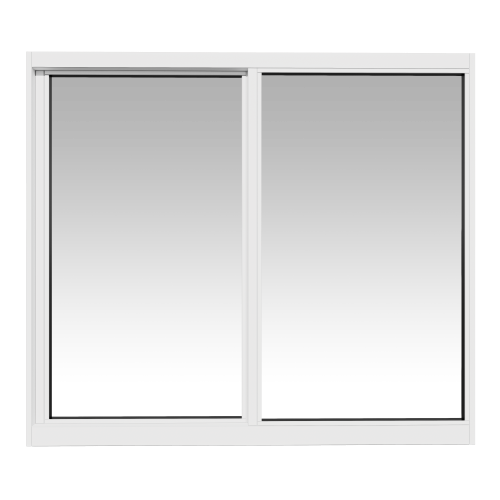
 PGT · WinGuard Aluminum Series
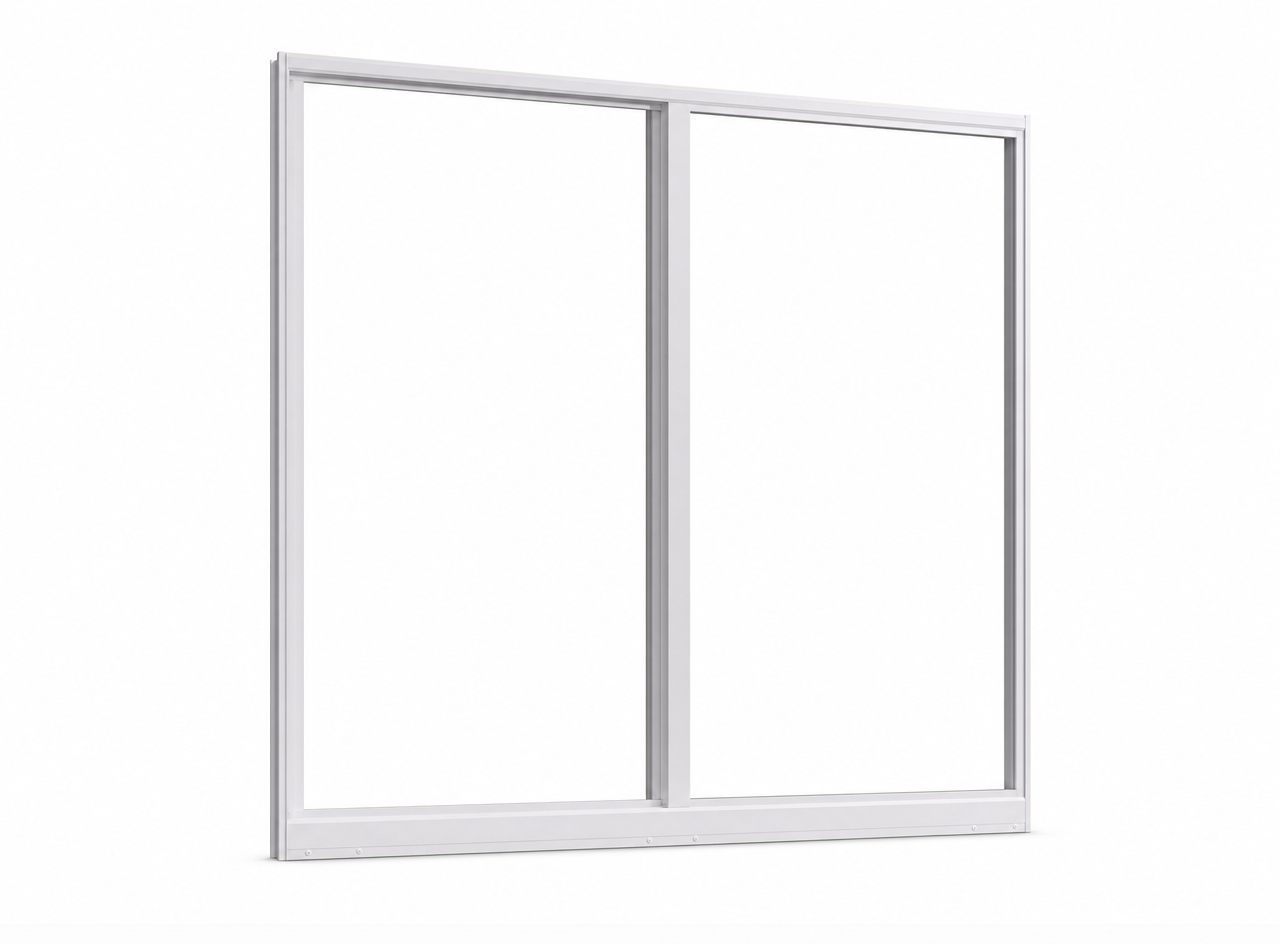
PGT WinGuard Aluminum Horizontal Roller HR7710A
Aluminum impact horizontal roller on the WinGuard 7700-series frame, opening side-to-side for wider residential openings. Diamond Glass, LMI for HVHZ.
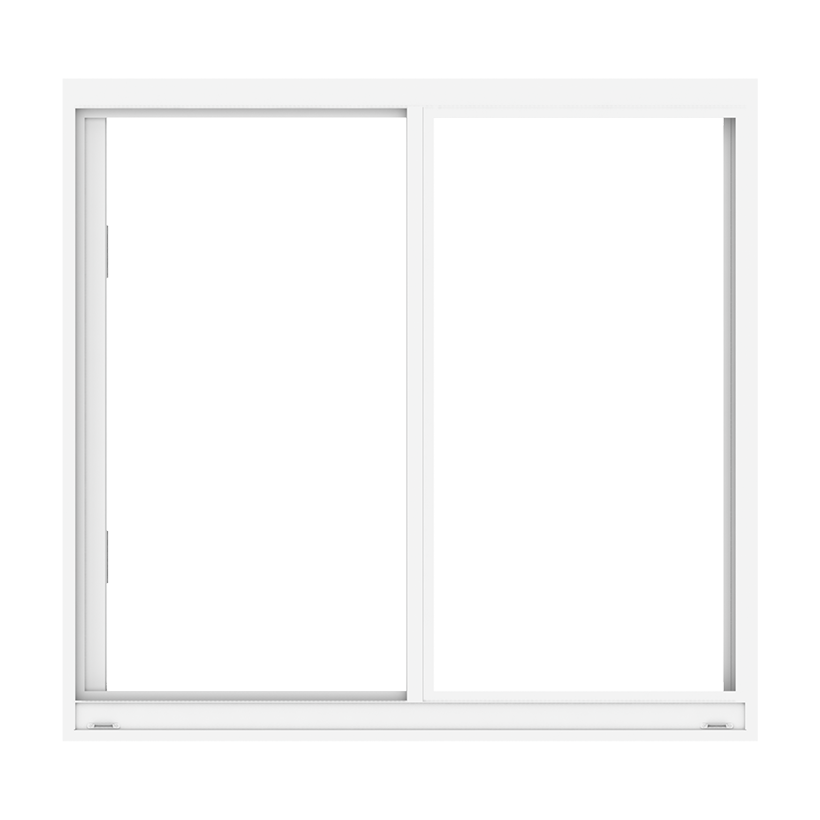
 ECO · Eco-Guard Horizontal Rolling Series
Eco-Guard Horizontal Rolling Series 200
2-3/4 in. aluminum impact roller, +80/-90 psf, LMI+SMI, NFRC-certified, in XO/XOX configurations to ~111 in. wide.
 ES Windows · Multimax Series
ES Windows Multimax ES-MX2000 Sliding Window
Value-tier aluminum impact horizontal slider in OX, XO, and XOX configurations on a 2-3/8 inch frame. Up to 111 by 63 inches, dual LMI+SMI for HVHZ.
Sequencing a Multi-Property Portfolio
With several properties, order of operations is most of the strategy:
- Rank by wind premium, not by favorite property. The same project buys a much larger credit where the premium is high and the wind share is 65 to 70 percent, so coastal Miami-Dade, Broward, Palm Beach, and Monroe holdings come first, inland properties later.
- Complete one property before starting the next. Two half-protected rentals can earn zero opening-protection credit on both. One finished rental earns its full credit while its sibling waits its turn.
- Aim at the lease calendar. Slot each property's install against its turnover date where the lead time cooperates, occupied where it does not.
- Batch by jurisdiction. Permits, inspections, and product approvals run per city or county; grouping properties in the same jurisdiction keeps the paperwork moving in parallel.
- Close the loop with the 1802. Order a wind mitigation inspection the week each property finishes, file the form with that property's policy, and calendar the five-year expiration. The credit only exists once the carrier holds the form.
Done in that order, a portfolio turns into a ladder: the first property's premium savings are already flowing while the second is in permitting.
What to Ask a Contractor Before a Rental Project
- Have you done occupied installs, and how do you sequence rooms so every opening is secured the same day?
- Who pulls the permit in this city or county, and who meets the inspector?
- Which exact products are you quoting, and what are their Florida Product Approval or NOA numbers?
- Can you price the full portfolio per opening, and hold scheduling flexibility for lease turnovers?
- Will you coordinate the OIR-B1-1802 wind mitigation inspection when the job closes out?
- Are you licensed and insured for this work, and can I verify the license number with the DBPR?
A contractor comfortable with all six questions has done landlord work before. Hesitation on the occupied-install or 1802 questions is a sign the crew has only run owner-occupied jobs.
Next Steps
- Pull each property's declarations page and note the total premium and any wind mitigation credits already applied.
- Order the OIR-B1-1802 inspection on your highest-premium property, or have us fold it into the project close-out.
- Check your lease calendar against product lead times and pick occupied install or turnover install per property.
- Ask your CPA how the project cost and the premium change flow through your return before you set the budget.
- Request a free estimate with your address list, and we will price the portfolio per opening and sequence it with you, starting where the wind premium is highest.