
The Florida product approval search lives at floridabuilding.org, the Florida Building Commission's site. Open the Product Approval menu, click "Find a Product or Application," type the digits of an FL number into the FL # box, and click search. The system returns the approval, its current status, its limits of use, and every engineering document behind it. There is no fee and no account to create.
Why does this matter to you as a homeowner? Any window, door, or shutter installed under a Florida permit must carry a current product approval: a statewide FL number under Section 553.842, Florida Statutes, or a local approval such as a Miami-Dade Notice of Acceptance (NOA). Plan reviewers check these numbers on every permit package. You can run the same check on a contractor's proposal in about five minutes, before you sign anything.
We track approvals for the products we install every day. Across the 507 current approval records in our product database, 422 are statewide Florida Product Approvals covering 43 window and door lines, and 85 are Miami-Dade NOAs covering 12 lines. The statewide system is where most lookups start, so this guide walks through it first, then shows you how to read what you find.
How to Search the Florida Product Approval System
Here is the exact process on the current site:
-
Go to the search page. From floridabuilding.org, the Product Approval section links to "Find a Product or Application." That page is the statewide search form.
-
Leave Code Version on 2023. The dropdown defaults to the 2023 code version, which matches the current Florida Building Code, 8th Edition (2023). Only change it if you are researching an approval issued under an older edition.
-
Have an FL number? Use the FL # box and stop there. Enter the digits alone:
239pulls up the whole application, while239.2jumps to one product within it. The site's own tip says to enter the FL number plus the code version and nothing else. Fewer criteria, better results. -
No FL number? Search by manufacturer or category. Pick the maker from the Product Manufacturer dropdown, or set Category to Windows, Exterior Doors, Shutters, or Impact Protective Systems. Choose a category first and the Subcategory list narrows to match (Single Hung, Sliding Glass Door, and so on).
-
Filter by what your home needs. The form includes yes/no filters for "Approved for use in HVHZ" and "Impact Resistant," plus a design pressure range. Setting Impact Resistant to Yes screens out non-impact products before you ever read a result.
-
Read the results list. Each row shows the FL number with its revision suffix (FL239-R30), the application type, the manufacturer, the validating engineer, and the status you want to see: Approved. Click the FL number to open the full approval, or History to see prior revisions.
-
Open the detail page and scroll to Summary of Products. This is where the real information lives. The next section shows you how to read it.
How to Read a Florida Product Approval
An FL number has three parts. Take FL239-R30, a PGT single hung window approval: FL239 is the application, R30 means it is on its thirtieth revision, and numbered sub-products like 239.1 and 239.2 are the individual models the approval covers.
The top of the detail page gives you the application status (Approved), the code version, the manufacturer's contacts, the compliance method, and the referenced test standards. For FL239 those standards are TAS 201, 202, and 203, the Miami-Dade impact and cycling protocols. Our impact window performance ratings guide covers what those tests measure and how design pressure ratings work.
The Summary of Products section is the part inspectors and plan reviewers actually use. Each sub-product row lists the model and its Limits of Use. Here is what each field tells you:
| Field | What it tells you | What to look for |
|---|---|---|
| Application Status | Whether the approval is in force | Approved, on the current revision |
| Model, Number or Name | The specific product covered | The exact model on your proposal |
| Approved for use in HVHZ | Legal in Miami-Dade and Broward | Yes, if you live in the HVHZ |
| Approved for use outside HVHZ | Legal in the rest of Florida | Yes for most of the state |
| Impact Resistant | Passed large missile impact testing | Yes for opening protection credit |
| Design Pressure | Wind load the product resists | A rating that meets your site's requirement |
| Installation Instructions | The anchoring drawings inspectors check | A PDF you can download and keep |
Two details trip people up. First, one FL number can hold impact and non-impact products side by side: under FL239, the SH5400
 PGT · EnergyVue Vinyl Series
PGT EnergyVue Vinyl Single Hung SH5400
Non-impact vinyl single-hung on a 3-1/2 inch welded vinyl frame with ComfortLift handles. The non-impact counterpart of the WinGuard SH5500.
Design pressure +65/-130 psf Sizes up to 52.125 x 91.75 in
See single-hung window details
is a non-impact vinyl single hung while the SH5500
PGT · EnergyVue Vinyl Series
PGT EnergyVue Vinyl Single Hung SH5400
Non-impact vinyl single-hung on a 3-1/2 inch welded vinyl frame with ComfortLift handles. The non-impact counterpart of the WinGuard SH5500.
Design pressure +65/-130 psf Sizes up to 52.125 x 91.75 in
See single-hung window details
is a non-impact vinyl single hung while the SH5500
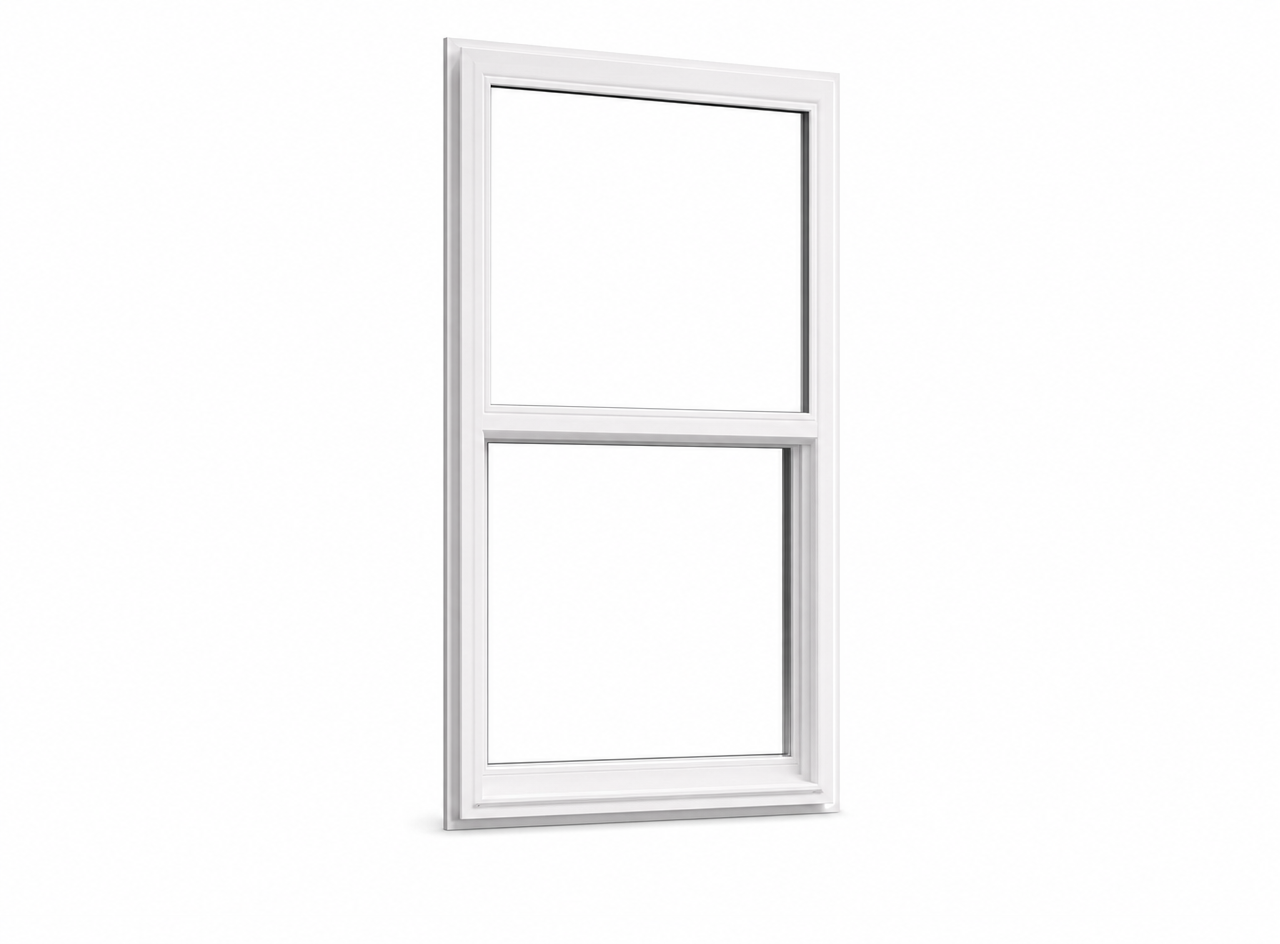 PGT · WinGuard Vinyl Series
PGT WinGuard Vinyl Single Hung SH5500
Flagship vinyl impact single-hung on a 3-1/2 inch welded frame with SecureConnect corner keys. ComfortLift handles, removable sash for cleaning, LMI for HVHZ.
HVHZ approved for South Florida Design pressure +65/-70 psf
See single-hung window details
is large missile impact rated. The FL number alone proves nothing about impact protection; the sub-product row does.
PGT · WinGuard Vinyl Series
PGT WinGuard Vinyl Single Hung SH5500
Flagship vinyl impact single-hung on a 3-1/2 inch welded frame with SecureConnect corner keys. ComfortLift handles, removable sash for cleaning, LMI for HVHZ.
HVHZ approved for South Florida Design pressure +65/-70 psf
See single-hung window details
is large missile impact rated. The FL number alone proves nothing about impact protection; the sub-product row does.
Second, Design Pressure sometimes reads N/A with a note pointing to the Miami-Dade NOA or the installation instructions for the numbers. The data exists, it just lives one PDF deeper.
The wind load your openings must resist depends on your location and exposure. Our wind zone lookup shows the design wind speed for any Florida address, and our guide to the Florida Building Code's impact window requirements explains which zones require opening protection.
FL Numbers vs Miami-Dade NOAs
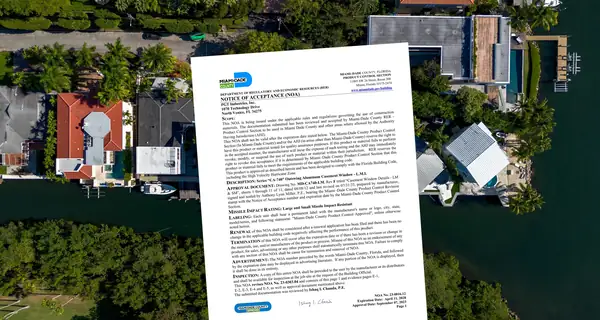
Florida runs two parallel approval currencies. The statewide FL system covers eight product categories, windows and exterior doors among them, and is accepted by building departments across the state. Miami-Dade County operates its own product control program, and its Notice of Acceptance is the document reviewers in that county work from.
The short version of when each governs: outside the High Velocity Hurricane Zone, the FL number is the standard route, and it is what most Florida plan reviewers expect on the product approval sheet. Inside the HVHZ—Miami-Dade and Broward counties—products must meet the code's stricter HVHZ provisions, and Miami-Dade reviewers work in NOAs. Most HVHZ-rated products carry both credentials, and the two systems interlock: FL239's HVHZ listing rests on Miami-Dade certification, and its own detail page points to the NOA for anchorage specifics.
The NOA lookup deserves its own walkthrough, and we cover that process separately. For the rest of the state, the statewide search above is the tool you need.
Checking a Contractor's Proposal Against the Approval System
This is the payoff for homeowners. A legitimate impact window proposal names the manufacturer and model for every opening. Take those models to the search and confirm four things:
- The model appears in the Summary of Products of a current, Approved application.
- Impact Resistant reads Yes for every opening you are paying impact prices for.
- The HVHZ field matches your county.
- The design pressure rating covers what your site requires.
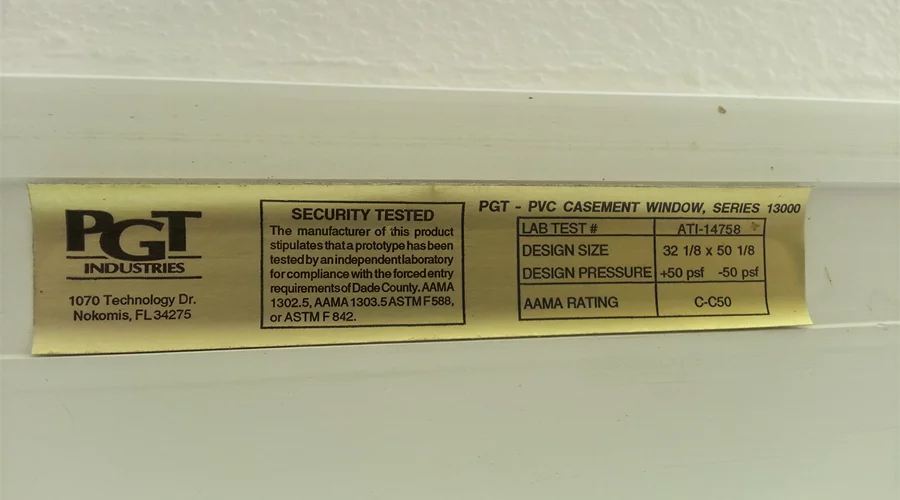
A proposal that lists no product models, or names a model you cannot find in the system, deserves questions before a deposit. The same check helps if you are unsure whether existing glass is protective; our guide on how to tell if windows are impact rated shows where to find the FL or NOA number etched in the glass corner or on the frame label.
The approval number follows the product through the whole job. Your contractor lists it on the permit application, the plan reviewer confirms it, and the inspector compares the installed anchoring to the approval's installation instructions. Product approval documents are part of the permit package you are already paying for; our breakdown of impact window permit costs in Florida shows what that review covers county by county.
Next Steps
If you want the lookup done for you, we list the FL and NOA numbers for the products we quote, and we can walk you through the approval for every opening on your home. Request a free estimate and we will put the model numbers, approval documents, and design pressures for your specific openings in writing.