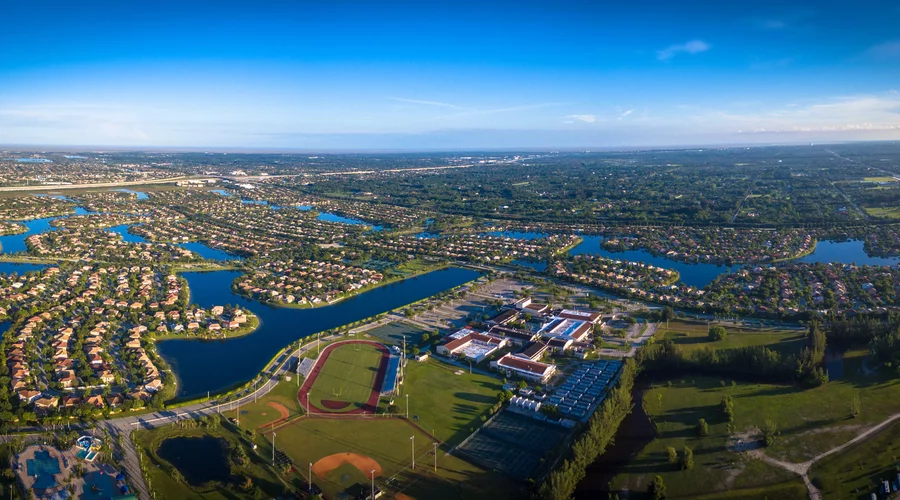

Florida's Wind-Borne Debris Region (WBDR) is the map that decides where impact windows and shutters are mandatory, and for decades it has followed the coast. (With one brief exception: for about seven months, from December 31, 2023 until an August 2024 technical amendment, ASCE 7-22 wording extended it to large inland lakes.) A growing body of research argues it should also cover homes near Florida's large inland lakes, where open water accelerates hurricane winds much as the ocean does. University of Florida modeling has found that a home within 3,000 feet of a big lake can face the same wind-borne debris risk as a home on the coast.
That idea has moved from research into formal building-code proposals, making it one of the more consequential open questions for Central Florida homeowners. This report covers what has been proposed, what the science shows, where the proposals stand, and what it means if your home sits near a big lake.
What Is the Wind-Borne Debris Region?
The WBDR is a designation in the Florida Building Code that identifies areas where wind-borne debris (roof tiles, lumber, gravel, building fragments) poses a significant threat to windows and doors during hurricanes. In these areas, all new construction must have impact-rated glazing or approved hurricane shutters on every opening.
Under the current 8th Edition FBC (2023), the WBDR includes:
- Areas within 1 mile of the coastal mean high-water line where the ultimate design wind speed is 130 mph or greater
- Any location where the ultimate design wind speed is 140 mph or greater, regardless of distance from the coast
This definition is focused on the coast. It covers all of Palm Beach, Pinellas, and Monroe counties, plus coastal portions of Lee, Collier, Brevard, Hillsborough, Sarasota, and other coastal counties.
What it does not cover: inland Central Florida, where homes sit next to large lakes that produce the same wind acceleration effects as open ocean. The 2025 proposal would have changed that. It did not pass, so this is the definition that remains in force.
The Expansion Proposals
Two forces put the inland expansion on the table: a change in the national wind standard that Florida references, and a state-commissioned research study built to test whether inland lakes really carry coastal-level debris risk.
The ASCE 7-22 Trigger
The story starts with a technical change in the national wind load standard. ASCE 7-22, the American Society of Civil Engineers standard referenced by the Florida Building Code for wind load calculations, made a significant change to the WBDR definition: it removed the word "coastal."
The previous standard defined the WBDR boundary as "1 mile from the coastal mean high-water line." The problem was that "coastal mean high-water line" was never formally defined, and its interpretation varied across Florida's 67 counties. Some jurisdictions measured from the ocean shoreline. Others measured from tidal estuaries. None of them considered inland water bodies.
ASCE 7-22 replaced the coastal reference with a physics-based criterion: the WBDR boundary is measured from any water body where an Exposure D condition exists upwind. Exposure D occurs when there are at least 5,000 feet of unobstructed flat terrain (including water) in the upwind direction. Open ocean qualifies. So do large inland lakes.
This single word change, from "coastal" to a physics-based exposure criterion, would have brought hundreds of thousands of inland Florida homes into the theoretical WBDR.
Florida's Response: Study First, Then Decide
The 8th Edition FBC initially adopted the expanded ASCE 7-22 definition, effective December 31, 2023 — so for about seven months the inland version of the WBDR was, on paper, Florida law. In 2024 the Florida Building Commission walked it back: a rarely-used Annual Technical Amendment (Supplement 2, August 2024) restored the old "coastal" language before the inland reading saw meaningful enforcement, and the Commission simultaneously engaged the University of Florida and Applied Research Associates (ARA) to study whether the inland expansion was scientifically justified.
The question they asked was specific: does wind-borne debris near large inland lakes actually pose the same level of threat as debris near the coast? That study is what made the 2025 proposal credible, and its findings are worth understanding even though the change did not pass.
What the Research Found
The HurMis Debris Simulation Model
UF and ARA used HurMis (Hurricane Missile), a validated 3D physics-based debris simulation model that tracks individual pieces of wind-borne debris through realistic wind fields, terrain, and building configurations. This is not a theoretical wind speed calculation. It is a simulation that generates thousands of individual debris trajectories and counts how many hit buildings at what velocities.
The study parameters:
- 30 representative Florida neighborhoods (23 near inland lakes, 7 near the coast)
- 84 identical houses per simulation (standardized to control for building variations)
- Each house had 30 openings: 27 windows, 2 entry doors, 1 garage door
- Debris sources per neighborhood: 1,800 asphalt shingle components, 84 roof deck panels (4x8 ft plywood), and framing components from 84 houses
- Wind fields: Florida-specific hurricane wind models calibrated to ASCE 7-22 design wind speeds
- Terrain: Site-specific terrain roughness profiles based on actual land use data for each neighborhood
The model tracked each piece of debris from the moment it separated from its source building through its flight path, accounting for drag, gravity, wind turbulence, and terrain effects, until it either hit a building opening or landed on the ground.
The Key Finding
Homes within 3,000 feet of large inland water bodies face wind-borne debris impact risk equal to or greater than homes currently required to have impact protection in coastal areas.
The 3,000-foot distance was not arbitrary. It emerged from the data as the distance at which suburban terrain roughness (trees, buildings, fences) has attenuated wind speeds enough to reduce debris risk below the level the current code considers significant. Beyond 3,000 feet, the debris impact rate drops progressively. Within 3,000 feet, the wind acceleration from the open water surface maintains velocities high enough to generate dangerous debris.
That finding led to a proposed compromise: a single 3,000-foot boundary measured from any qualifying water body, coastal or inland, with at least 5,000 feet of fetch. It would have added inland WBDRs around large Central Florida lakes while reducing the coastal boundary from 1 mile to 3,000 feet, for a net 43 to 56 percent reduction in total regulated area statewide. The regulated area would have gotten smaller overall while becoming more precisely targeted at genuine risk.
Which Lakes the Study Identified
The study flagged approximately 23 inland lakes and bays with at least 5,000 feet of fetch in the 130-140 mph design wind speed zone, concentrated in Central Florida:
| County | Notable Water Bodies | WBDR Status (then and now) |
|---|---|---|
| Lake | Lake Apopka, Lake Harris, Lake Griffin, Lake Eustis, Lake Dora | Not in WBDR |
| Polk | Lake Kissimmee, Crooked Lake, Lake Haines, Lake Hamilton | Not in WBDR |
| Seminole | Lake Jesup, Lake Monroe (northern portion) | Not in WBDR |
| Orange | Lake Apopka (western shore), East Lake Toho | Not in WBDR |
| Osceola | Lake Tohopekaliga, East Lake Toho | Not in WBDR |
| Volusia | Lake George, Lake Monroe (eastern portion) | Partially in WBDR (coastal areas) |
| Marion | Lake George (northern shore), Lake Weir | Not in WBDR |
| Sumter | Lake Panasoffkee | Not in WBDR |
Because the change did not pass, every "Not in WBDR" entry above stays exactly that. The housing stock around these lakes is predominantly 1980-1990 construction, built before the modern Florida Building Code, with non-impact windows now 35 to 45 years old and approaching the end of their service life. Those homeowners are in the natural window-replacement cycle regardless of any code mandate.
Where the Proposals Stand
For all the supporting science, the inland WBDR expansion did not become code.
The change moved through the 9th Edition rulemaking as two code modifications, a residential and a building version. A Structural Technical Advisory Committee reshaped it in October 2025 into a version that gave newly-covered inland homes a choice: install impact protection, or engineer the house to higher "partially enclosed" wind pressures. Then, at the Florida Building Commission plenary on December 9, 2025, the Commission voted to deny both versions, by 12 to 2 and 13 to 1. The current WBDR definition, the coastal 1-mile and 140-mph-anywhere rule described above, remains in force.
The detail that decides whether this is truly over: the engineer who presented the change, testifying for a building-code group, asked the Commission to deny it so he could keep working on the issue. The home builders, apartment, roofing, and pool-industry associations, along with Miami-Dade County, all supported denial, largely on cost and feasibility grounds. So this was not the science being rejected. It was an unfinished rule sent back for more work, and the University of Florida research behind it still stands, which means a revised version can return in a future code cycle.
A separate legislative effort went the same way. Two 2026 bills, HB 911 and SB 1218, would have mandated 160-mph wind protection (walls, roof, doors, glazing) for certain new construction within five miles of tidal water. Both died in committee on March 13, 2026. You may still see other companies present the "160 mph within five miles of the coast" rule as upcoming Florida code. It is not. Those bills did not pass, though a future legislative session could refile them.
One important clarification: the 9th Edition FBC still takes effect December 31, 2026. It carries other changes, including adoption of ASCE 7-22 wind provisions and a tighter glazed Solar Heat Gain Coefficient limit of 0.25 in Florida's climate zones. What it does not carry is the inland WBDR expansion. (As with any code in its final adoption window, homeowners and builders should confirm the published 9th Edition text for their county before relying on a specific provision.)
The Risk Near Big Lakes Did Not Go Away
Here is the part that matters most. A code change was denied. The debris physics were not. The same simulation results, and the storms that produced them, still describe real risk near large inland lakes.
Real hurricanes have produced documented wind-borne debris damage in inland areas near water bodies, including areas that are not classified as WBDR.
Hurricane Charley (2004): After making landfall at Punta Gorda as a Category 4 storm, Charley tracked northeast directly across Central Florida. Wind-borne debris damage was documented in Orlando more than 3 miles inland from the nearest large water body. The damage was not just from direct wind. It came from debris propelled across open water surfaces and accelerated into residential neighborhoods.
Hurricane Michael (2018): In the Panhandle, significant debris damage was documented more than 3 miles inland from St. Andrew Bay, in areas not classified as WBDR. Homes near the bay experienced debris impacts that homes farther inland, shielded by terrain and other buildings, did not. The pattern matched the physics: open water accelerates wind, which generates and propels debris.
Hurricane Ike (2008): Along the Texas coast, post-storm assessments documented debris damage from failing asphalt shingles and vinyl siding at wind speeds as low as 90 to 110 mph. Many Central Florida inland areas have design wind speeds of 130 to 140 mph, well above the threshold at which shingle and siding debris becomes dangerous.
A limitation the researchers acknowledged: post-hurricane damage assessments prioritize coastal areas. Inland debris damage is systematically under-documented because survey teams focus on where the worst damage is expected, the coast, not where it might also exist, near inland lakes. The absence of documented inland damage is not evidence that it does not occur. It is evidence that nobody was looking.
So if your home sits within a few thousand feet of a big lake, the code does not require impact protection, but the research that almost changed the code says your risk is real.
What Impact Windows Cost If You Choose to Upgrade
Because no mandate applies, this is now a voluntary decision. The UF/ARA cost analysis is still a useful benchmark for what that decision involves.
New Construction
Adding impact-rated windows and doors to a new home in the 130-140 mph wind speed zone increases total construction cost by only 1.7 to 2.7 percent. On a $350,000 new home, that is roughly $6,000 to $9,500. For context, that is less than most kitchen upgrades, and unlike granite countertops, impact windows reduce your insurance premiums, lower your energy bills, and protect your family during hurricanes.
The Benefit-Cost Ratio
The study calculated the benefit-cost ratio (BCR) by comparing the cost of impact-resistant fenestration against the expected reduction in insured losses over 10 years:
| Scenario | BCR (10-Year) | What This Means |
|---|---|---|
| 130 mph, Exposure C (coastal equivalent) | 61-110% | Recover 61-110% of window cost through avoided damage in 10 years |
| 140 mph, Exposure B (suburban inland) | Higher | Better return due to higher wind speed |
A BCR of 61 to 110 percent means impact windows pay for themselves, or close to it, through avoided damage alone within a decade, before factoring in insurance savings ($300-$800/year in Central Florida), energy savings ($500-$800/year), or property value increases (7-10%). The study also noted that intangible costs (displacement from a damaged home, loss of irreplaceable property, stress) are not captured in the BCR, which makes the real case stronger.
Existing Homes (Retrofit)
For existing homes, the cost is higher because you are replacing functional, if aging, windows rather than specifying impact as part of new construction. Typical retrofit costs for a Central Florida home with 12-15 openings range from $15,000 to $40,000 depending on product tier. See our complete cost guide for pricing by window type, frame material, and manufacturer. The My Safe Florida Home program offers matching grants up to $10,000 for qualifying improvements, and a free wind mitigation inspection is worthwhile regardless of where you live.
The 25% Rule Still Applies, But Only Inside the WBDR
If your home is already in the coastal WBDR, the 25% rule governs your replacements:
If you replace more than 25% of the total glazed opening area of your home within a 12-month period, all replacement windows must meet current impact standards.
This rule is measured by total glass surface area, not by number of windows. A single large sliding glass door might represent 15 to 20 percent of your total glazed area by itself.
Because the inland expansion did not pass, the 25% rule does not newly apply to homes near Central Florida lakes that sit outside the current WBDR. Those homeowners can replace windows with non-impact units if they choose. The case for choosing impact anyway rests on the benefits and the documented risk, not on a mandate.
What You Should Do Now
If You Live Near a Large Central Florida Lake
1. Know your actual situation. There is no inland WBDR mandate, so impact windows are not required. But if you are within roughly 3,000 feet of a lake with 5,000-plus feet of open water in a 130-plus mph wind zone, the UF/ARA research says your debris risk is comparable to regulated coastal homes. Treat it as a real risk you can choose to address, not a requirement you are waiting on.
2. Weigh impact windows on their year-round merits. Even with no code pressure, impact windows deliver insurance savings, lower cooling costs, UV protection, and noise reduction every day, not only during a storm. For a lakefront home in the natural replacement cycle, they are often the better long-term value.
 PGT · WinGuard Aluminum Series
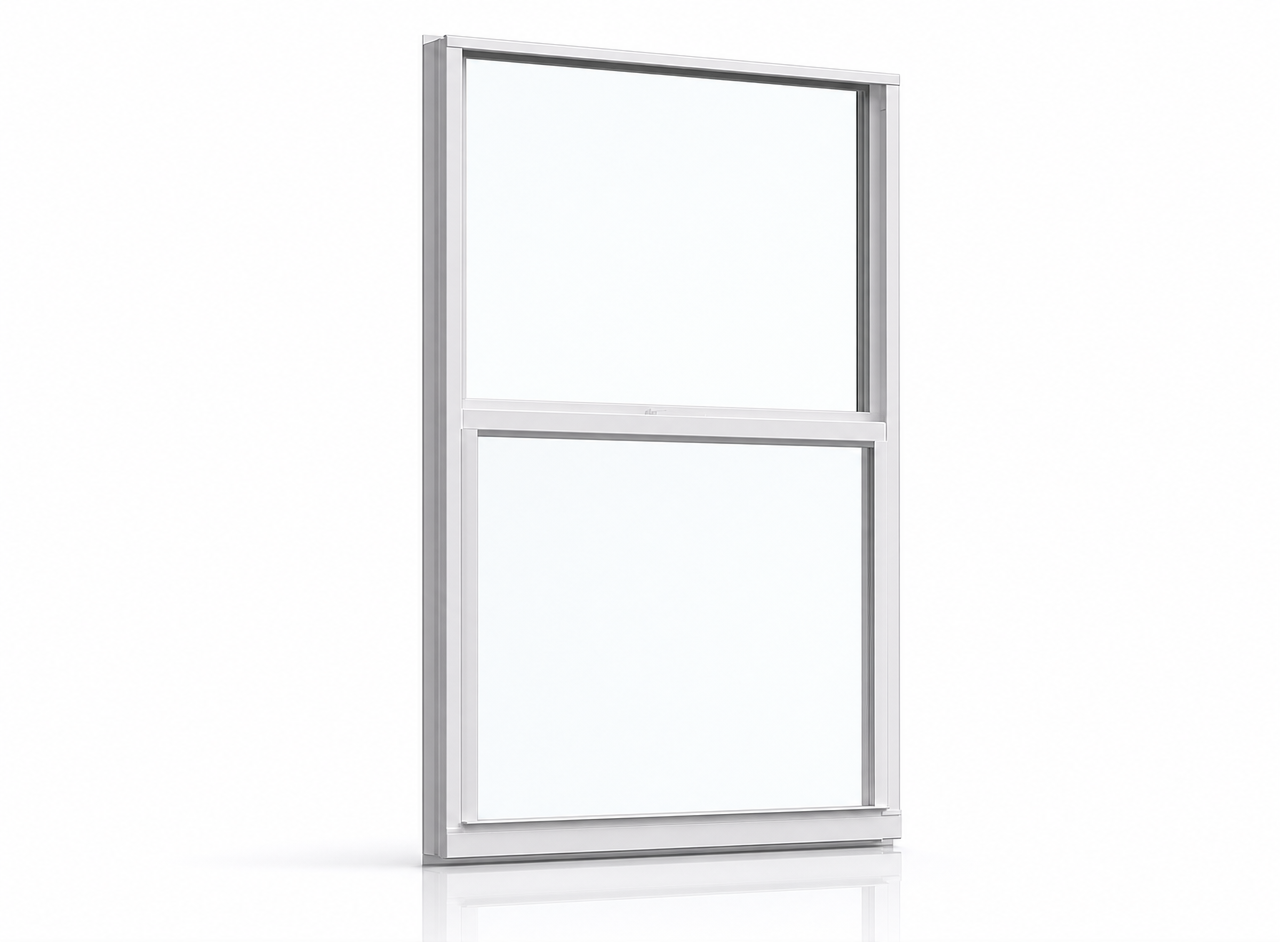
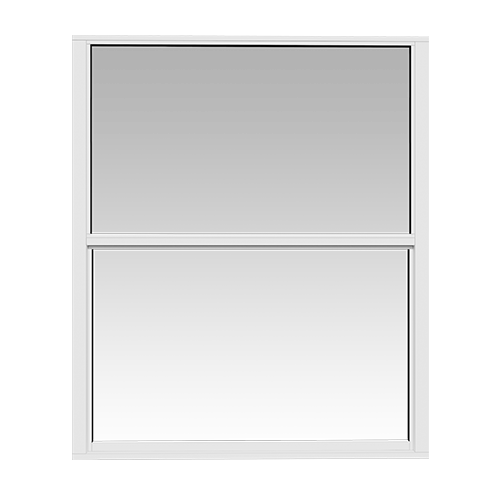
PGT WinGuard Aluminum Single Hung SH7700A
Aluminum impact single-hung on the WinGuard 7700-series frame with Diamond Glass laminated glazing. LMI impact-rated for Miami-Dade and Broward HVHZ installations.
 ECO · Eco-Guard Single Hung Series
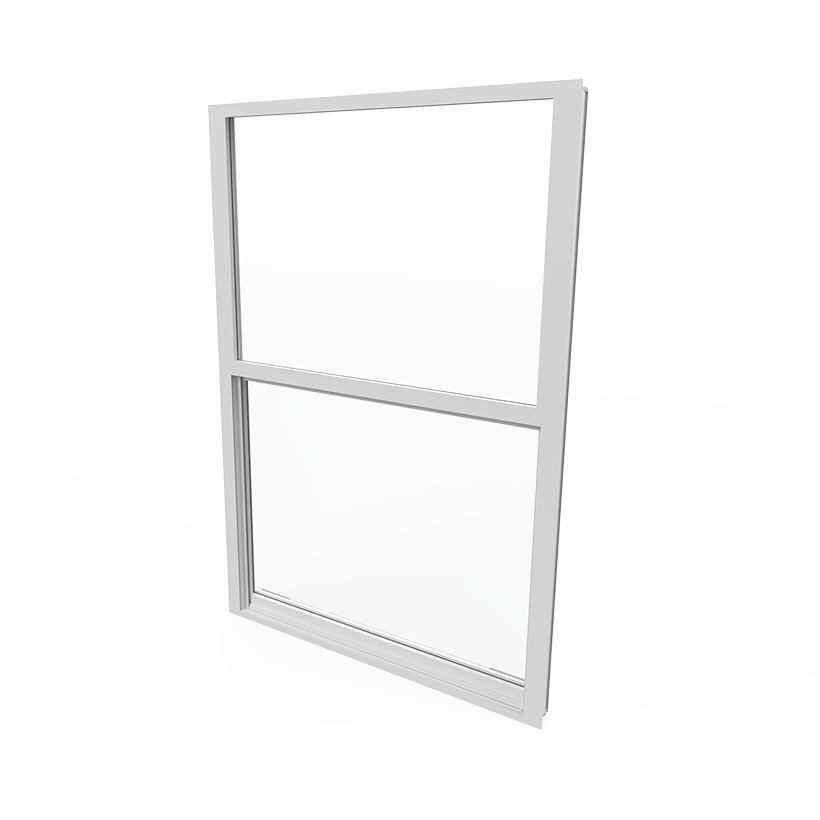
Eco-Guard Single Hung Series 50
Entry aluminum impact single hung on a 2-1/8 in. frame, +55/-60 psf, LMI for HVHZ, with block-and-tackle balances.
 ES Windows · Elite Series
ES Windows Elite ES-EL100 Single Hung
Aluminum impact single-hung on a 2-15/16 inch frame with block-and-tackle or ultra-lift balances. Saflex/Kuraray PVB, Vanceva Storm, and SentryGlas Plus interlayers available.
3. Get a free wind mitigation inspection. Through the My Safe Florida Home program, a free inspection documents your home's existing features and can immediately lower your insurance premiums by recording any mitigation features you already have.
If You Are Building a New Home Near an Inland Lake
Consider specifying impact windows from the start. The cost premium is only 1.7 to 2.7 percent of total construction cost. Whether or not a future code revisits the inland WBDR, the home gains permanent hurricane protection, insurance savings from day one, lower cooling costs, and higher resale value. Building to a higher standard is rarely a mistake in Florida.
If You Are Buying a Home Near a Central Florida Lake
Ask about the windows. If the home has non-impact windows and sits within 3,000 feet of a large lake, factor a possible future impact upgrade into your offer. No code requires it today, and the insurance and energy benefits make the upgrade worthwhile on their own.
Next Steps
- Get a free estimate to understand the cost of impact windows for your specific home, whether you are inside or outside the current WBDR.
- Check your distance from the nearest large lake and your wind zone requirements.
- Apply for a free inspection through the My Safe Florida Home program to document your current mitigation features and potentially qualify for grants up to $10,000.
- Compare your options in our impact windows cost guide, with pricing by window type, frame material, and manufacturer.
- Bookmark this page. If a future code cycle revisits the inland WBDR, we will update it here.