
Hurricane Helene made landfall about 10 nautical miles southwest of Perry, Florida late on September 26, 2024 as a Category 4 with 140 mph winds. Hurricane Milton came ashore at Siesta Key thirteen days later, on the evening of October 9, as a Category 3 with 115 mph winds. Two years on, the most durable lesson from the pair has little to do with wind speed: the year a house was permitted predicted its outcome better than which storm reached it. In the state's own post-storm survey of 358 structures, not one home built to the Florida Building Code was destroyed by either event, while 46% of pre-code homes in the Big Bend surge zone were.
That is the anniversary read in one paragraph. The rest of this piece works through it: what the two storms actually did according to the National Hurricane Center's final reports rather than the figures that circulated during the event, what the building performance survey found and what it did not, what the claims aftermath taught the people who filed, what has and has not changed in the code since, and what a Florida homeowner should take from all of it heading into the 2027 season.
We install impact windows and doors across South Florida every week, so treat this as a contractor's reading of the public record. The record does more work here than any sales argument would.
What Helene and Milton Actually Did
Both storms have final Tropical Cyclone Reports from the National Hurricane Center, which supersede everything reported while the storms were in progress. Several widely repeated numbers from October 2024 did not survive that review.
| Hurricane Helene | Hurricane Milton | |
|---|---|---|
| Florida landfall | ~10 n mi SW of Perry, 0310 UTC Sept 27 (11:10 pm EDT Sept 26) | Siesta Key, 0030 UTC Oct 10 (8:30 pm EDT Oct 9) |
| Landfall intensity | Category 4, 140 mph, 939 mb | Category 3, 115 mph, ~958 mb |
| Peak intensity | 140 mph, reached 6 hours before landfall | 180 mph, 895 mb over the Gulf on Oct 7 |
| Peak Florida surge | 12 to 16 ft above ground, Keaton Beach to Steinhatchee | 6 to 9 ft above ground, Venice to Boca Grande |
| Tornadoes | Isolated | 45 on land plus a waterspout, including three EF-3s |
| US damage (NCEI) | $78.7 billion | $34.3 billion |
Sources: NHC Tropical Cyclone Report on Helene and NHC Tropical Cyclone Report on Milton.
Helene was the strongest hurricane to strike the Florida Big Bend since reliable records began around 1900, and it was moving at 27 knots when it did, which pushed damaging gusts hundreds of miles inland. Its wind field was larger than roughly 90% of comparable storms at similar latitude. The water record it set matters more to homeowners than the wind: the Cedar Key tide gauge read 9.30 feet above mean higher high water, the highest since that station opened in 1914, and St. Petersburg's gauge read 6.31 feet, breaking a 1985 record on a station dating to 1947. Helene is responsible for at least 250 deaths in the United States, making it the deadliest hurricane in the contiguous states since Katrina.
Milton was a different animal. It reached 180 mph over the Gulf with a central pressure of 895 mb, tying Rita for the fourth-lowest ever measured in an Atlantic hurricane, then hit shear on approach and weakened to 115 mph by landfall. The strongest sustained wind actually measured in Florida was 91 mph with a gust to 107 mph, at a University of Florida tower at Venice Beach. Its tornado outbreak was the standout: 45 tornadoes on land, three of them EF-3, which made Milton the first tropical cyclone in the Storm Prediction Center's records since 1995 to produce more than one EF-3.
Two details are worth holding onto. Milton's surge was worst well south of the eye, cutting a new inlet through Manasota Key, while Tampa Bay saw only 1 to 2 feet because the winds there blew offshore. And Milton crossed ground Helene had already stripped thirteen days earlier, which is why damage attribution in that corridor is still imperfect.
The Building Performance Finding That Matters Most
Before the survey findings, one number from our own shelf. Across the 732 impact-rated design pressure records in our product approval database, covering 271 distinct products in the large- and small-missile classes, the median rated suction pressure is 87 psf and 79% of records rate at 70 psf or higher. That is what an impact-rated opening on the market today carries, and it is a useful floor to keep in mind when reading what happened to openings in 2024.
The University of Florida and Auburn University conducted the field reconnaissance for the Florida Building Commission and delivered Report 02-25 in June 2025. They assessed 358 single-family and multi-family structures, 173 on site and 185 by imagery, across the Big Bend surge zone and the East Coast tornado paths.
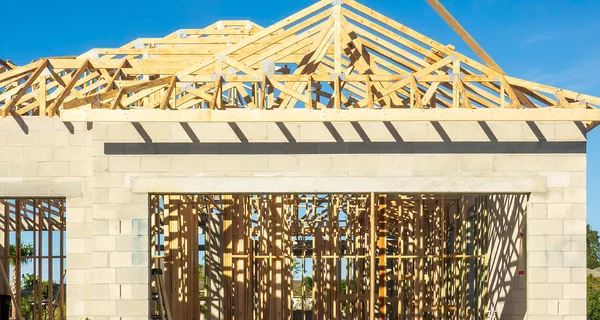
The headline is a zero. Of the 43 post-code residential structures in the coastal dataset, none were destroyed and none suffered more than moderate damage. Of the 178 pre-code structures in the same hazard, 46% were destroyed, most swept off their foundations. Every one of the 78 structures observed collapsed, partly collapsed, or shifted off its foundation was pre-code. In the tornado paths the pattern repeated: one post-code home in the whole set landed in the heavy-damage or destroyed category.
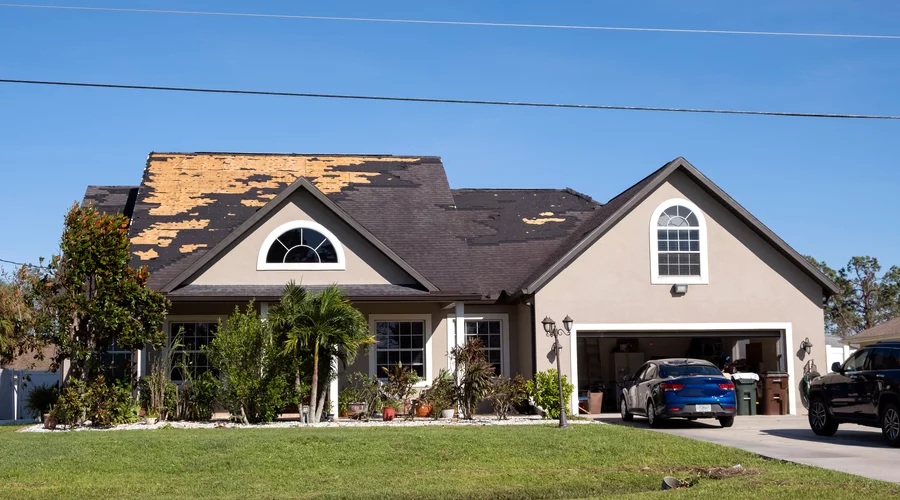
That finding deserves more room than an anniversary retrospective can give it, and we already gave it that room. Our full breakdown of the study, code era by code era and failure mode by failure mode, is in how Florida's building code performed during Helene and Milton. What belongs here is the part homeowners keep getting wrong: this is not a claim that a post-2002 house is storm-proof. Post-code homes in the Big Bend took water, lost cladding, and lost roof cover. The code kept them standing and repairable. That is the whole promise, and it held.
One honest counterexample from the same report: in the Spanish Lakes neighborhood of St. Lucie County, a piece of roof decking driven by an EF-3 tornado passed through an impact-rated window. Impact glass is certified against a nine-pound 2x4 at 50 feet per second. Tornado debris fields can exceed that. Impact windows in other homes along the same track performed as designed, so this reads as the edge of the envelope rather than a product failure, but it is in the record and we are not going to leave it out.
What the Insurance Aftermath Taught
The performance data was the good news of 2024. The claims data was not.
Independent analyses of Florida's 2024 residential storm claims found that roughly half were denied and that about 60% closed without payment, with damage falling below the deductible the single largest denial reason at 30%. Read carefully, those are not primarily stories about carriers behaving badly. They are stories about the arithmetic of a percentage-based hurricane deductible meeting a partial loss.
Florida hurricane deductibles run $500 flat or 2%, 5%, or 10% of dwelling coverage. On a home insured for $450,000, a 2% deductible is $9,000. Two broken windows and the water that followed them frequently price out below that, and a claim that prices below the deductible closes without payment by definition. The homeowners most surprised by this in late 2024 were the ones who had assumed a named storm meant a check.
The mechanics of getting a window claim documented, developed, and paid belong to a separate piece, and we wrote one: filing a hurricane window damage claim in Florida walks the deadlines, the scope arguments, and the supplement window. The lesson for this retrospective is narrower. Storm damage to openings is largely a self-funded repair for Florida homeowners, whatever the policy says. Anyone budgeting for a hurricane on the assumption that insurance absorbs opening damage is budgeting on a premise the 2024 data does not support.
The Opening That Failed Twice
The single most useful thing the two storms exposed is that one opening carries both the structural risk and the insurance risk, and it is not a window.
Structurally, the survey found garage doors initiating failures in otherwise code-compliant homes. In the Spanish Lakes neighborhood, homes built in 2019 and later lost garage doors on windward walls; once the door went, internal pressurization lifted the roof decking from the inside. The report's own phrasing is that garage doors can act as damage amplifiers. Florida's residential code has historically permitted garage doors to be designed for 60% of the ASCE 7 wind pressures other components carry, and 2024 put that allowance under scrutiny.
On the insurance side, the same opening governs the money. Florida's wind mitigation opening protection credit is all or nothing: every glazed opening on the home must be protected to earn the full rating. Windows, sliding glass doors, entry doors with sidelites or transoms, skylights, and garage doors with decorative glass inserts all count. A single unprotected glazed opening drops the whole home out of the credit. We have walked homes with a full set of impact windows earning no opening protection credit because of one glazed garage door, which is a costly way to learn a form's rules.
Armor Pro installs impact-rated aluminum garage doors, so the fix is available. The point for the anniversary is structural, though: the weakest opening decides both outcomes, and in 2024 it was the same opening twice.
What Changed in the Code Since 2024
Less than the 2024 headlines implied, and the reasons are worth knowing.
The most-watched proposal was an expansion of the Wind-Borne Debris Region inland, which would have pulled homes around large Central Florida lakes into impact-glazing requirements. The Florida Building Commission voted it down on December 9, 2025, denying the building code and residential code versions on 12-2 and 13-1 votes, per the Commission's minutes. The detail that gets lost in coverage of that vote: the group proposing the change asked for the denial itself, to keep developing the idea. It is out of the 9th Edition, not off the table.
On the legislative side, HB 911 and SB 1218, which would have set a 160 mph building envelope standard, both died in committee on March 13, 2026.
The 9th Edition of the Florida Building Code is still moving through rulemaking, with an expected effective date of December 31, 2026. Until it is adopted, the current Wind-Borne Debris Region definition stands: within one mile of the coast where the ultimate design wind speed is 130 mph or higher, and anywhere the ultimate design wind speed reaches 140 mph. If you are told your county's requirements changed because of Helene and Milton, ask which adopted provision changed, because as of this writing the fenestration requirements did not.
What Changed in How Florida Buys
The visible shift after 2024 was in the questions homeowners ask us, not in the code.
Before Helene, the common opening question on an estimate was whether impact glass genuinely performs in a real hurricane. That question has largely gone away, and we credit the survey data for it. The questions that replaced it are sequencing questions: which openings first, what a partial retrofit does to the insurance credit, whether shutters on the back bedrooms are a reasonable way to reach full coverage on a budget. Those are better questions, and the all-or-nothing rule is why they have a real answer. A mixed approach, impact units on the openings you live with and rated shutters on the rest, earns the same credit as a full impact retrofit, at a different price.
The second shift is geographic. Helene's surge reached record levels in Pinellas, Hillsborough, and Manatee counties, which are not places that had thought of themselves as front-line. That widened the map of homeowners who consider hardening a live decision rather than a South Florida concern.
The third is less encouraging. The claims data pushed a share of homeowners toward the cheapest possible post-storm repair, replacing broken units in kind rather than upgrading. That is understandable when the repair is self-funded. It also means a house can pass through a hurricane, get repaired, and end up no better protected than it was, which is the outcome the code's 25% rule and the opening protection credit both exist to prevent.
The Honest Takeaway for the 2027 Season
Nothing in the 2024 record supports panic buying, and nothing in it supports waiting either. What it supports is a specific sequence.
Know your code era. A house permitted before March 2002 was not built to the statewide Florida Building Code, and the survey data separates decisively at that line. If your home is pre-code, opening protection is the single most effective improvement available to you, and the surge data says elevation and location still govern outcomes that no window can change.
Count your openings, all of them. The insurance credit and the structural performance both turn on complete coverage, and both are lost at the same weak point. Glazed garage doors, skylights, and door sidelites are where that count usually goes wrong.
Budget as though you are paying for repairs yourself, because the 2024 claims data says you probably will. That reframes the impact window decision honestly: it is not primarily an insurance play, it is a way of not needing the repair.
Do the work off-season. Lead times run weeks to months, permits take their own time, and no part of that compresses in the days before a named storm. Our hurricane season preparation guide covers the calendar, and what to do about window damage after a hurricane covers the other end of it.
Two years out, Helene and Milton have made the same argument that Andrew, Charley, and Michael made before them, with better data behind it. Openings decide outcomes. The code knows it, the wind mitigation form knows it, and after 2024 the field survey has 358 more structures worth of evidence for it.
Next Steps
Start with your permit date and an opening count, including the garage. If that count turns up gaps, we will walk the house with you, price a full-coverage approach against a mixed impact-and-shutter approach, and give you both numbers without a pitch attached. Request a free estimate and we will schedule around your calendar, not a storm's.