
Window damage after a hurricane puts you in a race you did not sign up for: water is finding the opening, the insurance clock is running, adjusters will judge the scene by what you preserved, and the least trustworthy contractors in Florida are already driving toward your neighborhood. The good news is that the right sequence is short, specific, and fully manageable by a homeowner in 72 hours.
This is the order that protects your family, your house, and your claim. Do the steps in order; most post-storm mistakes are just these steps done backwards.
Hour Zero: Make It Safe
Before any photograph or phone call, deal with the physical hazards.
- Treat every damaged opening as sharp and unstable. Laminated impact glass cracks and holds; ordinary annealed glass leaves shards in carpet, sills, and grass for weeks. Keep children and pets out of the room entirely, shoes on for everyone else.
- Look at the frame, not just the glass. A window or door frame that has pulled from the wall, a slider that has jumped its track, or a garage door panel bowed inward can shift again without warning. Do not force operable damaged units open or closed; you can worsen both the damage and the safety picture.
- Check for the non-glass hazards around the openings. Soaked ceilings above a breached window can drop; outlets and fixtures below water intrusion are an electrical risk until checked. If a wall around an opening has visibly moved, stay out of the room and get a professional opinion before re-entering.
- Mind the outside approach. Downed lines, gas smell, and unstable trees kill more people after storms than during them. The window can wait an hour; the wires cannot be assumed dead.
Hours 1-4: Document Before You Touch Anything
The single most valuable thing you can do for your claim costs nothing: photograph and video everything before cleanup begins.
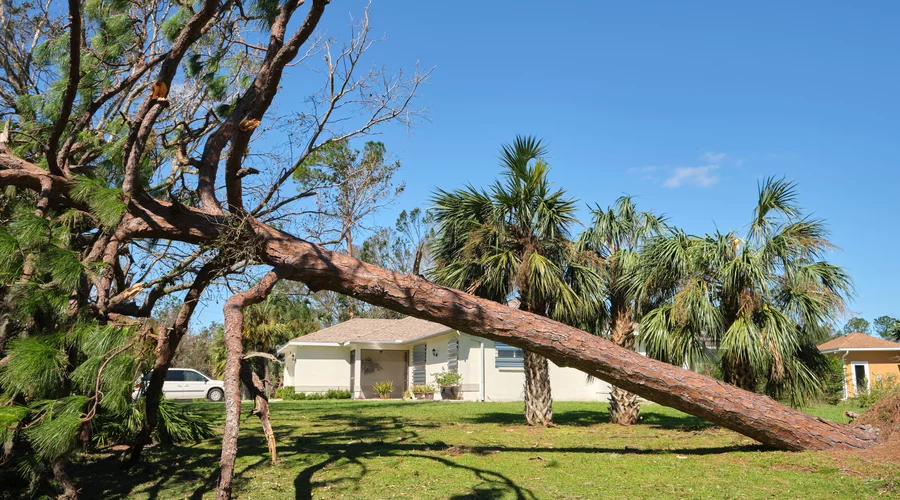
- Wide shots first. Every affected room, every affected elevation of the house, the roofline above damaged openings, and the yard showing what the wind threw (the branch, the neighbor's pergola, the gravel). Context photos establish cause, and cause is what makes it a hurricane claim.
- Close-ups second. Each damaged opening from inside and outside: glass, frame, screen, sill, wall, floor. Two marks matter more than the rest: the permanent frame label (manufacturer, model, approval number, design pressure — the unit's legal identity for code and insurance purposes) and the etched "bug" in a glass corner, which records whether the glass was tempered or laminated and to what standard it was tested. Photograph both wherever they survive; they answer the repair-versus-replace and like-for-like questions before anyone argues about them.
- Water's path third. Wet drywall, ceilings, flooring, furniture, electronics. Water damage grows for days; timestamped photos from day one separate storm water from neglect.
- Video walk-through last. One continuous pass through the affected areas, narrating what you see, with a date reference. Five minutes of video answers a hundred adjuster questions.
Do not discard anything yet. Broken units, hardware, even the debris that came through the glass are physical evidence; stack them somewhere dry and out of the way. If the insurer wants an inspection under Florida's post-reform timelines (investigation must begin within 7 days of your notice, physical inspection within 30), the evidence should still exist.
One more receipt category starts now if the damage makes rooms unusable: additional living expenses. If your family sleeps elsewhere because bedrooms are open to weather, the hotel nights, the meals you would not otherwise have bought, and similar displacement costs fall under the loss-of-use coverage most Florida policies carry. The documentation habit is the same one running through this whole guide: receipts, dates, and a one-line note of why the expense existed.
Hours 4-24: Cover the Openings
Your policy is not passive on this point: every Florida homeowners policy requires reasonable steps to prevent further damage after a loss. An open window mouth funneling the next rain band into your living room is exactly what that clause is about. Cover it, and keep the receipts, because reasonable emergency measures are reimbursable as part of the claim.
Practical guidance for the covering itself (plywood choice, anchoring that does not chew up the wall, what to do about sliders too big to board) lives in our dedicated emergency board-up guide. The claim-relevant rules fit in four lines:
- Photograph each opening again after covering it. Before-and-after pairs prove mitigation.
- Keep every receipt: plywood, fasteners, tarps, a handyman's invoice, the hardware-store run at 7am.
- Temporary means temporary. Do not commission permanent repairs or sign replacement contracts before the adjuster documents the damage; emergency mitigation is expected, full repair before inspection can complicate the claim.
- If you cannot safely reach an opening (second story, unstable frame), pay for professional board-up and keep that invoice too. Ladders after storms are their own emergency-room category.
The Openings Everyone Forgets to Check
Broken window glass announces itself. The damage that surfaces weeks later, after the claim scope is set, hides in the openings nobody walked:
- The garage door. Look down its face from one end: panels that took pressure show a shallow bow you will miss head-on, and a bowed door has lost the rigidity its wind rating depends on. Test the opener under power only after checking the tracks; a racked door can jump the rails on the first cycle. Garage doors are the largest opening in the house and the most consequential failure, which is why they get their own guide.
- Sliders that "work fine." Run every sliding door through its full travel. A panel that drags, a lock that no longer aligns, or new daylight at the interlock means the frame moved even though the glass held. Racked slider frames are claim items; discovered in month eleven, they are arguments.
- Window seals on the windward side. Fogging or moisture between panes days after the storm marks a breached insulated-glass seal: real damage, commonly missed, and a legitimate line in the scope.
- Skylights and gable-end vents. Both are openings in the code's eyes and both leak quietly into attics. A five-minute attic check with a flashlight after the first post-storm rain catches what the ceiling will otherwise report in October.
- Screens, shutters, and tracks. Bent accordion rails and torn screens are individually small and collectively hundreds of dollars of claimable damage; photograph them with everything else.
Walk this list once during documentation and again a week later. Anything new goes to the adjuster as part of the same loss, and Florida's supplemental-claim window (18 months) exists for exactly this pattern.
Day 1-3: Report the Claim
Report promptly, even if you suspect the damage lands near your deductible. The mechanics that matter in Florida:
- The deadline is one year from the date of loss for initial hurricane claims under Florida Statute 627.70132, and 18 months for supplemental claims on the same loss. Miss the window and the claim is gone regardless of merit.
- Prompt notice is still the standard. The one-year outer limit does not replace your policy's prompt-notice requirement; late reporting inside the year invites disputes about what damage came from which event, and hurricane seasons sometimes deliver a second storm to the same roof.
- Know your hurricane deductible before you fixate on a number. It is $500 flat or 2%, 5%, or 10% of your dwelling coverage, applied per calendar year across the whole claim. On a $400,000 policy, a single broken window at $2,500 sits far below an $8,000 deductible; three openings plus water and drywall usually does not. The 2024 season's data explains why documenting sub-deductible damage still matters: in the post-Helene claim analyses, about 30% of denied Florida claims were denied as below-deductible — and every one of those documented losses still counted toward its calendar-year deductible when Milton arrived thirteen days later. Report and document either way; the deductible math, matching rules, and supplement process are covered in our hurricane window damage claim guide.
- A damaged opening is also switching off your insurance discount. Florida's revised wind-mitigation form (in force since April 2026) disqualifies homes with openings "in need of repair or replacement" from opening-protection credits entirely, no matter how many impact units the house has. The credit comes back when the repair is complete and a new wind-mitigation inspection documents it, which is one more reason permanent repair belongs on a schedule, not a someday list.
- Write down your claim number and every interaction. Date, name, what was said. Post-reform Florida timelines (7-day investigation start, 30-day inspection) are enforceable expectations, and your log is what makes them real.
Day 1-3, Concurrently: Manage the Door-Knockers
The most dangerous window in your post-storm week is the one a stranger offers to fix. Storm-chasing crews follow landfall coverage the way gulls follow shrimp boats, and their pitch has not changed in twenty years: sign today, assign the claim, hand over a deposit, beat the rush.
The complete field guide is in our post-storm contractor scams article; the 72-hour version:
- Sign nothing in the first days except emergency mitigation invoices from someone you chose, not someone who chose you.
- Assignment-of-benefits contracts are dead in Florida for policies issued since January 1, 2023. Anyone waving an AOB form at you is either out of date or counting on you being.
- Verify any license in two minutes at MyFloridaLicense.com before a contractor sets foot on a ladder.
- Deposits have rules. A contractor taking more than 10% up front on residential work owes you a permit application within 30 days under Florida law. Storm-chasers structure around this; local licensed installers do not need to.
After Day 3: The Permanent-Repair Decision
Once openings are covered, the claim is filed, and the adjuster is scheduled, the pressure drops and the real decision arrives: repair in kind, or upgrade the openings that just failed.
Florida's building code has an opinion here. Replacement windows and doors must meet current code, which in the Wind-Borne Debris Region means impact-rated products or shutters protecting them; a storm that removed your 1996 single-pane sliders removed the option of replacing them like-for-like. Two process facts help the schedule: F.S. 553.7922 requires building departments to expedite hurricane-repair permits during the emergency period, and tear-out on older homes routinely reveals more of the storm's work — our crews find rotted buck framing behind the frame in most pre-1980 tear-outs, and hollow-sounding stucco that comes off in sheets around a racked opening. That hidden damage belongs in your claim as a supplement (photograph it in place before anyone repairs it), which is why the 18-month supplement window exists. That constraint is also an opportunity: insurance proceeds for the damaged openings, applied toward code-compliant impact units, close part of the price gap on protection you would otherwise buy alone, and the premium credits start at the next renewal. Post-storm is also when installation lead times stretch, so get in a measured quote early: a free estimate locks nothing in but reserves your place in a queue that only grows after landfall.
If money is the obstacle, note one boundary honestly: the My Safe Florida Home grant cannot fund work that has already started, and storm repairs rarely can wait for a grant queue. Insurance, financing, or both carry the post-storm case; the grant belongs to the openings the storm did not reach.
Next Steps
- Walk the sequence: safety, photos, covering, claim, log. In that order, starting now.
- Read the board-up guide before the hardware-store run, and the claim guide before the adjuster calls.
- Keep the scam field guide open on your phone for the week of door-knockers.
- When openings are covered and the claim is moving, get a free estimate on code-compliant replacement so lead time works for you instead of against you.
- If costs stack up, review financing options before settling for the cheapest bidder in the parking lot.