
Vinyl impact windows cost about $875 to $2,100 installed per window in South Florida, standard aluminum runs $950 to $2,175, and thermally broken aluminum, the top of the residential market, runs $1,250 to $3,440. Whole-home projects span roughly $8,000 for a small home with budget-tier products to $100,000 or more for a large home with luxury frames. Frame material sets the baseline; glass package, window size, and design pressure move the number from there.
Those figures are not national survey averages. Across the 419 products we publish installed retail pricing for, 190 are impact windows priced per unit, and the ranges above are the medians by frame material. This guide walks through what each material costs, why the gaps exist, what moves the price inside each tier, and where the cheaper option quietly costs you later.
If you want a number for your own home rather than a range, start with our impact windows cost calculator. Enter your opening count and sizes and it builds an installed estimate from the same pricing data behind this article. Then come back here to see what switching frame material would do to that number.
Impact Window Prices by Frame Material
| Frame material | Window products we price | Installed price per window (median range) | 15 windows at the medians |
|---|---|---|---|
| Vinyl (including uPVC) | 71 | $875–$2,100 | $13,100–$31,500 |
| Aluminum | 109 | $950–$2,170 | $14,250–$32,600 |
| Thermally broken aluminum | 12 | $1,250–$3,440 | $18,800–$51,600 |
| Clad wood and specialty frames | 7 | $1,000–$2,370 (small sample; most quotes are custom) | Custom |
The method, in one sentence: for every impact window we publish per-unit installed pricing on (our own retail figures), each product carries a published low (its smallest standard size in a base configuration) and a published high (a larger size with an upgraded glass package), and the table reports the median of each by frame material, with the 15-window column multiplying those medians by fifteen and rounding to the nearest $100, before any volume discount.
The full spread is wider than the medians. Small aluminum openings start near $490 installed in our catalog and small vinyl near $540, while large aluminum architectural units reach $8,200. Doors are a separate budget line entirely; a single big sliding glass door can cost as much as five to eight windows.
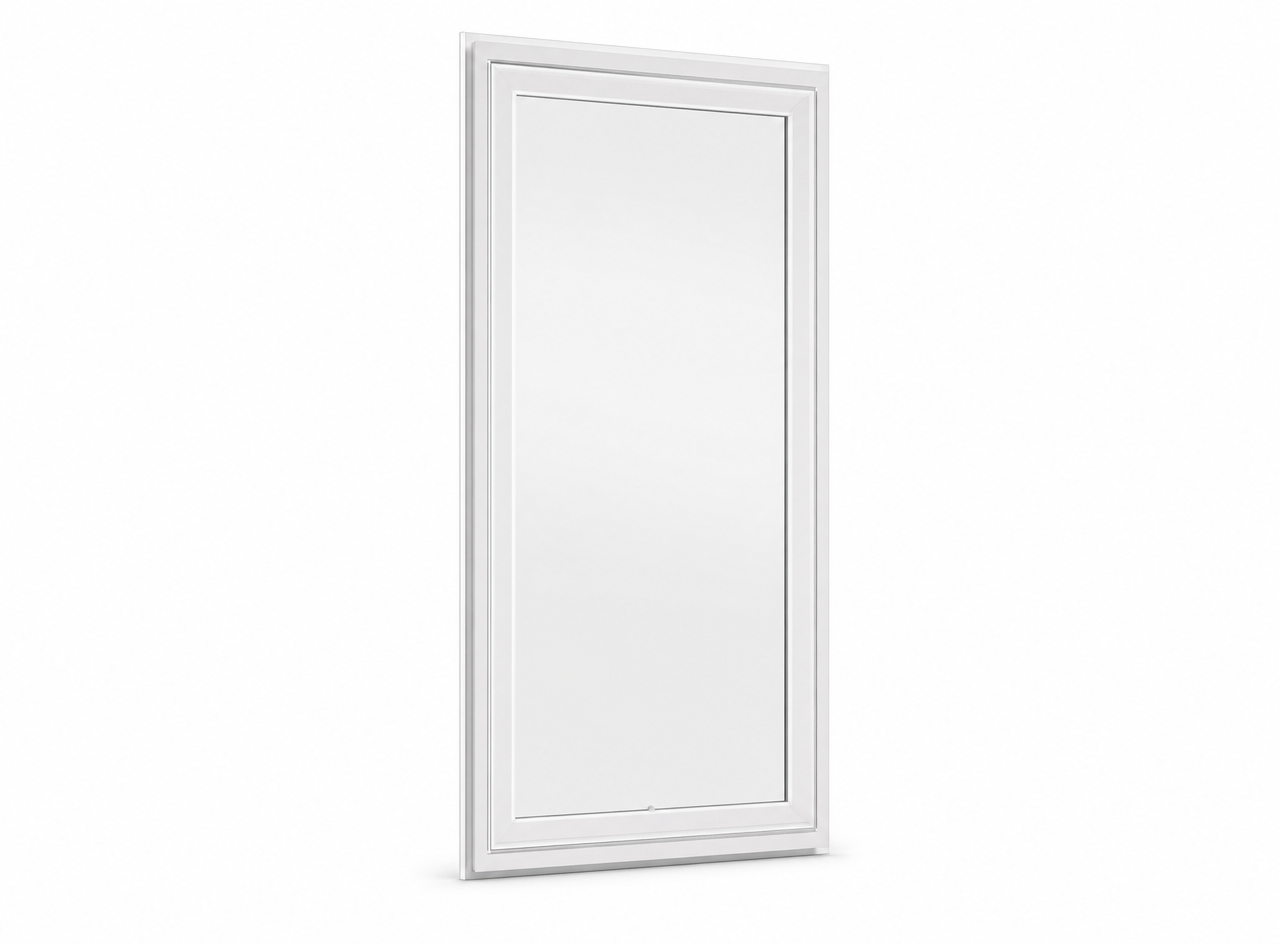
 PGT · WinGuard Vinyl Series
PGT WinGuard Vinyl Casement CA5540
Vinyl impact outward-swing casement with multi-point lock and nesting handle. Optional TrueHold hinge extends maximum sash height from 75 to 84 inches.
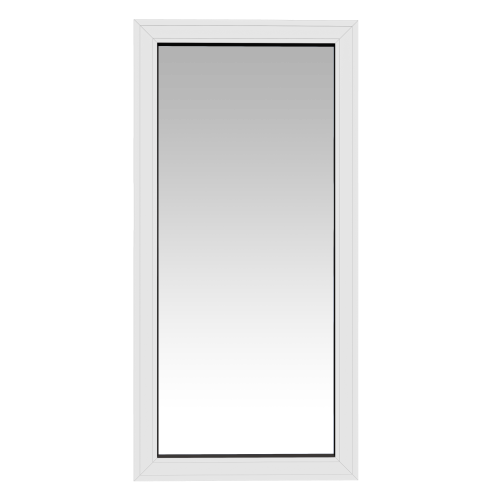
 ECO · Eco-Guard Casement & Awning Series
Eco-Guard Casement Window Series 500
Outswing aluminum impact casement, 2-3/4 in. frame, +70/-75 psf, LMI+SMI, NFRC-certified, with a stainless operator + multipoint lock.
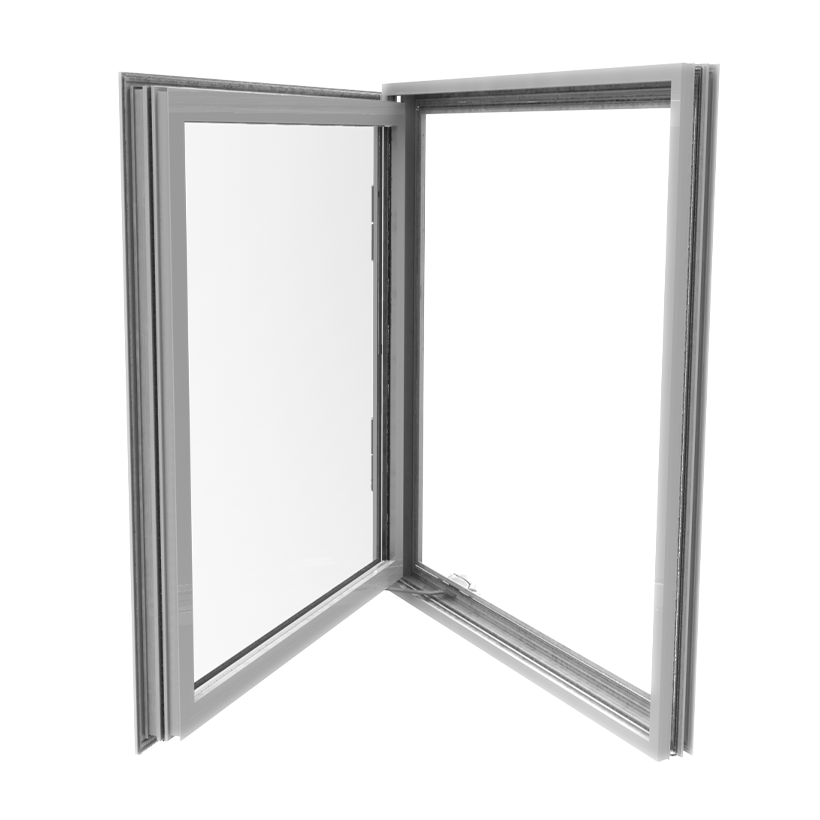
 ES Windows · Prestige Series
ES Windows Prestige ES-P252 Casement/Awning/Fixed (TB)
Thermally broken aluminum window platform supporting casement, awning, and fixed configurations on a shared 2.5-inch frame. Dual LMI+SMI at 95/105 psf.
Why Aluminum Dominates the High-Velocity Hurricane Zone
Miami-Dade and Broward counties form the High-Velocity Hurricane Zone, the strictest wind-borne-debris region in the Florida Building Code. Products installed there need approvals tested to the zone's own protocols, and the Miami-Dade Product Control search is where those Notices of Acceptance live.
Aluminum wins in that zone on physics. The extrusions are stiff enough to hold big spans of heavy laminated glass at high design pressures while keeping sightlines slim, and every major South Florida manufacturer runs aluminum lines locally. You can see the result in our catalog: 279 of the 419 products we publish pricing for use standard aluminum frames, and counting thermally broken versions brings aluminum to 310 of 419, about 74% of everything we price.
That crowded field is also why aluminum is cheaper than its reputation. With this many manufacturers competing on the same extrusion-and-glass formula, the median aluminum window's installed low in our pricing is $950, only $75 above vinyl's $875. The tradeoff is chemistry rather than dollars: bare or cheaply painted aluminum corrodes in salt air, so coastal installs should budget for better finishes, and high-grade coatings add real money per window.
Where Vinyl Saves Money
National installer cost guides such as Modernize and Angi put aluminum 20–30% above vinyl for comparable specifications. Our own medians sit closer together, that $75 gap at the entry point, because South Florida's aluminum market is unusually price-competitive. Compare like-for-like from a single manufacturer, though, and vinyl still comes in lower on most standard residential sizes.
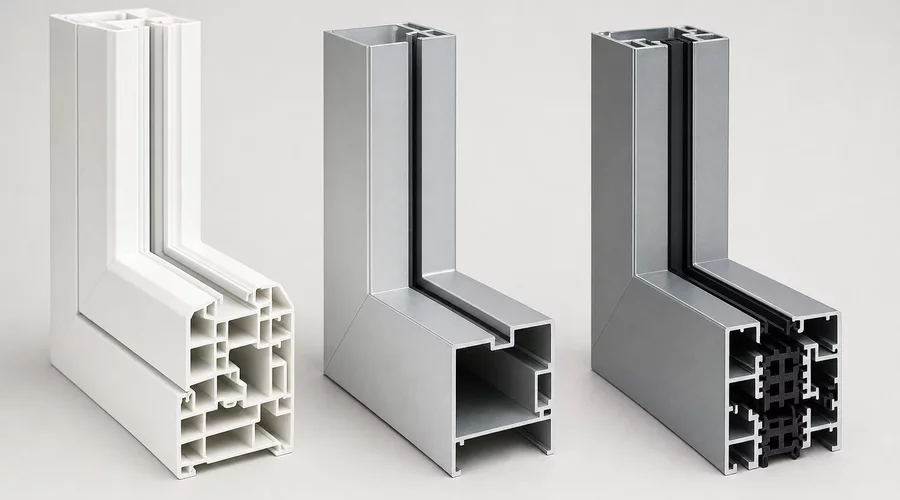
Vinyl's savings also continue after installation. The multi-chamber uPVC frame conducts far less heat than un-broken aluminum, which matters on west-facing glass in August, and the material never corrodes and never needs repainting. When you compare quotes, check the NFRC label's U-factor on the actual products rather than trusting frame stereotypes; some aluminum packages with upgraded glass outperform bargain vinyl.
The limits are structural. Vinyl caps out sooner on maximum size and design pressure, fewer vinyl lines carry HVHZ approvals, and color selection is narrower. If your openings are standard sizes outside the HVHZ, vinyl is usually the cheapest path to a code-compliant impact opening. If you have nine-foot spans on a Broward waterfront lot, the vinyl discount may not be available to you at any price.
Dollars are only half of this decision. Our vinyl vs aluminum comparison covers strength, looks, and lifespan side by side; this guide stays on price.
The Premium Tiers: Thermally Broken Aluminum, Fiberglass, and Clad Wood
Thermally broken aluminum splits the frame extrusion with a resin or polyamide strut so heat cannot bridge from the exterior metal to the interior. You keep aluminum's spans and design pressures and lose most of its heat gain. You pay for it: the twelve window products we publish pricing for run $1,250 to $3,440 installed at the median, and industry guides put the premium at 50–80% over standard aluminum. The buyers are mostly waterfront and modern builds with lots of glass.
Fiberglass barely exists in the Florida impact market. National guides price it 30–50% above baseline frames, but only 3 of the 419 products we price use it, so plan on limited selection and dealer-order timelines.
Clad wood pairs a wood interior with an aluminum exterior skin. The six window products we price span $760 to $2,855 installed, but that sample is small and most clad-wood work here is custom-quoted, often on renovation projects where the interior finish has to match existing millwork. Steel shows up as a single specialty product in our pricing; treat it as a commercial or design-driven choice, not a cost play.
What Moves the Price Inside Each Material
Two neighbors with the same frame material can get quotes $15,000 apart. Here is why.
Size. A 48"×72" window carries about 2.4 times the glass of a 30"×48" unit but costs roughly 1.5 to 1.8 times as much, since frame, hardware, and labor scale more slowly than glass area. Very large openings can trigger custom engineering, which resets the math upward.
Glass package. After the frame itself, this is the biggest lever on the quote:
| Glass configuration | Cost vs. base laminated | What you get |
|---|---|---|
| 5/16" laminated | Baseline | Entry impact glass, non-HVHZ |
| 7/16" laminated | +10–15% | Standard residential, HVHZ-ready |
| Insulated laminated (IGU) | +40–60% | Lower U-factor, quieter interior |
| IGU with Low-E and argon | +60–80% | Best thermal performance |
| SGP interlayer upgrade | +15–25% | Large panels, higher design pressure |
Design pressure and the HVHZ. Meeting Miami-Dade and Broward requirements, with the product approvals and inspections that come along, adds 15–25% at the project level compared with a similar job elsewhere in the state.
Options. Add-ons alone can swing a window's price by 35%, per Window + Door Magazine's industry survey: Low-E coating adds $75–$150 per window, argon fill $50–$100, tinted glass $30–$75, turtle glass $50–$100, grids $50–$150, and arched or radius shapes $200–$1,000 or more.
Volume. Dealers discount scale. Six to ten windows usually price 5–8% below list, and whole-home projects of twenty-plus openings run 10–15% below.
Tariffs. Aluminum-framed products carry an extra macro factor right now. Section 232 tariffs of 50% on imported aluminum, plus a 10% tariff on finished aluminum window and door imports that took effect in April 2026, pushed industry-wide price increases of 5–10% across 2025–2026. Vinyl is not fully insulated from this either, since hardware and reinforcement contain metal, but the exposure is smaller. If you are comparing quotes, ask how long the price is locked; 60–90 day locks on signed contracts are common.
These market ranges come from the national cost guides above plus manufacturer pricing data compiled in our cost research; the per-material medians remain our own retail figures.
Cost vs. Longevity: The Honest Tradeoffs
Cheap aluminum near salt water is a false economy. A mill-finish or budget-paint frame on a barrier island will pit and chalk years before the glass gives out, and refinishing installed frames is expensive. If you choose aluminum on the coast, the durable coating belongs in the original quote, not in a future repair budget.
Vinyl never corrodes and never needs paint, so its modest upfront savings hold up over time. The catch is availability: a vinyl line that cannot meet your opening's size or design-pressure rating saves you nothing, because you cannot install it there. Price vinyl only after confirming it qualifies for every opening on your plan.
Thermally broken aluminum costs about $300 more at the median low and $1,270 more at the median high than standard aluminum in our pricing. What you are buying is comfort and cooling load, not protection—the laminated glass, not the thermal strut, earns the impact rating. On a shaded elevation the upgrade may never pay for itself; on a west wall of glass it changes how the room feels every afternoon.
One thing frame material does not change: your insurance credit. Florida's wind mitigation inspection (form OIR-B1-1802) grades opening protection by the glazing's impact rating, not the frame around it, so vinyl and aluminum impact windows earn the same credit class. Savings differ by carrier and policy; the Florida Office of Insurance Regulation's wind mitigation resources explain the inspection, and your agent can quote your actual discount.
Whole-Home Budgets by Material and Tier
Frame material and manufacturer tier travel together, so whole-home budgets are easiest to read as a grid. These installed ranges come from national cost guides and manufacturer pricing compiled in our cost research:
| Home size | Budget tier | Mid-range | Premium and luxury |
|---|---|---|---|
| Small (8–10 openings) | $8,000–$14,000 | $16,000–$25,000 | $22,000–$35,000 |
| Average (12–15 openings) | $14,000–$22,000 | $28,000–$45,000 | $40,000–$65,000 |
| Large (18–25 openings) | $22,000–$35,000 | $45,000–$70,000 | $65,000–$100,000+ |
Scale works in your favor. Per-opening cost falls from $1,600–$2,200 on a five-opening job to $1,100–$1,600 at twenty-five openings, because permits, mobilization, and engineering spread across more units. Doors pull the other way: windows are usually 70–80% of a home's openings but only 55–65% of project cost, with sliding glass doors absorbing the rest.
Two things these tables leave out. County permit fees and inspection requirements shift the total by real money depending on where you live, which our county-by-county cost guide breaks down, and line items like stucco repair, engineering letters, and disposal appear on the final invoice rather than the brochure; our guide to the hidden costs of impact window installation covers that layer.
On paying for it: most of our customers finance at least part of the project, and the financing page lays out the current programs and terms. Income-qualified homeowners should also look at My Safe Florida Home grants of up to $10,000, with one hard rule: work started before grant approval is disqualified. When you are ready to turn these ranges into your own number, run your opening count through the cost calculator.
Next Steps
Frame material narrows your budget to a range; a measured quote settles it. Request a free estimate and we will price your actual openings both ways wherever vinyl and aluminum both qualify, so you can see the material gap on your own home instead of a table.