
Impact window repair is usually possible without replacing the whole unit. Hardware, weatherstripping, and perimeter seals are all serviceable, and even a cracked laminated pane is rarely an emergency, because the interlayer keeps holding the opening closed after the glass breaks. The real decisions are which failures take a glass-only swap, which need a new unit, and who you call for each.
We install and service impact windows across South Florida, and the repair calls follow a pattern: a spidered pane after a mower threw a rock, a single-hung that will not stay up, a lock that stopped catching, a puddle on the sill after a summer squall. Each of those has a different answer, a different price class, and a different right person for the job. This guide walks the full decision tree: cracked and broken glass, hardware, weatherstripping, frame damage, and water leaks. It also covers the step most homeowners skip: documenting the damage and getting the insurance sequence right before anyone touches the window.
One scope note: sliding glass doors that grind, drag, or will not lock have their own decision tree and parts economy, covered separately in our sliding glass door repair-or-replace guide.
A Cracked Impact Window Is Rarely an Emergency
Here is the fact that should lower your heart rate: a cracked impact window is still doing most of its job. Laminated impact glass is two lites of glass bonded to a tough polymer interlayer. When the glass fractures, the shards stay glued to that interlayer, and the assembly keeps resisting load as a unit.
The post-breakage numbers back this up. Our glazing materials database tracks 43 published interlayer properties across PVB, ionoplast, and TPU films, and the post-fracture rows come from laminated-glass load testing compiled by Fractan. With one lite broken, a laminated panel retains roughly 60% of its intact strength. With both lites broken, it still carries about 18 to 22% of the original load, held together entirely by the interlayer.
The test standards were written with this behavior in mind. ASTM E1996, the missile-impact standard behind every impact window approval, does not fail a specimen because the glass cracked. After the 2x4 strike and thousands of pressure cycles, the window passes as long as the interlayer has no tear longer than 5 inches and no opening a 3-inch sphere can pass through.
Miami-Dade's TAS 203 protocol for the High-Velocity Hurricane Zone is stricter still: the allowed tear is only 1/16 inch wide. The engineers who wrote the rules assumed the glass would break and designed the pass line around the interlayer holding.
So a cracked pane is a scheduled repair, not a 2 a.m. crisis. The exceptions are real but narrow: glass displaced from the frame, a visible tear or hole in the interlayer, both lites shattered with the panel sagging, or shards actually falling. Those need same-week attention and, until then, the room treated with caution.
One Florida-specific reason not to let a shattered pane ride for months: interlayer stiffness drops as temperature rises, which is documented in Kuraray's published Trosifol elastic-properties data. A fully fractured panel in a west-facing wall will slowly soften and sag through a Florida summer. It holds today; it should not be asked to hold until Thanksgiving.
Document First, Then Decide
The most expensive mistake we see is not the crack. It is the homeowner who cleaned up, swapped the glass, and then called their insurer. Insurance sequencing beats speed, and the sequence starts with evidence.
Before anyone touches the window:
- Photograph the damage from inside and outside, wide shots and close-ups, with something for scale.
- Photograph the cause if you can identify it: the rock, the fallen branch, the golf ball.
- Note the date and time of loss in writing. Every deadline below runs from that date.
- Keep the broken pieces and any failed parts until the claim is resolved.
Florida law then puts real clocks on both sides. Under Section 627.70131, Florida Statutes, your insurer must acknowledge your claim communication within 7 calendar days and begin its investigation within 7 days of your proof-of-loss statement. The insurer must also complete any physical inspection within 30 days and pay or deny the claim within 60 days of notice. Your own clock is in Section 627.70132 of the same chapter: notice of a new claim is barred after 1 year from the date of loss, and supplemental claims after 18 months.
Whether a claim is worth filing is a separate question. Everyday breakage from a mower or an errant baseball falls under your standard deductible, and a single pane repair may not clear it. Storm damage often falls under a separate percentage-based hurricane deductible, which a single window almost never clears on its own.
The documentation still matters either way. Window damage discovered now is sometimes the visible edge of a larger loss, and a repair receipt with photos protects you if related damage shows up later. When in doubt, document fully, get a repair quote first, and make the claim decision with both numbers in front of you.
None of this stops you from making the opening safe. Temporary measures that do not touch the glass or pry the frame, like taping a poly sheet over the interior face of a fractured pane, do not compromise a claim. Removing the sash, digging out glass, or re-caulking before the adjuster sees it can.
Repair or Replace: The Decision by Failure Type
Every impact window repair call lands in one of five buckets. Here is the short version, then each bucket on its own.
| Failure | Usually repairable? | The fix | When it becomes replacement |
|---|---|---|---|
| Cracked or broken glass | Yes, at the glass level | New laminated glass unit, same makeup | Frame damaged, or unit obsolete with no matching glass |
| Hardware: locks, balances, rollers | Yes | Matched replacement parts | Parts unavailable, or hardware failed from frame corrosion |
| Weatherstripping and gaskets | Yes | New seals in the manufacturer profile | Seal channels themselves corroded or deformed |
| Frame damage | Cosmetic only | Touch-up, sealant, minor refinishing | Racked, cracked, bent, or corroded frame members |
| Water leaks | Usually | Perimeter sealant, weep cleaning, gasket work | Leak traced to frame joints or the original installation |
Cracked or Broken Glass
There is no field repair that restores a laminated impact lite. Resin injection, the windshield trick, has no place here: the window's approval was earned by an intact, tested glass makeup, and nothing squeezed into a crack recreates that. The fix for broken impact glass is a new laminated glass unit built to the same specification, set into the existing frame.
That last clause is the part people miss. An impact window's rating belongs to the whole tested assembly, so the replacement glass has to match the approved makeup. That means the same glass thicknesses, the same interlayer type and thickness, and the same overall construction the approval documents describe.
A glass shop quoting a generic laminated unit that merely fits the opening is quoting you out of your rating. Ask the shop to pull the makeup from the window's approval paperwork, or have us do it; the label on the glass or frame carries the identifiers.
Glass-level replacement is the right call when the frame is sound, the window is a current or recent product, and only the glass failed. A new unit is the right call when the frame took damage too, when the product is old enough that matching glass is a custom order approaching unit cost, or when the same window has now cost you glass, hardware, and seal money inside a few years.
Hardware: Locks, Balances, Rollers, and Operators
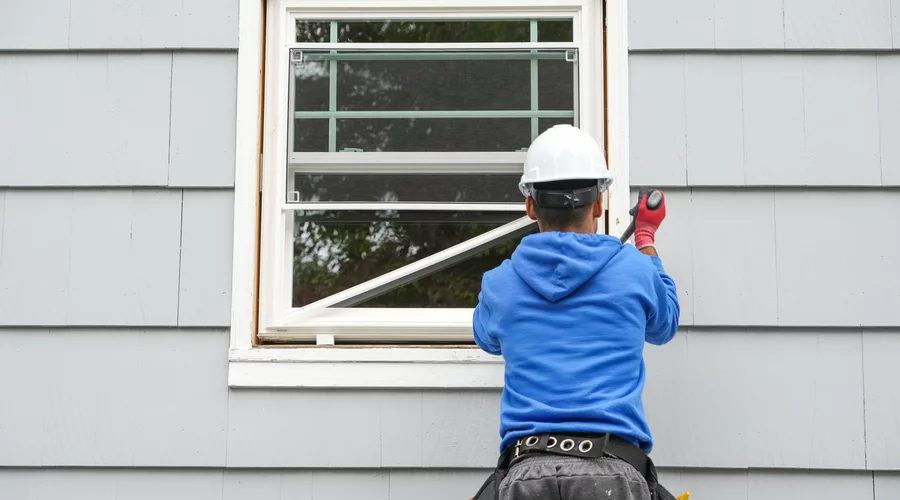
Hardware failures feel alarming and are mostly routine. A lock that will not catch, a single-hung sash that slams down instead of staying up, a horizontal roller that grinds in its track, a casement crank that spins without moving the sash: all of these are wear parts with replacements.
Balances are the classic case. A single-hung sash is held by concealed balance mechanisms, and when one fails the sash becomes deadweight. The window is not broken; a spring did what springs do.
Matched balances are an in-place swap. The same goes for lock keepers, cam locks, casement operators, and roller assemblies.
Two things decide whether hardware work is a quick visit or a hunt. First, parts availability: current product lines have parts on the shelf, discontinued lines may not, and an obsolete lock body can turn a small job into a search across suppliers. Second, cause: hardware that failed because the surrounding aluminum is corroding is a symptom, and replacing the part without addressing the frame buys you a season, not a fix. Hardware is also where manufacturer warranties earn their keep, and coverage terms differ by brand and part; our impact window warranty guide breaks down who covers what and for how long.
Weatherstripping and Gaskets
Weatherstripping is a wear item, the same as tires. South Florida sun and salt air harden and shrink the seals long before anything structural gives out. The symptoms are whistling on windy days, dust lines around the sash, and a room that got harder to cool.
The repair is straightforward when done right: the old seal comes out and a new seal in the manufacturer's profile goes in. Profile matters. Generic foam tape from the hardware store is not the same part, seats badly in the channel, and usually makes the operation stiffer without sealing better. This is inexpensive work, and it is worth doing promptly, since failed seals let wind-driven rain start working on the sill and the hardware.
Frame Damage
Frames divide cleanly into cosmetic and structural. Scratches, chips, and faded finish are cosmetic; touch-up and refinishing handle them, and none of it affects performance.
Structural frame damage is the one bucket where we will almost always steer you to replacement. A frame that is racked out of square, cracked at a corner joint, bent by an impact, or showing real corrosion in the metal has lost the geometry and material the rating depends on, and the anchorage into the wall may be compromised with it. Straightening or patching a structural frame member is not a repair we will sell, because the result cannot be tied back to any tested condition. If the frame is gone, the unit is gone.
Water Leaks
"The window leaks" is a diagnosis that is wrong about half the time, and the order of investigation matters. Water at the sill can be the glazing seal, the sash gaskets, blocked weep holes, failed perimeter sealant between frame and wall, or a wall problem above the window entirely: stucco cracks and failed flashings deliver water to the window, which gets blamed for it.
Most true window leaks are repairable. Weep holes get cleared, gaskets get replaced, perimeter sealant gets cut out and redone properly.
The serious cases are leaks through the frame's own joinery, which means the frame is failing, and leaks traced to how the window was installed, where water is getting behind the flanges or bucks. Installation-path leaks cannot be fixed with caulk cosmetics; the fix is opening up the perimeter and re-doing the water management, and in bad cases that is a re-install. If a leak survived one round of "we caulked it," stop caulking and get it diagnosed for real.
What Repair Solves and What Replacement Costs
Repair-side pricing is mostly labor plus modest parts, and it varies enough by product line and part availability that quoting ranges here would be guessing. The honest way to think about it: seals and most hardware jobs are service-call money, glass-level replacement is a mid-size job priced by the glass unit, and anything touching the frame or the installation belongs in replacement math.
Replacement-side numbers we can state, because they are ours. Averaged across the configurations in our current price book, full replacement of the common opening types runs:
| Opening type | Our installed range (typical configurations) |
|---|---|
| Single-hung | $900 to $2,100 |
| Horizontal roller | $900 to $2,300 |
| Casement | $1,200 to $2,600 |
| Fixed / picture | $900 to $2,600 |
Those are our retail installed figures averaged across the 40 single-hung, 30 horizontal roller, 28 casement, and 45 fixed configurations we price; oversized openings and upgraded glass makeups land above the ranges. The decision rule we give customers: when a repair quote for one window passes about a third of that window's replacement cost, or when this is the second repair on the same unit, run the replacement numbers before spending the repair money. An in-person estimate settles it quickly.
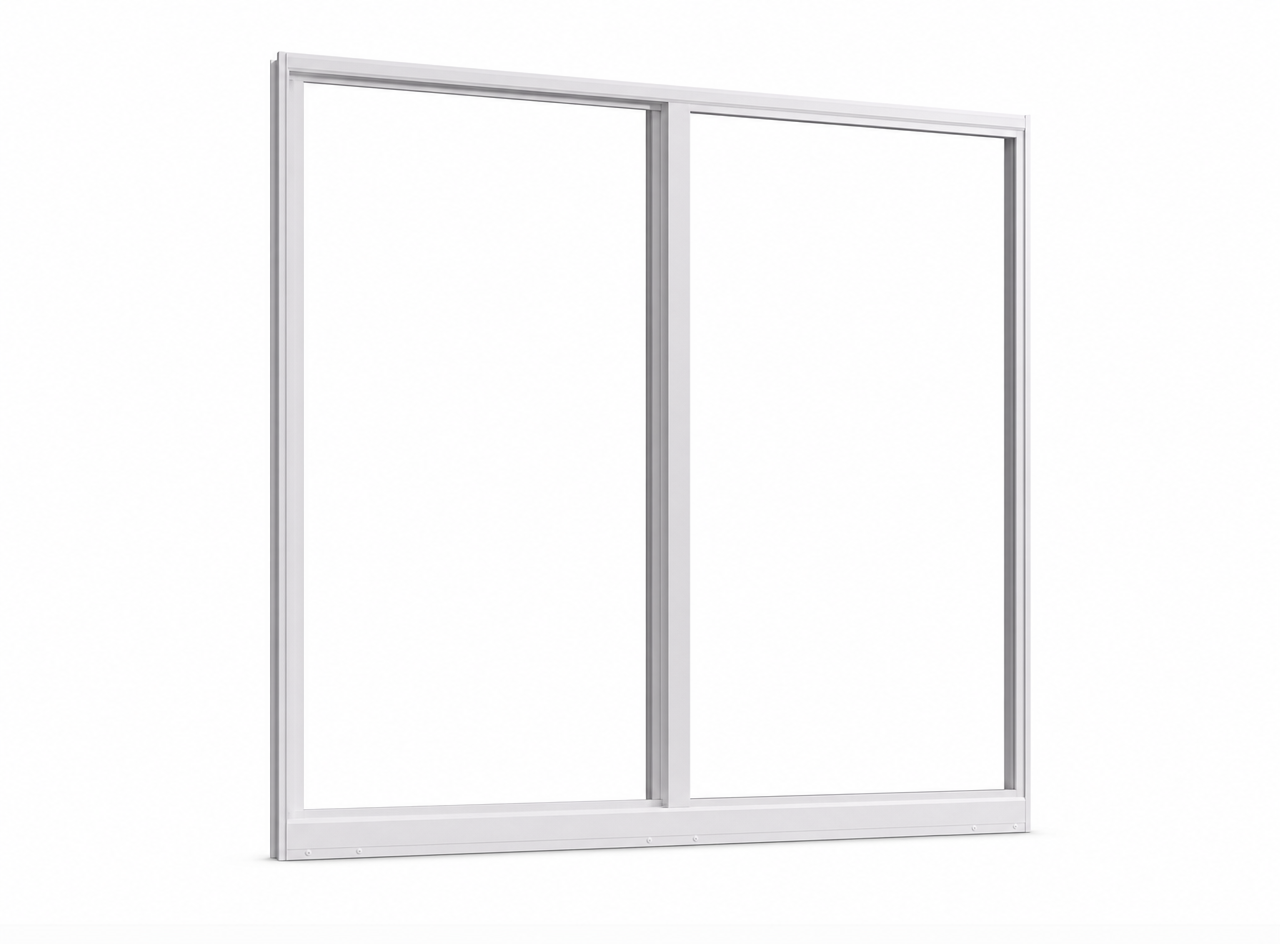
 PGT · WinGuard Aluminum Series
PGT WinGuard Aluminum Horizontal Roller HR7710A
Aluminum impact horizontal roller on the WinGuard 7700-series frame, opening side-to-side for wider residential openings. Diamond Glass, LMI for HVHZ.
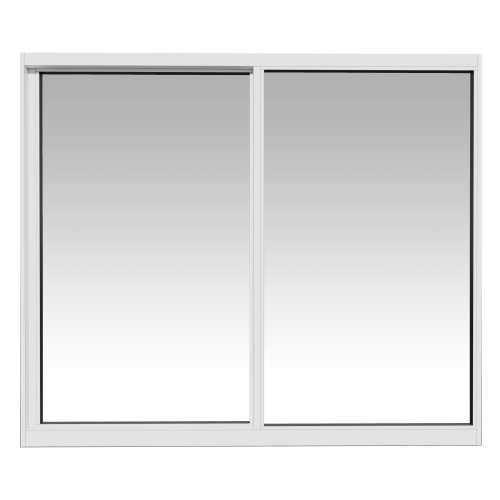
 ECO · Eco-Guard Horizontal Rolling Series
Eco-Guard Horizontal Rolling Series 60
Entry 2-panel aluminum impact roller, 2-1/8 in. frame, +55/-60 psf, LMI for HVHZ.
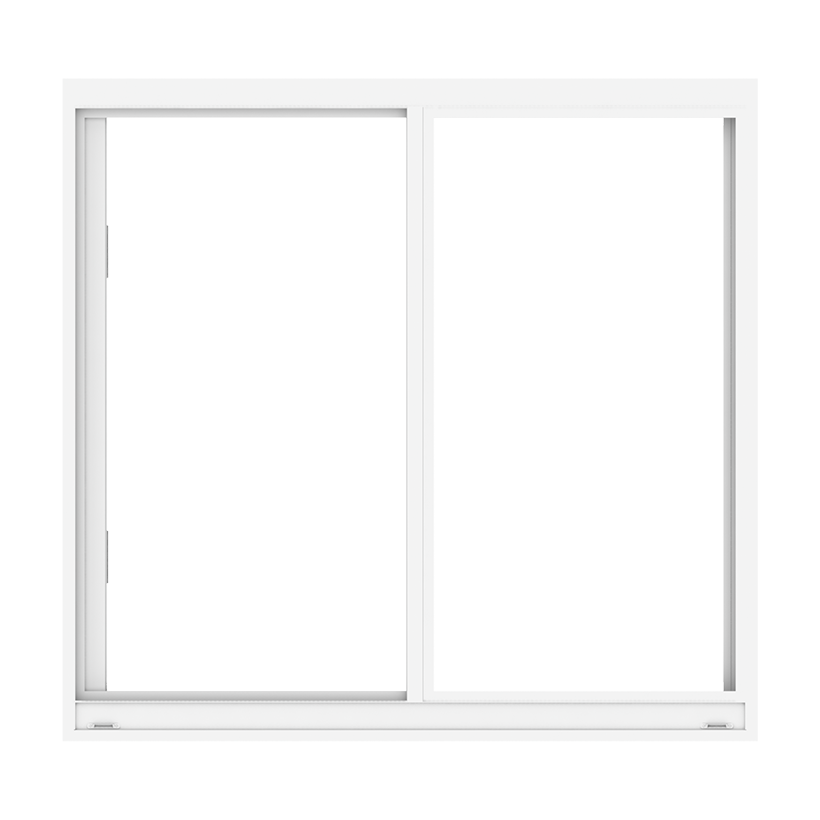
 ES Windows · Multimax Series
ES Windows Multimax ES-MX2000 Sliding Window
Value-tier aluminum impact horizontal slider in OX, XO, and XOX configurations on a 2-3/8 inch frame. Up to 111 by 63 inches, dual LMI+SMI for HVHZ.
Who Does Which Job: Glazier, Installer, or Manufacturer
Three different trades touch impact window repair, and matching the problem to the right one saves both money and warranty standing.
A glass shop or glazier handles glass-level work: fabricating and setting a replacement laminated unit in a sound frame. The one requirement worth repeating is that the new glass match the approved makeup, not merely the opening size.
An installing contractor, which is what we are, handles everything that touches the frame, the anchorage, or the wall: unit replacement, structural frame problems, installation-path leaks, and repairs on windows where the diagnosis is not obvious. This is also the right call when the repair needs to hold up in an insurance file, because the documentation habits are part of the job. We service impact windows we did not originally install.
The manufacturer's warranty department handles covered parts: hardware, glass with manufacturing defects, and seal failures inside the coverage terms. The practical route usually still runs through an installer or dealer, who files the claim and fits the parts, but knowing what is covered before paying out of pocket is worth ten minutes with your paperwork.
After a Storm, the Playbook Changes
Everything above assumes everyday damage: the mower rock, the worn balance, the aged gasket. Hurricane window repair after a named storm runs on different rules: the insurance stakes are larger, the same statutory clocks carry far more money, and every contractor in a damaged zip code is suddenly busy or fake.
We keep the storm playbook in two dedicated guides. Window damage after a hurricane covers the first 72 hours: making openings safe, documenting for the adjuster, and handling the door-knockers. Emergency board-up covers putting temporary protection over failed openings without wrecking the wall, and getting the cost reimbursed. Start there if your damage came with a storm name attached; come back here when you reach the permanent-repair decision.
Next Steps
- Photograph any damage now, before cleanup or repairs, and note the date of loss.
- Pull your window paperwork or photograph the labels on the glass and frame; they identify the product and glass makeup.
- Check your deductible before assuming a claim makes sense, and keep the 1-year filing clock in mind.
- Get a repair quote and a replacement number for the affected openings, and compare them with the one-third rule.
- Request a free estimate and we will diagnose the failure, tell you which bucket it lands in, and price both paths honestly.