
Impact windows are the default hurricane protection for snowbird and vacation homes in Florida for one blunt reason: the house is empty during the months when hurricanes actually arrive. Accordion shutters and storm panels only protect a home if someone is there to close them, and 97.6 percent of Florida's recorded hurricane landfalls happened between June and October, when most seasonal owners are 1,200 miles north. Laminated impact glass in every opening, plus locked impact doors, is the one setup that protects the house with nobody on site.
We install impact windows and doors across South Florida, and seasonal owners make up a meaningful share of our work. Their questions are different from a year-round homeowner's, and so is the right answer. This guide covers the deployment problem nobody warns you about, what remote monitoring can and cannot do, how an empty house changes the insurance conversation, the departure and arrival checklist we give seasonal clients, and why your November-to-April occupancy window is the right time to schedule the work.
Your House Is Empty Exactly When Hurricanes Show Up
Start with the timing mismatch, because it is the whole problem. The typical snowbird pattern runs roughly November through April in Florida, with the house empty from late spring until the holidays. Hurricane season runs June 1 through November 30, and the National Hurricane Center's climatology puts the peak on September 10, with most activity between mid-August and mid-October.
We wanted a harder number than "peak season," so we computed one. We took NOAA's HURDAT2 Atlantic hurricane database, kept every hurricane-strength landfall point, and intersected those points with the Florida state boundary: 126 hurricane landfall events from 1851 through 2025, counting each separate landfall a storm makes. Of those 126, a full 123, or 97.6 percent, came ashore between June 1 and October 31. That window sits almost entirely inside the months a seasonal home stands empty.
| Month | Florida hurricane landfalls (1851–2025) | Share |
|---|---|---|
| June | 6 | 4.8% |
| July | 6 | 4.8% |
| August | 25 | 19.8% |
| September | 45 | 35.7% |
| October | 41 | 32.5% |
| November | 3 | 2.4% |
| December through May | 0 | 0% |
Two details in that table deserve attention. First, August through October alone accounts for 111 of the 126 landfalls, about 88 percent, and that stretch is the dead center of the away months. Second, in 175 years of records, Florida has never taken a hurricane landfall between December and May. The three November exceptions were an unnamed 1935 hurricane that struck the Miami area on November 4, Hurricane Kate near Mexico Beach on November 21, 1985, and Hurricane Nicole near Vero Beach on November 10, 2022.
Read that as a seasonal owner and the conclusion writes itself. Whatever protects your house has to work without you, because the odds that you are standing in it when a hurricane arrives are close to zero.
Who Closes Your Shutters in September?
Every deployable protection system, accordion shutters, roll-downs you crank by hand, aluminum panels stacked in the garage, hurricane fabric, assumes a person is present in the 24 to 72 hours before landfall. For a year-round resident that assumption usually holds. For a seasonal owner it fails in every direction at once.
You cannot fly down to do it yourself. Airlines cancel into the forecast cone before conditions get dangerous, and the last thing emergency managers want is people flying toward a hurricane to board up a second home. A neighbor with a spare key is a plan until the neighbor is prepping their own house, or is a seasonal owner too. Panel systems are the worst case: hauling, lifting, and wing-nutting aluminum panels over a dozen openings is hours of two-person work, some of it on a ladder, in pre-storm heat.
Some owners try the standing workaround: close the accordions in May and leave the house sealed until November. Before you adopt it, check your condo or HOA documents, because many restrict how long shutters may stay deployed, and a house sealed behind metal for six months creates its own problems. It advertises vacancy to anyone casing the street. It traps heat and humidity against the glass. And if anything goes wrong inside, a roof leak, a failed water heater, nobody walking by will see it.
This is the case laid out in our full impact windows vs. hurricane shutters comparison, and it gets stronger the fewer days a year you are in residence. Shutters are a fine product with a person attached. Without one, they are aluminum that happens to be bolted near your windows.
What Remote Monitoring Can and Cannot Do
Modern seasonal owners run a small technology stack: cameras, water-leak sensors, smart locks, a thermostat that reports humidity. Add a professional home-watch service walking the property every week or two and you have decent eyes on the house. It is worth having all of it.
Just be honest about what monitoring is. A camera tells you what is happening; it does not do anything about it. A live feed of your unprotected lanai slider while a hurricane warning is up for your county is a source of stress, not a layer of defense. Sensors shorten the time between a problem and a phone call, which matters most for water leaks, and matters least in the one scenario where hours count and nobody can reach the property.
Home-watch services can close shutters, and some will contract for storm prep. Ask the hard questions before you rely on it: how many client homes does the service cover, how many crews does it run, and where does your house fall in the queue when every client calls in the same 48 hours? A conscientious operator will tell you plainly that a storm-prep contract is best-efforts, not a guarantee. If the plan requires perfect execution by a third party during the most chaotic week of the year, it is not really a plan.
Permanent protection inverts the whole question. With impact glass in every opening, your monitoring stack goes back to doing what it does well, watching for leaks and break-ins, while the structural protection just stands there, deployed since the day it was installed.
The Insurance Conversation for an Empty House
A seasonal home changes two separate insurance conversations, and owners regularly conflate them.
The first is occupancy status. Insurers price and write policies differently for a year-round residence, a seasonal home, a rental, and a vacant property, because an empty house carries more risk of theft, vandalism, and damage that sits undetected for weeks, a point the Insurance Information Institute makes in its vacation-home guidance. Many policies contain provisions that change or restrict certain coverages once a home has been unoccupied past a stated stretch of time, and the definitions and thresholds vary from policy to policy. We will not tell you what your insurer's clause says, because we have not read your policy. The advice that never misses: answer occupancy questions accurately when you apply, and ask your agent directly how your policy treats the months the house stands empty. Discovering an occupancy problem during a claim is the expensive way to learn it.
The second conversation is the wind-mitigation credit, and here the rules are friendlier and better documented. On the Florida wind-mitigation inspection form, opening protection is rated for the whole house at once: every glazed opening, windows, sliding doors, skylights, glass in the entry door, glass inserts in the garage door, must be protected for the home to earn the full credit. One unrated bathroom window can reduce the credit to little or nothing. Shutters and impact glass qualify equally, so there is no discount advantage to either method, and shutters do not need to be closed to earn it. Our analysis of Florida wind-mitigation credits puts the opening-protection savings at roughly $200 a year on a modest North Florida home up to $1,500 to $3,500 a year on a coastal Miami-Dade home carrying a heavy wind premium, always as a range that depends on your county, your premium, and your insurer's filed rates.
Notice the irony in that pairing. The discount does not require your shutters to be closed, but the protection does. An insurer will happily credit accordion shutters that spend September stowed open on an empty house; the credit and the actual defense of the building have quietly come apart. Impact glass is the one method where the thing that earns the discount and the thing that stops the debris are the same object in the same position year-round. Our guide to Florida hurricane insurance walks through the inspection form and credit mechanics.
Why Impact Glass Plus Locked Openings Is the Snowbird Default
Put the deployment problem and the insurance mechanics side by side and the comparison table for a seasonal home looks like this:
| Factor | Impact windows and doors | Accordion or roll-down shutters | Storm panels |
|---|---|---|---|
| Protects with nobody on site | Yes, always | Only if closed before the storm | Only if installed before the storm |
| Labor at each storm | None | Someone on site to close and lock | Hours of two-person installation |
| Wind-mitigation credit | Full, all openings protected | Full, all openings protected | Full, all openings protected |
| Break-in resistance while empty | Laminated glass resists forced entry | Only while deployed | None while stored |
| Curb appearance during away months | Normal house | Normal (open) or sealed (closed) | Normal until installed |
| Daylight and egress | Unchanged | Blocked while closed | Blocked while installed |
The security row matters more than most owners expect. An empty house is a target, and the III lists theft and vandalism among the elevated risks of a home nobody occupies. The laminated interlayer in impact glass is a forced-entry deterrent every day of the year, not just during storms; a burglar who smashes ordinary glass gets a hole, while one who hits laminated glass gets a spiderwebbed sheet still bonded in its frame.
Two completeness notes, both consequences of the all-or-nothing credit rule. Sliding glass doors are usually the biggest and most vulnerable openings in a Florida vacation home, and they must be impact-rated like everything else. And the garage door counts: one with glass inserts is a glazed opening that needs impact rating, and even a solid one should be wind-rated, since garage door failure is a classic way hurricanes get inside a building envelope. We install impact garage doors along with impact windows, so a seasonal home can be brought to full-envelope protection in one project.
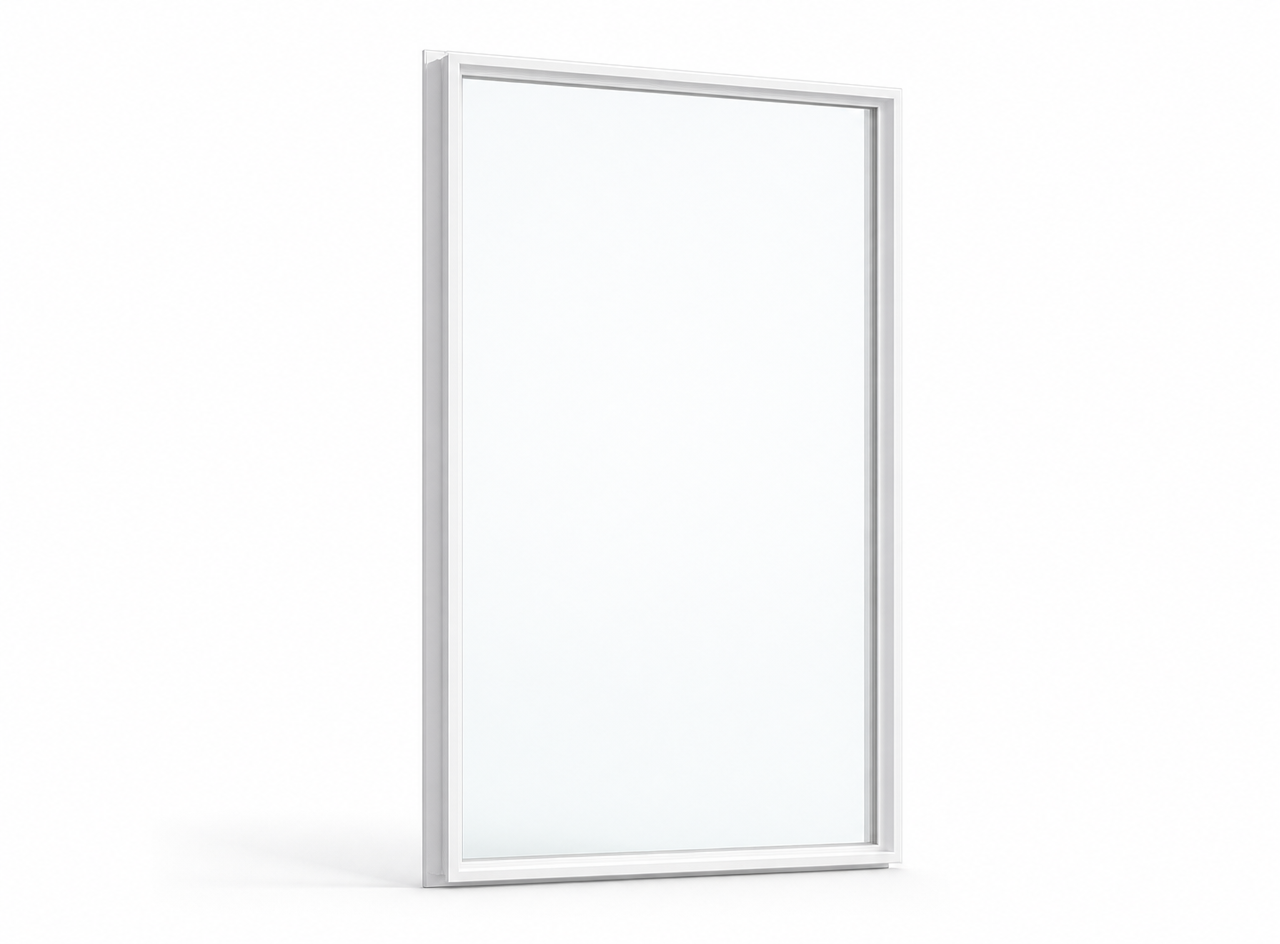
 PGT · WinGuard Aluminum Series
PGT WinGuard Aluminum Picture PW7720A
Aluminum impact fixed picture window on the WinGuard 7720 picture platform for unobstructed view installations. Diamond Glass, LMI for HVHZ.

 ECO · Eco-Guard Architectural Fixed Window Series
Eco-Guard Architectural Fixed Window Series 300
2-3/4 in. aluminum impact fixed window with concealed fasteners, +80/-90 psf, LMI+SMI, up to 36 x 120 in.
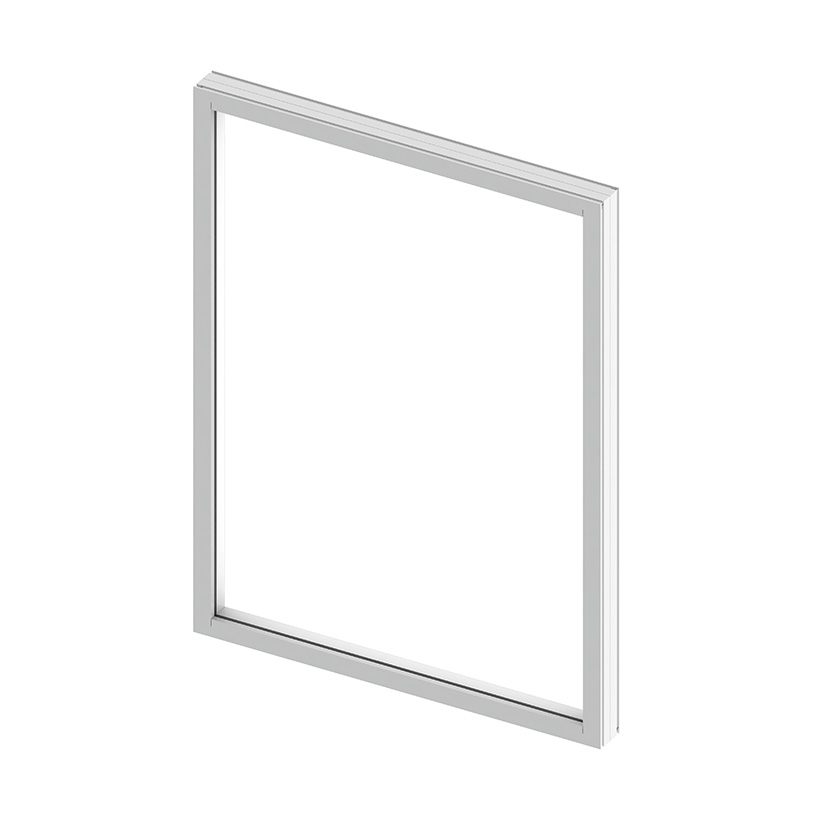
 ES Windows · Elite Series
ES Windows Elite ES-EL150 Fixed Window
Aluminum impact fixed window on a 2-15/16 inch frame, matching the rest of the Elite residential line for clean sightline continuity.
On cost: across the 122 standard window configurations in our pricing database, single-hung, double-hung, casement, sliding, and fixed, typical installed pricing at standard sizes runs from under $1,000 to around $2,600 per opening, with large sliding doors and specialty shapes above that. A whole-house project is real money, and for a seasonal owner it replaces a recurring problem, who deploys, who verifies, who is liable, with a one-time decision.
The Departure and Arrival Checklist for Your Openings
Whatever protection you have today, your openings deserve their own lines on the seasonal checklist. Here is the openings-focused version we give seasonal clients, alongside our broader hurricane preparedness checklist.
Before you leave in spring:
- Walk every opening and confirm its protection status: impact-rated, shuttered, or unprotected. The unprotected list is your to-do list.
- Lock every window and door, and engage every latch point on sliding doors. Impact glass performs as a system with its frame and locks.
- Photograph each elevation of the house. If you ever file a claim from out of state, dated photos of pre-storm condition are worth the ten minutes.
- Confirm your wind-mitigation inspection is current and your insurer has it on file, and ask your agent the occupancy question above.
- Put your protection plan in writing with whoever watches the house: who acts on a hurricane watch, what they do, and who they call.
- Shut off the water at the main. It has nothing to do with hurricanes and everything to do with the most common empty-house claim.
When you arrive in fall:
- Inspect frames, seals, and operation on every window and door. Six months of salt air and summer heat is a real service interval.
- Check weep holes on window and door tracks and clear any debris so the drainage path works.
- Look for water staining at heads and sills, evidence of a leak that happened while nobody was watching.
- If any opening is still on the unprotected list, this is the season to fix it, while you are on site to make decisions.
Scheduling the Install in Your Occupancy Window
The occupancy window that creates your hurricane exposure also solves your installation logistics. From November through April you are on site to meet the estimator, choose frames and glass, sign permit paperwork, give installers access, and be present for the final inspection. None of that works well from another state.
The rhythm we suggest to seasonal clients: get the estimate and measurements done in November or December, right after you arrive. Manufacturing lead time then runs while you are enjoying the season. Installation lands in late winter, and the permit is closed out with you still in residence. You fly north in April behind laminated glass, and September becomes a month you read about instead of a month you monitor a camera feed through.
If your timing does not line up that neatly, do not wait a full year. Permitting, manufacturing, and installation continue all summer, and openings protected in August are better than openings protected never; we cover the details in installing impact windows during hurricane season. The one thing we ask seasonal owners not to do is discover the problem in May, on the way out the door, and defer it to a phone call in September when a storm has a name.
Next Steps
If you own a seasonal home in South Florida, the useful first step takes ten minutes: walk the house, count the openings that would stand unprotected in September, and request a free estimate. We can start the conversation remotely, then time the measurement visit and installation to your occupancy window, so the whole project happens while you are here and the protection is standing long after you have gone north.