

Sliding glass door repair-or-replace is the most common door question we hear in Florida, and it deserves a more honest answer than either the repair shop's ("always repairable") or the replacement salesman's ("never worth fixing"). The truth has a clean structure: some slider problems live in the parts, and parts problems repair economically. Others live in the engineering of the door itself, and no quantity of parts will fix engineering.
This guide sorts every common symptom into those two piles, with current Florida service pricing on the repair side and installed pricing on the replacement side, so the decision is arithmetic instead of persuasion.
The Repair Pile: Parts Problems, With Parts Prices
Hard to slide. The classic. A 280-360 pound panel rides on four small rollers, and when they wear, flatten, or seize, the door drags. Roller replacement in the Florida market runs $150-$350 per door (parts are $25-$60 per roller; the labor is the panel lift). Service data across the trade traces 35-40% of all slider problems to track debris and maintenance, accelerated near salt air. This is the single most repairable problem a door has.
One warning attached to it: rollers are the repair with a deadline. A flattened or seized roller stops rolling and starts dragging steel against the aluminum track, and a chewed track cannot be economically replaced on most doors. Delay turns a $150-$250 roller job into a $400-$600 roller-plus-track-damage job within 6-12 months, and a badly gouged track pushes the whole conversation into replacement. If your door drags, fix it this month, not this year.
Latch and lock problems. Hardware and latch repairs run $85-$165. On impact-rated doors with multi-point locks, alignment matters more than parts: the lock engages at multiple points, and a door that has settled out of level will miss its keepers. A service tech adjusts roller height (every roller assembly has adjustment screws for exactly this) before replacing anything.
Torn weatherstripping. Wipe seals and pile weatherstrips drag with every operation and wear on schedule: figure replacement every 3-5 years, at $10-$40 in materials for a confident DIYer or $50-$120 professionally per door. Worn weatherstrip is also the first suspect for minor everyday drafts and light-rain seepage, which is a different animal from storm leakage (next section).
Screens. Re-meshing runs $60-$140. Nobody replaces a door over a screen.
The maintenance that prevents all of it: track cleaning quarterly (monthly on coastal property, where salt crystals work like grinding paste in the roller races), silicone-based lubricant only (petroleum products degrade the weatherstripping they touch), and keeping the weep holes clear so the track drains outward the way it was designed to. Salt air also finds multi-point lock mechanisms, so coastal doors earn a hardware wipe-down and lubrication on the same calendar. Scheduled annual service cuts emergency calls dramatically; it is cheap insurance on a door you would rather not replace yet.
The Storm-Leak Question: Usually Engineering, Not Parts
Here is where honest advice departs from the service menu. A slider that leaks only during storms is usually not broken. It is doing what its design permits, and the research on this is unusually strong because the Florida Legislature ordered it: a 2024 law directed the Florida Building Commission to study wind-driven rain through sliding-door tracks, and the resulting FIU Wall of Wind research found water intrusion in every configuration tested, at every wind speed.
The engineering reason is a mismatch most homeowners never hear: a door's water resistance is tested at only 15% of its structural wind rating. A DP-50 door — structurally rated for roughly Category 4 wind pressure — is water-tested at about 7.5 PSF, and real hurricane rain arrives with pressure that can exceed 50 PSF. Under that pressure, the weep holes that normally drain the track outward can reverse and become entry points. FEMA's post-storm investigation teams said it plainly after both Michael and Ian: current testing standards "may not adequately address water infiltration." Our deep dive on why sliding glass doors leak during hurricanes covers the full story, including where the standards are heading.
What this means for your decision:
- Everyday leakage (light rain, no wind) is a parts problem: weatherstrip, track seals, clogged weeps, or a sill pan issue. Repairable.
- Storm-only leakage on an older low-sill door is a design ceiling. The fixes that work are engineering fixes: a replacement unit with a taller sill dam (high-performance hurricane sills run 2-4 inches versus the 3/4-inch ADA-height sills on many older sliders), a lift-and-slide unit whose compression seals load when the door locks rather than dragging wipe seals, or exterior protection over the opening. A repair invoice cannot raise a sill dam.
The Replacement Pile: Where Repair Money Goes to Die
The racked frame. If the panel drags at one corner, the latch misses high or low, or daylight shows at the interlock, measure the opening's diagonals. A frame out of square means the opening moved — settling, a storm, or the original install — and shimming a moving panel into a moved frame is a fight the panel loses monthly. Racking is the cleanest replacement trigger there is, and after a storm it belongs in your damage documentation too.
Failed laminated glass. Cracked or delaminating glass in an impact slider means a new panel: Florida glass replacement averages $440-$880 and climbs past $2,200 for large or custom laminated panes. On a newer door from an active product line, one panel is a legitimate repair. On an older door, price that panel against the door's remaining life, because a discontinued series means the next failed part has no source, and a damaged opening also suspends your wind-mitigation insurance credit until it is repaired and re-documented.
The pre-code slider. A non-impact door from before Florida's modern code era cannot be repaired into compliance. Every part replaced is money spent maintaining glass that will not survive a debris strike, on a unit that current code will not allow you to replace like-for-like anyway: in the Wind-Borne Debris Region, the replacement must be impact-rated or protected by rated coverings. One code wrinkle worth knowing before you replace "just the slider": if your home predates the modern code and the door exceeds 25% of the home's total glazed area — a single large slider often does — replacing it can trigger current-code requirements across the replacements. Plan the sequence with someone who prices the whole picture.
The math side by side. A typical two-panel impact slider installs at $2,200-$4,500 (6-foot) to $3,500-$5,500 (8-foot); three- and four-panel openings run $4,500-$12,000. Against that, a pre-code door consuming $300-$600 a year in accumulating repairs, providing no debris protection, no insurance credit, and storm-season anxiety, is not saving money; it is financing the eventual replacement on the installment plan, without the premium credits or the financing structures that make the real thing manageable.
 PGT · WinGuard Aluminum Series
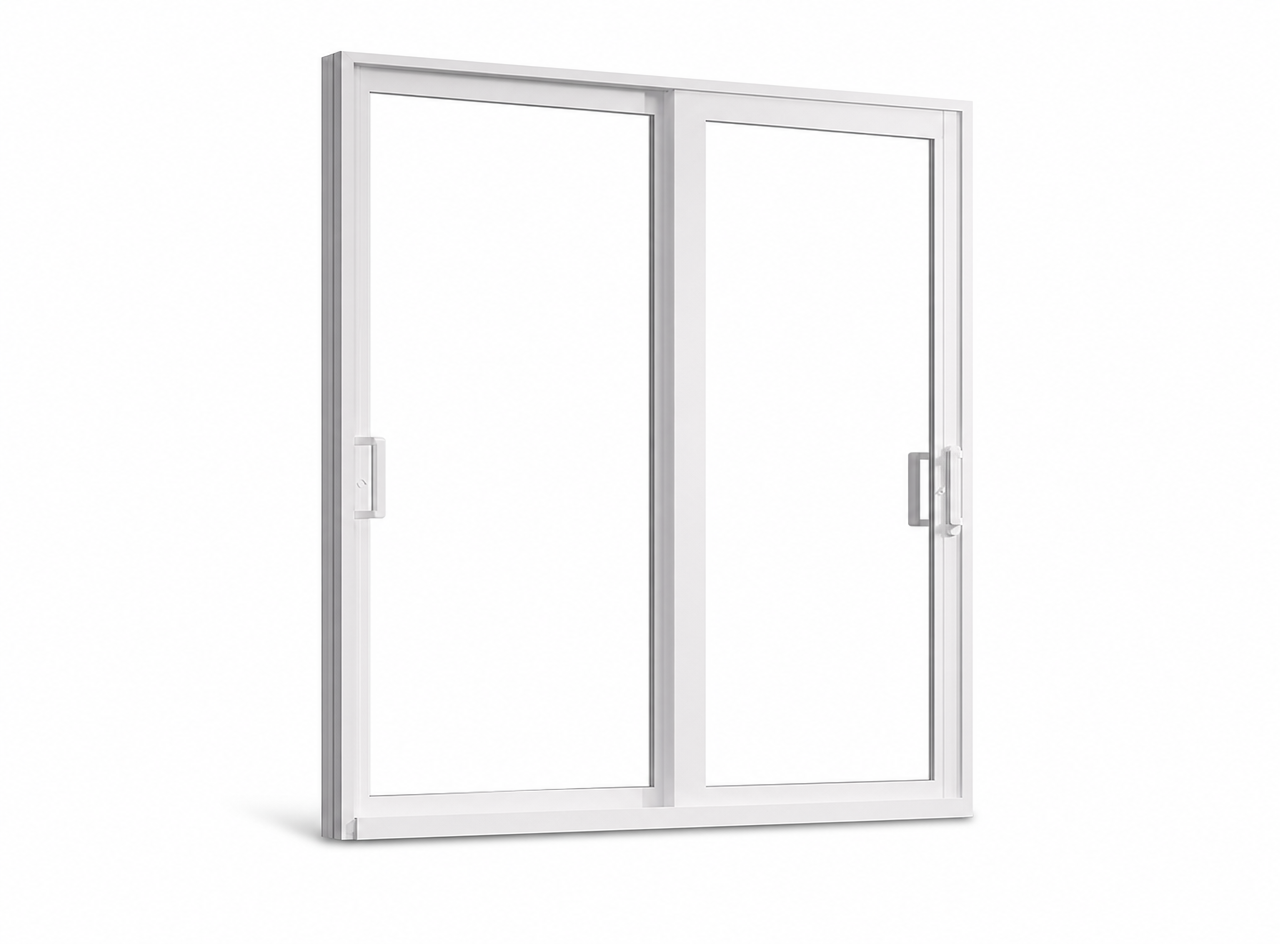
PGT WinGuard Aluminum SGD770A Sliding Glass Door
Flagship aluminum impact sliding glass door in WinGuard, the workhorse SGD across the catalog. Diamond Glass laminated glazing, LMI for HVHZ.
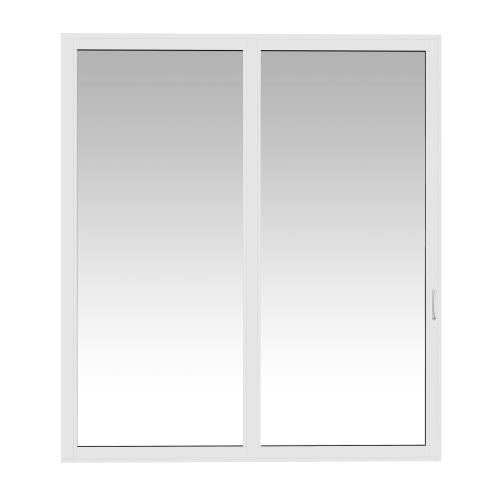
 ECO · Eco-Guard Sliding Glass Door Series
Eco-Guard Sliding Glass Door Series 700
Standard aluminum impact patio slider to 4.5 ft panels x 108 in., +70/-75 psf, LMI+SMI, NFRC-certified, dual-point lock, water-rated sill-riser table.
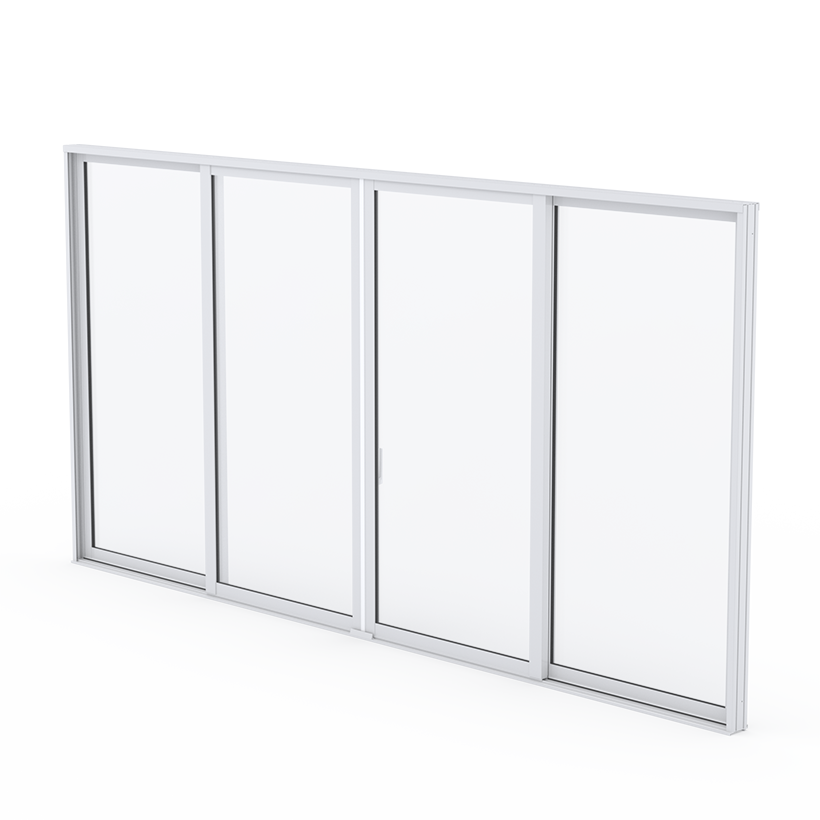
 ES Windows · Prestige Series
ES Windows Prestige ES-SGD2020 Sliding Glass Door
Flagship aluminum impact sliding door in 2-track or 3-track configurations supporting up to 5 panels. Corners at 90 and 135 degrees, plus a pocket option for full-wall openings.
The Age Question, Answered With a Calendar
Door age changes the repair math in ways a service call cannot see, so run this quick audit before authorizing any repair over $300:
Under 10 years, active product line. Repair almost everything. Parts exist, the manufacturer honors warranties (register the door if you never did; many warranties require it), and the door has 15-20 years of remaining service life to amortize the repair against. The one exception is glass failure from a storm impact, which belongs in your insurance claim rather than the repair budget.
Ten to twenty years. The gray zone where the audit matters. Check three things: whether the product line still ships (a discontinued line means the next part is a fabrication project), whether the frame is still square, and how the repair tab is trending. Two service calls a year on a fifteen-year-old door is the door telling you something.
Pre-2002, non-impact. The repair conversation is really a scheduling conversation about replacement. Every dollar into a pre-code slider maintains glass that provides no debris protection, earns no insurance credit, and cannot legally be replaced like-for-like when it finally fails. The productive move is pricing the replacement now, on your calendar, rather than after a storm on everyone's calendar at once — with lead times and post-storm pricing both working against the wait.
The Decision Table
| Symptom | Verdict | Cost side |
|---|---|---|
| Drags, sticks, hard to slide | Repair now (rollers) | $150-$350 |
| Latch misses, lock stiff | Repair (adjust, then hardware) | $85-$165 |
| Drafts, seeps in light rain | Repair (weatherstrip, seals, weeps) | $50-$120 |
| Leaks only in storms, low sill | Engineering — replacement-grade fix | Unit replacement |
| Frame racked, diagonals off | Replace | $2,200-$5,500 typical 2-panel |
| Laminated glass failed | Panel on new doors; replace on old/discontinued | $440-$2,200+ per pane |
| Pre-code non-impact unit | Replace (code requires impact-rated) | $2,200-$5,500+ |
| Track gouged from dead rollers | Usually replace | — |
What a Real Replacement Includes (So You Can Compare Quotes)
Because slider installs fail at predictable points, a competent quote includes things a cheap one skips: a sill pan beneath the threshold (required for sliding doors under Florida's installation code, with the pan running up the jambs and draining outward), a threshold set dead level on a full support bed — an out-of-level track is the dominant slider failure at inspection and the reason multi-point locks misalign within months — stainless-hardware rollers rated for the panel weight, and a permit with final inspection, which every Florida door replacement requires. Tear-out on older openings finds rot under the threshold often enough (our crews hit it on a meaningful share of pre-1980 jobs) that a contingency line beats a surprise change order; the 72-hours guide covers why hidden damage documented early claims better.
Lead-time reality for planning: standard impact sliders run 6-10 weeks from order, longer for large multi-panel formats and for certain manufacturers whose slider backlogs run far past their window lead times, and everything stretches further in season — one more argument for deciding before the cone shows up. A repair, by contrast, books in days, which is one more reason to keep a repairable door repaired while you plan the replacement on your own schedule.
Next Steps
- Diagnose with the table above; if it is rollers, book the repair this month, before the track pays for the delay.
- If it is storm leakage, read the leak research explainer and decide whether a taller-sill or lift-and-slide replacement fits the exposure.
- If it is replacement, get a free estimate with the sill pan, level-set, and permit spelled out, and compare against our sliding glass door guide and door cost guide.
- Check the insurance credit math — an unprotected big slider is often the one opening zeroing your wind-mitigation discount.
- If budget drives the timing, the financing options and MSFH grant both cover impact doors, and the grant's most common recommendation is exactly this door.