

Impact door selection is a trade-off exercise wearing a style question's clothing. Every door type that survives Florida's testing gauntlet gives up something to get there — clear opening, water behavior, wind rating, or money — and the brochures each emphasize the strength while the trade hides in the spec sheet. Having installed all five types across South Florida, here is the comparison we actually walk through at a kitchen table, opening by opening.
The Five Types in One Table
| Type | Installed cost/sq ft | Typical DP band | Clear opening | The trade |
|---|---|---|---|---|
| Sliding glass (SGD) | $80-$150 | DP 35-60 (premium lines to +125/-150) | 50% (more with pockets) | Track water management |
| French (hinged pair) | $90-$160 | DP 35-55 — lowest of any glazed door | ~100% of frame | The meeting-stile joint |
| Entry (solid or glazed) | $100-$200 | DP 40-65+ | 100% | Smallest glass area |
| Bi-fold | $120-$250 | DP 40-70+ | ~90% | Price and panel-width limits |
| Pivot | $100-$180 | DP 40-60 | 100% (huge single panel) | Hardware engineering, weight |
For calibration, impact windows run $55-$140 per square foot installed. Doors cost more per foot of glass everywhere on this table, and the reason is honest: heavier frames, more complex hardware, higher structural demands, and testing that requires a door to remain in its frame and operable after taking a nine-pound 2x4 at 34 mph — windows only have to keep the glazing barrier intact.
Sliding Doors: The Most Glass per Dollar, Riding on the Hardest Engineering
The slider is Florida's default big-opening door for good reasons: the most glass per dollar on this page, panels available past ten feet tall in premium lines, and configurations from a simple two-panel to 40-foot multi-track walls. Two-panel installed pricing runs $2,200-$5,500 for common sizes; the full size-by-size table covers the big formats.
The trade lives at the bottom of the door. A sliding sill must carry panel weight, drain rain, resist storm pressure that drives water uphill, and stay low enough to walk over — five jobs pulling in different directions, which is why track water management is the industry's hardest problem and the subject of state-commissioned research (the short version, and what it means for buyers, lives in our slider leak explainer). Two spec-sheet numbers tell you how a given slider resolves the conflict: sill dam height (3/4-inch sills prioritize step-over convenience; 2-4 inch dams prioritize the storm) and seal type — premium lift-and-slide hardware sets the panel down onto compression seals when closed, rather than dragging wipe seals, extending seal life and sealing tighter, at a 30-50% premium over an equivalent standard slider.
Choose the slider when glass area is the point, the exposure is manageable or the sill spec is honest, and the budget wants the most opening per dollar. Our sliding glass door guide goes model-deep.
French Doors: The Elegant Joint That Physics Taxes
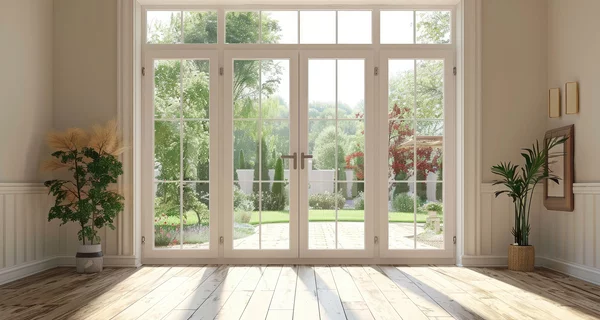
French doors are the room-to-terrace classic, and buyers deserve the number the brochures skip: they carry the lowest typical wind ratings of any glazed door type — DP 35-55 against sliders reaching +125/-150 in premium lines. The reason is structural, not quality: two moving panels meet mid-span with no fixed frame between them, and that meeting stile must hold against alternating positive and negative pressure that can exceed 100 PSF in a design storm. Florida's test protocol respects the weakness explicitly: double-door assemblies take an additional missile impact aimed at the center where the leaves meet.
Good hurricane French doors answer with hardware: reinforced meeting stiles, multi-point locks engaging head, sill, and stile simultaneously, and a hurricane-rated astragal whose flush bolts anchor the inactive leaf into the header and threshold — those bolts are the primary thing preventing the fixed leaf from blowing in. Swing direction matters more here than on any other type: outswing doors seal tighter as the wind pushes them into their frames, which is why Florida hurricane zones prefer them; inswing units fight the storm at their locks and need the more robust locking to compensate. Installed pricing runs $3,500-$6,000 for standard pairs, $5,500-$8,500 with sidelites. Our French door guide covers the details, including shutter options for existing doors.
Choose French doors when the swing-door aesthetic is the point and the opening's exposure is moderate, and spec the astragal and DP rating like they matter, because on this type they do.
Entry Doors: The Highest Ratings per Dollar
The everyday front door is the easiest impact decision on this page. Solid impact entry doors reach DP 40-65+ at $1,500-$3,500 single-leaf installed, glass inserts and sidelites raise both the price and the stakes (door glass must pass both safety-glazing and debris testing, since it extends to near floor level), and premium units reach +133/-150 ratings. Outswing with non-removable-pin hinges is the hurricane-zone default. One insurance note that surprises people: a solid entry door without glass is a non-glazed opening, and does not break your opening-protection insurance credit the way one unprotected glazed door can — but its sidelites and transom do count. Our front door roundup ranks the current field.
Bi-Fold and Pivot: The Statement Category
Bi-folds stack their panels to open roughly 90% of the wall, hang from the top track (which keeps debris out of the running gear and carries weight more stably), and price accordingly: $8,000-$15,000 for a four-panel and up steeply from there, $120-$250 per square foot. Panel widths cap around 3-4 feet, so wide openings mean many panels. The category is the fastest-growing in impact doors, and the engineering has matured: the strongest HVHZ-certified bi-folds now carry DP +70/-100.
Pivots rotate a single oversized panel — up to 6x11 feet in current lines — on offset hardware, making the entrance the architecture. DP 40-60 is achievable, pricing runs $2,200-$8,500 depending on size, and the weight-and-hardware engineering is the whole product; our pivot door page covers the options.
Multi-slides deserve their footnote here: bottom-rolling panels that stack or pocket to 50-100% clear opening at large scale (lines run to 30 feet wide). The planning trap is structural: the head track needs a header sized to a strict deflection limit, verified before demolition, because discovering an undersized header mid-job means an engineering letter and a multi-week delay.
The Threshold Question Every Type Must Answer
Whatever the door type, the sill underneath it resolves the same conflict, and knowing the bands helps you read any spec sheet. Sill dam height maps to water resistance directly:
| Sill dam height | Water resistance | Where it belongs |
|---|---|---|
| 3/4" (sliders) / 1/2" (swing doors) | Minimal | Accessibility-first thresholds |
| 1"-1.5" | Moderate | Standard residential |
| 2"-4" | High | Hurricane-exposed elevations |
| 3"-4"+ | Maximum | Oceanfront and extreme exposure |
The low end of that table exists because accessibility rules cap threshold heights (3/4 inch for sliders, 1/2 inch for other doors, beveled), and a 3/4-inch dam is genuinely inadequate against hurricane-driven rain — a conflict the industry has engineered real escapes from rather than pretending away. The elegant ones: cam-lift hinges that raise the door over a flush threshold and drop it onto a compression seal when closed; water-rated ADA-compliant sill systems that reach meaningful ratings at legal heights; a linear drain across the exterior of a flush opening; and the oldest trick in Florida architecture, a real overhang or recessed doorway that keeps the worst of the rain off the door entirely. If your household needs a step-free threshold, ask for these by name; if it does not, buy the taller dam on exposed elevations and take the water performance.
Matching the Door to the Opening
The 6-16 foot rear opening to a patio or pool: slider by default; lift-and-slide if the exposure is coastal and the budget allows; bi-fold when indoor-outdoor living is the explicit goal and the budget is real. Watch sill height against your water exposure.
The pair-of-doors opening to a balcony or garden: French doors if the look is the point (spec the astragal, prefer outswing); a two-panel slider if wind rating and water behavior outrank the aesthetic — the honest answer is that the slider usually outperforms the French pair in a storm at similar money.
The front entrance: impact entry door, outswing, solid or with rated glass, on non-removable-pin hinges so the swing direction never becomes a security trade. If there are sidelites or a transom, they are glazed openings; protect them like windows, because the insurance credit counts them like windows.
The oversized architectural opening (16 feet and up): multi-slide or bi-fold, with the header engineering settled on paper first, and an honest conversation about lead times — large-format custom doors run 8-24 weeks from order.
Any opening you are not replacing yet: rated shutters remain legitimate protection at a fraction of glass cost ($500-$3,000 per opening versus $2,500-$12,000+), with the identical insurance credit — the trade is deployment labor every warning and none of the year-round benefits. The hybrid we spec most: impact glass on the doors you live through daily, shutters on secondary openings, everything protected so the all-or-nothing insurance credit actually triggers, since one unprotected glazed door — very often the big slider — zeroes the discount for the whole house.
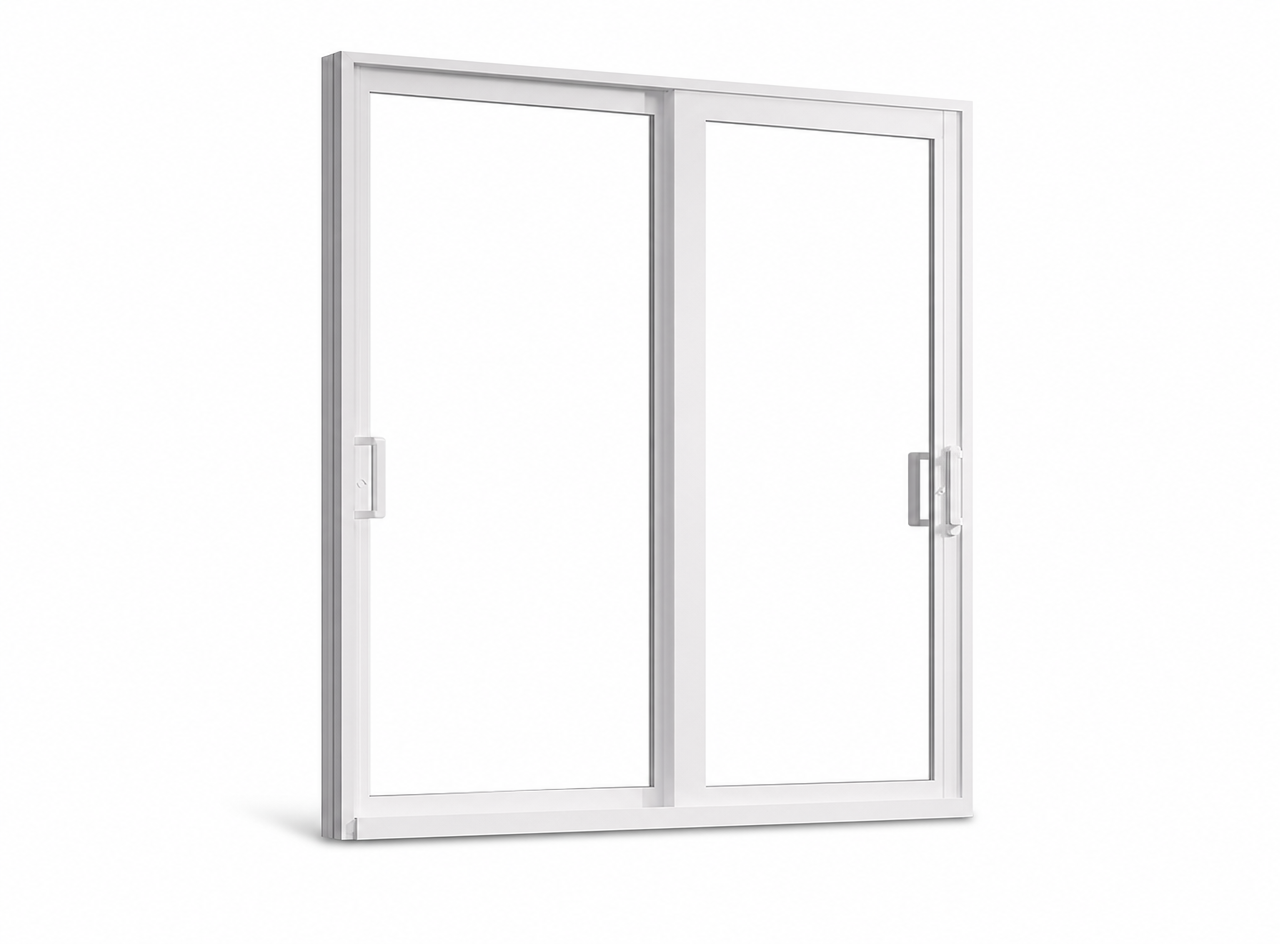
 PGT · WinGuard Aluminum Series
PGT WinGuard Aluminum SGD770A Sliding Glass Door
Flagship aluminum impact sliding glass door in WinGuard, the workhorse SGD across the catalog. Diamond Glass laminated glazing, LMI for HVHZ.
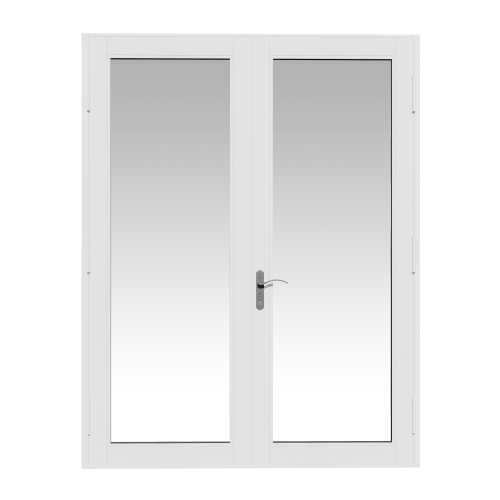
 ECO · Eco-Guard French & Swing Door Series
Eco-Guard French Door Series 600
4 in. outswing aluminum impact French door, single/double/OXXO to 148 in. wide x 98 in., +70/-75 psf, LMI+SMI, NFRC-certified, concealed install screws.
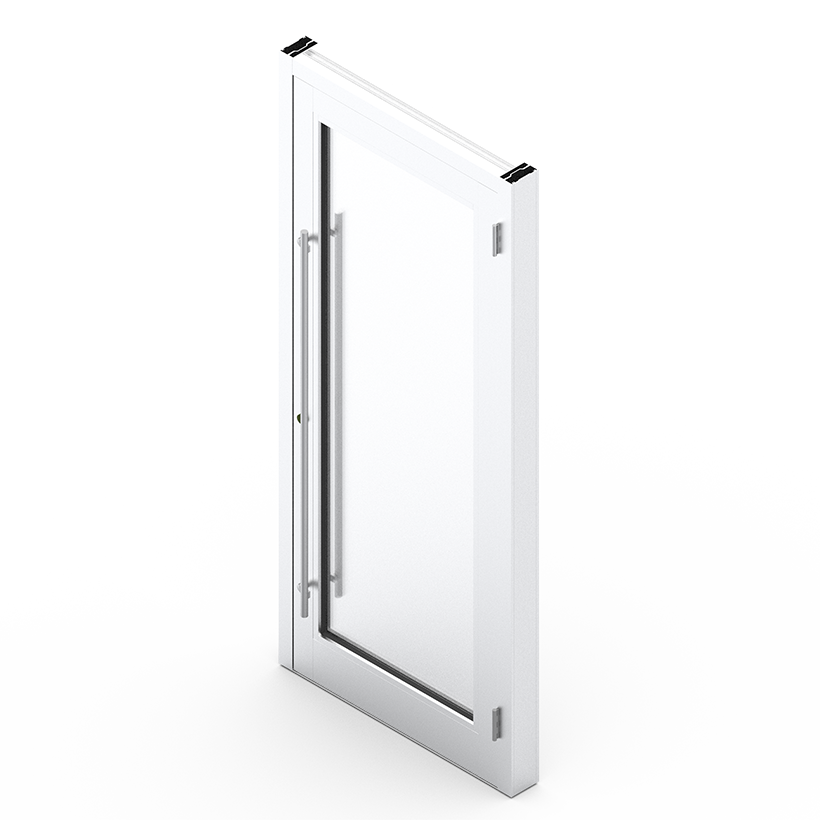
 ES Windows · Prestige Series
ES Windows Prestige ES-9000 Impact Entry Door
Premium aluminum impact entry door in outswing and inswing on a 5-inch frame. Pre-assembled door leaves with stainless hardware, rated to 120 psf.
The Money Layer
Whatever the type, three programs move the math: the My Safe Florida Home grant explicitly covers impact doors and most commonly recommends upgrading unprotected sliding doors (the largest glazed openings, the largest credit opportunity); financing structures fit doors the same as windows; and door projects earn the same premium credits at renewal.
Lead times deserve a line in the plan too, because they vary by type more than price does: standard sliders and entry doors run 4-10 weeks from order, custom large-format sliders 8-16, bi-folds 8-20, and multi-slides up to 24 — and all of them stretch in season and after any landfall. The buyers who get the door they actually wanted are the ones who chose the type before the calendar chose for them. The market agrees on where taste is heading, for what it is worth: bi-folds are the fastest-growing impact door category, and the door market as a whole is growing faster than impact windows. Tariff reality belongs in the plan too: aluminum is 40-60% of an impact door's manufacturing cost, and the 2025-2026 tariff stack has pushed door prices 15-20% with per-home effects of $2,000-$4,000 — one more reason the order-now math favors deciding over waiting.
Next Steps
- Walk your openings and note three things per opening: width, exposure direction, and how you actually use it daily. The table above turns that into a shortlist.
- Price the shortlist with a free estimate — installed, per opening, with sill heights and DP ratings on the quote.
- Read the deep guide for your finalists: sliders, French, front doors, or pivots.
- Check the insurance credit math before sequencing — the credit is all-or-nothing across glazed openings, which often reorders which door goes first.
- If the budget is the constraint, start with the MSFH grant and financing guide; doors qualify for both.