

An Elevation Certificate is a FEMA form, completed and sealed by a licensed land surveyor, engineer, or architect, that documents how high your building sits compared to the base flood elevation on FEMA's flood maps. Insurance agents use it to check for a lower flood premium; building departments use it to confirm new construction in a flood zone meets elevation rules. It is the flood-side sibling of the two wind documents Florida homeowners already know: the OIR-B1-1802 wind mitigation form and the 4-point inspection.
Flood paperwork matters here more than anywhere. Our count of FEMA's public OpenFEMA policy records whose terms span June 1, 2026 comes to roughly 1.1 million NFIP flood insurance policies in force in Florida. Every one of those premiums is now priced under Risk Rating 2.0, the methodology that made the certificate optional.
Optional does not mean useless. The right certificate can cut your premium or support a map amendment that removes a lender's flood insurance requirement. Here is where to find one free, who still needs one, and how to read the two numbers that matter most.
Where to Find an Existing Elevation Certificate Free
Work through this list before you pay anyone to survey your home. Certificates stay with the building, not the owner, so one completed years ago is still valid if the structure has not changed.
| Step | Where to look | What you will find |
|---|---|---|
| 1 | Florida's statewide database at the Division of Emergency Management | Since January 1, 2023, Florida surveyors must file a digital copy of every certificate they complete with the state within 30 days. Search your address free at florida.withforerunner.com/properties. |
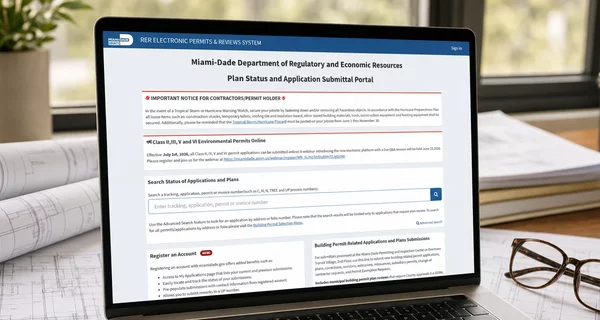
| 2 | Your county or city floodplain office | Miami-Dade's Elevation Certificate search covers homes built after 1995 at ecmrer.miamidade.gov. Other counties, Charlotte among them, run address lookups too. |
| 3 | Your closing or loan file | Title packages, lender files, and old flood policies often include a certificate from a prior sale. |
| 4 | The builder or prior owner | Builders obtain certificates for new construction in flood zones, and communities keep a copy on file when a permit required one. |
| 5 | LOMA or LOMR-F records | If a prior owner had the home removed from the high-risk flood zone through a Letter of Map Amendment, an Elevation Certificate usually supported that request. |
| 6 | Only then, hire a professional | A licensed land surveyor, engineer, or architect can complete a new one. |
FEMA's guidance at floodsmart.gov matches: start with your local floodplain manager, and hire a surveyor only if no certificate is on file.
The statewide database is the piece most homeowners have never heard of. Florida Statute 472.0366 is the reason it exists, and it means any certificate completed in Florida since 2023 should be a two-minute search rather than a new surveyor's invoice.
What the Current Form Looks Like
The current certificate is FEMA Form FF-206-FY-22-152, formerly numbered 086-0-33. The cover reads "2022 Edition," FEMA approved it for use in July 2023, and the form carries an OMB expiration date of June 30, 2026, per FEMA's NFIP bulletin W-23007.
That expiration date applies to the blank form template, not to your completed certificate. Per the form's own instructions, a completed Elevation Certificate does not expire unless a physical change to the building invalidates the recorded information, and it is not invalidated when the property changes hands.
Three lettered sections do most of the work:
- Section A identifies the building, its flood openings, and requires at least two photographs.
- Section B records the flood map data: your flood zone and the base flood elevation.
- Section C holds the surveyed elevations, which only a land surveyor, engineer, or architect authorized by state law can certify.
Who Needs an Elevation Certificate After Risk Rating 2.0
Risk Rating 2.0, FEMA's pricing methodology for NFIP flood insurance, took effect for new policies on October 1, 2021 and for renewals on April 1, 2022. Before it, homes in high-risk zones needed an Elevation Certificate to be rated at all. FEMA's Risk Rating 2.0 FAQ states the change directly: "An Elevation Certificate (EC) will no longer be required to purchase coverage under Risk Rating 2.0."
FEMA now estimates your building's first-floor height from its own data. You never have to prove your elevation. You get to, when it helps. The same FAQ tells policyholders to submit a certificate to their NFIP insurer to find out whether it lowers the premium. If FEMA's estimate underrates how high your home actually sits, a certificate is the correction mechanism, and your agent can quote the policy both ways.
A certificate is still effectively required in three situations:
- Building in a high-risk zone. Communities use the certificate to document that new construction, and renovation heavy enough that floodplain rules treat it as new construction, meets local elevation requirements. This is a permitting matter, not an insurance choice.
- Requesting a LOMA or LOMR-F. A Letter of Map Amendment can pull a building that sits above the base flood elevation out of the mapped high-risk zone, which can remove a lender's flood insurance mandate. Certified elevations back that request.
- Community Rating System discounts. The NFIP keeps using certificates for floodplain management, which feeds the CRS program that discounts premiums community-wide.
How to Read the Two Numbers That Matter
A completed certificate is dense, but the comparison at its heart is simple: how does your building's lowest floor compare to the base flood elevation?
Base Flood Elevation, Section B, Item B9. The BFE is the height floodwater is expected to reach or exceed in a flood with a 1 percent chance of occurring in any year, the "100-year flood." It comes off FEMA's Flood Insurance Rate Map for your address. Item B8 next to it lists your flood zone; zones containing the letter A or V are the high-risk Special Flood Hazard Areas.
Your building's elevations, Section C, Item C2. The surveyor records the top of the bottom floor, the next higher floor, the lowest adjacent grade, and the lowest machinery serving the building, such as an AC condenser.
Read C2.a against B9. A bottom floor above the BFE tends to reward submitting the certificate to your insurer. A bottom floor below it explains a painful premium and points toward mitigation, since Risk Rating 2.0 prices each building on factors that include foundation type and first-floor height rather than zone alone.
Section A's flood-opening items (A8 and A9) matter for elevated homes. The form defines a permanent flood opening as "a flood vent or other opening that allows the free passage of water automatically in both directions without human intervention." Enclosures and garages below an elevated floor need them to relieve water pressure during a flood.
Flood Vents and Impact Windows Are Opposite Jobs
Homeowners sometimes ask us whether sealing a home with impact windows and doors conflicts with those flood vents. It does not, because the two systems face different directions. Flood openings sit low, in garages and crawlspace enclosures, and exist to let rising water pass through so water pressure cannot collapse a wall. Impact windows and doors sit in the living envelope and exist to keep wind-borne debris and wind pressure out; they are tested for impact and pressure cycling, not rated as flood barriers.
The insurance paperwork splits the same way. Your NFIP policy responds to flood, your homeowners or windstorm policy responds to wind, and the two are priced off different documents: the Elevation Certificate on the flood side, the OIR-B1-1802 on the wind side. Opening protection earns wind credits only through a wind mitigation inspection, and no elevation survey will capture it. Our guide to hurricane insurance in Florida walks the full wind-versus-flood split.
Hiring a Surveyor When No Certificate Exists
If every free source comes up empty, commission a new certificate from a licensed land surveyor, engineer, or architect. The visit involves instrument measurements of floor and grade elevations tied to a benchmark, photographs of each side of the building, and the flood map sections.
Fees vary with foundation type, lot layout, and travel, so get quotes from two or three licensed surveyors rather than budgeting off a national average. Because of the 30-day filing statute, the certificate you pay for lands in the state database, where the next owner of your home will find it free.
Next Steps
Pull your address through the free statewide and county searches, and if a certificate turns up, hand it to your insurance agent to re-quote your flood premium. Then work the wind side, where the bigger South Florida credits usually live: request a free estimate and we will assess your home for impact windows and doors, ready for the wind mitigation credits the flood policy cannot give you.