

Vetting a Florida impact window contractor takes about ten minutes and four public records: the company's DBPR license and the person who qualifies it at myfloridalicense.com, its permit history at real addresses in a county permit portal, a certificate of insurance sent straight from the insurance agent, and the Florida product-approval numbers printed on the proposal. All four are free, none needs an account, and a contractor who stalls on any of them has answered your question.
An impact window contract is one of the larger checks most homeowners write, and Florida's paper trail exists because enough of those checks went to the wrong people. The state built a public verification system around contracting: licenses you can read in full, permits logged address by address, product approvals with the test reports attached, and a deposit statute with criminal teeth. Almost nobody uses it before signing.
This guide walks through each lookup step by step, then covers the contract terms Florida law requires, the deposit rules in Section 489.126, and the red flags that end a conversation early. We hold license CBC1270699, and we would rather you check it than take our word, so we use our own record as the demonstration. A company that shows you how to run these checks should be able to pass them.
The Four Public Records That Vet Any Florida Window Contractor
Run these in order. The first two take three minutes each; the last two take two.
| Check | Where | What you confirm | Walk away if |
|---|---|---|---|
| DBPR license + qualifier | myfloridalicense.com | License exists, right trade, Current/Active, who qualifies it | No record, wrong trade, name mismatch with no answer |
| Permit history | County or city permit portal | Real jobs, finaled inspections, steady local volume | No permits in their name, strings of expired permits |
| Certificate of insurance | The contractor's insurance agent | Liability and workers' comp, current dates, exact named insured | COI arrives only from the contractor's own hand |
| Product approvals | floridabuilding.org or Miami-Dade | FL numbers or NOAs on the proposal match real, current approvals | No approval numbers anywhere on the proposal |
Each check catches a different failure. The license check catches the unlicensed and the borrowed-number operators. The permit check catches companies that sell well and finish poorly. The insurance check catches the crew that becomes your legal problem the moment someone falls off a ladder. The approval check catches product substitution before it is installed in your wall.
Check 1: Read the DBPR License, Then Find the Qualifier
Every legitimate Florida contractor holds a license from the Department of Business and Professional Regulation, and the whole record is public.
- Open the DBPR license search. Search by license number if the proposal shows one; otherwise search by name, and try the exact company name from the paperwork, not the name on the truck.
- Open the record and read four lines: the licensee name, the license type, the status, and the expiration date. You want a construction license in the right trade showing Current, Active.
- Click through to the qualifying agent, the individual who holds the professional responsibility behind the company's license.
The license type matters more than people expect. Window and door replacement falls within the scope of a certified general contractor (license numbers starting CGC), a certified building contractor (CBC), a certified residential contractor (CRC), or a glass-and-glazing specialty license (SCC). The leading C means certified, licensed by state examination and valid in all 67 counties; an R prefix means registered, valid only in specific local jurisdictions. A landscaping or painting outfit quoting your windows has no license category to stand on, and the record will say so.
Now the part most homeowners have never heard of. Florida does not license brands; it licenses companies through a qualifying agent, a person who passed the exams and answers to the state for every job the company signs. The name on the truck is marketing. The qualifier on the license record is the accountable party.
The pattern is easy to see for yourself. Look up a handful of the biggest South Florida impact-window names on the DBPR licensee search and most of them trade under a storefront name that shares nothing with their qualifying agent's name. That is legal and common. It is also why you look the record up: the person the state holds responsible for your installation is usually not findable from the company's website, trucks, or sales material.
Run the check on us first. Our license is CBC1270699, a certified building contractor license, and the record at myfloridalicense.com shows it Current and Active. The same number appears on our proposals and contracts, which is not a courtesy: Section 489.119(5)(b), Florida Statutes, requires the license number on every offer, bid, contract, and advertisement. A proposal with no license number printed on it is breaking the law on page one.
One more read before you close the tab: if the company name on your proposal differs from the licensee name in the record, ask about it. A registered fictitious name is a routine, checkable answer. No answer at all suggests a borrowed license number, and contracting under someone else's license is a crime under Chapter 489.
Check 2: Pull the Permit History at Real Addresses
Permits are the only third-party log of a contractor's actual work. Sales volume is a claim; finaled permits are a record, written by building departments with no stake in the pitch.
Here is the lookup:
- Find your jurisdiction's permit portal. Miami-Dade County runs a public permit search that accepts contractor names; many South Florida cities run their own portals on the Accela Citizen Access platform, searchable the same way.
- Search the contractor's licensed name and read the list: how many permits, in which cities, over what period, and with what status.
- If the portal coverage in your area is thin, ask the contractor for three recent permit numbers with addresses in your county. A real installer rattles these off; the portals confirm them in seconds.
What you want to see is boring: a steady run of window and door permits across recent years, in the cities where the company claims to work, with final inspections passed. The status field is the tell. A permit that reads finaled or closed passed its inspections. A permit that reads expired without a final inspection is a job that was started, paid for, and never proven to meet code, and it resurfaces at resale, at refinance, and in insurance claims.
Two related reads while you are in the portal. Confirm the permits list the company as the contractor of record, because an installer whose customers pull their own permits is shifting the code liability onto those homeowners. And notice what jurisdictions charge for this paperwork; our county-by-county breakdown of what an impact window permit costs in Florida shows the fee is a small slice of the job, which is worth knowing when someone frames the permit as an expensive extra. Skipping it outright sits high on our list of the top mistakes Palm Beach homeowners make on impact window projects.
Check 3: Get the Certificate of Insurance From the Agent
Two coverages protect you on a window job: general liability, for the damage a crew can do to your property, and workers' compensation, for the injuries a crew can do to itself. If the second is missing and an uninsured worker gets hurt on your property, the claim comes looking for you.
The check has one rule that does most of the work: request the certificate of insurance from the contractor's insurance agent, naming you as the certificate holder, rather than accepting a PDF from the salesperson's phone. Certificates are trivial to edit; agents send current ones as a matter of course, and a contractor who resists routing one through the agent is telling you something.
When it arrives, read three things:
- The named insured, which must match the licensee name from Check 1 exactly, not a sister company or a similar-sounding LLC.
- The policy dates, which must cover your project window, not just today.
- The workers' comp line, either an active policy or a list of officer exemptions. Exemptions are legal for company officers, but a six-person crew working under two exemptions means four people are not covered.
You can confirm the comp coverage yourself in the state CFO's Proof of Coverage database, which shows active policies and exemptions by company name. Liability coverage is a condition of holding the license at all, so a licensed contractor who cannot produce a clean certificate has a story you do not need to hear the end of.
Check 4: Look Up the Product Approval Numbers on the Proposal
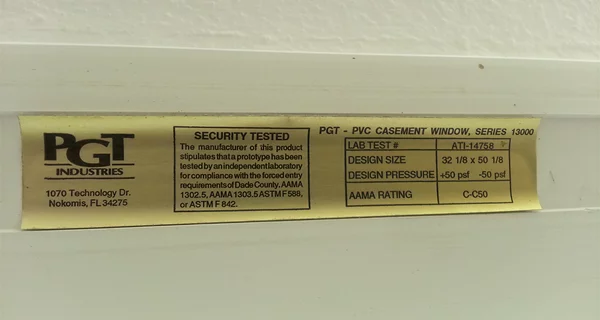
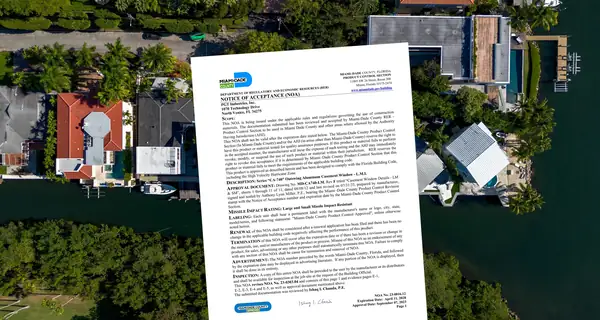
Every impact window and door legally installed in Florida carries a product approval: either a statewide Florida Product Approval, written as an FL number, or a Miami-Dade Notice of Acceptance, written as an NOA. The approval is the document that proves the exact product, in the exact configuration, passed impact and pressure testing. In the High-Velocity Hurricane Zone, which covers Miami-Dade and Broward counties, the approval must be rated for HVHZ use.
A serious proposal names the manufacturer, the series, and the approval number for each opening type. Here is how you check any of them:
- For FL numbers, open the Florida Product Approval search and type the number. The approval page lists the manufacturer, the product description, and attachments including the certified installation instructions and the tested design pressures.
- For NOAs, use the Miami-Dade Product Control search. NOAs carry expiration dates, so confirm the approval is current, not lapsed.
- Compare what the approval describes against what the proposal sells: same manufacturer, same series, glass makeup consistent with the quote, design pressures that cover your openings.
This is the check that catches quiet product substitution, where the brand discussed in your living room and the product that arrives on the truck are not the same thing. It also catches proposals written with no approval numbers at all, which describe not a product but a price, to be filled later with whatever is cheapest that week. If you want to see how approval numbers, series names, and glass makeups fit together, our impact windows pages carry them for the products we install.
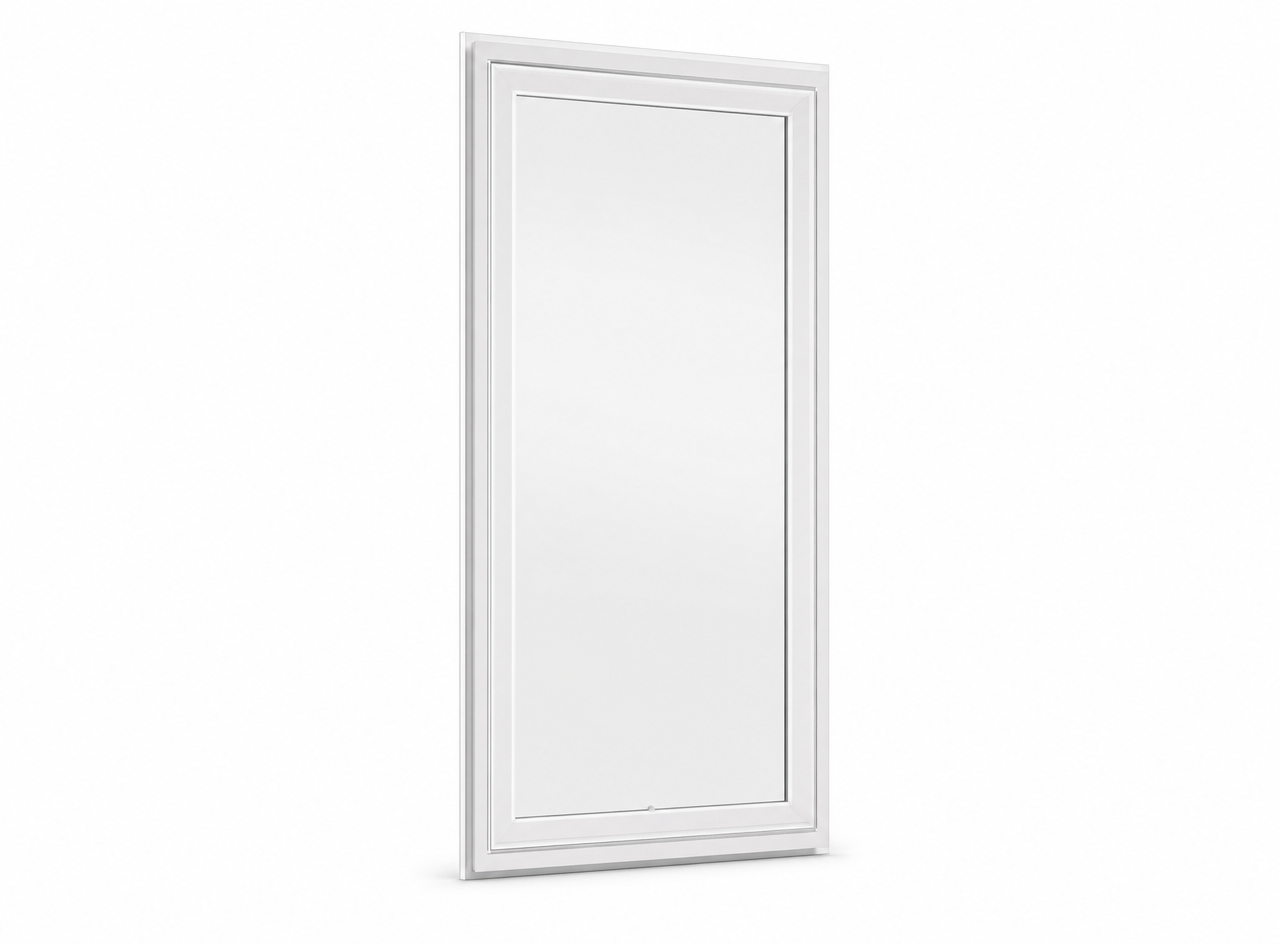
 PGT · WinGuard Vinyl Series
PGT WinGuard Vinyl Casement CA5540
Vinyl impact outward-swing casement with multi-point lock and nesting handle. Optional TrueHold hinge extends maximum sash height from 75 to 84 inches.

 ECO · Eco-Guard Casement & Awning Series
Eco-Guard Casement Window Series 500
Outswing aluminum impact casement, 2-3/4 in. frame, +70/-75 psf, LMI+SMI, NFRC-certified, with a stainless operator + multipoint lock.
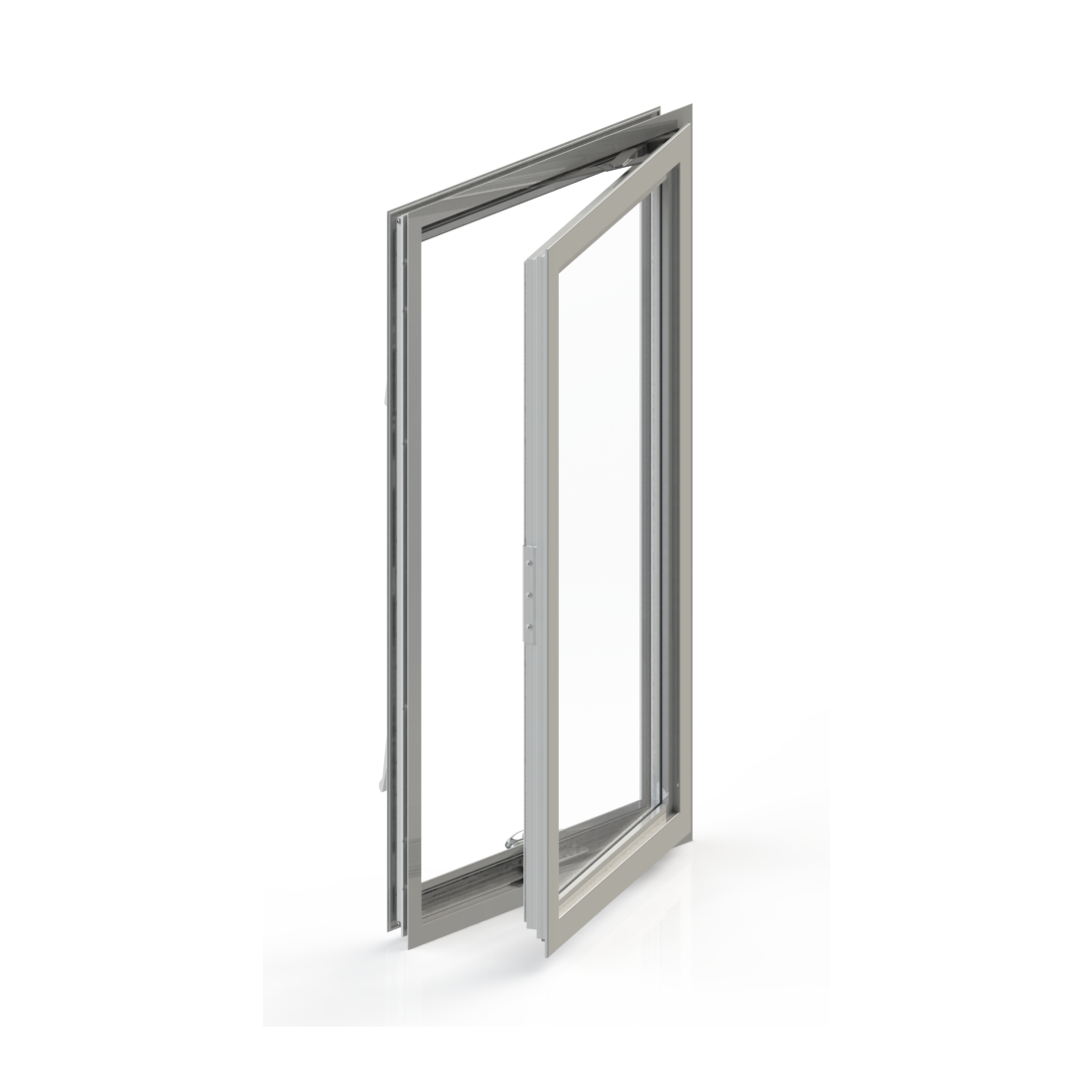
 ES Windows · Elite Series
ES Windows Elite ES-5000 Casement
Flagship aluminum impact casement in Elite, available in X and XX configurations on a 2-1/8 inch frame depth. Stainless 4-bar hinges, rated to 90 psf.
Florida Contract Terms That Matter
Florida writes several homeowner protections directly into the contract document, so a contract missing them is itself a finding.
| Term | Statute | What it does for you |
|---|---|---|
| License number printed on the contract | F.S. 489.119(5)(b) | Ties the paper in your hand to the record you checked at DBPR |
| Construction lien law warning, contracts over $2,500 | F.S. 713.015 | A signed, 12-point boldface notice that subs and suppliers can lien your home if the contractor fails to pay them |
| Recovery fund notice, contracts over $2,500 | F.S. 489.1425 | Points to the Florida Homeowners' Construction Recovery Fund, real money available when a licensed contractor causes a covered loss |
| Written scope, product, and payment schedule | Good practice backed by F.S. 489.126 | Names the series, colors, glass, approval numbers, opening count, permit responsibility, and when each payment is due |
The lien warning deserves a plain-language translation, because it describes the one risk that survives paying your bill: if your contractor takes your money and fails to pay the glass supplier, that supplier can place a lien on your home. The defense is written into the same notice: before each payment, collect a written release of lien from anyone who has sent you a Notice to Owner. On a window job the supplier pool is small, so this is one or two documents, not a stack.
Beyond the required clauses, the scope section is where good contracts separate from vague ones. Manufacturer, series, frame color, glass makeup, approval number, and count for every opening; the contractor named as permit puller; change orders in writing. Most disputes homeowners bring us to untangle trace back to a sentence that was never written down.
The Deposit Law: What Section 489.126 Requires
Florida does not cap deposits, but it attaches obligations to them. Under Section 489.126, Florida Statutes, a contractor who takes an initial payment of more than 10 percent of the contract price on a residential job must apply for the necessary permits within 30 days after the payment, and must start the work within 90 days after all permits issue, unless you agreed in writing to longer periods or the contractor has just cause.
The statute also hands you the enforcement tool. If the clock runs out, you send a written demand by certified mail, return receipt requested, to the address on the contract, demanding the permit application, the work, or a refund. Thirty more days of silence lets a court infer the contractor had no just cause, and the statute ties criminal exposure to the amounts involved. This is why the demand letter, not the angry phone call, is the move that matters.
For a custom-manufactured product like impact windows, deposits above 10 percent are normal and lawful; the manufacturer wants a commitment before building your sizes. What the law gives you is a test: any contractor taking a real deposit should volunteer, in writing, when the permit application goes in. A healthy payment schedule tracks the work itself: a deposit at signing, a progress payment when product arrives or the permit posts, and the balance after the final inspection passes, never before.
Red Flags That End the Conversation
Any one of these, unexplained, is enough:
- No license number on the ad, the business card, or the proposal, since the statute requires it on all three.
- A license in the wrong trade quoting your windows, with no window-scope license behind it.
- "You can pull the permit yourself as owner-builder." That sentence transfers the code liability from the contractor to you, and it is the signature move of installers who cannot pull permits in their own name.
- "No permit needed for replacement windows." In Florida, replacement impact windows are permitted and inspected work, everywhere.
- A deposit demand near half the job with no written permit timeline, which turns Section 489.126 from your protection into your lawsuit.
- A certificate of insurance that only ever comes from the salesperson, never from an agent.
- A proposal with no product approval numbers, no series names, and a price good only today.
Storm season adds its own cast of door-knockers, deductible schemers, and today-only pricing, and those variants get their own field guide in our post on post-storm contractor scams in Florida. The evergreen version of the defense is this article: four lookups, run before you sign, in any season.
Next Steps
Run the four checks on every company that bids your project, ours included; ten minutes of public records beats any review page ever written. When you are ready for numbers, request a free estimate, then hold whatever we send you to the same standard: license number on the paperwork, products named specifically enough to look up, and a payment schedule that respects the permit and the final inspection.