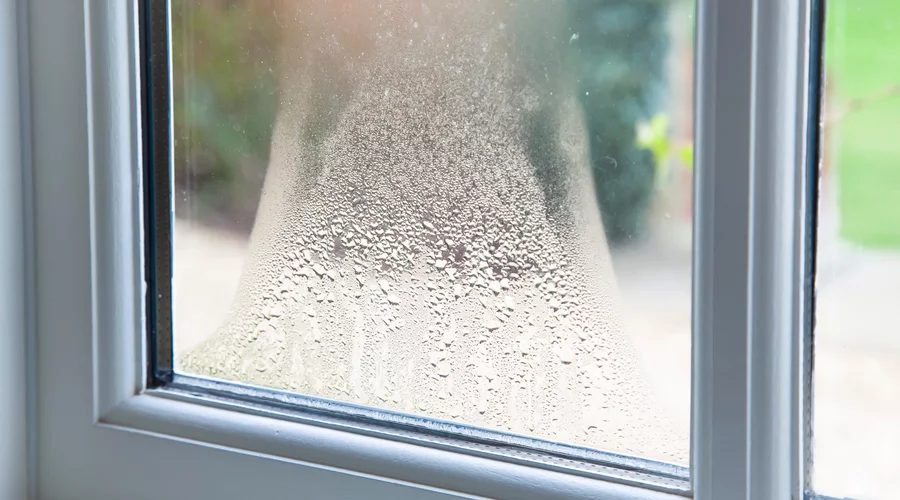

If you are searching for how to fix foggy windows, the honest answer depends on where the fog sits. Moisture on the inside or outside surface of the glass wipes away and usually points to humidity, not a defect. Fog trapped between the panes, where no cloth can reach it, means the sealed insulated glass unit has failed, and no cleaner, defogger spray, or dehumidifier will fix it. The repair is replacing the sealed glass unit or the window, and on an impact window that decision has a wrinkle most national advice skips: the laminated pane.
We install impact windows across South Florida, and fogged glass is one of the most common service calls we hear about on units 8 to 15 years old. Before writing this guide, we compared the sealed-glass clauses in the five current manufacturer warranty documents in our library: PGT
 PGT
PGT Custom Windows & Doors
America's largest impact window and door manufacturer, with 45 years of Florida-specific engineering.
Miami-Dade NOA / HVHZ approved 57 models across 7 product lines
Explore PGT
, CGI, ES Windows
PGT
PGT Custom Windows & Doors
America's largest impact window and door manufacturer, with 45 years of Florida-specific engineering.
Miami-Dade NOA / HVHZ approved 57 models across 7 product lines
Explore PGT
, CGI, ES Windows
 ES Windows
Tecnoglass-owned, vertically integrated impact windows and doors with in-house glass and aluminum.
Miami-Dade NOA / HVHZ approved 145 models across 9 product lines
Explore ES Windows
, ECO Window Systems
ES Windows
ES Windows
Tecnoglass-owned, vertically integrated impact windows and doors with in-house glass and aluminum.
Miami-Dade NOA / HVHZ approved 145 models across 9 product lines
Explore ES Windows
, ECO Window Systems

 ECO
ECO Window Systems
Miami-made impact windows and doors with vertical glass integration and Miami-Dade NOA coverage.
Miami-Dade NOA / HVHZ approved 41 models across 10 product lines
Explore ECO
, and Eastern Architectural Systems
ECO
ECO Window Systems
Miami-made impact windows and doors with vertical glass integration and Miami-Dade NOA coverage.
Miami-Dade NOA / HVHZ approved 41 models across 10 product lines
Explore ECO
, and Eastern Architectural Systems
 EAS
Eastern Architectural Systems
Fort Myers manufacturer of vinyl and aluminum impact windows and doors, makers of the Bertha line.
18 models across 6 product lines
Explore EAS
.
EAS
Eastern Architectural Systems
Fort Myers manufacturer of vinyl and aluminum impact windows and doors, makers of the Bertha line.
18 models across 6 product lines
Explore EAS
.
Coverage for a fogged insulated glass unit runs from 5 years on the leanest document to 25 years at 100% on the longest. That is a fivefold spread between brands sold side by side in the same market. Which document your window carries decides whether this problem costs you a service visit or a full replacement.
Here is how to diagnose the fog, why Florida is so hard on window seals, and what fixing it actually involves.
First, Find Out Where the Fog Actually Is
Three different problems get called "foggy windows," and only one of them is a defect. The test takes thirty seconds: try to wipe the moisture from inside the house, then from outside.
| Where the moisture sits | What it wipes with | What it is | What fixes it |
|---|---|---|---|
| Outside surface, usually early morning | A cloth, outside | Exterior dew on a well-insulated unit | Nothing. It burns off by mid-morning |
| Inside surface, often with AC running hard | A cloth, inside | Indoor humidity condensing on cool glass | Lower indoor humidity; run exhaust fans |
| A film that smears but never fully clears | Partially, either side | Surface residue: salt spray, sprinkler minerals, cleaner haze | A proper wash, not a seal repair |
| Between the panes, unreachable from either side | Nothing | Failed insulated glass unit seal | Replacing the sealed unit or the window |
Exterior dew surprises people, but it is a good sign. Glass manufacturer Vitro explains in its condensation guide that dew on the exposed surfaces of a sealed insulated unit means the glass is doing its job. So little heat escapes through the unit that the outer pane stays cool enough for dew to form. Interior condensation is a humidity problem in the house, not in the window.
The film case trips up coastal homeowners most. Salt spray and hard-water mist from sprinklers bake onto glass in Florida sun and read as permanent fog from a few feet away. If a section clears when you wash it correctly, the seal is fine; our guide to cleaning impact windows covers the wash that removes mineral film without scratching the glass.
If the haze sits between the panes, keep reading. That unit has a dead seal, and the clock on your warranty claim may already be running.
What a Failed Seal Actually Is
An insulated glass unit, or IGU, is two panes of glass separated by a spacer around the perimeter and bonded with sealant into a single sealed sandwich. The cavity between the panes holds dry air or argon. Inside the spacer sits a desiccant, a moisture-absorbing material whose whole job is to soak up whatever tiny amount of water vapor works its way in over the years.
Seal failure is what happens when the sealant bond gives up faster than the desiccant can compensate. Humid air leaks into the cavity and the desiccant saturates. The excess moisture then condenses on the inner glass surfaces as fog, droplets, or, in advanced cases, a milky mineral haze etched onto the glass itself.
That is why the fog comes and goes at first, showing up on cool mornings and vanishing by afternoon, then eventually stays. The desiccant buys the unit years of grace, and once it is spent, there is no reversing the process from outside the unit.
This failure mode is so well understood that the industry certifies against it. Sealed units sold in the US are tested to the ASTM E2190 durability standard, which puts sample units through accelerated weathering, high humidity, and fog testing before they can be certified, a regime the Insulating Glass Certification Council describes in its E2190 certification documentation. Certification proves the design can survive the test chamber. How long a unit survives on a real Florida wall is a different question.
Why Florida Kills Window Seals Faster
Every stress that ages an IGU edge seal runs harder here than in almost any other American climate.
Thermal cycling. Every day, the sun heats the glass and the air sealed inside the cavity expands; every evening it cools and contracts. That daily pressure swing flexes the sealant bead like a joint bending thousands of times a year. South Florida sun makes the swings bigger, and west-facing glass takes the worst of it.
UV exposure. The organic sealants that close the unit's edge degrade under ultraviolet light. Our latitude delivers more UV per year than nearly anywhere else the products are sold.
Humidity. Sealants do not have to tear to fail; water vapor migrates through them slowly even when they are intact, and the rate rises with the moisture load on the outside. A Florida summer keeps that load near its ceiling for months at a stretch, which is why the desiccant in a Florida unit works harder from day one.
Salt air. Within a few miles of the coast, salt attacks the metal spacers and glazing components at the unit's edge. The corrosion research we reviewed in our salt-air and windows guide is the reason every Florida manufacturer writes coastal maintenance clauses into its warranty, and an edge under corrosion attack is an edge whose seal fails sooner.
None of this means a Florida IGU is doomed early. It means the engineering margin gets spent faster here, and it explains why manufacturers put hard limits on how long they will stand behind a sealed unit, limits that vary more between brands than most buyers ever check.
Fog in an Impact Window Is a Different Problem
Here is where the national "foggy window" advice stops fitting. An impact window is built around laminated glass: two glass lites bonded to a clear interlayer that holds the pane together under debris impact. As our impact glass guide explains, that laminated assembly comes in two configurations, and the difference decides whether your window can even fog between panes.
Single-glazed laminated units, the most common impact configuration in South Florida, are one laminated pane with no cavity. There is no sealed air space, so there is nothing to fog. If a single-glazed impact window shows internal haze, bubbling, or milkiness, that is delamination of the interlayer, a different defect with its own warranty clause, not seal failure.
Insulated impact units pair the laminated pane with a second lite across a sealed, often argon-filled cavity. These carry the best energy numbers, and they are the ones that fog exactly the way any IGU fogs. The laminated pane keeps doing its structural job while the fog builds; the unit loses clarity and insulation, not impact resistance.
The laminated pane also changes the repair math. On an ordinary double-pane window, a glazier can pop out the failed IGU and drop in a generic replacement from any local fabricator. On an impact window, the glass makeup is part of the product's approval: the unit was tested and approved with a documented combination of glass thicknesses, interlayer, and cavity.
Replacement glass that does not match the approved makeup can compromise the approval on that opening, and with it the paper trail your insurance wind-mitigation credit rests on. The practical consequence is that fogged impact glass gets replaced through the manufacturer or with a matching documented unit, not with whatever the nearest glass shop cuts. You can look up the certified makeup of many products in the NFRC certified product directory, and your installer can pull it from the product approval.
One more thing the laminated pane rules out: drill-and-vent "defogging" services, which bore small holes to dry the cavity of a standard IGU. Whatever their merits on ordinary glass, they modify a tested assembly, they cannot restore an argon fill, and every warranty document we reviewed treats unauthorized modification as grounds to walk away. Do not let anyone drill a fogged impact unit.
What the Manufacturer Warranties Cover
Seal failure is the fine print these documents were written for, and the spread between brands is wide. This is the sealed-glass coverage in the five current warranty documents we hold, the same set we compared in our impact window warranty guide:
| Brand | Insulated glass (seal failure) coverage | Clock starts | Claim deadline |
|---|---|---|---|
| PGT (WinGuard, EnergyVue) | 100% through year 25, then 50% of glass price | Date of delivery | Through your dealer; no stated discovery deadline |
| CGI (legacy, pre-2026) | 100% through year 25, then 50% of glass price | Date of delivery | Through your dealer or the legacy portal |
| Eastern Architectural Systems | 20 years | Date of manufacture | In writing within 30 days of discovery |
| ES Windows | 10 years, if registered within 90 days of delivery | Date of delivery | In writing within 90 days of discovery |
| ECO Window Systems | 5 years (insulated laminated glass) | Per document terms | In writing within 90 days of discovery |
The PGT and CGI language is explicit about what counts: the sealed unit is warranted against defects that produce "material obstruction of vision" from moisture or dust in the air space. That is a fogged window described in contract language. EAS runs its 20 years from the date of manufacture rather than delivery, worth knowing if your windows sat in a warehouse. And ECO's 5-year term on insulated laminated glass is the shortest in the set, one reason two otherwise similar quotes are not actually similar.
Three habits protect the claim. Report fog the week you see it; the 30-day EAS window and the 90-day ES and ECO windows run from discovery, and "I noticed it last spring" can sink an otherwise valid claim. Photograph the fog with the date, since intermittent early-stage fogging may not perform on demand for the service tech. And keep your order number with your home records, because it is the first thing every manufacturer asks for.
What no document covers is labor. The manufacturer's obligation is the replacement sealed unit or sash, shipped at no charge on an approved claim. The work of swapping it belongs to you and your installer, which is why who installed your windows matters as much after the sale as before it.
What It Actually Costs to Fix
The bill depends on where the failed unit falls on this ladder.
Inside the warranty term. The glass itself is free on an approved claim. You pay the labor to install the replacement sash or sealed unit, a fraction of new-window money. This is the path most fogged units under 10 years old should take, and it is why we tell homeowners to start with the warranty before pricing anything.
Outside the warranty, frame in good shape. A matching replacement sealed unit or sash bought through the manufacturer's parts channel costs real money but still runs well below a full window, and it preserves the approved glass makeup on the opening. Whether it makes sense depends on the age of the surrounding units: paying to reglaze one opening in a wall of 15-year-old windows whose seals all face the same sun is often money spent twice.
Full replacement. When the frame, hardware, or several units are aging together, replacement wins. Across the 177 priced window configurations in our catalog, installed pricing runs from about $490 for small openings to roughly $8,200 for the largest architectural units, with most common sizes landing between $1,000 and $2,500 installed. Those are our retail figures, and a fogged 15-year-old unit is also a 15-year-old unit on energy performance, hardware, and code cycle; many homeowners use the failure as the trigger to upgrade the impact windows on the whole exposure. If you want numbers for your specific openings, a free estimate will price both the reglaze path and the replacement path side by side.
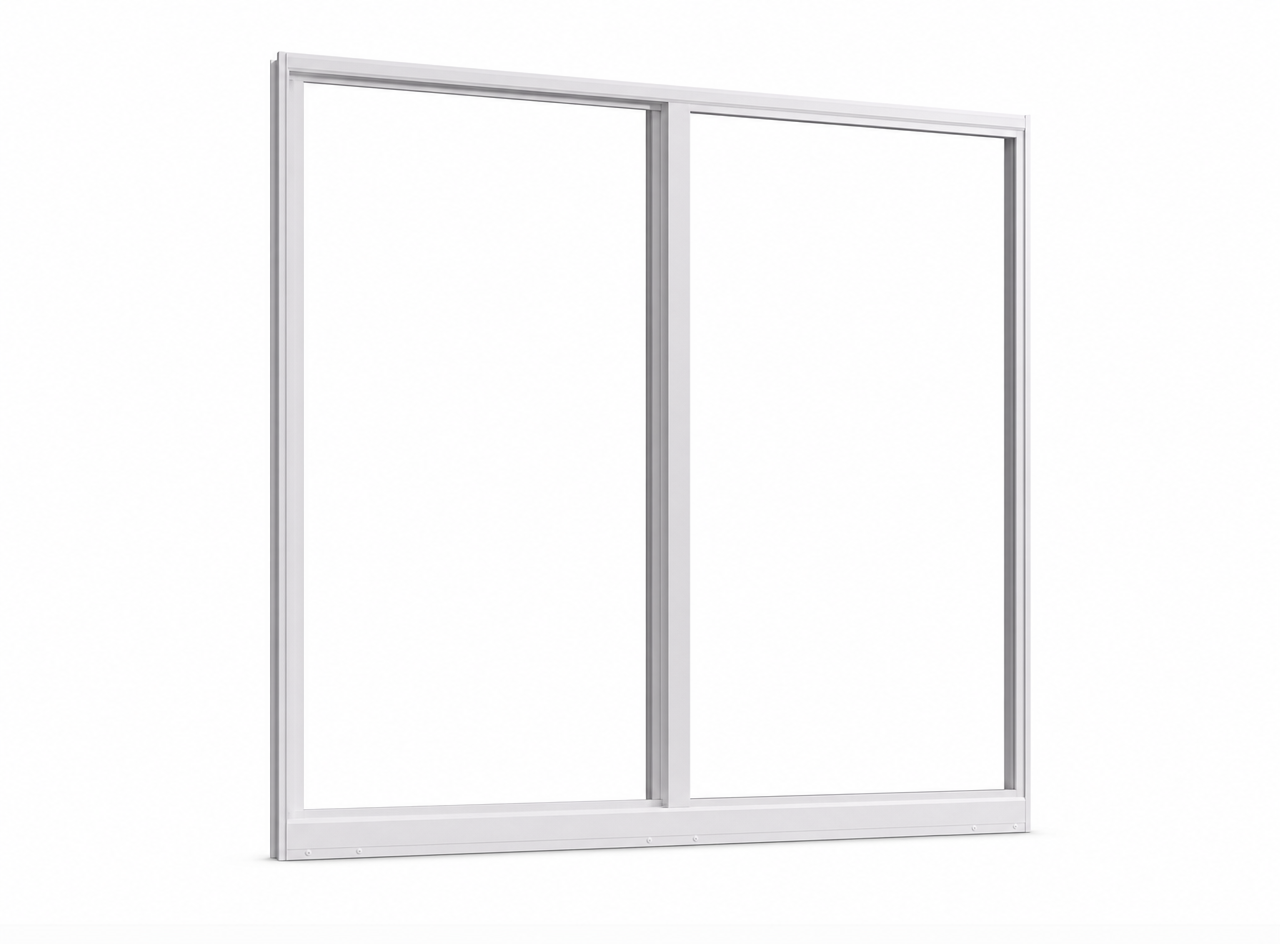 PGT · WinGuard Aluminum Series
PGT WinGuard Aluminum Horizontal Roller HR7710A
Aluminum impact horizontal roller on the WinGuard 7700-series frame, opening side-to-side for wider residential openings. Diamond Glass, LMI for HVHZ.
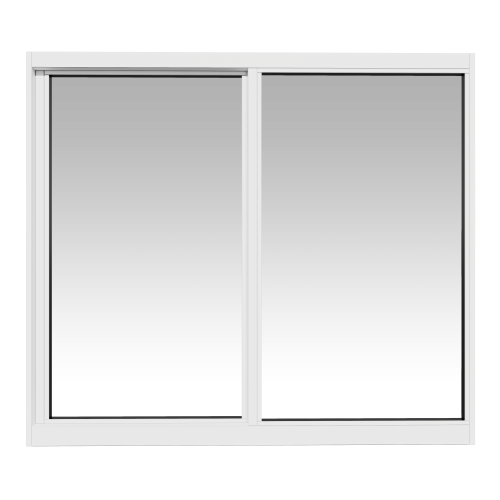 ECO · Eco-Guard Horizontal Rolling Series
Eco-Guard Horizontal Rolling Series 200
2-3/4 in. aluminum impact roller, +80/-90 psf, LMI+SMI, NFRC-certified, in XO/XOX configurations to ~111 in. wide.
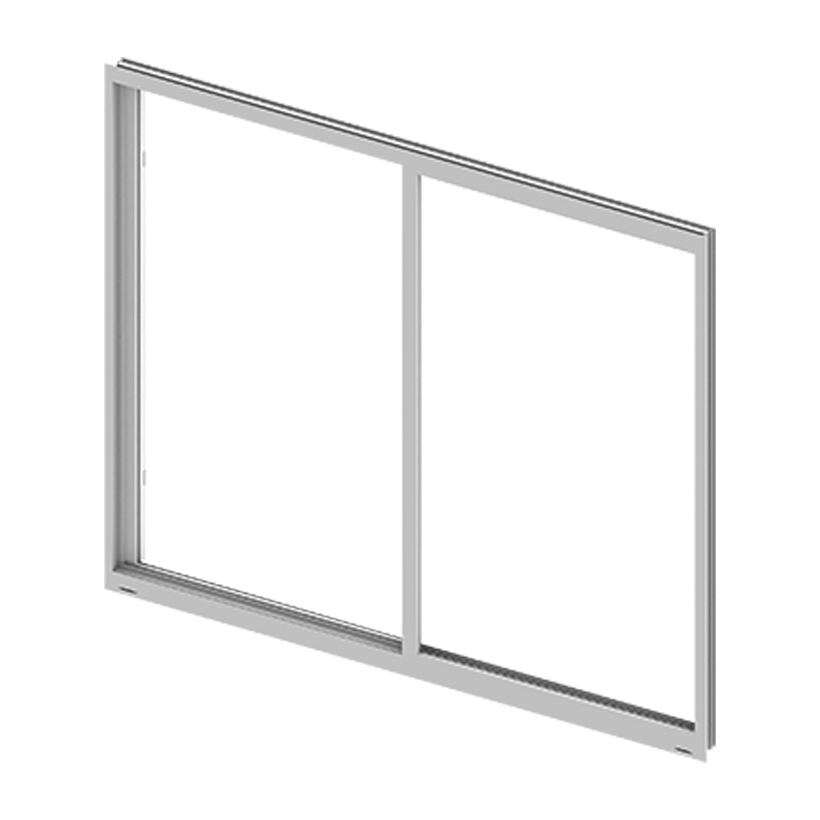 ES Windows · Elite Series
ES Windows Elite ES-EL200 Sliding Window
Aluminum impact horizontal slider in XO, OX, and XOX configurations on a 2-15/16 inch frame. Polyamide rollers with needle bearings.
What is never worth paying for: cleaning products, moisture absorbers, or interior films marketed to fix fog between panes. The moisture is sealed inside a cavity they cannot reach.
Next Steps
If one of your windows is fogging between the panes, act while the claim window is open: photograph the fog, find your order paperwork, and check your brand's sealed-glass term against the table above. Then request a free estimate and we will tell you plainly whether your unit is a warranty claim, a glass replacement, or a window at the natural end of its run, and what each path costs on your actual openings.