
Single hung vs double hung comes down to one question: do you need the top sash to move? In a single hung window, only the bottom sash slides and the upper half is fixed glass; in a double hung, both sashes slide and most tilt inward. For Florida homes getting impact windows, single hung is the default answer, because it costs less, far more approved impact models exist, and it puts one less sliding seal between your living room and a hurricane.
National buying guides treat the two styles as near-equals, and in most of the country they are. Florida's certification lists tell a different story. Across the 43 hung-window products holding an active Florida product approval (a statewide FL number or a Miami-Dade NOA) in the database we maintain on the brands we track, single hungs outnumber double hungs 33 to 10, about 3.3 to 1.
The double hung still earns its place in a particular set of rooms. This guide compares the two styles the way we quote them: what each one actually is, what Florida's approval lists contain, what wind-driven rain research says about that second sash, what the price gap looks like inside one product series, and the rooms where the double hung remains the right call.
What Actually Moves: Single Hung and Double Hung Defined
Both styles belong to the family the industry calls vertically sliding, or hung, windows. The North American Fenestration Standard (NAFS, published as AAMA/WDMA/CSA 101/I.S.2/A440) defines the product types along with the performance classes and grades printed on the label of every certified window sold in the US.
A single hung window has a fixed upper sash glazed into the frame and one operable lower sash. The lower sash rides in jamb tracks on a pair of balances, and it locks against a meeting rail that never moves. From the street it reads as two panes stacked in one frame.
A double hung window looks the same at a glance, but both sashes ride on balances. The top sash slides down, the bottom sash slides up, and on most vinyl models each sash tilts inward or lifts out for cleaning. Two operable sashes mean two sets of balances, two locking points at the check rail, and roughly twice the length of sliding weatherstrip.
That last detail is the whole comparison in miniature. Every seal that moves is a seal that wears, and every crack a sash slides along is a path air and water can work through when a storm pressurizes one side of the wall.
Why Florida Skews Single Hung
Up north, this choice usually scores as a tie: pay more for the double hung, get easier cleaning and top venting. The math changes when the window has to stop a hurricane, for three reasons.
Approved impact models are scarce. Of the impact-rated hung windows with active Florida approvals in our tracking database, 23 are single hung and 7 are double hung. Head into the High-Velocity Hurricane Zone (Miami-Dade and Broward counties) and the list collapses further: one impact double hung we track carries an active Miami-Dade Notice of Acceptance, against seven single hungs.
The second sash is a second leak path. Wind-driven rain testing at Florida International University recorded water intrusion through full-scale double-hung assemblies at every wind speed tested. More on that below.
The price delta is real. Where one manufacturer builds both styles in the same series, the double hung starts 12.5% higher installed, and the short approved list means budget double-hung options barely exist.
None of this makes the double hung a bad window. It makes it a window you should choose on purpose, for reasons that hold up against impact window engineering, not out of habit from a previous house in a calmer state.
Approval and Availability: What the Certification Lists Show
Two systems govern what can legally go into a Florida wall: the statewide Florida Product Approval and Miami-Dade County's Notice of Acceptance for the HVHZ. We track both across the manufacturers we install, and here is the hung-window split as of August 2026:
| Measure in our tracking database | Single hung | Double hung |
|---|---|---|
| Products with an active Florida product approval | 33 | 10 |
| Impact-rated models in that set | 23 | 7 |
| Impact-rated models with an active Miami-Dade NOA | 7 | 1 |
The lone HVHZ-listed impact double hung on our list is PGT's WinGuard Vinyl DH5560, a laminated-glass unit with both sashes operable and removable for cleaning. It is a well-built window. It is also, in Miami-Dade and Broward, close to the only game in town.
The pattern is not a quirk of our sample. We also mirror the NFRC certified-product directory for the ten window brands we track. The two national brands in that set, Andersen and Pella, certify 725 double-hung configurations against 250 single hung; in the northern replacement market, the double hung is the volume product. The six brands whose catalogs center on impact and coastal lines run the opposite way: 435 single-hung certified configurations against 75 double hung.
Manufacturers who engineer for hurricane zones keep landing on the single hung. A fixed top sash is simpler to seal and brace, and its meeting rail anchors to the frame instead of asking a latch to hold two moving sashes together while the wall flexes under load.
Wind-Driven Rain and the Second Sash
Here is the part of the comparison that only matters in places like Florida. An impact window's laminated glass is built to take flying debris and keep the opening sealed against pressure. Water is a different opponent: it does not need a breach, just a seam, a few hours, and wind pushing it sideways.
Researchers at Florida International University's Wall of Wind, a facility that recreates Category 5 wind conditions at full scale, tested full-scale double-hung window assemblies (non-impact, impact-rated, and shuttered) at roughly 63, 78, and 136 mph, matching tropical-storm, hurricane, and major-hurricane conditions. Their final report to the Florida Building Commission states the result plainly: water intrusion was observed at every wind speed and in every configuration tested, with the worst of it appearing between the window frames at the sill of the double-hung units.
Two details from that research change how you should read a window label. First, the water-penetration test behind Florida product approvals (TAS 202) runs at only 15% of the window's positive design pressure rating, and the NAFS water rating is not directly tied to the design-pressure number at all. A window that passes its structural tests was never tested to keep water out under anything close to design-level wind. Second, intrusion showed up at tropical-storm speeds, not just at the extremes.
What does that mean for the sash count? Every hung window has a sliding seal around its operable sash and a horizontal joint at the meeting rail.
A single hung has one operable perimeter plus a glazed, fixed top sash. A double hung carries two operable perimeters, a latch-dependent check rail, and a top sash that must seal against the frame head with weatherstrip rather than glazing. Same glass, more seams, and in wind-driven rain, seams are the whole game.
We wrote a full guide on this subject: why impact windows might not keep all water out. The short version is that some water intrusion during a major hurricane is normal for every operable window, single or double hung. The style choice decides how many paths you hand the storm; maintenance decides how well the paths you kept stay closed.
The Cost Difference on a Real Opening
Price comparisons between the two styles usually fall apart because the products are not parallel. The double hungs that survive in Florida catalogs are mostly premium vinyl units, while single hungs run from builder-grade aluminum to heavy HVHZ packages. The cleanest read comes from a series that builds both.
Eastern Architectural Systems
 EAS
Eastern Architectural Systems
Fort Myers manufacturer of vinyl and aluminum impact windows and doors, makers of the Bertha line.
18 models across 6 product lines
Explore EAS
does exactly that in its 143 Series vinyl line: both styles state-approved, both starting from the same nominal 24 x 36 inch opening. From our installed price book:
EAS
Eastern Architectural Systems
Fort Myers manufacturer of vinyl and aluminum impact windows and doors, makers of the Bertha line.
18 models across 6 product lines
Explore EAS
does exactly that in its 143 Series vinyl line: both styles state-approved, both starting from the same nominal 24 x 36 inch opening. From our installed price book:
| EAS 143 Series vinyl, same starting size | Installed, starting at |
|---|---|
| 143 single hung | $840 |
| 143 double hung | $945 |
That $105 gap, a 12.5% premium at entry size, is the second sash: another pair of balances, a second lock set, tilt hardware, and more weatherstrip, before you touch glass or color options. A whole-home project multiplies the delta by 15 or 20 openings, which is worth remembering when you compare financing terms.
The quieter cost is choice. With 23 approved impact single hungs on our list against 7 double hungs, a single-hung shopper can play brands against each other in every price tier. A double-hung shopper picks from a short list that skews premium, and inside the HVHZ the list drops to one.
Cleaning, Ventilation, and Egress: Where Double Hung Wins
Some rooms justify the double hung's premium, and cleaning is the honest headline. Tilt both sashes inward and you can wash the exterior glass of a second-story window while standing in the bedroom. A single hung gives you a tilting or removable bottom sash at best; the fixed upper pane still needs a ladder, a pole, or a window-cleaning bill. If your second story sits above a pool cage, a steep grade, or landscaping you would rather not crush with ladder feet, that one feature can settle the argument.
Ventilation is the second genuine win. A double hung vents from the top, which does three things a bottom-vent single hung cannot: it exhausts warm air from the ceiling level, it keeps the open gap out of reach of small children, and under a decent roof overhang it can stay cracked in light rain.
Egress is where homeowners expect a difference and find none worth counting. A hung window of either style opens to about half its frame height, and Florida's residential code judges a bedroom window on the clear opening one operable sash yields. Both sashes of a double hung share the same frame, so opening one closes the other's path. If a bedroom window sits near the egress limit, the fix is a bigger unit or a different operating style, not a second sash; our comparison of every impact window type covers which styles buy more clear opening.
On air leakage, fewer operable seals mean the single hung usually posts slightly better numbers, though both trail compression-seal styles like casements and awnings. If air-tightness tops your list, the hung family is the wrong branch to shop in the first place.
Which Rooms Change the Answer
| Your situation | Better fit | Why |
|---|---|---|
| Ground-floor rooms, standard openings | Single hung | Lowest cost, widest approved selection, one less sliding seal |
| Second-story rooms with no easy exterior access | Double hung | Tilt-in sashes clean both panes from inside |
| Miami-Dade or Broward (HVHZ) | Single hung | We track one impact double hung with an active NOA |
| Kids' rooms upstairs | Double hung | Top-sash venting keeps the open gap out of reach |
| Direct coastal exposure to wind-driven rain | Single hung, or a fixed and casement mix | Fewer sliding seals, fewer intrusion paths |
| Matching existing double hungs you are keeping | Double hung | Consistent sightlines and meeting-rail height |
Most of our projects land on single hung for the bulk of the house, with double hungs placed where the cleaning case is strong. The two styles share sightlines closely enough that mixing them across one facade goes unnoticed from the street. You can browse the models we install, with approvals and installed pricing, on our single-hung impact windows page, which also lists the double-hung units we carry.
 PGT · WinGuard Aluminum Series
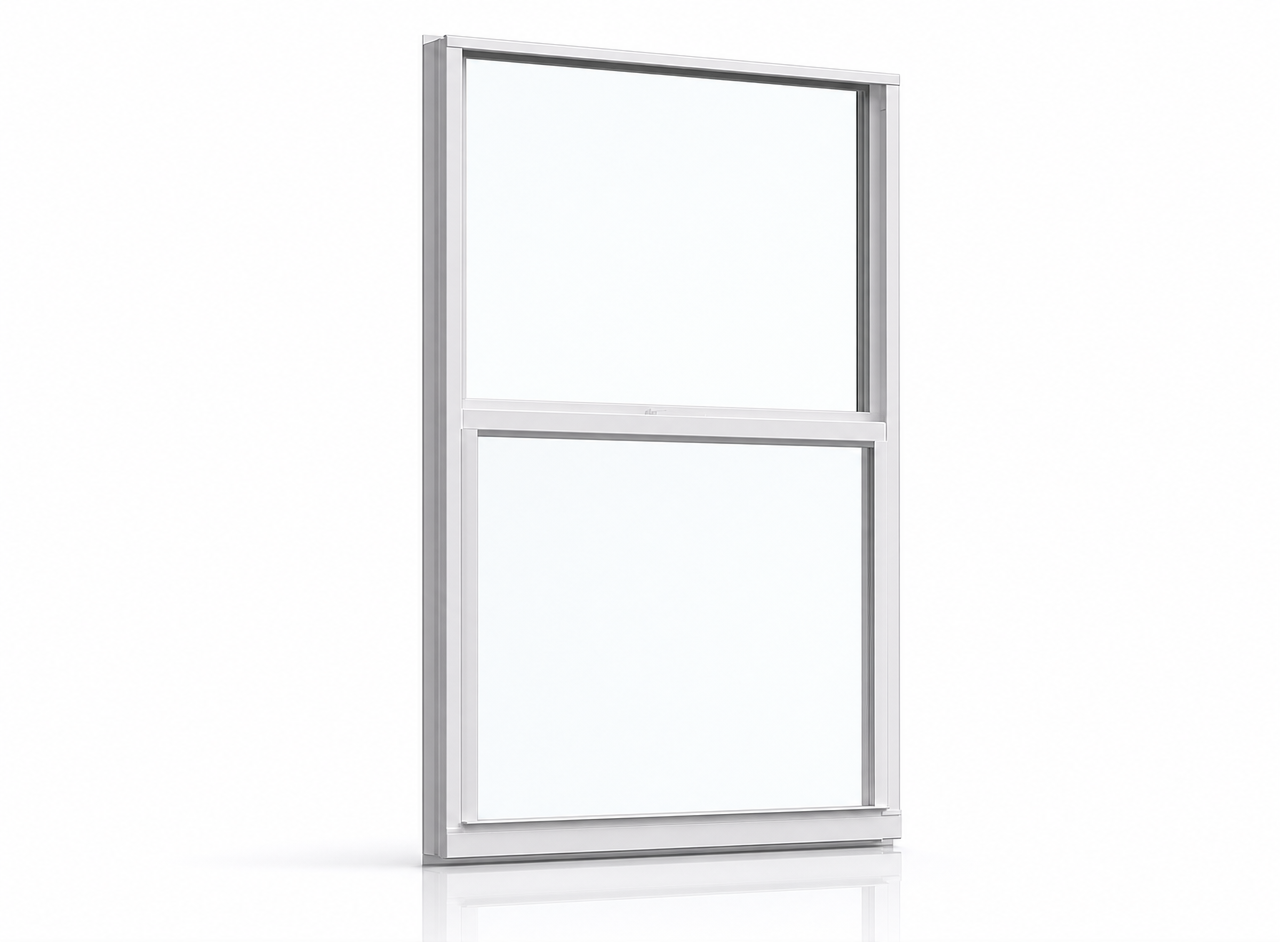
PGT WinGuard Aluminum Single Hung SH7700A
Aluminum impact single-hung on the WinGuard 7700-series frame with Diamond Glass laminated glazing. LMI impact-rated for Miami-Dade and Broward HVHZ installations.

 ECO · Eco-Guard Single Hung Series
Eco-Guard Single Hung Series 50
Entry aluminum impact single hung on a 2-1/8 in. frame, +55/-60 psf, LMI for HVHZ, with block-and-tackle balances.
 ES Windows · Multimax Series
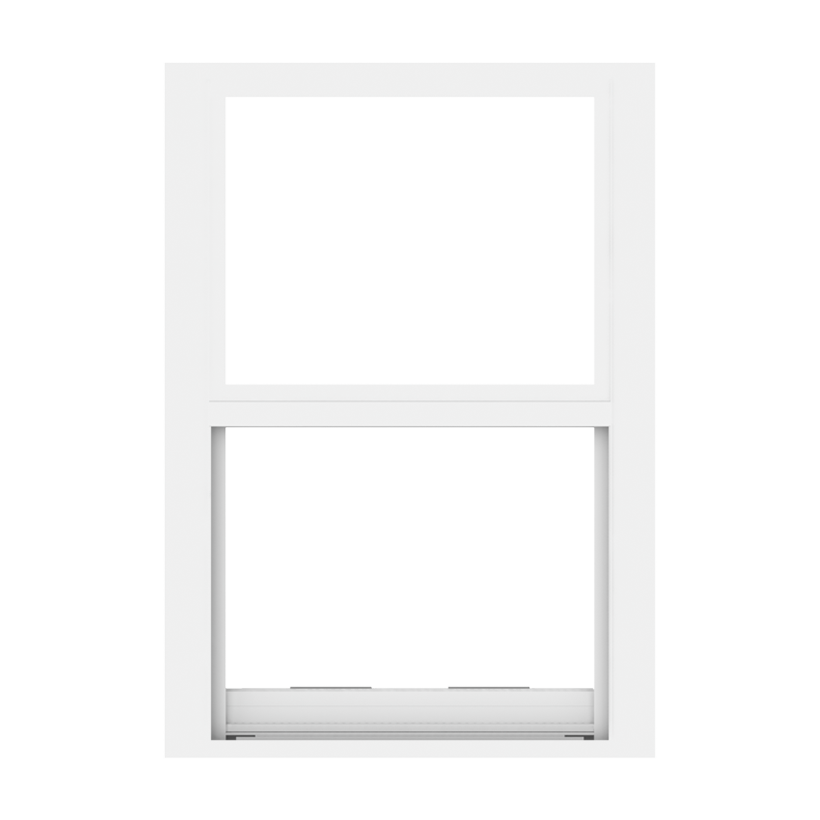
ES Windows Multimax ES-MX1000 Single Hung
Value-tier aluminum impact single-hung in an OX configuration on a 2-3/8 inch frame. Block-and-tackle and ultra-lift balance options, dual LMI+SMI.
Next Steps
If you are pricing hung windows for a Florida home, get numbers for both styles on your actual openings instead of deciding from a national chart. We install both, we can lay out the approved options for your wind zone side by side, and the visit costs nothing: request a free estimate and we will measure your openings, quote each style, and walk you through the approval paperwork for your address.