

Orlando sits about 60 miles inland from Florida's Atlantic coast and 85 miles from the Gulf. That distance buys Central Florida lower wind speeds and different building code requirements than coastal communities—but it does not buy immunity from hurricanes.
Most of Orange County falls outside both the High Velocity Hurricane Zone (limited to Miami-Dade and Broward counties) and the Wind-Borne Debris Region. That means impact windows are not code-required for the majority of Orlando homes.
But code-required and worthwhile are two very different things. This guide covers why thousands of Central Florida homeowners are choosing to install impact windows voluntarily, and why the math often works out better than you would expect.
Orlando's Wind Zone and Building Code Status
Understanding where Orlando fits in Florida's hurricane code framework is the starting point for any window decision.
Design Wind Speeds
Central Florida (inland Orlando and Orange County) carries design wind speeds of 115-130 mph under the Florida Building Code 8th Edition and ASCE 7-22. That is significantly lower than Miami-Dade's 170+ mph or the Gulf Coast's 140-155 mph, but still well above what standard windows are engineered to handle.
Not in the HVHZ
The HVHZ applies only to Miami-Dade and Broward counties. Orlando is not close to it. This means products installed in Orlando do not need a Miami-Dade Notice of Acceptance (NOA); they need a Florida Product Approval (FPA) with testing to ASTM E1886/E1996 standards. That distinction directly affects your product options and pricing.
Wind-Borne Debris Region Status
Here is where it gets specific. Most of Orange County is not in the Wind-Borne Debris Region, which is the geographic boundary that triggers the code requirement for impact-rated glazing or approved shutters. However, some areas near large lakes or at the edges of the WBDR boundary may fall within it. Your contractor and local building department can confirm the status of your specific property.
What the FBC 9th Edition May Change
The FBC 9th Edition, effective December 31, 2026, could expand the WBDR. Two proposed code modifications would reintroduce interior water body proximity as a WBDR trigger. Orlando is a city defined by its lakes: Lake Apopka, the Butler chain, Lake Nona, Lake Tibet, and dozens of others. If these modifications are adopted, homes near large lakes could be reclassified into the WBDR, making impact protection a code requirement for the first time.
Homeowners who install impact windows now get ahead of any potential future mandate and avoid the demand surge and price increases that typically follow code expansions.
Why Orlando Homeowners Install Impact Windows
Even without a code requirement, the case for impact windows in Central Florida is built on five pillars that together produce measurable financial returns.
1. Insurance Savings Through Wind Mitigation Credits
Florida law requires insurers to offer discounts for homes that meet wind mitigation standards. When a licensed inspector performs a wind mitigation inspection and documents that all openings have impact-rated protection, you qualify for the opening protection credit.
For Orlando homeowners, this typically translates to $200-$500 per year in premium reductions. That is lower than the $1,000-$2,500/year savings common in coastal counties, but it is still meaningful, especially when Florida's average homeowners insurance premium hit $14,140 in 2024. Orlando premiums are lower than the coastal average, but they are still significantly elevated compared to national norms.
The critical rule is the same everywhere in Florida: the opening protection credit requires every opening to be protected. One unprotected window or door eliminates the credit entirely. Impact windows are the only solution that provides permanent, always-ready protection without the hassle of deploying shutters before each storm.
2. Hurricane Risk Is Real in Central Florida
Orlando is inland, not invincible. The historical record makes that clear:
- Hurricane Charley (2004): Made landfall at Punta Gorda as a Category 4, then tracked directly through the Orlando metro area. Damage across Central Florida was catastrophic.
- Hurricane Ian (2022): Crossed Florida and passed through Orlando with 75-85 mph winds (tropical storm to Category 1 strength). Despite being weakened, Ian caused $2.2 billion in Orange County damage alone.
- Hurricane Irma (2017): Affected all of Florida as it tracked up the peninsula, bringing tropical storm conditions to Central Florida.
Tropical-storm-force winds (39-73 mph) reach Orlando regularly during active hurricane seasons. Standard single-pane or dual-pane windows were never engineered for those conditions. A single breach during a storm creates internal pressure that can lift the roof structure, the most common cause of catastrophic home damage during hurricanes.
3. Energy Efficiency: Bigger Savings Than Coastal Homes
This is where Orlando's inland geography actually works in your favor for impact window ROI. Without the moderating effect of coastal breezes, Orlando's summers are hotter than waterfront communities. Average highs above 90 degrees persist from June through September, and humidity amplifies the cooling load.
Florida residents already use nearly 30% more electricity than the average American household, almost entirely due to air conditioning. At Florida's average rate of 15.54 cents per kWh and average monthly bills of $166.27, cooling costs are a major household expense.
Modern impact windows use insulated glass units (IGUs) with Low-E coatings that block infrared heat before it enters your home. The result:
- 25-40% reduction in cooling costs, translating to $500-$800 per year in energy savings
- ENERGY STAR v7.0 Southern Zone certification requires U-Factor of 0.32 or less and SHGC of 0.23 or less, both achievable with today's impact IGUs
- Orlando's inland heat means these savings are often larger than what coastal homeowners realize
Combined with insurance savings, a Central Florida homeowner can see $700-$1,300 per year in ongoing financial benefits from impact windows that pay for themselves over time.
4. Security and Noise Reduction
Impact laminated glass is inherently resistant to forced entry. Unlike standard glass that shatters cleanly, the PVB interlayer in impact glass holds fragments together even after the outer pane is broken. A burglar would need sustained effort with heavy tools to create an opening, the kind of conspicuous activity that attracts attention and triggers alarm systems. For Orlando homeowners, this 24/7 security benefit applies every day of the year, not just during hurricane season.
Noise reduction is the benefit homeowners consistently underestimate before installation and appreciate most afterward. Impact windows achieve STC ratings of 32-42, a significant reduction in transmitted sound. This matters particularly in Orlando neighborhoods affected by:
- Interstate 4 corridor traffic running through the heart of the metro
- Orlando International Airport (MCO) flight paths
- Theme park traffic and commercial activity in tourist corridors
- Construction activity in rapidly growing areas like Lake Nona and Horizon West
5. Property Value and Resale Speed
Impact windows add an estimated 7-10% to home value and help sellers recoup 70-85% of the project cost at resale. Homes with impact windows also sell approximately 20% faster than comparable homes without them.
This matters in Orlando's current real estate market. The top origin states for Florida transplants (New York 11%, Georgia 7%, California 6%, Texas 6%, New Jersey 5%) include several hurricane-aware markets. Buyers relocating from South Florida to Central Florida increasingly expect impact windows as a standard feature, not a premium upgrade.
The Cost Advantage: Why Orlando Projects Are More Affordable
One of the biggest advantages of installing impact windows in Orlando is cost. Because you are outside the HVHZ, you have access to a broader range of products at lower price points.
Why Non-HVHZ Products Cost Less
Products approved for non-HVHZ areas do not need the stricter Miami-Dade NOA testing (TAS 201/202/203 with its 48x stricter tear tolerance). They use ASTM E1886/E1996 testing instead, which is still rigorous (it includes large and small missile impact) but opens the field to more manufacturers and designs. The result: non-HVHZ impact products are typically 10-20% less expensive than their HVHZ-rated equivalents.
Lower Design Pressure Requirements
Most Orlando locations require DP-30 to DP-40 rated products, compared to DP-50+ for coastal properties. Lower DP requirements mean lighter-duty frames and hardware, which reduces material costs without compromising performance for your actual wind zone.
Vinyl Frames Are the Optimal Choice
In coastal communities, the salt air corrosion question drives many homeowners toward aluminum or requires premium coatings on any frame material. Orlando does not have that problem. With no salt air exposure, vinyl frames are the ideal choice for Central Florida:
- 15-30% less expensive than aluminum frames
- Better thermal performance (lower U-Factor) for energy savings
- No painting, no corrosion, minimal maintenance
- Multi-chamber construction provides structural rigidity
Recommended vinyl products for Orlando:
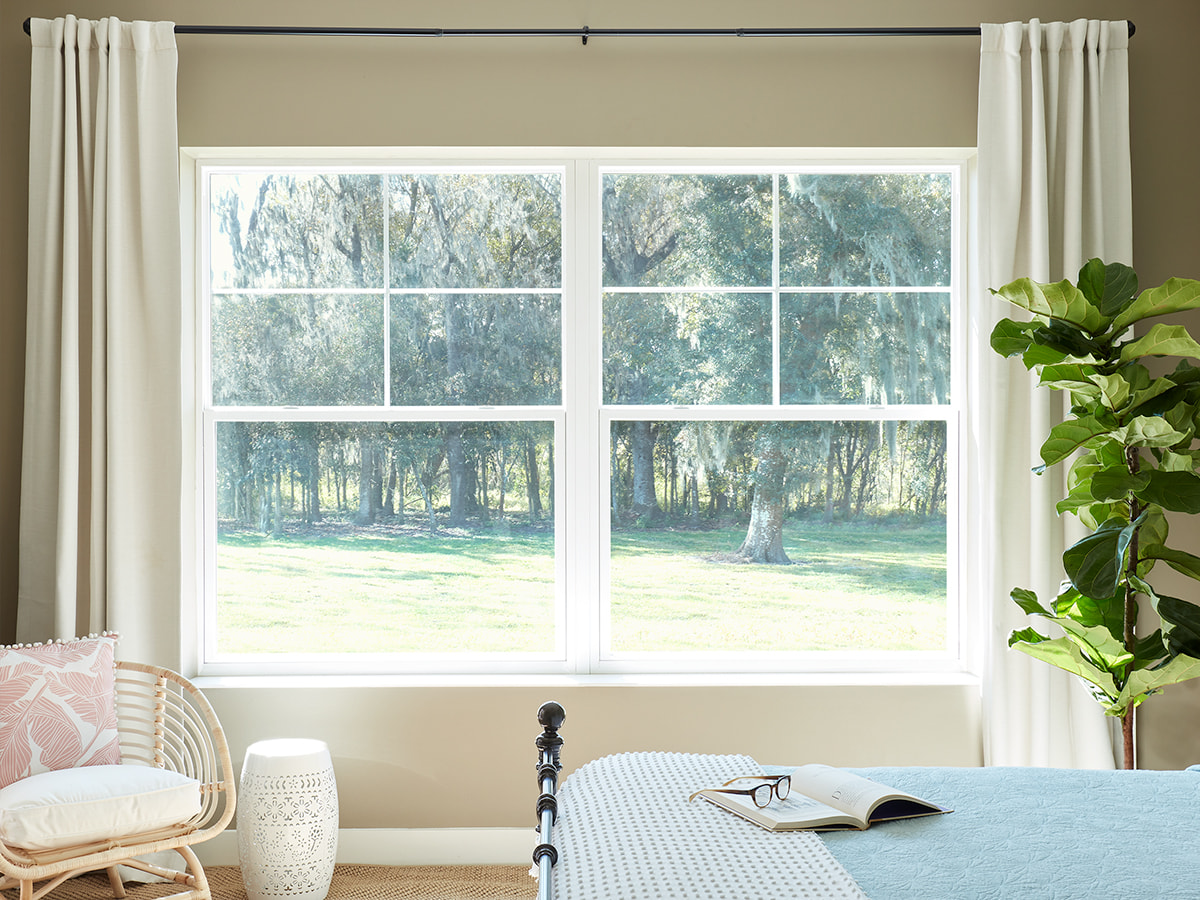
- CWS StormStrong: DP +/-50 rating, available everywhere except the HVHZ. Strong performance at a competitive price point.
- EAS Bertha / Earthwise: DP +/-60 rating, fusion-welded corners, Good Housekeeping Seal. Premium vinyl with outstanding durability.
- PGT WinGuard Vinyl: Broad product line with options for every budget and window style.
 CWS
CWS
3 models · Single-Hung Window, Fixed Window
 EAS
EAS
3 models · Fixed Window, Horizontal Roller Window, Single-Hung Window
 PGT
PGT
12 models · Casement Window, Double-Hung Window, French Door
Orlando Pricing Overview
| Category | Per Window | Whole Home (12-15 openings) |
|---|---|---|
| Vinyl impact windows | $400-$1,100 | $12,000-$30,000 |
| Aluminum impact windows | $550-$1,600 | $15,000-$35,000 |
By budget tier:
| Tier | Products | Whole Home Estimate |
|---|---|---|
| Budget | ECO, EAS vinyl | $10,000-$18,000 |
| Mid-range | PGT WinGuard vinyl, CWS StormStrong | $15,000-$25,000 |
| Premium | ES Windows, PGT aluminum | $20,000-$35,000 |
These estimates include professional installation. Final pricing depends on window sizes, opening count, structural modifications needed, and product selection. Request a free estimate for project-specific pricing.
Orlando Neighborhood Guide
Central Florida's diverse housing stock means impact window projects look different depending on where you live. Here is what to expect in Orlando's major neighborhoods.
Winter Park
Winter Park's tree-lined streets and historic homes are among the most desirable in Central Florida. Many homes still have original single-pane windows that are decades past their useful life. HOA and historic district guidelines may influence frame color and style selections, but modern impact windows are available in profiles that match virtually any architectural period. The energy savings from replacing single-pane windows in these older homes are among the highest of any upgrade scenario.
College Park
This neighborhood's charming bungalows near downtown Orlando blend historic character with ongoing renovation. Homes range from original 1920s-1940s construction to fully modernized interiors behind preserved facades. Impact windows protect the investment homeowners have made in these renovations while preserving the architectural character that makes College Park distinctive.
Dr. Phillips
Upscale suburban homes in Dr. Phillips tend to be larger with more window and door openings. That means higher total project costs but also proportionally higher insurance and energy savings. Sliding glass doors and large picture windows are common in this area, and impact-rated versions of both are available in the vinyl and aluminum product lines suited for Orlando.
Baldwin Park
This planned community on the former Naval Training Center features newer construction, and some homes may already have impact-rated windows from the original build. Homeowners with standard windows in Baldwin Park benefit from the community's strong resale market, where impact windows are increasingly expected by buyers.
Lake Nona
The Medical City area and surrounding residential development is one of the fastest-growing parts of Orlando. Newer construction standards mean many Lake Nona homes are already well-built, but window glazing may still be standard. Lake Nona's proximity to large water bodies is also worth monitoring as the FBC 9th Edition WBDR expansion is considered.
Windermere and Isleworth
Luxury lakefront homes in these communities call for premium products and larger opening sizes. Impact sliding glass doors and oversized fixed-panel windows are common project elements. The higher property values in Windermere and Isleworth also mean the 7-10% value increase from impact windows translates to a larger dollar amount.
Celebration
Disney-adjacent Celebration has specific architectural guidelines that govern exterior modifications. Impact windows are available in the profiles and colors required by Celebration's design standards. The community's strong rental and resale market makes impact windows a particularly good investment for homeowners who may sell or rent their property in the future.
Financial Assistance: My Safe Florida Home Program
Orlando homeowners may be eligible for the My Safe Florida Home program, which provides grants up to $10,000 for hurricane hardening improvements including impact windows and doors.
Eligibility requirements:
- Home built before 2008
- Property is homesteaded
- Insured value of $700,000 or less
The program begins with a free wind mitigation inspection that identifies which improvements will generate the greatest benefit for your home. Apply through the My Safe Florida Home portal.
For a typical Orlando vinyl impact window project in the $12,000-$18,000 range, a $10,000 grant can cover more than half the cost, making the net investment as low as $2,000-$8,000 before accounting for annual insurance and energy savings.
Grants are not the only way to manage the upfront cost. For the balance a grant does not cover—or if your home does not qualify—you can spread the project across low monthly payments instead of paying for everything at once.
Federal Tax Credit: No Longer Available
The Section 25C Energy Efficient Home Improvement Credit, which provided up to $600 per year for qualifying windows, expired on December 31, 2025 under the One Big Beautiful Bill. No replacement has been enacted. Impact windows installed in 2026 and beyond do not qualify for a federal tax credit.
Permitting in Orlando
Impact window replacement in Orlando requires a building permit through the Orange County Building Division or your city's building department (Winter Park, Maitland, and other incorporated cities handle their own permits). Your installer should pull permits and schedule inspections as part of the project.
Because Orlando is outside the HVHZ, the permitting process is generally straightforward. Products must carry a valid Florida Product Approval with the appropriate design pressure and impact ratings for your specific location. Your contractor will specify the correct product approval based on your home's wind zone, exposure category, and opening sizes.
Frequently Asked Questions
Are impact windows required by code in Orlando?
For most properties in Orlando and Orange County, no. The majority of the metro area falls outside the Wind-Borne Debris Region, so impact-rated glazing is not a code requirement. Some areas near large lakes or at the WBDR boundary may be exceptions; your local building department or contractor can confirm your property's status. The FBC 9th Edition (effective December 2026) may expand WBDR boundaries in ways that affect Orlando lake-adjacent properties.
How much do impact windows cost in Orlando?
Vinyl impact windows run $400-$1,100 per window installed. A typical Orlando home with 12-15 openings costs $12,000-$30,000 depending on product tier and window sizes. Orlando projects are generally 10-20% less expensive than equivalent coastal projects because non-HVHZ products cost less and lower design pressure requirements reduce material needs.
Will impact windows lower my insurance in Orlando?
Yes. Wind mitigation credits apply throughout Florida, including Orlando. When all openings are protected with impact-rated products, homeowners typically save $200-$500 per year on their wind premium. A licensed inspector must verify the protection through a wind mitigation inspection.
Should I choose vinyl or aluminum impact windows for my Orlando home?
Vinyl is the optimal choice for the vast majority of Orlando homes. Without salt air exposure, aluminum's corrosion resistance advantage is irrelevant, and vinyl costs 15-30% less. Vinyl also provides better thermal insulation, which matters in Orlando's heat. Aluminum remains the right choice for very large openings where structural rigidity is paramount or for specific architectural styles.
Do impact windows reduce noise from I-4 and MCO airport?
Significantly. Impact laminated glass achieves STC ratings of 32-42, which produces a noticeable and measurable reduction in transmitted sound. Homeowners near the I-4 corridor, in MCO flight paths, or adjacent to commercial corridors consistently report this as one of the most immediately noticeable benefits.
Can I get a My Safe Florida Home grant for impact windows in Orlando?
If your home was built before 2008, is homesteaded, and is insured at $700,000 or less, you may qualify for grants up to $10,000. Apply through mysafeflhome.com to start with a free wind mitigation inspection.
Is there still a federal tax credit for impact windows?
No. The Section 25C Energy Efficient Home Improvement Credit expired on December 31, 2025. There is no current federal tax credit for impact windows installed in 2026 or later.
How do Orlando impact windows compare to hurricane shutters?
Impact windows provide permanent, always-ready protection without any deployment time or storage requirements. Shutters must be installed before each storm, require physical effort (or motorized systems), and do not provide the daily benefits of energy efficiency, noise reduction, or security. For Orlando homeowners who are not code-required to have protection, impact windows are a far more practical voluntary upgrade because you benefit from them every day—not just during hurricanes. See our full comparison of impact windows vs. hurricane shutters.
Next Steps for Orlando Homeowners
If you are considering impact windows for your Orlando home, here is a straightforward path forward:
-
Get a free wind mitigation inspection through the My Safe Florida Home program to identify which improvements will generate the greatest benefit and whether you qualify for a grant.
-
Confirm your WBDR status with your local building department or contractor. Most Orlando properties are outside the WBDR, but it is worth verifying, especially if you live near a large lake.
-
Request a project estimate that includes product options appropriate for your wind zone. For most Orlando homes, vinyl impact windows in the mid-range tier offer the best combination of performance, durability, and value.
-
Plan your timeline. Lead times for non-HVHZ products are generally shorter than for HVHZ products, but planning ahead of hurricane season is always advisable. The 2026 Atlantic hurricane season officially begins June 1.
-
Request your free estimate from Armor Pro Windows & Doors. We handle impact window installation in Orlando and throughout Central Florida, and can walk you through product options, pricing, and financing for your specific home.
Orlando may not require impact windows by code, but the combination of real hurricane risk, meaningful insurance savings, substantial energy savings in Central Florida's heat, daily security and noise benefits, and strong property value returns makes them one of the smartest home improvements a Central Florida homeowner can make.